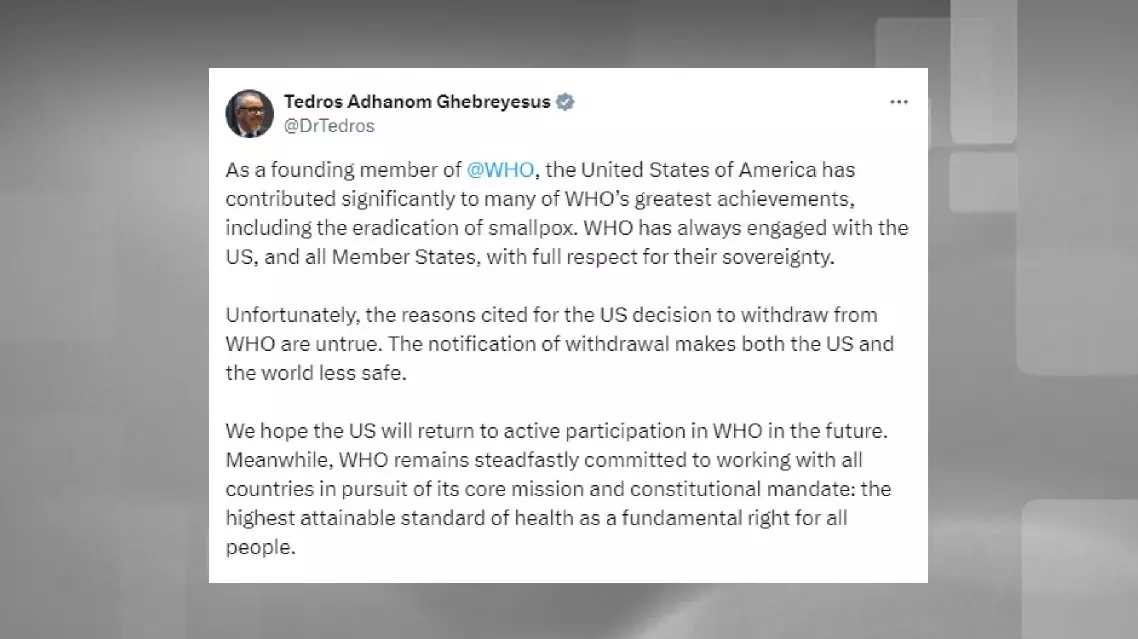
World Health Organization (WHO) Director-General Tedros Adhanom Ghebreyesus on Saturday depicted as "untrue" the reasons given by the United States for its withdrawal from the global health watchdog.
On the social platform X, the WHO chief noted that the move will make the United States itself and the world "less safe."
Click to Gallery
WHO chief says U.S. reasons for withdrawal 'untrue'
WHO chief says U.S. reasons for withdrawal 'untrue'
WHO chief says U.S. reasons for withdrawal 'untrue'
WHO chief says U.S. reasons for withdrawal 'untrue'
U.S. President Donald Trump signed an executive order on Jan. 20, 2025, the first day of his second term to formally initiate the U.S. exit from the UN specialized agency. The United Nations received the formal notice two days later.
Under the UN charter, the withdrawal takes effect one year after notice is given.
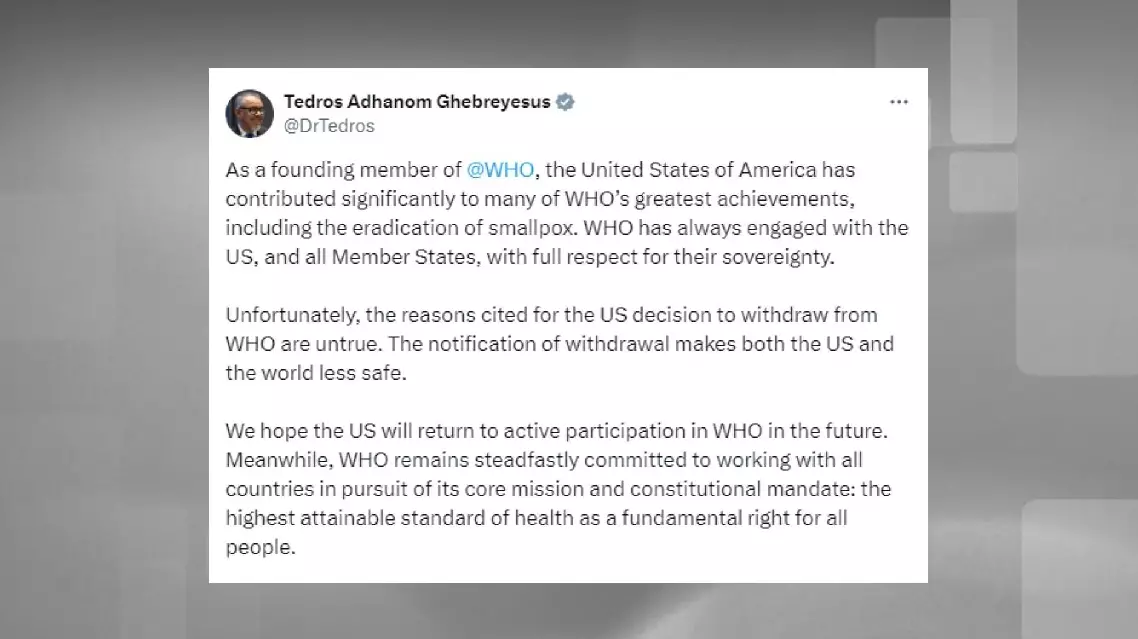
Commending the contribution made by the United States as a founding member to many of WHO's greatest achievements, Tedros wrote in the X post, "Unfortunately, the reasons cited for the U.S. decision to withdraw from WHO are untrue."
The U.S. move "makes both the U.S. and the world less safe," he said, expressing hope that the United States "will return to active participation in WHO in the future."
Also on Saturday, the WHO issued a statement, voicing regret over the U.S. withdrawal and rejecting accusations made by the Trump administration.
The U.S. withdrawal raises issues that will be considered by the WHO Executive Board at its regular meeting starting on Feb. 2 and by the World Health Assembly at its annual meeting in May 2026, it said.
In dealing with the consequences, the WHO Secretariat "will act on advice and guidance of our governing bodies accordingly," a WHO press official told Xinhua in an email Wednesday.
The United States has yet to pay its outstanding membership dues, according to the official. "As of today, the USA has not paid the invoiced amounts for its assessed contributions for the biennium 2024-2025," the official said.
The U.S.-based National Public Radio (NPR) reported that the outstanding amount is estimated to total some 278 million U.S. dollars.
WHO chief says U.S. reasons for withdrawal 'untrue'
WHO chief says U.S. reasons for withdrawal 'untrue'
WHO chief says U.S. reasons for withdrawal 'untrue'
WHO chief says U.S. reasons for withdrawal 'untrue'
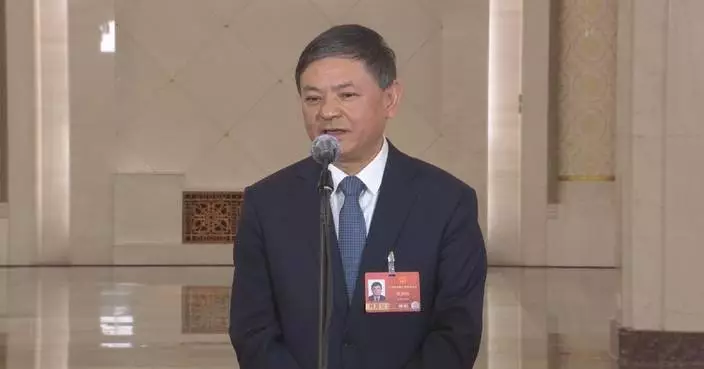
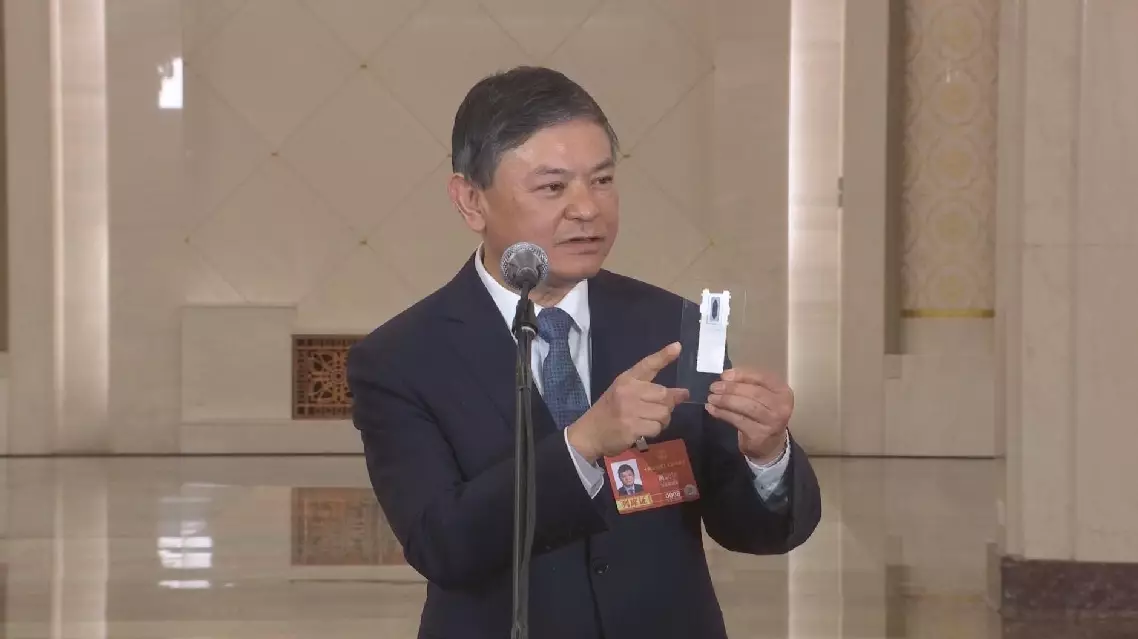
Smart technologies have reshaped China's ecological and environmental monitoring system, Huang Runqiu, minister of Ecology and Environment, said Thursday in Beijing on the sidelines of the fourth session of the 14th National People's Congress(NPC).
"Regarding ecological and environmental monitoring, we have been promoting the digitalization, informatization, and intelligentization of the entire monitoring process in recent years, reshaping the ecological and environmental monitoring system. For instance, in water environment monitoring and sampling, we have used intelligent drones which can quickly locate sampling points, collect samples accurately, return rapidly, and they are safe and reliable, improving work efficiency by over 70 percent. They are particularly advantageous for sampling during flood seasons and in remote areas," Huang told the press.
"In terms of environmental sample analysis, we have developed 'lights-out laboratories' in recent years. As the name suggests, these labs operate without lights and are unattended. Through robotic arms, robots, and intelligent management systems, they achieve full-process automation and intelligence from sample handover, testing, and analysis to report generation. This has significantly enhanced work efficiency, increasing it by more than eightfold compared to traditional labs. More importantly, it reduces human interference, human error, and even data falsification," he said.
Thanks to the improved ecological and environmental supervision capabilities, the number of environmental violation cases nationwide has decreased from 130,000 five years ago to 43,000 last year, representing a decline of 68 percent, Huang said.
The minister said China has already applied environmental DNA technology in the biodiversity monitoring work.
"In the field of biodiversity monitoring, monitoring aquatic organisms remains a weak point. However, significant progress has been made in recent years as we have developed environmental DNA technology. Although this chip is very small in size, it contains DNA detection information for aquatic organisms, including the finless porpoise and the Chinese sucker, from 19 state-controlled sections in the Jiangsu segment of the Yangtze River. The results showed that over the past five years, more than 20 species of aquatic organisms have increased in this river section, fully demonstrating the tangible effectiveness of the ten-year fishing ban in the Yangtze River," Huang said while showing a chip to reporters.
The 14th NPC, China's national legislature, concluded its fourth session on Thursday.
Smart technologies reshape China's ecological, environmental monitoring system: minister