Skip to Content Facebook Feature Image

Longtime festivalgoers say the final Sundance in Utah may also be their last

ENT

Longtime festivalgoers say the final Sundance in Utah may also be their last
ENT

ENT

Longtime festivalgoers say the final Sundance in Utah may also be their last

2026-01-25 16:28 Last Updated At:17:53

PARK CITY, Utah (AP) — Attendees at this year's Sundance Film Festival could not stand in line, step onto a shuttle bus or walk into a lounge without hearing one common question: “Will you go to the festival when it moves to Boulder?”

Butch Ward has been a Sundance regular since the early '90s, but like many longtime festivalgoers who fell in love with its charming mountain hometown of Park City, he said he won't be following Sundance to its new setting in Colorado next year.

The media professional from Fort Lauderdale, Florida, considers this the last year of the festival in its true form, “because a Sundance outside Utah just isn't Sundance.”

That sentiment was shared by many attendees who had found their happy place at the Utah festival.

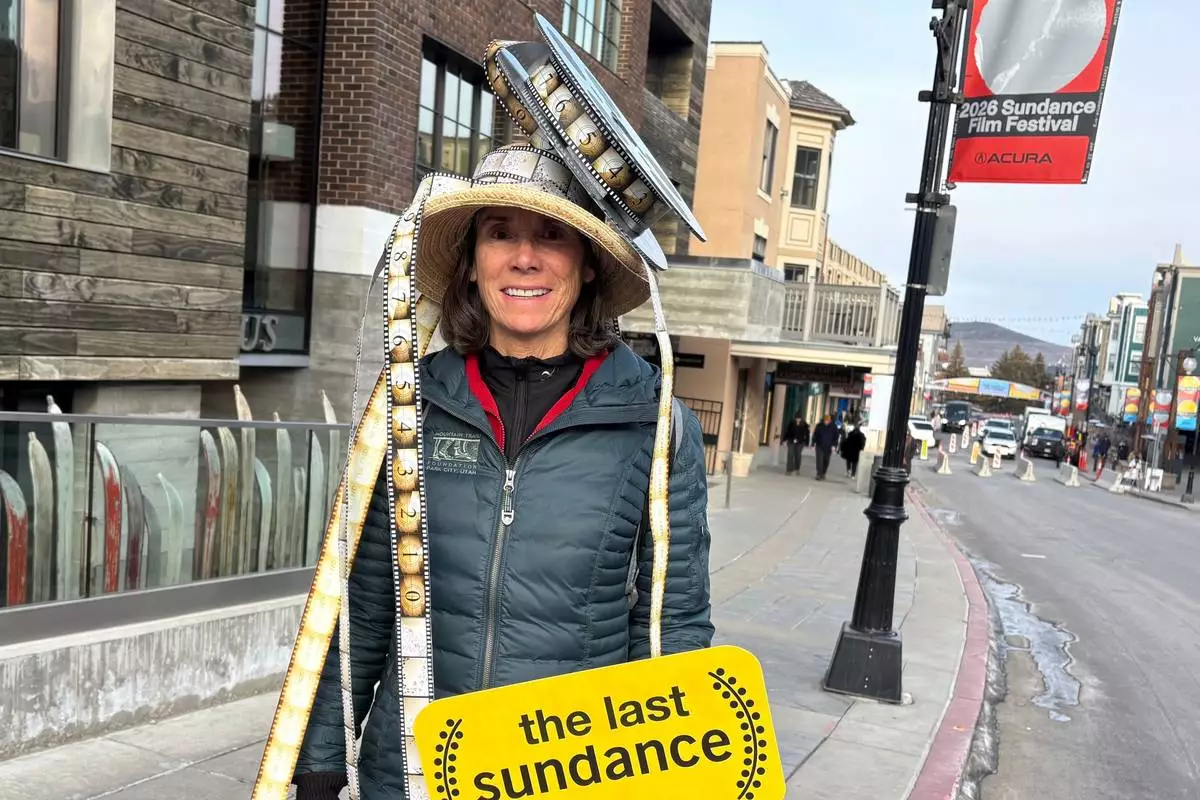
A group of women walked down Main Street on Saturday wearing yellow scarves that read “Our last Sundance 2026.” Another festivalgoer with a film reel balanced atop her head held a sign dubbing this “the last Sundance.”

“It’s not just a resistance to change,” said Suzie Taylor, an actor who has been coming to Sundance on and off since 1997. "Robert Redford's vision was rooted here. And isn’t it poetic that he passed right before the last one?”

For Julie Nunis, the joy of Sundance is grounded in the tradition Redford created in Park City more than four decades ago. The actor from Los Angeles has come to the festival nearly every year since 2001 and said she doesn’t want to experience it any other way.

Redford, who died in September at age 89, established the festival and development programs for filmmakers in the Utah mountains as a haven for independent storytelling far from the pressures of Hollywood. Before his death, Redford, who attended the University of Colorado Boulder, gave his blessing for the festival to relocate.

Boulder emerged victorious from a yearlong search in which numerous U.S. cities vied to host the nation’s premier independent film festival. Sundance organizers decided to search for a new home because they said the festival had outgrown the ski town it helped put on the map and developed an air of exclusivity that took focus away from the films.

Some film professionals and volunteers said they were willing to give Boulder a try but worried Sundance could lose its identity outside its longtime home.

Lauren Garcia, who has come from Seattle to volunteer at Sundance for the past six years, said curiosity may lead her to Boulder for future festivals. She described feeling a sadness lingering over the final Utah festival and wondered if Redford's death means it's time for Sundance to close this chapter.

“How is the festival going to express itself in a new place and continue his legacy? It's a huge question mark," said Garcia, an anthropologist. "The truth is, it's never going to be the same now that he's gone.”

Redford's daughter, Amy Redford, who serves on the Sundance Institute's board of trustees, said she's excited about the transition, even if it comes with a steep learning curve.

Nik Dodani, an actor and filmmaker passionate about telling LGBTQ+ stories, said he’s excited to experience the festival in a new state that embraces diversity, but he worries the departure will create a “vacuum” of those stories in Utah.

Amy Redford assures that won't be the case.

The piece of her father's legacy that she said meant the most to him — the institute’s lab programs for emerging screenwriters and directors — will remain in Utah, at the resort he founded, about 34 miles (54 kilometers) south of Park City. Filmmakers will continue to “create the civil discourse that we really need to be having in the state," she said.

“Boulder, Colorado, will be a new adventure. It will feel like our beginnings when we were trying to figure things out, and that will have an important impact on what we do,” she told The Associated Press. “But the way that we meet artists where they need to be, well, that evolves out of a heartbeat that is here" in Utah.

For more coverage of the 2026 Sundance Film Festival, visit: https://apnews.com/hub/sundance-film-festival
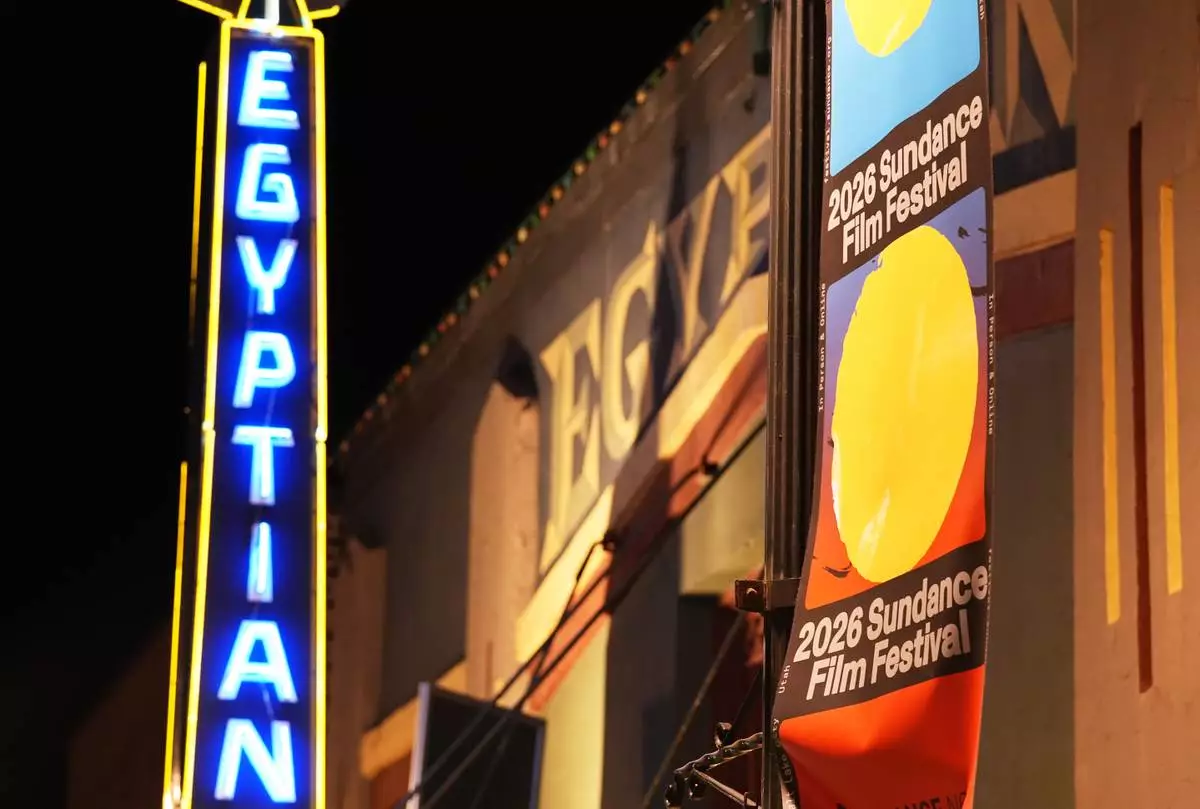
A banner for the 2026 Sundance Film Festival hangs near the Egyptian Theatre before the start of the festival on Wednesday, Jan. 21, 2026, in Park City, Utah. (AP Photo/Chris Pizzello)
A banner for the 2026 Sundance Film Festival hangs near the Egyptian Theatre before the start of the festival on Wednesday, Jan. 21, 2026, in Park City, Utah. (AP Photo/Chris Pizzello)

A woman wearing a film reel on her head holds a sign that reads "the last sundance" while attending final Sundance Film Festival in Park City, Utah, on Friday, Jan. 23, 2026, before the festival moves next year to Boulder, Colo. (AP Photo/Hannah Schoenbaum)
A woman wearing a film reel on her head holds a sign that reads "the last sundance" while attending final Sundance Film Festival in Park City, Utah, on Friday, Jan. 23, 2026, before the festival moves next year to Boulder, Colo. (AP Photo/Hannah Schoenbaum)

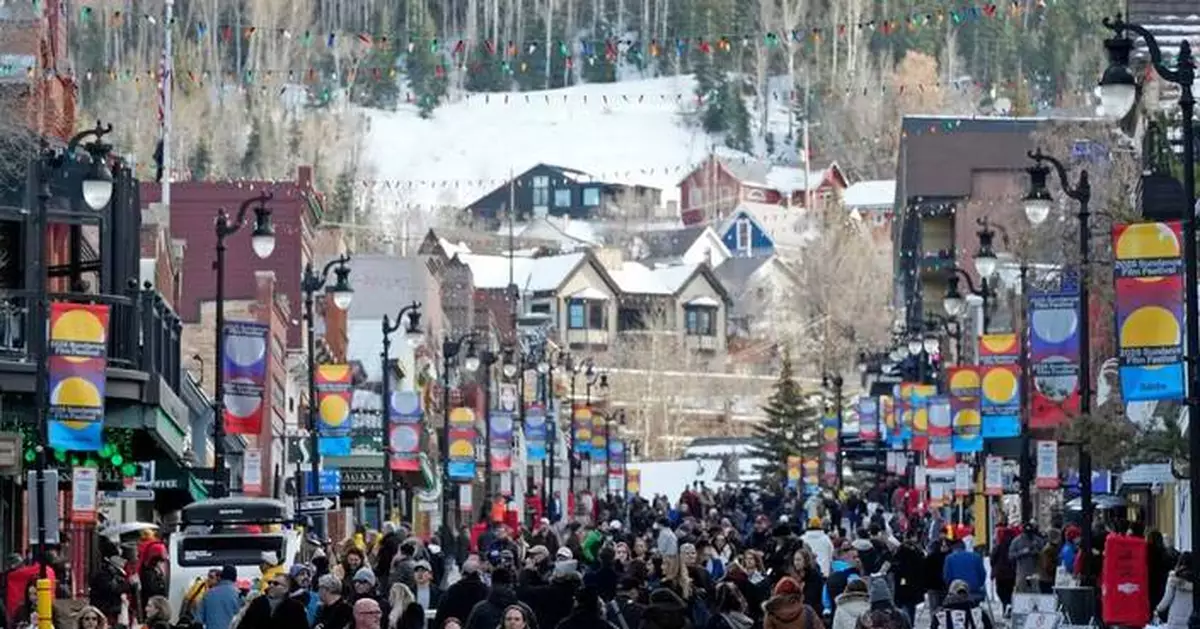
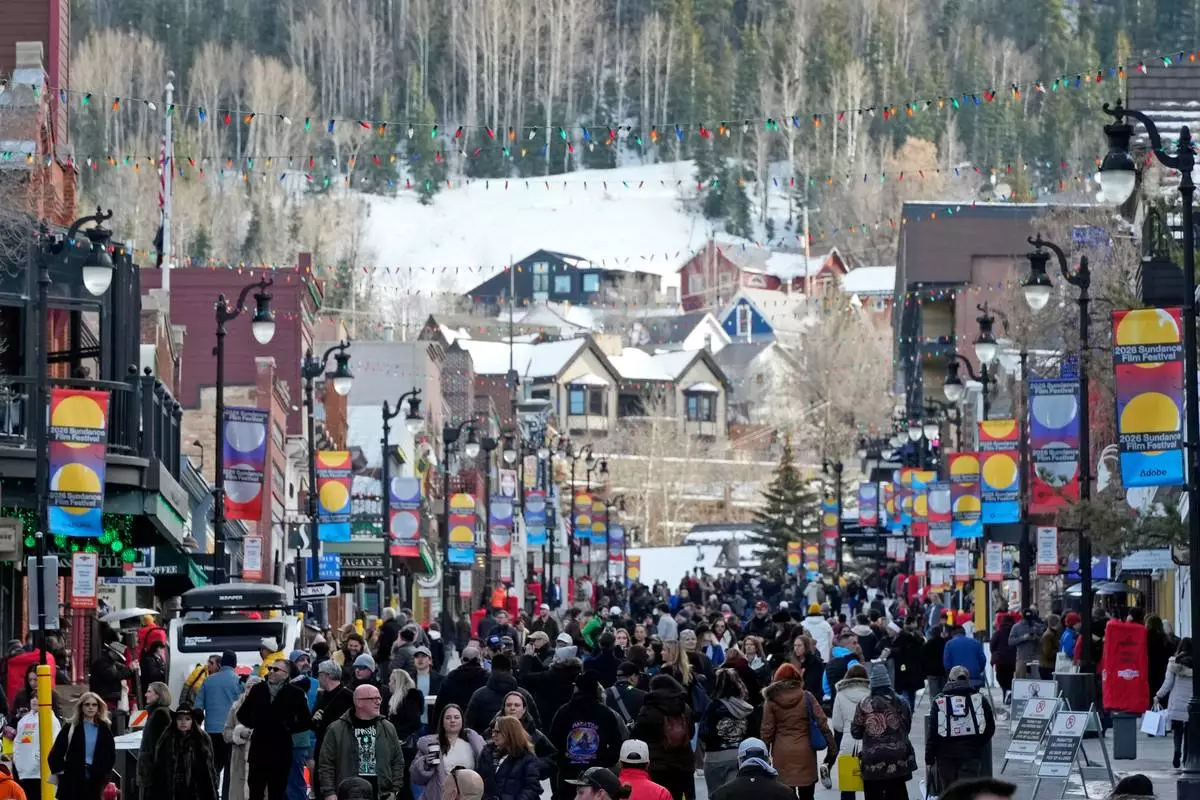
Pedestrians walk down Main Street on the first day of the 2026 Sundance Film Festival on Thursday, Jan. 22, 2026, in Park City, Utah. (Photo by Charles Sykes/Invision/AP)

Pedestrians walk down Main Street on the first day of the 2026 Sundance Film Festival on Thursday, Jan. 22, 2026, in Park City, Utah. (Photo by Charles Sykes/Invision/AP)

DES MOINES, Iowa (AP) — A new Iowa law bans local nondiscrimination protections on the basis of gender identity after the state became the first in the U.S. to rollback its civil rights code last year.

The preemption law took effect Tuesday, as soon as Republican Gov. Kim Reynolds signed it. It prevents cities and counties from having civil rights protections that go beyond the categories identified in state code.

Many cities across the state have gender identity protections on their books, including liberal populous centers, Des Moines and Iowa City, home to the University of Iowa. Last month, Ames, which is home to Iowa State University, enacted an ordinance enacting gender identity protections.

Republicans who control the House and Senate said the preemption law provides clarity on which classes are protected. Democrats objected.

“There could literally be hundreds of situations where we have conflicts with local ordinances,” said Republican state Rep. Steve Holt. “And considering the climate that we’re in today, a patchwork of different civil rights ordinances would be extremely difficult for businesses and schools to navigate.”

At least two other states, Arkansas and Tennessee, have laws that prohibit local nondiscrimination ordinances that are broader than state law, according to researchers at Movement Advancement Project, an LGBTQ+ rights think tank.

Sexual orientation and gender identity were not originally included in Iowa's Civil Rights Act of 1965. They were added by the then-Democratic-controlled Legislature in 2007 with the support of about a dozen Republicans.

Last year, Reynolds and other Iowa Republicans said that the nondiscrimination protections could not coexist with recent laws to restrict transgender students’ use of such spaces as bathrooms and locker rooms, and their participation on sports teams.

Iowa’s civil rights law protects against discrimination based on race, color, creed, sex, sexual orientation, religion, national origin or disability status.

In Iowa City, about 100 miles (160 kilometers) east of Des Moines, gender identity protections against discrimination have been in local code for about 30 years, said Laura Bergus, a City Council member and lawyer.

After last year's state law was enacted, the city passed a resolution “to reinforce the fact that we had that authority and to make sure that our residents knew that discrimination on the basis of gender identity specifically was still prohibited in Iowa City,” Bergus said Wednesday.

Bergus said the new law is “extreme overreach,” preventing local governments from responding to the needs of their community, and Iowa City is considering legal action.

“Our local leadership remains committed to protecting all of us,” Bergus said.

Iowans have until April 27 to file a civil rights complaint with the state on the basis of gender identity for incidents that occurred before the civil rights code rollback took effect on July 1, 2025. Only one complaint has been accepted for investigation since then, according to data provided by the Iowa Office of Civil Rights as of Feb. 13.

By contrast, 46 complaints on the basis of gender identity were accepted for investigation during the previous 12 months.

The rollback also removed Iowans' ability to request a change to the sex designation on their birth certificate.

In 2025, from January through June 208 birth certificates had sex designation changes, according to state health department data provided to The Associated Press. That was significantly higher than in 2024, when there were 135 requests over the course of the entire year.

The state no longer tracks how many birth certificate changes it receives but continues to get them, according to the state health department. All are rejected.

FILE - Protesters fill the Iowa state Capitol to denounce a bill that would strip the state civil rights code of protections based on gender identity, Thursday, Feb. 27, 2025, in Des Moines, Iowa. (AP Photo/Charlie Neibergall, File)

FILE - Protesters fill the Iowa state Capitol to denounce a bill that would strip the state civil rights code of protections based on gender identity, Thursday, Feb. 27, 2025, in Des Moines, Iowa. (AP Photo/Charlie Neibergall, File)

FILE - Protesters fill the Iowa state Capitol to denounce a bill that would strip the state civil rights code of protections based on gender identity, Thursday, Feb. 27, 2025, in Des Moines, Iowa. (AP Photo/Charlie Neibergall, File)

FILE - Protesters fill the Iowa state Capitol to denounce a bill that would strip the state civil rights code of protections based on gender identity, Thursday, Feb. 27, 2025, in Des Moines, Iowa. (AP Photo/Charlie Neibergall, File)

Recommended Articles