MELBOURNE, Australia (AP) — Learner Tien is the youngest man to reach the Australian Open quarterfinals in 11 years. He's the youngest American man to go so far in a Grand Slam event since 2002.
And he didn't have to go the distance again with three-time runner-up Daniil Medvedev to get there.
Click to Gallery
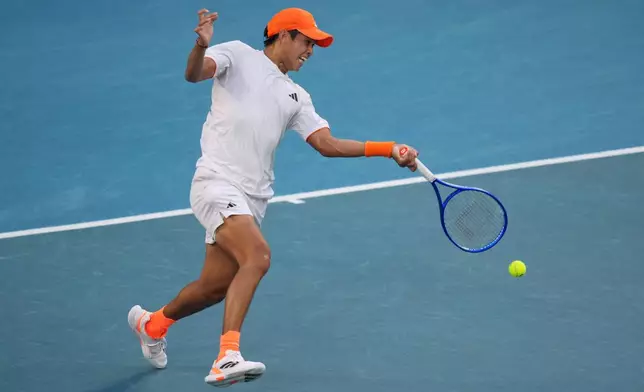
Learner Tien of the U.S. plays a forehand return to Daniil Medvedev of Russia during their fourth round match at the Australian Open tennis championship in Melbourne, Australia, Sunday, Jan. 25, 2026. (AP Photo/Asanka Brendon Ratnayake)
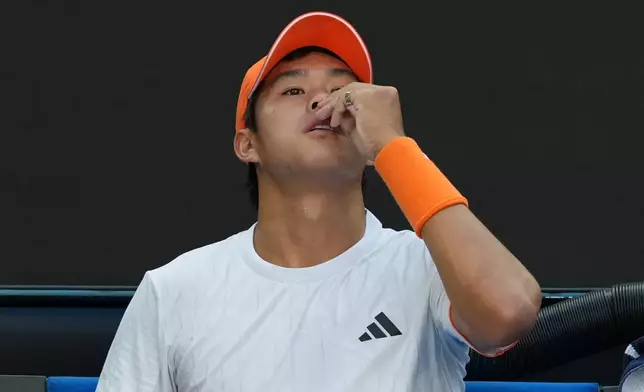
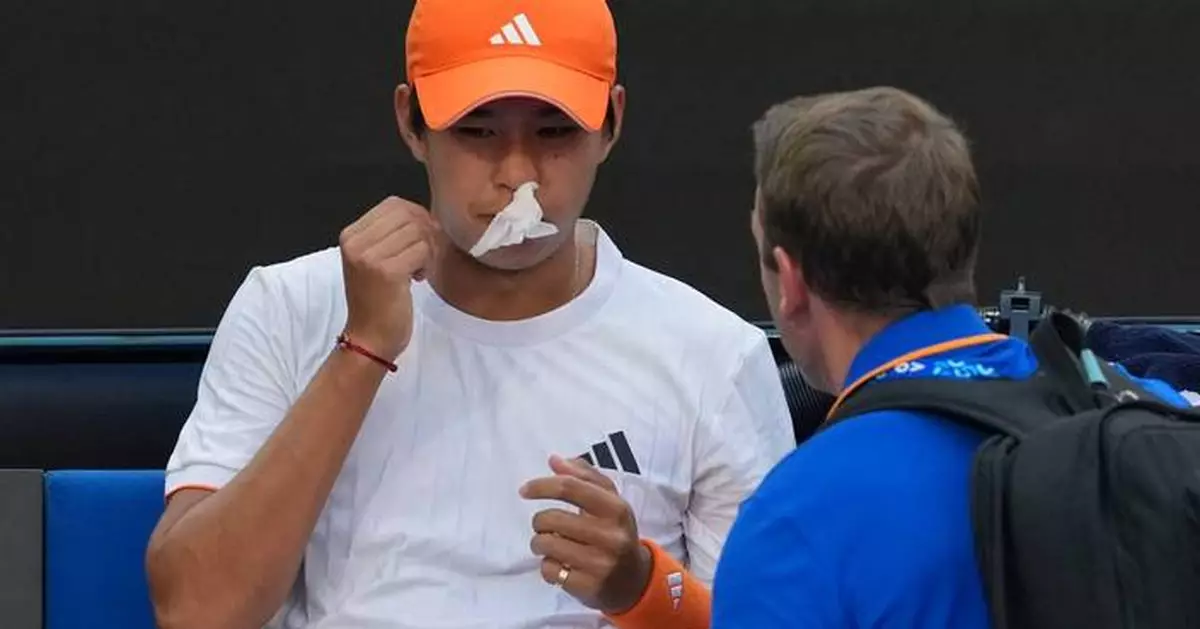
Learner Tien of the U.S. attempts to stop a nose bleed during his fourth round match against Daniil Medvedev of Russia at the Australian Open tennis championship in Melbourne, Australia, Sunday, Jan. 25, 2026. (AP Photo/Asanka Brendon Ratnayake)
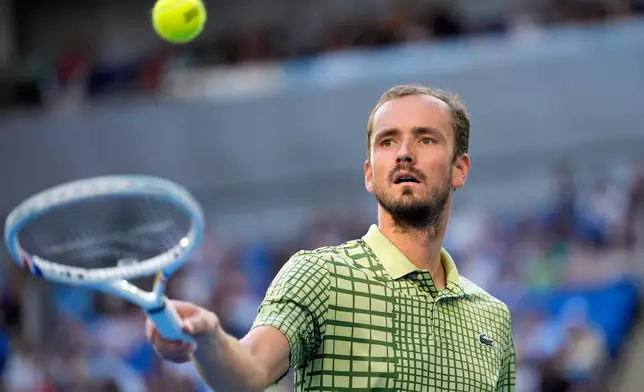
Daniil Medvedev of Russia plays prepares to serve to Learner Tien of the U.S. during their fourth round match at the Australian Open tennis championship in Melbourne, Australia, Sunday, Jan. 25, 2026. (AP Photo/Asanka Brendon Ratnayake)
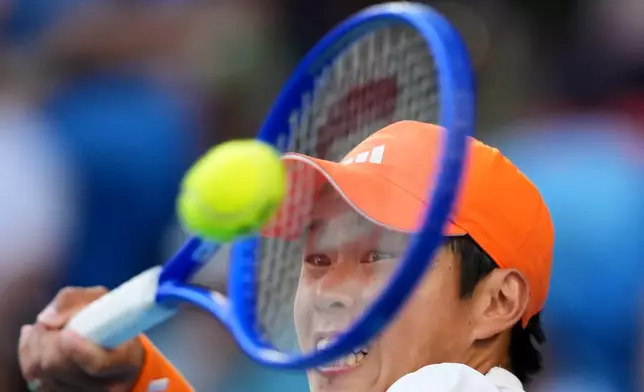
Learner Tien of the U.S. plays a forehand return to Daniil Medvedev of Russia during their fourth round match at the Australian Open tennis championship in Melbourne, Australia, Sunday, Jan. 25, 2026. (AP Photo/Asanka Brendon Ratnayake)
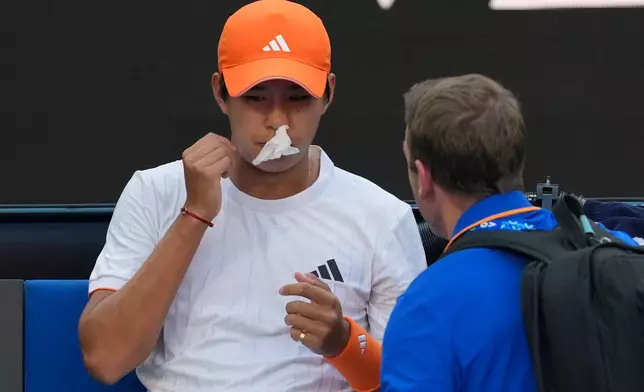
Learner Tien of the U.S. receives treatment for a nose bleed during his fourth round match against Daniil Medvedev of Russia at the Australian Open tennis championship in Melbourne, Australia, Sunday, Jan. 25, 2026. (AP Photo/Asanka Brendon Ratnayake)
The 20-year-old Tien had a 6-4, 6-0, 6-3 win over Medvedev on Sunday, a year after a second-round, five-set upset over the 2021 U.S. Open champion.
“Feels amazing. So special to do it, especially here,” Tien said. “This is a big goal for me this year. I’m just super happy.”
Tien's breakthrough run last year at a major ended in the fourth round in Australia.
He has already gone one better, becoming the youngest man since Nick Kyrgios in 2015 to make it to the last eight at Melbourne Park. And he's the youngest American to do so at a major since Andy Roddick at the 2002 U.S. Open.
“I feel like I have a lot more experience now,” he said, comparing victories in Australia. “I mean, I have only had a year since then, but that’s a lot more than I had then.”
He still lives at home with his parents when he's not away on tour, and now has 1989 French Open champion Michael Chang working with his coaching team. Not that he needs a lot of encouragement from the International Tennis Hall of Fame player.
“I always just tell him if there is something like blatantly obvious that I’m missing, feel free to shout at me,” Tien said. "If you can’t get my attention, feel free to do whatever it takes to get me to notice what you’re trying to tell me.
“I feel like usually I’m pretty attentive on things going on in the match ... but sometimes there are just some things that in the heat of the moment I miss, so it’s nice to have someone there that will just remind me.”
Tien's road will get tougher, with No. 3 Alexander Zverev, the runner-up in Melbourne last year, up next. Zverev beat Francisco Cerundolo 6-2, 6-4, 6-4, his first straight-set win in the tournament.
“I was able to get (Zverev) the first time we played. The second time, he beat me pretty bad,” Tien said. “He plays great tennis here, he’s the defending finalist. It’s going to be a challenge, but I’m looking forward to it.”
Tien had a nosebleed and needed a medical timeout for tissues and treatment after the third game, causing a seven-minute pause in the match. It didn't slow him down.
“Yeah, I mean, came out very well. My nose started bleeding in the third game. I was really hoping that I wouldn’t come back out cold and, you know, be a little bit thrown off by it,” he said. “Thankfully, I was able to keep my momentum going.”
He doesn't think the bleed is anything too serious, or regular, attributing it to Melbourne's dry summer air.
Tien had the bulk of the crowd on Margaret Court Arena on his side, including dozens of fans wearing what are known locally as L Plates — signs that are mandatory for learner drivers and have a black L printed on a yellow background.
“Every year since I’ve been coming here, the crowd support is amazing,” he said. “I don’t know why.”
On a momentum-seizing roll, Tien had Medvedev so rattled that the Russian tried to mix things up, including attempting an underarm serve.
“He played great, super-aggressive,” Medvedev said. "Even when I was making good shots, he was making a better shot back.
“He had, like, unbelievable match where everything went in.”
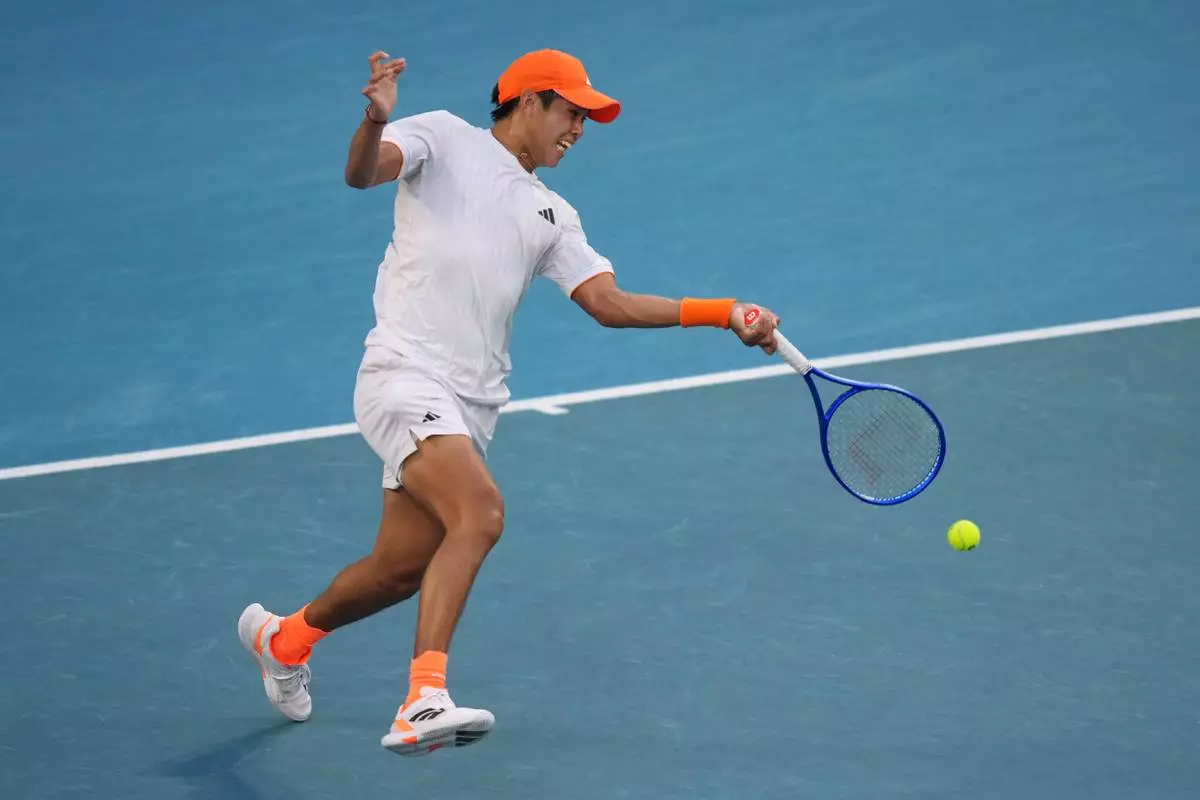
Learner Tien of the U.S. plays a forehand return to Daniil Medvedev of Russia during their fourth round match at the Australian Open tennis championship in Melbourne, Australia, Sunday, Jan. 25, 2026. (AP Photo/Asanka Brendon Ratnayake)
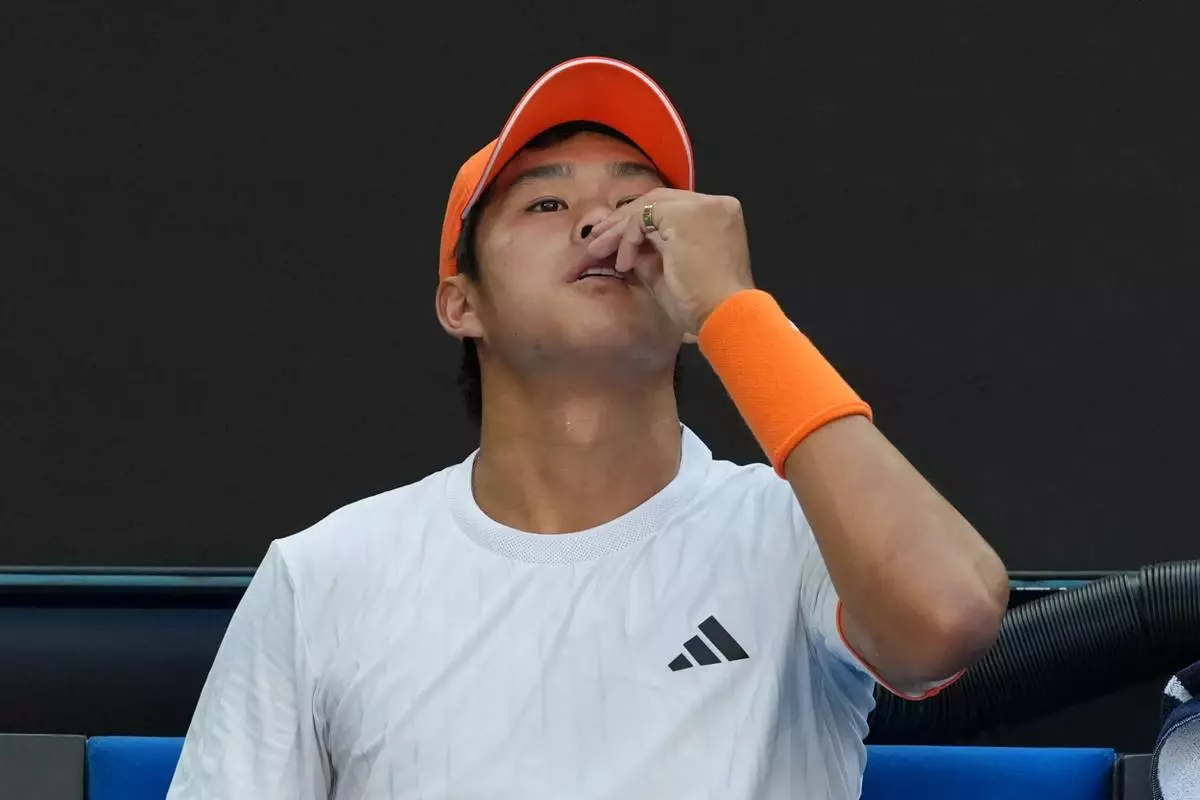
Learner Tien of the U.S. attempts to stop a nose bleed during his fourth round match against Daniil Medvedev of Russia at the Australian Open tennis championship in Melbourne, Australia, Sunday, Jan. 25, 2026. (AP Photo/Asanka Brendon Ratnayake)
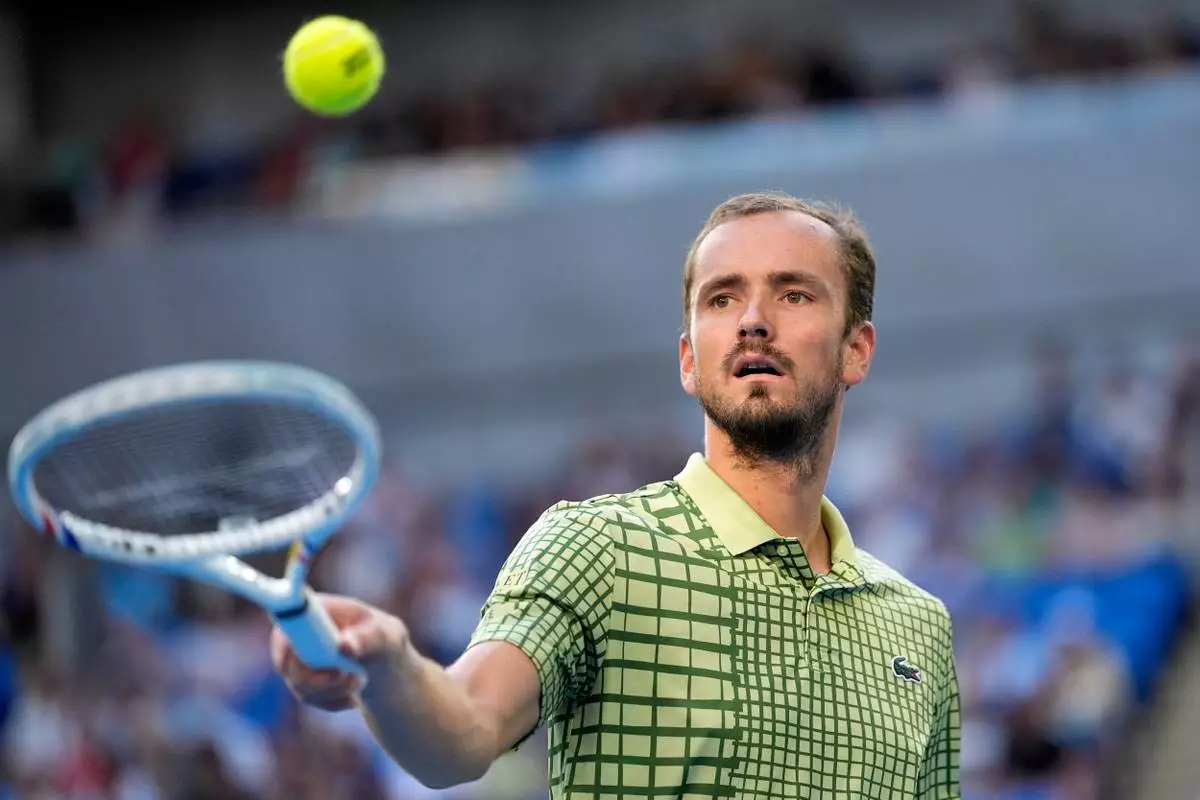
Daniil Medvedev of Russia plays prepares to serve to Learner Tien of the U.S. during their fourth round match at the Australian Open tennis championship in Melbourne, Australia, Sunday, Jan. 25, 2026. (AP Photo/Asanka Brendon Ratnayake)
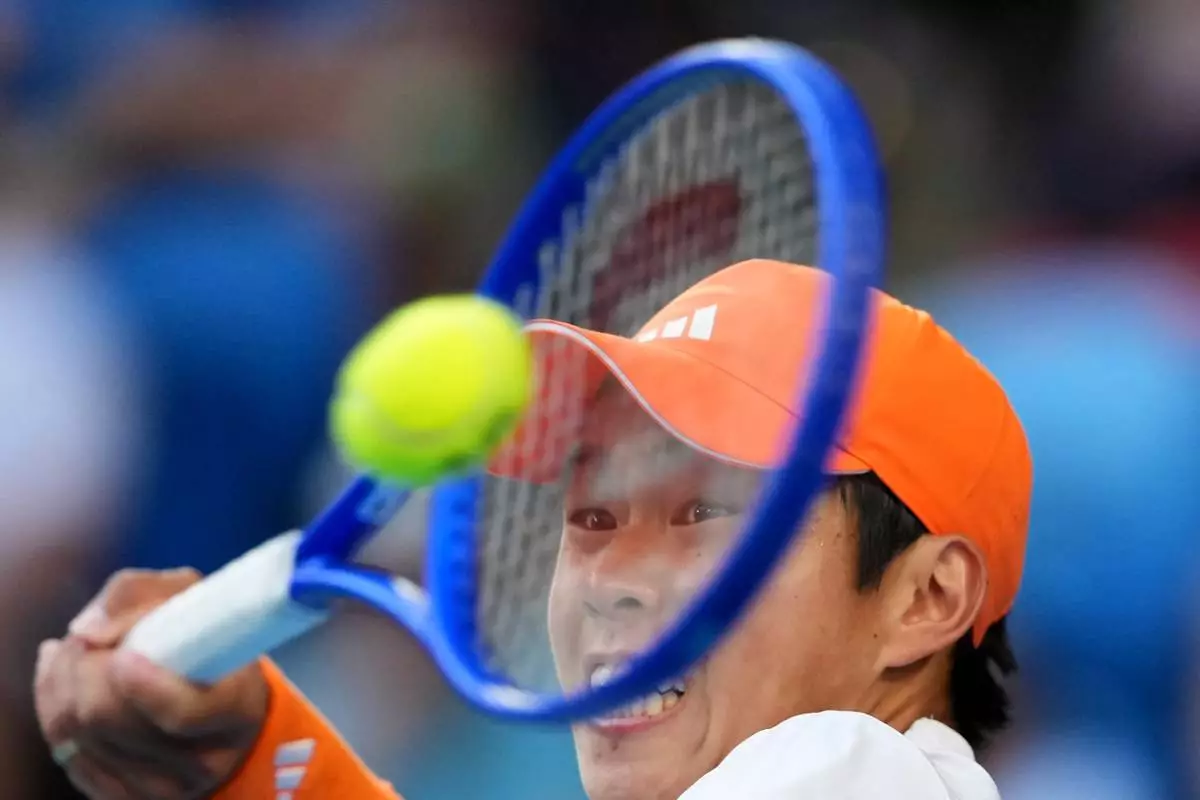
Learner Tien of the U.S. plays a forehand return to Daniil Medvedev of Russia during their fourth round match at the Australian Open tennis championship in Melbourne, Australia, Sunday, Jan. 25, 2026. (AP Photo/Asanka Brendon Ratnayake)
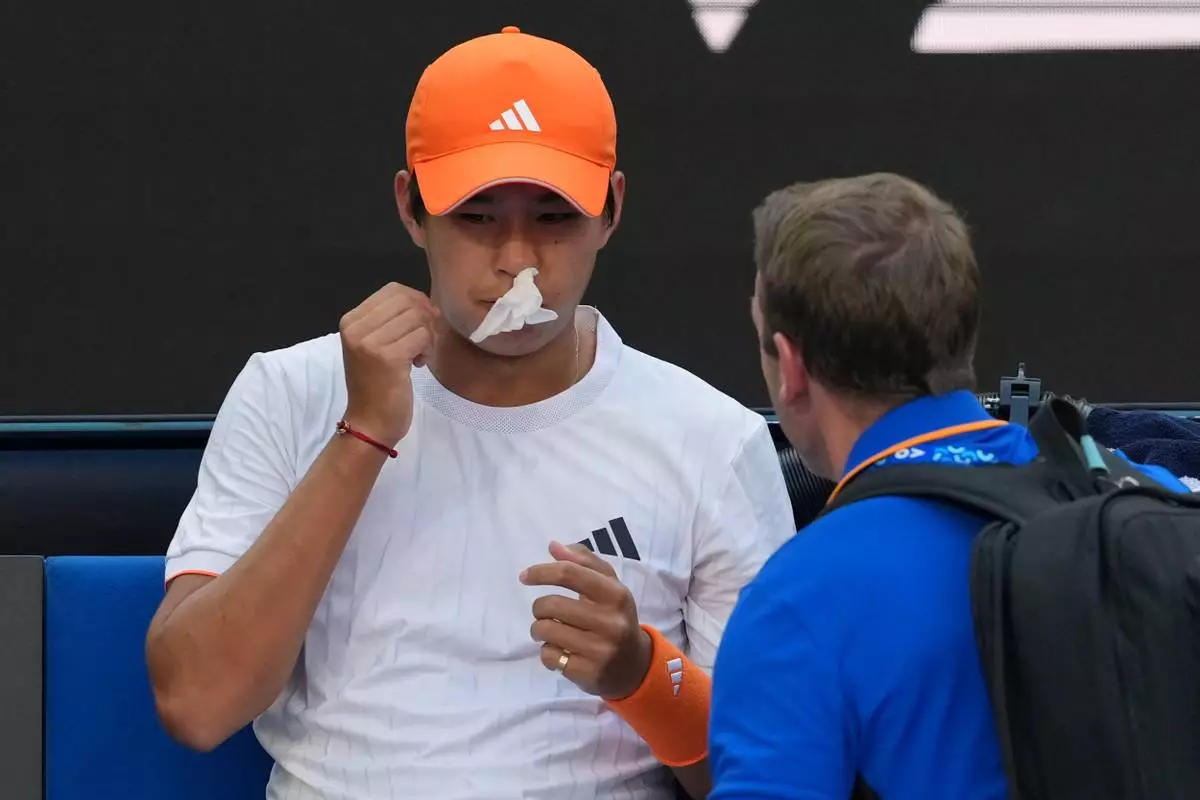
Learner Tien of the U.S. receives treatment for a nose bleed during his fourth round match against Daniil Medvedev of Russia at the Australian Open tennis championship in Melbourne, Australia, Sunday, Jan. 25, 2026. (AP Photo/Asanka Brendon Ratnayake)

ATLANTA (AP) — Your watch says you had three hours of deep sleep. Should you believe it?
Millions of people rely on phone apps and wearable devices like rings, smartwatches and sensors to monitor how well they're sleeping, but these trackers don’t necessarily measure sleep directly. Instead, they infer states of slumber from signals like heart rate and movement, raising questions about how reliable the information is and how seriously it should be taken.
The U.S. sleep-tracking devices market generated about $5 billion in 2023 and is expected to double in revenue by 2030, according to market research firm Grand View Research. As the devices continue to gain popularity, experts say it is important to understand what they can and cannot tell you, and how their data should be used.
Here's a look at the technology — and why one expert thinks its full potential has yet to be realized.
Whether it's an Apple Watch, a Fitbit, an Oura Ring or one of innumerable other competitors, health and fitness trackers largely take the same basic approach by recording the wearer's movements and heart rate while at rest, according to Daniel Forger, a University of Michigan math professor who researches the science behind sleep wearables.
The algorithms used by major brands have become highly accurate for determining when someone is asleep, Forger said. The devices are also somewhat helpful for estimating sleep stages, though an in-lab study would be more precise, he said.
“If you really want to know definitively how much non-REM sleep you’re having versus REM sleep, that’s where the in-lab studies really excel,” Forger said.
Dr. Chantale Branson, a neurologist and professor at the Morehouse School of Medicine, said she frequently has patients showing up with sleep scores from fitness trackers in hand, sometimes fixated on granular details such as how much REM sleep they got on a certain night.
Branson says those patients are taking the wrong approach: the devices help highlight trends over time but should not be viewed as a definitive measure of one's sleep health. Nor should any single night's data be seen as significant.
“We would have believed them with or without the device and worked on trying to figure out why they can't sleep — and that is what the wearables do not do,” she said.
Branson said she thinks people who check their sleep statistics every morning would be better served by spending their efforts on “sleep hygiene” such as creating a relaxing bedtime routine, avoiding screens before bed and making sure their sleep environment is comfortable. She advises those concerned about their sleep to consult a clinician before spending money on a wearable.
Forger takes a more favorable view toward the devices, which he says help keep the overlooked importance of sleep front of mind. He recommends them even for people without significant sleep issues, saying they can offer insights that help users fine-tune their routines and feel more alert during the day.
“Seeing if your biological clock is in sync is a huge benefit because even if you’re giving yourself the right amount of time, if you’re sleeping at the wrong times, the sleep won’t be as efficient,” Forger said.
Kate Stoye, an Atlanta-area middle school teacher, bought an Oura Ring last summer, having heard positive things from friends who used it as a fertility tracker: “It’s so accurate,” she said. Stoye found the ring to be just as helpful with tracking her sleep. After noticing that the few nights she drank alcohol coincided with poorer sleep quality, she decided to give up alcohol.
“I don’t see much reason to drink if I know that it’s going to affect how I feel,” said Stoye, who always wears her device except when she is playing tennis or needs to charge it.
Another trend she says she detected in the ring's data: the importance of not eating too late if she wants to get good rest.
“I always struggle with going to bed, and it’s often because I eat late at night,” Stoye said. “I know that about myself, and it knows it too.”
Mai Barreneche, who works in advertising in New York City, used to wear her Oura Ring constantly. She said it helped her develop good sleep habits and encouraged her to maintain a daily morning exercise regimen. But as a metric-driven person, she became "obsessed" enough with her nightly sleep scores that it began to cause her anxiety — a modern condition that researchers have dubbed “orthosomnia.”
“I remember I would go to bed thinking about the score I was going to get in the morning,” Barreneche said.
Barreneche decided not to wear her ring on a beach vacation a few years ago, and when she returned home, she never put it back on. She said she has maintained the good habits the device pointed her toward, but no longer wants the stress of monitoring her nightly scores.
Branson, of the Morehouse School of Medicine, said she's observed similar score-induced anxiety as a recurring issue for some patients, particularly those who set goals to achieve a certain amount of REM sleep or who shared their nightly scores with friends using the same device. Comparing sleep types and stages is ill-advised since individual needs vary by age, genetics and other factors, she said.
“These devices are supposed to help you," Branson said. "And if you feel anxious or worried or frustrated about it, then it’s not helpful, and you should really talk to a professional.”
Forger thinks the promise of wearables has been underestimated, with emerging research suggesting the devices could one day be designed to help detect infections before symptoms appear and to flag sleep pattern changes that may signal the onset of depression or an increased risk of relapse.
“The body is making these really interesting and really important decisions that we’re not aware of to keep us healthy and active and alert at the right times of day,” he said. “If you have an infection, that rhythm very quickly starts to disappear because the body goes into overdrive to start fighting the infection. Those are the kind of things we can pick up.”
The technology could be particularly useful in low-resource communities, where wearables could help health issues to be identified more quickly and monitored remotely without requiring access to doctors or specialized clinics, according to Forger.
“There’s this really important story that’s about to come out: About just how understanding sleep rhythms and sleep architecture is going to generally improve our lives,” he said.
A patient room for sleep research is seen at the Morehouse School of Medicine Friday, Jan. 16, 2026, in Atlanta, Ga. (AP Photo/Emilie Megnien)
Dr. Chantale Branson, a sleep neurologist at the Morehouse School of Medicine, stands for a portrait, Friday, Jan. 16, 2026, in Atlanta, Ga. (AP Photo/Emilie Megnien)
Wearable devices, including Apple Watches, can be used to track sleep, Wednesday, Jan. 21, 2026, in Atlanta, Ga. (AP Photo/Emilie Megnien)
Middle school teacher Kate Stoye puts on an Oura ring, a wearable sleep tracking device, Wednesday, Jan. 7, 2026, in Hiram, Ga. (AP Photo/Emilie Megnien)
Middle school teacher Kate Stoye checks her sleep score on her phone, Wednesday, Jan. 7, 2026, in Hiram, Ga. (AP Photo/Emilie Megnien)