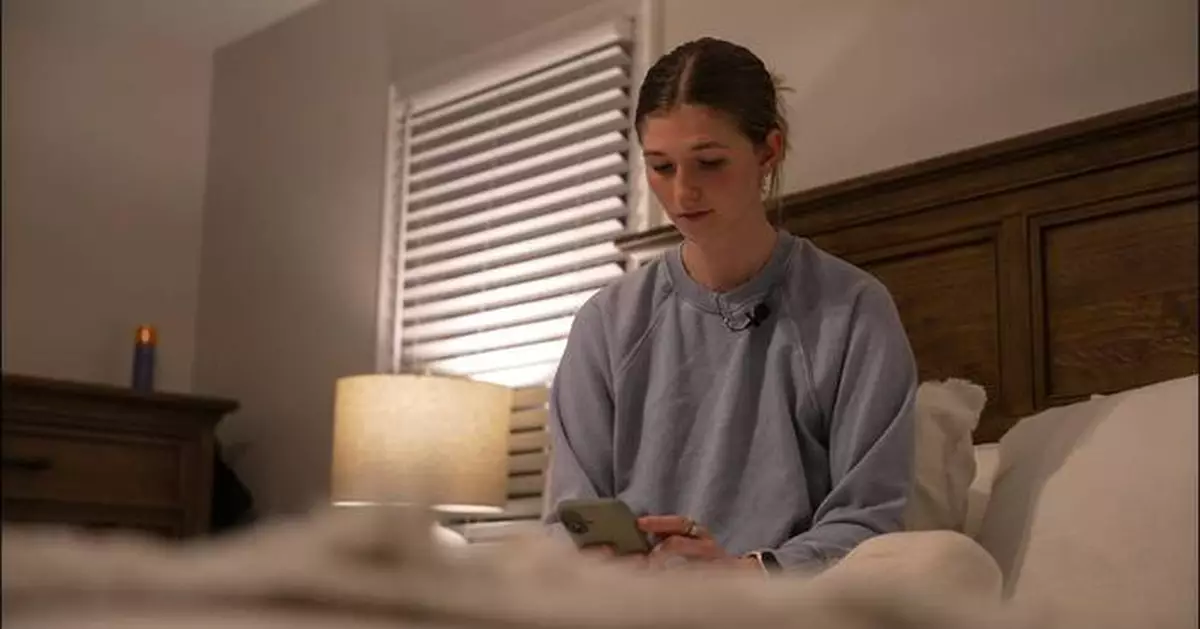
ATLANTA (AP) — Your watch says you had three hours of deep sleep. Should you believe it?
Millions of people rely on phone apps and wearable devices like rings, smartwatches and sensors to monitor how well they're sleeping, but these trackers don’t necessarily measure sleep directly. Instead, they infer states of slumber from signals like heart rate and movement, raising questions about how reliable the information is and how seriously it should be taken.
Click to Gallery
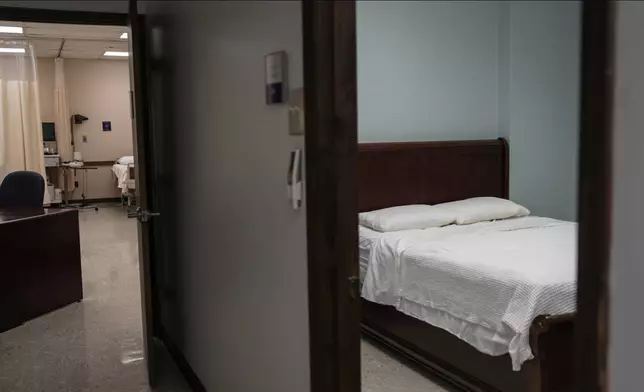
A patient room for sleep research is seen at the Morehouse School of Medicine Friday, Jan. 16, 2026, in Atlanta, Ga. (AP Photo/Emilie Megnien)
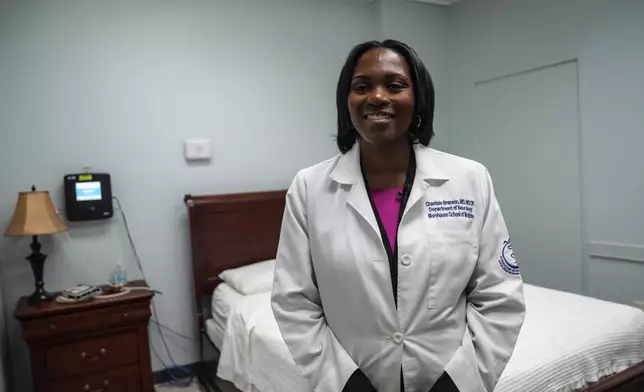
Dr. Chantale Branson, a sleep neurologist at the Morehouse School of Medicine, stands for a portrait, Friday, Jan. 16, 2026, in Atlanta, Ga. (AP Photo/Emilie Megnien)
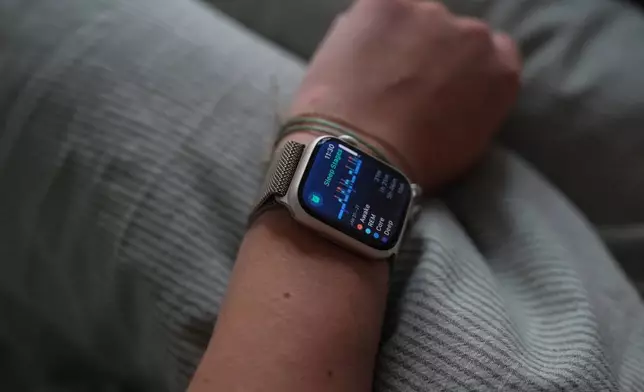
Wearable devices, including Apple Watches, can be used to track sleep, Wednesday, Jan. 21, 2026, in Atlanta, Ga. (AP Photo/Emilie Megnien)
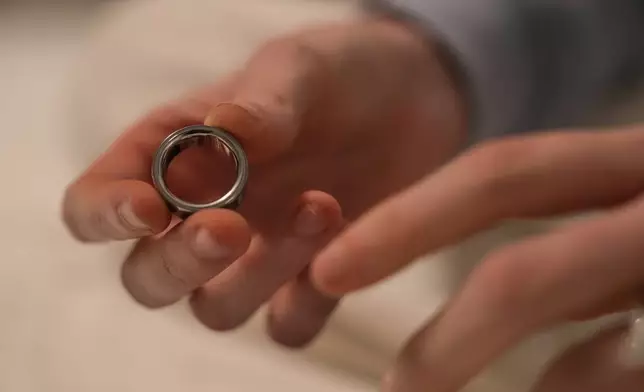
Middle school teacher Kate Stoye puts on an Oura ring, a wearable sleep tracking device, Wednesday, Jan. 7, 2026, in Hiram, Ga. (AP Photo/Emilie Megnien)
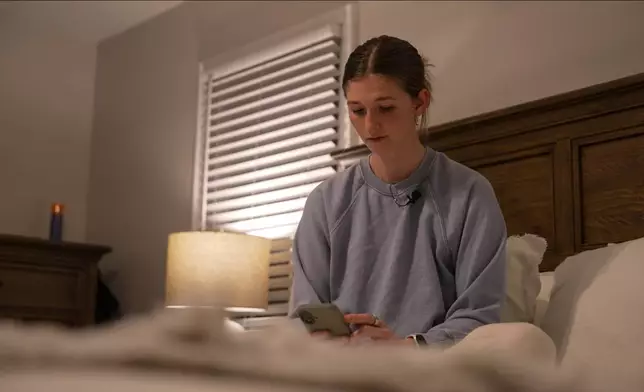
Middle school teacher Kate Stoye checks her sleep score on her phone, Wednesday, Jan. 7, 2026, in Hiram, Ga. (AP Photo/Emilie Megnien)
The U.S. sleep-tracking devices market generated about $5 billion in 2023 and is expected to double in revenue by 2030, according to market research firm Grand View Research. As the devices continue to gain popularity, experts say it is important to understand what they can and cannot tell you, and how their data should be used.
Here's a look at the technology — and why one expert thinks its full potential has yet to be realized.
Whether it's an Apple Watch, a Fitbit, an Oura Ring or one of innumerable other competitors, health and fitness trackers largely take the same basic approach by recording the wearer's movements and heart rate while at rest, according to Daniel Forger, a University of Michigan math professor who researches the science behind sleep wearables.
The algorithms used by major brands have become highly accurate for determining when someone is asleep, Forger said. The devices are also somewhat helpful for estimating sleep stages, though an in-lab study would be more precise, he said.
“If you really want to know definitively how much non-REM sleep you’re having versus REM sleep, that’s where the in-lab studies really excel,” Forger said.
Dr. Chantale Branson, a neurologist and professor at the Morehouse School of Medicine, said she frequently has patients showing up with sleep scores from fitness trackers in hand, sometimes fixated on granular details such as how much REM sleep they got on a certain night.
Branson says those patients are taking the wrong approach: the devices help highlight trends over time but should not be viewed as a definitive measure of one's sleep health. Nor should any single night's data be seen as significant.
“We would have believed them with or without the device and worked on trying to figure out why they can't sleep — and that is what the wearables do not do,” she said.
Branson said she thinks people who check their sleep statistics every morning would be better served by spending their efforts on “sleep hygiene” such as creating a relaxing bedtime routine, avoiding screens before bed and making sure their sleep environment is comfortable. She advises those concerned about their sleep to consult a clinician before spending money on a wearable.
Forger takes a more favorable view toward the devices, which he says help keep the overlooked importance of sleep front of mind. He recommends them even for people without significant sleep issues, saying they can offer insights that help users fine-tune their routines and feel more alert during the day.
“Seeing if your biological clock is in sync is a huge benefit because even if you’re giving yourself the right amount of time, if you’re sleeping at the wrong times, the sleep won’t be as efficient,” Forger said.
Kate Stoye, an Atlanta-area middle school teacher, bought an Oura Ring last summer, having heard positive things from friends who used it as a fertility tracker: “It’s so accurate,” she said. Stoye found the ring to be just as helpful with tracking her sleep. After noticing that the few nights she drank alcohol coincided with poorer sleep quality, she decided to give up alcohol.
“I don’t see much reason to drink if I know that it’s going to affect how I feel,” said Stoye, who always wears her device except when she is playing tennis or needs to charge it.
Another trend she says she detected in the ring's data: the importance of not eating too late if she wants to get good rest.
“I always struggle with going to bed, and it’s often because I eat late at night,” Stoye said. “I know that about myself, and it knows it too.”
Mai Barreneche, who works in advertising in New York City, used to wear her Oura Ring constantly. She said it helped her develop good sleep habits and encouraged her to maintain a daily morning exercise regimen. But as a metric-driven person, she became "obsessed" enough with her nightly sleep scores that it began to cause her anxiety — a modern condition that researchers have dubbed “orthosomnia.”
“I remember I would go to bed thinking about the score I was going to get in the morning,” Barreneche said.
Barreneche decided not to wear her ring on a beach vacation a few years ago, and when she returned home, she never put it back on. She said she has maintained the good habits the device pointed her toward, but no longer wants the stress of monitoring her nightly scores.
Branson, of the Morehouse School of Medicine, said she's observed similar score-induced anxiety as a recurring issue for some patients, particularly those who set goals to achieve a certain amount of REM sleep or who shared their nightly scores with friends using the same device. Comparing sleep types and stages is ill-advised since individual needs vary by age, genetics and other factors, she said.
“These devices are supposed to help you," Branson said. "And if you feel anxious or worried or frustrated about it, then it’s not helpful, and you should really talk to a professional.”
Forger thinks the promise of wearables has been underestimated, with emerging research suggesting the devices could one day be designed to help detect infections before symptoms appear and to flag sleep pattern changes that may signal the onset of depression or an increased risk of relapse.
“The body is making these really interesting and really important decisions that we’re not aware of to keep us healthy and active and alert at the right times of day,” he said. “If you have an infection, that rhythm very quickly starts to disappear because the body goes into overdrive to start fighting the infection. Those are the kind of things we can pick up.”
The technology could be particularly useful in low-resource communities, where wearables could help health issues to be identified more quickly and monitored remotely without requiring access to doctors or specialized clinics, according to Forger.
“There’s this really important story that’s about to come out: About just how understanding sleep rhythms and sleep architecture is going to generally improve our lives,” he said.
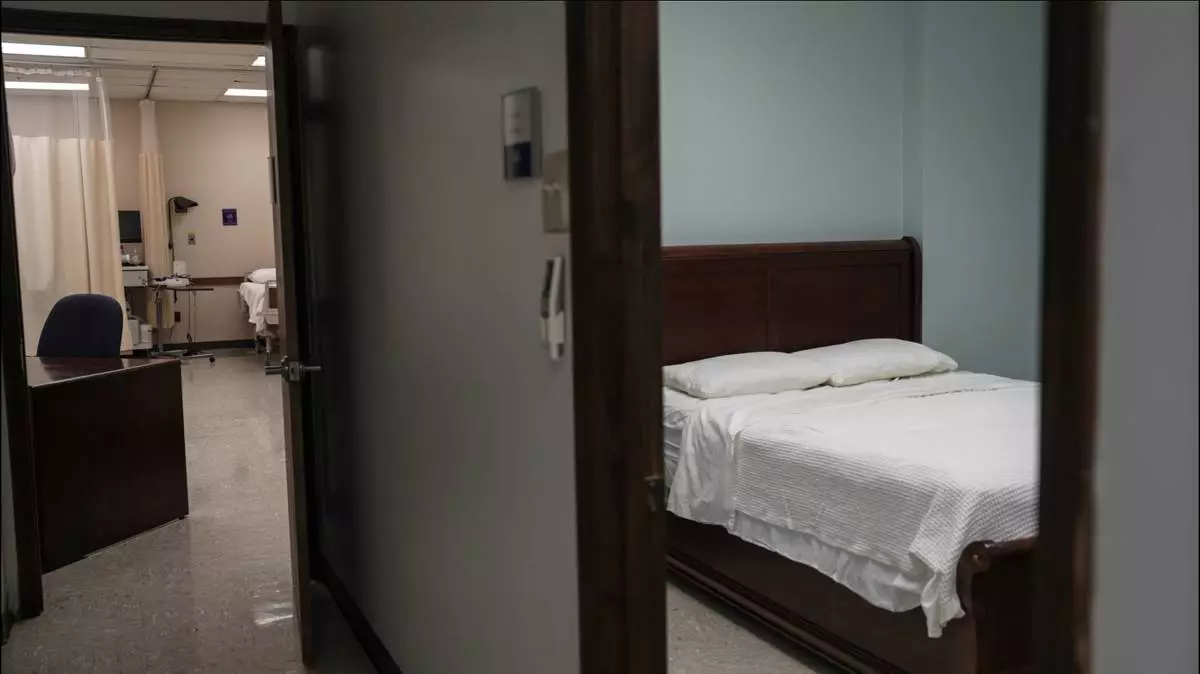
A patient room for sleep research is seen at the Morehouse School of Medicine Friday, Jan. 16, 2026, in Atlanta, Ga. (AP Photo/Emilie Megnien)
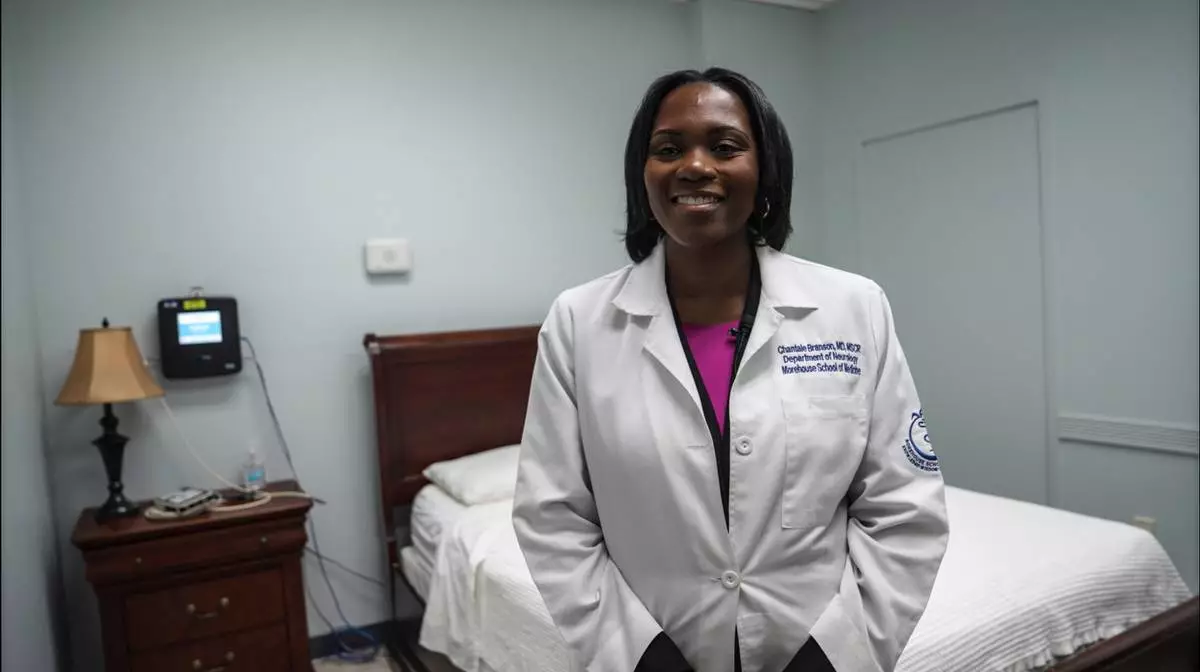
Dr. Chantale Branson, a sleep neurologist at the Morehouse School of Medicine, stands for a portrait, Friday, Jan. 16, 2026, in Atlanta, Ga. (AP Photo/Emilie Megnien)
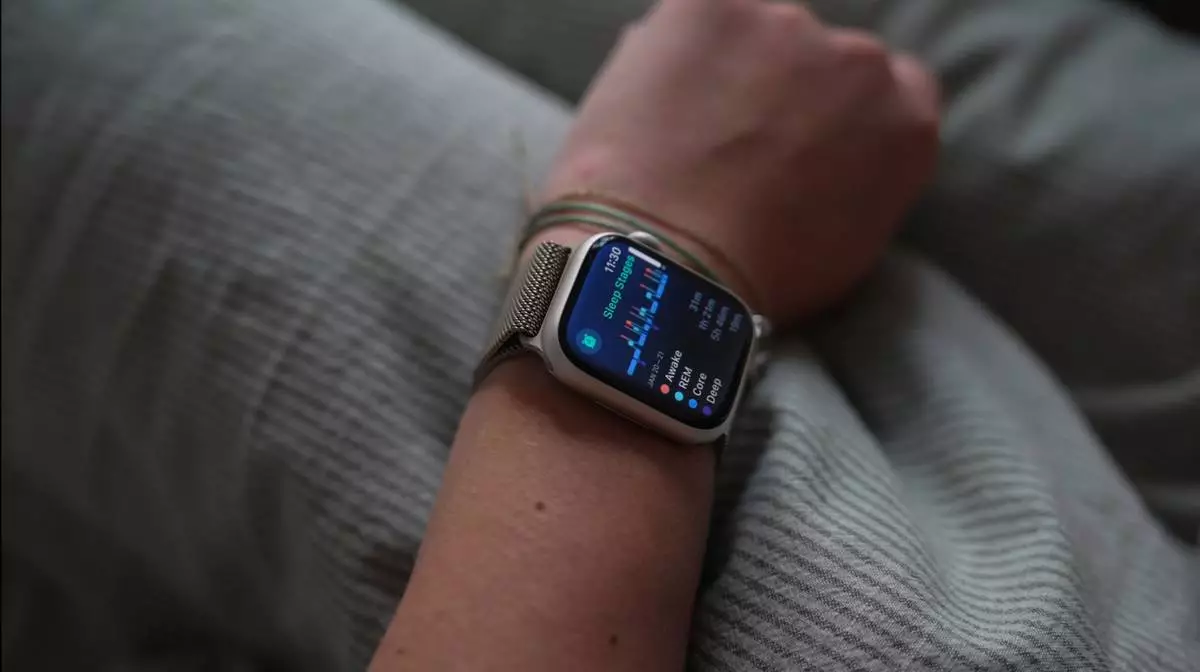
Wearable devices, including Apple Watches, can be used to track sleep, Wednesday, Jan. 21, 2026, in Atlanta, Ga. (AP Photo/Emilie Megnien)
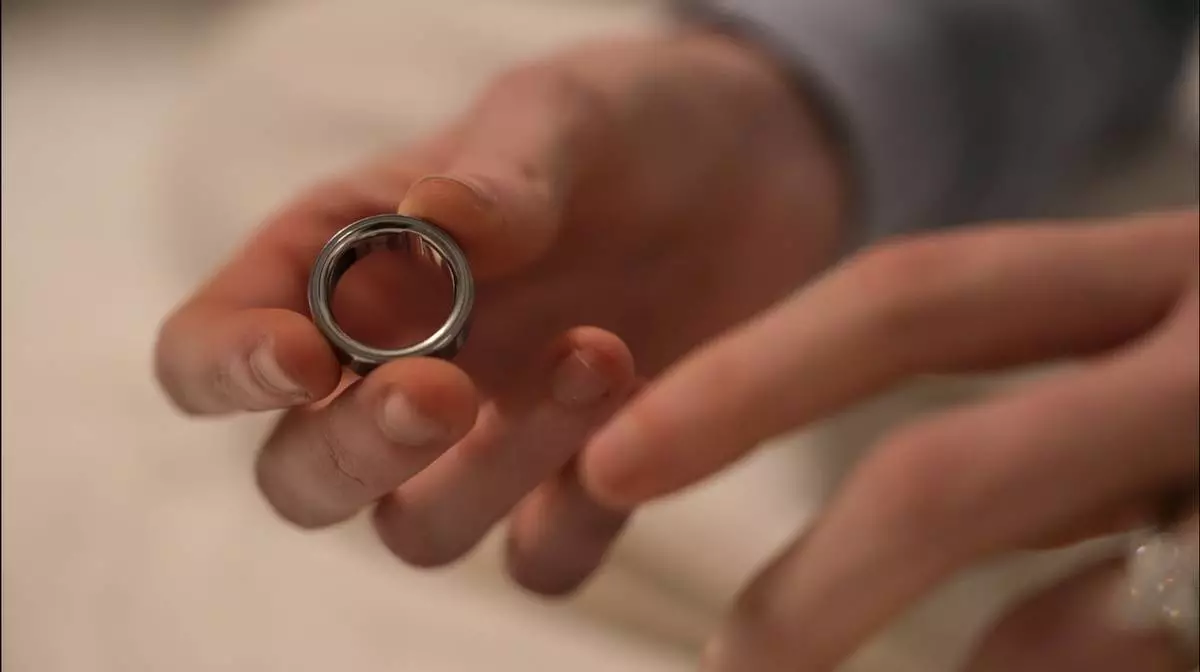
Middle school teacher Kate Stoye puts on an Oura ring, a wearable sleep tracking device, Wednesday, Jan. 7, 2026, in Hiram, Ga. (AP Photo/Emilie Megnien)
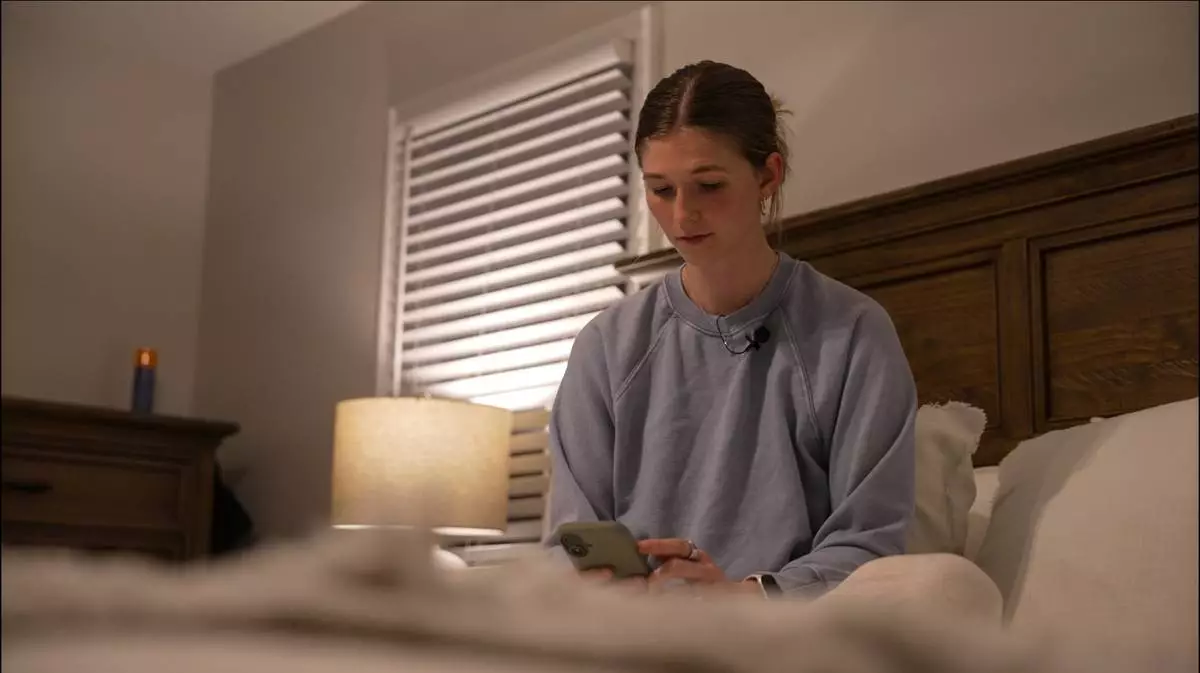
Middle school teacher Kate Stoye checks her sleep score on her phone, Wednesday, Jan. 7, 2026, in Hiram, Ga. (AP Photo/Emilie Megnien)
MINNEAPOLIS (AP) — Democrats demanded that federal immigration officers leave Minnesota after a U.S. Border Patrol agent fatally shot a man in Minneapolis, drawing hundreds of protesters onto the frigid streets and increasing tensions in a city already shaken by another shooting death weeks earlier.
Family members identified the man who was killed as Alex Pretti, a 37-year-old intensive care unit nurse who protested President Donald Trump’s immigration crackdown in his city. After the shooting, an angry crowd gathered and protesters clashed with federal officers, who wielded batons and deployed flash bangs.
A federal judge has already issued an order blocking the Trump administration from “destroying or altering evidence” related to the shooting, after state and county officials sued.
Minnesota Attorney General Keith Ellison said the suit filed Saturday is meant to preserve evidence collected by federal officials that state authorities have not yet been able to inspect. A court hearing is scheduled for Monday in federal court in St. Paul.
“A full, impartial, and transparent investigation into his fatal shooting at the hands of DHS agents is non-negotiable,” Ellison said in a statement.
Spokespersons for the Justice Department and the Department of Homeland Security, which are named in the lawsuit, didn't immediately respond to an email seeking comment Sunday.
Another federal judge previously ruled that officers participating in the federal immigration enforcement surge in Minnesota can’t detain or tear gas peaceful protesters who aren’t obstructing authorities, including when these people are observing the agents.
The Minnesota National Guard was assisting local police at the direction of Gov. Tim Walz, officials said. Guard troops were sent to both the shooting site and a federal building where officers have squared off with demonstrators daily.
Information about what led up to the shooting was limited, Police Chief Brian O’Hara said.
Department of Homeland Security spokesperson Tricia McLaughlin said in a statement that federal officers were conducting an operation and fired “defensive shots” after a man with a handgun approached them and “violently resisted” when they tried to disarm him.
In bystander videos of the shooting that emerged soon after, Pretti is seen with a phone in his hand but none appears to show him with a visible weapon.
O'Hara said police believe he was a “lawful gun owner with a permit to carry.”
DHS Secretary Kristi Noem said during a news conference that Pretti had shown up to “impede a law enforcement operation.” She questioned why he was armed but did not offer details about whether Pretti drew the weapon or brandished it at officers.
The officer who shot him is an eight-year Border Patrol veteran, federal officials said.
The president weighed in on social media by lashing out at Walz and the Minneapolis mayor.
He shared images of the gun that immigration officials said was recovered and said: “What is that all about? Where are the local Police? Why weren’t they allowed to protect ICE Officers?”
Trump, a Republican, said the Democratic governor and mayor are “are inciting Insurrection, with their pompous, dangerous, and arrogant rhetoric.”
Rep. Alexandria Ocasio-Cortez of New York was among several Democratic lawmakers demanding federal immigration authorities leave Minnesota. She also urged Democrats to refuse to vote to fund U.S. Immigration and Customs Enforcement, saying via social media: “We have a responsibility to protect Americans from tyranny.”
Senate Democratic Leader Chuck Schumer later said that Democrats will not vote for a spending package that includes money for DHS, which oversees ICE. Schumer’s statement increases the possibility that the government could partially shut down Jan. 30 when funding runs out.
Pretti was shot just over a mile from where an ICE officer killed 37-year-old Renee Good on Jan. 7, sparking widespread protests.
Pretti's family released a statement Saturday evening saying they are “heartbroken but also very angry” and calling him a kindhearted soul who wanted to make a difference in the world through his work as a nurse.
“The sickening lies told about our son by the administration are reprehensible and disgusting. Alex is clearly not holding a gun when attacked by Trump’s murdering and cowardly ICE thugs. He has his phone in his right hand and his empty left hand is raised above his head while trying to protect the woman ICE just pushed down all while being pepper sprayed," the family statement said. “Please get the truth out about our son. He was a good man.”
In a bystander video obtained by The Associated Press, protesters are heard blowing whistles and shouting profanities at federal officers on Nicollet Avenue.
An officer shoves a person who is wearing a brown jacket, skirt and black tights and carrying a water bottle. That person reaches out for a man, and the two link up, embracing. The man, wearing a brown jacket and black hat, seems to be holding his phone up toward the officer.
The same officer shoves the man in his chest and the two, still embracing, fall back.
The video shifts to a different part of the street and then comes back to the two individuals unlinking from each other. It shifts focus again and then shows three officers surrounding the man.
Soon at least seven officers surround him. One is on his back, and another who appears to have a canister in his hand strikes a blow to his chest. Several officers try to bring the man’s arms behind his back as he appears to resist. As they pull his arms, his face is briefly visible. The officer with the canister strikes him near his head several times.
A shot rings out, but with officers surrounding the man, it’s not clear where it came from. Multiple officers back off. More shots are heard. Officers back away, and the man lies motionless on the street.
The police chief appealed for calm, both from the public and from federal law enforcement.
“Our demand today is for those federal agencies that are operating in our city to do so with the same discipline, humanity and integrity that effective law enforcement in this country demands,” the chief said. “We urge everyone to remain peaceful."
Gregory Bovino of U.S. Border Patrol, who has commanded the administration’s big-city immigration campaign, said the officer who shot the man had extensive training as a range safety officer and in using less-lethal force.
“This is only the latest attack on law enforcement. Across the country, the men and women of DHS have been attacked, shot at,” he said.
Walz said he had no confidence in federal officials and the state would lead the investigation into the shooting.
But Drew Evans, superintendent of the Minnesota Bureau of Criminal Apprehension, said during a news conference that federal officers blocked his agency from the scene even after it obtained a signed judicial warrant.
Demonstrations broke out in several cities across the country including New York, Washington and Los Angeles.
In Minneapolis, protesters converged at the scene of the shooting in Minneapolis despite dangerously cold weather — by the afternoon the worst of an extreme cold wave was over, but the temperature was still -6 degrees (-21 Celsius).
An angry crowd gathered after the shooting and screamed profanities at federal officers, calling them “cowards” and telling them to go home. One officer responded mockingly as he walked away, telling them: “Boo hoo.” Agents elsewhere shoved a yelling protester into a car. Protesters dragged garbage dumpsters from alleyways to block streets, and people chanted “ICE out now” and “Observing ICE is not a crime.”
As dark fell hundreds of people mourned quietly by a growing memorial at the site of the shooting. Some carried signs saying “Justice for Alex Pretti.” Others chanted Pretti's and Good's names. A doughnut shop and a clothing store nearby stayed open, offering protesters a warm place as well as water, coffee and snacks.
Caleb Spike said he came from a nearby suburb to show his support and his frustration. “It feels like every day something crazier happens,” he said. “What’s happening in our community is wrong, it’s sickening, it’s disgusting.”
Santana reported from Washington. Associated Press writers Giovanna Dell'Orto, Tim Sullivan and Sarah Raza in Minnesota, Jim Mustian in New York, Michael Catalini in New Jersey and Christopher Weber in Los Angeles contributed.
Federal agents deploy tear gas and other munitions into a crowd of people near the intersection of 27th Street and Nicollet Avenue in Minneapolis after a federal officer shot and killed 37-year-old Alex Pretti on Saturday, Jan. 24, 2026. (Ben Hovland/Minnesota Public Radio via AP)
People gather at the site where a federal officer shot and killed 37-year-old Alex Pretti in Minneapolis on Saturday, Jan. 24, 2026. (Ben Hovland/Minnesota Public Radio via AP)
A person holds up their hands as law enforcement deploys a thick screen of teargas on Nicollet Avenue in Minneapolis on Saturday, Jan. 24, 2026. (Ben Hovland/Minnesota Public Radio via AP)