A fully robotic restaurant where AI-powered robots prepare and serve a full range of dishes, drinks, and desserts started its trial operations in Hangzhou, east China's Zhejiang after the province's first robot restaurant began trial operations.
Inside the restaurant, a cooking robot can be seen preparing popular Chinese dish Three-Cup Chicken. Following pre-set programs, the cooking robot would add ingredients and seasonings to the cooking pot in sequence, while its robotic arms would stir, toss and adjust flavor automatically. Within minutes, a freshly cooked dish is completed.
"The food tastes good and suits my preferences. It would be even better if it were a bit more tender," said a customer.
Another customer said the restaurant just brings his childhood imagination to life.
"When I was young, I saw robots cooking in cartoons. Now it feels like a childhood dream has come true," said the customer.
According to staff from the restaurant, the cooking robot has a built-in menu of more than 100 dishes, mainly featuring the Hangzhou cuisine known for its light, fresh and delicate flavors. The restaurant's development team has also designed 24 seasonal specialty dishes inspired by China's traditional 24 solar terms, blending modern technology with traditional dietary concepts.
The 24 solar terms, consisting of 12 major solar terms and 12 minor solar terms, were created thousands of years ago by the ancient Chinese to guide agricultural production. Today, the culture behind the terms provides useful guidance to people's lives as each term features special food, cultural ceremonies and healthy living tips.
Moreover, the noodle-cooking robot in the restaurant can prepare three different types of noodles simultaneously, with each order taking about three minutes to complete.
More than 10 robots are currently in operation at the restaurant, including cooking, noodle-making, coffee-making and floor-cleaning robots, covering multiple stages such as food preparation, serving and cleaning.

AI robot restaurant begins trial operations in east China's Hangzhou
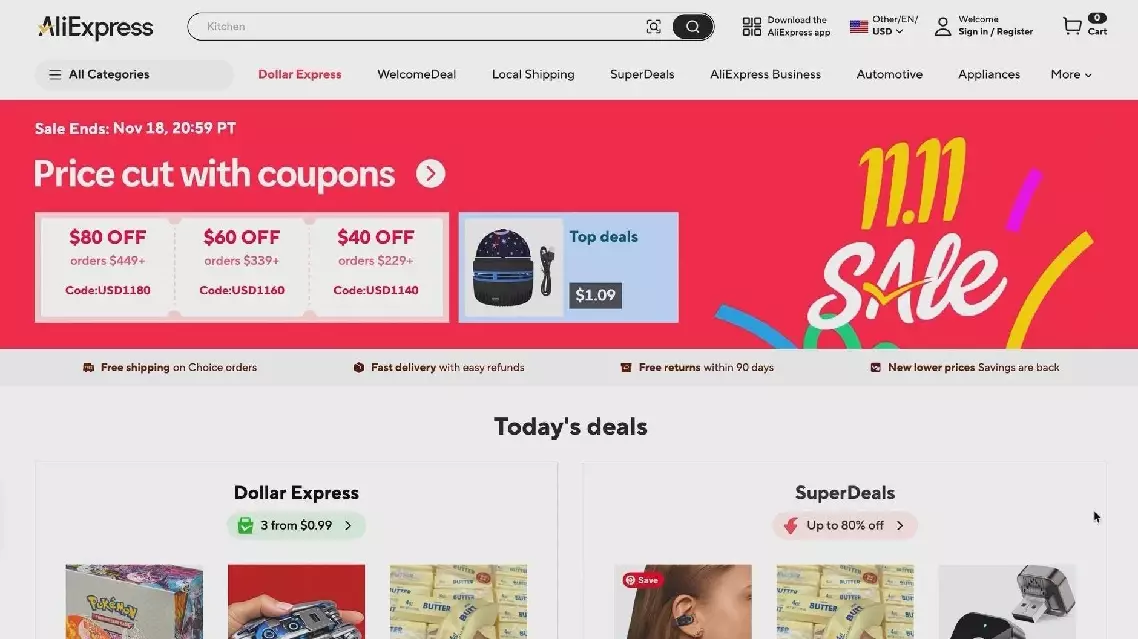
Single's Day, a special shopping day on Nov 11 that originated in China and has become the world's biggest shopping day, is beginning to gain traction with American retailers and consumers.
Based on 2025 data, total sales for this year's Singles' Day could exceed 238 billion U.S. dollars in China alone, exceeding the worldwide retail sales on Black Friday and Amazon Prime Day combined.
While relatively unknown outside Asia, Singles' Day has big potential, according to Thomas Harpointner, Founder and CEO of AIS Media, a digital marketing agency.
"The funny thing about Singles' Day, I think most Americans have never heard of it. You know, it's clearly more of an international event. For that very reason, Single's Day presents a big opportunity for American retailers," he said.
Harpointer said that Western big-name brands like Lancome and Walmart are already introducing Singles' Day branding and promotions on their global websites.
"Where 11-11 has a big opportunity is the distance between Thanksgiving and 11-11. You know, you have a bigger gap between Black Friday, Cyber Monday. Singles' Day is so far out from Christmas, you know, it's almost give-or-take six weeks. There are things that people shop for themselves. It's an opportunity to gift yourself something," he said.
AliExpress, the global online retail marketplace owned by one of China's largest retailers Alibaba, is investing heavily in e-commerce platforms and distribution networks to expand Singles' Days sales in global markets including the U.S.
"This year we have announced a set of upgrades to make the shopping experience for the U.S shoppers much more predictable, reliable and trustworthy. We simplified our order tracking. The tech and the logistic infrastructure we built behind all these innovations and offers, we have local warehouses in the U.S., we have technology infrastructure," shared Eric Zhang, Vice President of AliExpress.
But just as important as providing a better customer experience, is introducing 11-11 as a concept to international shoppers. That is why companies like AliExpress are working on building local partnerships, such as with YouTube Shop, to spread the word.
"We try to talk to the U.S. consumers in their own language, in their own culture, with their trustworthy influencers and the deal sites and so on, so the U.S. consumers could get a better understanding of AliExpress, then they can gain good access to the prices and the products and services," said Zhang.
That means working with influencers, like Russ Crandall from Retro Game Corps, whose YouTube channel shows audiences where to find retail bargains.
Crandall, whose YouTube Channel focuses on gaming and computer devices, says Singles' Day is likely to catch on in new markets, driven by more sophisticated, global e-commerce platforms and more cost-conscious consumers.
"I feel like it's just going to start to trickle up, you know, in the same way that other Chinese-based marketplaces have become a lot more popular in the United States. I feel like this could really give Black Friday a run for its money at some point, especially as prices just get higher and higher for everybody in the world," said Crandall.
In a time of rising prices, Crandall says online consumers are extremely cost conscious right now and eager to find the best deal, wherever that click might take them.
Singles' Day shopping gains ground in U.S. as retailers look to cash in