Landlords in New York are increasingly worried about the challenges posed by "squatters", who do not pay rent on time and often refuse to vacate the property, and the legal process for evicting these tenants is both onerous and costly.
The issue of squatters has grown more pressing in the country due to a combination of stringent tenant protection laws and a significant imbalance between housing supply and demand.
Currently, tenant protection policies and lengthy legal procedures make it difficult for landlords to evict these squatters in a timely manner.
In interviews with China Global Television Network (CGTN), landlords and real estate agents highlighted the legal loopholes and the harsh realities they encounter.
"I rented my apartment out to a tenant. She fell behind on the rent. And then another month, I even lowered the rent for her. And I just saw that it wasn't getting better. It was just going to be a problem tenant. I tried to work with her. And next thing you know, it just became a personal matter where we just didn't get along. And she would just cut me off and ignore me. And I really didn't have much direction to go. So I had to take the legal process, which is pretty disappointing in New York City. To sum it all up, it would be almost two years where she would live here rent-free," said Sergio, a landlord.
"We purchased this property seven years ago to supplement our retirement income. And we inherited one tenant who always paid late. So my husband went to him and told him, 'Listen! Don't pay me what you owe me, just move, because I can't be running after you every time for the money.' To which he said, 'There is nothing you can do because the system here protects only tenants, does not protect landlords,'" said Lza, another landlord.
"The biggest issue that landlords face with problematic tenants is non-payment of the rent. There are other issues, like people bringing pets in without consent and noise and damage to the unit. But the most costly is problematic tenants not paying their rent. We've definitely come across people that don't pay and then refuse to leave the property. And then we just go through the process, which involves written warnings and notices from there to try to get them out. But it is a timely process. So after the lease is signed, the tenant moves into the property, and then they don't pay their rent at some point during the lease terms. And the process to get them out in New York is incredibly difficult and litigious," said Shawn Mazzarone, a real estate agent.
When the landlords attempt to recover unpaid rent through legal channels, they often find themselves navigating a lengthy and expensive process that may not yield favorable outcomes.
"The laws in New York City are not very fair for individuals we call landlords. So if you rent your apartment out to somebody and they decide to stop paying you -- which is what happened to me a few times -- you have no choice but to go through the process, which is a very lengthy and costly process, which could be a psychological and financial nightmare for a lot of people," said Sergio.
"When I talked to my lawyer and I asked him, 'What's going on? How can we get rid of him? Get him out of the house?' He says, 'These are... that you cannot understand how many landlords are crying to the judge. And there is nothing you can do. This is what's going on,'" said Lza.
Lester Chang, a New York State Assemblyman, emphasized the necessity for expedited legal proceedings and an increase in the number of judges to address the issue of squatters.
"Landlords' first issue of unfairness right now on eviction on the court side itself is that there is no adjudication in a speedy way. Many landlords expressed years of frustration. One, two, three, even four years of no resolution. So either fault the city or fault the government (for) not hiring enough housing judges. And also not having judges to adjudicate this," he said.
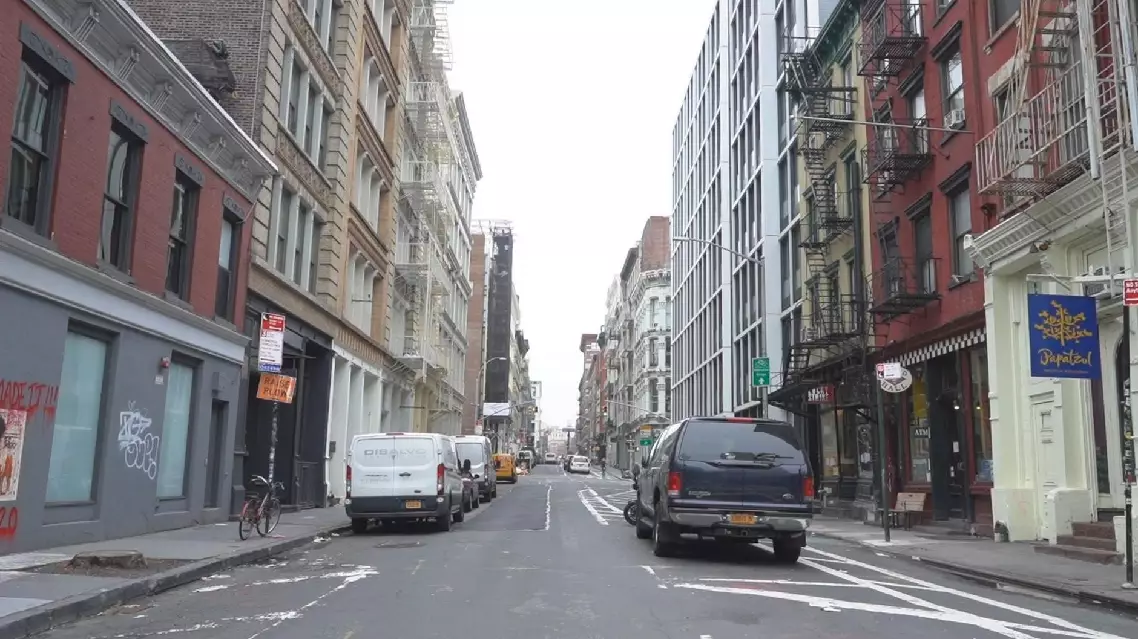
Landlords in New York plagued by squatters refusing to pay rent