RICHMOND HILL, Ontario--(BUSINESS WIRE)--Jan 26, 2026--
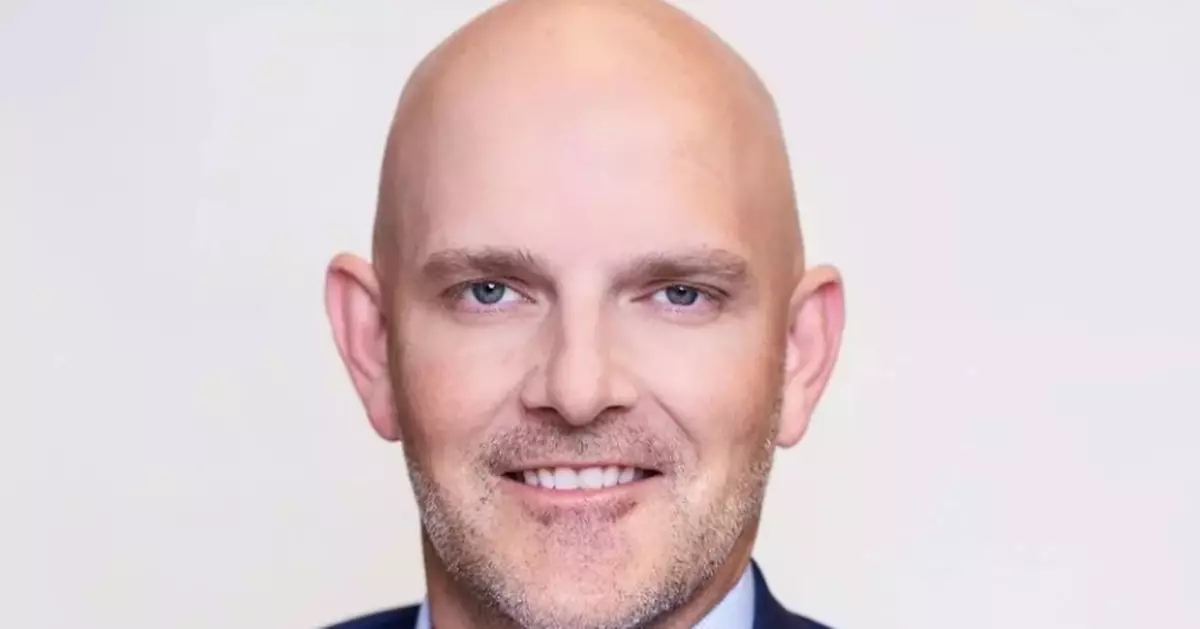
PROLLENIUM® Medical Technologies, a privately held medical aesthetics company, has appointed Erick Brenner as Chief Executive Officer, effective immediately. Brenner succeeds Walter Geiger, who has served as Interim CEO since April 2025, and will return to his role as Operating Partner at ARCHIMED, PROLLENIUM®’s majority shareholder.
This press release features multimedia. View the full release here: https://www.businesswire.com/news/home/20260126198897/en/
Brenner most recently served as President of Galderma U.S., where he oversaw a $1.8 billion portfolio across injectable aesthetics, dermatologic skincare, and therapeutic dermatology. He brings more than 25 years of experience spanning pharmaceuticals, medical aesthetics, and consumer skincare, including senior leadership roles tied to major product launches, portfolio integrations, and Galderma’s recent initial public offering.
During Geiger’s tenure as Interim CEO, PROLLENIUM® advanced its science-led product strategy, strengthened its operational platform, and continued to scale its vertically integrated manufacturing capabilities in North America. Geiger joined the company during a transition period and is credited with helping position the business for its next phase of growth.
“PROLLENIUM® has benefited from strong operational leadership over the past year, and we are grateful to Walter for his stewardship during a critical period,” said Justin Bateman, Chair of the Board of Advisors. “Erick brings deep industry experience and a proven ability to scale global aesthetics platforms, which aligns well with the company’s long-term growth ambitions.”
Brenner said PROLLENIUM®’s differentiated operating model and focus on science-driven innovation were key factors in his decision to join the company.
“PROLLENIUM® has built a compelling platform by combining research and development, manufacturing, and commercial execution under one roof,” Brenner said. “I look forward to working with the team to continue expanding the company’s global presence while maintaining a strong focus on quality, safety, and clinical performance.”
For more information on PROLLENIUM®, please visit www.prollenium.com.
About PROLLENIUM®
Founded in 2002, PROLLENIUM® is a science-first innovator in facial aesthetics and regenerative skin technologies. PROLLENIUM® is one of the select few manufacturers to have received FDA approval for its state-of-the-art facilities and combines advanced research and development, high-quality manufacturing, and deep expertise in medical aesthetics. Aesthetic professionals trust PROLLENIUM® brands in over 70 countries worldwide.

CEO of Prollenium Erick Brenner
ATLANTA (AP) — The Georgia General Assembly ended its annual session early Friday without a plan for new equipment to overhaul the state's voting system by a July deadline, plunging into doubt the future of elections in the political battleground.
The lawmakers' failure to offer a solution after months of debate raises uncertainty about how Georgians will vote in November and leaves confusion that could end in the courts or a special legislative session.
“They’ve abdicated their responsibility,” Democratic state Rep. Saira Draper said of inaction by Republicans who control the legislature.
Currently, voters make their choices on Dominion Voting machines, which then print ballots with a QR code that scanners read to tally votes. Those machines have been repeatedly targeted by President Donald Trump following his 2020 election loss, and Trump’s Georgia supporters responded by enacting a law in 2024 that bans using barcodes to count votes.
But state law still requires counties to use the machines. No money has been allocated to reprogram them, and lawmakers failed to agree on a replacement.
“We’ll have an unresolvable statutory conflict come July 1,” said House Governmental Affairs Committee Chairman Victor Anderson, a Cornelia Republican who backed a proposal to keep using the machines in 2026 that Senate Republicans declined to consider.
House Republicans and Democrats backed Anderson's plan, which would have required that Georgia choose a voting process that didn't use QR codes by 2028. Election officials preferred that solution.
“The Senate has shown that they’re not responsible actors,” Draper said. She added that Lt. Gov. Burt Jones, a Trump-endorsed Republican running for governor, seemed more interested in keeping Trump's backing than “doing right by Georgia voters.”
A spokesperson for Jones didn't immediately respond to a request for comment early Friday.
Joseph Kirk, Bartow County election supervisor and president of the Georgia Association of Voter Registration and Election Officials, said he’ll look to the secretary of state for guidance and assumes a judge will rule to instruct election officials how to proceed.
“This is uncharted territory,” he said.
Robert Sinners, a spokesperson for Republican Secretary of State Brad Raffensperger, who is also running for governor, said officials are “ready to follow the law and follow the Constitution.”
Republican House Speaker Jon Burns told reporters that his chamber was seeking to minimize changes this year.
“You can’t change horses in the middle of the stream,” Burns said.
Burns said he would meet with Gov. Brian Kemp and “take his temperature" on the possibility of a special session. A spokesperson for Kemp didn't answer questions about what the outgoing Republican governor would do.
Anderson said without action, the state could be required to use hand-marked and hand-counted paper ballots in November.
Election officials say switching to a new system within just a few months, as advocated by some Republicans, would be nearly impossible.
“They made no way for this to happen except putting a deadline on it," Cherokee County elections director Anne Dover said of the switch away from barcodes. Dover said one problem under some plans is that a very large number of ballots would have to be printed.
Lawmakers seemed more concerned about scoring political points than making practical plans, Paulding County Election Supervisor Deidre Holden said.
“If anyone is resilient and can get the job done, it’s all of us election officials, but the legislators need to work with us, and they need to understand what we do before they go making laws that are basically unachievable for us,” Holden said.
Supporters of hand-marked paper ballots say voters are more likely to trust in an accurate count if they can see what gets read by the scanner.
Right-wing election activists lobbied lawmakers for an immediate switch to hand-marked paper ballots, but the House turned away from a Senate proposal to do so.
Anderson said he wasn’t sure if a special session could escape those political crosswinds, but said Georgia lawmakers must fix the problem.
“This is a legislative problem,” Anderson said. “It’s a legislative solution that has to happen.”
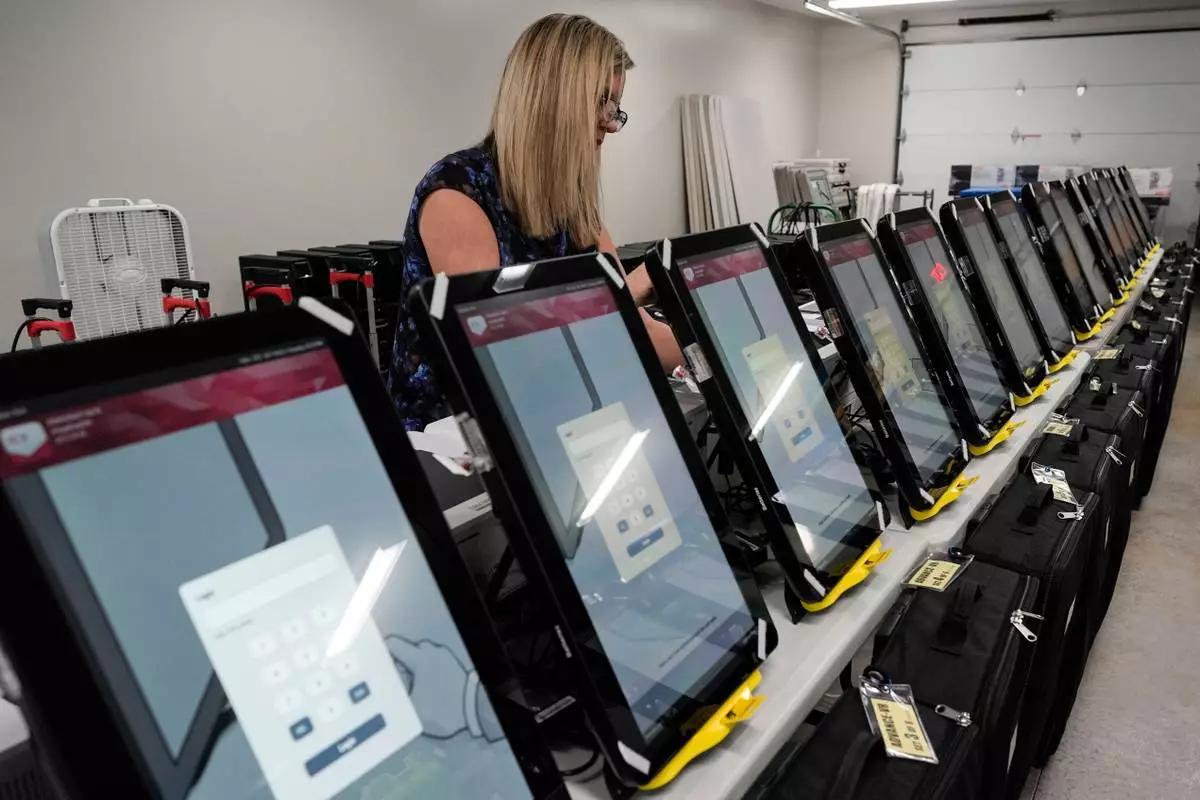
FILE - Voting machines are seen at the Bartow County Election office, Jan. 25, 2024, in Cartersville, Ga. (AP Photo/Mike Stewart, File)