Skip to Content Facebook Feature Image

Chinese stocks close lower on stricter regulations: market analyst

China

China

China

Chinese stocks close lower on stricter regulations: market analyst

2026-01-26 23:22 Last Updated At:01-27 03:37

Major stock indices on the Chinese mainland closed lower on Monday as traders responded to the Chinese securities regulators' efforts to slow down the rally in equities, said Timothy Pope, a China Global Television Network (CGTN) market analyst.

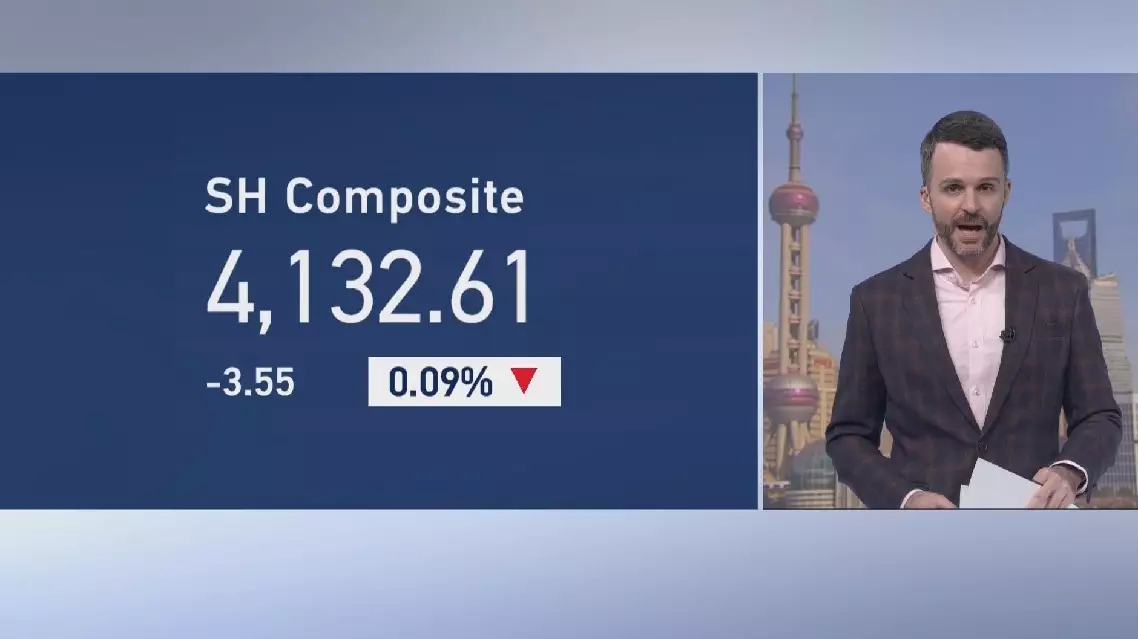
The benchmark Shanghai Composite Index down 0.09 percent to 4,132.61 points, while the Shenzhen Component Index closed 0.85 percent lower at 14,316.64 points.

Pope said that the stock market decline was caused by a crackdown on suspected market manipulation and a drop in technology stocks.

"What I think we're seeing is the markets continuing to respond to regulator and exchange efforts to slow down the rally in equities a little bit. The Shanghai Composite Index ended fractionally lower today and the Shenzhen Component was off by around 0.9 percent. There's been a bit of a flurry of regulatory action so far this year. The biggest move of course being the change to margin lending rates a couple of weeks ago. We've also seen some firm action taken against investors suspected of market manipulation. Just on Friday, we saw a billion yuan fine handed down to an individual investor, and exchanges have also been publishing notices of hundreds of what they've termed abnormal trades. And it seems like this is working, it's definitely slowed the pace of gains, but hasn't prompted a broad-based correction. What we have seen is investors switching out of tech stocks. They have been a pretty persistent drag on the markets over the last two weeks, and that continued today. A sub-index tracking Chinese semiconductor shares dropped 2.3 percent and the country's most valuable semiconductor stock - Cambricon - shed 2.6 percent," Pope said.

Pope said the fluctuations in metal and crude oil prices on the back of geopolitical uncertainty has also played a role in the market downturn.

"The other big trend this month has been metals prices, with Venezuela, the whole Greenland madness, or was it Iceland, and that's created a lot of geopolitical uncertainty. Gold has cracked 5000 dollars an ounce for the first time. Onshore Chinese gold prices have been even higher, so Chinese mining stocks have been going gangbusters and we're really seeing that supporting the markets today. Chinese oil stocks were also up, as well. We saw crude prices rising and also because domestic refiners are probably going to have to pick up a bit of slack as imports from both Venezuela and Russia have been dented in the new year," he said.
Chinese stocks close lower on stricter regulations: market analyst


Chinese stocks close lower on stricter regulations: market analyst

Hong Kong's Hang Seng Index ended slightly higher on Monday while Japan's Nikkei 225 saw a decline, according to Timothy Pope, a market analyst for China Global Television Network (CGTN).

The Hang Seng Index went up 0.06 percent to close at 26,765.52 points on Monday and the benchmark Nikkei stock index, the 225-issue Nikkei Stock Average, dropped by 1.79 percent to end at 52,885.25 points.

"The Hang Seng managed to claw back some earlier losses and end the session flat. The big supporting factor in Hong Kong was also Chinese energy and metals stocks. I said miners were going gangbusters, well, Zijin Mining surged to a record high at one point today, adding 7.8 percent, but closed 4.4 percent higher, paring those gains a little bit. Zijin mines copper as well as gold and announced today that an expansion of a Chinese copper mine project was now up and running. Its Hong Kong shares have risen almost 18 percent since the start of this year, and its Shanghai stock has also made some pretty comfortable double digit gains. The downside in Hong Kong today was also the same story as the Chinese mainland - it was tech. The Hang Seng Tech Index shed 1.2 percent by the end of the session," he said.

Popo said the decline in the Tokyo market was caused by fears of a joint Japanese-US currency intervention.

"Over in Tokyo the Nikkei 225 was down 1.8 percent as investors were on guard for a potential joint Japanese-US currency intervention. The Japanese Prime Minister said all necessary steps would be taken to act against abnormal market moves, but she was fairly non-specific. The yen surged on Friday after the New York Fed reportedly conducted a rate check, and it was up again today to a more than three-month high. The intervention would be to stem yen declines, but it's not clear if that threat has been averted as yet. But Japan's exporter heavy markets were down on the currency gains today, automaker stocks like Nissan and Honda traded significantly lower, as did the tech investor Softbank, it was one of the Nikkei's heaviest decliners. Conversely, of course, it was good for importer stocks, but those gains didn't do nearly enough to outweigh the very broad-based losses that we saw in Monday's session in Tokyo," he said.

Hong Kong stock markets edge higher, Tokyo stocks decline amid currency fluctuations: analyst

Hong Kong stock markets edge higher, Tokyo stocks decline amid currency fluctuations: analyst

Recommended Articles