China's cultural collectible market has thrived over recent years, fueled by robust interest-driven consumption, which is becoming a prominent trend among young consumers.
In a Pop Mart store in eastern Beijing's Chaoyang District, a steady flow of young people arrive daily to purchase collectibles for their homes. Many say there's nothing quite like the thrill of being in a toy store and getting up close and personal with their favorite character.
Carefully crafted and beautifully designed figurines seem to have made these toys a must have. The element of surprise with every blind box - a type of packaging that keeps its contents hidden - has made it more popular.
"[Unboxing blind boxes] is primarily about relaxing. It also has certain hidden features, which can evoke a sense of joy," said a consumer.
In addition to a variety of dolls and themed figurines, more niche markets, such as those of doll's dresses and doll pendants, are quietly gaining popularity among young people.
"I bought doll clothing because I think it makes my doll unique compared to others, giving it a more distinct appearance and making it look even better," said another consumer.
"The average daily customer flow is about 2,000 visits at the store, and the overall sales and transaction volume exceed 500 items each day. Since opening in December (of last year), our sales have surpassed one million yuan (143,800 U.S. dollars), significantly exceeding expectations. On average, each doll comes with two to three sets of clothing, with prices for doll outfits ranging from 59 to 69 yuan (from about 8.46 to 9.89 U.S. dollars) per set)," said Zuo Yinliang, manager of a trendy toy store in Chaoyang District.
In Suzhou City of east China's Jiangsu Province, visitors are turning their attention to the exquisite cultural and creative products found in museums.
To celebrate the upcoming Chinese lunar Year of the Horse, the Suzhou Museum has launched a series of Year-of-the-Horse-themed products, which has quickly captured the hearts of many young consumers.
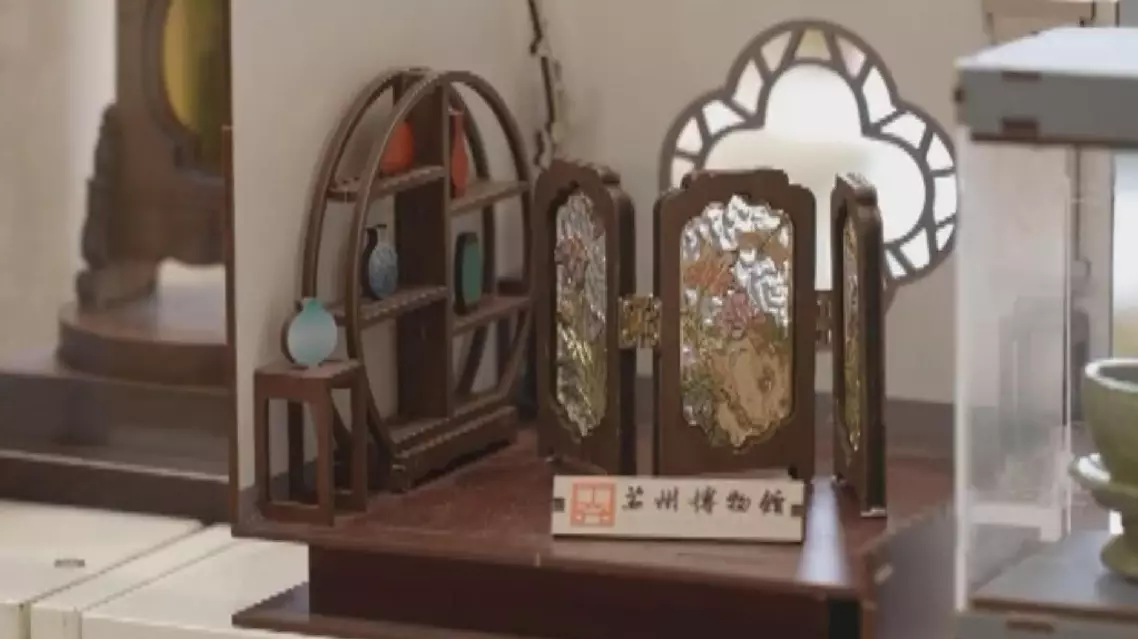
The Suzhou Museum hosted approximately 20 exhibitions throughout last year, featuring nearly 300 cultural and creative products. In particular, over 70,000 fridge magnets can be sold in a year, becoming one of the best-selling peripheral products.
"It serves both as a decorative screen and a fridge magnet, featuring exquisite craftsmanship. We earned nearly three million yuan (nearly 430,000 U.S. dollars) in the sales of such products in 2025," said Jiang Han, director of the Cultural and Creative Department of Suzhou Museum. In recent years, the museum's cultural creation design team has been continuously exploring visitor needs and seeking innovative expressions of traditional culture. "We hold a topic selection meeting approximately every quarter, where we discuss the types of products we want to create and the themes to be used for them. After analyzing sales trends, we then decide whether to proceed with large-scale production and manufacturing of the next batch of such products," Jiang said.
China's cultural collectible market flourishes, interest-driven consumption thrives