Skip to Content Facebook Feature Image

Mississippi shivers under ice as long recovery looms

News

Mississippi shivers under ice as long recovery looms
News

News

Mississippi shivers under ice as long recovery looms

2026-01-27 07:29 Last Updated At:07:30

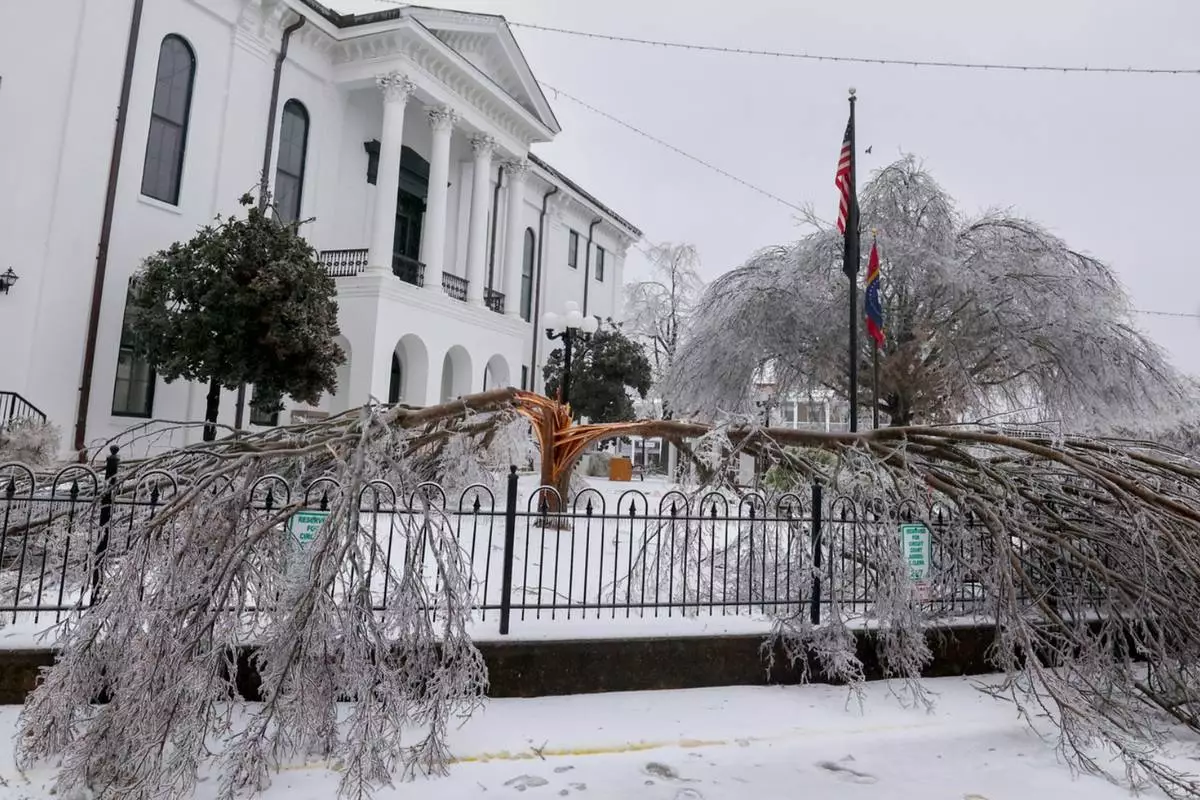
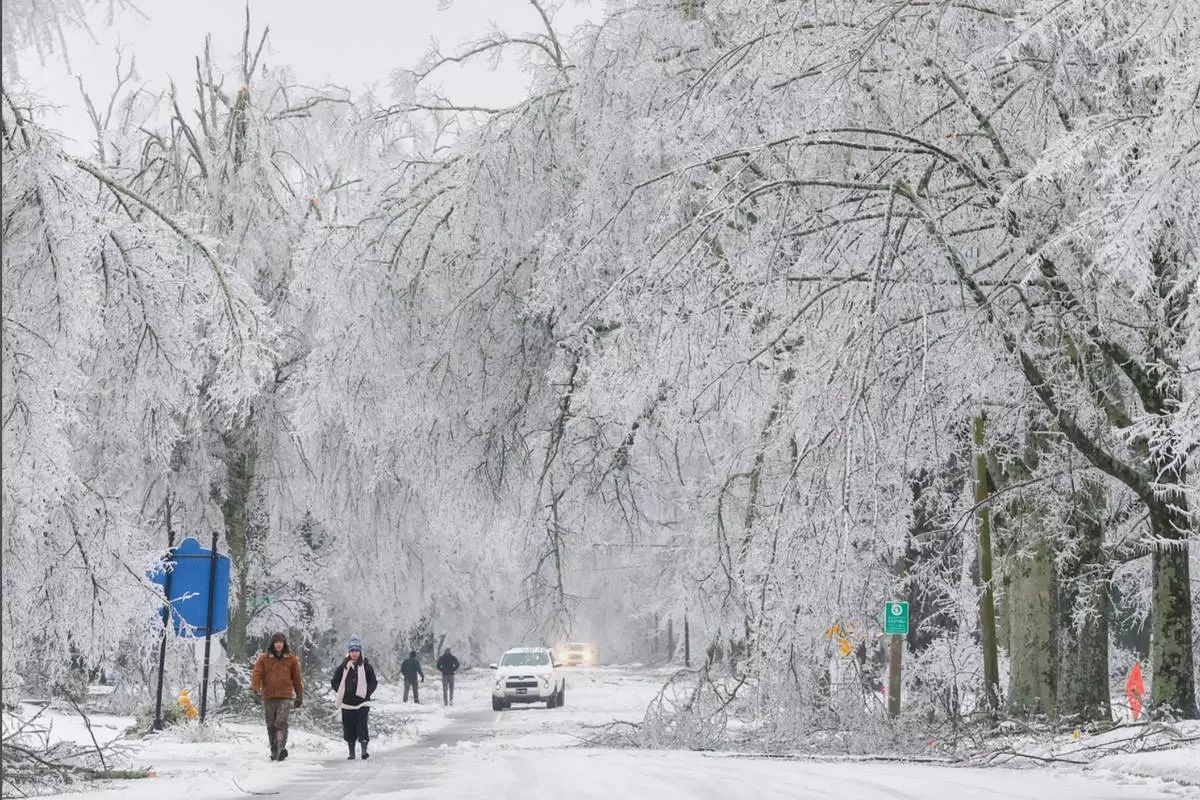
VICKSBURG, Miss (AP) — Residents in a iced-over swath of Mississippi began to confront the ugly truth Monday as they shivered in ever-colder and darkened houses: Recovery from the state's worst ice storm in more than 30 years could take a week or more.

While the weekend's winter storm impacted tens of millions of Americans, the most lingering effects are concentrated in a band from far eastern Texas across north Louisiana, Mississippi and into Nashville, Tennessee.

More Images
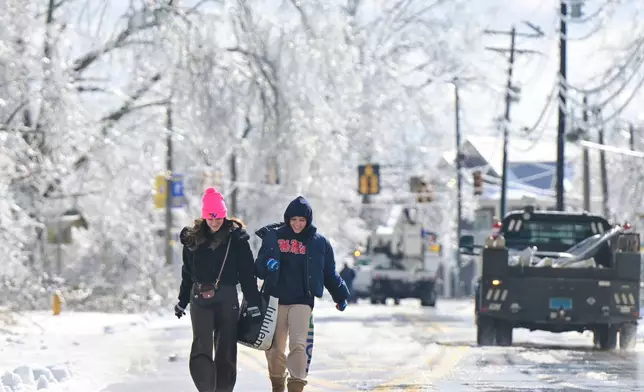
Arriana Delguerra, left, and Cera Lacomb walk on the icy streets in Oxford, Miss. on Monday, Jan. 26, 2026. (AP Photo/Bruce Newman)
Arriana Delguerra, left, and Cera Lacomb walk on the icy streets in Oxford, Miss. on Monday, Jan. 26, 2026. (AP Photo/Bruce Newman)

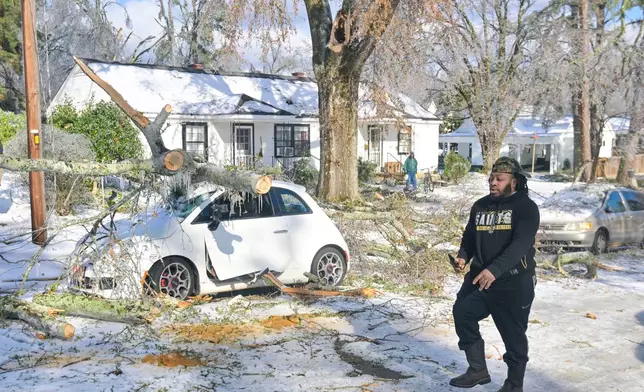
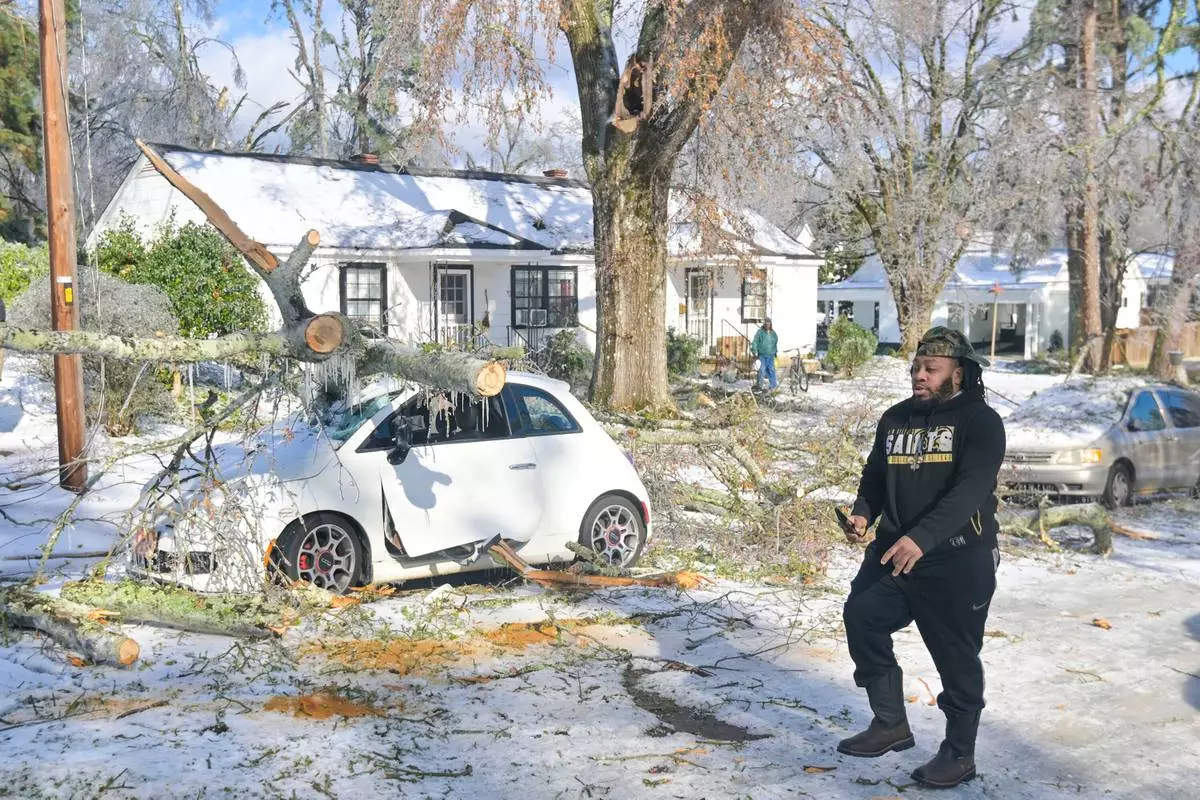
A man walks past a car damaged by a tree that fell during an ice storm, in Oxford, Miss. on Monday, Jan. 26, 2026. (AP Photo/Bruce Newman)
A man walks past a car damaged by a tree that fell during an ice storm, in Oxford, Miss. on Monday, Jan. 26, 2026. (AP Photo/Bruce Newman)

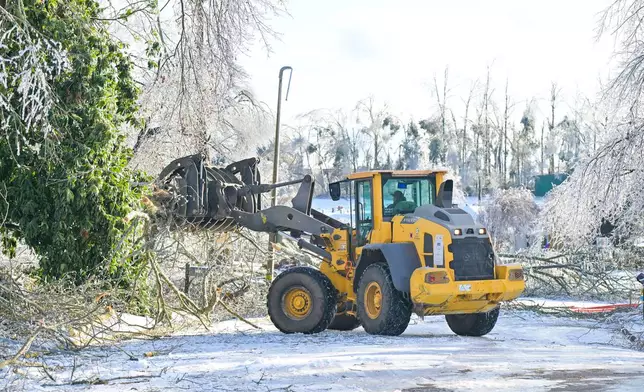
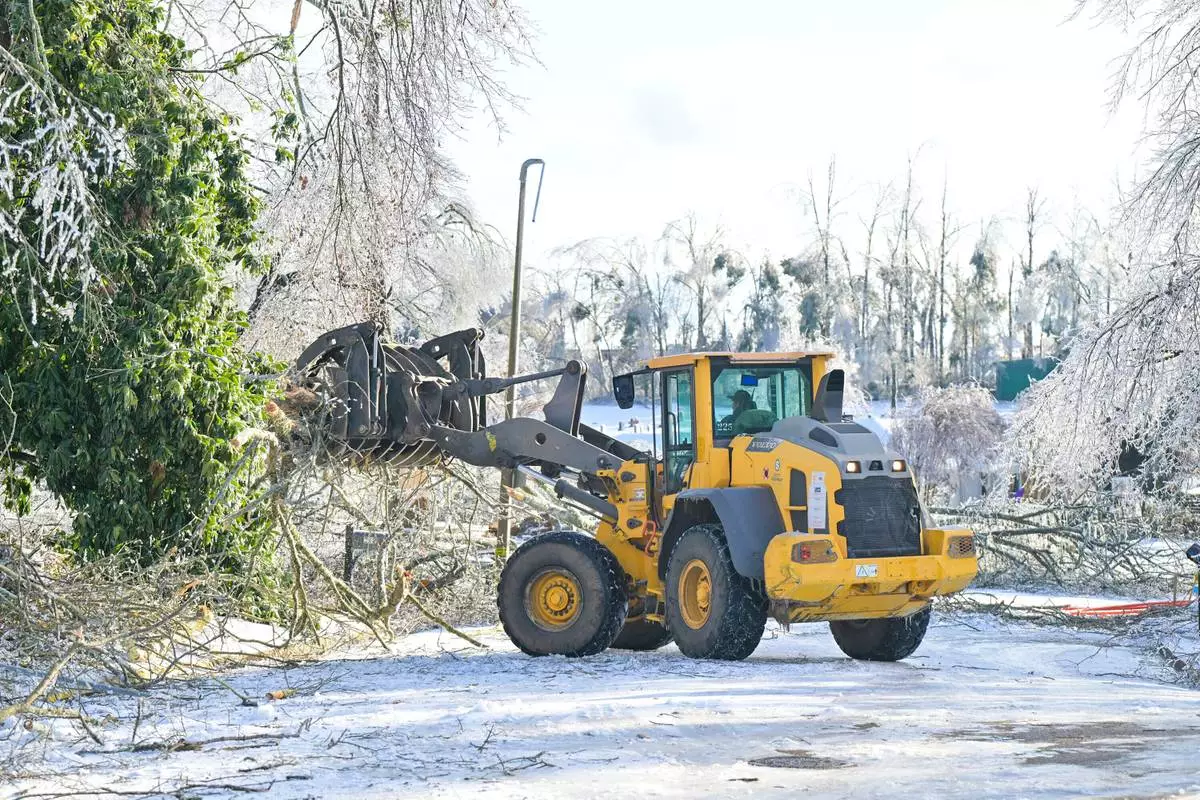
A worker clears trees from the roadway in Oxford, Miss. on Monday, Jan. 26, 2026, following a weekend ice storm. (AP Photo/Bruce Newman)
A worker clears trees from the roadway in Oxford, Miss. on Monday, Jan. 26, 2026, following a weekend ice storm. (AP Photo/Bruce Newman)

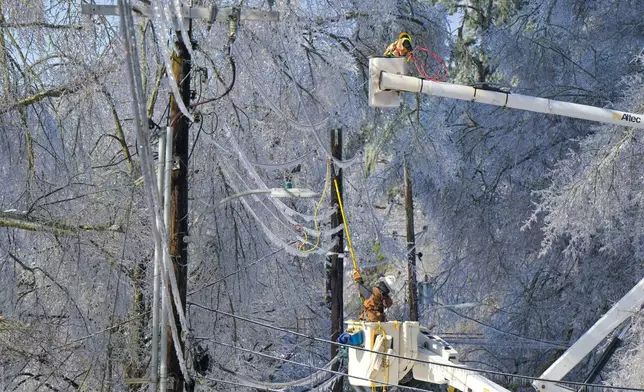
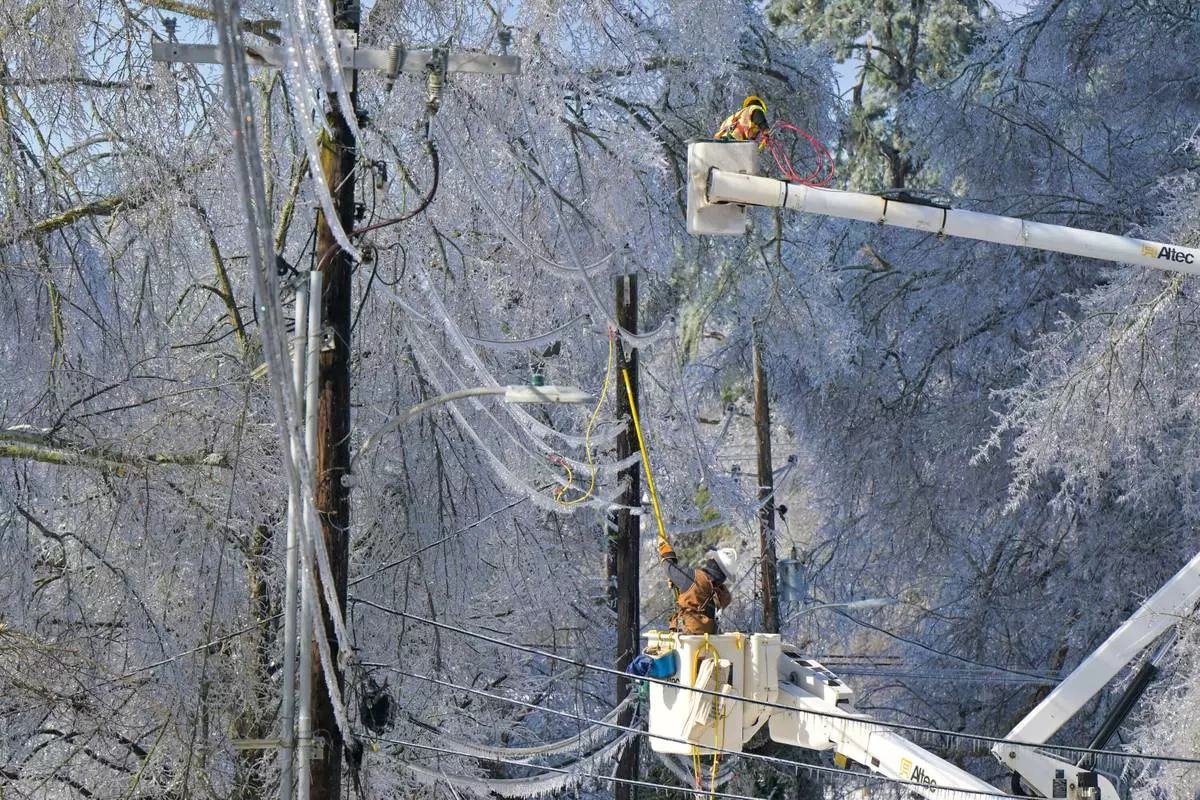
A lineman works to restore power in Oxford, Miss. on Monday, Jan. 26, 2026, following a weekend ice storm. (AP Photo/Bruce Newman)
A lineman works to restore power in Oxford, Miss. on Monday, Jan. 26, 2026, following a weekend ice storm. (AP Photo/Bruce Newman)

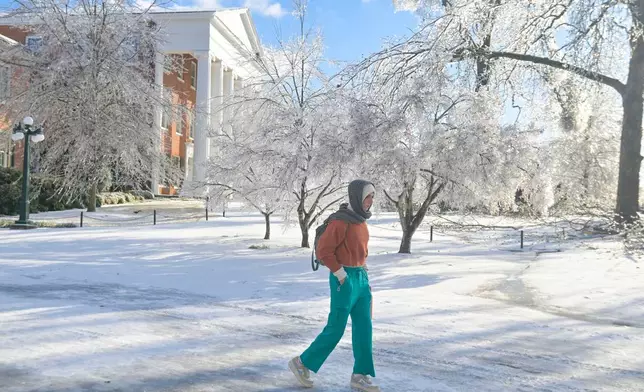
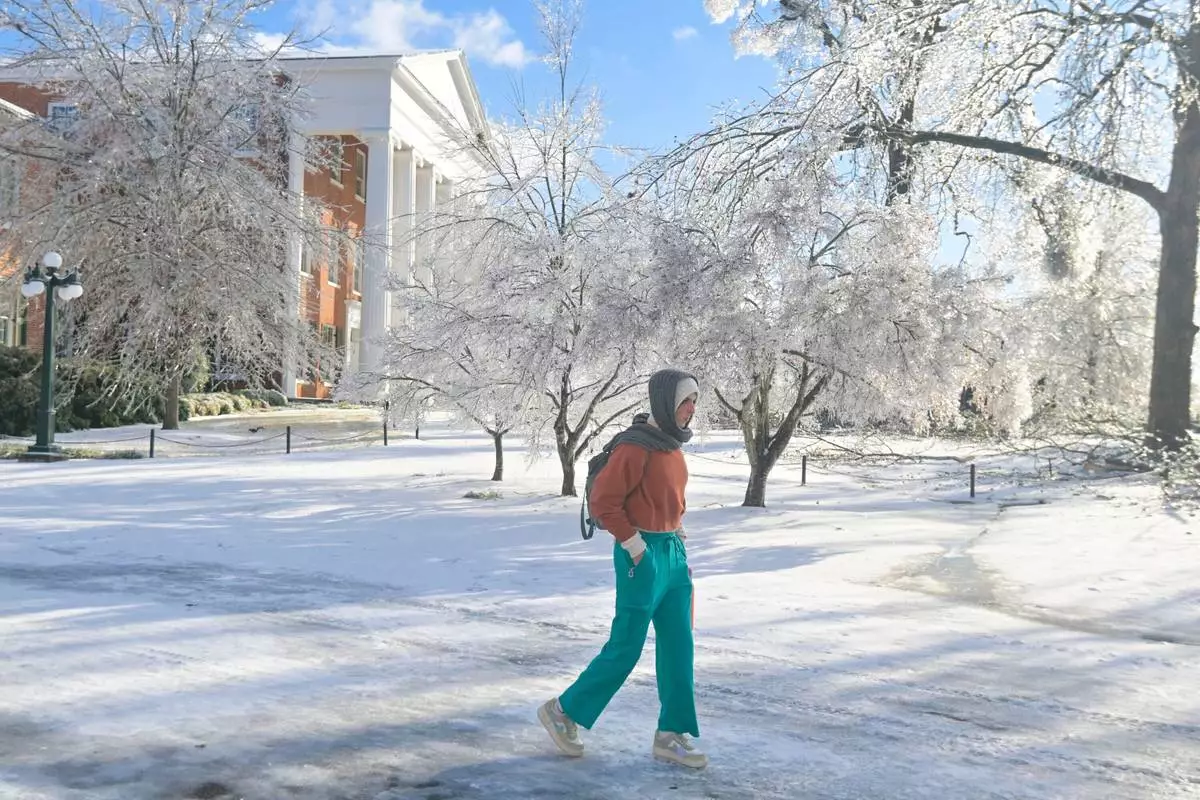
A woman walks across the campus of the University of Mississippi in Oxford, Miss. on Monday, Jan. 26, 2026, following a weekend ice storm. (AP Photo/Bruce Newman)
A woman walks across the campus of the University of Mississippi in Oxford, Miss. on Monday, Jan. 26, 2026, following a weekend ice storm. (AP Photo/Bruce Newman)

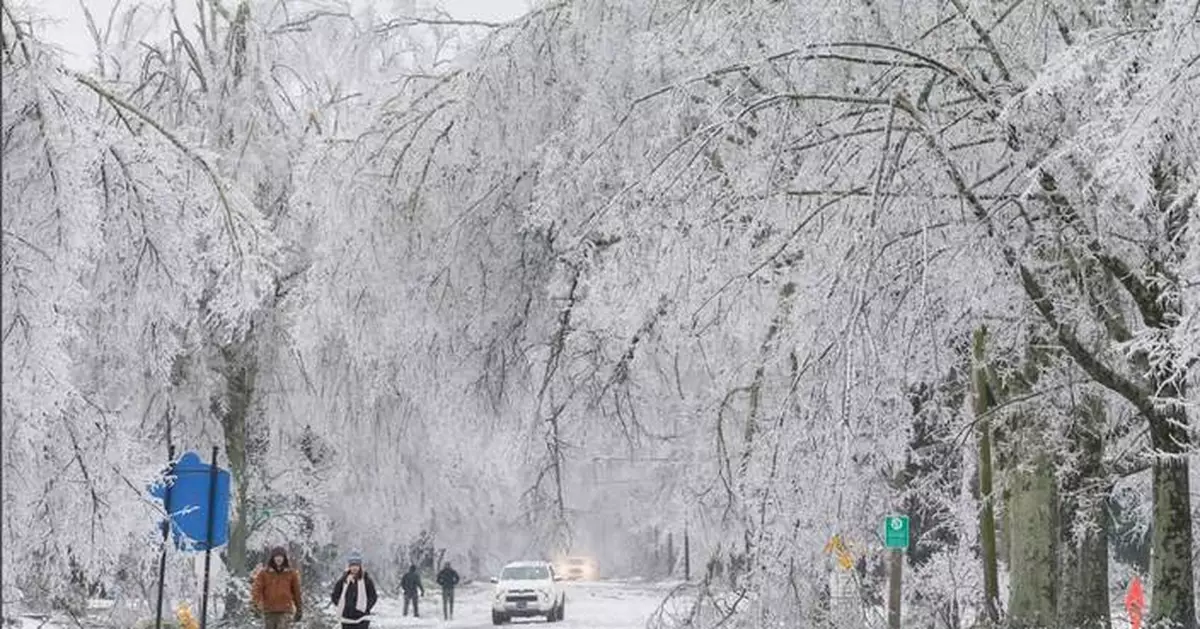
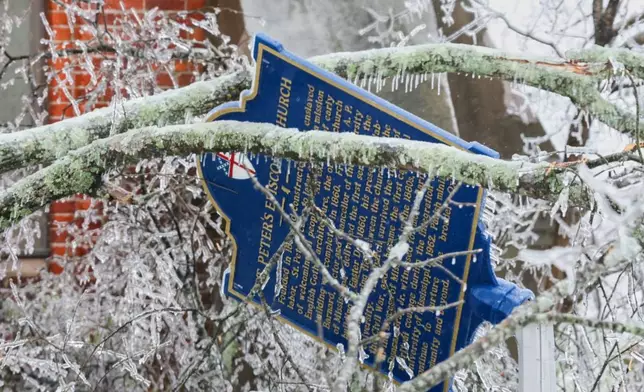
In this image provided by the City of Oxford, Miss., snow and ice cover trees as a winter storm passes through, Sunday, Jan. 25, 2026, in Oxford, Miss. (Josh McCoy/City of Oxford, Miss. via AP)
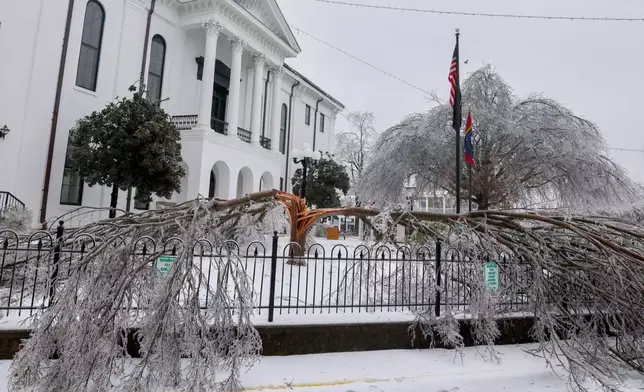
In this image provided by the City of Oxford, Miss., snow and ice cover trees as a winter storm passes through, Sunday, Jan. 25, 2026, in Oxford, Miss. (Josh McCoy/City of Oxford, Miss. via AP)
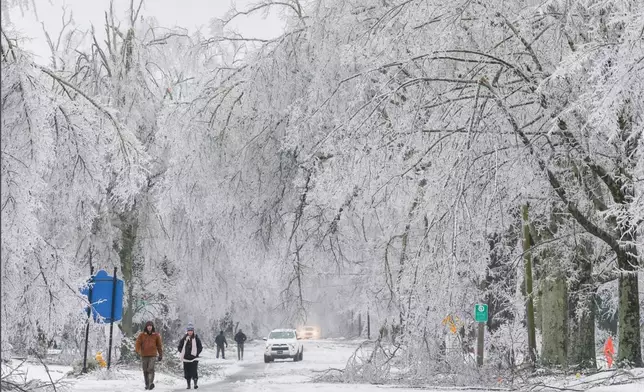
In this image provided by the City of Oxford, Miss., snow and ice cover trees as a winter storm passes through, Sunday, Jan. 25, 2026, in Oxford, Miss. (Josh McCoy/City of Oxford, Miss. via AP)

In this image provided by the City of Oxford, Miss., snow and ice cover trees as a winter storm passes through, Sunday, Jan. 25, 2026, in Oxford, Miss. (Josh McCoy/City of Oxford, Miss. via AP)

In this image provided by the City of Oxford, Miss., snow and ice cover trees and streets as a winter storm passes through, Sunday, Jan. 25, 2026, in Oxford, Miss. (Josh McCoy/City of Oxford, Miss. via AP)

In this image provided by the City of Oxford, Miss., snow and ice cover trees and streets as a winter storm passes through, Sunday, Jan. 25, 2026, in Oxford, Miss. (Josh McCoy/City of Oxford, Miss. via AP)

Parents were worrying about the 20,000-plus college students at the University of Mississippi, which canceled classes and closed campus for the rest of the week. Officials were fretting not only about restoring electricity and opening warming stations, but keeping fuel flowing to backup generators that run water pumps and supply medical facilities and opening darkened gas stations and grocery stores.

“I mean, it looks like a war zone out here,” said Adrian Ronca-Hohn, who estimated that the storm toppled around 40 trees surrounding his property in Iuka, in the state's hilly northeast corner. He and relatives plan to chain saw their way out Tuesday.

Like others, Ronca-Hohn couldn't see the destruction when ice began toppling trees before dawn Sunday. But the 23-year-old football coach and storm chaser said he could hear it.

“We couldn’t go 10 seconds without hearing what sounded like a gunshot," he said of trees falling. “You’d hear a pop, a hard pop, and you’d hear the whistle of it falling, and then it would crash to the ground and just kind of explode. And every now and again, you’d hear one real close, like, right outside. It was a sleepless night.”

Marshall Ramsey, an editorial cartoonist who teaches journalism at Ole Miss, said trees breaking, electric transformers exploding and thunder made for a “demonic symphony" in Oxford.

Power outages dropped below 150,000 Monday afternoon, but Mississippi still had the largest share of outages of any state. At Alcorn County Electric Power Association in Corinth, all 19,000 customers were dark at midday Monday. Tennessee Valley Authority high voltage lines were down, and General Manager and CEO Sean McGrath said the cooperative couldn't fully evaluate damage until TVA restores power to substations.

TVA spokesperson Scott Brooks said the power provider couldn't deliver electricity to 12 of its 153 local utilities. Brooks said some utility substations are so damaged that they can’t receive electricity. Some faced expensive choices in what is one of the nation's poorest states. In Vicksburg, Jamita Washington said she wrapped herself in blankets but could see her breath in the home she shares with her 20-year-old son and small dog. She has spent the past two days warming up in her car before returning to her freezing home.

When the power didn’t return Monday, she started seeking a hotel room. “I wanted to wait it out, but I think I have to,” Washington said. “I can’t take another chance on it. It was extremely cold last night.“

Jackson Mills, 25, said he was staying with his wife, son and in-laws at his grandfather’s house in Corinth where there's a gas fireplace. Mills said he trekked into nearby Tennessee Sunday to buy gas for a generator the family is using.

“We’d like for all this to mostly go away, just melt away, but it’s just so dadgum cold that it’s not melting,” Mills said.

Things were worse in neighboring Tippah County, where not only was power out, but most didn't have running water or natural gas service. State Rep. Jody Steverson of Ripley said low temperatures will make conditions "life-threatening," He communicated by text because cellphone service was faltering.

Republican Gov. Tate Reeves said Monday that he's deploying 500 National Guard soldiers by Wednesday to remove debris and control traffic. He said 61 shelters and warming centers were operating in 30 counties, and the state had doubled its request for generators from the Federal Emergency Management Agency from 30 to 60 to provide power to shelters, nursing homes, hospitals and water systems. The state is also distributing cots, blankets, prepackaged meals and bottled water.

“We will get through this,” Reeves said. "We’re not going to get through it today and we’re not going to get through it tomorrow.”

Ramsey said his Oxford family has been running a generator to power a space heater and a light and charge phones. He said his house was about 50 degrees inside Monday morning, calling it “a little chilly, but doable.“

"Apparently, the new status symbol in this town is having electricity,” Ramsey said. “It’s a mess.”

Amy reported from Atlanta. Associated Press reporters Charlotte Kramon in Atlanta and Kim Chandler in Montgomery, Alabama, contributed.
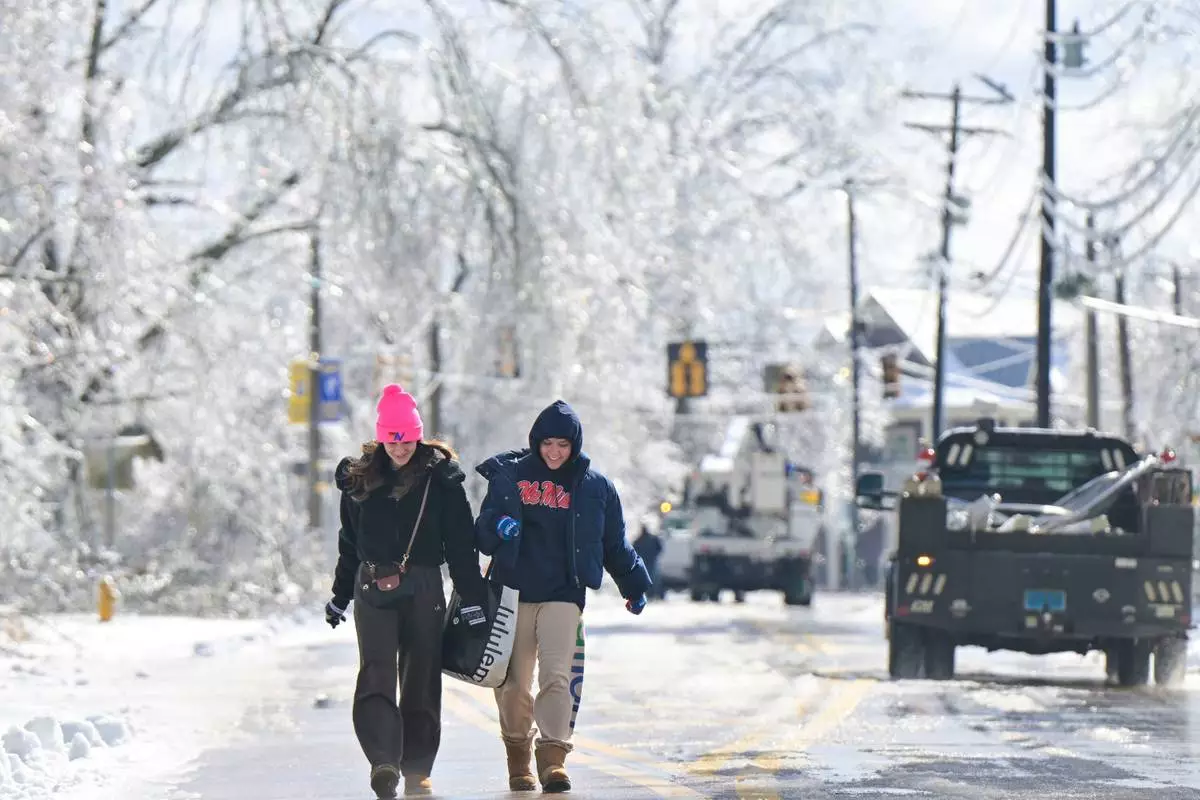
Arriana Delguerra, left, and Cera Lacomb walk on the icy streets in Oxford, Miss. on Monday, Jan. 26, 2026. (AP Photo/Bruce Newman)
Arriana Delguerra, left, and Cera Lacomb walk on the icy streets in Oxford, Miss. on Monday, Jan. 26, 2026. (AP Photo/Bruce Newman)

A man walks past a car damaged by a tree that fell during an ice storm, in Oxford, Miss. on Monday, Jan. 26, 2026. (AP Photo/Bruce Newman)
A man walks past a car damaged by a tree that fell during an ice storm, in Oxford, Miss. on Monday, Jan. 26, 2026. (AP Photo/Bruce Newman)

A worker clears trees from the roadway in Oxford, Miss. on Monday, Jan. 26, 2026, following a weekend ice storm. (AP Photo/Bruce Newman)
A worker clears trees from the roadway in Oxford, Miss. on Monday, Jan. 26, 2026, following a weekend ice storm. (AP Photo/Bruce Newman)

A lineman works to restore power in Oxford, Miss. on Monday, Jan. 26, 2026, following a weekend ice storm. (AP Photo/Bruce Newman)
A lineman works to restore power in Oxford, Miss. on Monday, Jan. 26, 2026, following a weekend ice storm. (AP Photo/Bruce Newman)

A woman walks across the campus of the University of Mississippi in Oxford, Miss. on Monday, Jan. 26, 2026, following a weekend ice storm. (AP Photo/Bruce Newman)
A woman walks across the campus of the University of Mississippi in Oxford, Miss. on Monday, Jan. 26, 2026, following a weekend ice storm. (AP Photo/Bruce Newman)

In this image provided by the City of Oxford, Miss., snow and ice cover trees as a winter storm passes through, Sunday, Jan. 25, 2026, in Oxford, Miss. (Josh McCoy/City of Oxford, Miss. via AP)
In this image provided by the City of Oxford, Miss., snow and ice cover trees as a winter storm passes through, Sunday, Jan. 25, 2026, in Oxford, Miss. (Josh McCoy/City of Oxford, Miss. via AP)
In this image provided by the City of Oxford, Miss., snow and ice cover trees as a winter storm passes through, Sunday, Jan. 25, 2026, in Oxford, Miss. (Josh McCoy/City of Oxford, Miss. via AP)

In this image provided by the City of Oxford, Miss., snow and ice cover trees as a winter storm passes through, Sunday, Jan. 25, 2026, in Oxford, Miss. (Josh McCoy/City of Oxford, Miss. via AP)
In this image provided by the City of Oxford, Miss., snow and ice cover trees and streets as a winter storm passes through, Sunday, Jan. 25, 2026, in Oxford, Miss. (Josh McCoy/City of Oxford, Miss. via AP)
In this image provided by the City of Oxford, Miss., snow and ice cover trees and streets as a winter storm passes through, Sunday, Jan. 25, 2026, in Oxford, Miss. (Josh McCoy/City of Oxford, Miss. via AP)

Shoveling in single-digit temperatures after the colossal winter storm this weekend, I dumped mounds of snow onto my garden beds, knowing it would protect my trees, shrubs and dormant perennials.

When the ground repeatedly freezes and thaws, as it does over winter in cold climates, that can squeeze roots, seeds, bulbs, tubers and rhizomes right out of the earth. Once exposed, they can be killed off by cold, drying winds.

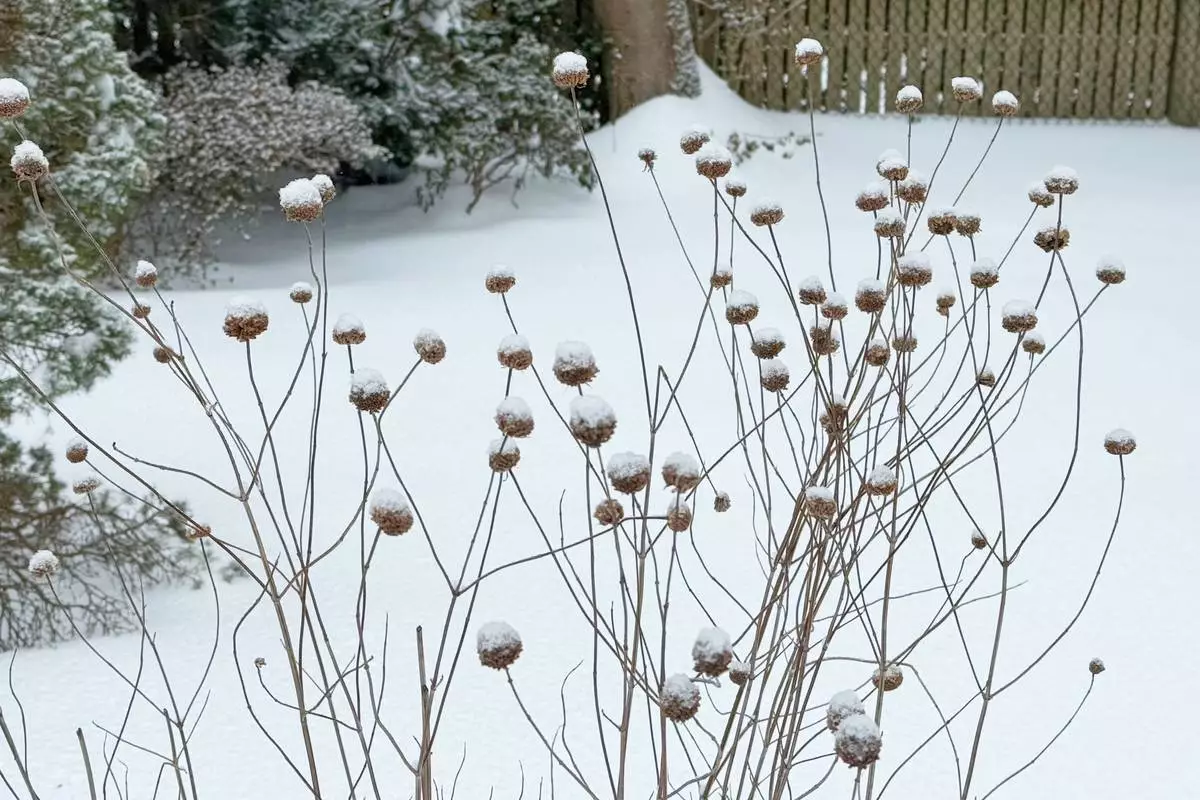
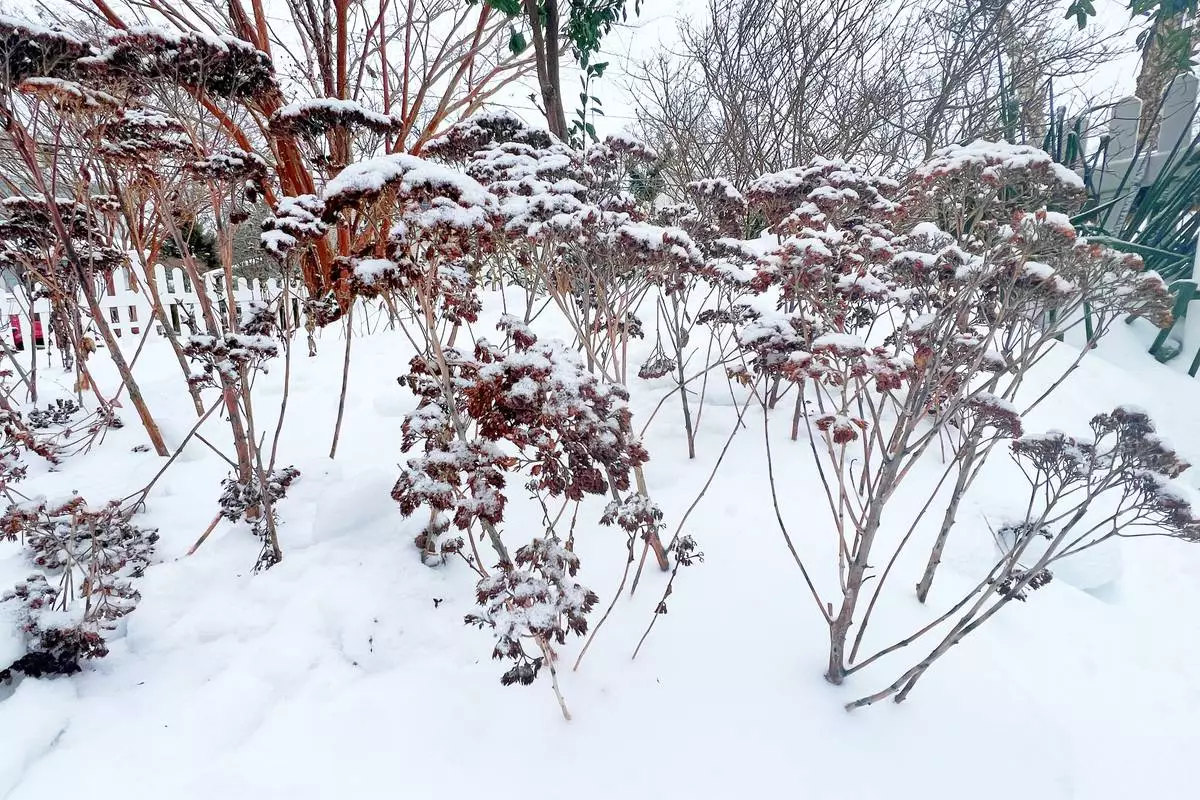
But snow cover provides a heavy blanket of winter mulch that insulates the soil, prevents heat from escaping and keeps soil temperatures from seesawing. And as it melts, snow will not only water your garden but fertilize it with plant-boosting nitrogen absorbed from the air on its way to earth.

It’s a perfect display of nature taking care of itself.

On the downside, the same heavy blanket that keeps plants warmly tucked in can spell disaster for evergreen trees like arborvitae and Leyland cypress. When wet snow accumulates on trees, its weight can bend, buckle or snap branches. And if you don’t remove it, it can permanently disfigure them.

We can help by gently knocking snow off branches with a long-handled broom. Under normal circumstances, I do this after the storm ends. But during extended snowfalls, I go out during the storm, as well, to keep on top of the accumulation. Trees are expensive, so I’d rather brave the elements than have to replace them.

When water or accumulated snow freezes into ice, however, it’s best to leave the branches be. Attempts to crack or knock ice off plants risk further damaging bark and other delicate plant parts. All we can do is allow it to melt naturally and hope for the best.

After removing snow from walkways and driveways, it’s good practice to apply rock salt to prevent ice from forming. But choosing a product can be confusing.

Magnesium chloride is the best choice, as it dissolves quickly to coat and melt ice, works in temperatures as cold as 10 degrees below zero Fahrenheit and is less likely to burn pets’ paws. It’s also the safest for your plants, which become exposed to the product via wind, soil runoff, melting snow and splashing slush, as well as deliberate snow dumping.

One drawback, however, is that magnesium chloride is also the most expensive of the commonly available ice-melt products. If your coverage area is so large that using it exclusively becomes too expensive, consider using it in areas adjacent to plants and where pets will be exposed. Then, opt for my second choice, calcium chloride, in less-trafficked areas and those away from lawns and gardens.

You’ll often see calcium chloride marketed as pet- and plant-safe, but it still can damage plants and irritate pets’ (and your own) paws. Wear gloves when handling it. If you must use it near plants, apply sparingly. And rinse pets’ paws after exposure.

As a gardener, you might recognize the chemical name of another type of rock salt, potassium chloride. Although it’s also a component of balanced fertilizers (the K in N-P-K ratios), the amounts needed to melt ice can actually harm or kill plants, so avoid using it as a deicer.

Sodium chloride is the cheapest of the bunch, but the worst choice for plants, pets and the environment. It can corrode cars, crack concrete, and poison wildlife, plants and trees.

When applying any ice-melt product, always use the least amount necessary, as they all have some potential to damage masonry. Applying a waterproofing sealant to driveways and walkways during warmer weather will help protect against ice-related cracks for several years.

Jessica Damiano writes weekly gardening columns for the AP and publishes the award-winning Weekly Dirt Newsletter. You can sign up here for weekly gardening tips and advice.

For more AP gardening stories, go to https://apnews.com/hub/gardening.

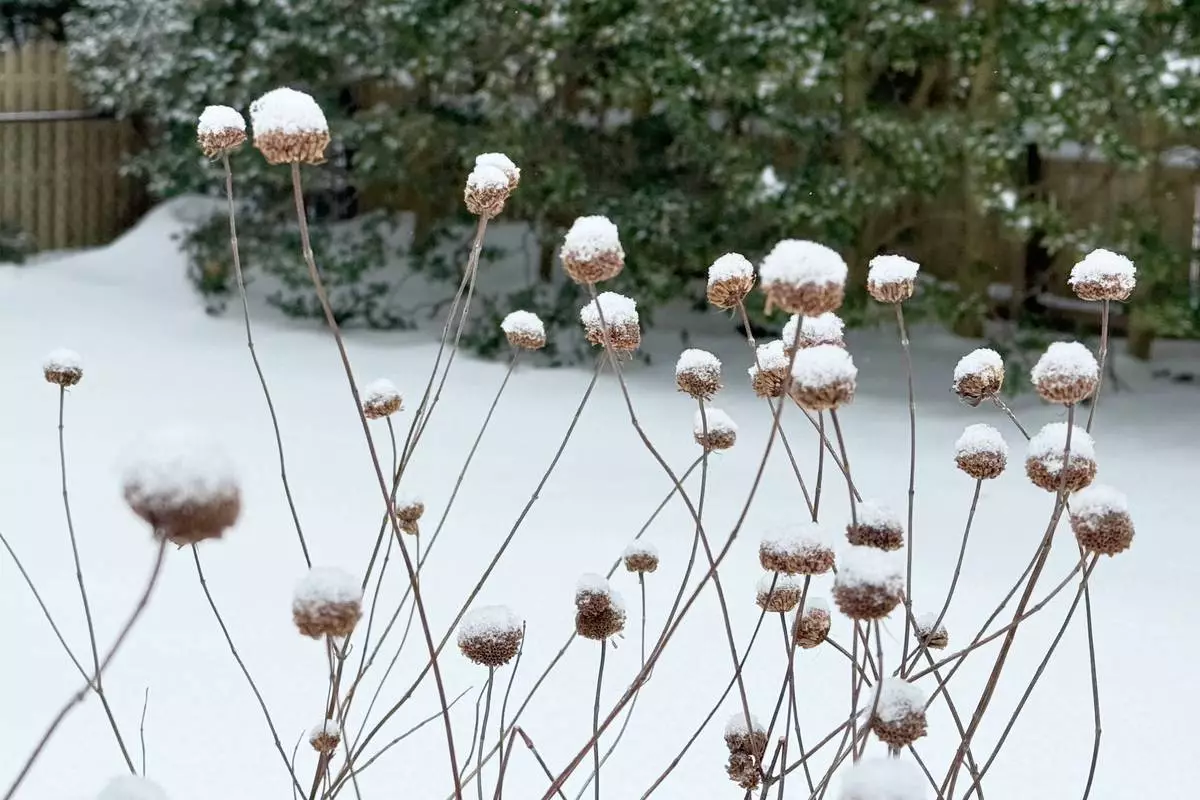
Snow covers bergamot stalks in a garden after a winter storm in Westchester County, N.Y.,, on Jan 26, 2026. (AP Photo/Julia Rubin)

Snow covers bergamot stalks in a garden after a winter storm in Westchester County, N.Y.,, on Jan 26, 2026. (AP Photo/Julia Rubin)

Snow covers bergamot stalks in a garden after a winter storm in Westchester County, N.Y.,, on Jan 26, 2026. (AP Photo/Julia Rubin)

Snow covers bergamot stalks in a garden after a winter storm in Westchester County, N.Y.,, on Jan 26, 2026. (AP Photo/Julia Rubin)

A mound of snow insulates dormant sedums in a garden bed in Long Island, N.Y., after a winter storm. (Jessica Damiano via AP)

A mound of snow insulates dormant sedums in a garden bed in Long Island, N.Y., after a winter storm. (Jessica Damiano via AP)

Snow covers bergamot stalks in a garden after a winter storm in Westchester County, N.Y.,, on Jan 26, 2026. (AP Photo/Julia Rubin)

Snow covers bergamot stalks in a garden after a winter storm in Westchester County, N.Y.,, on Jan 26, 2026. (AP Photo/Julia Rubin)

Recommended Articles