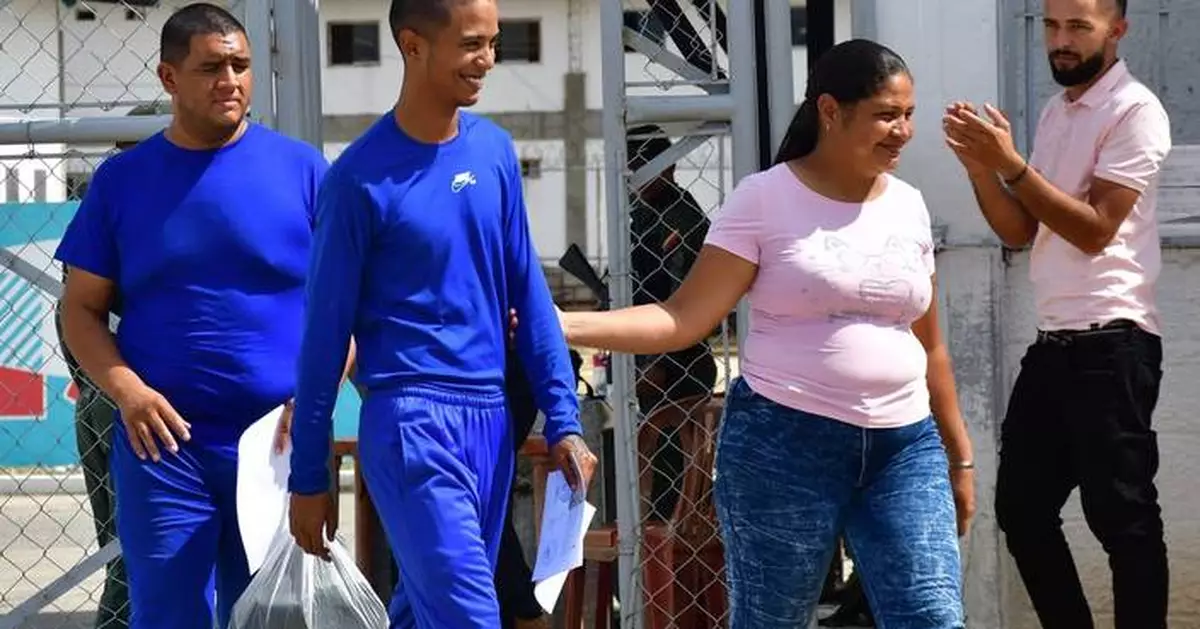
CARACAS, Venezuela (AP) — Venezuela’s leading prisoner rights organization said Monday that dozens of prisoners were released over the weekend, as the United States continues to pressure the acting government to free hundreds of dissidents jailed under ousted leader Nicolás Maduro.
Alfredo Romero, president of Foro Penal, said in a post on X that 266 “political prisoners” had been freed since Jan. 8, when Venezuela’s acting government promised to release a “significant number” of prisoners in what it described as an effort to promote national reconciliation. At least 100 of these prisoners were released over the past two days, according to figures published by the group.
Maduro was captured by the United States in a raid Jan. 3 and was replaced by Vice President Delcy Rodríguez, a longtime ruling party insider, who is now the nation’s acting president.
“I am pleased to report that Venezuela is releasing its Political Prisoners at a rapid rate, which rate will be increasing over the coming short period of time. I’d like to thank the leadership of Venezuela for agreeing to this powerful humanitarian gesture!” U.S. President Donald Trump said in a Truth Social post.
According to human rights groups, prisoners released this weekend included an opposition activist, a human rights lawyer and a journalism student who was jailed in March after he published complaints about his hometown’s sewage system and was charged with “inciting hatred.”
However, at least 600 dissidents remain detained in Venezuela, according to Foro Penal, including several members of the Vente Venezuela party, led by opposition leader and Nobel Peace Prize winner María Corina Machado.
On Friday, Rodríguez said that her administration had freed more than 620 prisoners, adding that she would ask the U.N. High Commissioner for Human Rights to verify the release lists. On Monday, Venezuela's Interior Minister Diosdado Cabello said in a news conference that 808 prisoners had been freed since December.
Human rights groups in Venezuela have accused the government of inflating the number of freed prisoners, while officials claim nongovernmental organizations are merely trying to undermine state credibility. Cabello said Monday there “were no political prisoners” in Venezuela. “Only people who committed crimes.”
Outside Venezuela’s prisons, relatives of detainees have held regular vigils to demand the release of those still behind bars.
Follow AP’s coverage of Latin America and the Caribbean at https://apnews.com/hub/latin-america
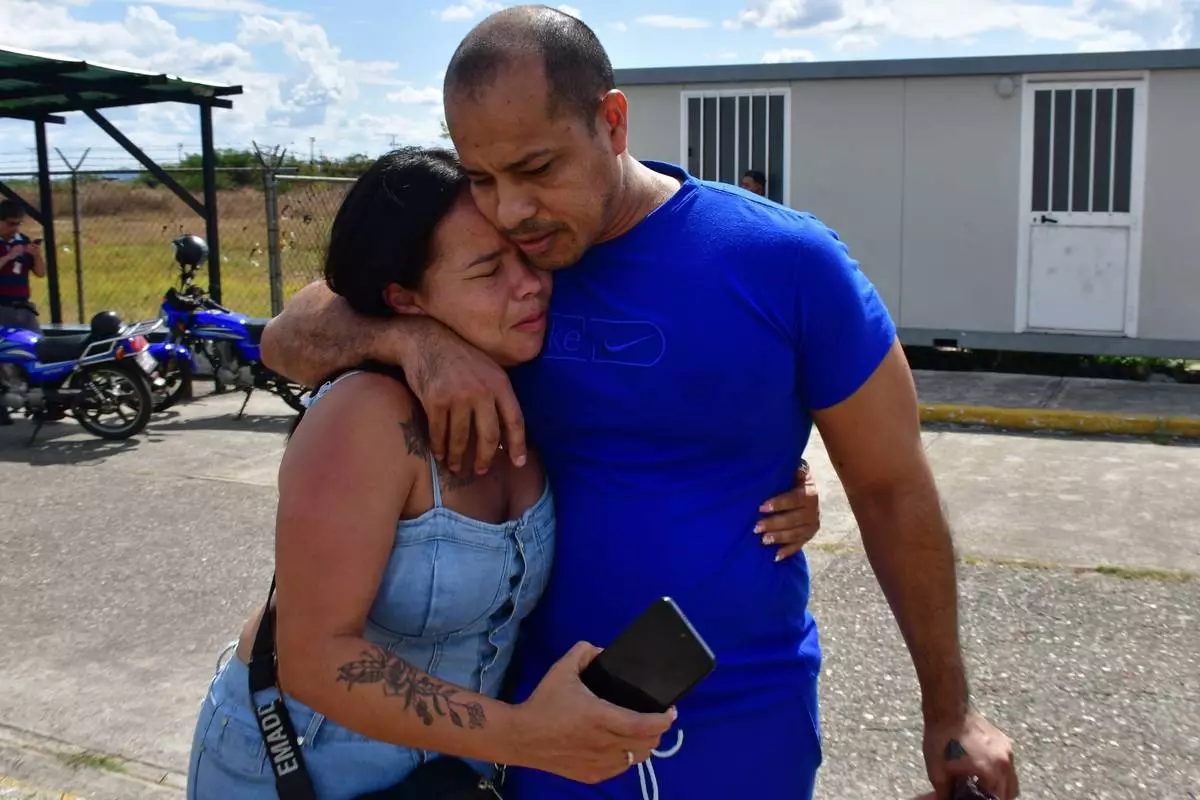
Carlos Andres Perez, right, embraces his cousin upon his release from prison in Tocuyito, Venezuela, Sunday, Jan. 25, 2026. (AP Photo/Jacinto Oliveros)
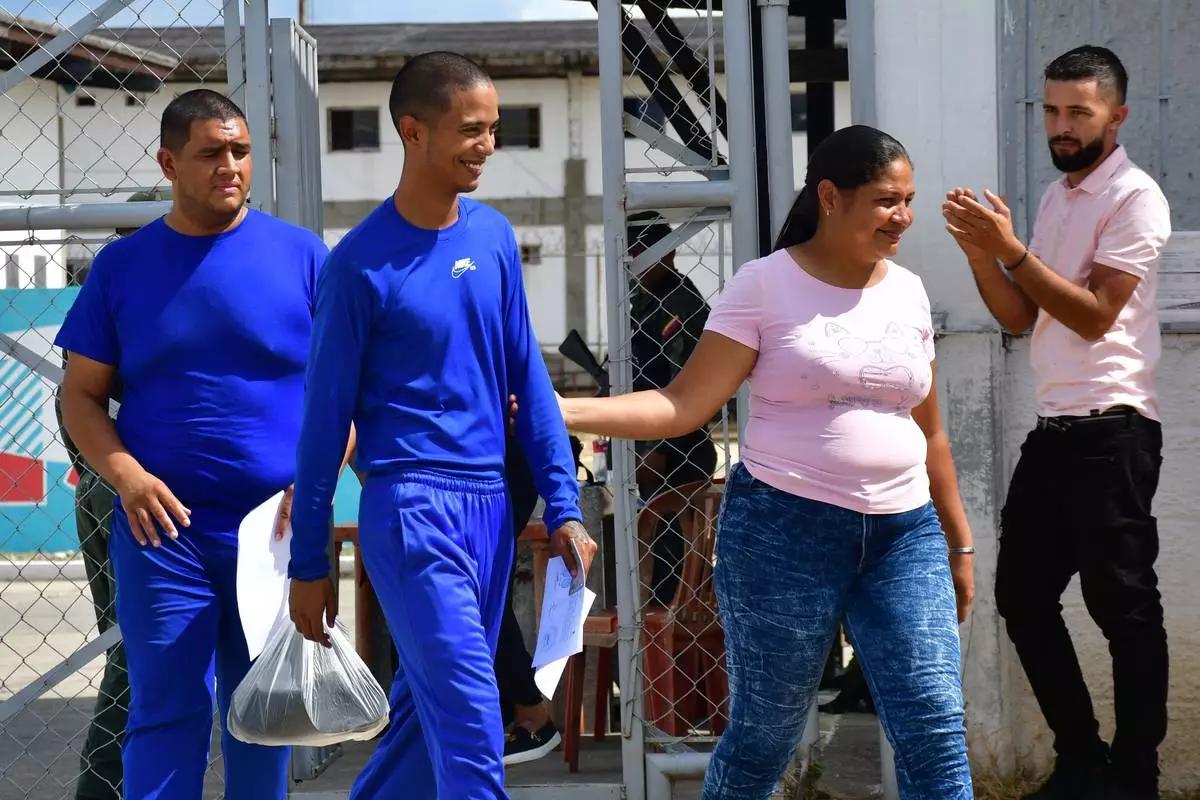
Ricardo Gámez, left, leaves prison after being released in Tocuyito, Venezuela, Sunday, Jan. 25, 2026. (AP Photo/Jacinto Oliveros)
PORTLAND, Maine (AP) — Six people died when a business jet crashed during takeoff as a snowstorm moved in and visibility diminished in Maine Sunday night.
The Bombardier Challenger 600 flipped over and burned on takeoff at Bangor International Airport around 7:45 p.m. Sunday night as the nation’s massive winter storm was beginning to reach the area.
An audio recording of air traffic controllers posted by www.LiveATC.net includes someone saying “Aircraft upside down. We have a passenger aircraft upside down,” about 45 seconds after a plane was cleared for takeoff. First responders arrived less than a minute later, airport director Jose Saavedra said.
Experts say the weather and questions about whether ice accumulating on the wings kept the plane from getting airborne — as has happened at least twice before on that plane model — will likely be an initial focus by the National Transportation Safety Board. However, the agency will consider all possible factors.
“You can count on the fact that NTSB is going to look very closely at this,” said John Cox, who is CEO of Safety Operating Systems.
The airport said Monday afternoon there were six people aboard, according to the flight manifest, and all died. Earlier in the day, the Federal Aviation Administration had said seven died and one was injured but warned the numbers were subject to change, and the agency defers to local authorities.
Snowfall was heavy elsewhere at the time of the crash, but accumulation had just started in Bangor. Other planes had been taking off safely. But about half an hour before the crash, the pilot of a Florida-bound Allegiant plane radioed the tower to abort his takeoff.
“One, our deice fluid has failed and two, I don’t think the visibility is good enough for us to go, so we’re going to have to taxi back to the gate here,” the Allegiant pilot radioed. The controller responded by saying he was just getting ready to warn the pilot that visibility had dropped to about three-quarters of a mile.
At about the same time, the pilot of the Bombardier had taxied over to the deicing pad and was radioing in a request to get his plane's wings and tail treated, according to audio posted by www.LiveATC.net. The plane remained at the deicing pad for about 20 minutes before taxiing to the runway.
The Bombardier Challenger 600 model “has a history of problems with icing on takeoff” that caused previous deadly crashes in Birmingham, England; and Montrose, Colorado, more than 20 years ago, aviation safety consultant Jeff Guzzetti said. Even a little bit of ice on the wings can cause serious problems, so careful inspections and de-icing are a crucial step before takeoff, the former federal crash investigator said. And there is a time limit on how long de-icing remains effective. It could last only about 20 minutes.
The National Weather Service in Caribou, Maine, said the airport eventually received nearly 10 inches of snow, but it was just beginning to fall at the time of the crash. Wind speeds were about 10 mph, which is not out of the ordinary. Temperatures dropped below 3 degrees (minus 16 Celsius) while the jet was in Bangor.
Cox said those conditions wouldn't keep planes from flying.
The plane that crashed had just landed at Bangor from Houston at 6:09 p.m., according to FlightRadar24.com, so it would have likely been sitting outside in the snow for more than an hour before it tried to takeoff again. And it wouldn’t have taken long for ice to start building up on the wings — particularly if the plane was refueled with cold jet fuel that’s stored in wing tanks, a factor the NTSB has cited in previous crashes.
“Given the weather conditions at the time, and the history of wind contamination with this particular aircraft, I’m sure that’s something the NTSB is going to look into immediately,” Guzzetti said. “If there was any kind of precipitation at all, freezing precipitation, they would have needed to clean off those wings before they took off.”
The Bombardier Challenger 600 is a wide-bodied business jet configured for nine to 11 passengers. It was launched in 1980 as the first private jet with a “walk-about cabin” and remains a popular charter option, according to aircharterservice.com.
Crash investigators in England recommended improved procedures for ice detection after a 2002 crash, but significant changes weren't made until after the NTSB finished its investigation in 2006 of the Colorado crash that killed the son of NBC television executive Richard Ebersol.
The FAA published new rules afterward to make clear to pilots and airports that even a small amount of frost on the wings can be a problem. The agency also clarified the standards for de-icing to make certain that all frozen particles are removed from the wings, and it required a combination of tactile and visual inspections.
Bombardier was also required to add a cold weather operations warning to the plane's flight manual after three incidents in Canada where one of these planes rolled unexpectedly in ways the pilot didn't command during take offs in cold weather and icing conditions.
The planemaker said it has delivered more than 1,000 of Challenger 600s, and the plane is designed to be safe. Bombardier said it is deeply saddened by the crash and will work with investigators to determine what happened.
The identities of those onboard won’t be released publicly until they can be confirmed, officials said.
The jet was registered to a corporation that shares the same address in Houston as the personal injury law firm Arnold and Itkin Trial Lawyers, and one of the law firm’s founding partners is listed as the registered agent for the company that owns the plane.
The international airport in Bangor, about 200 miles (320 kilometers) north of Boston, is one of the closest in the U.S. to Europe and is often used to refuel private jets flying overseas. The Bombardier was headed for France when it crashed.
The airport shut down after the crash and will remain closed at least until Wednesday so the FAA and National Transportation Safety Board investigators can examine and remove the wreckage.
A preliminary report outlining the facts of the crash should be released in about a month, but the final version likely won't be published for more than a year.
Ramer contributed to this report from Concord, New Hampshire; and Funk contributed from Omaha, Nebraska.
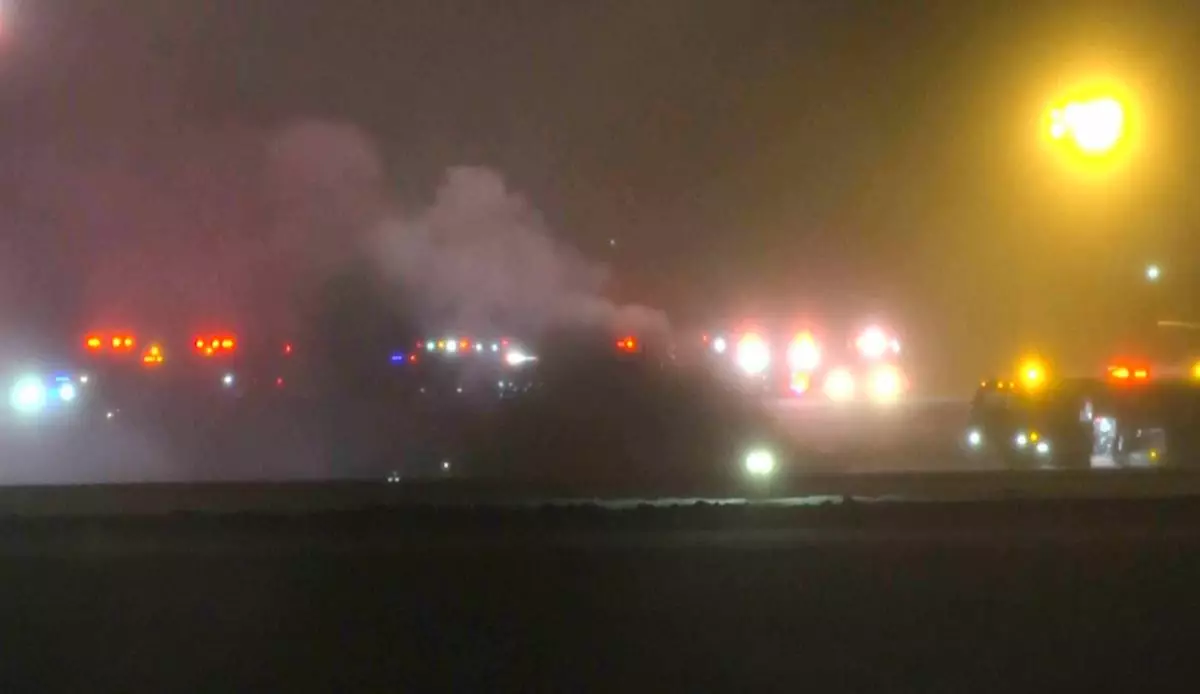
This image taken from video provided by WABI television, emergency services work on a scene of the Bombardier Challenger 600 crash at the Bangor Airport in Maine, late Sunday, Jan. 25, 2026. (WABI via AP)