Skip to Content Facebook Feature Image

Bring the desert’s warmth indoors this winter with big, bold succulents

ENT

Bring the desert’s warmth indoors this winter with big, bold succulents
ENT

ENT

Bring the desert’s warmth indoors this winter with big, bold succulents

2026-01-27 13:09 Last Updated At:14:00

TUCSON, Ariz. (AP) — Shallow dishes crowded with tiny, drought-resistant plants in shades of green, red and purple are pretty much all most people know about indoor succulents gardening.

But there’s another way to bring the warmth of the desert into your home when it’s too cold to garden outside.

More Images
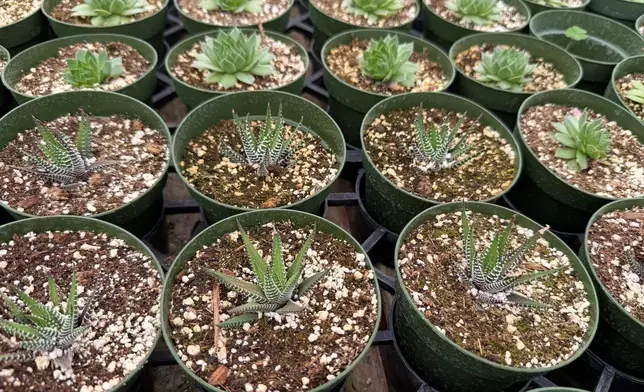
Tiny striped succulents known as zebra plants appear in Tucson, Ariz., on Nov. 9, 2025. (Anita Snow via AP)

Tiny striped succulents known as zebra plants appear in Tucson, Ariz., on Nov. 9, 2025. (Anita Snow via AP)

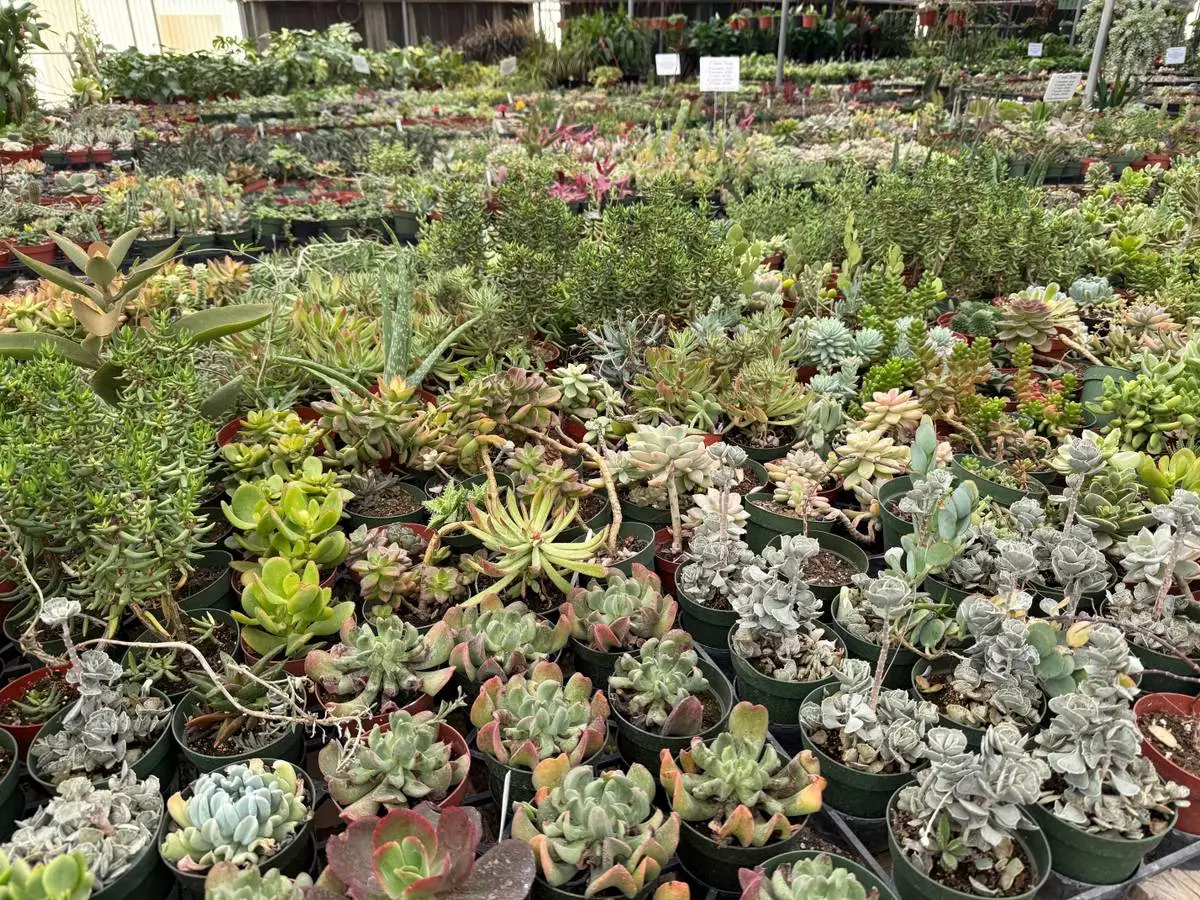
A variety of succulents are displayed at a nursery in Tucson, Ariz., on Nov. 9, 2025. (Anita Snow via AP)
A variety of succulents are displayed at a nursery in Tucson, Ariz., on Nov. 9, 2025. (Anita Snow via AP)

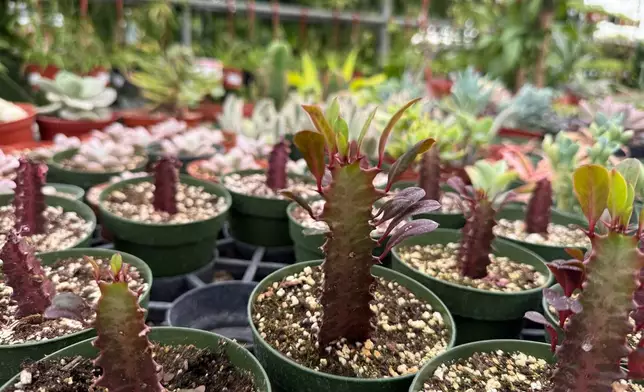
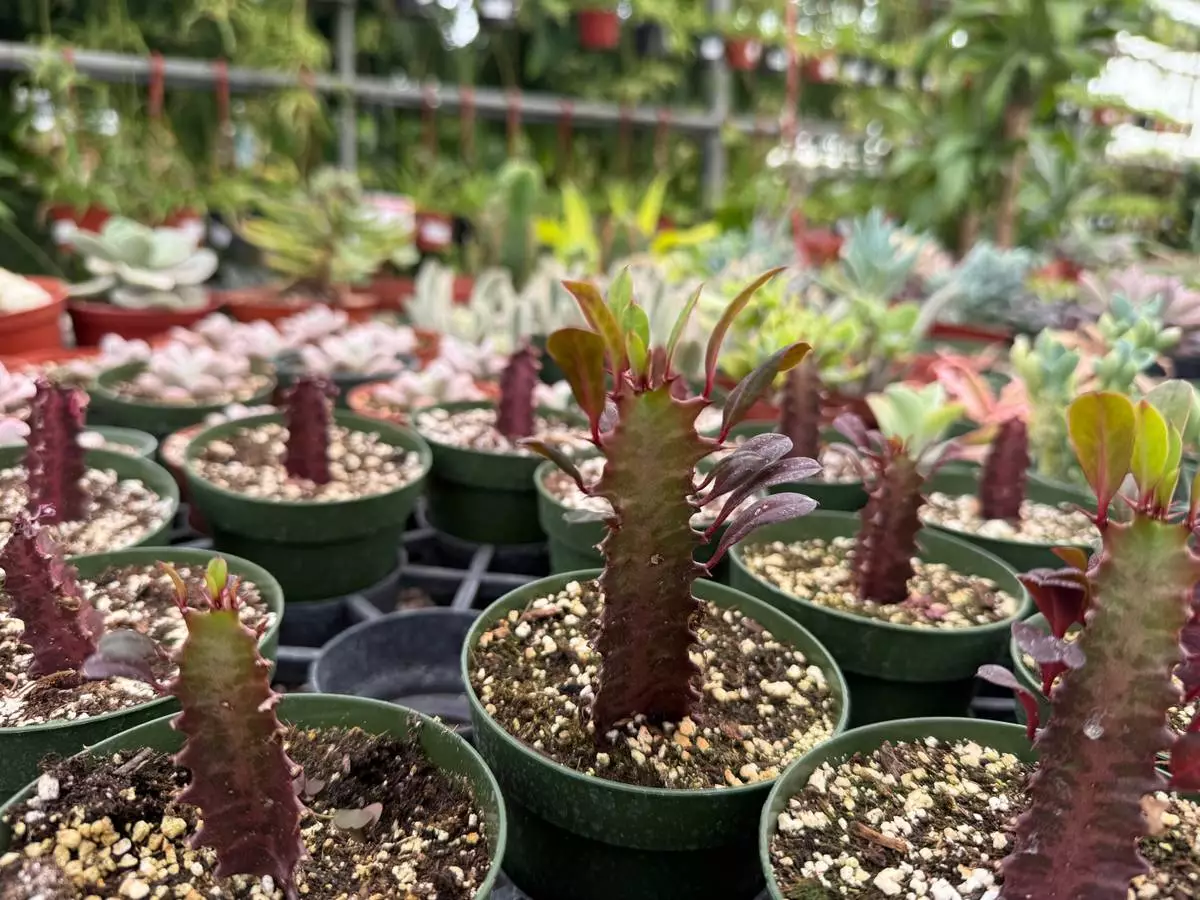
Tiny red African milk trees appear in Tucson, Ariz., on Nov. 8, 2025. (Anita Snow via AP)
Tiny red African milk trees appear in Tucson, Ariz., on Nov. 8, 2025. (Anita Snow via AP)

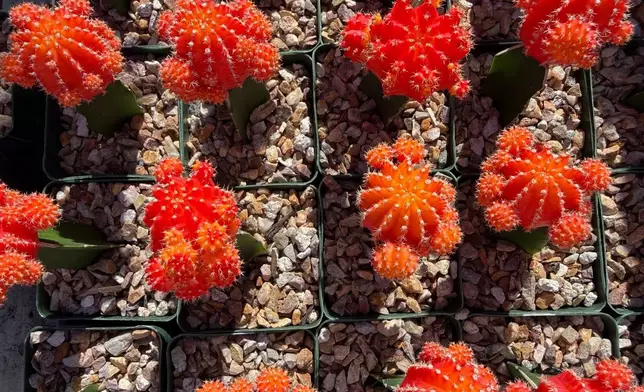
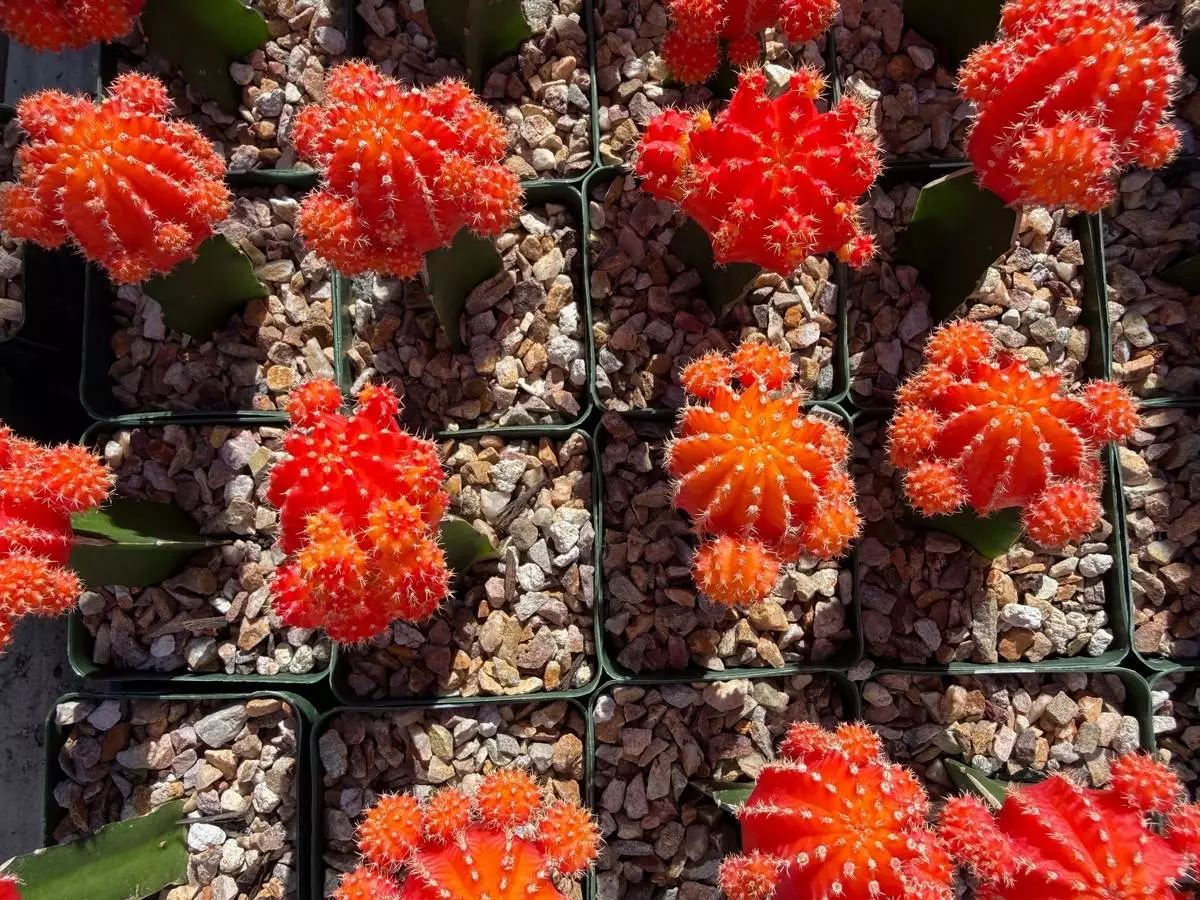
Bright orange tops of the Moon Cactus appear in Tucson, Ariz., on Nov. 8, 2025. (Anita Snow via AP)
Bright orange tops of the Moon Cactus appear in Tucson, Ariz., on Nov. 8, 2025. (Anita Snow via AP)

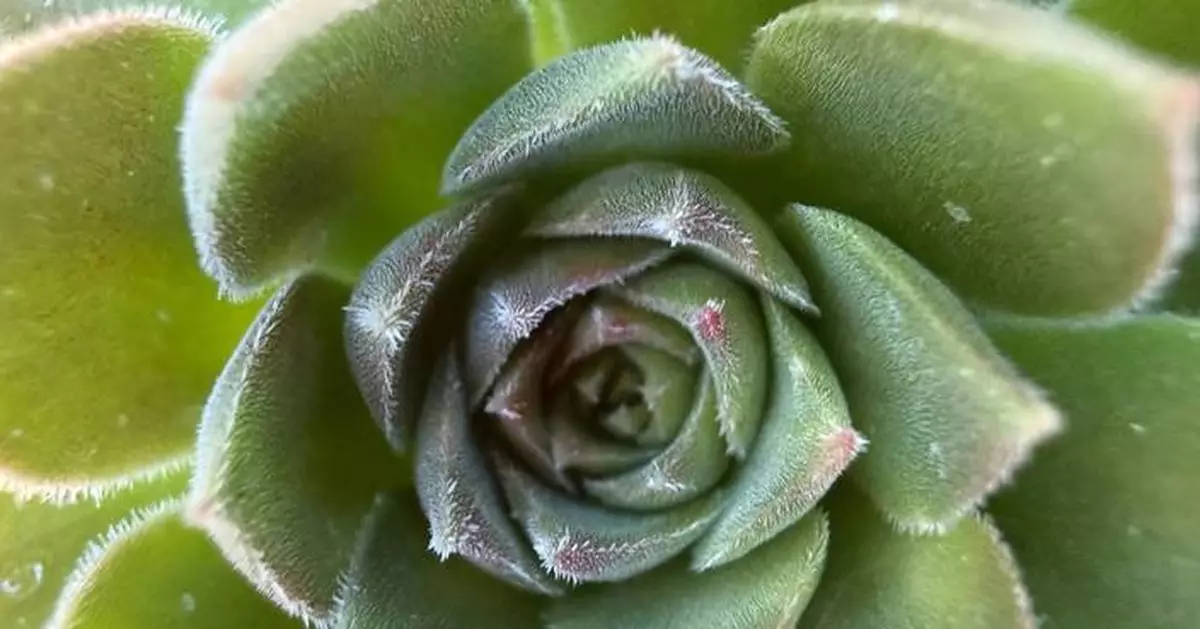
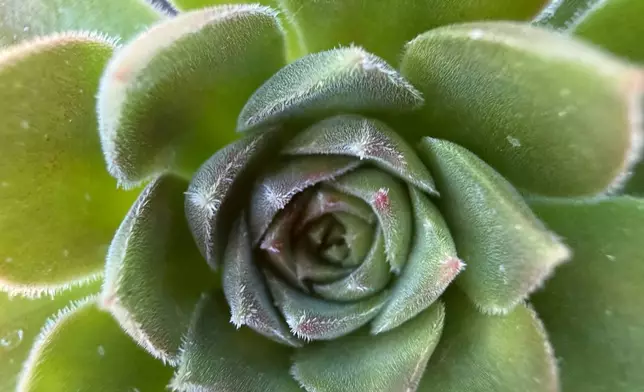
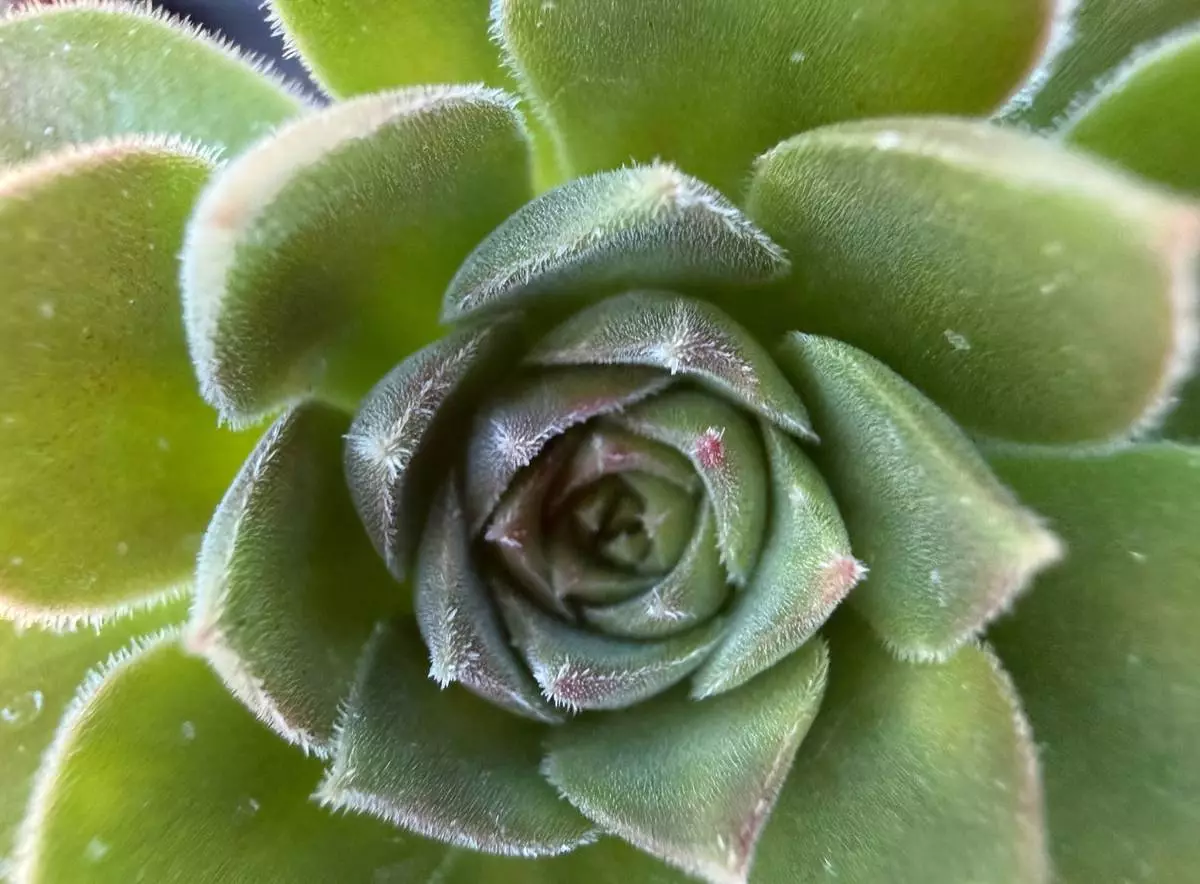
A succulent rosette is displayed in Tucson, Ariz., on Nov. 8, 2025. (Anita Snow via AP)

A succulent rosette is displayed in Tucson, Ariz., on Nov. 8, 2025. (Anita Snow via AP)

Go big and bold with indoor succulent gardens, suggests Marylee Pangman, a Tucson-based educator and writer who specializes in desert container gardening.

“Pick just one statement plant and see how you do before expanding the collection,” recommended Pangman, who has designed, built and maintained gardens for hundreds of clients in southern Arizona. “Success builds confidence.”

You could grow an architectural succulent in a huge ceramic floor pot, such as a green and yellow snake plant with tongue-like leaves stretching toward the ceiling, Pangman offered. Or try an African milk tree, which grows upright with many arms and can reach 6 feet (1.8 meters) tall indoors.

Succulents, including the subspecies of cactuses, are plants with fleshy tissues that conserve moisture. They come in many shapes and sizes, and the larger structural varieties especially command attention.

Pangman said succulents are perfect for busy people or retirees who want gardens that are enjoyable and not a chore. Far easier to care for than thirstier plants, succulents usually require less light and water, sometimes just once every two to four weeks.

“Anyone can grow succulents,” Pangman said. “They are especially great if you travel a lot.”

Pangman had no gardening experience when she moved to Tucson in 1996 to escape upstate New York winters. Within two years, she had studied to be a master gardener and launched The Contained Gardener, her potted-landscape design business.

Pangman later sold the business and now shares her knowledge through her writing, including the book “Getting Potted in the Desert” and her website and Substack platform. She also teaches online classes on her own platform and through the Tucson Botanical Garden.

These are her recommendations for growing large succulents indoors.

Consider your home’s indoor lighting and avoid plants that are fast-growing or can grow abnormally large.

For high light or south-facing areas: Consider more vertical-shaped architectural and medicinal aloe vera plants that can grow 2 to 3 feet (0.6 to 0.9 meters) high. Several agaves also do well with south-facing areas, including the fox tail (agave attenuata), a sculptural plant that forms rosettes and can spread 3 to 4 feet (0.9 to 1 meter) wide. In a smaller home, consider the striking Queen Victoria agave or the Blue Elf aloe hybrid.

For medium light, or east- and west-facing areas: The dramatic African milk tree (Euphorbia trigona), the classic jade plant (Crassula ovata), the velvety-leaved felt bush (Kalanchoe beharensis) and the tree-like Aeonium arboreum, which forms rosette clusters on woody stems.

For lower light, north-facing areas: The sturdy snake plant (Sansevieria trifasciata) is a winner, as are the shade-tolerant gasteria varieties with their dagger-shaped leaves. The somewhat smaller zebra plant (Haworthia fasciata) makes a statement when planted in a group. And while it isn’t technically a succulent, Pangman likes the ZZ plant, or zamiifolia, which has glossy leaves and stems and can live in very low light with infrequent watering.

Containers for the larger plants should be especially big, with a diameter of at least 18 to 22 inches (46 to 56 centimeters) and a depth of 16 to 18 inches (41 to 46 centimeters). Don’t buy plastic pots. Choose breathable terracotta, glazed ceramic or lightweight resin containers with drainage holes. Wheeled plant stands can protect floors from heavy pots, enable rotation of plants to expose all sides to light and allow plants to be easily moved outdoors in the spring.

Use gritty, well-draining soil. Ask your local nursery or big box home improvement store about a commercial cactus and succulent mix. A top dressing like colored recycled glass, gravel or smooth river stones can be scattered above the soil to control moisture and create an attractive focal point.

Place plants away from windows, ideally 3 to 5 feet (0.9 to 1.5 meters). Rotating pots is especially helpful for east- and west-facing windows to ensure all sides get light. Pale color and signs of stretching result from insufficient light. Too much light can cause sunburn and brown or white patches.

The easiest way to kill your succulents is by overwatering. Generally, they don’t need to be watered more than once every two to four weeks. Large pots in particular dry slowly, so always use a moisture meter to test the soil down 2 to 3 inches (5 to 8 centimeters). If it is dry, water the plant until it drains from the bottom.

Along with Pangman’s online resources, you can consult with your community’s big box home improvement stores and nurseries. A nearby community college or agricultural extension office connected to a public university or the county government also may have educational resources to share.

For more AP gardening stories, go to https://apnews.com/hub/gardening.
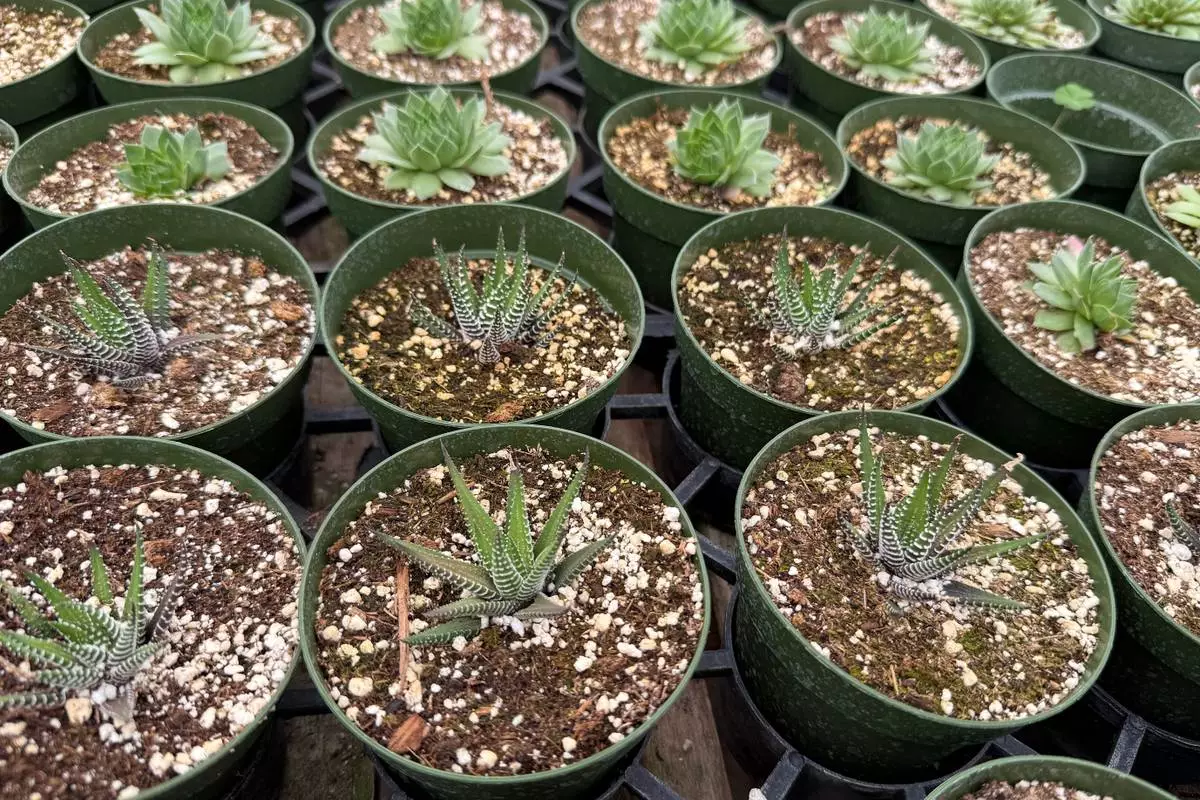
Tiny striped succulents known as zebra plants appear in Tucson, Ariz., on Nov. 9, 2025. (Anita Snow via AP)
Tiny striped succulents known as zebra plants appear in Tucson, Ariz., on Nov. 9, 2025. (Anita Snow via AP)

A variety of succulents are displayed at a nursery in Tucson, Ariz., on Nov. 9, 2025. (Anita Snow via AP)
A variety of succulents are displayed at a nursery in Tucson, Ariz., on Nov. 9, 2025. (Anita Snow via AP)

Tiny red African milk trees appear in Tucson, Ariz., on Nov. 8, 2025. (Anita Snow via AP)
Tiny red African milk trees appear in Tucson, Ariz., on Nov. 8, 2025. (Anita Snow via AP)

Bright orange tops of the Moon Cactus appear in Tucson, Ariz., on Nov. 8, 2025. (Anita Snow via AP)
Bright orange tops of the Moon Cactus appear in Tucson, Ariz., on Nov. 8, 2025. (Anita Snow via AP)

A succulent rosette is displayed in Tucson, Ariz., on Nov. 8, 2025. (Anita Snow via AP)
A succulent rosette is displayed in Tucson, Ariz., on Nov. 8, 2025. (Anita Snow via AP)
MELBOURNE, Australia (AP) — The Australian Open put its Extreme Heat Protocol into play for the second time this tournament because of searing heat on Tuesday.

The policy uses a ‘Heat Stress Scale’ ranging from 1 to 5 and taking into account the air temperature, radiant heat, humidity and wind speed.

When the index hits 5, play is suspended on outside courts and the roof is closed on the three arenas at Melbourne Park which have retractable covers.

That happened on Saturday during Jannik Sinner’s match on the center court.

The roof was open to start Day 10 but the measures were imposed again after Aryna Sabalenka beat Iva Jovic 6-3, 6-0. The roof was closed for the next match, a men’s quarterfinal between No. 3 Alexander Zverev and American Learner Tien.

“At the end of the match, it was really hot out there,” Sabalenka said. “I’m glad they kind of closed the roof kind of, like, almost halfway so we had a lot of shade in the back so we could go back and stay in the shade.

“I guess, yeah, as a woman,” she added, laughing, “we are stronger than the guys, so they had to close the roof for the guys so they don’t suffer!”

The protocol aims to ensure player safety and consistency during extreme conditions. With temperatures forecast to reach 45 degrees Celsius (113 Fahrenheit) late Tuesday, organizers were prepared.

Here’s what to know about the Australian Open’s Extreme Heat Protocol:

The Australian Open introduced the Heat Stress Scale in 2019, a measure from 1 to 5 that takes into account four climate factors: air temperature, radiant heat, humidity and wind speed.

It was developed to provide consistency for all players and minimize the risk of heat-related illness.

It sets thresholds for cooling interventions. In the event of extreme heat, the tournament referee has the authority to suspend play or order extra cooling breaks.

Play is automatically suspended when the index hits 5 in women’s and men’s singles.

The referee may suspend the calling of any upcoming matches on outdoor courts. And if matches on the outdoor courts have been suspended, the referee may make the decision to close the roof — or to keep the roof closed — for any upcoming matches on the arena courts.

The referee will make the decision as to when to call for the resumption of play, and each player must be given at least a half-hour of notice prior to the resumption of play.

When the index reaches 4, organizers can impose an extra 10-minute break between the second and third sets in women’s singles matches and between the third and fourth sets in men’s singles.

In an arena stadium, if the roof is closed before the end of the first set in a women’s singles match or before the end of the second set in a men’s singles match, there will be no extra cooling breaks.

Sabalenka said she knew going into the match that some precautions would be taken when the scale hit 4 and then the full policy implemented when it hit 5.

“I knew . . . that they won’t let us play on crazy heat. If it would reach the 5, they would definitely close the roof, so I knew that they were protecting us, our health,” she said. “Yeah, anyway, when we’re finished .. it was 4.4, so it was quite hot.”

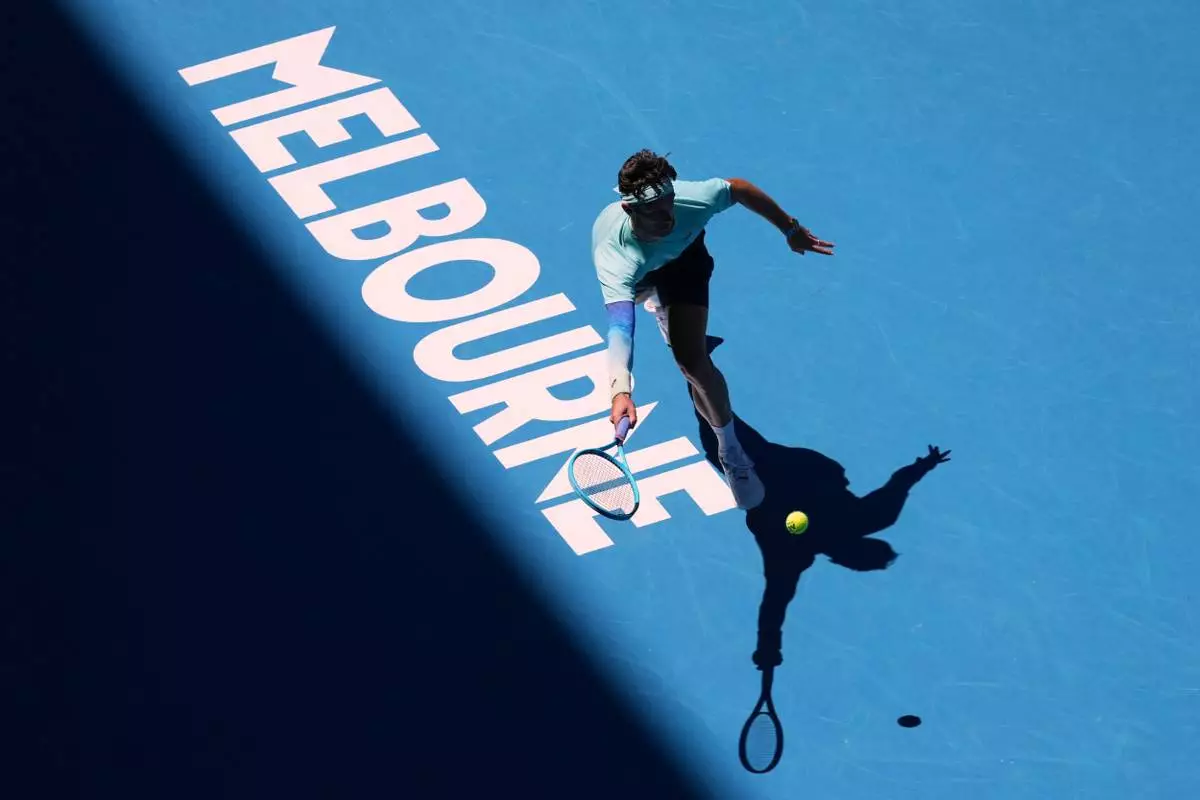
Lorenzo Musetti of Italy plays a forehand return to Tomas Machac of the Czech Republic during their third round match at the Australian Open tennis championship in Melbourne, Australia, Saturday, Jan. 24, 2026. (AP Photo/Asanka Brendon Ratnayake)

Lorenzo Musetti of Italy plays a forehand return to Tomas Machac of the Czech Republic during their third round match at the Australian Open tennis championship in Melbourne, Australia, Saturday, Jan. 24, 2026. (AP Photo/Asanka Brendon Ratnayake)

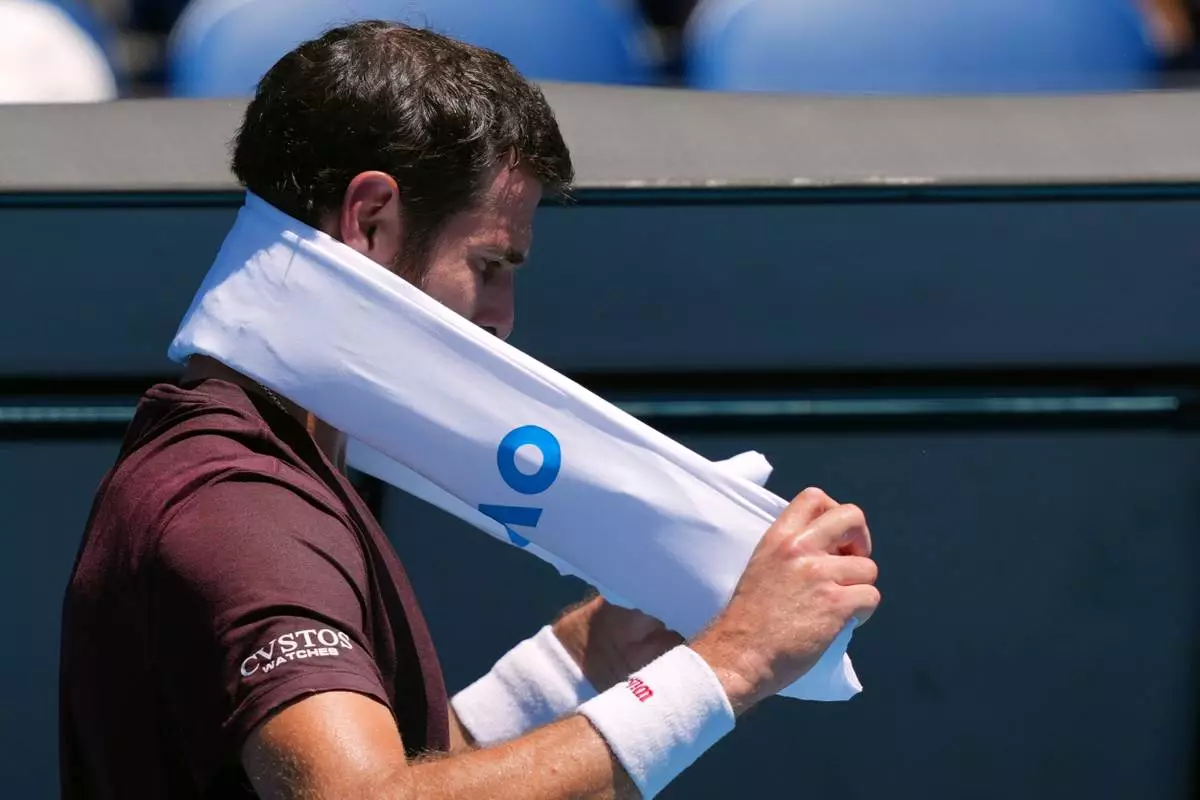
Karen Khachanov of Russia wraps an ice towel around his neck during a break in his third round match against Luciano Darderi of Italy at the Australian Open tennis championship in Melbourne, Australia, Saturday, Jan. 24, 2026. (AP Photo/Dar Yasin)

Karen Khachanov of Russia wraps an ice towel around his neck during a break in his third round match against Luciano Darderi of Italy at the Australian Open tennis championship in Melbourne, Australia, Saturday, Jan. 24, 2026. (AP Photo/Dar Yasin)

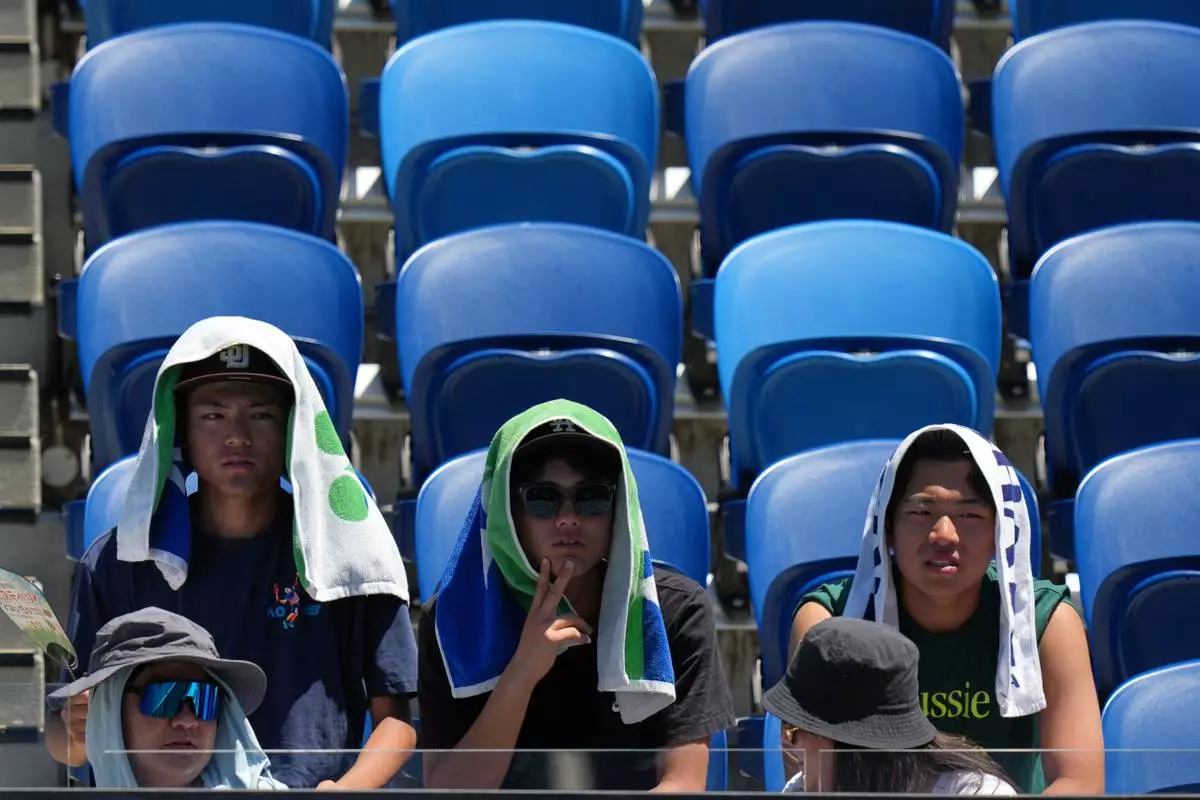
Spectators watch third round matches at the Australian Open tennis championship in Melbourne, Australia, Saturday, Jan. 24, 2026. (AP Photo/Dar Yasin)

Spectators watch third round matches at the Australian Open tennis championship in Melbourne, Australia, Saturday, Jan. 24, 2026. (AP Photo/Dar Yasin)

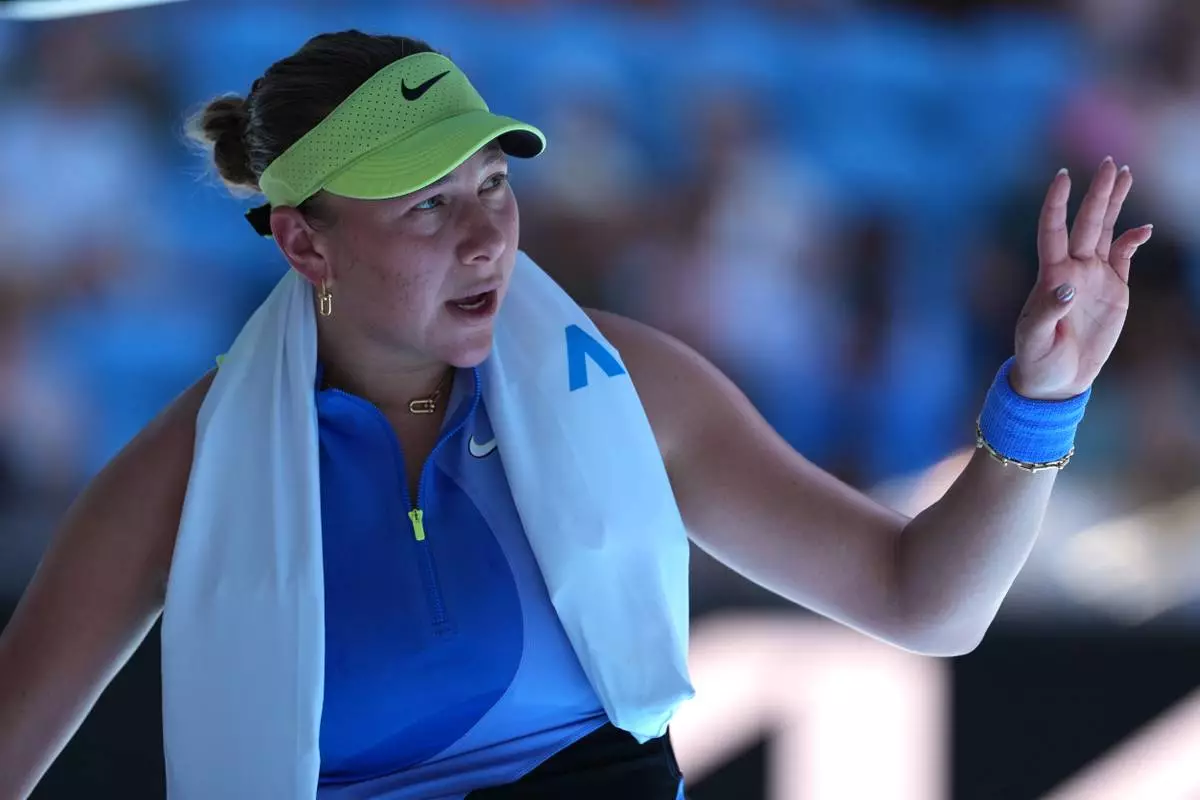
Amanda Anisimova of the U.S. gestures during her third round match against compatriot Peyton Stearns at the Australian Open tennis championship in Melbourne, Australia, Saturday, Jan. 24, 2026. (AP Photo/Aaron Favila)

Amanda Anisimova of the U.S. gestures during her third round match against compatriot Peyton Stearns at the Australian Open tennis championship in Melbourne, Australia, Saturday, Jan. 24, 2026. (AP Photo/Aaron Favila)

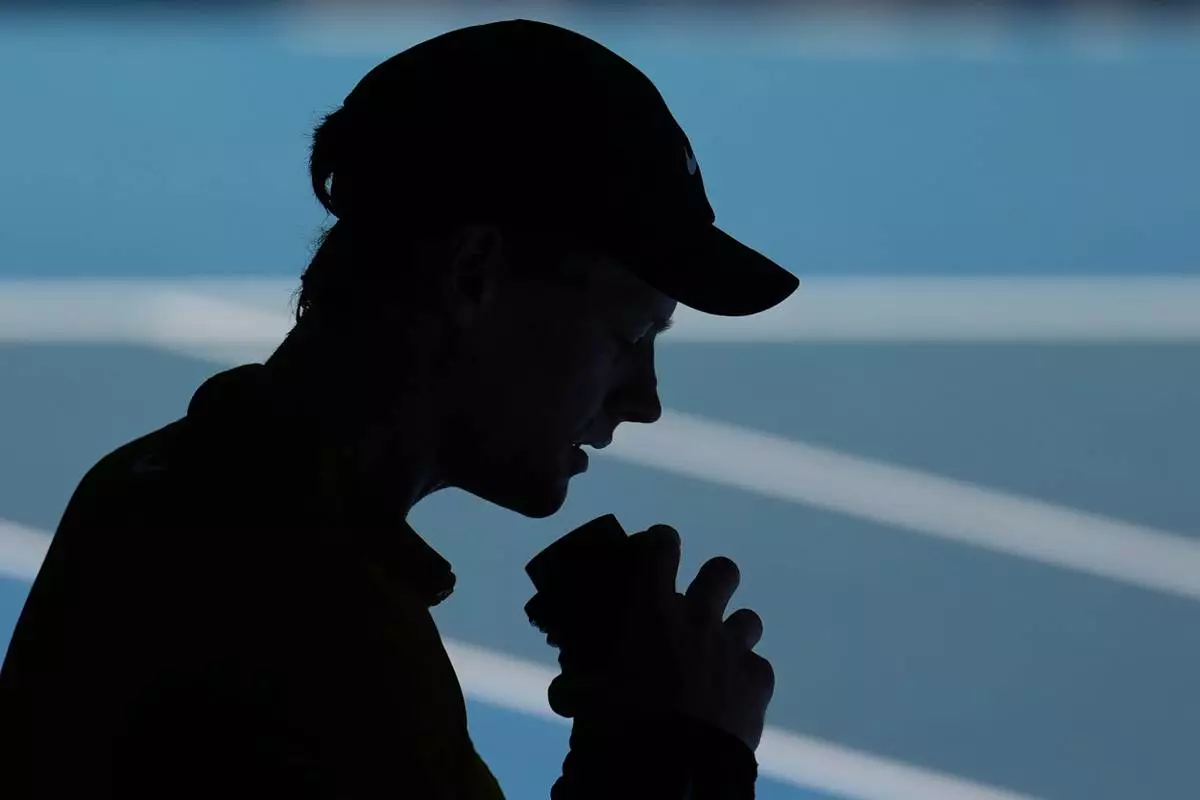
Jannik Sinner of Italy takes a drink during his third round match against Eliot Spizzirri of the U.S. at the Australian Open tennis championship in Melbourne, Australia, Saturday, Jan. 24, 2026. (AP Photo/Dita Alangkara)

Jannik Sinner of Italy takes a drink during his third round match against Eliot Spizzirri of the U.S. at the Australian Open tennis championship in Melbourne, Australia, Saturday, Jan. 24, 2026. (AP Photo/Dita Alangkara)

Recommended Articles