The newly unveiled School of Space Exploration at the University of Chinese Academy of Sciences aims to cultivate and pool comprehensive talents in deep-space exploration as part of the country's goal in advancing its strength in aerospace.
The school, officially launched on Tuesday, has designed an interdisciplinary curriculum for students to have them prepared for the next frontier in space exploration.
"I think this is a very promising direction. It requires interdisciplinary knowledge, with excellent foundation in multiple disciplines including mathematics, mechanics and fluid mechanics. I hope I can first solidify my multidisciplinary foundation and develop scientific thinking in this process," said Zhuang Hengdong, a student with the School of Space Exploration.
"It feels like our perspective has shifted from how high we can fly to how far we can go. In the past, we focused more on Earth-moon exploration and related engineering. In the future, we'll be exploring more of the unknown universe, possibly extending to the entire solar system and even longer-range deep-space explorations," said Cheng Lei, another student at the school.
Zhu Junqiang, dean of the new school, and also, an academician of the Chinese Academy of Sciences, noted that the School of Space Exploration will cultivate talents who are curious about the unknown world with innovative spirits.
"Space exploration is itself a name full of imagination. There are still many unknowns in space that will encourage people to explore. We hope to cultivate comprehensive and cross-disciplinary talents who can meet the needs of dealing with changes in the world situation and who can not only understand engineering and design advanced launch vehicles and space stations, but also possess strong scientific literacy, study key scientific problems in space, and dare to explore the unknown world with a strong sense of innovation and innovative spirit," said Zhu.
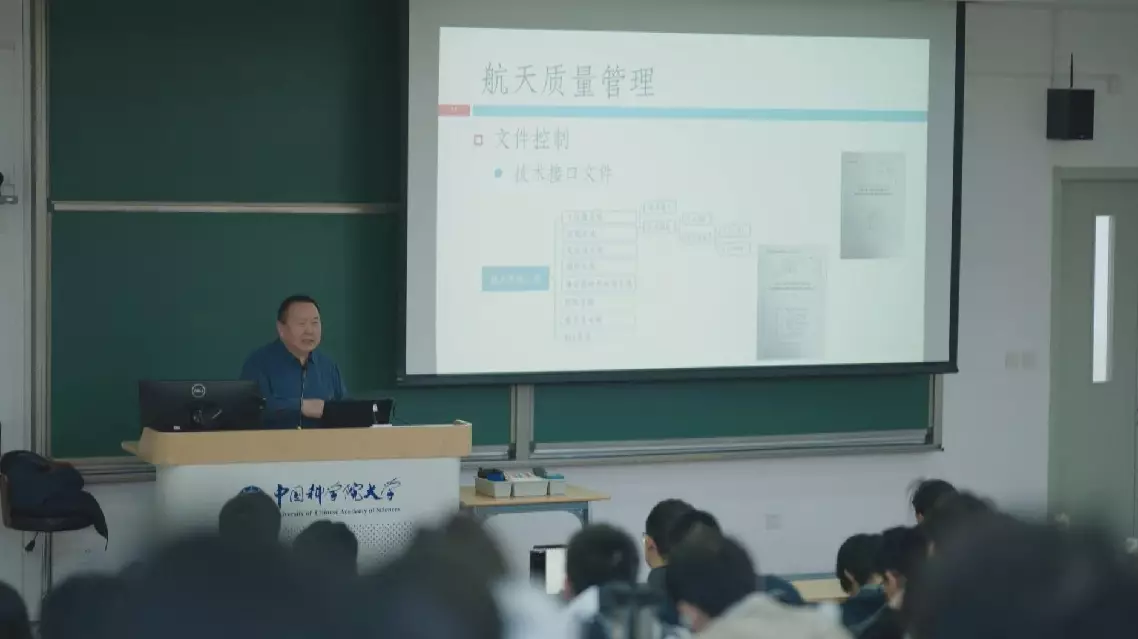
China's new space exploration school aims to train next-generation deep-space talents
Chinese President Xi Jinping on Monday said normal passage through the Strait of Hormuz should be maintained.
Xi made the remarks during a phone conversation with Saudi Crown Prince and Prime Minister Mohammed bin Salman Al Saud.
Xi pointed out that China attaches great importance to developing relations with Saudi Arabia and has always adhered to the principles of mutual respect, equality and mutual benefit.
Noting that this year marks the 10th anniversary of the comprehensive strategic partnership between China and Saudi Arabia, Xi said China is willing to work with Saudi Arabia to seize this opportunity to deepen strategic mutual trust, strengthen practical cooperation, and enhance exchanges at all levels, so as to continuously expand the breadth and depth of bilateral relations and set as an example for advancing relations between China and Arab countries.
On the current situation in the Middle East and the Gulf region, Xi stressed that China calls for an immediate and comprehensive ceasefire and cessation of hostilities, supports all efforts conducive to restoring peace, and remains committed to resolving disputes through political and diplomatic means.
Xi said that the normal passage through the Strait of Hormuz serves the common interests of regional countries and the international community, adding that China supports regional countries in building a common home marked by good-neighborliness, development, security and cooperation, mastering their own future and destiny, and promoting long-term peace and stability in the region.
Mohammed, for his part, said that Saudi-China relations are strategic and developing relations with China is vital to his country, noting that the current conflict in the Middle East undermines the security of Gulf nations and severely impacts global energy supply and economic operation.
Saudi Arabia, committed to resolving disputes and differences through dialogue, hopes to prevent the situation from escalating, he said, adding that China, as a responsible major country, has consistently upheld fairness and justice and supported good neighborliness, dialogue and cooperation among countries in the Middle East.
Saudi Arabia is willing to enhance communication and coordination with China to preserve the current ceasefire, prevent a resurgence of the conflict, ensure the safe and free navigation through the Strait of Hormuz, and jointly seek ways to achieve long-term peace and stability in the region, said Mohammed.
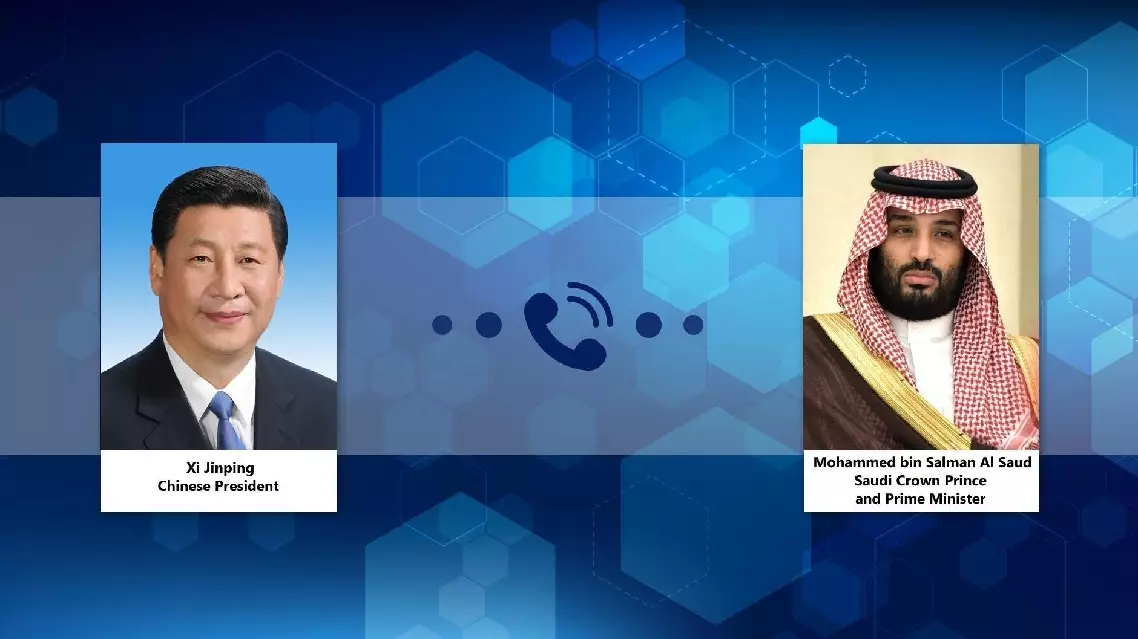
Xi says normal passage through Strait of Hormuz should be maintained