DETROIT (AP) — Patrick Kane of the Detroit Red Wings has tied Dallas' Mike Modano as the highest-scoring U.S.-born players in NHL history.
Kane matched Mike Modano by recording his 1,374th point on an assist on a goal by Alex DeBrincat late in Detroit's 3-1 loss to the Los Angeles Kings on Tuesday night. He got there a couple of months after turning 37, while Modano was 40 when he scored a goal to register point No. 1,374.
“Nothing really went right for us tonight, so it’s tough to really think about (the record) right now, but hopefully next game’s a better result and (I) can move past Mike next game," Kane said after the game. "That’d be nice, to do that and do it with a win.”
He will have a chance to move ahead of Modano when the Red Wings host the Washington Capitals on Thursday.
Kane has been one of the faces of American hockey since getting taken with the first pick in the 2007 draft by Chicago. He helped the Blackhawks win the Stanley Cup three times from 2010-15 as a co-headliner of one of the most successful runs since the league’s salary cap era began in ’05.
Earlier this month, Kane became the 50th player and fifth American to score 500 goals, following Keith Tkachuk, Jeremy Roenick and Joe Mullen. Brett Hull, a dual citizen who was born in Canada and played internationally for the U.S., had 741 goals and 1,391 points.
Kane won the Calder Trophy as rookie of the year in ’07-08, the Conn Smythe Trophy as playoff MVP in 2013 and the Hart Trophy as regular-season MVP in 2015-16, when he also led the league in scoring.
Kane has 1,374 points on 500 goals and 874 assists in 1,341 career NHL regular-season games.
Modano retired in 2011 with 561 goals and 813 assists in 1,499 games.
AP NHL: https://apnews.com/hub/nhl

Detroit Red Wings' Alex DeBrincat (93) and Patrick Kane (88) celebrate after DeBrincat's goal against the Winnipeg Jets during third-period NHL hockey game action in Winnipeg, Manitoba, Saturday, Jan. 24, 2026. (John Woods/The Canadian Press via AP)

Detroit Red Wings right wing Patrick Kane (88) watches a video tribute with his son Patrick III while being honored by the team for scoring his 500th career goal earlier in the month before an NHL hockey game against the Ottawa Senators, Sunday, Jan. 18, 2026, in Detroit. (AP Photo/Lon Horwedel)

Detroit Red Wings right wing Patrick Kane (88) stands with his family, from left to right, father Patrick Sr., mother Donna, girlfriend Amanda Grahovec, and son Patrick III while being honored by the team for scoring his 500th career goal earlier in the month before an NHL hockey game against the Ottawa Senators, Sunday, Jan. 18, 2026, in Detroit. (AP Photo/Lon Horwedel)
MINNEAPOLIS (AP) — If there’s been a soundtrack to life in Minneapolis in recent weeks, it’s the shrieking whistles and honking horns of thousands of people following immigration agents across the city.
They are the ever-moving shadow of the Trump administration's Operation Metro Surge.
They are teachers, scientists and stay-at-home parents. They own small businesses and wait tables. Their network is sprawling, often anonymous and with few overall objectives beyond helping immigrants, warning of approaching agents or filming videos to show the world what is happening.
And it's clear they will continue despite the White House striking a more conciliatory tone after the weekend killing of Alex Pretti, including the transfer of Gregory Bovino, the senior Border Patrol official who was the public face of the immigration crackdown.
“I think that everyone slept a little better knowing that Bovino had been kicked out of Minneapolis,” said Andrew Fahlstrom, who helps run Defend the 612, a hub for volunteer networks. “But I don’t think the threat that we’re under will change because they change out the local puppets.”
What started with scattered arrests in December ramped up dramatically in early January, when a top ICE official announced the “largest immigration operation ever.”
Masked, heavily armed agents traveling in convoys of unmarked SUVs became commonplace in some neighborhoods. By this week, more than 3,400 people had been arrested, according to Immigration and Customs Enforcement. At least 2,000 ICE officers and 1,000 Border Patrol officers were on the ground.
Administration officials insist they are focusing on criminals in the U.S. illegally, but the reality in the streets has been far more aggressive. Agents have stopped people, seemingly randomly, to demand citizenship papers, including off-duty Latino and Black police officers and city workers, area officials say.
They smashed through the front door of a Liberian man and detained him without a proper warrant, even though he'd been checking in regularly with immigration officials. They have detained children along with their parents and used tear gas outside a high school in an altercation with protesters after detaining someone.
To be sure, federal agents are barely a presence in many areas, and most people have never smelled a whiff of tear gas. But the crackdown rippled quickly through immigrant-heavy neighborhoods. Patients are avoiding life-saving medical care, doctors said. Thousands of immigrant children are staying home. Immigrant businesses shut down, cut their hours or kept their doors locked to everyone but regular customers.
Activist groups rapidly organized across deeply liberal Minneapolis-St. Paul and some suburbs. Small armies of volunteers began making food deliveries to immigrants afraid to leave their homes. They drove people to work and stood watch outside schools.
They also created interlocking webs of dozens, perhaps hundreds, of rapid response networks — sophisticated systems involving thousands of volunteers who track immigration agents, communicating with encrypted apps like Signal.
Tracking often means little more than quietly reporting the movement of convoys to dispatchers and recording the license plates of possible federal vehicles.
But it's not always quiet. Protester caravans regularly form behind immigration convoys, creating mobile protests of anger and warning that weave through city streets.
When agents stop to arrest or question someone, the networks signal the location, summoning more people who sound warnings with whistles and honking, film what’s happening and call out legal advice to people being detained.
Sometimes it all can feel performative, whether it’s Bovino in body armor tossing a smoke grenade, or young activists who rarely take off their helmets and gas masks, even when law enforcement is nowhere to be seen.
But crowds often lead to real confrontations, with protesters screaming at immigration agents. Agents respond only sometimes, but when they do it’s often with punches, pepper spray, tear gas and arrests.
Those confrontations worry some in the activist world.
Take the recent afternoon in south Minneapolis, where dozens of protesters, some in gas masks, clashed with immigration agents in south Minneapolis. Protesters screamed at agents, threw snowballs and tried to block their vehicles. Agents responded by shoving protesters who got too close, firing pepper balls and finally throwing tear gas grenades and driving away. Demonstrators without masks wretched in the streets as volunteers handed out bottles of water to flush their eyes.
By then, even many of the people in the protest weren’t sure what started it, including the city council member who soon arrived.
Minneapolis has a long tradition of progressivism, and Jason Chavez is a proud part of that.
He bristled when asked about the confrontation.
“I didn’t see anybody ‘confronting,’” said Chavez. “I saw people alerting neighbors that ICE was in their neighborhood. And that’s what neighbors should continue to do.”
To understand this world, talk to a woman known in the rapid response networks only by her nickname, Sunshine. She asked that her real name not be used, fearing retaliation.
A friendly woman who works in health care, she has spent hundreds of hours in her slightly beat-up Subaru patrolling an immigrant St. Paul enclave of taquerias and Asian grocery stores, watching for signs of federal agents. She can spot an idling SUV from the tiniest hint of exhaust, an out-of-state license plate from a block away, and quickly distinguish an undercover St. Paul police car from an unmarked immigration vehicle.
On the messaging apps, she's simply Sunshine. She knows the real names of few other people, even after working with some for weeks on end.
She hates what is happening, and feels deeply for people living in fear. She worries the Trump administration wants to push the nation into civil war, and believes she has no choice except to patrol — “commuting” it's often called, half-jokingly — every day.
“Sometimes people just want to pick up their kid and walk their dog and go to work. And I get that. I get that desire,” she said while driving through the neighborhood last week. “I just don’t know if that’s the world we live in anymore.”
She runs constant equations in her head: Should she report an immigration vehicle to the network's dispatcher, or honk her horn as a warning? Would honking unnecessarily scare residents who are already afraid? Are agents leading her around? Are federal vehicles moving to launch a raid, or are they distracting observers while other agents make arrests elsewhere?
She is careful and avoids confrontation. She also finds hope in the community that has been created, and how offers to volunteer exploded after the Jan. 7 killing of Renee Good by an ICE agent. And she understands the anger of the people who face off against agents.
“My strategy, my approach, my risk calculation is different than other peoples'. And at the same time, the vitriol, the frustration, I get it,” she said. “And sometimes it feels good to see someone unleash that.”
Not everyone agrees. Even nationally, some activist groups have pushed back against protest strategies that could lead to clashes.
“Loud does not equal effective,” a group in a heavily immigrant Maryland county said in a recent social media post, explaining why their volunteers don't use whistles. Among other things, the Montgomery County Immigrant Rights Collective warned that whistling can “escalate already volatile ICE agents who don't respect our rights” and “increase the likelihood of aggression toward bystanders or the detained person.”
“This is not an action movie,” the post says. “You are not in a one-on-one fight with ICE.”
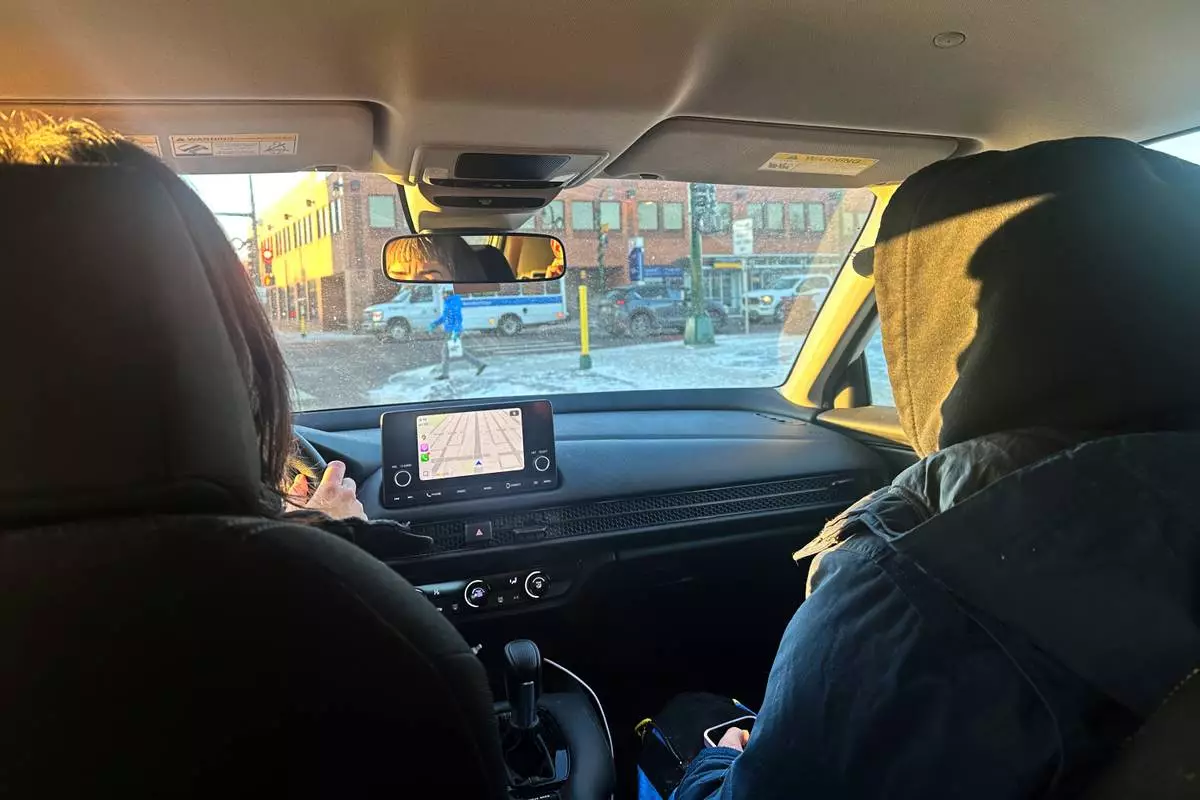
A pair of volunteer observers patrol south Minneapolis neighborhoods Tuesday, Jan 27, 2026, looking for signs of activity by federal immigration officers. (AP Photo/Tim Sullivan)
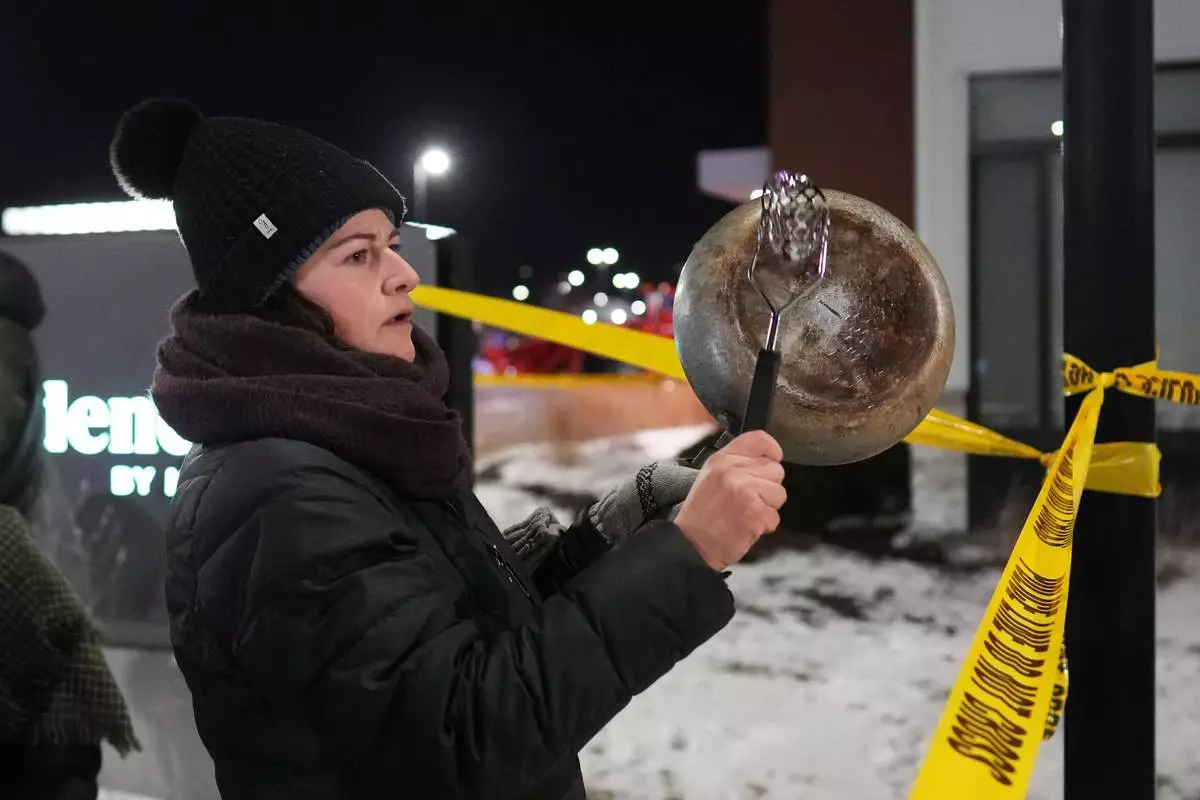
A demonstrator makes noise during a protest outside a SpringHill Suites and Residence Inn by Marriott hotels on Monday, Jan. 26, 2026, in Maple Grove, Minn. (AP Photo/Adam Gray)
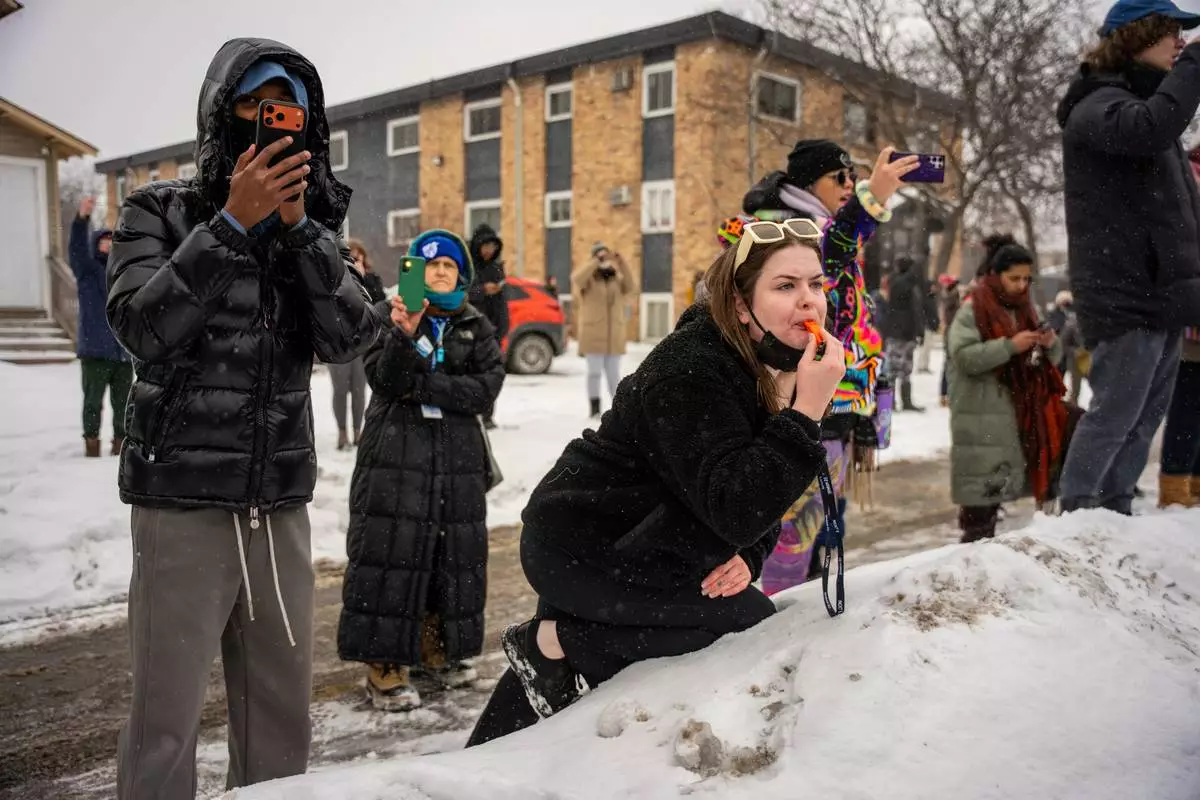
People record and react to federal agents arresting people, Wednesday, Jan. 21, 2026, in Minneapolis. (AP Photo/Angelina Katsanis)
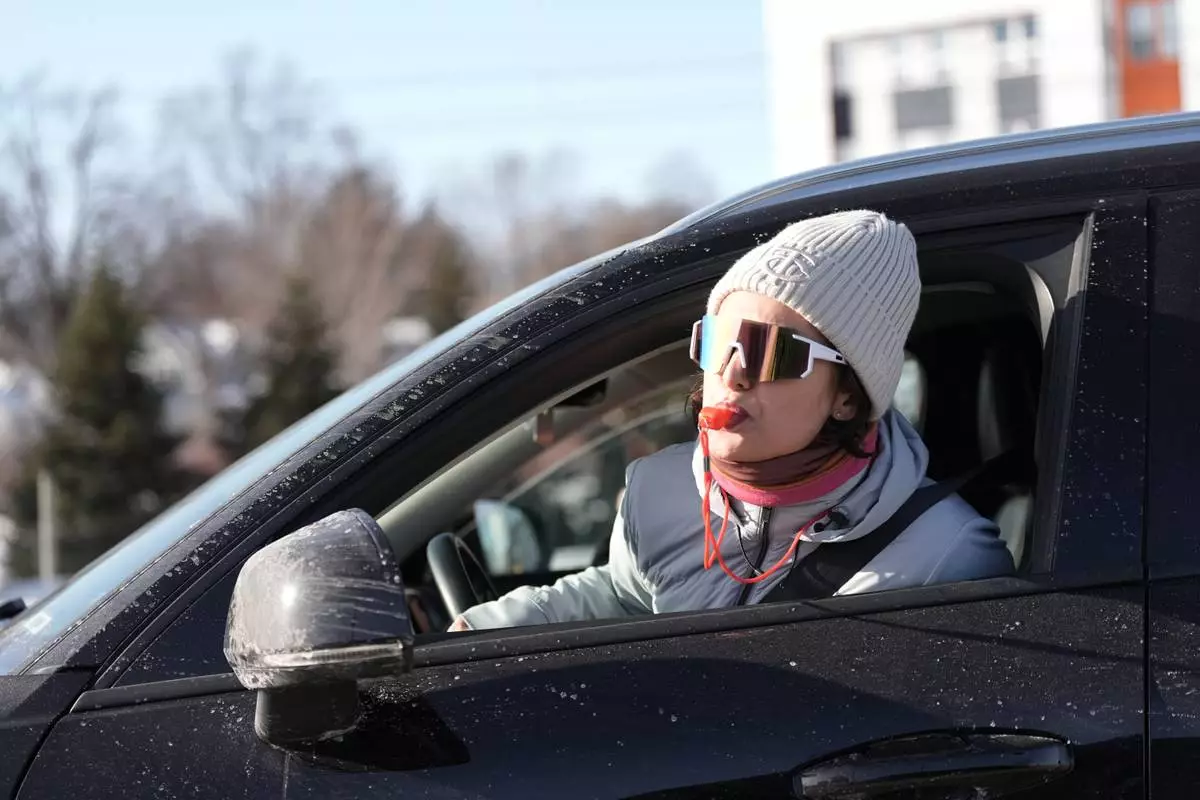
A woman uses a whistle as a convoy of Federal agents drive by on Friday, Jan. 23, 2026, in Minneapolis. (AP Photo/Angelina Katsanis)
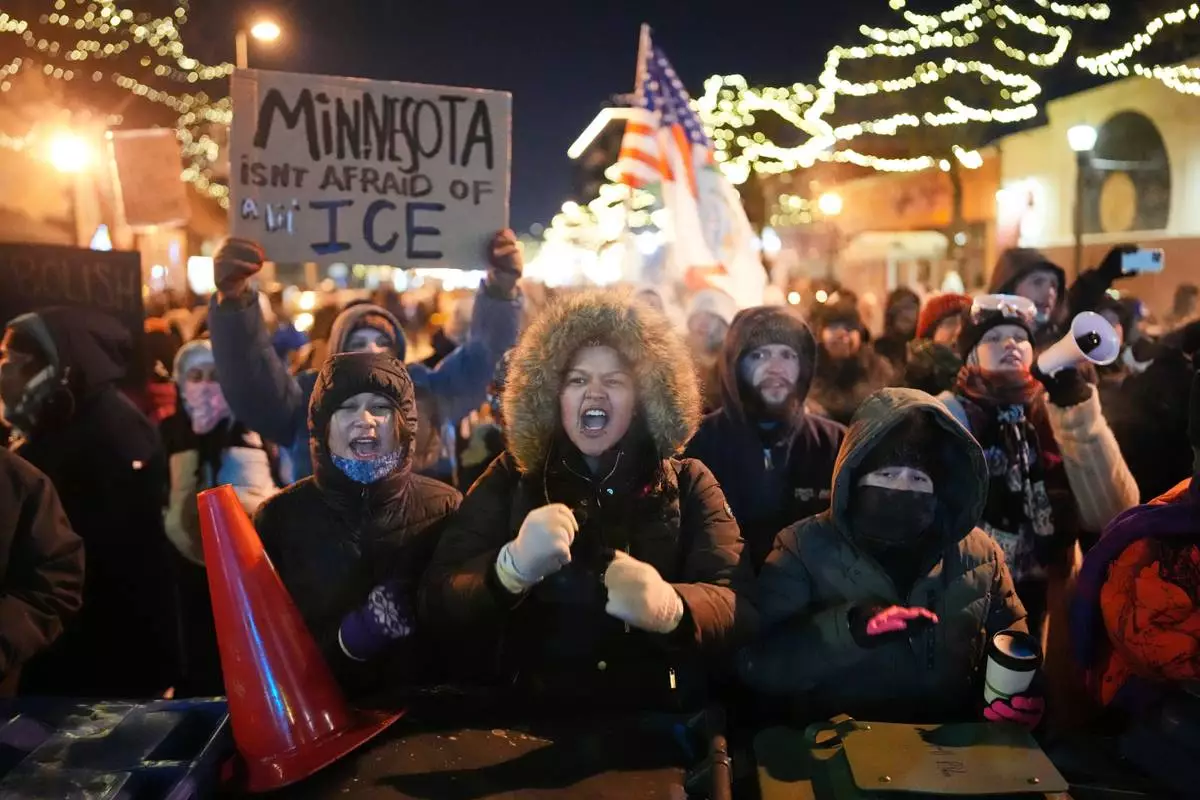
Protesters chant and bang on trash cans as they stand behind a makeshift barricade during a protest in response to the death of 37-year-old Alex Pretti, who was fatally shot by a U.S. Border Patrol officer earlier in the day, Saturday, Jan. 24, 2026, in Minneapolis. (AP Photo/Adam Gray)