PHOENIX (AP) — Mark Williams scored 27 points, Dillon Brooks had 26 and the short-handed Suns beat the Brooklyn Nets 106-102 on Tuesday night in a game that featured a scuffle late in the fourth quarter.
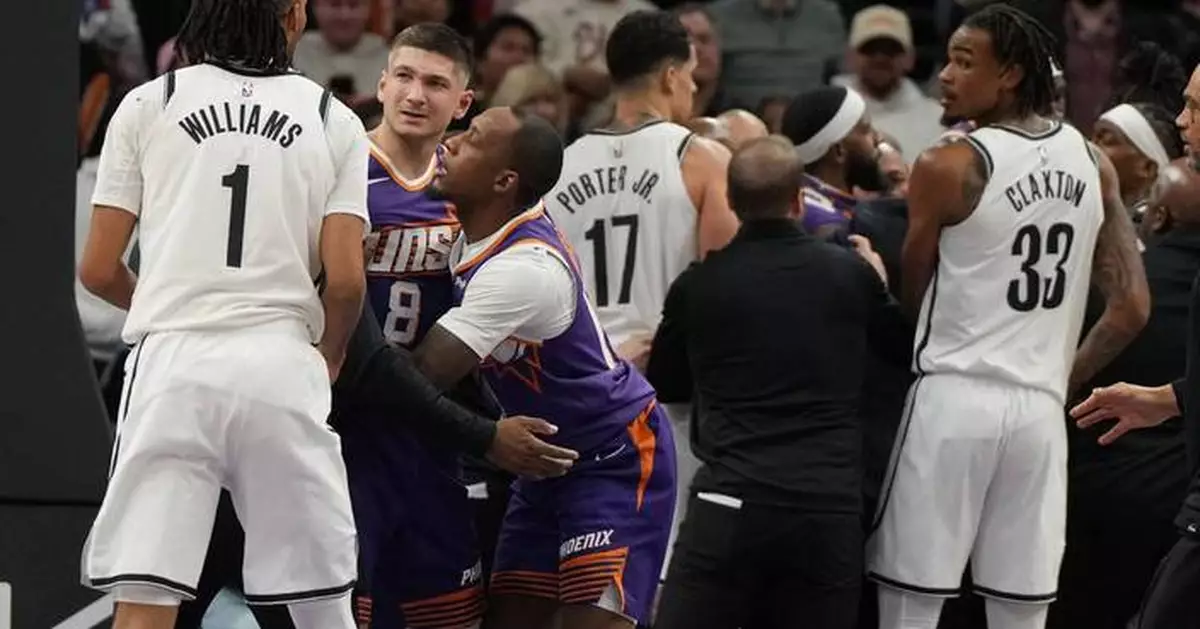
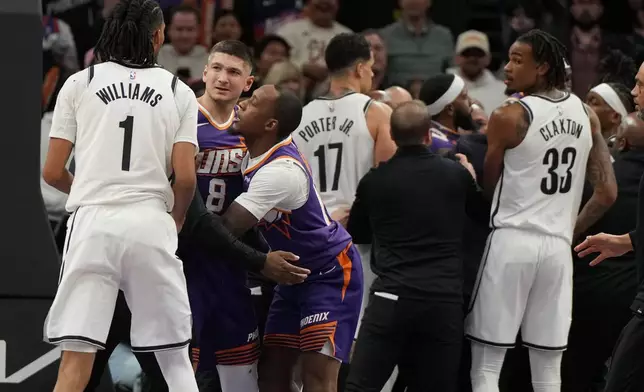
After Brooks put the Suns ahead 104-102 on two free throws with 1:23 remaining, a steal by the Suns' Royce O'Neale led to a scramble for the ball in the paint. Brooks tried to wrestle the ball away from Ziaire Williams after the whistle, and the Nets' Egor Demin pushed Brooks.
Click to Gallery
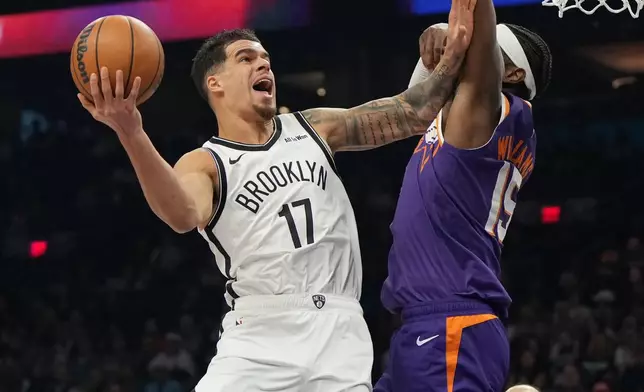
Brooklyn Nets forward Michael Porter Jr. shoots on Phoenix Suns center Mark Williams (15) during the first half of an NBA basketball game, Tuesday, Jan. 27, 2026, in Phoenix. (AP Photo/Rick Scuteri)
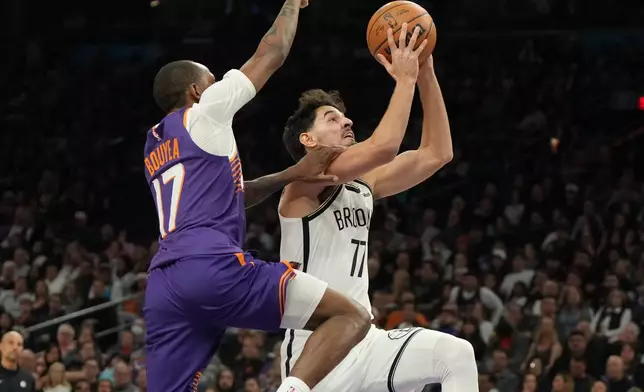
Brooklyn Nets forward Michael Porter Jr. drives on Phoenix Suns guard Jamaree Bouyea (17) during the first half of an NBA basketball game, Tuesday, Jan. 27, 2026, in Phoenix. (AP Photo/Rick Scuteri)
Phoenix Suns guard Grayson Allen (8) shoots on Brooklyn Nets guard Egor Demin (8) during the second half of an NBA basketball game, Tuesday, Jan. 27, 2026, in Phoenix. (AP Photo/Rick Scuteri)
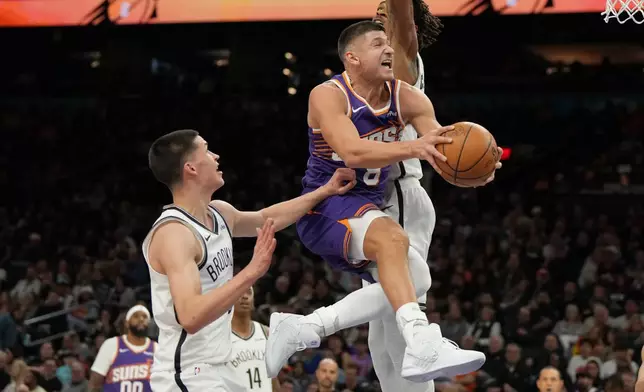
Phoenix Suns guard Grayson Allen (8) drives between Brooklyn Nets guard Egor Demin, left, and center Nic Claxton during the second half of an NBA basketball game, Tuesday, Jan. 27, 2026, in Phoenix. (AP Photo/Rick Scuteri)
Phoenix Suns guard Grayson Allen (8) and Brooklyn Nets forward Ziaire Williams (1) get separated during the second half of an NBA basketball game, Tuesday, Jan. 27, 2026, in Phoenix. (AP Photo/Rick Scuteri)
Several players started jawing at each other and assistant coaches from both sides gathered on the floor as officials tried to restore order. Demin, Mann and Michael Porter Jr. received technical fouls for the Nets, and the Suns' Grayson Allen and O'Neale also got technicals. Brooks did not receive a technical after getting one earlier in the game.
Allen added 18 points for the short-handed Suns, who ended a two-game skid. Devin Booker missed his second straight game after rolling his right ankle in a loss at Atlanta on Friday night, and Jalen Green also sat with a nagging right hamstring injury.
Porter finished with a season-high 36 points for the Nets, who have lost six straight and 14 of 16. Demin added 15 points, but Brooklyn struggled to find secondary scoring.
When Porter made a 3-pointer with 9:47 left in the third quarter, he had 12 of the Nets' 24 baskets for 27 points.
Phoenix led 91-81 midway through the fourth, but Brooklyn responded with a 19-5 run capped by Porter's 3 for a 100-96 lead with 3:33 left. Williams scored four quick points for Phoenix and then Allen tied it at 102-all with 1:39 remaining.
Nets: At Denver on Thursday night.
Suns: Host Detroit on Thursday night.
AP NBA: https://apnews.com/hub/nba
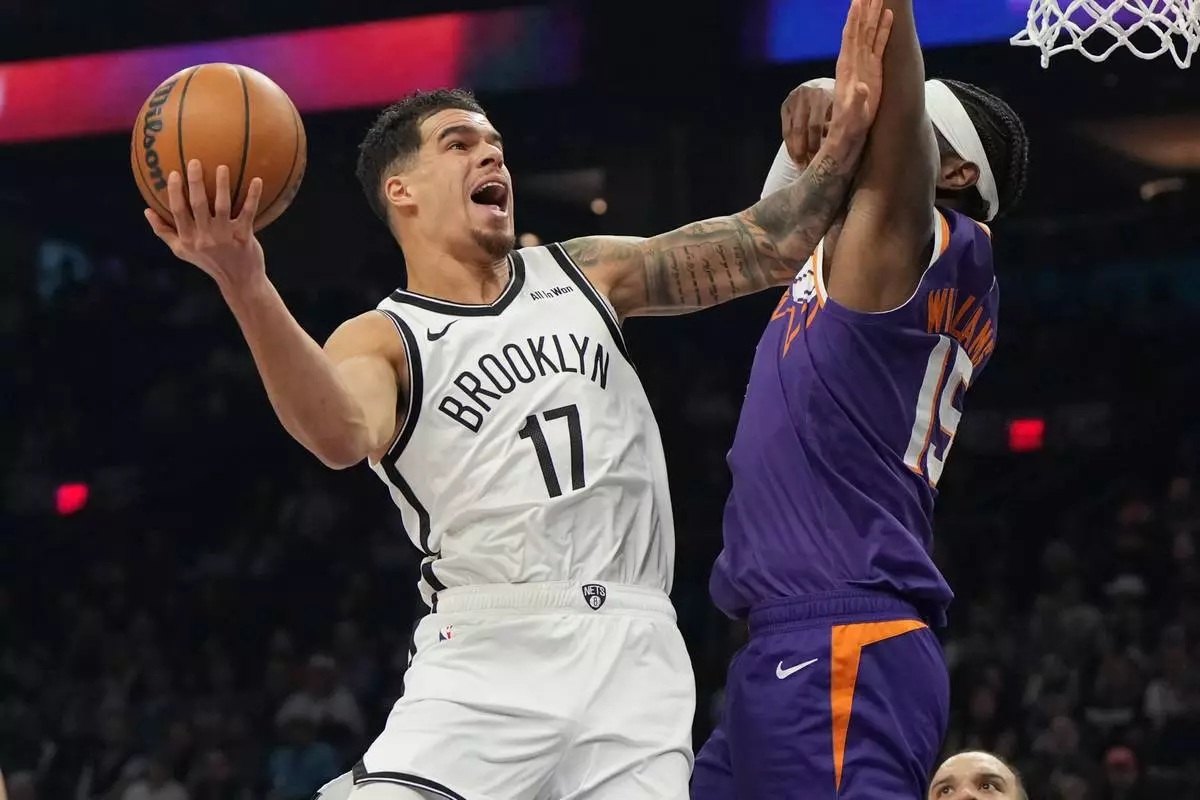
Brooklyn Nets forward Michael Porter Jr. shoots on Phoenix Suns center Mark Williams (15) during the first half of an NBA basketball game, Tuesday, Jan. 27, 2026, in Phoenix. (AP Photo/Rick Scuteri)
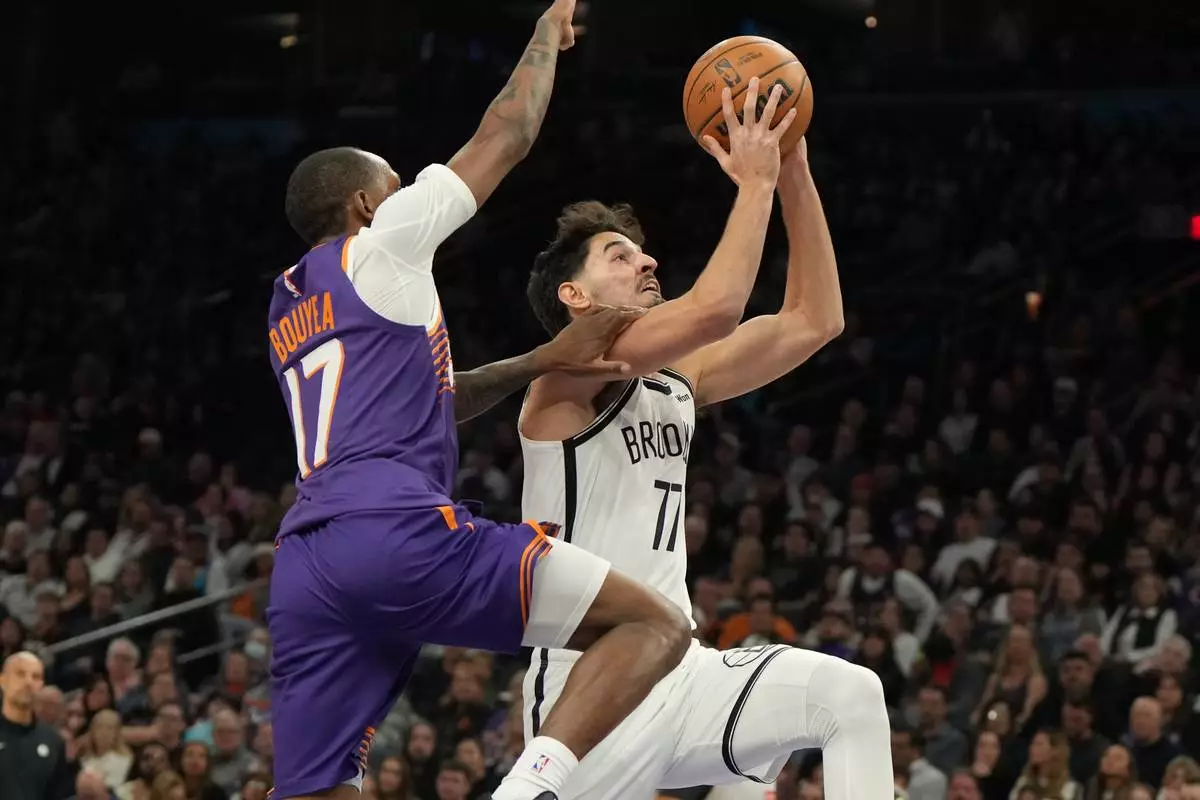
Brooklyn Nets forward Michael Porter Jr. drives on Phoenix Suns guard Jamaree Bouyea (17) during the first half of an NBA basketball game, Tuesday, Jan. 27, 2026, in Phoenix. (AP Photo/Rick Scuteri)
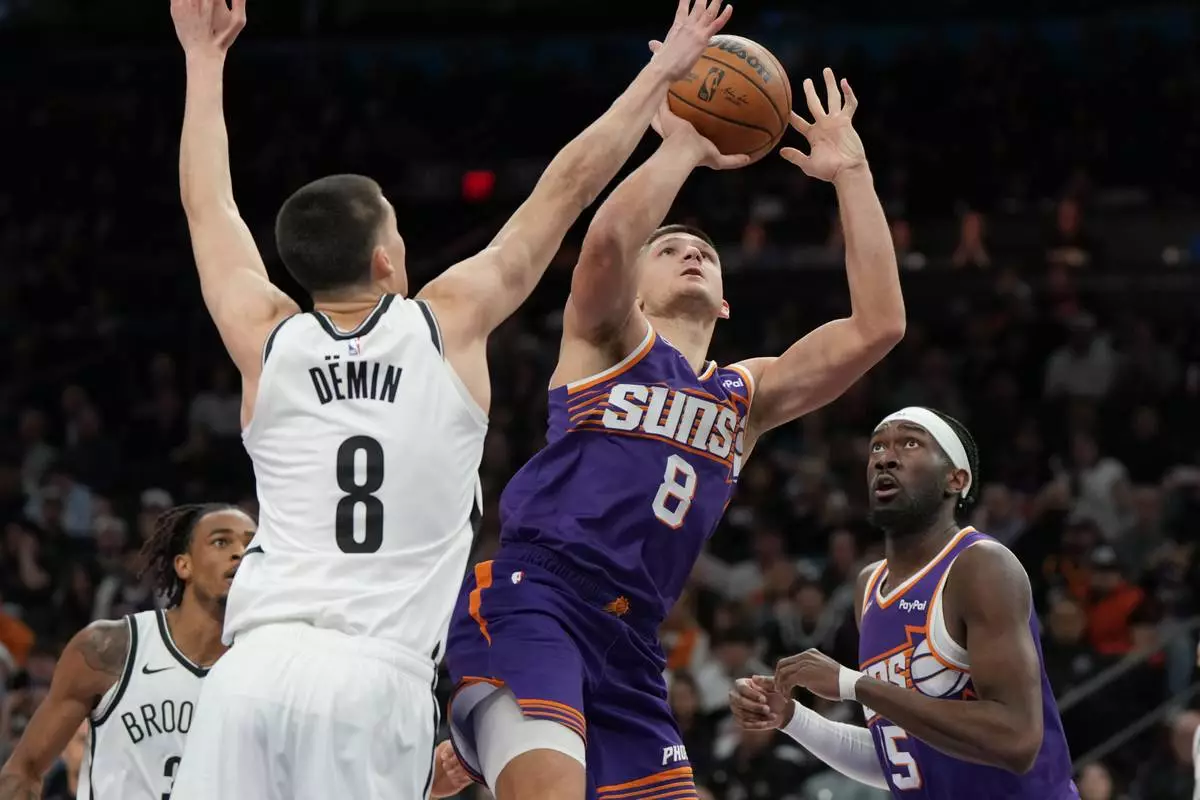
Phoenix Suns guard Grayson Allen (8) shoots on Brooklyn Nets guard Egor Demin (8) during the second half of an NBA basketball game, Tuesday, Jan. 27, 2026, in Phoenix. (AP Photo/Rick Scuteri)
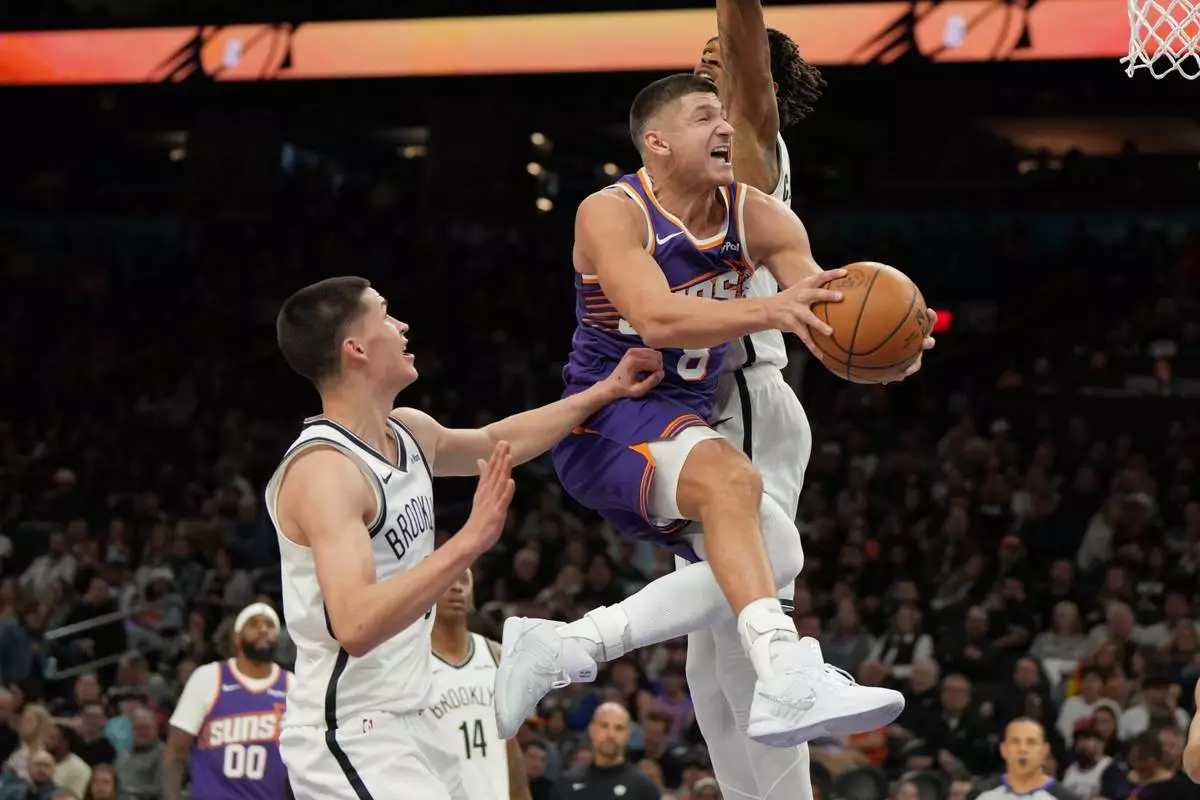
Phoenix Suns guard Grayson Allen (8) drives between Brooklyn Nets guard Egor Demin, left, and center Nic Claxton during the second half of an NBA basketball game, Tuesday, Jan. 27, 2026, in Phoenix. (AP Photo/Rick Scuteri)
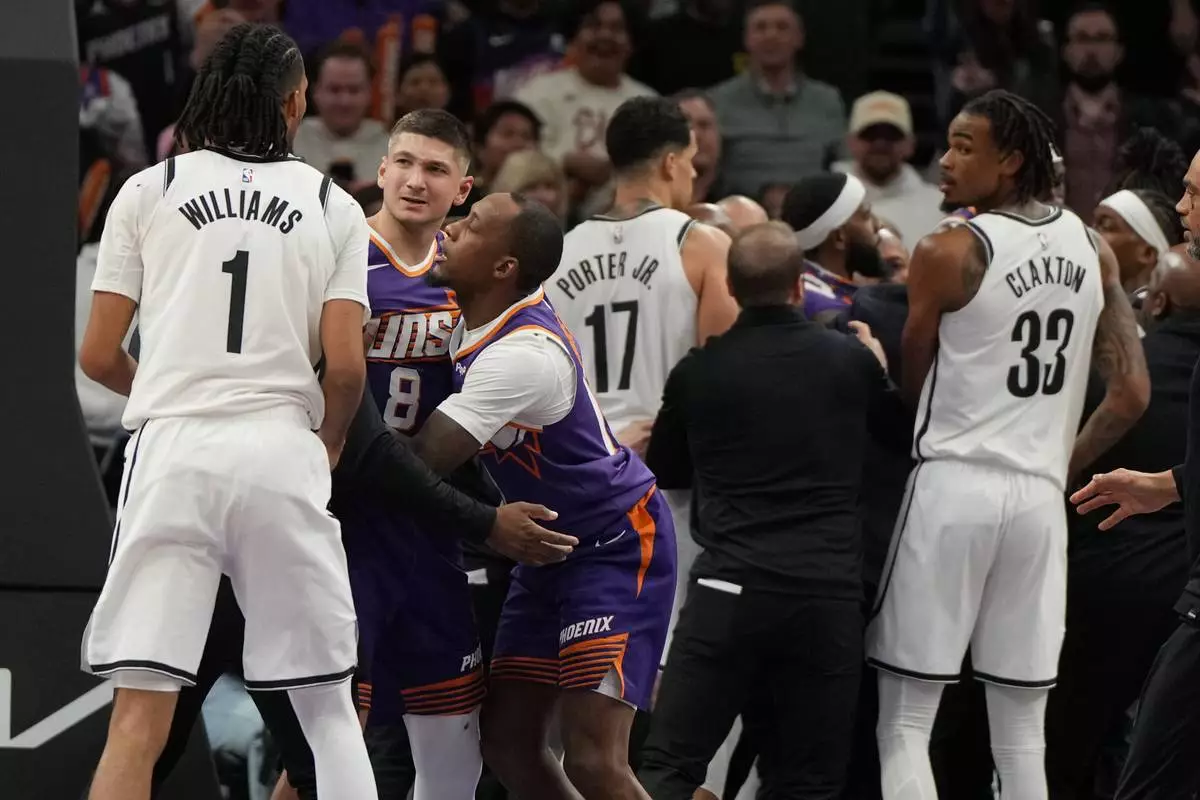
Phoenix Suns guard Grayson Allen (8) and Brooklyn Nets forward Ziaire Williams (1) get separated during the second half of an NBA basketball game, Tuesday, Jan. 27, 2026, in Phoenix. (AP Photo/Rick Scuteri)
ARAFAT, Saudi Arabia (AP) — Muslim pilgrims from around the world congregated on Mount Arafat in Saudi Arabia on Tuesday, the second official day of the annual Islamic pilgrimage, considered the pinnacle of the Hajj.
Despite the sweltering heat, the pilgrims gathered on the rocky hill and surrounding plain for intense prayers and worship that often mark a spiritual peak for them. They fervently murmured prayers and poured their hearts out in supplications. Many raised their hands in worship. It is common for pilgrims on that day, some with tears streaming down their faces, to ask God for forgiveness, mercy, blessings and good health.
The Hajj, one of the Five Pillars of Islam, is required once in a lifetime for every Muslim who can afford it and is physically able to perform it.
For pilgrims, the Hajj, performed over several days, can be a deeply moving spiritual experience and a chance to seek God’s forgiveness and the erasure of past sins. As they brave the intense heat to perform religious rituals, many pilgrims have been using umbrellas for shade.
A Saudi official said on Friday that more than 1.5 million pilgrims have arrived in the country from abroad.
This year, Muslims have been pouring into Saudi Arabia for the Hajj against the backdrop of a tenuous ceasefire in the Iran war and related uncertainty in the region.
The U.S. military said Monday that it carried out “self-defense” strikes in southern Iran, including on missile launch sites and boats used to lay mines, even as President Donald Trump said on social media that negotiations with Tehran were “proceeding nicely." Iran on Tuesday denounced the most recent U.S. strikes as a sign of “bad faith and unreliability” as negotiations pressed on toward a possible deal to end the war.
For many, performing the Hajj can be a realization of a lifelong dream as they spend years hoping and praying to one day be able to undertake the pilgrimage or saving up money and waiting for a permit to embark on the trip.
“This happens once in a lifetime,” Mohammad Asal, an Egyptian pilgrim, said. “People here have prepared their prayers, hoping that God will respond to them, because we know that ... the most important ritual of the Hajj is being in Arafat.”
The Hajj brings together large numbers of Muslims of diverse races, ethnicities, languages and socioeconomic classes, creating a sense of unity for many. It’s a mass, communal experience, with Muslims performing rituals together. But it is also deeply personal, as every pilgrim brings their own yearnings and experiences.
“It was incredible,” Ahmed Sufyan, a pilgrim from the United States, said on Tuesday. “The unity and peace that we feel is something I’ve never experienced before,” he added via WhatsApp.
“Our wishes are many,” Mohammad Obaid, a Sudanese pilgrim, said, adding he was praying for Sudan and Muslims everywhere.
Fam reported from Winter Park, Florida.
Associated Press religion coverage receives support through the AP’s collaboration with The Conversation US, with funding from Lilly Endowment Inc. The AP is solely responsible for this content.
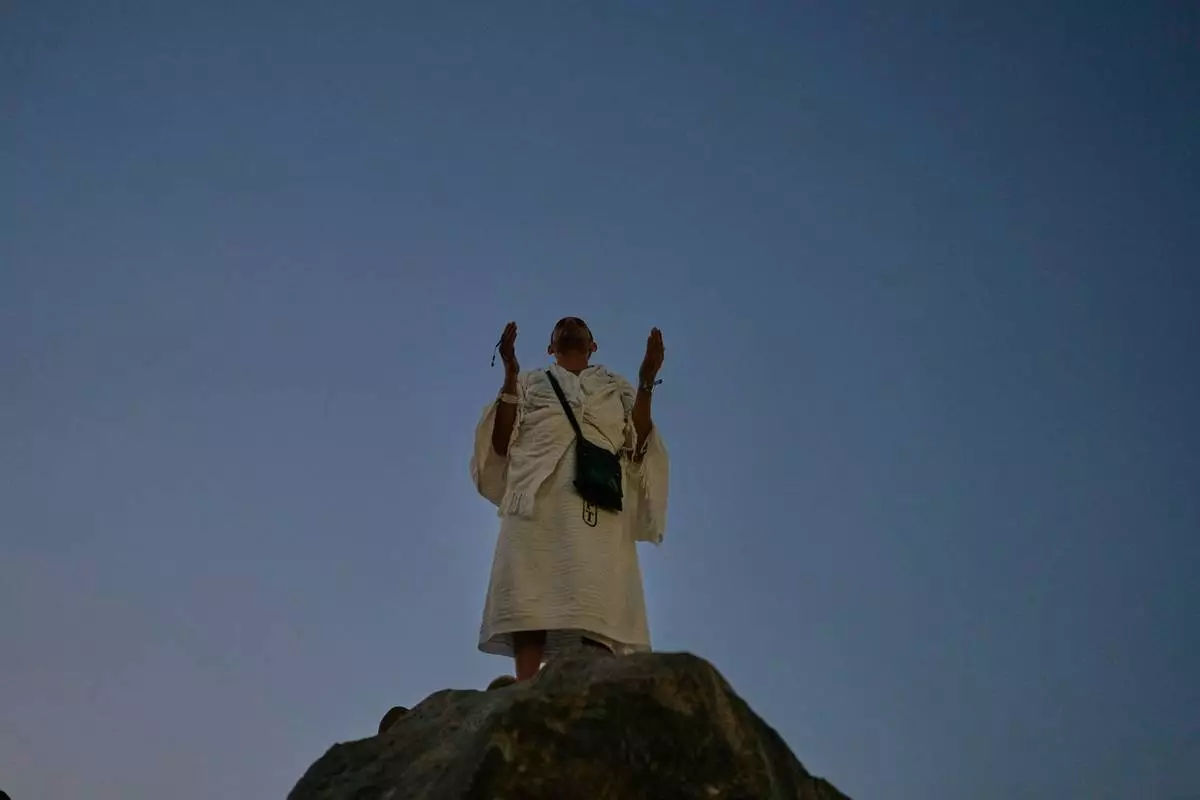
A Muslim pilgrim pray atop of the rocky hill known as the Mountain of Mercy, on the Plain of Arafat, during the annual Hajj pilgrimage near the holy city of Mecca, Saudi Arabia, Tuesday, May 26, 2026. (AP Photo/Altaf Qadri)
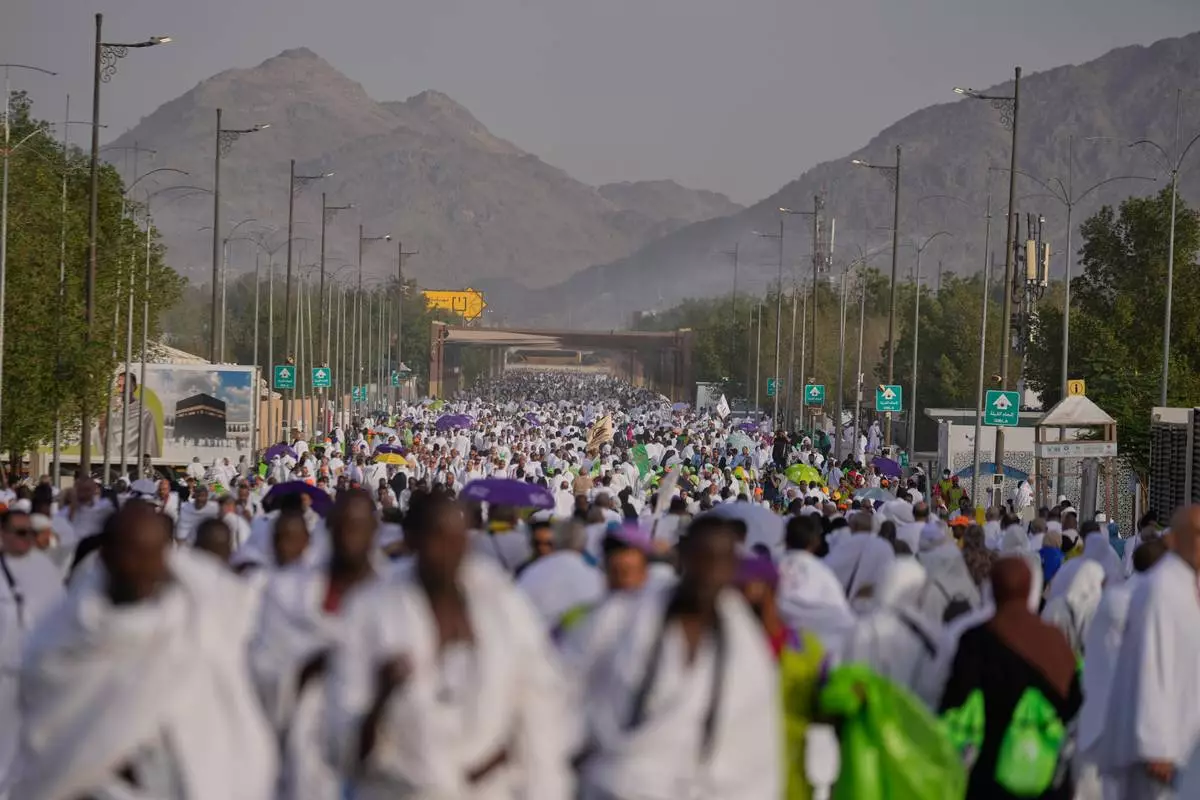
Muslim pilgrims walk towards the rocky hill known as the Mountain of Mercy, on the Plain of Arafat, during the annual Hajj pilgrimage near the holy city of Mecca, Saudi Arabia, Tuesday, May 26, 2026. (AP Photo/Altaf Qadri)
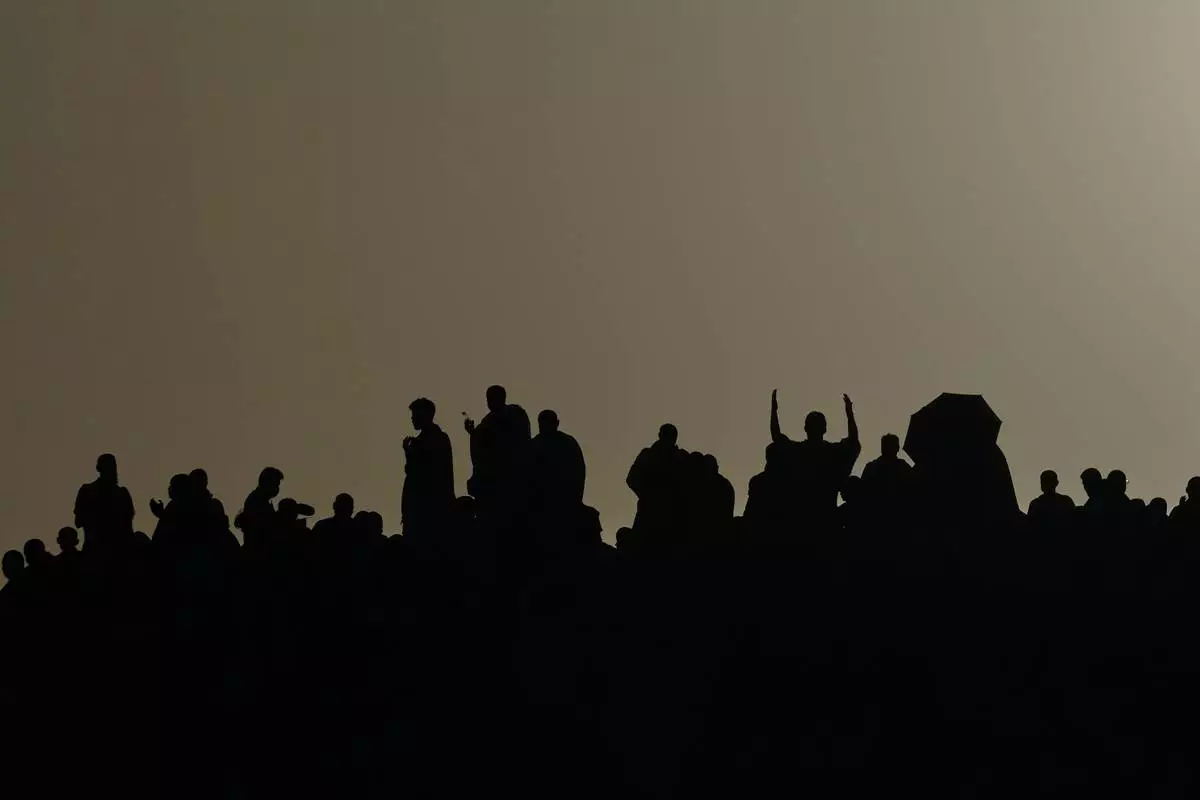
Muslim pilgrims are silhouetted as they pray at top of the rocky hill known as the Mountain of Mercy, on the Plain of Arafat, during the annual Hajj pilgrimage near the holy city of Mecca, Saudi Arabia, Tuesday, May 26, 2026. (AP Photo/Altaf Qadri)
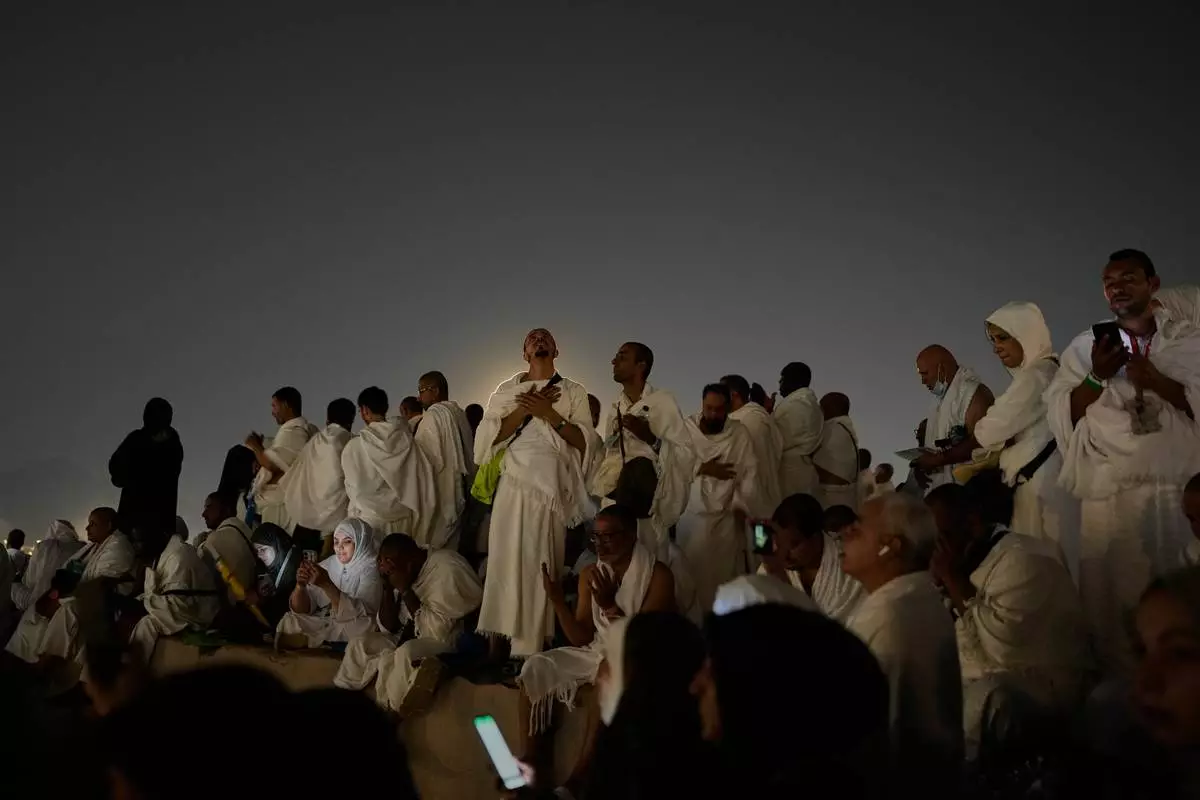
Muslim pilgrims pray at top of the rocky hill known as the Mountain of Mercy, on the Plain of Arafat, during the annual Hajj pilgrimage near the holy city of Mecca, Saudi Arabia, Tuesday, May 26, 2026. (AP Photo/Altaf Qadri)
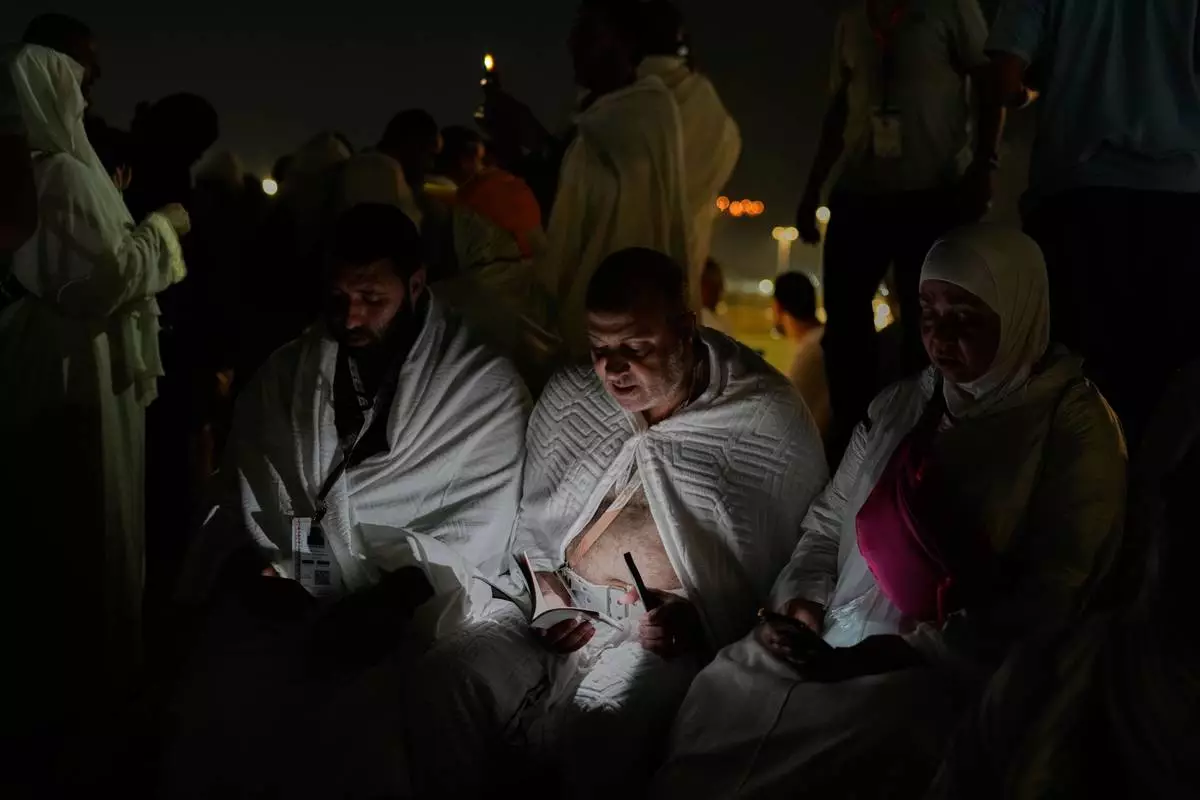
Muslim pilgrims read a copy of Islam's holy book Quran atop of the rocky hill known as the Mountain of Mercy, on the Plain of Arafat, during the annual Hajj pilgrimage near the holy city of Mecca, Saudi Arabia, Tuesday, May 26, 2026. (AP Photo/Altaf Qadri)