WASHINGTON (AP) — Being a night owl can be bad for your heart.
That may sound surprising but a large study found people who are more active late at night — when most of the population is winding down or already asleep — have poorer overall heart health than the average person.
“It is not like, that, night owls are doomed,” said research fellow Sina Kianersi of Brigham and Women's Hospital and Harvard Medical School, who led the study. “The challenge is the mismatch between your internal clock and typical daily schedules ” that makes it harder to follow heart-healthy behaviors.
And that’s fixable, added Kianersi, who describes himself as “sort of a night owl” who feels a boost in “my analytical thinking” after about 7 or 8 at night.
Heart disease is the leading cause of death in the U.S. The American Heart Association has a list of eight key factors that everyone should heed for better heart health: being more physically active; avoiding tobacco; getting enough sleep and a healthy diet; and controlling blood pressure, cholesterol, blood sugar and weight.
Where does being a night owl come in? That has to do with the body's circadian rhythm, our master biological clock. It follows a roughly 24-hour schedule that regulates not just when we become sleepy and when we’re more awake but also keeps organ systems in sync, influencing things like heart rate, blood pressure, stress hormones and metabolism.
Everybody’s circadian rhythm is a little different. Prior research had suggested night owls might have more health problems, as well as risk factors like higher rates of smoking and less physical activity, than people with more typical bedtimes, Kianersi said.
To learn more, Kianersi’s team tracked more than 300,000 middle-age and older adults in the UK Biobank, a huge health database that includes information about people’s sleep-wake preferences. About 8% of those people classified themselves as night owls, more active physically and mentally in the late afternoon or evening and up past most people’s bedtime. About a quarter were early-birds, most productive in the daylight hours and likewise early to bed. The rest were average, somewhere in the middle.
Over 14 years, the night owls had a 16% higher risk of a first heart attack or stroke compared to the average population, the researchers found.
The night owls, especially women, also had overall worse cardiovascular health based on meeting the heart association’s eight key factors, the researchers reported Wednesday in the Journal of the American Heart Association.
Unhealthy behaviors — smoking, insufficient sleep and poor diet — appear to be the main reasons.
“It comes down to the problem of a night owl trying to live in a morning person’s world. They’re getting up early for work because that’s when their job starts but it may not align with their internal rhythm,” said Kristen Knutson of Northwestern University, who led recent heart association guidance on circadian rhythms but wasn’t involved in the new study.
That affects more than sleep. For example, metabolism fluctuates throughout the day as the body produces insulin to turn food into energy. That means it might be harder for a night owl to handle a high-calorie breakfast eaten very early in the day, during what normally would still be their biological night, Knutson said. And if they're out late at night, it can be harder to find healthy food choices.
As for sleep, even if you can't meet the ideal of at least seven hours, sticking to a regular bedtime and wake time also may help, she and Kianersi said.
The study couldn't examine what night owls do when the rest of the world is asleep. But Kianersi said one of the best steps to protect heart health — for night owls and anyone — is to quit smoking.
“Focus on the basics, not perfection,” he said, again, advice that’s good for everyone.
The Associated Press Health and Science Department receives support from the Howard Hughes Medical Institute’s Department of Science Education and the Robert Wood Johnson Foundation. The AP is solely responsible for all content.
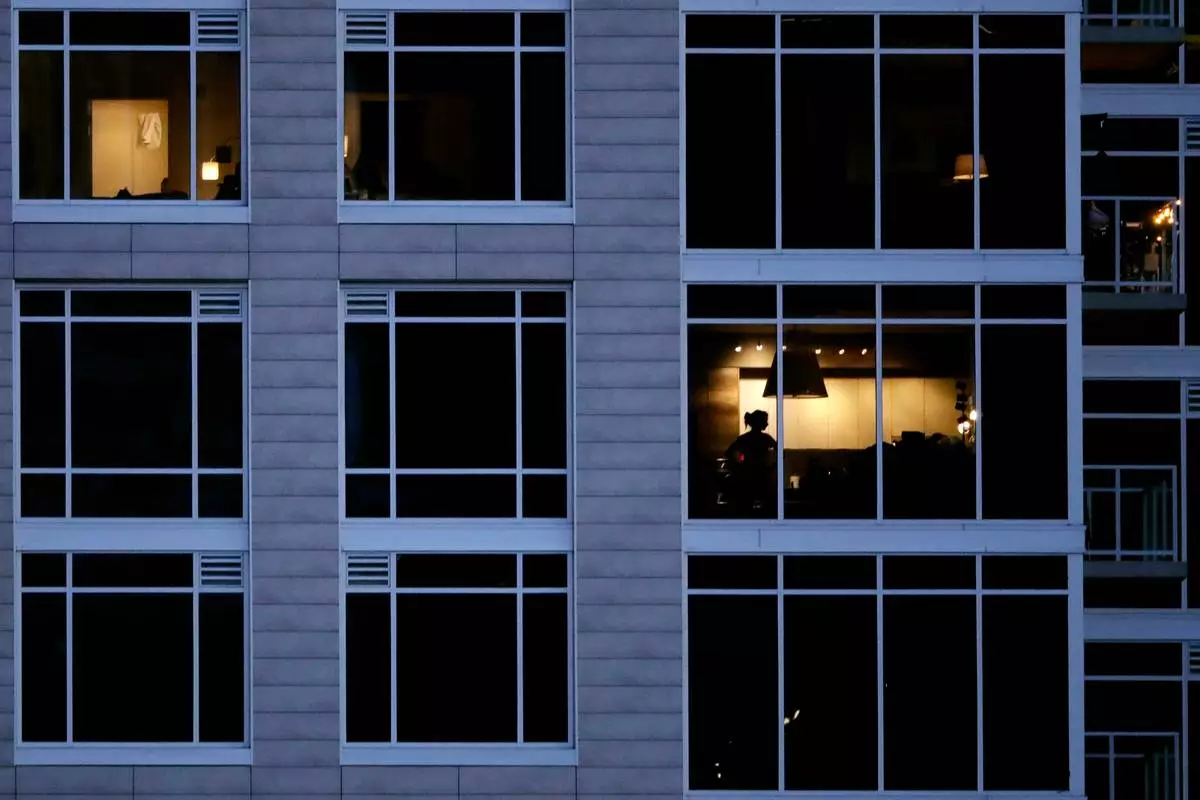
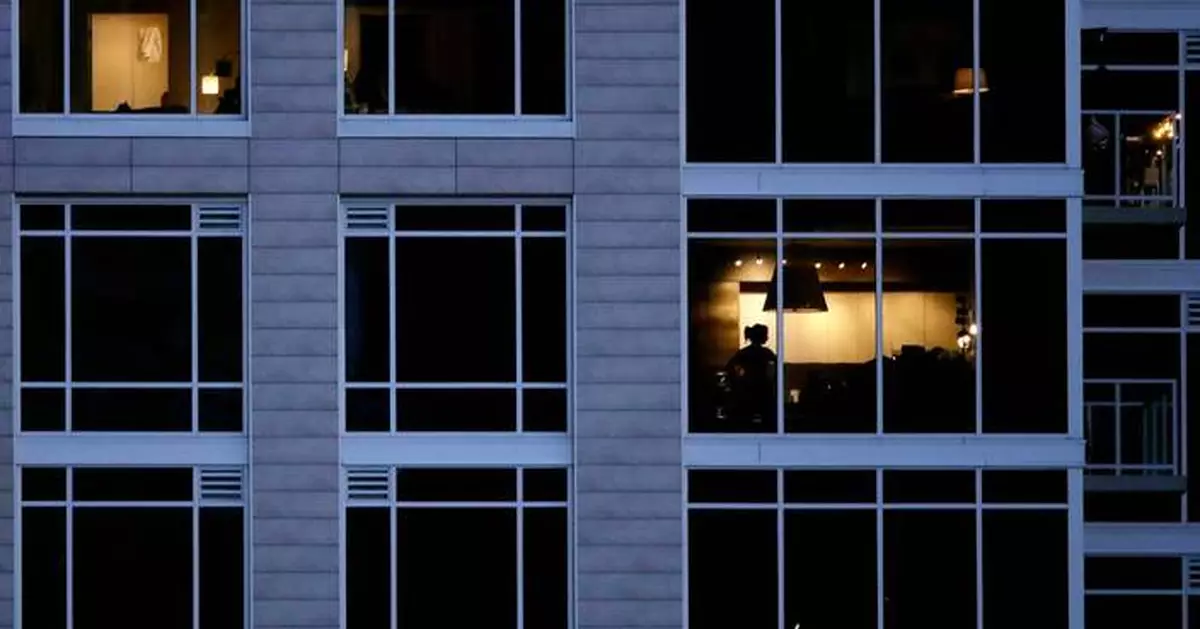
FILE - A person looks out of a window in an apartment building in Kansas City, Mo., May 3, 2020. (AP Photo/Charlie Riedel, File)
A third round of “No Kings” protests is coming this spring, with organizers saying they are planning their largest demonstrations yet across the United States to oppose what they describe as authoritarianism under President Donald Trump.
Previous rallies have drawn millions of people, and organizers said they expect even greater numbers on March 28 in the wake of Trump's immigration crackdown in Minneapolis, where violent clashes have led to the death of two people.
“We expect this to be the largest protest in American history,” Ezra Levin, co-executive director of the nonprofit Indivisible, told The Associated Press ahead of Wednesday's announcement. He predicted that as many as 9 million people will turn out.
“No Kings” protests, which are organized by a constellation of groups around the country, have been a focal point for outrage over Trump's attempts to consolidate and expand his power.
“This is in large part a response to a combination of the heinous attacks on our democracy and communities coming from the regime, and a sense that nobody’s coming to save us," Levin said.
Last year, Trump said he felt attendees were “not representative of the people of our country,” and he insisted that “I’m not a king.”
The latest round of protests had been in the works before the crackdown in Minneapolis. However, the killing of two people by federal agents in recent weeks has refocused plans.
Levin said they want to show “support for Minnesota and immigrant communities all over” and oppose “the secret police force that is murdering Americans and infringing on their basic constitutional rights.”
“And what we know is, the only way to defend those rights is to exercise them, and you do that in nonviolent but forceful ways, and that’s what I expect to see in ‘No Kings’ three," Levin said.
Trump has broadly defended his aggressive deportation campaign and blamed local officials for refusing to cooperate. However, he's more recently signaled a shift in response to bipartisan concern over the killing of Alex Pretti in Minneapolis on Saturday.
In June, the first “No Kings” rallies were organized in nearly 2,000 locations nationwide, including cities, towns and community spaces. Those protests followed unrest over federal immigration raids and Trump’s deployment of the National Guard and Marines to Los Angeles, where tensions escalated with protesters blocking a freeway and setting vehicles on fire.
They were organized also in large part to protest a military parade in the nation's capital that marked the Army’s 250th anniversary and coincided with Trump’s birthday. “No Kings” organizers at the time called the parade a “coronation” that was symbolic of what they characterized as Trump’s growing authoritarian overreach.
In response, some conservative politicians condemned the protests as “Hate America” rallies.
During a second round of protests in October, organizers said demonstrations were held in about 2,700 cities and towns across the country. At the time, Levin pointed to Trump’s sweeping immigration crackdown, his unprecedented promises to use federal power to influence midterm elections, restrictions on press freedom and retribution against political opponents, steps he said cumulatively represented a direct threat to constitutionally protected rights.
On social media, both Trump and the official White House account mocked the protests, posting computer-generated images of the president wearing a crown.
The big protest days are headline-grabbing moments, but Levin said groups like his are determined to keep up steady trainings and intermediate-level organizing in hopes of growing sustainable resistance to the Trump administration's actions.
“This isn’t about Democrats versus Republicans. This is about do we have a democracy at all, and what are we going to tell our kids and our grandkids about what we did in this moment?" Levin said. "I think that demands the kind of persistent engagement. ”
Meg Kinnard can be reached at http://x.com/MegKinnardAP
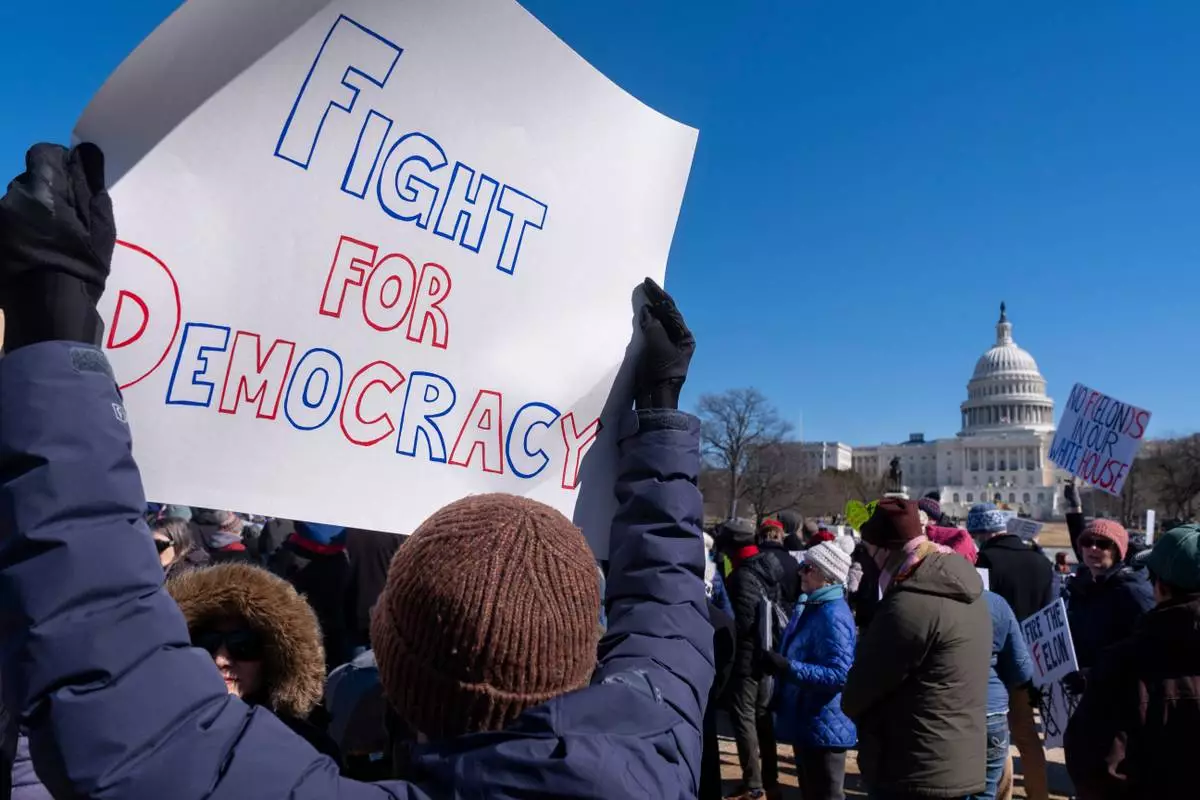
FILE - People protest as part of the "No Kings Day" protest on Presidents Day in Washington, Monday, Feb. 17, 2025, near the Capitol in Washington. (AP Photo/Jacquelyn Martin, File)
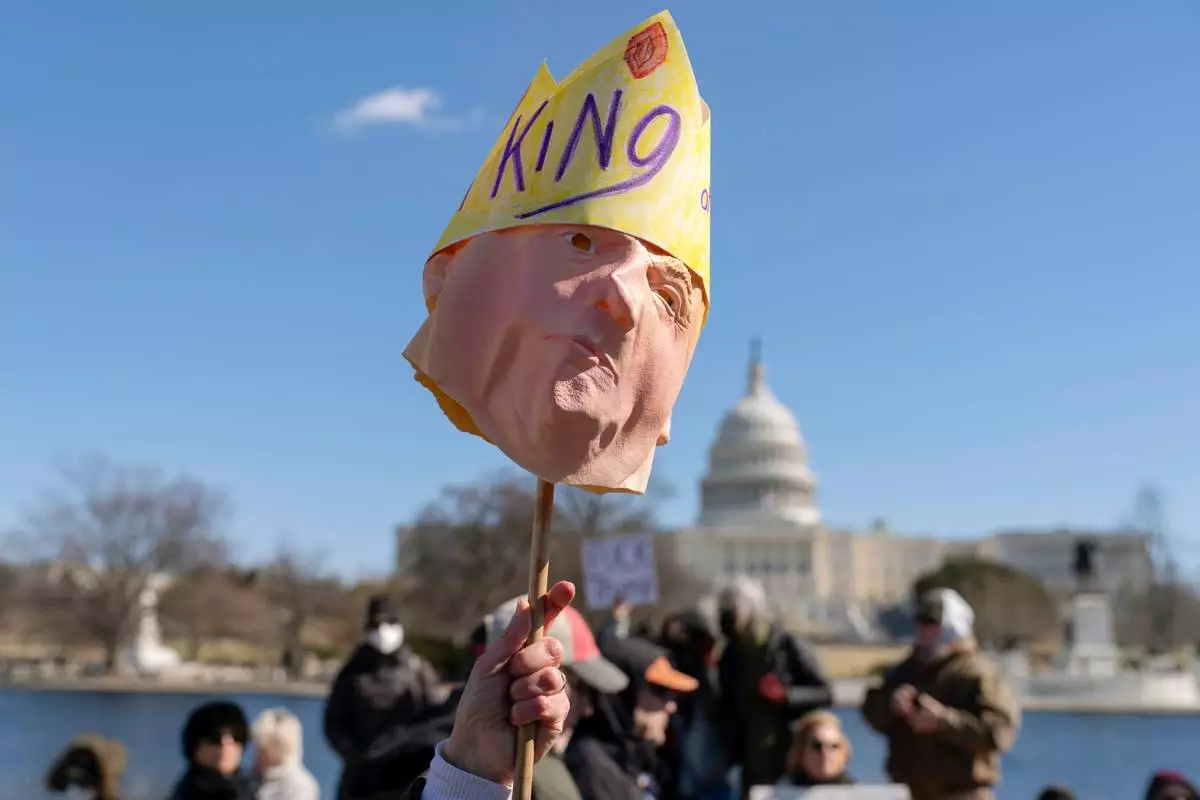
FILE - People take part in the "No Kings Day" protest on Presidents Day in Washington, Feb. 17, 2025, near the Capitol in Washington. (AP Photo/Jose Luis Magana, File)