BERLIN (AP) — Lawmakers in an eastern German state elected a new governor on Wednesday as mainstream parties try to prevent a victory for the far-right Alternative for Germany in a regional election that is only seven months away.
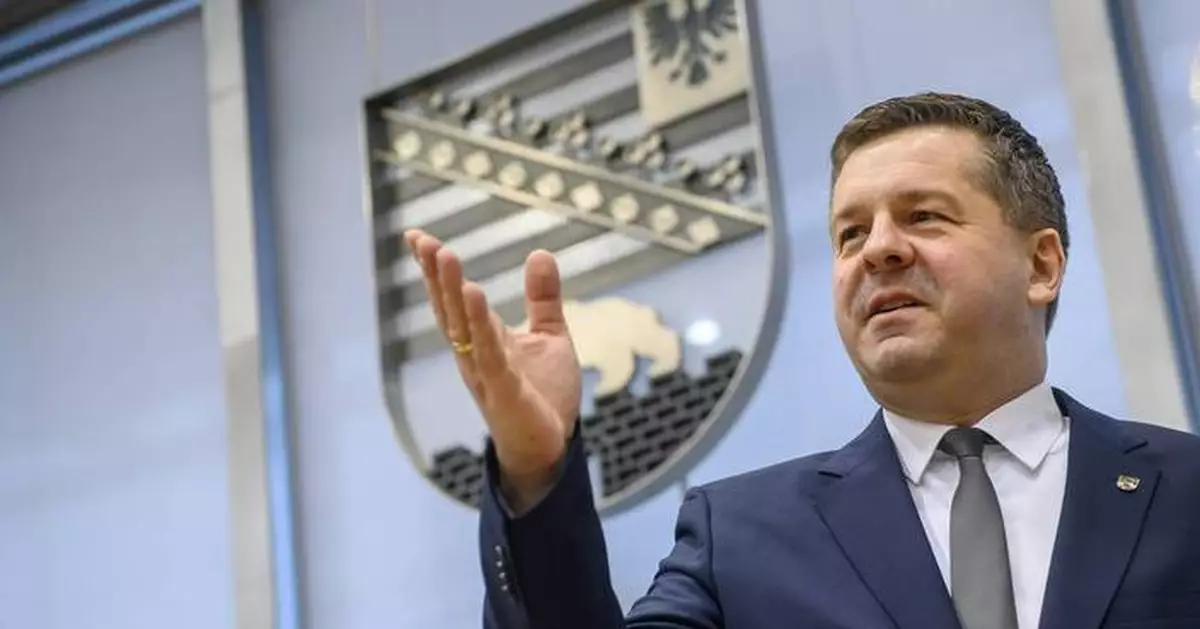
The state legislature in Saxony-Anhalt elected Sven Schulze, a member of German Chancellor Friedrich Merz's center-right Christian Democratic Union, to replace long-serving incumbent Reiner Haseloff.
Haseloff, 71, has led the state of some 2.2 million people since 2011. Schulze, 46, was designated last year as the CDU's candidate for governor to succeed him in a state election on Sept. 6.
Although it's quite common in Germany for governors to hand over the reins in midterm to allow their successors a chance to become better-known to voters, Haseloff originally appeared minded to serve out his term. But with regional support very high for Alternative for Germany, or AfD, he announced this month that he would step down early.
AfD, which became the second-biggest party in Germany's federal parliament in a national election last year, is at its strongest in the formerly communist and less prosperous east. Opposition to migration is the signature issue of AfD, with which mainstream parties refuse to work. But it also has shown a talent for capitalizing on discontent with other issues, such as the country's sluggish economy.
In recent years, some sitting governors in the east — including Haseloff himself in the state's last election in 2021 — have managed to beat back challenges from AfD as relatively popular incumbents. Schulze, who was Saxony-Anhalt's economy minister until now, would have lacked that potential advantage if Haseloff had stayed in office.
AfD so far has emerged as the biggest party in one state election, in the neighboring eastern region of Thuringia in 2024, but it has yet to take power at state level.
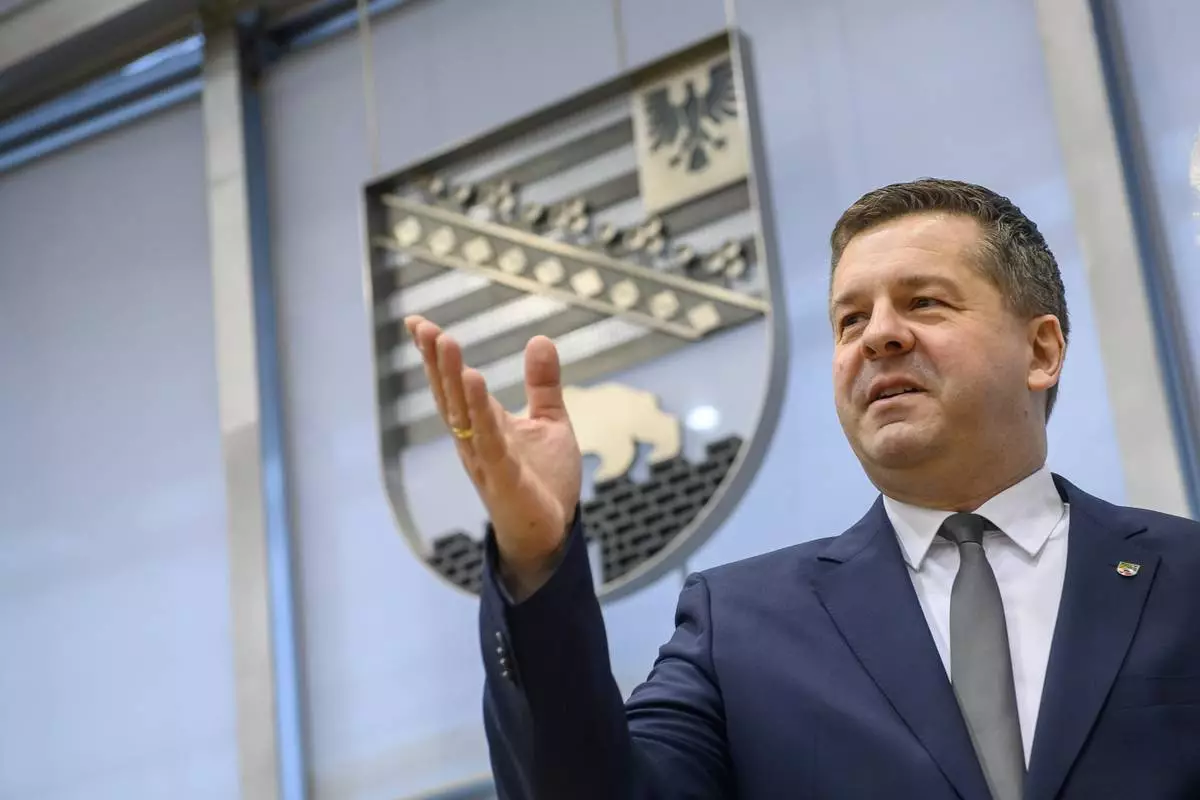
Sven Schulze, Minister for Economic Affairs, Tourism, Agriculture and Forestry of Saxony-Anhalt as well as CDU state chairman and top candidate for the 2026 state election, comes to the Saxony-Anhalt state parliament, Wednesday, Jan.28, 2026. (Klaus-Dietmar Gabbert/dpa via AP)
DUBAI, United Arab Emirates (AP) — Iranian officials reached out to the wider Middle East on Wednesday over the threat of a possible U.S. military strike on the country, a month since the start of protests in Iran that soon spread nationwide and sparked a bloody crackdown.
Two nations, Saudi Arabia and the United Arab Emirates, have signaled they won't allow their airspace to be used for any attack. But America has moved the USS Abraham Lincoln and several guided missile destroyers into the region, which can be used to launch attacks from the sea.
It remains unclear what U.S. President Donald Trump will decide about using force, though he laid down two red lines — the killing of peaceful demonstrators and the possible mass execution of detainees. The protests saw at least 6,221 people killed as Iran launched a bloody crackdown on the demonstrations, with many others feared dead, activists said Wednesday.
Iran's state-run media, which now only refers to protesters as “terrorists,” remains the sole source of news for many as Tehran cut off access to the global internet some three weeks ago. But Iranians have become angry and anxious in the weeks since, seeing footage of protesters shot and killed while worrying about what may happen next as the country's economy sinks further.
“I feel that my generation failed to give a better lesson to younger ones," said Mohammad Heidari, a 59-year-old high school teacher in Tehran. “The result of decades of teaching by my colleagues and me led to death of thousands, and maybe more injured and prisoners.”
Egypt's Foreign Ministry said its top diplomat, Badr Abdelatty, separately spoke with Iranian Foreign Minister Abbas Araghchi and U.S. Mideast envoy Steve Witkoff to “work toward achieving calm, in order to avoid the region slipping into new cycles of instability.”
The statement offered no details, though Iranian state media quoted Araghchi as saying third-party mediators had been in touch. Witkoff, a billionaire real estate developer and Trump's friend, had earlier negotiated over Iran's nuclear program. There was no immediate acknowledgment from the White House of the call.
Meanwhile, Saudi Arabia's Crown Prince Mohammed bin Salman held a call with Iranian President Masoud Pezeshkian, saying the kingdom would “not allow its airspace or territory to be used for any military actions against Iran or for any attacks from any party, regardless of their origin.” That follows a similar pledge by the UAE.
Both Saudi Arabia and the UAE host American air assets and troops. Both also have faced attacks in the last decade. A 2019 assault believed by the West to have been carried out by Iran briefly halved Saudi oil production. The UAE faced several attacks claimed by Yemen's Houthi rebels in 2022.
However, America's biggest base in the region is Qatar's vast Al Udeid Air Base, which serves as the forward operating headquarters of the U.S. military's Central Command. Both Araghchi and Ali Larijani, a top Iranian security official, held calls with Qatar's Prime Minister Mohammed bin Abdulrahman Al Thani. Qatar acknowledged the calls, but offered few specifics on what was discussed.
Iran attacked Al Udeid in June in response to Trump sending American warplanes to bomb Iranian nuclear enrichment sites after Israel launched a 12-day war on the Islamic Republic.
“Our position is exactly this: Applying diplomacy through military threats cannot be effective or constructive,” Araghchi told journalists Wednesday outside of a Cabinet meeting. “If they want negotiations to take shape, they must abandon threats, excessive demands, and the raising of illogical issues. Negotiations have their own principles: they must be conducted on an equal footing, based on mutual respect, and for mutual benefit.”
While the protests have been halted for weeks after the crackdown, information slowly trickling out of Iran via Starlink satellite dishes is reaching activists, who have been trying to tally the carnage.
On Wednesday, the U.S.-based Human Rights Activists News Agency, which has been accurate in multiple rounds of unrest in Iran, said at least 6,221 dead it counted included at least 5,858 protesters, 214 government-affiliated forces, 100 children and 49 civilians who weren’t demonstrating. More than 42,300 have been arrested, it added.
The group verifies each death and arrest with a network of activists on the ground in Iran. The Associated Press has been unable to independently assess the death toll given that authorities cut off the internet and disrupted calls into the Islamic Republic.
Iran’s government has put the death toll at a far lower 3,117, saying 2,427 were civilians and security forces, and labeled the rest “terrorists.” In the past, Iran’s theocracy has undercounted or not reported fatalities from unrest.
That death toll exceeds that of any other round of protest or unrest in Iran in decades, and recalls the chaos surrounding the 1979 Islamic Revolution.
The protests began on Dec. 28, sparked by the fall of the Iranian currency, the rial, and quickly spread across the country. They were met by a violent crackdown, the scale of which is only starting to become clear as the country has faced more than two weeks of internet blackout — the most comprehensive in its history.
Associated Press writer Fay Abuelgasim in Cairo contributed to this report.
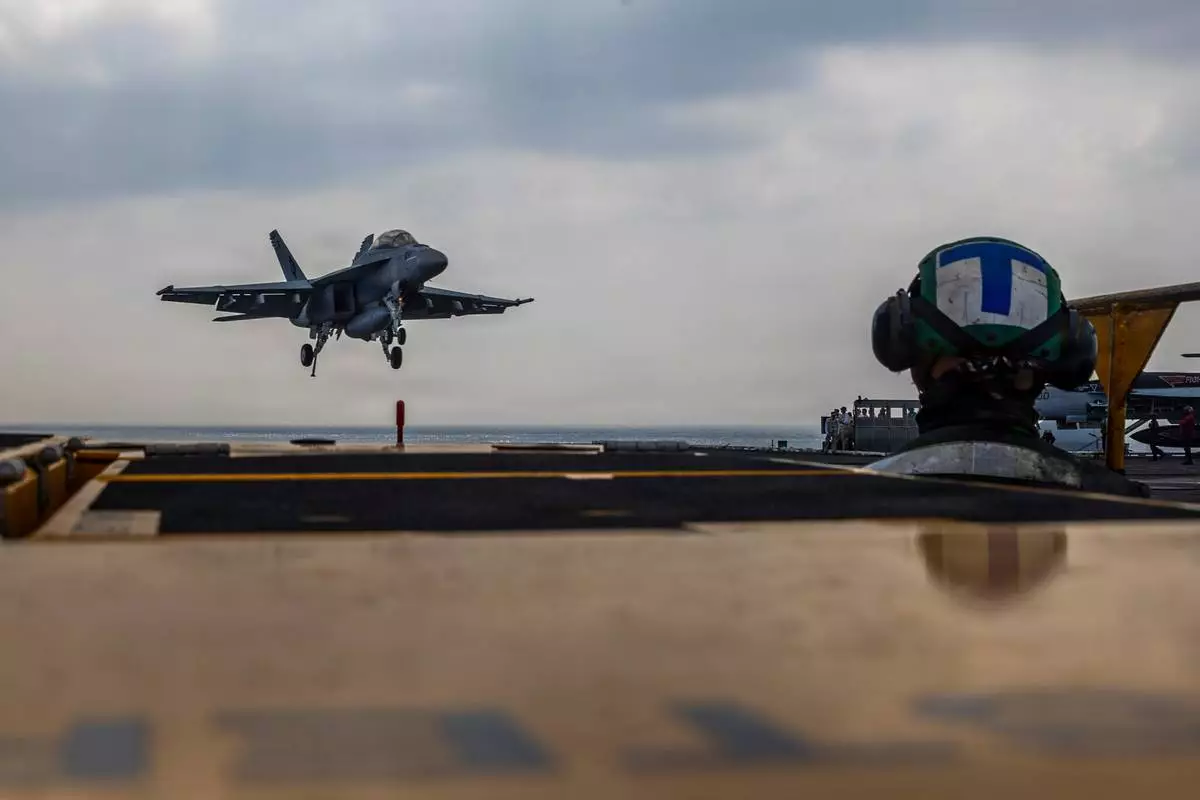
This photo provided by the U.S. Navy shows a Boeing F/A-18E Super Hornet landing on the Nimitz-class aircraft carrier USS Abraham Lincoln in the Indian Ocean on Jan. 22, 2026. (Mass Communication Specialist Seaman Daniel Kimmelman/U.S. Navy via AP)
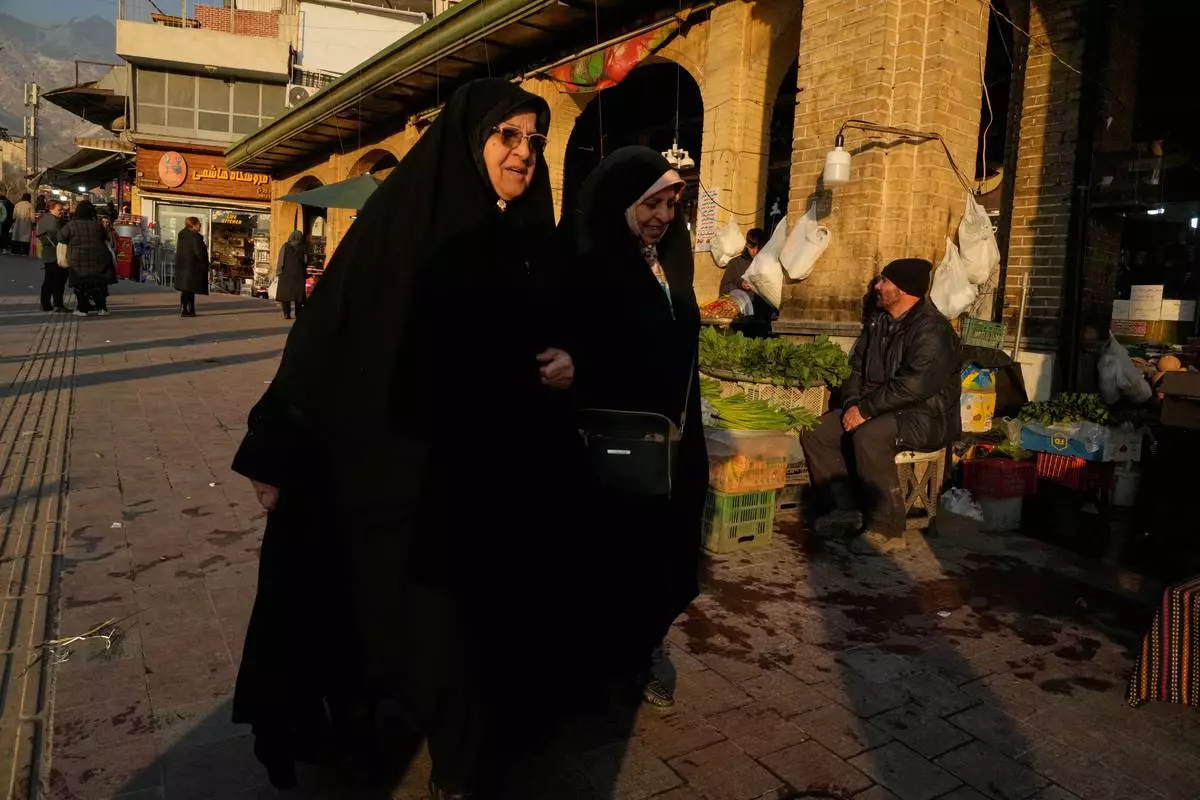
Women walk past the Tajrish bazaar in northern Tehran, Iran, Tuesday, Jan. 27, 2026. (AP Photo/Vahid Salemi)
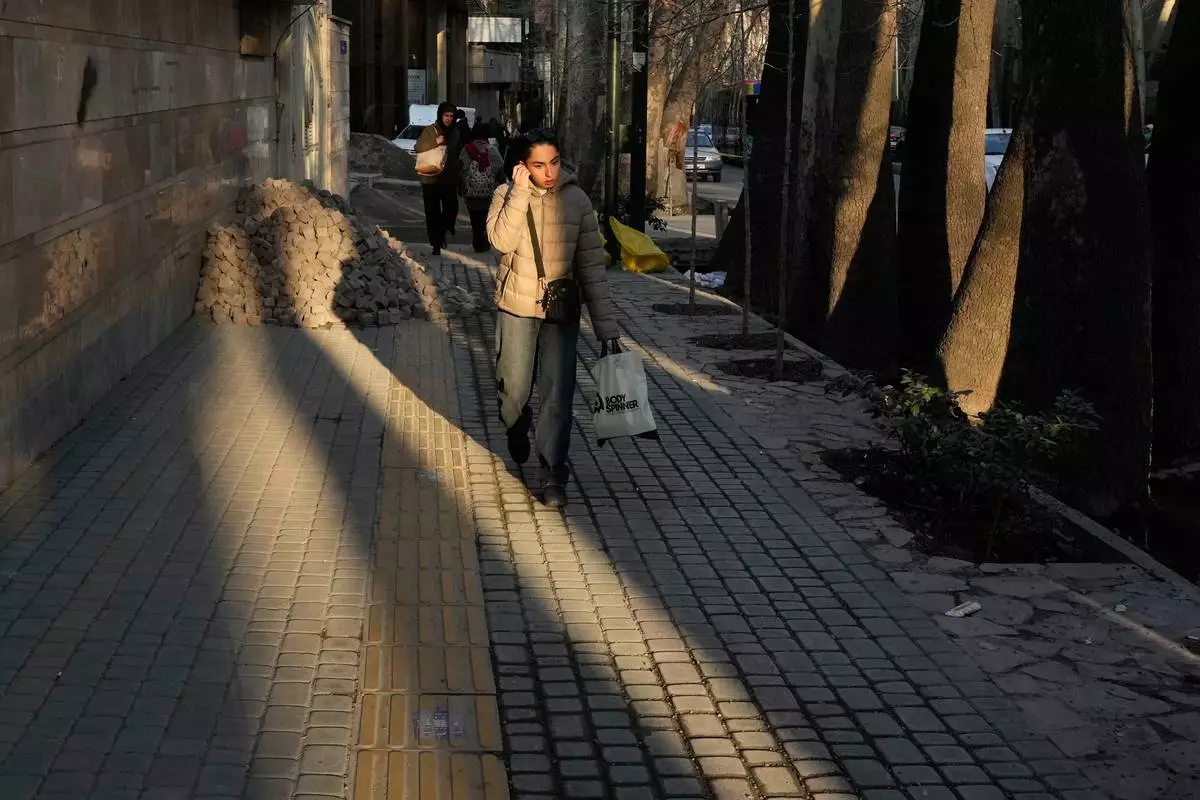
People walk along the sidewalk in northern Tehran, Iran, Tuesday, Jan. 27, 2026. (AP Photo/Vahid Salemi)
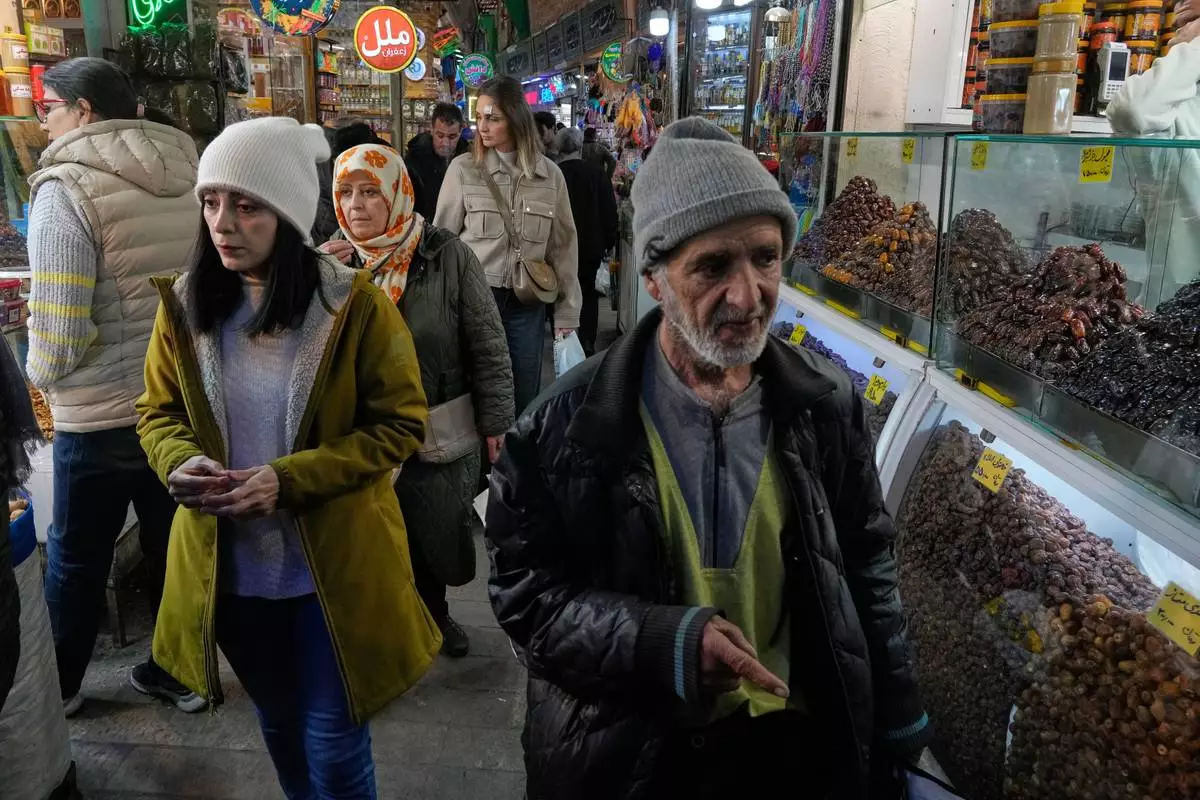
People walk through the Tajrish bazaar market in northern Tehran, Iran, Tuesday, Jan. 27, 2026. (AP Photo/Vahid Salemi)
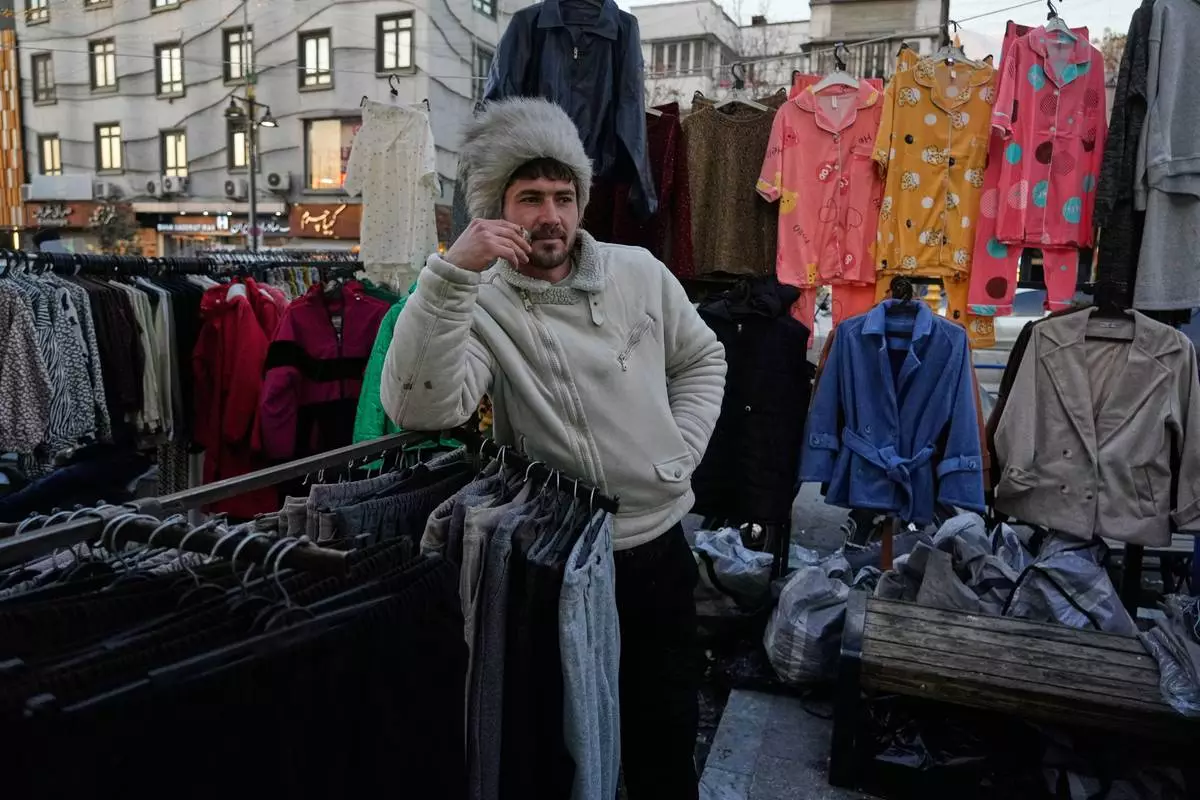
A vendor waits for customers at Tajrish Square in Tehran, Iran, Tuesday, Jan. 27, 2026. (AP Photo/Vahid Salemi)