Significant progress was made during the 14th Five-Year Plan period (2021–2025) in promoting green development and reducing carbon emissions, according to the Ministry of Ecology and Environment.
At a press conference held on Wednesday, the ministry's officials said that China established the largest clean power supply system and the largest clean steel production system globally during the period. Meanwhile, the market penetration rate of new energy vehicles in the country exceeded 50 percent and the proportion of clean transportation in key regions and industries reached 78 percent.
China has also established the world's most extensive carbon emissions trading market, marking a major milestone in its efforts to combat climate change, the ministry noted.
The cumulative trading volume of carbon emission allowances had reached 865 million tons, with a total transaction value of 57.663 billion yuan (about 8.29 billion U.S. dollars) by the end of 2025.
In addition, the ministry stated that China launched a national voluntary greenhouse gas emission reduction trading market, took the lead in establishing a product carbon footprint management system, and issued the "National Adaptation Strategy to Climate Change 2035" to enhance climate resilience in key areas. Over the past five years, new quality productivity has driven development, speeding up the green and low-carbon transition.
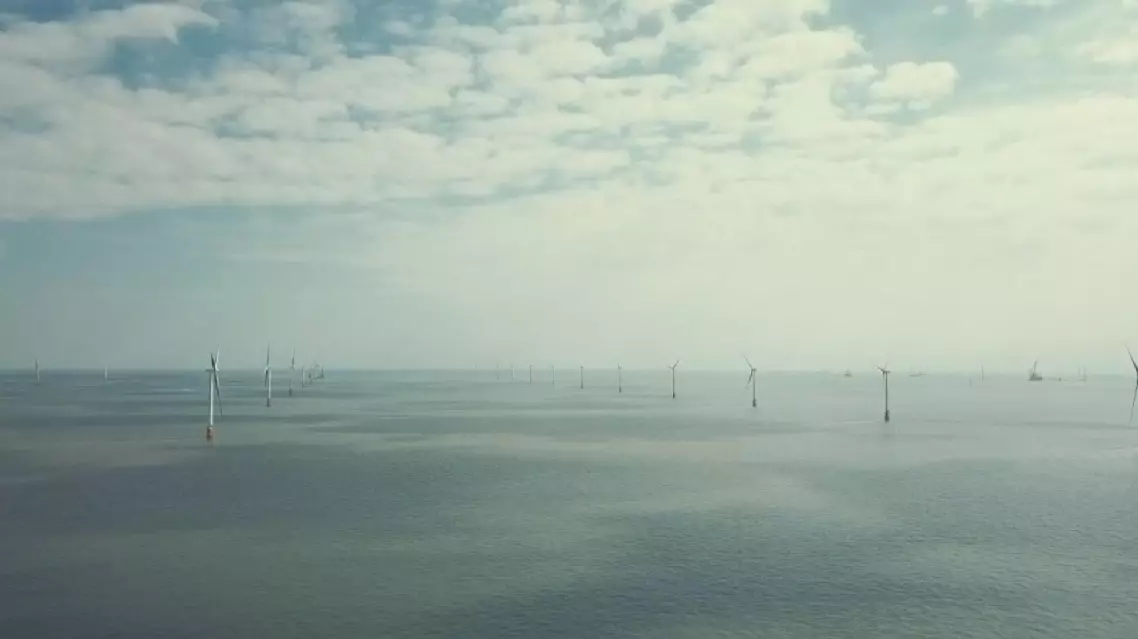
China builds largest renewable energy system globally

Finland's Prime Minister Petteri Orpo is on a four-day official visit to China, leading a delegation of executives from more than 20 Finnish companies seeking new business opportunities.
Christoph Vitzthum, president and CEO of the Finnish food company Fazer Group, is among the delegation. He said the trip to China has provided him a new insight into the development of Chinese consumer market.
"It's remarkable to see how the Chinese consumer has developed and how much we as a company can learn from the Chinese market. Needless to say, the market is vast, but you have to be able to be relevant in a market. And if you see one of the big consumer trends in China, it's the same that we have been seeing in Europe for some years. That's health and well-being - less sugar, less fat, more fiber, more healthy products. As the Chinese economy has developed, as the Chinese middle class has grown significantly, these themes are also now prevalent in the Chinese market," said Vitzthum.
Vitzthum said competition and consumer choice are beneficial for market growth and category expansion allows brands to differentiate themselves and strengthen brand positioning.
"The consumer in general loves choice. I don't see the competition as a problem. I see the category growth, be it in grain-based products or be it in chocolate, is a good thing. If you take for example milk chocolate, the Karl Futzer brand, which we have launched in China. In China, it's the only brand that is made from fresh milk. And when we have studied this with consumers, it resonates very well with the Chinese consumer. By comparing to alternatives, you can really promote your own brand and bring the things that we are standing for," he said.
As part of the agenda of Orpo's visit to Beijing, Chinese and Finnish enterprises signed multiple commercial agreements on Monday at the sixth meeting of the China-Finland Committee for Innovative Business Cooperation.
Business leaders of the two countries engaged in lively discussions on cooperation in many fields including innovation, green development and digitalization.
Fazer CEO sees new opportunities for business cooperation with China