MOSCOW (AP) — Syria’s interim President Ahmad al-Sharaa visited Moscow on Wednesday for the second time in less than four months, and Russian President Vladimir Putin emphasized his readiness to help the country rebuild its war-battered economy.
“I know that there is a lot that’s necessary to restore in Syria, and our economic operators, including the construction sector, are ready for this joint work,” Putin said.
Click to Gallery
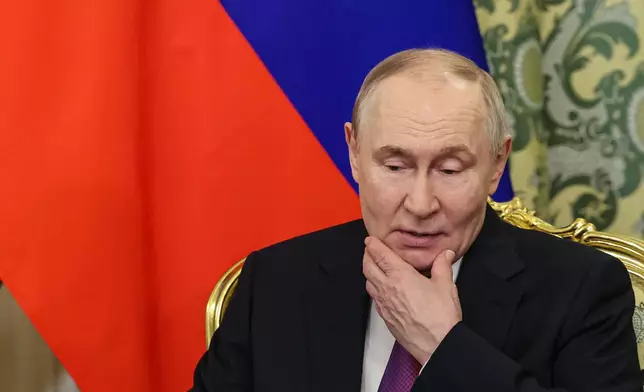
Russian President Vladimir Putin listens to Syrian interim President Ahmad al-Sharaa during their meeting at the Grand Kremlin Palace in Moscow, on Wednesday, Jan. 28, 2026. (Maxim Shipenkov/Pool Photo via AP)
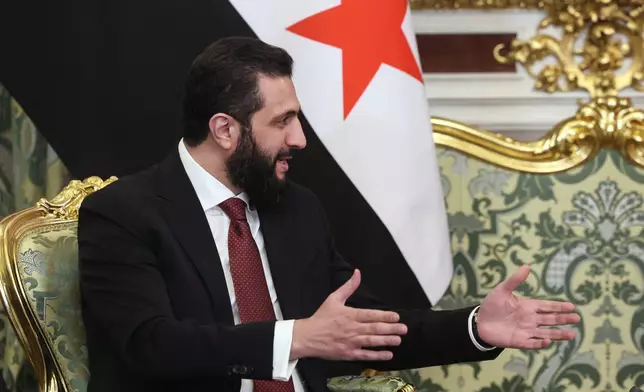
Syrian interim President Ahmad al-Sharaa gestures while speaking to Russian President Vladimir Putin during their meeting at the Grand Kremlin Palace in Moscow, on Wednesday, Jan. 28, 2026. (Maxim Shipenkov/Pool Photo via AP)
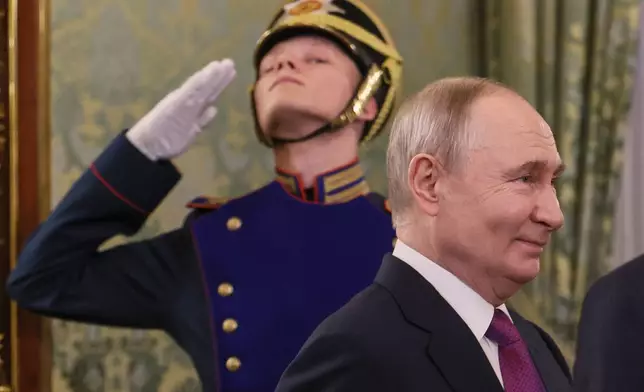
Russian President Vladimir Putin arrives for his meeting with Syrian interim President Ahmad al-Sharaa at the Grand Kremlin Palace in Moscow, on Wednesday, Jan. 28, 2026. (Maxim Shipenkov/Pool Photo via AP)
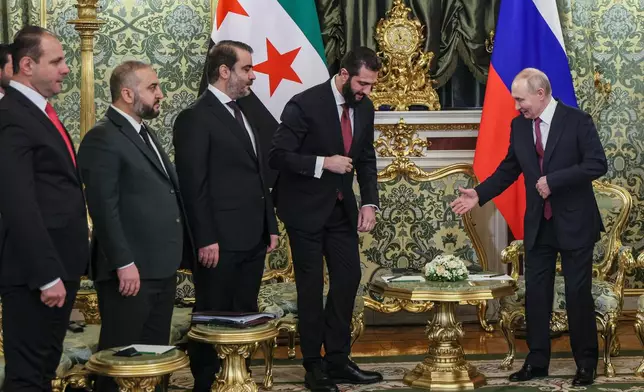
Russian President Vladimir Putin, right, welcomes Syrian interim President Ahmad al-Sharaa, center, for talks during their meeting at the Grand Kremlin Palace in Moscow, on Wednesday, Jan. 28, 2026. (Maxim Shipenkov/Pool Photo via AP)
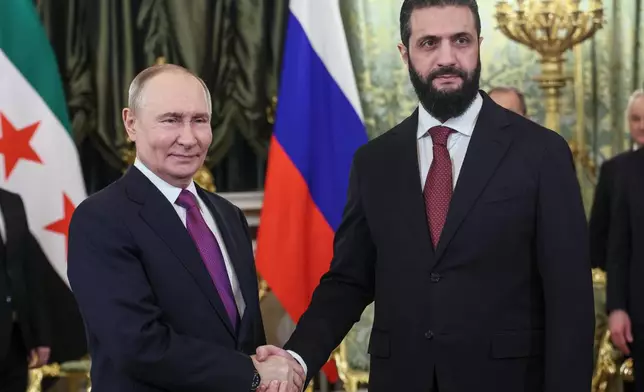
Russian President Vladimir Putin, left, and Syrian interim President Ahmad al-Sharaa pose for a photo during their meeting at the Grand Kremlin Palace in Moscow, on Wednesday, Jan. 28, 2026. (Maxim Shipenkov/Pool Photo via AP)
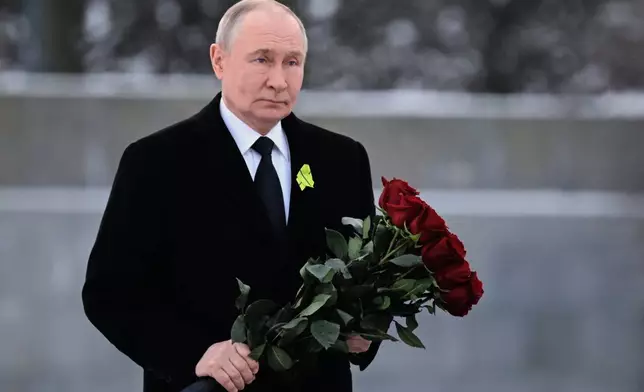
Russian President Vladimir Putin lays flowers at the grave of his brother, who died as a child during the siege of Leningrad, during a commemoration ceremony at the Piskaryovskoye Cemetery, where most of the Leningrad Siege victims were buried, marking the 82nd anniversary of the World War II battle that lifted the Nazi siege of Leningrad, in St. Petersburg, Russia, Tuesday, Jan. 27, 2026. (Alexei Danichev/Sputnik, Kremlin Pool Photo via AP)
The talks also were expected to focus on the future of Russian military bases in Syria, a key foothold for Moscow in the Mediterranean.
Al-Sharaa, who first visited Russia in October, thanked Putin for helping to stabilize Syria.
He led a swift rebel offensive in December 2024 that ousted former Syrian President Bashar Assad, who enjoyed Moscow’s support for years as his government fought a devastating civil war.
Russia, which in recent years has been focused on the fighting in Ukraine and kept only a small military contingent in Syria, didn’t try to counter the rebel offensive. It gave asylum to Assad and his family after he fled the country.
The Russian military recently has begun pulling out from a base in northeastern Syria in an area still controlled by the Kurdish-led Syrian Democratic Forces after the group lost most of its territory in an offensive by government forces.
Putin told al-Sharaa that Moscow always supported Syria's integrity and congratulated him on reclaiming control over the area, describing it as a "very important step."
“You know that we always stood for the restoration of Syria’s territorial integrity, and we support all your efforts in this direction," Putin said.
In the meeting, al-Sharaa emphasized the importance of Russia’s role in supporting Syria’s unity and stability, Syria’s SANA state news agency reported. He noted that in 2025, Syria had overcome major challenges, the latest of which was the reunification of its territories, and he expressed hope for a transition to stability and peace, it added.
Fighting broke out early this month between the SDF and government forces after negotiations over a deal to merge broke down. A ceasefire is now in place and has been largely holding. After the expiration of a four-day truce Saturday, the sides announced the ceasefire had been extended by another 15 days.
Despite having been on opposite sides from Moscow during the civil war, the interim government in Damascus has signaled readiness to develop ties in apparent hopes that Russia could help rebuild the war-shattered country and offer a way to diversify its foreign policy.
For the Kremlin, it’s essential to keep its naval and air bases on Syria's coast, the only such outposts outside the former Soviet Union that are crucial for maintaining Russia’s military presence in the Mediterranean. Russian authorities have voiced hope for negotiating a deal to maintain the Hmeimim air base and the naval outpost in Tartus.
Russian Defense Minister Andrei Belousov and military intelligence chief Adm. Igor Kostyukov were among senior officials who took part in Wednesday's Kremlin talks.
Kremlin spokesman Dmitry Peskov said ahead of the meeting that “all issues related to our military's presence in Syria will be discussed in the talks.” He refused to comment on reports that Syria's interim government had pushed for Assad's extradition.
Abby Sewell in Beirut contributed.
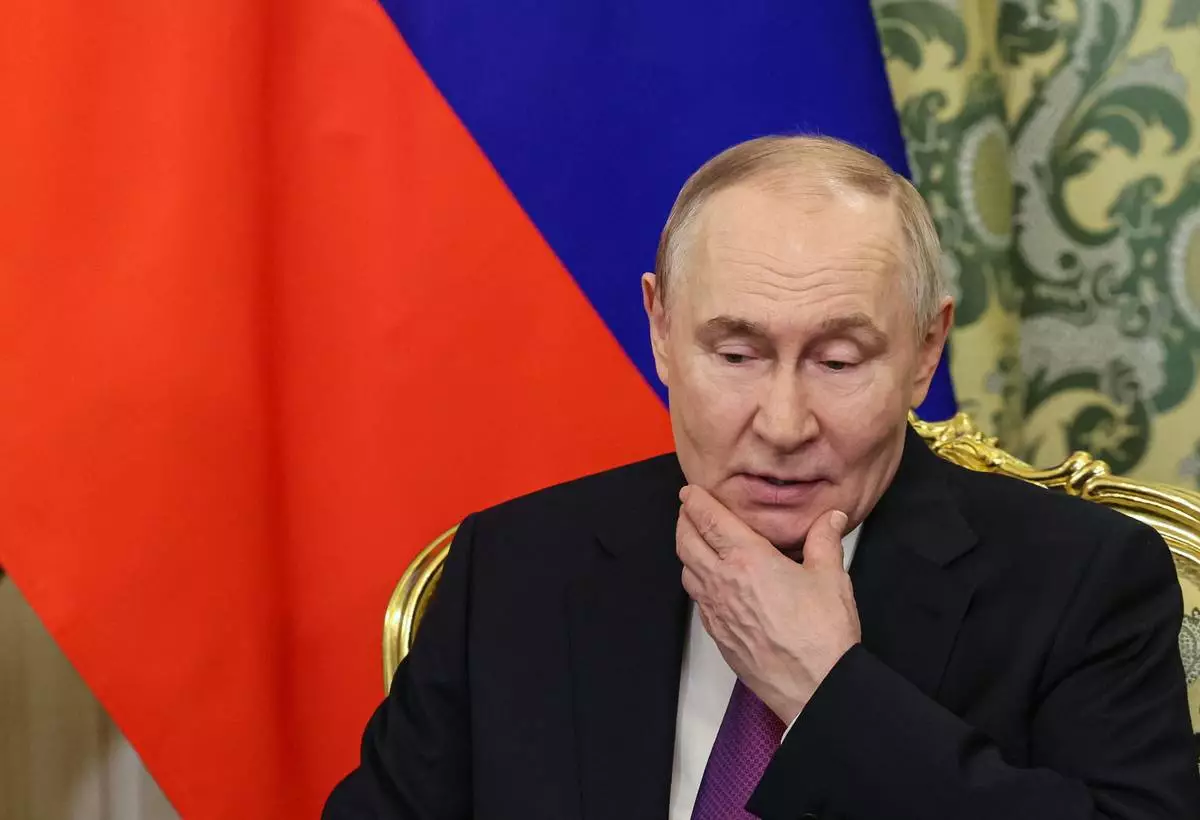
Russian President Vladimir Putin listens to Syrian interim President Ahmad al-Sharaa during their meeting at the Grand Kremlin Palace in Moscow, on Wednesday, Jan. 28, 2026. (Maxim Shipenkov/Pool Photo via AP)
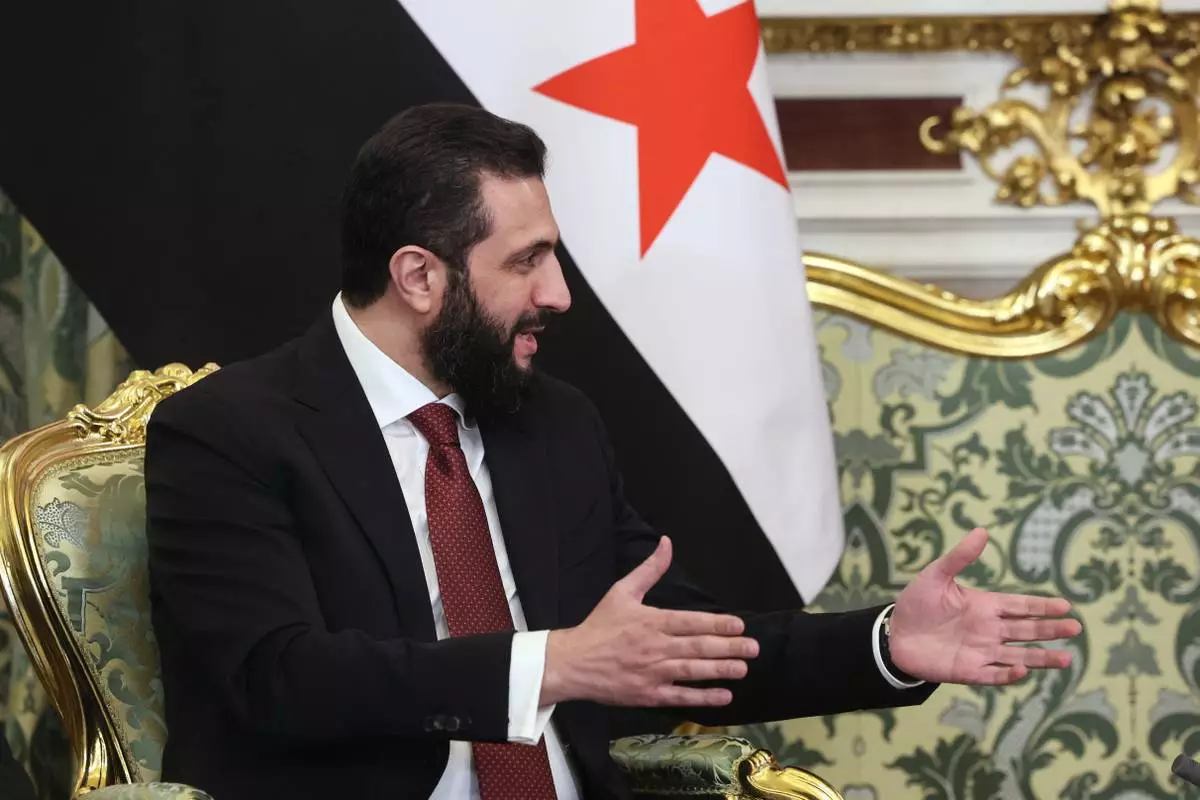
Syrian interim President Ahmad al-Sharaa gestures while speaking to Russian President Vladimir Putin during their meeting at the Grand Kremlin Palace in Moscow, on Wednesday, Jan. 28, 2026. (Maxim Shipenkov/Pool Photo via AP)
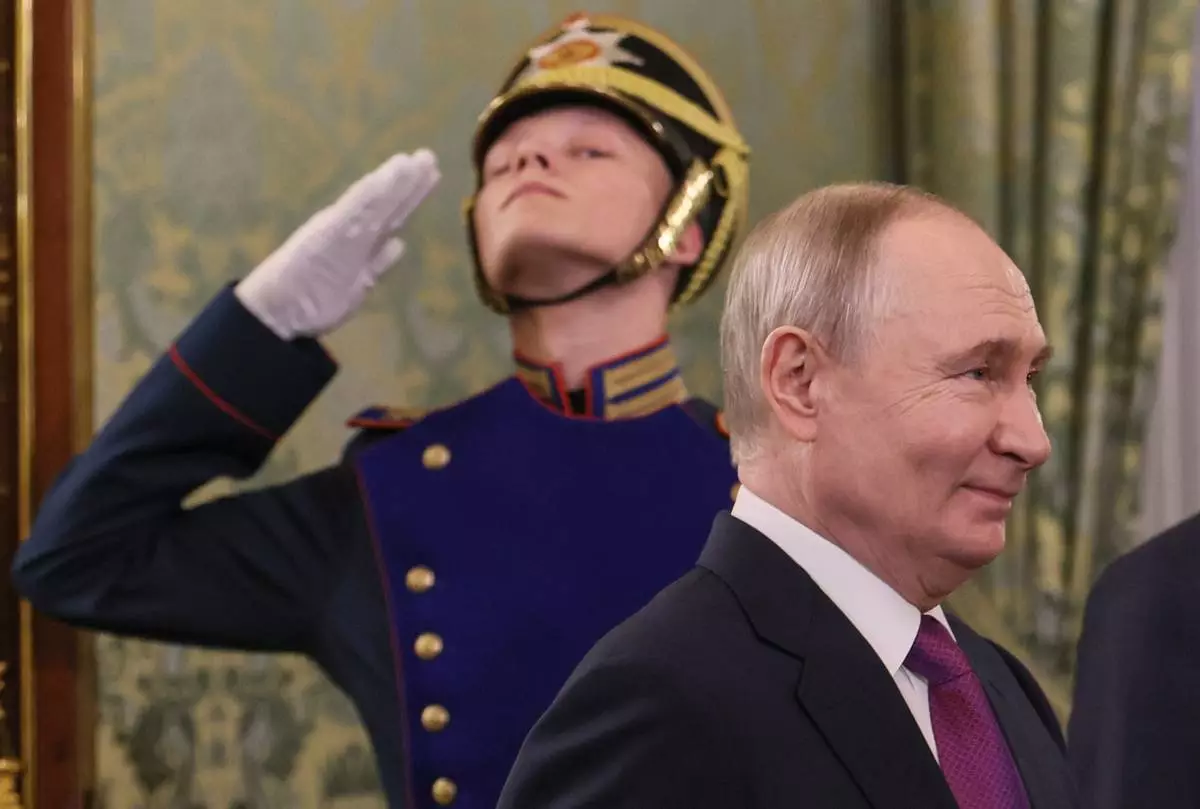
Russian President Vladimir Putin arrives for his meeting with Syrian interim President Ahmad al-Sharaa at the Grand Kremlin Palace in Moscow, on Wednesday, Jan. 28, 2026. (Maxim Shipenkov/Pool Photo via AP)
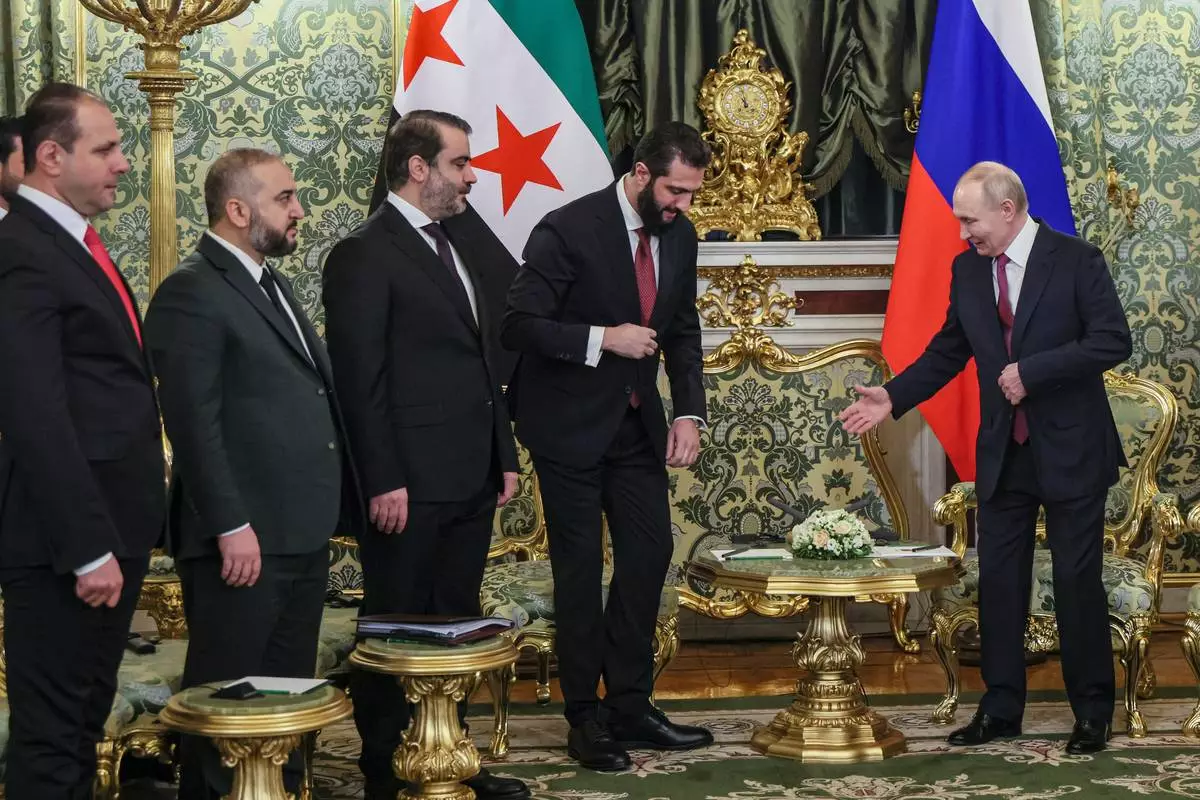
Russian President Vladimir Putin, right, welcomes Syrian interim President Ahmad al-Sharaa, center, for talks during their meeting at the Grand Kremlin Palace in Moscow, on Wednesday, Jan. 28, 2026. (Maxim Shipenkov/Pool Photo via AP)
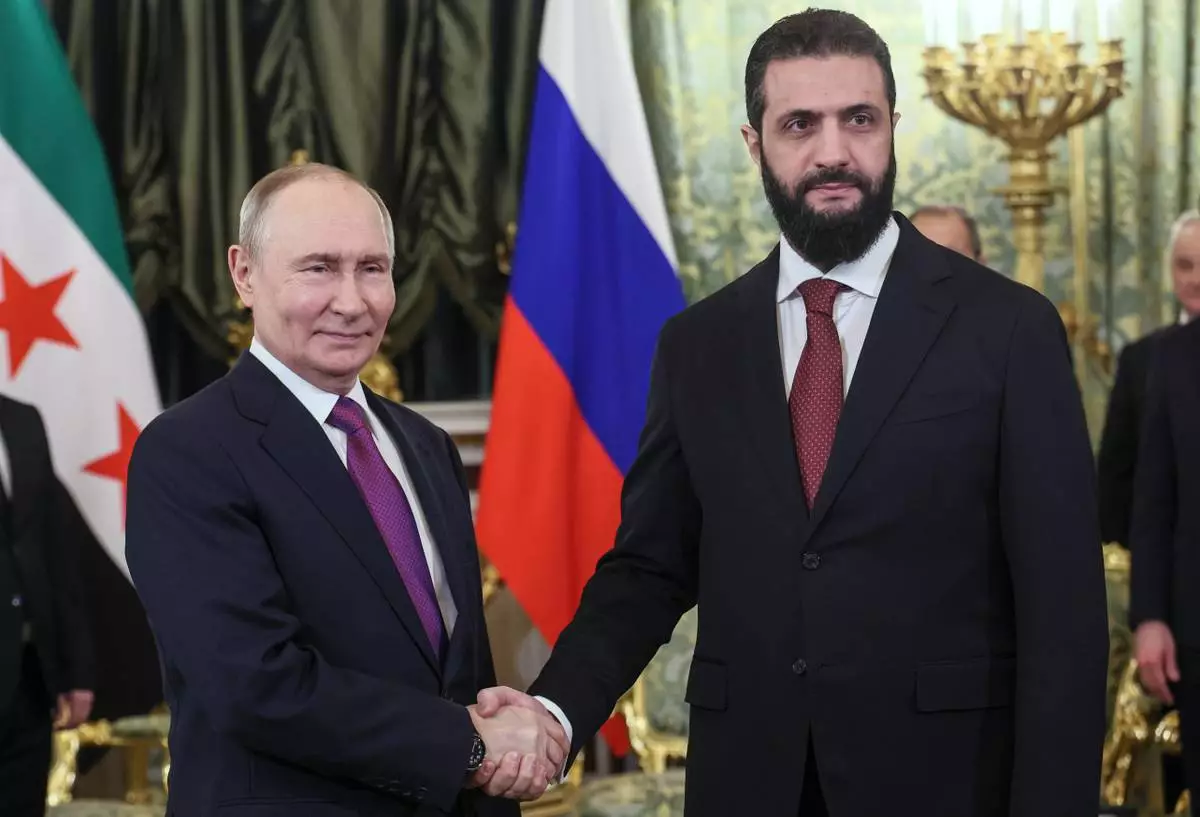
Russian President Vladimir Putin, left, and Syrian interim President Ahmad al-Sharaa pose for a photo during their meeting at the Grand Kremlin Palace in Moscow, on Wednesday, Jan. 28, 2026. (Maxim Shipenkov/Pool Photo via AP)
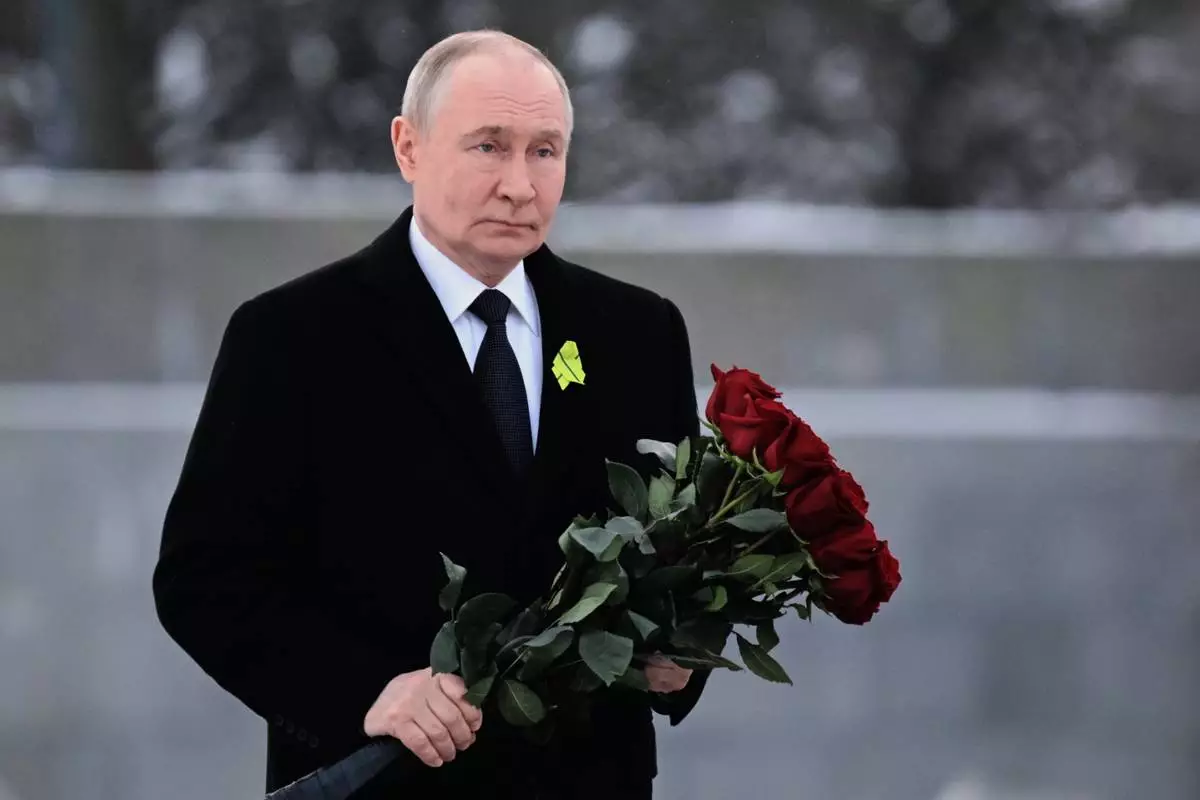
Russian President Vladimir Putin lays flowers at the grave of his brother, who died as a child during the siege of Leningrad, during a commemoration ceremony at the Piskaryovskoye Cemetery, where most of the Leningrad Siege victims were buried, marking the 82nd anniversary of the World War II battle that lifted the Nazi siege of Leningrad, in St. Petersburg, Russia, Tuesday, Jan. 27, 2026. (Alexei Danichev/Sputnik, Kremlin Pool Photo via AP)