U.S. consumer confidence plunged in January to its lowest level in more than a decade, as U.S. people grew increasingly pessimistic about geopolitical tensions, high prices and the economic impact of trade policies, The Conference Board reported Tuesday.
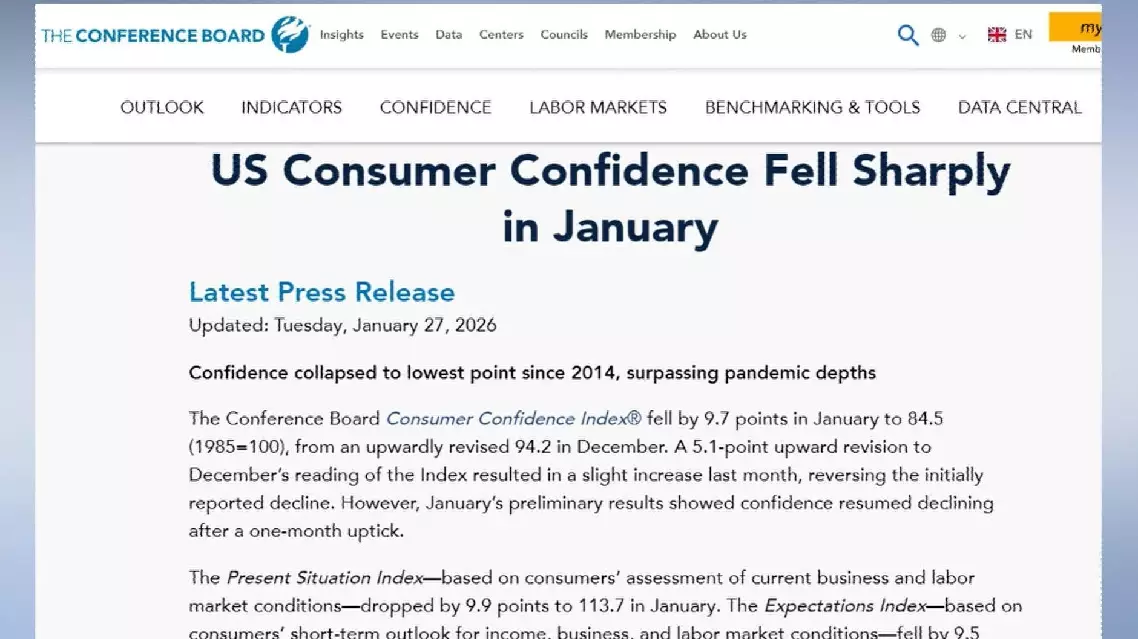
According to preliminary results of a monthly survey issued by The Conference Board, the U.S. Consumer Confidence Index fell by 9.7 points from 94.2 in December to 84.5 in January, marking the lowest reading since May 2014.
Of the index's components, the Present Situation Index, which measures consumers' assessment of current business and labor market conditions, declined significantly by 9.9 points to 113.7.
The Expectations Index, reflecting short-term outlook for income, business, and labor market conditions, fell by 9.5 points to 65.1.
This sub-index has now remained below the threshold of 80 -- a level historically signaling an upcoming recession -- for 12 consecutive months.
The research group's Chief Economist, Dana Peterson, said that U.S. consumer confidence plunged in January, with all five components of the index declining as concerns about the current economic situation and the outlook for the future intensified.
Survey data showed a further deterioration in consumers' perceptions of current conditions.
The proportion of consumers who viewed business conditions as "good" decreased from 19.8 percent last month to 17.9 percent. Similarly, the share of consumers who felt jobs were "plentiful" fell from 27.5 percent to 23.9 percent over the same period.
Peterson noted that the downturn in sentiment was reflected in consumer comments, which continued to skew toward pessimism.
Consumers' responses indicated persistently high concerns about prices and inflation, as well as gasoline and grocery prices. Mentions of tariffs and trade, along with health insurance, also increased in frequency.
U.S. consumer confidence collapses to lowest level since 2014