Founded in 1987, Million Tech started with barcode technology. With the development of AI, Million Tech turned its business focus to smart education, developing a smart library system and the Library GO AI platform to stimulate children's imagination and increase their reading interest via the assistance of AI. Moreover, such a smart system has also enhanced the efficiency of organizing books and shortened the working hours from 3 weeks involving a large amount of manpower to half a day or even an hour.
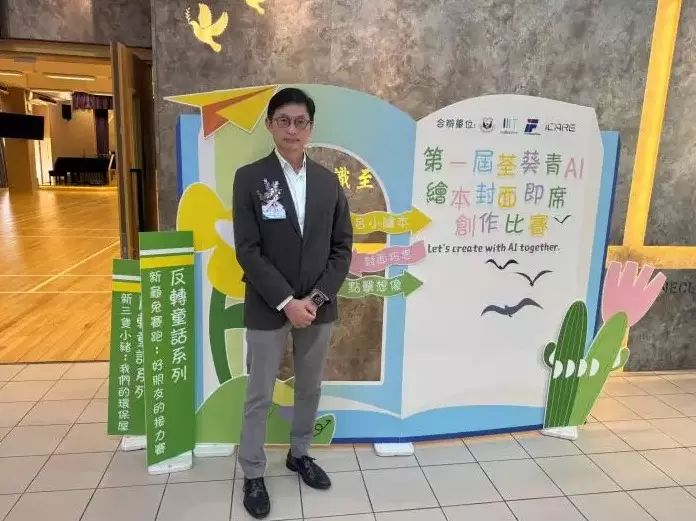
Mr. Nelson Tse, the founder and CEO of Million Tech, Photo by Bastille Post
During its 38 years of operation, many retail groups have used the barcode and POS systems developed by the enterprise. Moreover, hospitals and the Legislative Council Library, which owns a 50,000-volume collection, have also adopted the enterprise's technology to organize files at present. The founder & CEO of Million Tech, Mr. Nelson Tse, stated that the enterprise has persisted in focusing on solving practical problems. Starting with barcode technology and evolving into the development of AI educational technology, the enterprise has witnessed the power of AI to truly help teachers reduce their workload and increase students' reading interest, dedicated to making knowledge a priority in this distracting era.
Click to Gallery
Mr. Nelson Tse, the founder and CEO of Million Tech, Photo by Bastille Post
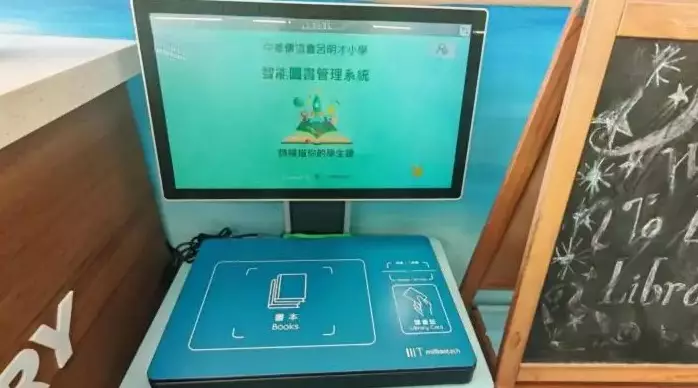
Million Tech's smart library system adopts RFID (radio-frequency identification) technology as its core technology, replacing the traditional barcode system to improve library operational efficiency significantly. Photo by Bastille Post
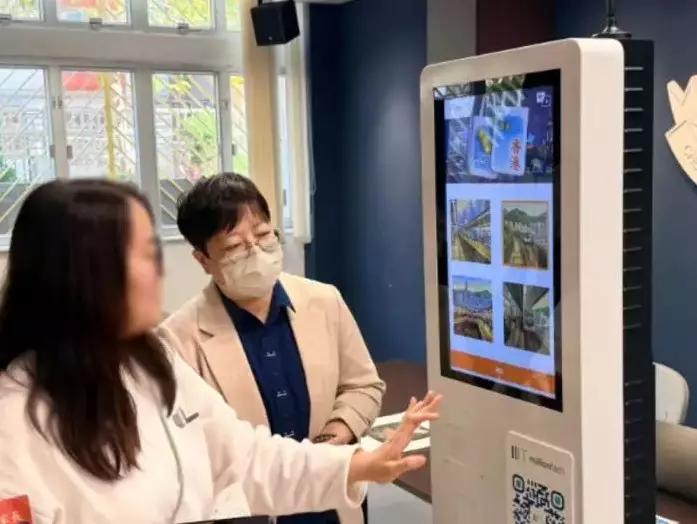
Million Tech independently developed Library GO, Hong Kong's first campus reading promotion platform based on KOHA with the application of AI. Photo source: Million Tech
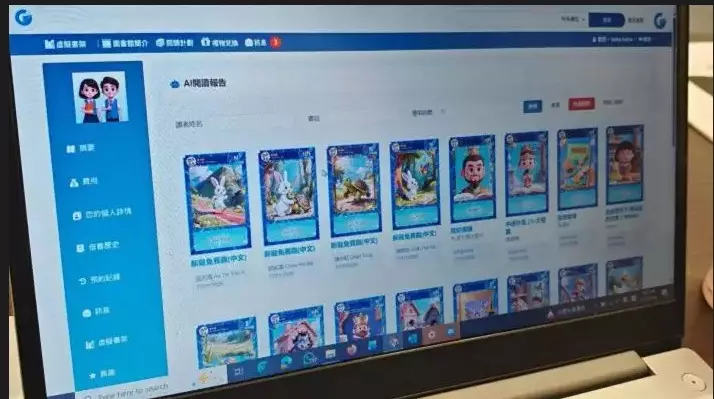
The system can print the AI images into physical cards. Photo by Bastille Post
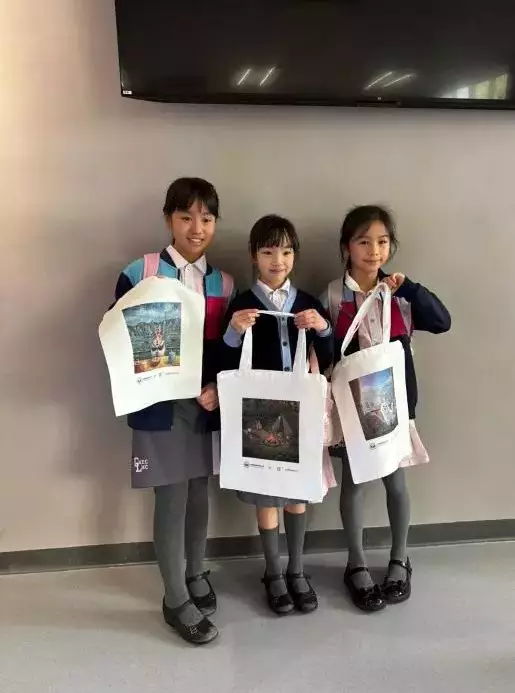
The system can also print the AI images on daily necessities such as reusable bags. Photo source: Million Tech
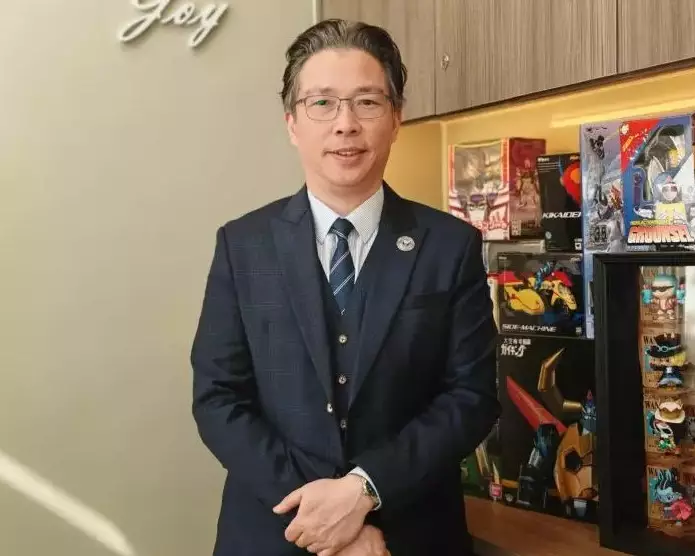
Mr. Leung Hon Kei, the Principal of CNEC Lui Ming Choi Primary School, Photo by Bastille Post
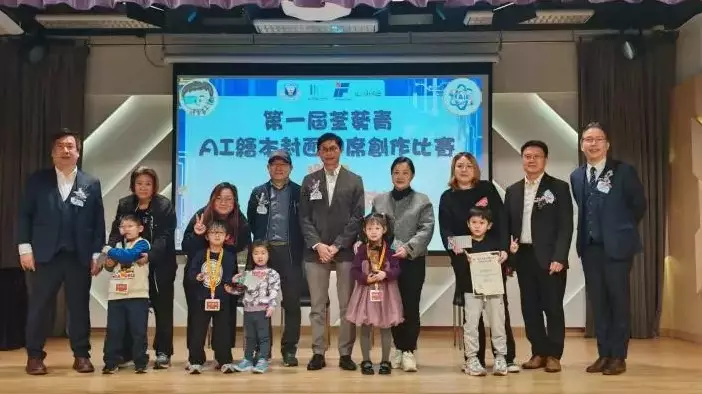
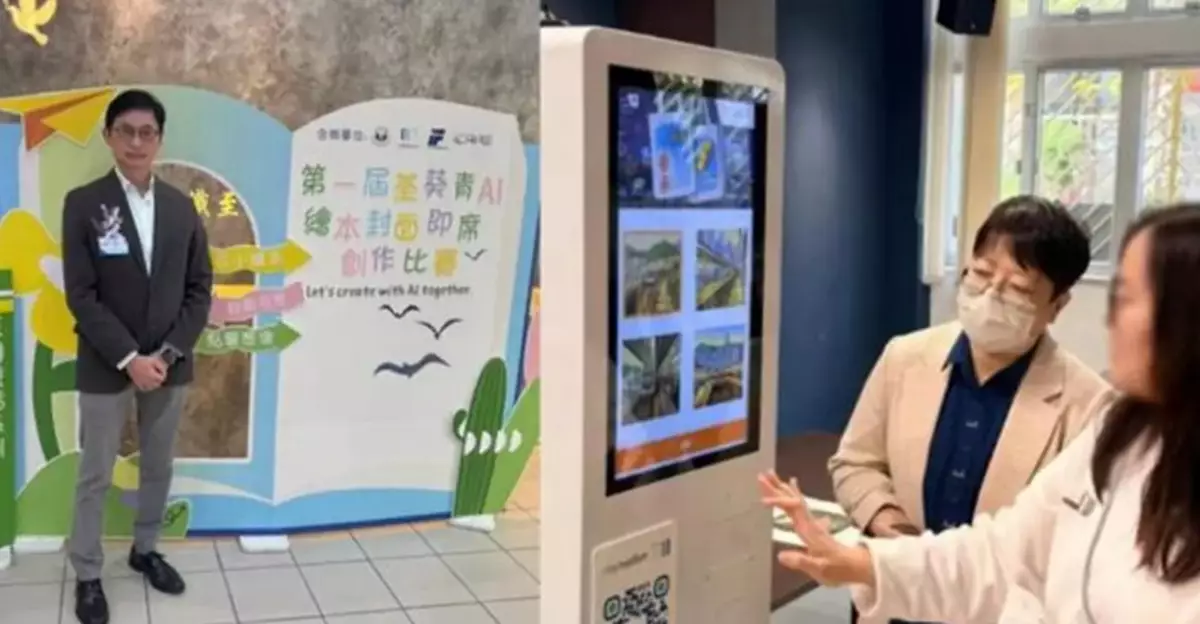
Million Tech collaborated with CNEC Lui Ming Choi Primary School to hold the first AI Picture Book Cover Improvisation Competition in Tsuen Wan, Kwai Chung, and Tsing Yi. Photo by Bastille Post
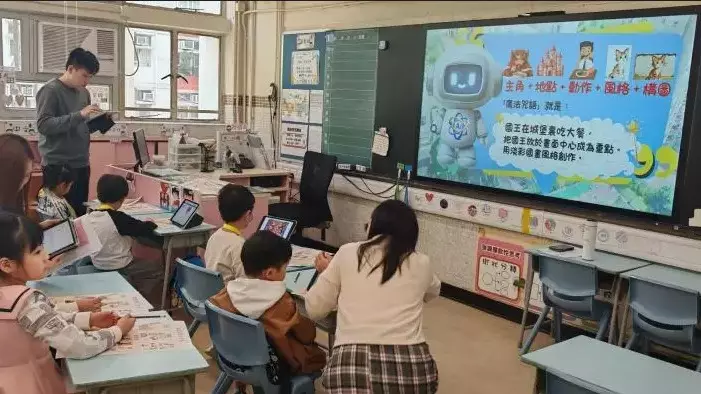
The principal stated that the school plans to introduce more AI elements in the future. Photo by Bastille Post
The RFID Technology Accelerates Book Borrowing and Management
Million Tech's smart library system adopts RFID (radio-frequency identification) technology as its core technology, replacing the traditional barcode system to improve library operational efficiency significantly. Traditionally, taking stock of 10,000 books would take three weeks, involving a great deal of manpower. As for now, with the assistance of RFID technology, it can be accomplished in half a day or even an hour, freeing teacher-librarians from tedious administrative work and allowing them to focus on promoting reading activities.
Million Tech's smart library system adopts RFID (radio-frequency identification) technology as its core technology, replacing the traditional barcode system to improve library operational efficiency significantly. Photo by Bastille Post
Regarding book borrowing, the system supports borrowing multiple books at once, increasing the speed of library service by more than three times. Students can borrow more books during breaks, accessing knowledge more quickly. Furthermore, the system also possesses flexible deployment capabilities; for instance, book lockers can be set up outside the library, or exclusive bookshelves can be placed during Reading Week activities, making borrowing unrestricted by space.
Mr. Nelson Tse shared that over 100 primary and secondary schools in Hong Kong have already adopted this system. According to the school responses, a significant reduction in teachers' administrative burden, an increase in the volumes of books that students borrow, and a gradual development of reading habits have all been achieved. One teacher even filmed a video showcasing the fast speed of book borrowing, praising the system for "revitalizing the library." Furthermore, by integrating the data analysis function, the system can also track students' borrowing preferences and provide teachers with lists of personalized book recommendations to further optimize library resource allocation.
The Library GO AI Platform: Hong Kong's First AI-Powered Library Management System Based on KOHA
In addition, Million Tech independently developed Library GO, Hong Kong's first campus reading promotion platform based on KOHA with the application of AI.
Million Tech independently developed Library GO, Hong Kong's first campus reading promotion platform based on KOHA with the application of AI. Photo source: Million Tech
Mr. Nelson Tse said that Library GO not only contains traditional functions such as retaining complete borrowing records, data input, etc., but also turns libraries smarter and more interactive via AI. By transforming AI into a bridge connecting reading and creation, Library GO has allowed students to step further from "finishing reading a book" to "reinterpreting the story in their own way", forging the library into a paradise of creativity and learning.
After reading a book, students can simply input their reading reports, reflections, or imaginative descriptions into the platform and receive unique AI images with the system's instant transformation of texts. Besides, the system can also print the images into physical cards or on daily necessities such as reusable bags, etc., allowing students to experience the sense of accomplishment that "my ideas can be turned into something tangible," greatly enhancing their reading engagement and creative desire.
The system can print the AI images into physical cards. Photo by Bastille Post
The system can also print the AI images on daily necessities such as reusable bags. Photo source: Million Tech
The library of CNEC Lui Ming Choi Primary School has adopted the system. The Principal, Mr. Leung Hon Kei, stated that the school library is no longer a place for merely borrowing books, but a core space for promoting reading and creativity after the utilization of the smart library system: "The smart library system makes borrowing books more convenient for students. As a consequence, they have increased their interest in reading. Moreover, teachers can also benefit from having less administrative workload, such as book counting, allowing them to have more time organizing reading promotion activities and assisting students to enhance their reading interest and habits."
Mr. Leung Hon Kei, the Principal of CNEC Lui Ming Choi Primary School, Photo by Bastille Post
The AI Picture Book Cover Improvisation Competition: Inspiring Extemporaneous Creativity
The enterprise recently collaborated with CNEC Lui Ming Choi Primary School to hold the first AI Picture Book Cover Improvisation Competition in Tsuen Wan, Kwai Chung, and Tsing Yi. The competition focused on "improvisational creation," with students uploading their reading reflections to the Library GO platform, where AI instantly generated picture book images. The entire process required no prior preparation, avoiding excessive parental intervention and emphasizing children's pure, extemporaneous imagination, allowing their boundless creativity to be truly seen.
The generated images can be made into AI creative reading cards (printed as physical cards for collection) or printed on eco-friendly bags, becoming unique souvenirs for reading. The judges awarded prizes based on the works' creativity, their connection to the story content, and their overall expressive effect.
Million Tech collaborated with CNEC Lui Ming Choi Primary School to hold the first AI Picture Book Cover Improvisation Competition in Tsuen Wan, Kwai Chung, and Tsing Yi. Photo by Bastille Post
The principal stated, "Previously, technological limitations prevented children from realizing their boundless imaginations. Nevertheless, with the help of AI tools nowadays, they can turn their creativity into anything they like. As for children's growth, reading is especially important. The parental reading and the establishment of children's values are often realized through books."
He said the core goal of the competition was to stimulate students' creativity. Therefore, they adopted the "reverse thinking" technique from the SCAMPER creative thinking method, guiding children to think about innovative adaptations of classic stories. For example, the teachers would discuss with students whether the tortoise and the hare had to compete or whether they would have the possibility for cooperation. The school hopes that moral and emotional education can be naturally conducted via picture book creation, allowing students to more deeply understand the essence of stories during the process of hands-on adaptation and creation.
The principal stated that the school plans to introduce more AI elements in the future. Photo by Bastille Post
The principal also stated that the school plans to introduce more AI elements in the future, such as screenless reading aids, the classroom's meta-human project, and an AI Fitness system, to naturally integrate AI technology into every aspect of daily learning, making it an invisible partner to assist students' exploration and growth.
Mr. Nelson Tse said, "When we see even kindergarten students can use AI to transform their ideas into presentable artworks, we feel our belief has been further strengthened: AI's role is not to replace children's creativity, but rather to become a powerful tool, helping them turn their boundless imaginations into a tangible reality. Cultivating a mindset of collaborating with technology and realizing creativity from a young age will provide them with a significant advantage in the future."
Plans to Expand the Markets of Macau and the Belt and Road Countries
Looking ahead, Million Tech will continue to develop its layout in the field of smart education, such as exploring the development space of e-book management, AI fitness tracking, and self-learning platforms. Mr. Nelson Tse stated that the enterprise would continue to collaborate with schools, truly solving practical pain point problems of principals, teachers, and students through continuous dialogue and listening, making technology a substantial support in the educational field.
Furthermore, the enterprise also plans to gradually expand its business, first exporting its experience and products to Macau, and then considering entering the markets of Southeast Asia and Belt and Road countries, bringing Hong Kong's smart education schemes to a wider development stage.