Three-dimensional (3D) printing technology is being used to treat wounded patients in Gaza, offering hope to those injured in conflicts in the region.
Jamil Resha, whose leg was broken in a conflict, is feeling much better now, benefiting from a supportive device made with platinum parts and 3D-printed components.
"After this device was installed in my leg, I was surprised at the result. The device is made of platinum, yet it was manufactured locally. Over time, my condition improved significantly with the device inside my leg, and my leg is now much better than it was before," he said.
Dr. Fadel Naim, director of Al-Ahli Hospital in Gaza, explained 3D printing technology's importance in the resource-scarce region.
"3D printing allows us to use available materials, including old materials that can be reused," he said.
"The device is very basic and simple in design, but it offers a real solution to a very important problem," the doctor added.

3D printing technology brings hope to wounded patients in Gaza
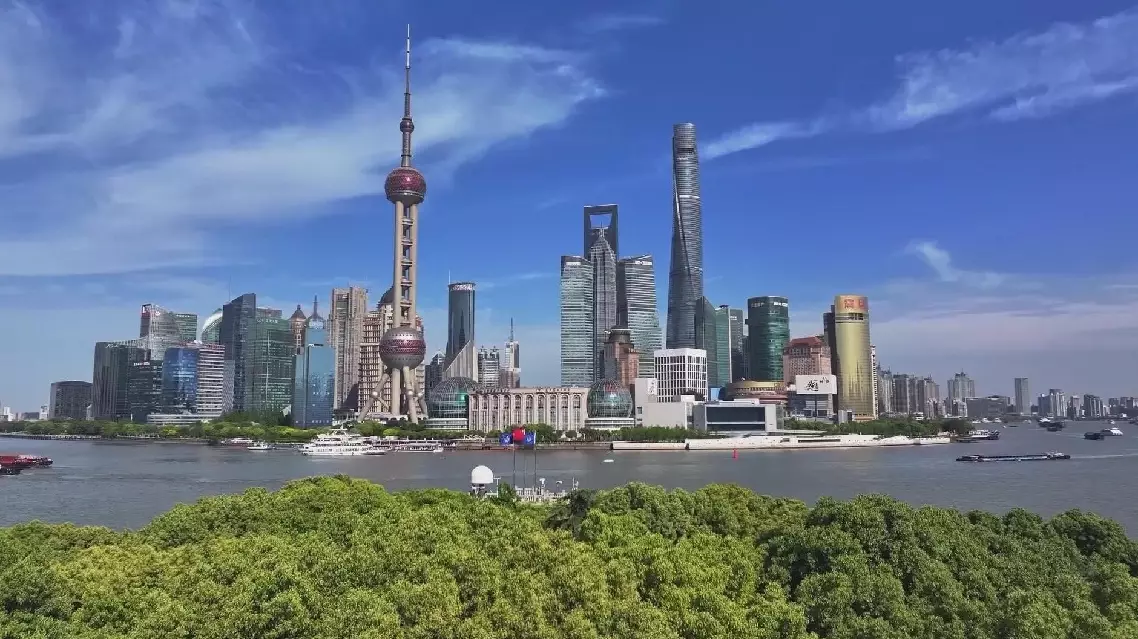
China continued to make headway in environmental protection throughout 2025, with notable improvements in both air quality and surface water conditions, according to the latest data released by the Ministry of Ecology and Environment.
According to the Ministry, the average concentration of PM2.5 in 339 cities at the prefectural level and above stood at 28.0 micrograms per cubic meter, marking a year-on-year decrease of 4.4 percent.
Meanwhile, the average PM10 concentration reached 48 micrograms per cubic meter, down by 2.0 percent compared to the previous year.
Excluding days affected by exceptional sand and dust weather, the average proportion of days with good air quality was 89.3 percent, an increase of 1.9 percentage points from 2024.
In terms of surface water quality, monitoring data showed further improvement nationwide.
Among 3,641 state-monitored surface water sections, 91.4 percent were rated as good quality (Grade I-III), up by 1.0 percentage point year-on-year.
The proportion of sections with inferior quality (below Grade V, the lowest level in China's five-tier water quality rating system) remained stable at 0.6 percent.
Key river basins, including the Yangtze River, Yellow River, Pearl River, Songhua River, Huaihe River, Haihe River, and Liaohe River, as well as rivers in northwestern and southwestern regions and those in east China's provinces of Zhejiang and Fujian, recorded good-quality water in 93.0 percent of monitored sections, an improvement of 0.6 percentage points.
The below-Grade V proportion in these basins was 0.4 percent, a slight increase of 0.1 percentage points.
Among 209 key lakes and reservoirs under observation, 78.5 percent attained good water quality, representing a rise of 1.4 percentage points from the previous year. The share of those with inferior water quality dropped by 1.0 percentage points to 3.3 percent.
China reports steady improvement in air, water quality for 2025