Iran's mission to the United Nations on Wednesday reiterated Tehran's readiness to dialogue with Washington, and its willingness to defend itself if provoked, after U.S. President Donald Trump escalated his rhetoric and announced the deployment of additional U.S. naval forces to the Middle East.
"The last time the U.S. blundered into wars in Afghanistan and Iraq, it squandered over 7 trillion U.S. dollars and lost more than 7,000 American lives," the statement said. "Iran stands ready for dialogue based on mutual respect and interests -- but if pushed, it will defend itself," the mission said in a post on social media platform X.
Meanwhile, foreign ministers in the Middle East have expressed concerns over rising tensions.
Saudi Arabian Foreign Minister Faisal bin Farhan Al Saud, in a phone call on Wednesday with Iranian counterpart Seyed Abbas Araghchi, noted the shared responsibility of countries in the region to maintain stability and security.
Egyptian Foreign Minister Badr Abdelatty spoke separately with Araghchi and U.S. President Donald Trump's special envoy Steve Witkoff. Abdelatty urged both sides to step up efforts to reduce tensions.
The United States has already dispatched the aircraft carrier USS Abraham Lincoln and accompanying guided-missile destroyers to the region. The U.S. Central Command said Monday that the carrier-led strike group had taken up position in Middle Eastern waters, without disclosing its exact location.
The heightened military posture comes roughly a month after protests erupted across Iran, which Tehran has accused the United States and Israel of fomenting. Since then, Trump has sent mixed signals, alternately calling for negotiations while refusing to rule out military intervention.
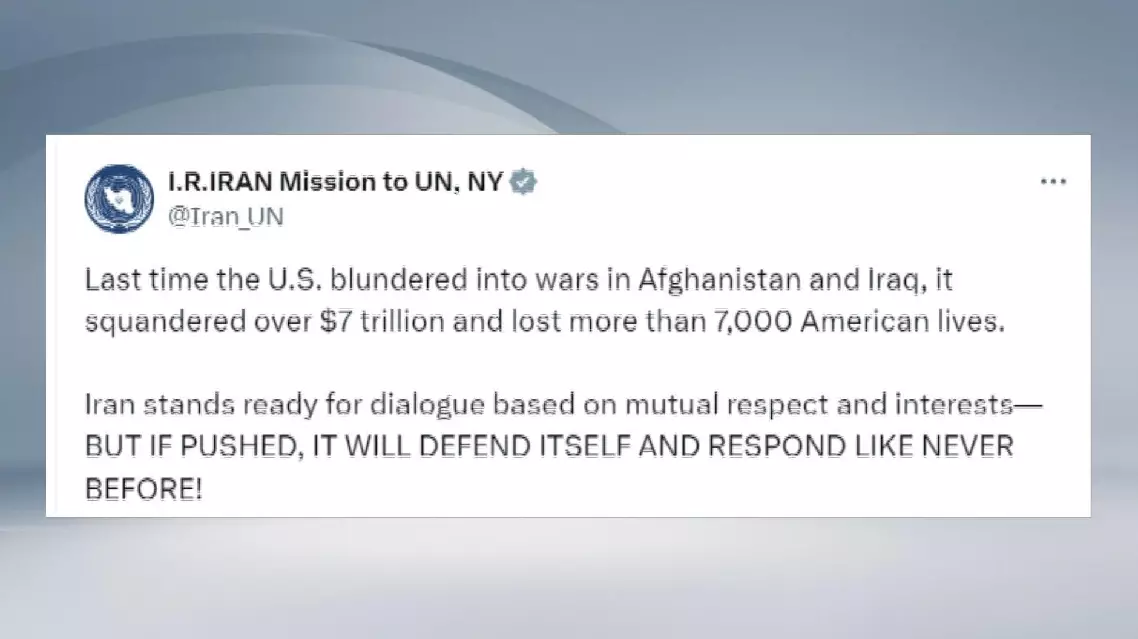
Iran's mission to UN says Tehran is ready for dialogue, but will defend itself if provoked
Smart wearable devices are increasingly embedded in daily life in China, where booming sales of watches and smart glasses are reshaping the consumer electronics market. In Beijing's Chaoyang District, smart watches have become a popular choice for shoppers seeking tools to monitor sleep, heart rate and stress.
"I often use my smart watch to monitor my sleep, heart rate, and stress. I hope it could also incorporate AI functions, allowing me to chat with it in-depth or help me complete some simple tasks," said a customer.
Beyond watches, smart glasses powered by large‑model technology are entering China's consumer market, reshaping the landscape of wearable electronics.
"It is more convenient to use smart glasses as earphones at work. This is my third pair of smart glasses, and the functions of the new one is much better than the previous ones," said a customer.
"Smart wearable devices have evolved significantly, shifting from simply displaying data to facilitating effective user interaction. As these product categories update at an accelerating pace and user demands grow increasingly diverse, manufacturers are compelled to accelerate their own cycles of innovation in both functional design and hardware configuration. Take smartwatches as an example: sales in this category have increased by more than 40 percent (compared to the same period in 2024)," said Zhang Jie, manager of Beijing Shuangjing Branch of JD Mall.
According to the latest worldwide quarterly wearable device tracker, in the first three quarters of 2025, global wrist-worn device shipments reached 150 million units, a year-on-year increase of 10 percent.
Among them, China's cumulative shipments totaled 58.43 million units, representing a year-on-year growth of 27.6 percent. In the first half of 2025, the global smart glasses shipments reached 4.065 million units, a year-on-year increase of 64.2 percent, and China's cumulative shipments exceeded 1 million units.
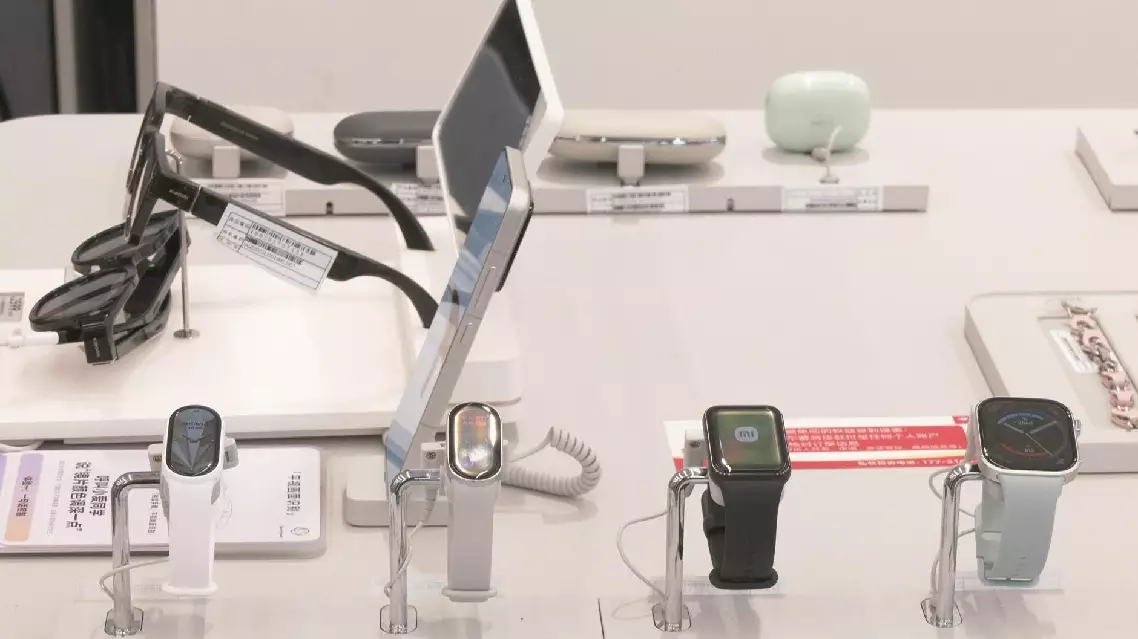
China smart wearables growth fuels consumer electronics boom