
CLEVELAND--(BUSINESS WIRE)--Jan 29, 2026--
TFS Financial Corporation (NASDAQ: TFSL) (the "Company"), the holding company for Third Federal Savings and Loan Association of Cleveland (the "Association"), today announced results for the quarter ended December 31, 2025.
This press release features multimedia. View the full release here: https://www.businesswire.com/news/home/20260129022639/en/
“We have had a positive start to our fiscal year as we quickly adapted to three recent Fed rate cuts,” said Chairman and CEO Marc A. Stefanski. “Our net interest income increased by $7.4 million over the same period in 2025, and we continue to effectively navigate competition for savings customers while also managing our margin. Our Tier 1 capital ratio of 10.75%, demonstrates our strength and stability as we consistently exceed the amount considered well capitalized.”
Operating Results for the Quarter ended December 31, 2025 compared to the Quarter ended September 30, 2025
The Company reported net income of $22.3 million for the quarter ended December 31, 2025 compared to $26.0 million for the quarter ended September 30, 2025. The decrease in net income was mainly due to a decrease in net interest income and an increase in non-interest expense, partially offset by a release of provision for credit losses.
Net interest income decreased $1.6 million, or 2.07%, to $75.7 million for the quarter ended December 31, 2025 when compared to the quarter ended September 30, 2025. The main reason for the decrease was lower average yields on home equity lines of credit and cash equivalents, following three recent 25 basis point interest rate cuts to the Wall Street Journal Prime Rate, the index to which home equity lines of credit are linked. The interest rate spread for the quarter ended December 31, 2025 was 1.47% compared to 1.54% for the preceding quarter. The net interest margin was 1.79% for the quarter ended December 31, 2025 and 1.84% for the quarter ended September 30, 2025.
During the quarter ended December 31, 2025, there was a $1.0 million release of provision for credit losses compared to a $1.0 million provision expense for the quarter ended September 30, 2025. The total allowance for credit losses at December 31, 2025 was $104.1 million, or 0.66% of total loans receivable, compared to $104.4 million, or 0.67% of total loans receivable, at September 30, 2025. The overall allowance decreased primarily due to a decline in unfunded commitments for loan originations. The liability for unfunded commitments included in the total allowance was $29.1 million at December 31, 2025 and $30.1 million at September 30, 2025. Net loan recoveries were $0.7 million during the quarter ended December 31, 2025 compared to $1.0 million for the quarter ended September 30, 2025.
Total loan delinquencies increased $2.2 million to $36.9 million, or 0.23% of total loans receivable, at December 31, 2025 from $34.7 million, or 0.22% of total loans receivable, at September 30, 2025. Non-accrual loans increased $0.3 million to $39.0 million, or 0.25% of total loans receivable, at December 31, 2025 from $38.7 million, or 0.25% of total loans receivable, at September 30, 2025.
Total non-interest expense for the quarter ended December 31, 2025 increased $4.2 million, or 8.07%, from the prior quarter to $56.2 million, mainly due to increases of $2.9 million in salaries and employee benefits, $1.7 million in marketing costs and $0.6 million in office property, equipment and software expenses, partially offset by a $0.8 million decrease in other expenses. Salaries and benefits increased primarily due to a one-time after-tax bonus of $1,500 given to all associates in December 2025, in appreciation for their contributions to record earnings in fiscal year 2025, and a $0.8 million increase in group health insurance costs. The increase in marketing costs resulted from initiatives aimed at attracting and retaining deposit customers. The decrease in other expenses was primarily the result of decreases in down payment assistance, appraisal, credit report and professional consultant costs, partially offset by an increase in postage.
Operating Results for the Quarter ended December 31, 2025 compared to the Quarter ended December 31, 2024
The Company reported net income of $22.3 million for the quarter ended December 31, 2025 compared to $22.4 million for the quarter ended December 31, 2024. Compared to the same quarter of the previous year, net interest income and non-interest income increased, while the release of provision for credit losses decreased. These changes were offset by an increase in non-interest expense.
Net interest income increased $7.4 million, or 10.83%, to $75.7 million for the quarter ended December 31, 2025 compared to $68.3 million for the same quarter a year ago. When comparing the two periods, the average balance and yield of interest-earnings assets increased $403.0 million and 15 basis points while the average balance and cost of interest-bearing liabilities increased $397.6 million and two basis points. The interest rate spread for the quarter ended December 31, 2025 was 1.47% compared to 1.34% for the year-ago quarter. The net interest margin was 1.79% for the quarter ended December 31, 2025 and 1.66% for the quarter ended December 31, 2024.
During the quarter ended December 31, 2025, there was a $1.0 million release of provision for credit losses compared to a $1.5 million release of provision for the quarter ended December 31, 2024. The total allowance for credit losses was $104.1 million, or 0.66% of total loans receivable, at December 31, 2025 compared to $97.8 million, or 0.64% of total loans receivable, at December 31, 2024. The increase in the allowance was driven by an increase in home equity line of credit commitments, with a partially offsetting decrease in the residential mortgage portfolio. Home equity lines of credit carry a higher life of loan loss estimate than residential mortgage loans.
Total non-interest income increased by $1.5 million, or 23.07%, to $8.0 million for the quarter ended December 31, 2025, from $6.5 million for the quarter ended December 31, 2024. The increase was mainly the result of a $0.3 million increase in fees and service charges and a $1.2 million increase in net gain on the sales of loans. During the quarters ending December 31, 2025 and December 31, 2024, there were $120.8 million and $72.0 million loans sold with net gains on the sale of loans totaling $2.3 million and $1.1 million, respectively.
Total non-interest expense increased $8.3 million, or 17.31%, to $56.2 million for the quarter ended December 31, 2025 from $47.9 million for the same quarter a year ago. The increase was mainly due to increases of $3.9 million in salaries and employee benefits, $2.5 million in marketing costs, $1.0 million in office property, equipment and software and $1.2 million in other expenses. The increase in salaries and benefits was primarily due to a one-time after-tax bonus of $1,500 given to all associates in December 2025, totaling $2.2 million, and an increase in staffing. The increase in marketing costs resulted from initiatives aimed at attracting and retaining deposit customers. Information technology improvements drove the increase in office property, equipment and software expenses. The increase in other expenses was primarily due to increases in down payment assistance and postage.
Financial Condition at December 31, 2025
Total assets increased $42.4 million, or less than 1%, to $17.50 billion at December 31, 2025 from $17.46 billion at September 30, 2025. This change was mainly the result of increases in loans held for investment and prepaid expenses and other assets, partially offset by decreases in investment securities available for sale and loans held for sale.
Investment securities available for sale decreased $66.2 million, or 12.71%, to $454.5 million at December 31, 2025 from $520.7 million at September 30, 2025. This decrease was mainly due to the combined effect of cash flows from security repayments and maturities. During the quarter ended December 31, 2025, a $50.0 million treasury security matured and was not replaced.
Loans held for investment, net of deferred loan fees and allowance for credit losses, increased $78.4 million, or 0.50%, to $15.74 billion at December 31, 2025 from $15.66 billion at September 30, 2025. The increase was offset by a $43.3 million decrease in the portfolio of loans held for sale, which totaled $14.4 million at December 31, 2025. During the quarter ended December 31, 2025, the home equity loans and lines of credit portfolio increased $236.0 million and residential core mortgage loans decreased $153.9 million.
The changes in loans held for sale and loans held for investment were affected by the volume of loans originated, acquired and sold. During the quarter ended December 31, 2025, total first mortgage loan originations were $315.4 million compared to $427.9 million for the quarter ended September 30, 2025 and $176.5 million for the quarter ended December 31, 2024. Of total residential mortgage loans originated during the current period, $268.5 million (85%) were purchase transactions. There was $120.8 million of residential mortgage loans delivered to Fannie Mae on contracts settled during the quarter ended December 31, 2025. Commitments originated for home equity loans and lines of credit were $531.1 million for the quarter ended December 31, 2025 compared to $645.4 million for the quarter ended September 30, 2025 and $559.0 million for the quarter ended December 31, 2024.
Other assets increased $46.7 million, or 41.81%, to $158.4 million at December 31, 2025 from $111.7 million at September 30, 2025. The increase was primarily the result of a $47.9 million increase in the margin requirement on swap contracts after an investment security that had been posted as collateral matured during the quarter ended December 31, 2025.
Deposits decreased by $74.9 million, or 0.72%, to $10.37 billion at December 31, 2025 from $10.45 billion at September 30, 2025. The decrease in deposits included a $494.2 million decrease in the CD portfolio and a $10.0 million decrease in money market accounts, partially offset by a $399.7 million increase in savings accounts and a $27.5 million increase in checking accounts. Some CDs convert to tiered-interest savings accounts at maturity, prompting a shift from CDs to savings accounts between the periods compared. At December 31, 2025, brokered CDs totaled $0.88 billion and included $550.0 million of one- to three-month certificates of deposit accounts aligned with pay-fixed interest rate swap contracts, with a remaining weighted average effective maturity of approximately 2.1 years.
Borrowed funds increased $69.6 million, or 1.43%, to $4.94 billion at December 31, 2025 from $4.87 billion at September 30, 2025. The total balance of borrowed funds at December 31, 2025 consisted of $1.55 billion of long-term advances with a weighted average maturity of approximately 1.7 years, $2.95 billion of three-month advances, aligned with interest rate swap contracts, with a remaining weighted average effective maturity of approximately 2.8 years, and $270.0 million in overnight borrowings, all from the FHLB, and $150 million of fed funds purchased.
Total shareholders' equity increased $7.0 million, or less than 1%, to $1.90 billion at December 31, 2025 from $1.89 billion at September 30, 2025. Activity during the quarter reflects $22.3 million of net income, $1.9 million of stock repurchases, a quarterly dividend of $14.9 million and a negative net adjustment of $2.3 million related to stock compensation and employee stock ownership plans. During the quarter ended December 31, 2025, a total of 139,442 shares of the Company's stock were repurchased at an average cost of $13.66 per share. The Company's eighth stock repurchase program, approved in January 2017, allows for a total of 10,000,000 shares to be repurchased and 5,195,356 shares have been repurchased as of December 31, 2025.
The Company declared and paid a quarterly dividend of 0.2825 per share during the quarter ended December 31, 2025. As a result of a mutual member vote, Third Federal Savings and Loan Association of Cleveland, MHC (the "MHC"), the mutual holding company that owns approximately 81% of the outstanding stock of the Company, was able to waive its receipt of its share of the dividend paid. Under current Federal Reserve regulations, the MHC is required to obtain the approval of its members every 12 months for the MHC to waive its right to receive dividends. As a result of a July 8, 2025 member vote and the subsequent non-objection of the Federal Reserve, the MHC has the approval to waive receipt of up to $1.13 per share of possible dividends to be declared on the Company’s common stock during the twelve months subsequent to the members’ approval (i.e., through July 8, 2026), including a total of up to $0.565 remaining. The MHC has conducted the member vote to approve the dividend waiver each of the past twelve years under Federal Reserve regulations and for each of those twelve years, approximately 97% of the votes cast were in favor of the waiver.
The Company operates under the capital requirements for the standardized approach of the Basel III capital framework (“Basel III Rules”). At December 31, 2025 all of the Company's capital ratios exceeded the amounts required for the Company to be considered "well capitalized" for regulatory capital purposes. The Company's Tier 1 leverage ratio was 10.75%, its Common Equity Tier 1 and Tier 1 ratios, as calculated under the fully phased-in Basel III Rules, were each 17.35% and its total capital ratio was 18.31%.
Presentation slides as of December 31, 2025 will be available on the Company's website, thirdfederal.com, under the Investor Relations link under the "Presentations" heading, beginning January 30, 2026. The Company will not be hosting a conference call to discuss its operating results.
Third Federal Savings and Loan Association is a leading provider of savings and mortgage products, and operates under the values of love, trust, respect, a commitment to excellence and fun. Founded in Cleveland in 1938 as a mutual association by Ben and Gerome Stefanski, Third Federal’s mission is to help people achieve the dream of home ownership and financial security. It became part of a public company in 2007 and celebrated its 85 th anniversary in May 2023. Third Federal, which lends in 28 states and the District of Columbia, is dedicated to serving consumers with competitive rates and outstanding service. Third Federal, an equal housing lender, has 21 full service branches in Northeast Ohio, two lending offices in Central and Southern Ohio, and 15 full service branches throughout Florida.
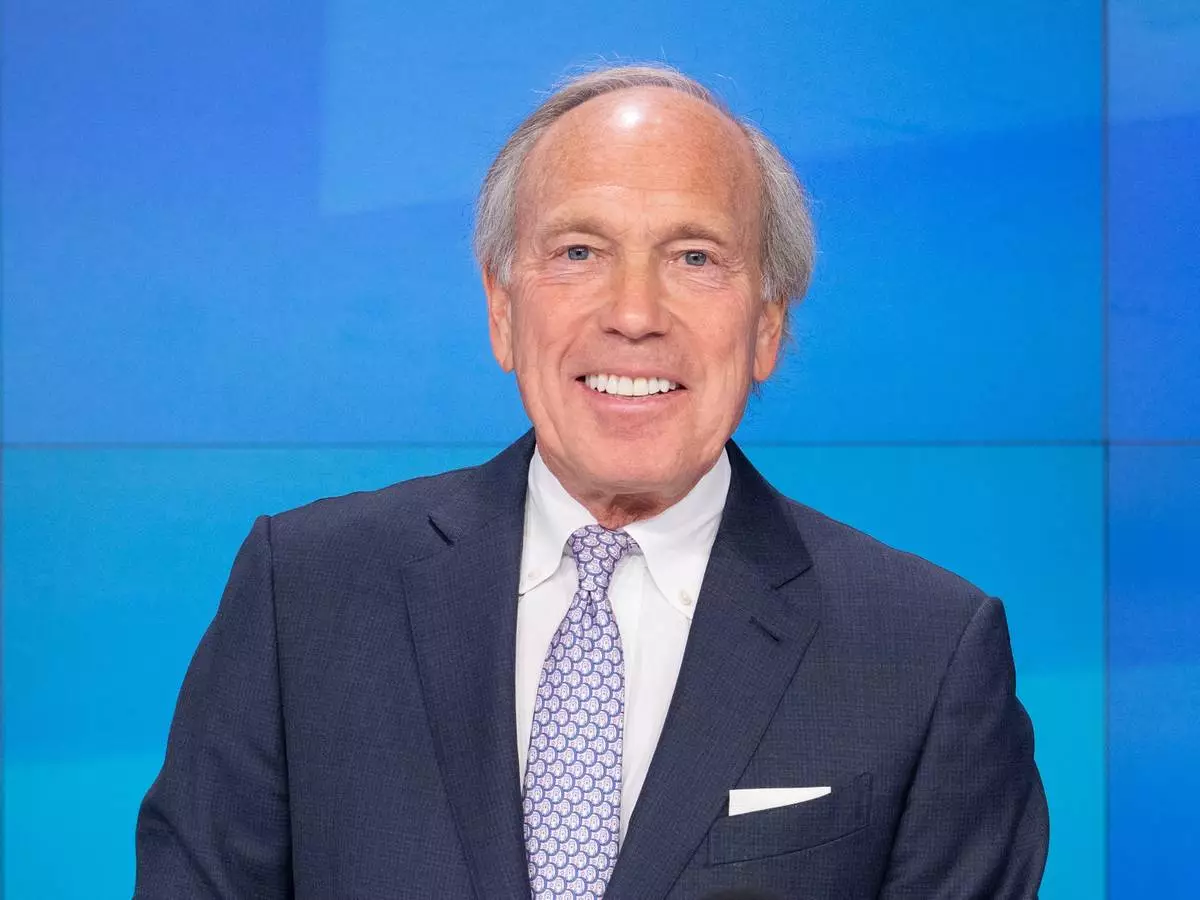
Chairman and CEO Marc A. Stefanski