MADISON, Wis. (AP) — A jury found a Wisconsin man guilty Thursday of forging threats against President Donald trump in an attempt to get the victim in a robbery case against him deported.
Online court records show the Milwaukee County jury found 52-year-old Demetric Scott guilty of felony identity theft and witness intimidation after deliberating for most of the day. He represented himself during the three-day trial and was immediately taken into custody after the verdicts were read, leaving no way to reach him for comment on Thursday evening.
According to court documents, Mexican immigrant Ramon Morales Reyes was riding his bike in Milwaukee in September 2023 when Scott approached him and kicked him off the bike. He stabbed Morales Reyes with a box cutter before stealing the bike and riding away.
Scott was arrested hours later. While he was in jail, Scott wrote multiple letters posing as Morales Reyes to state and federal officials threatening to kill Trump at a rally. Federal immigration authorities took Morales Reyes into custody in May after he dropped his daughter off at school.
U.S. Department of Homeland Security Secretary Kristi Noem blasted his photo on social media, along with an excerpt of a letter he purportedly wrote in English promising to shoot Trump at a rally. The White House and Trump supporters played up his arrest as a major success in the administration's crackdown on immigration.
Investigators determined that Morales Reyes couldn't have written the letters since he doesn't speak English well, can't write in the language and the handwriting in the letters didn't match his.
Meanwhile, Scott was making calls from jail in which he talked about letters that needed to be mailed and a plan to get U.S. Immigration and Customs Enforcement authorities to pick someone up so his trial could get dismissed. He admitted to police that he wrote the letters.
Scott was charged separately with armed robbery, battery, and reckless endangerment in connection with the bike incident. The jury on Thursday acquitted him on the robbery and battery counts but found him guilty on the endangerment charge.
Court records show prosecutors charged Scott in 2022 with being a party to burglary. He was out on bail in connection with that case when the bike incident happened and wrote the letters, prompting prosecutors to charge him with three counts of bail jumping. The jury on Thursday found him guilty on one of those counts but acquitted him on the remaining two charges.
All together, he faces up to 26 years in the state prison system when he's sentenced on Feb. 27. The burglary charge is still pending.
The Noem news release with Morales Reyes' photo touting his arrest is still posted on the DHS website but now includes a disclaimer stating that he's no longer under investigation for threatening Trump but remains in ICE custody pending deportation. The release says he entered the U.S. illegally nine times between 1998 and 2005 and has a criminal record that includes arrests for felony hit and run, property damage and disorderly conduct with a domestic abuse modifier.
Morales Reyes was released on $7,500 bond in June and is currently residing with his family in Milwaukee, his deportation defense attorney, Cain Oulahan, said. He has applied for a U-visa, a document that allows crime victims and their family members to remain in the U.S., but Oulahan said it could take years to obtain one.
Wisconsin online court records do not show any criminal cases involving Morales Reyes. Oulahan, his attorney, said that all the background checks he has conducted on Morales Reyes have turned up nothing.
Morales Reyes moved to the U.S. from Mexico in the 1980s. He worked as a dishwasher in Milwaukee, is married and has three children who are U.S. citizens, according to his attorneys. He said Scott's conviction is a huge relief for Morales Reyes and his family.
"He’s been traumatized by going through all this, all these different levels that feel like victimization," Oulahan said. “He just wants to work and be with his family again."
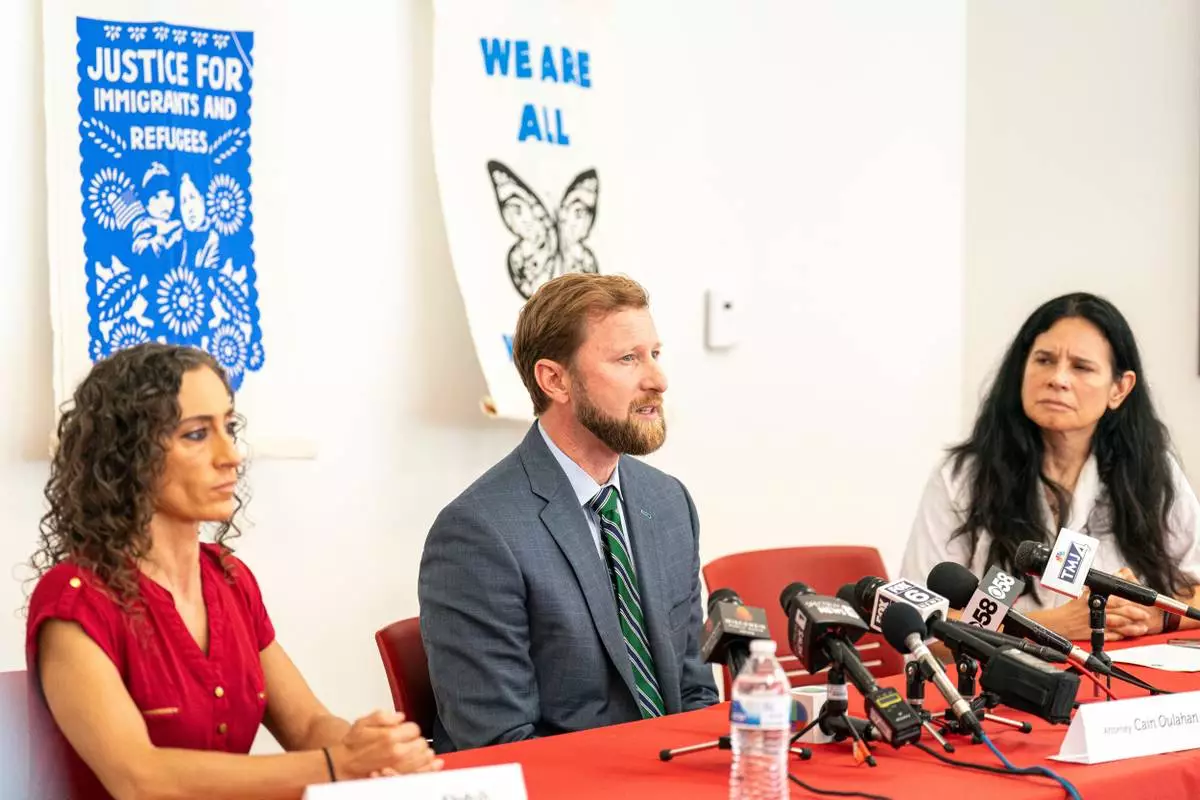
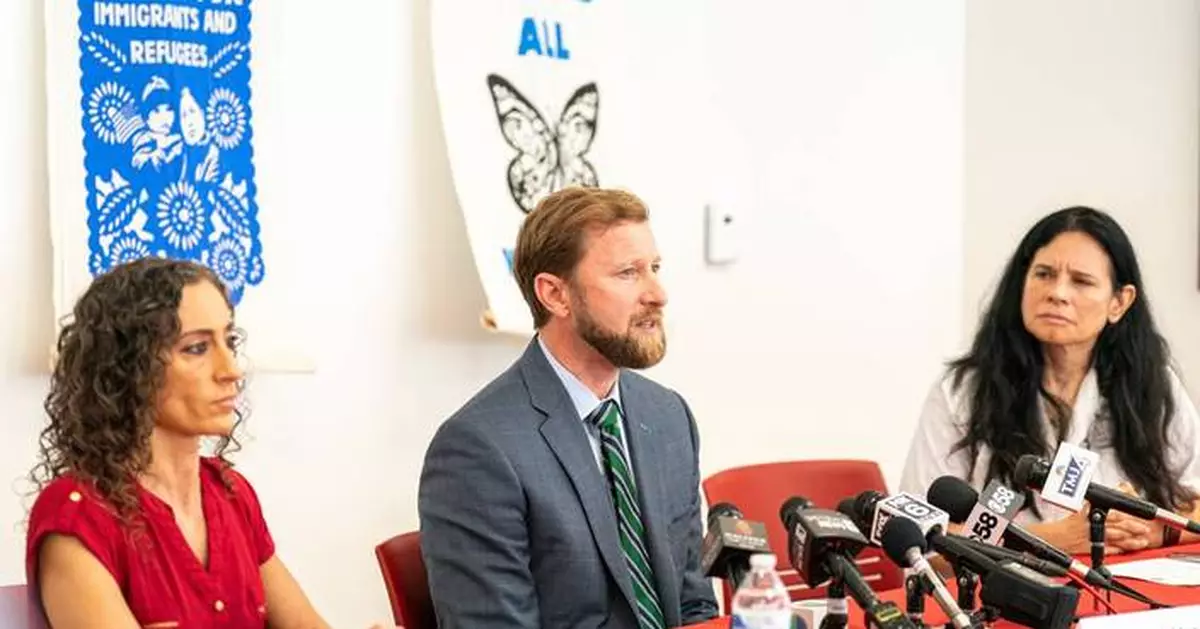
FILE - Cain Oulahan, center, Ramon Morales Reyes' immigration attorney addresses the media, May 30, 2025 in Milwaukee about the detention of his client Ramon Morales Reyes. (AP Photo/Andy Manis, File)
NASHVILLE, Tenn. (AP) — A new Tennessee law has eased up on two longstanding financial hurdles for people with felony sentences who want their voting rights back, including a unique requirement among states that they must have fully paid their child support costs.
The Republican-supermajority Legislature approved the Democratic-sponsored change, which now lets people prove they have complied for the last year with child support orders, such as payment plans. The legislation also unties the payment of all court costs from voting rights restoration.
Advocates for years have sought various changes to Tennessee’s voting rights restoration system at the statehouse and in court. They say loosening these two rules marks the biggest rollback of restrictions to voting rights restoration in decades.
“This is huge and this is history,” said Keeda Haynes, senior attorney for the advocacy group Free Hearts led by formerly incarcerated women like her.
Most Republicans voted for it and Democrats supported it unanimously. The law took effect immediately upon Republican Gov. Bill Lee's signature last week.
“I think people are at a point where they want to just remove the barriers out of the way and allow people to be fully functional members of society,” said Democratic House Minority Leader Karen Camper, a bill sponsor.
In 2023 and early 2024, the state decided that the system did require going to court or showing proof of a pardon, not just a paperwork process, and that gun rights were required to restore the right to vote. Election officials said a court ruling made the changes necessary, though voting rights advocates said officials misinterpreted the order.
Last year, lawmakers untangled voting and gun rights. But voting rights advocates opposed some of the bill's other provisions, such as keeping the process in the courts, where costs can rack up if someone isn't ruled indigent.
Easing up on the financial requirements uncommonly split legislative Republicans. For instance, Senate Speaker Randy McNally voted against it, while House Speaker Cameron Sexton supported it, noting that people aren't getting forgiveness on making their payments.
“They need to continue paying that, and as long as they do, then there’s a possibility (to restore their voting rights)," Sexton said. "I really think that’s harder for people to argue against than maybe what something else was.”
Republican Rep. Johnny Garrett, who voted no, said in committee his vote would hinge on whether “there still can be an (child support) arrearage owed beyond that 12 months.”
For some, backed-up child support payments could reach hundreds or thousands of dollars, and court costs could be hundreds or thousands more, said Gicola Lane, Campaign Legal Center's Restore Your Vote community partnership senior manager.
Advocates credited their narrowed focus, omitting goals such as automatic restoration of rights, no longer tying restitution payments to voting rights, or offering a path for certain people to restore their right who are permanently disenfranchised, including those convicted of voter fraud or most murder charges.
The bill passed the Senate last year and the House this year.
Lawmakers gave the child support requirement final passage in 2006 within an overhaul bill that also created a voting rights restoration process outside of court. Critics said the child support rule penalized impoverished parents.
Democrats were then narrowly hanging onto legislative leadership in both chambers. Republicans held a slim Senate majority but GOP defectors voted for a Democratic speaker.
Last year marked the dismissal of a nearly five-year-old federal lawsuit over Tennessee’s voting-rights restoration system. Free Hearts and the Campaign Legal Center represented plaintiffs in the long-delayed case, which saw some election policy changes along the way.
Roughly 184,000 people have completed supervision for felonies and their offenses don't preclude them from restoring their voting rights, according to a plaintiffs expert’s 2023 estimate in the lawsuit. About one in 10 were estimated to have outstanding child support payments, and more than six in 10 owed court courts, restitution or both, the expert said.
Both Republican and Democratic-led states have eased the voting rights restoration process in recent years. Some states have added complexities.
In Florida, after voters approved a constitutional amendment in 2018 restoring the right to vote for people with felony convictions, the Republican-controlled Legislature watered that down by requiring payment of fines, fees and court costs.
Voting rights are automatically restored upon release in nearly half of states. In 15 others, it occurs after parole, probation or a similar period and sometimes requires paying outstanding court costs, according to the National Conference of State Legislatures. In Maine and Vermont, people with felonies keep their voting rights in prison, the NCSL says.
Ten other states including Tennessee require additional government action. Virginia ’s governor must intervene to restore voting rights of people convicted of felonies. In some states, including Tennessee, certain conviction types render someone ineligible.
However, Virginia lawmakers this year have passed a proposed state constitutional amendment to ask voters whether they want automatic voting rights restoration after someone is released from prison. Kentucky lawmakers have proposed a similar change for voters' consideration that would automatically restore voting rights after certain completed sentences, including probation.
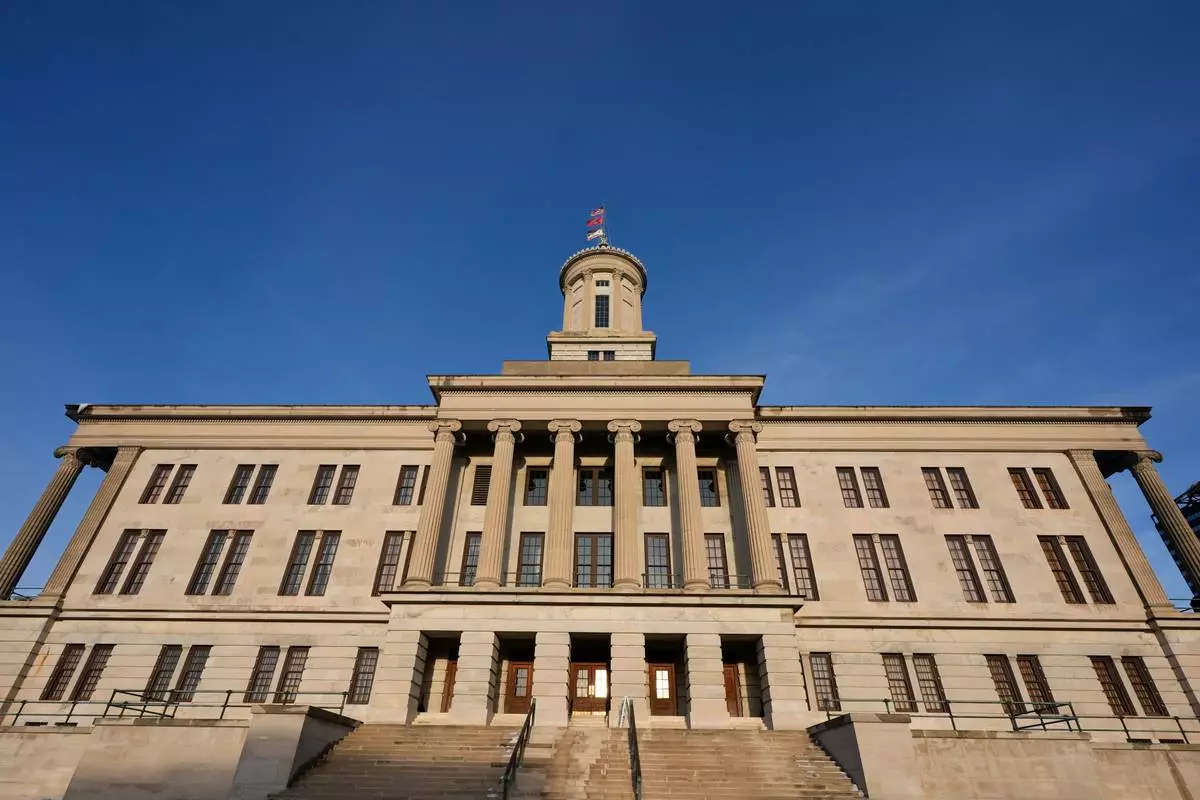
FILE - The Tennessee Capitol is seen, Jan. 22, 2024, in Nashville, Tenn. (AP Photo/George Walker IV, File)