SACRAMENTO, Calif. (AP) — A federal judge on Friday blocked certain federal agencies from requesting citizenship status when distributing voter registration forms, the latest blow to a wide-ranging executive order on elections President Donald Trump signed last year.
U.S. District Judge Colleen Kollar-Kotelly in Washington ruled that the Constitution's separation of powers, giving states and to an extent Congress authority over setting election rules, are at the heart of the case.
“Put simply, our Constitution does not allow the President to impose unilateral changes to federal election procedures,” wrote the judge, an appointee of former President Bill Clinton.
Specifically, Kollar-Kotelly permanently blocked two provisions of the executive order that sought to impose proof-of-citizenship rules.
Her decision said agencies will not be allowed to "assess citizenship” before providing a federal voter registration form to people enrolling in public assistance programs. It also said the Secretary of Defense cannot require documentary proof of citizenship when military personnel register to vote or request ballots.
“Our democracy works best when all Americans can participate, including members of our military and their families living overseas. Today’s ruling removes a very real threat to the freedom to vote for overseas military families and upholds the separation of powers," said Danielle Lang, a voting rights expert with the Campaign Legal Center, which is representing plaintiffs in the case.
The White House said Trump's executive order was intended to ensure “election security” and said Friday's ruling would not be the last word.
“Ensuring only citizens vote in our elections is a commonsense measure that everyone should be able to support,” said Abigail Jackson, a White House spokeswoman. "This is not the final say on the matter and the administration looks forward to ultimate victory on the issue.”
The specter of noncitizens voting and tainting elections was a central strategy for Trump and Republicans during the 2024 campaign, and congressional Republicans are continuing to push proposals that would require proof of citizenship to register to vote. Research, even among Republican state officials, has shown voting by noncitizens is a rare problem.
Friday's ruling is among several setbacks for the president's executive order, which has faced multiple lawsuits. In October, Kollar-Kotelly blocked the administration from adding a documentary proof of citizenship requirement to the federal voter registration form. Separate lawsuits by Democratic state attorneys general and by Oregon and Washington, which rely heavily on mailed ballots, have blocked various portions of Trump's order.
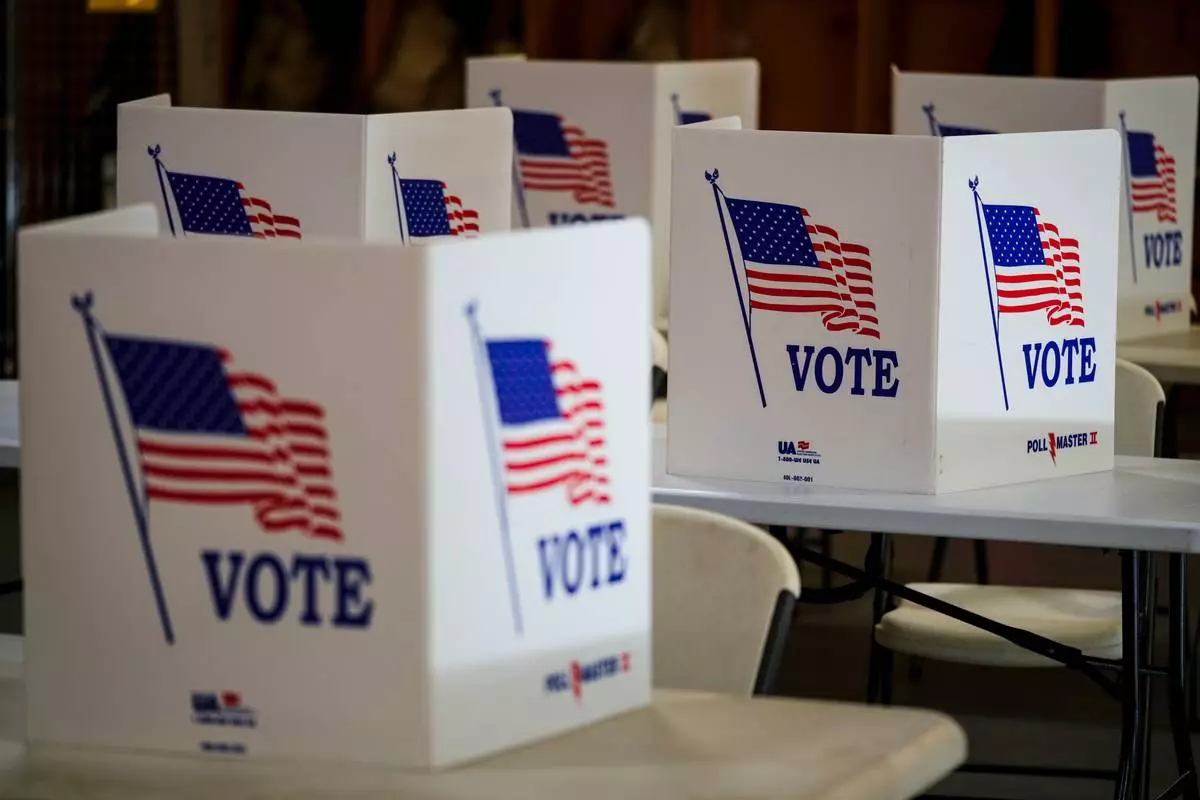
FILE- Voting booths are set up at a polling place in Newtown, Pa, April 23, 2024. (AP Photo/Matt Rourke, File)
WASHINGTON (AP) — The Trump administration has approved a massive new series of arms sales to Israel totaling $6.67 billion and to Saudi Arabia worth $9 billion.
Both sets of sales were announced by the State Department late Friday as tensions rise in the Middle East over the possibility of U.S. military strikes in Iran. They were made public after the department notified Congress of its approval of the sales earlier Friday.
The sales also were announced as President Donald Trump pushes ahead with his ceasefire plan for Gaza that is intended to end the Israel-Hamas conflict and reconstruct and redevelop the Palestinian territory after two years of war left it devastated, with tens of thousands dead.
The Saudi sale is for 730 Patriot missiles and related equipment that “will support the foreign policy and national security objectives of the United States by improving the security of a Major non-NATO Ally that is a force for political stability and economic progress in the Gulf Region,” the department said.
“This enhanced capability will protect land forces of Saudi Arabia, the United States, and local allies and will significantly improve Saudi Arabia’s contribution" to the integrated air and missile defense system in the region, it said.
The sales to Israel are split into four separate packages, including one for 30 Apache attack helicopters and related equipment and weapons and another for 3,250 light tactical vehicles.
The Apache helicopters, which will be equipped with rocket launchers and advanced targeting gear, are the biggest part of the total package, coming to $3.8 billion, according to the State Department.
The next largest portion is the light tactical vehicles, which will be used to move personnel and logistics “to extend lines of communication” for the Israel Defense Forces and will cost $1.98 billion, it said.
Israel will spend an additional $740 million on power packs for armored personnel carriers it has had in service since 2008, the department said. The remaining $150 million will be spent on a small but unreported number of light utility helicopters to complement similar equipment it already has, it said.
In separate but nearly identical statements on Israel, the department said none of the new sales would affect the military balance in the region and that all of them would “enhance Israel’s capability to meet current and future threats by improving its ability to defend Israel’s borders, vital infrastructure, and population centers.”
“The United States is committed to the security of Israel, and it is vital to U.S. national interests to assist Israel to develop and maintain a strong and ready self-defense capability,” the statements said.
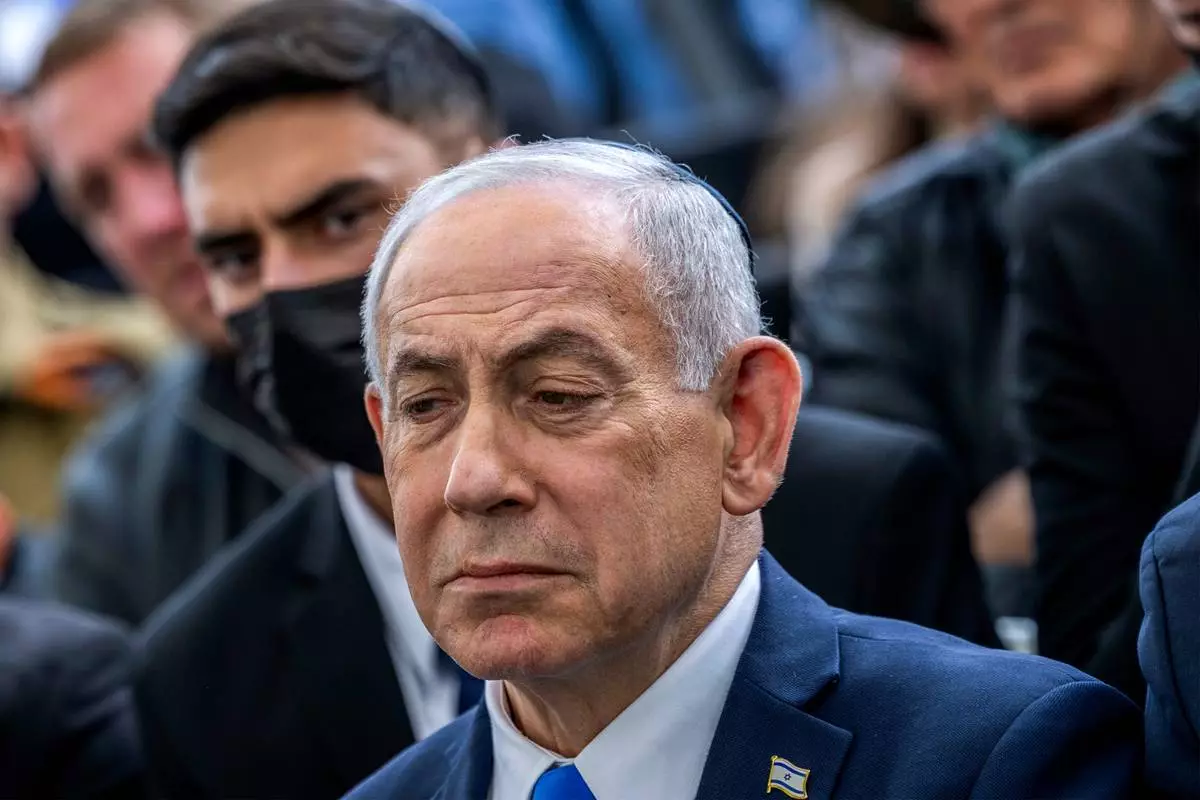
Israel's Prime Minister Benjamin Netanyahu reacts during the funeral of Israeli hostage Ran Gvili, whose remains were brought back to Israel, in the southern town of Meitar on Wednesday, Jan. 28, 2026.(Chaim Goldberg/Pool Photo via AP)