Skip to Content Facebook Feature Image

A bullet shattered her knee. Now a Gaza teen's chances of walking depend on Rafah border crossing

News

A bullet shattered her knee. Now a Gaza teen's chances of walking depend on Rafah border crossing
News

News

A bullet shattered her knee. Now a Gaza teen's chances of walking depend on Rafah border crossing

2026-01-31 13:04 Last Updated At:13:21

DEIR AL-BALAH, Gaza Strip (AP) — Rimas Abu Lehia was wounded five months ago when Israeli troops opened fired toward a crowd of hungry people mobbing an aid truck for food in Gaza and a bullet shattered the 15-year-old Palestinian girl's left knee.

Now her best chance of walking again is surgery abroad. She is on a long list of more than 20,000 Palestinians, including 4,500 children, who have been waiting — some more than a year — for evacuation to get treatment for war wounds or chronic medical conditions, according to the Gaza Health Ministry.

More Images
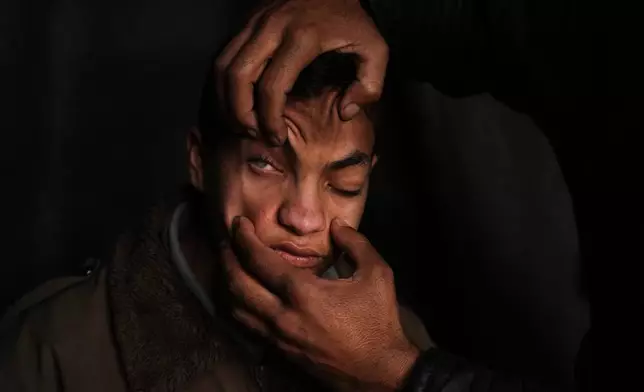
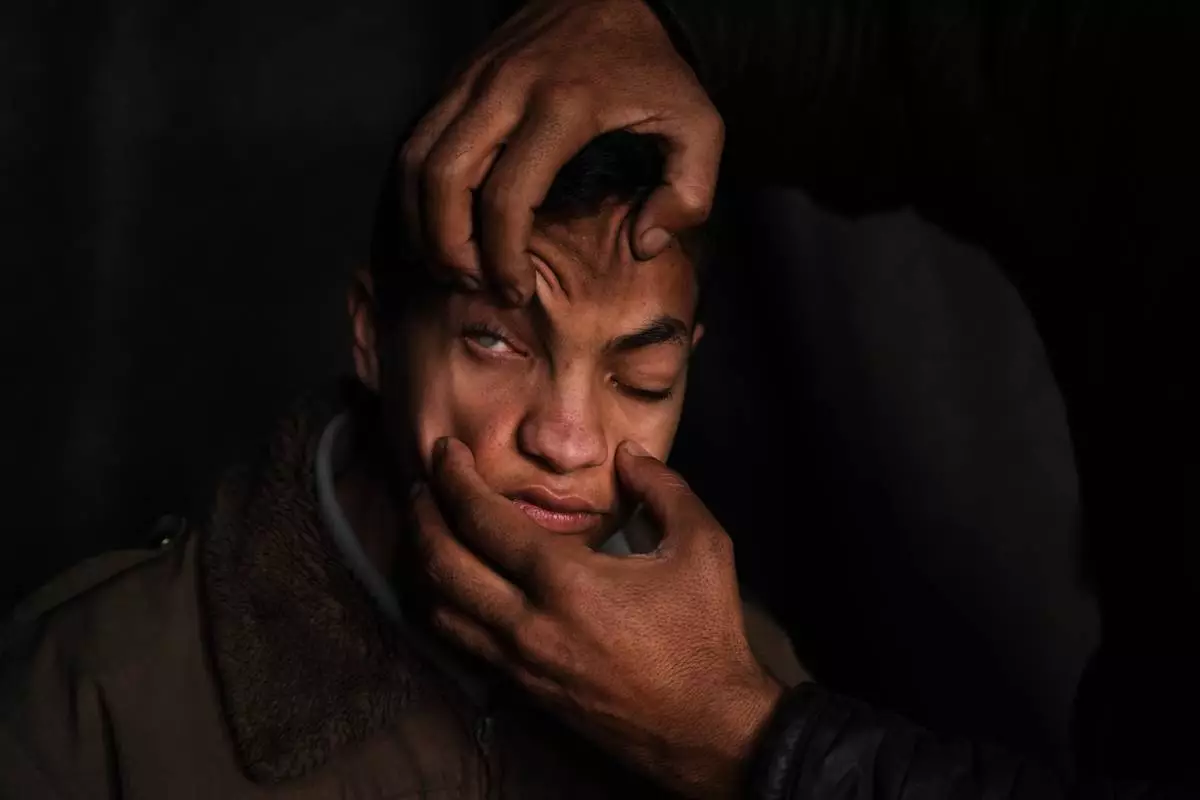
Mahmoud Abu Ishaq, 14, who is suffering vision loss due to a corneal condition, has his eye shown to the camera by his father as they await permission to travel outside the Gaza Strip for medical treatment, in Khan Younis, Gaza Strip, Tuesday, Jan. 27, 2026. (AP Photo/Abdel Kareem Hana)
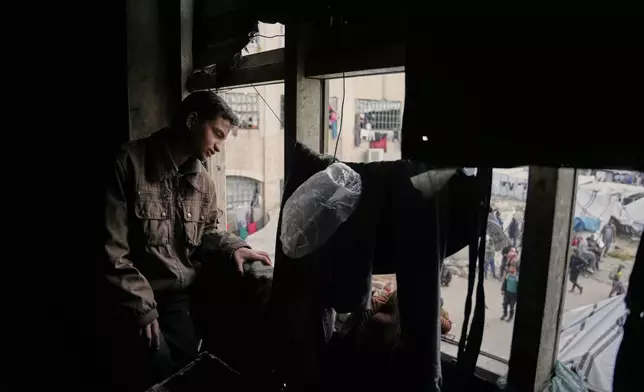
Mahmoud Abu Ishaq, 14, who is suffering vision loss due to a corneal condition, has his eye shown to the camera by his father as they await permission to travel outside the Gaza Strip for medical treatment, in Khan Younis, Gaza Strip, Tuesday, Jan. 27, 2026. (AP Photo/Abdel Kareem Hana)

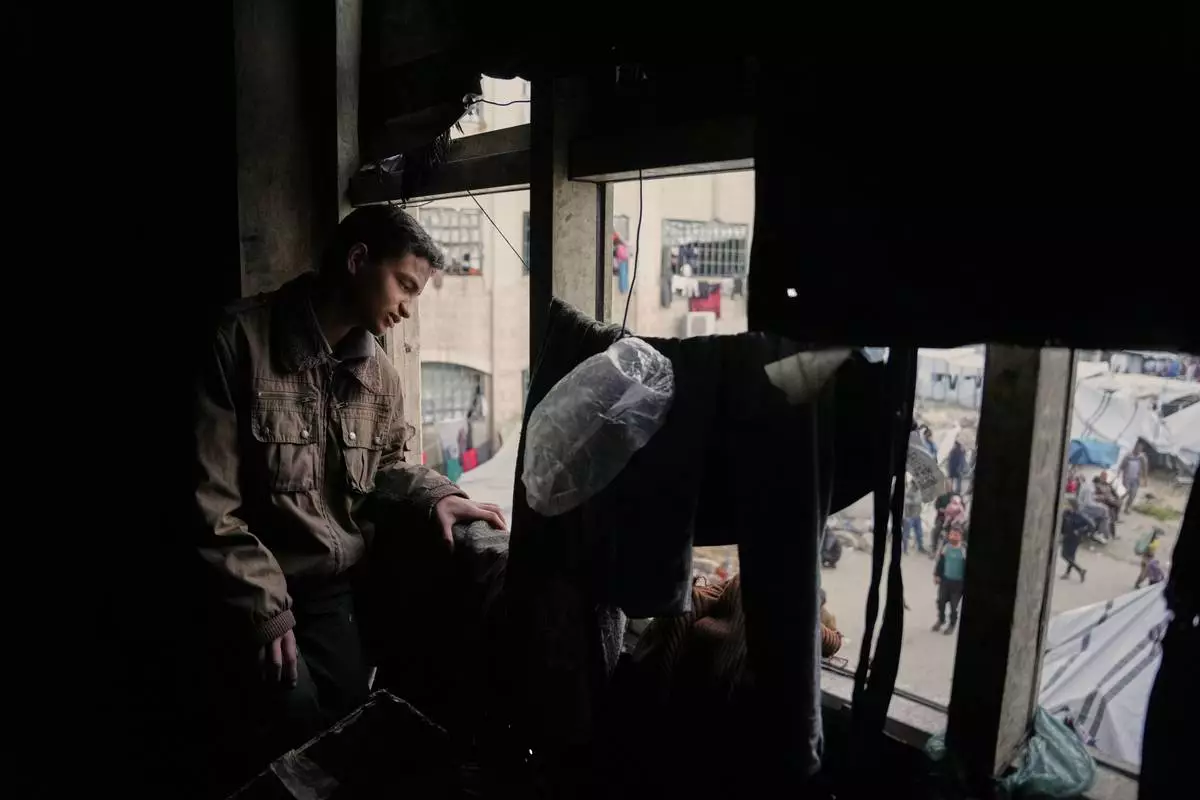
Mahmoud Abu Ishaq, 14, who is suffering vision loss and is awaiting permission to travel outside the Gaza Strip for medical treatment, poses for a photo in Khan Younis, Gaza Strip, Tuesday, Jan. 27, 2026. (AP Photo/Abdel Kareem Hana)
Mahmoud Abu Ishaq, 14, who is suffering vision loss and is awaiting permission to travel outside the Gaza Strip for medical treatment, poses for a photo in Khan Younis, Gaza Strip, Tuesday, Jan. 27, 2026. (AP Photo/Abdel Kareem Hana)

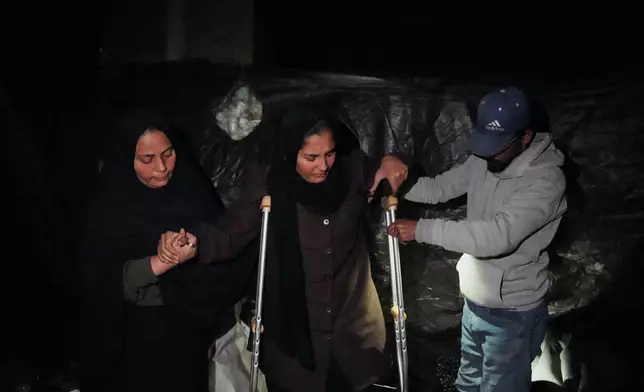
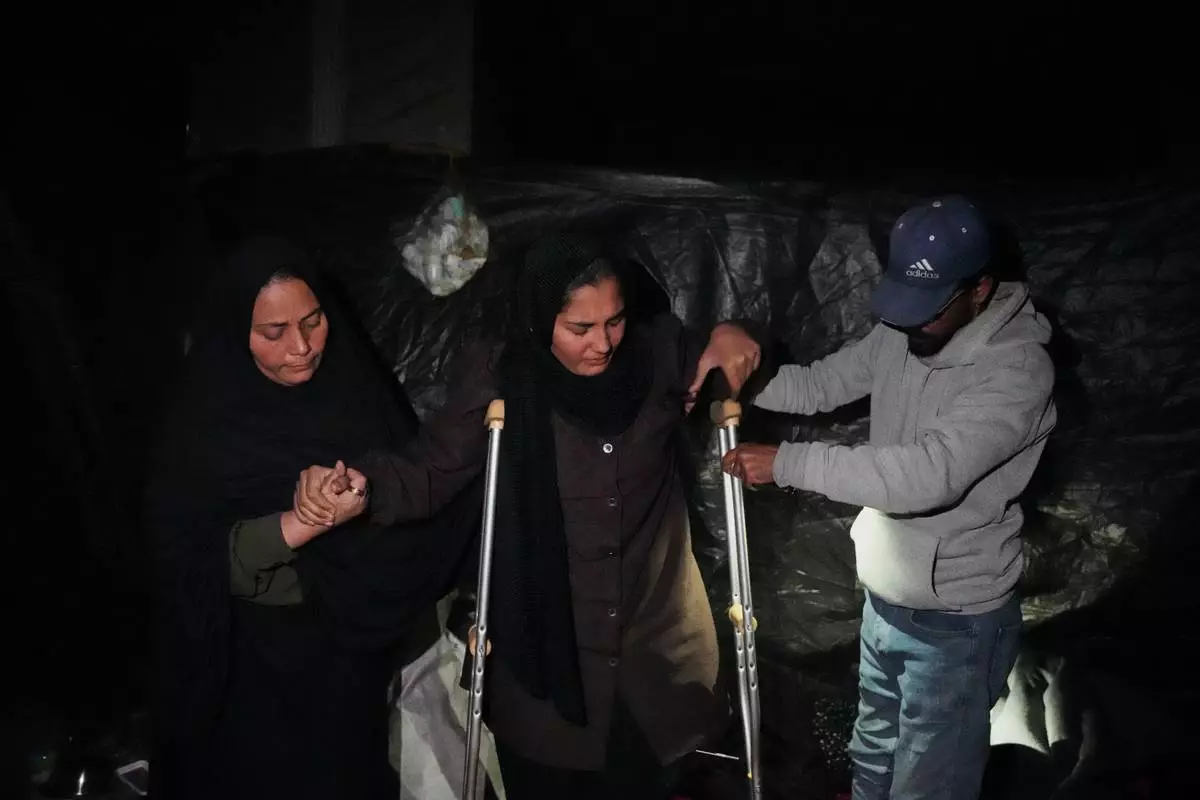
Rimas Abu Lehia, 15, who was injured in her left leg by Israeli fire, tries to sit on the ground with the help of her parents inside her family's tent in Khan Younis, Gaza Strip, Tuesday, Jan. 27, 2026, as she awaits permission to travel outside Gaza for medical treatment. (AP Photo/Abdel Kareem Hana)
Rimas Abu Lehia, 15, who was injured in her left leg by Israeli fire, tries to sit on the ground with the help of her parents inside her family's tent in Khan Younis, Gaza Strip, Tuesday, Jan. 27, 2026, as she awaits permission to travel outside Gaza for medical treatment. (AP Photo/Abdel Kareem Hana)

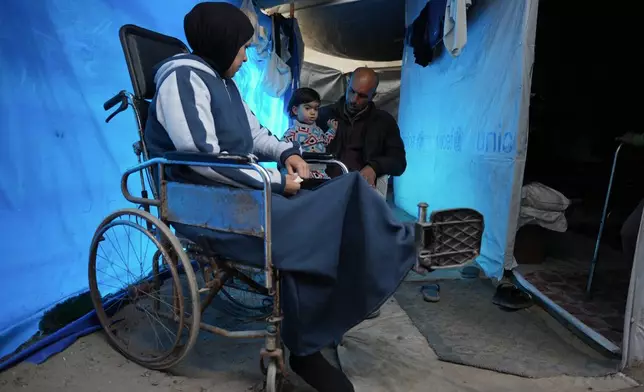
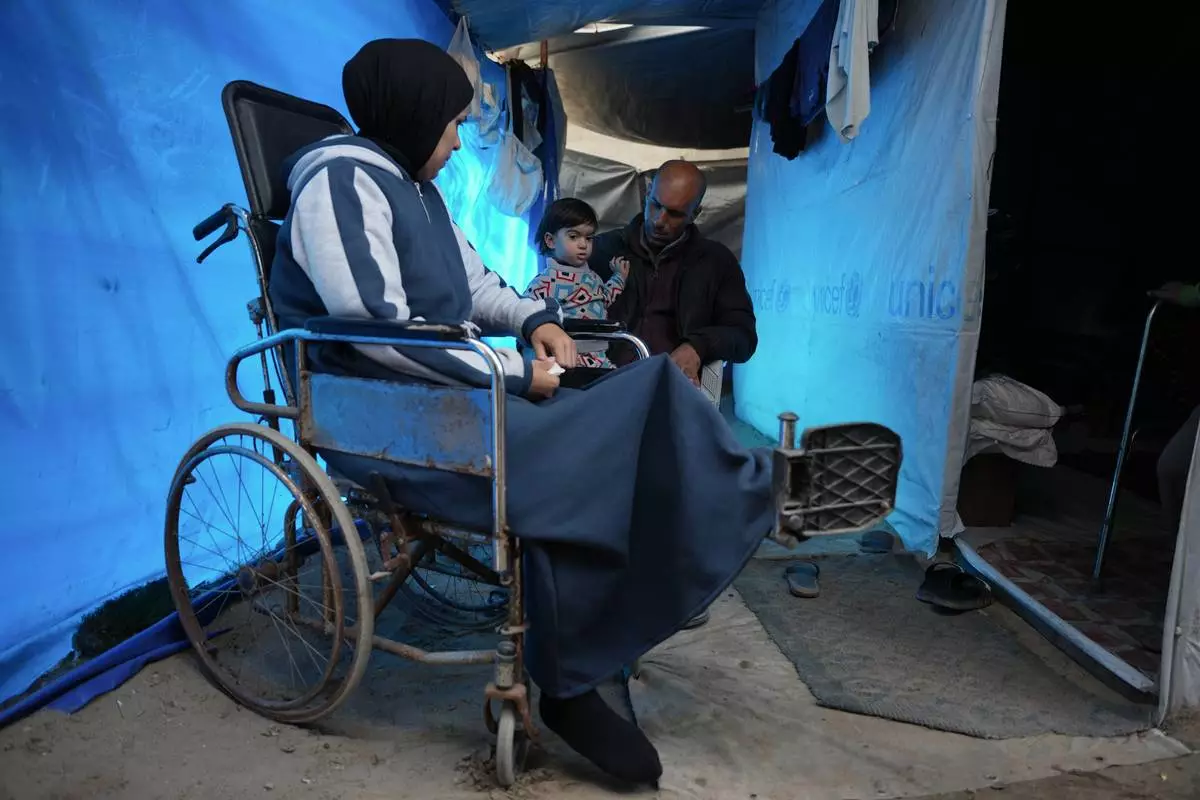
Islam Saleh, who was injured in her left leg in an Israeli strike on a school shelter in Jabalia in 2024, sits in a wheelchair inside her family's tent in Zawaida, Gaza Strip, Tuesday, Jan. 27, 2026, as she awaits permission to travel outside Gaza for treatment. (AP Photo/Abdel Kareem Hana)
Islam Saleh, who was injured in her left leg in an Israeli strike on a school shelter in Jabalia in 2024, sits in a wheelchair inside her family's tent in Zawaida, Gaza Strip, Tuesday, Jan. 27, 2026, as she awaits permission to travel outside Gaza for treatment. (AP Photo/Abdel Kareem Hana)

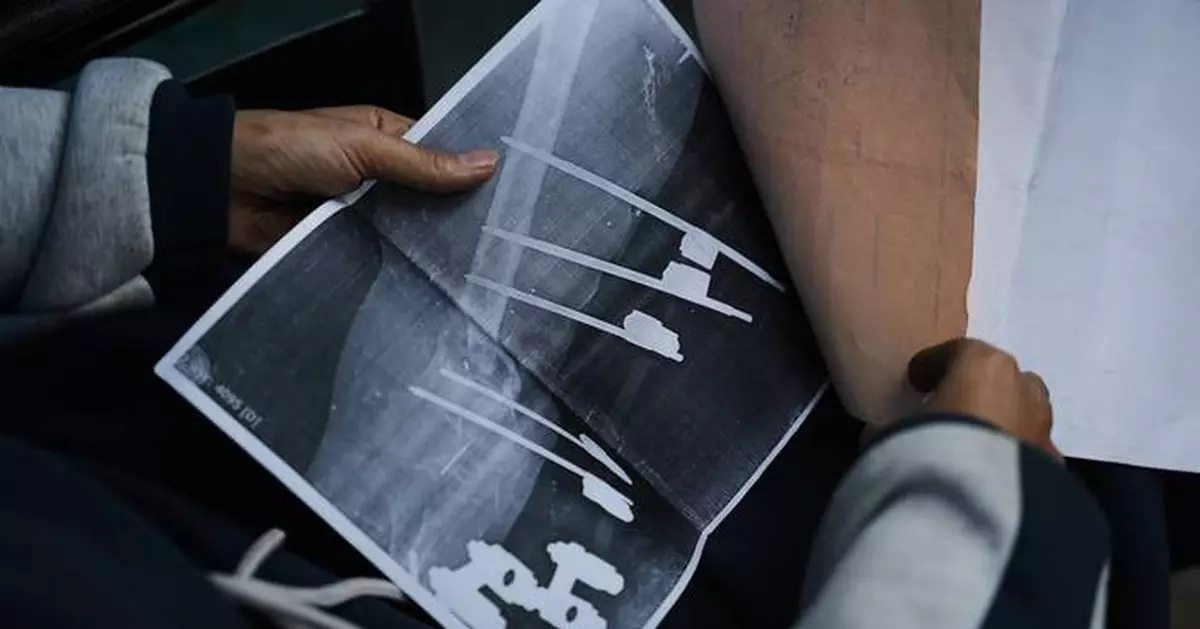
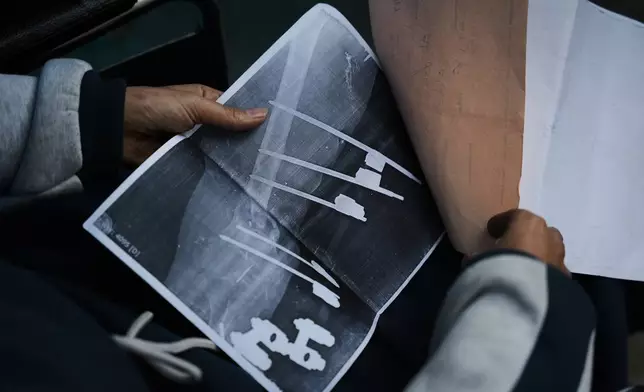
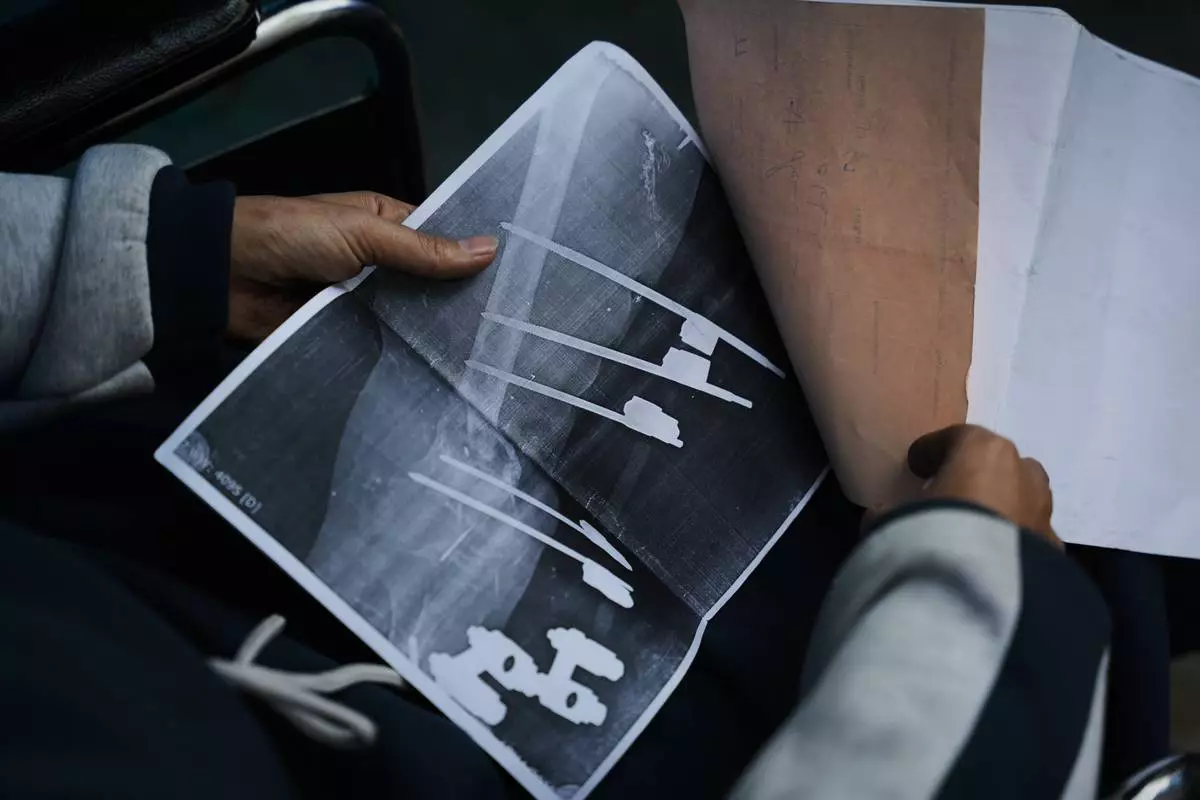
Islam Saleh, who was injured in her left leg in an Israeli strike on a school shelter in Jabalia in 2024, shows her medical reports inside her family's tent in Zawaida, Gaza Strip, Tuesday, Jan. 27, 2026, as she awaits permission to travel outside Gaza for treatment. (AP Photo/Abdel Kareem Hana)

Islam Saleh, who was injured in her left leg in an Israeli strike on a school shelter in Jabalia in 2024, shows her medical reports inside her family's tent in Zawaida, Gaza Strip, Tuesday, Jan. 27, 2026, as she awaits permission to travel outside Gaza for treatment. (AP Photo/Abdel Kareem Hana)

Their hopes hinge on the reopening of the crucial Rafah border crossing between Gaza and Egypt, a key point under the nearly 4-month-old ceasefire between Israel and Hamas. Israel has announced the crossing would open in both directions on Sunday.

The Israeli military body in charge of coordinating aid to Gaza said Friday that “limited movement of people only” would be allowed. Earlier, Prime Minister Benjamin Netanyahu had said Israel will allow 50 patients a day to leave; others have spoken of up to 150 a day.

That's a large jump from about 25 patients a week allowed to leave since the ceasefire began, according to U.N. figures. But it would still take anywhere from 130 to 400 days of crossings to get everyone in need out.

Abu Lehia said her life depends on the crossing opening.

“I wish I didn’t have to sit in this chair,” she said, crying as she pointed at the wheelchair she relies on to move. “I need help to stand, to dress, to go to the bathroom.”

Israel’s campaign in Gaza after the Hamas October 2023 attack on southern Israel that triggered the war has decimated the territory’s health sector — the few hospitals still working were overwhelmed by casualties. There are shortages of medical supplies and Israel has restricted aid entry.

Hospitals are unable to perform complicated surgeries for many of the wounded, including thousands of amputees, or treat many chronic conditions. Gaza’s single specialized cancer hospital shut down early in the war, and Israeli troops blew it up in early 2025. Without giving evidence, the military said Hamas militants were using it, though it was located in an area under Israeli control for most of the war.

More than 10,000 patients have left Gaza for treatment abroad since the war began, according to the World Health Organization.

After Israeli troops seized and closed the Rafah crossing in May 2024 and until the ceasefire, only around 17 patients a week were evacuated from Gaza, except for a brief surge of more than 200 patients a week during a two-month ceasefire in early 2025, according to WHO figures.

About 440 of those seeking evacuation have life-threatening injuries or diseases, according to the Health Ministry. More than 1,200 patients have died while waiting for evacuation, the ministry said Tuesday.

A U.N. official said one reason for the slow pace of evacuations has been that many countries are reluctant to accept the patients because Israel would not guarantee they would be allowed to return to the Gaza Strip. The official spoke on condition of anonymity because he was not authorized to discuss the issue. The majority of evacuees have gone to Egypt, the United Arab Emirates, Qatar and Turkey.

He said it wasn't clear if that would change with Rafah's opening. Even with "daily or almost daily evacuations,” he said, the number is not very high. Also, Israel has said it will only allow around 50 Palestinians a day to enter Gaza while tens of thousands of Palestinians hope to go back.

Israel has also banned sending patients to hospitals in the Israeli-occupied West Bank and east Jerusalem since the war began, the official said — a move that cut off what was previously the main outlet for Palestinians needing treatment unavailable in Gaza.

Five human rights groups have petitioned Israel’s High Court of Justice to remove the ban. The court has not ruled. Still, one cancer patient in Gaza was allowed to travel to the West Bank for treatment on Jan. 11, after the Jerusalem District Court accepted a petition in his case by the Israeli rights group Gisha.

Gaza has more than 11,000 cancer patients and some 75% of the necessary chemotherapy drugs are not available, the Health Ministry said. At least 4,000 cancer patients need urgent treatment abroad, it added.

Ahmed Barham, a 22-year-old university student, has been battling leukemia. He underwent two lymph node removal surgeries in June but the disease is continuing to spread “at an alarming rate,” his father, Mohamed Barham, said.

“There is no treatment available here," the elder Barham said.

His son, who has lost 35 kilograms (77 pounds), got on the urgent list for referral abroad this past week but still doesn’t have a confirmation of travel.

“My son is dying before my eyes,” the father said.

Mahmoud Abu Ishaq, a 14-year-old, has been waiting for more than a year on the referral list for treatment abroad.

The roof of his family home collapsed when an Israeli strike hit nearby in the southern town of Beni Suhaila. The boy was injured and suffered a retinal detachment.

“Now he is completely blind,” his father, Fawaz Abu Ishaq said. “We are waiting for the crossing to open.”

Abu Lehia was wounded in August, when she went out from her family tent in the southern city of Khan Younis, looking for her younger brother, Muhannad, she told The Associated Press. The boy had gone out earlier that morning, hoping to get some food off entering aid trucks.

At the time, when Gaza was near famine, large crowds regularly waited for trucks and pulled food boxes off them, and Israeli troops often opened fire on the crowds. The Israeli military said its forces were firing warning shots, but hundreds were killed over the course of several months, according to Gaza health officials.

When Abu Lehia arrived at the edge of a military-held zone from which the trucks were passing, dozens of people were fleeing as Israeli troops fired. A bullet hit Abu Lehia in the knee, and she fell to the ground screaming, she said.

At the nearby Nasser Hospital, she underwent multiple surgeries, but they were unable to repair her knee. Doctors told her she needs knee replacement surgery outside Gaza.

Officials told the family last month that she would be evacuated in January. But so far nothing has happened, said her father, Sarhan Abu Lehia.

“Her condition is getting worse day by day,” he said. “She sits alone and cries.”

Magdy reported from Cairo. Associated Press writer Lee Keath in Cairo contributed to this report.
Mahmoud Abu Ishaq, 14, who is suffering vision loss due to a corneal condition, has his eye shown to the camera by his father as they await permission to travel outside the Gaza Strip for medical treatment, in Khan Younis, Gaza Strip, Tuesday, Jan. 27, 2026. (AP Photo/Abdel Kareem Hana)
Mahmoud Abu Ishaq, 14, who is suffering vision loss due to a corneal condition, has his eye shown to the camera by his father as they await permission to travel outside the Gaza Strip for medical treatment, in Khan Younis, Gaza Strip, Tuesday, Jan. 27, 2026. (AP Photo/Abdel Kareem Hana)

Mahmoud Abu Ishaq, 14, who is suffering vision loss and is awaiting permission to travel outside the Gaza Strip for medical treatment, poses for a photo in Khan Younis, Gaza Strip, Tuesday, Jan. 27, 2026. (AP Photo/Abdel Kareem Hana)
Mahmoud Abu Ishaq, 14, who is suffering vision loss and is awaiting permission to travel outside the Gaza Strip for medical treatment, poses for a photo in Khan Younis, Gaza Strip, Tuesday, Jan. 27, 2026. (AP Photo/Abdel Kareem Hana)

Rimas Abu Lehia, 15, who was injured in her left leg by Israeli fire, tries to sit on the ground with the help of her parents inside her family's tent in Khan Younis, Gaza Strip, Tuesday, Jan. 27, 2026, as she awaits permission to travel outside Gaza for medical treatment. (AP Photo/Abdel Kareem Hana)
Rimas Abu Lehia, 15, who was injured in her left leg by Israeli fire, tries to sit on the ground with the help of her parents inside her family's tent in Khan Younis, Gaza Strip, Tuesday, Jan. 27, 2026, as she awaits permission to travel outside Gaza for medical treatment. (AP Photo/Abdel Kareem Hana)

Islam Saleh, who was injured in her left leg in an Israeli strike on a school shelter in Jabalia in 2024, sits in a wheelchair inside her family's tent in Zawaida, Gaza Strip, Tuesday, Jan. 27, 2026, as she awaits permission to travel outside Gaza for treatment. (AP Photo/Abdel Kareem Hana)
Islam Saleh, who was injured in her left leg in an Israeli strike on a school shelter in Jabalia in 2024, sits in a wheelchair inside her family's tent in Zawaida, Gaza Strip, Tuesday, Jan. 27, 2026, as she awaits permission to travel outside Gaza for treatment. (AP Photo/Abdel Kareem Hana)
Islam Saleh, who was injured in her left leg in an Israeli strike on a school shelter in Jabalia in 2024, shows her medical reports inside her family's tent in Zawaida, Gaza Strip, Tuesday, Jan. 27, 2026, as she awaits permission to travel outside Gaza for treatment. (AP Photo/Abdel Kareem Hana)

Islam Saleh, who was injured in her left leg in an Israeli strike on a school shelter in Jabalia in 2024, shows her medical reports inside her family's tent in Zawaida, Gaza Strip, Tuesday, Jan. 27, 2026, as she awaits permission to travel outside Gaza for treatment. (AP Photo/Abdel Kareem Hana)
Nine people, including former CNN anchor Don Lemon and another journalist — have been charged with violating two different federal laws in connection with the protest that interrupted a worship service at a Minnesota church earlier this month.

The group that barged into a worship service that Sunday was upset that the head of a local field office for U.S. Immigration and Customs Enforcement serves as a pastor. The protest was quickly denounced by President Donald Trump, Attorney General Pam Bondi and other officials, as well as many religious leaders.

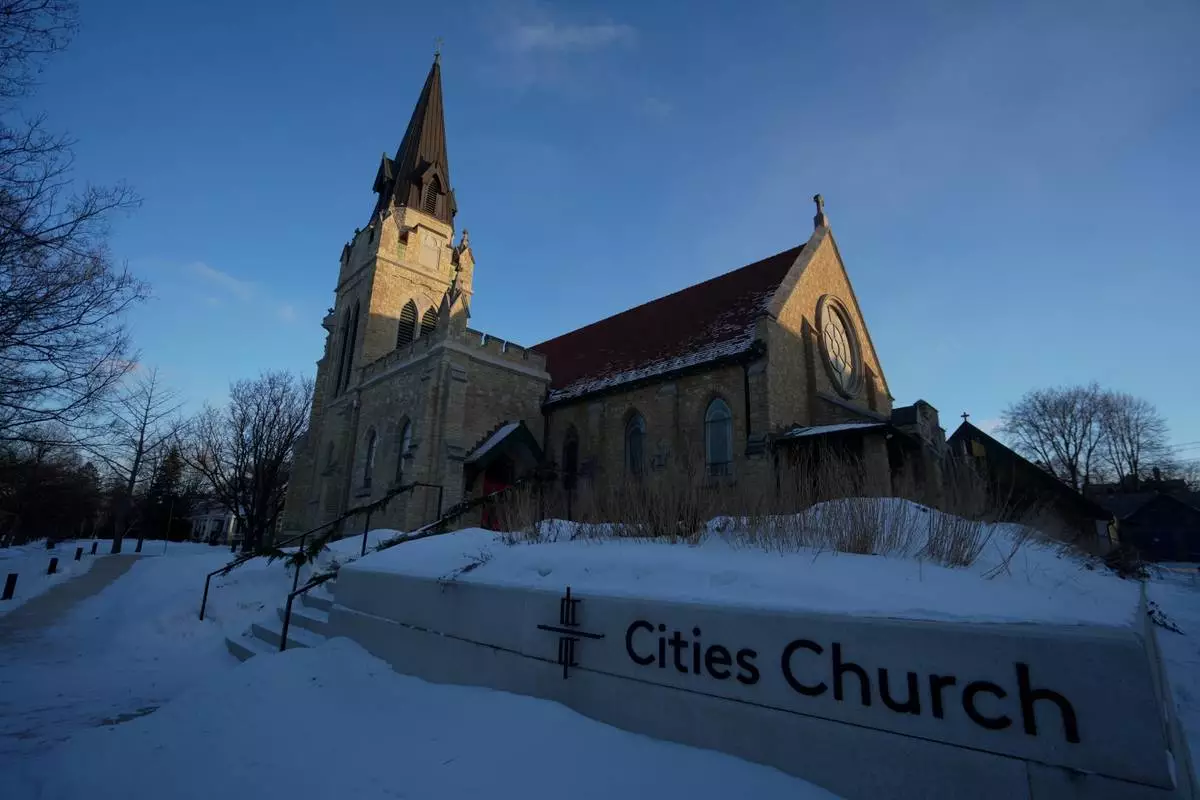
Lemon and a local reporter were covering the protest on Jan. 18 at the Cities Church in St. Paul. A grand jury in Minnesota indicted Lemon and others on charges of conspiracy and interfering with the First Amendment rights of worshippers. The indictment alleges various actions by the group that entered the church, including what Lemon said as he reported on the event for his livestream show.

The arrests of Lemon and independent journalist Georgia Fort are especially troubling for legal experts and media groups who worry about the chilling effect on coverage of the Trump administration.

David Harris, a University of Pittsburgh law professor specializing in criminal law, said the charges against the protesters are more tenable, given the federal laws against disrupting the free exercise of worship. “A court will have to sort that out,” he said.

But charges against reporters are troubling, he said.

“Charging journalists for being there covering the disruption does not mean they were part of the disruption,” Harris said. “Don Lemon and other journalists are the way that we the public are finding out what is happening in these spaces,” he said. “They are our eyes and ears. The message that is being sent is that journalists like Don Lemon and others should feel intimidated from doing this.”

The two key laws cited in the complaints against those who were arrested were passed more than a century apart — one rooted in efforts to prevent intimidation by the post-Civil War Ku Klux Klan and the other to enable access to abortion clinics, though they both have had wider applications.

Here are some details about those laws:

The Freedom of Access to Clinic Entrances law, known as the FACE Act for short, was passed in 1994 to help ensure that patients seeking care at an abortion clinic — as well as the doctors and nurses who work there — could safely access the facilities that often draw protests. It followed incidents of violence targeting clinic workers.

A Republican-sponsored clause that provided for penalties for disruptions of worship services was also incorporated into the law.

Anti-abortion conservatives have denounced the law, focusing on the clinic protections. Trump last year pardoned several people convicted for blockading clinics. His Justice Department scaled back FACE Act prosecutions of those accused of blocking clinics, claiming there had been a “weaponization” of the law.

But the U.S. Supreme Court, despite having overturned the Roe v. Wade decision that had legalized abortion nationwide, last year refused to hear a challenge to the constitutionality of FACE.

In 2025, 42 House Republicans co-sponsored legislation, introduced by Rep. Chip Roy, R-Texas, to repeal the FACE Act. The conservative Heritage Foundation supported the stalled repeal effort, calling the FACE Act “an ideological weapon” designed to suppress anti-abortion activity.

They have contended the worship-protection aspect of the law hasn't been invoked in the past. In 2025, the Justice Department did invoke the act in a lawsuit against demonstrators who protested outside of a synagogue.

Someone charged with their first violation of the FACE Act could be fined or sentenced up to one year in jail. Subsequent offenses, or charges that involve injuries, deaths or damage, could face tougher penalties.

The other charges against Lemon and Fort are based on a law commonly known as the Conspiracy Against Rights law, which was enacted shortly after the Civil War. It was originally designed to target vigilante groups such as the Ku Klux Klan. The law prohibits intimidating or otherwise preventing someone from exercising constitutional rights.

The Klan had been targeting those newly freed from slavery, but over the years the law has been revised to apply to a wide range of violations of constitutional rights. It was used to charge suspects in the “Mississippi Burning” killings of three civil rights workers in 1964. It has been used in cases ranging from church arsons and antisemitic intimidation to political conspiracy and witness tampering.

The law carries a penalty of up to 10 years in prison –- or more if it involves injury, death or destruction of property.

Harris said it's important for Americans to be able to see what's happening so they can make up their own minds, instead of only hearing officials describe what happened.

“We all have had the experience of them telling us things that simply do not square with what we see with our own eyes," he said. “Journalists being present to witness these things and report them are crucial to our being able to make our minds about what our government is doing.”

Jonathan Manes, senior counsel in the MacArthur Justice Center’s Illinois Office, agreed.

“It's astonishing that the federal government is criminally charging journalists for covering a protest,” said Manes, whose work focuses on governmental civil rights violations.

“The crucial point is that a journalist covering activities going on is not part of those activities,” he said. “None of this is to say that the protest here was a good thing or that it was even allowed, but journalists shouldn’t be charged federally with conspiracy when they’re covering it."

AP reporters Tiffany Stanley in Washington and Audrey McAvoy in Honolulu contributed.

Associated Press religion coverage receives support through the AP’s collaboration with The Conversation US, with funding from Lilly Endowment Inc. The AP is solely responsible for this content.

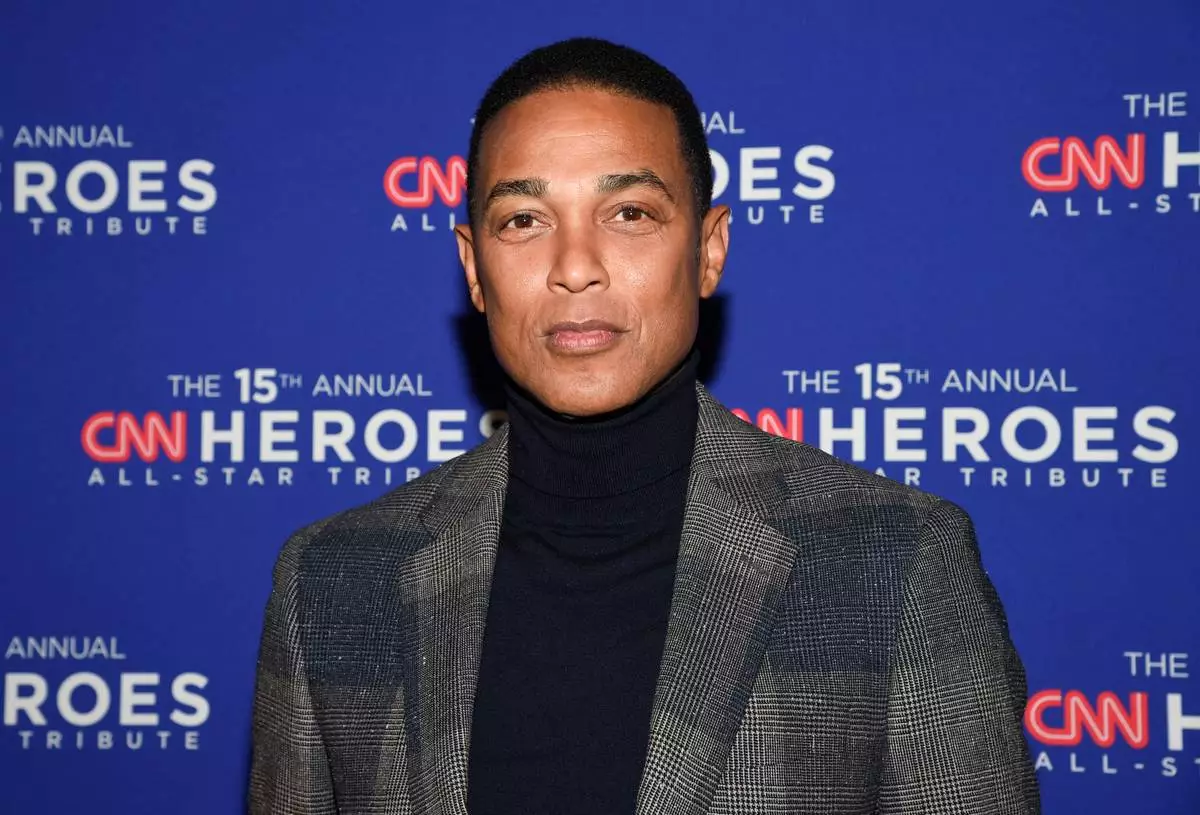
FILE - Don Lemon attends the 15th annual CNN Heroes All-Star Tribute at the American Museum of Natural History, Sunday, Dec. 12, 2021, in New York. (Photo by Evan Agostini/Invision/AP, File)

FILE - Don Lemon attends the 15th annual CNN Heroes All-Star Tribute at the American Museum of Natural History, Sunday, Dec. 12, 2021, in New York. (Photo by Evan Agostini/Invision/AP, File)

Cities Church is seen in St. Paul, Minn. where activists shut down a service claiming the pastor was also working as an ICE agent, Monday, Jan. 19, 2026 in St. Paul, Minn. (AP Photo/Angelina Katsanis)

Cities Church is seen in St. Paul, Minn. where activists shut down a service claiming the pastor was also working as an ICE agent, Monday, Jan. 19, 2026 in St. Paul, Minn. (AP Photo/Angelina Katsanis)

Recommended Articles