TORONTO (AP) — Members of Canada's Conservative opposition party voted to keep Pierre Poilievre as their leader despite his election loss last year and recent defections.
Poilievre received 87.4% support in a leadership review vote announced early Saturday at the party's convention in Calgary, Alberta.
Click to Gallery

Conservative Party Leader Pierre Poilievre and wife Anaida kiss as they arrive at the podium at the party's national convention in Calgary, Friday, Jan. 30, 2026. (Larry MacDougal /The Canadian Press via AP)
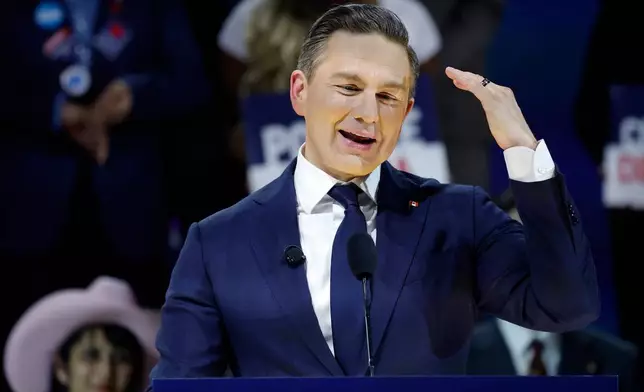
Conservative Party Leader Pierre Poilievre, delivers his keynote address at the party's national convention in Calgary, Friday, Jan. 30, 2026. (Larry MacDougal /The Canadian Press via AP)
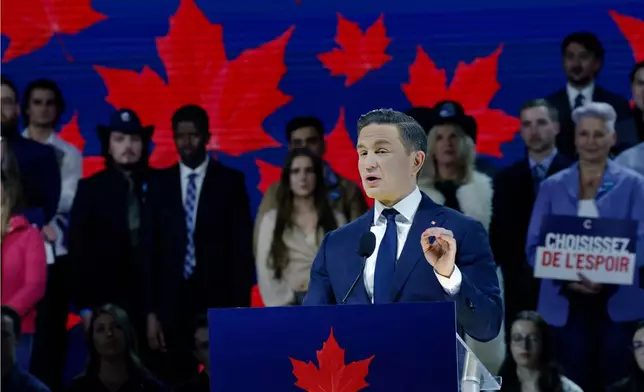
Conservative Party Leader Pierre Poilievre, delivers his keynote address at the party's national convention in Calgary, Friday, Jan. 30, 2026. (Larry MacDougal /The Canadian Press via AP)
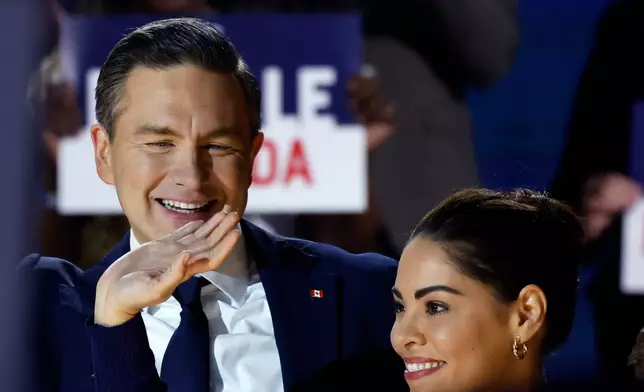
Conservative Party Leader Pierre Poilievre, and wife Anaida arrive at the podium as he prepares to deliver his keynote address at the party's national convention in Calgary, Friday, Jan. 30, 2026. (Larry MacDougal /The Canadian Press via AP)
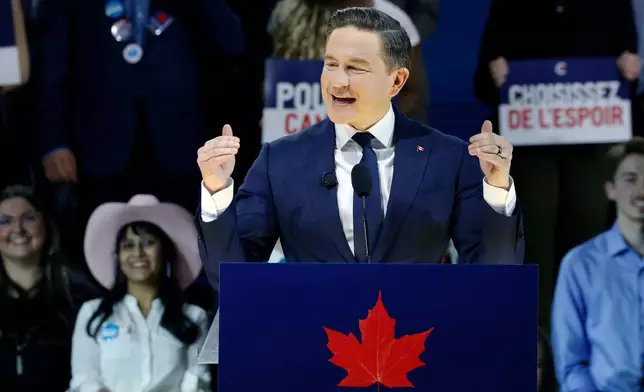
Conservative Party Leader Pierre Poilievre, delivers his keynote address at the party's national convention in Calgary, Friday, Jan. 30, 2026. (Larry MacDougal /The Canadian Press via AP)
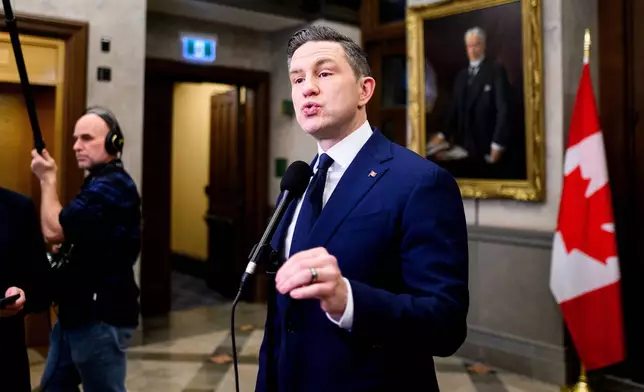
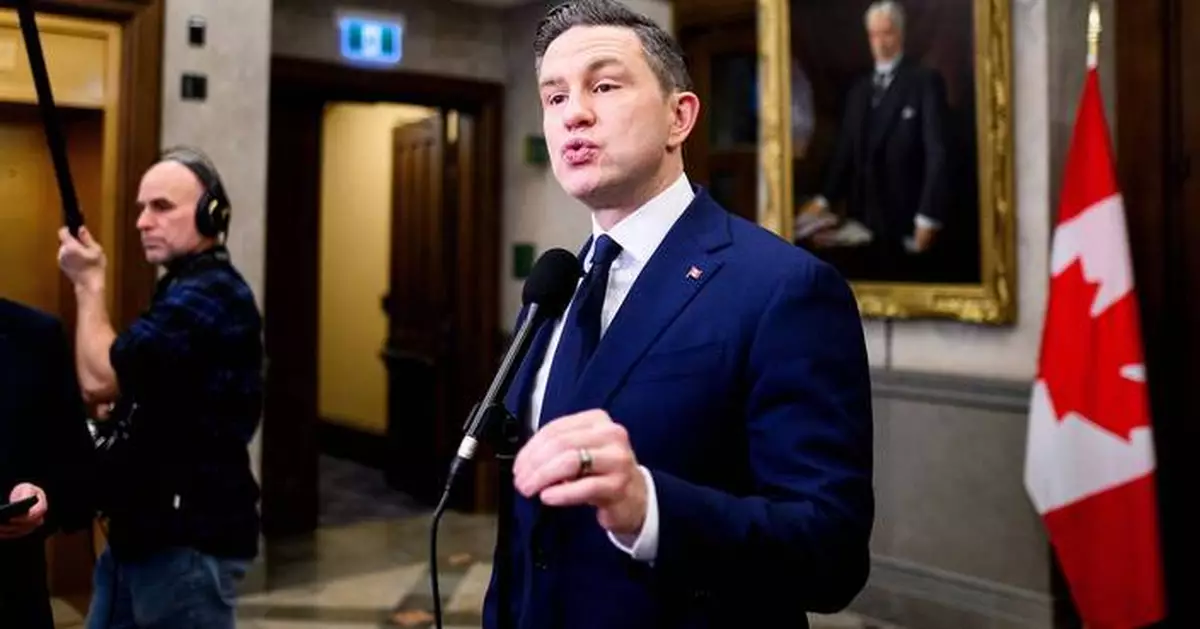
FILE - Conservative Leader Pierre Poilievre speaks in the foyer of the House of Commons on Parliament Hill in Ottawa, Thursday, Dec. 11, 2025. (Spencer Colby/The Canadian Press via AP, File
Poilievre lost the last election to Prime Minister Mark Carney’s Liberals in April and even his own seat in Parliament, but has since rejoined the House of Commons.
More recently two Conservative lawmakers have defected to the Liberals, leaving Carney's Liberals one seat shy of a majority government and being able to pass any bill without the support of an opposition party.
In a speech to party members before the party vote, Poilievre did not mention U.S. President Donald Trump's name despite the president's ongoing threats to Canada's economy and sovereignty.
Poilievre did talk about supporting Carney's efforts to remove U.S. tariffs and diversify Canada's exports.
“In this dangerous and uncertain world, Canadians must stand united so we can stand on our own two feet. United and strong Canadians will bow before no nation anywhere on earth,” Poilievre said before the party vote.
Until last year Poilievre was seen as a shoo-in to become Canada’s next prime minister and shepherd the Conservatives back into power for the first time in a decade. Then, Trump declared economic war on the U.S. neighbor to the north and even threatened to make Canada the 51st state.
Trump has continued to threaten Canada, which has infuriated Canadians and led to a sharp decline in Canadian visiting the U.S.
Daniel Béland, a political science professor at McGill University in Montreal, noted some political commentators and even former Conservative cabinet minister and Alberta premier Jason Kenney are already criticizing Poilievre “for not addressing the US presidential elephant in the room, which is currently such a key issue for so many Canadian voters of various partisan and ideological stripes.”
Béland said Poilievre and his party are facing an uphill battle.
“Many members of the base like him but, as far as the broader Canadian electorate is concerned, he’s much less popular than Mark Carney, who recently shined on the world stage at Davos and has re-centered the Liberal Party of Canada ideologically in ways that even some moderate conservative voters like,” Béland said.
Carney used a high-profile speech last week at the World Economic Forum in Davos, Switzerland to condemn economic coercion by great powers on smaller countries. The prime minister received widespread praise and attention for his remarks, upstaging Trump at the gathering.

Conservative Party Leader Pierre Poilievre and wife Anaida kiss as they arrive at the podium at the party's national convention in Calgary, Friday, Jan. 30, 2026. (Larry MacDougal /The Canadian Press via AP)
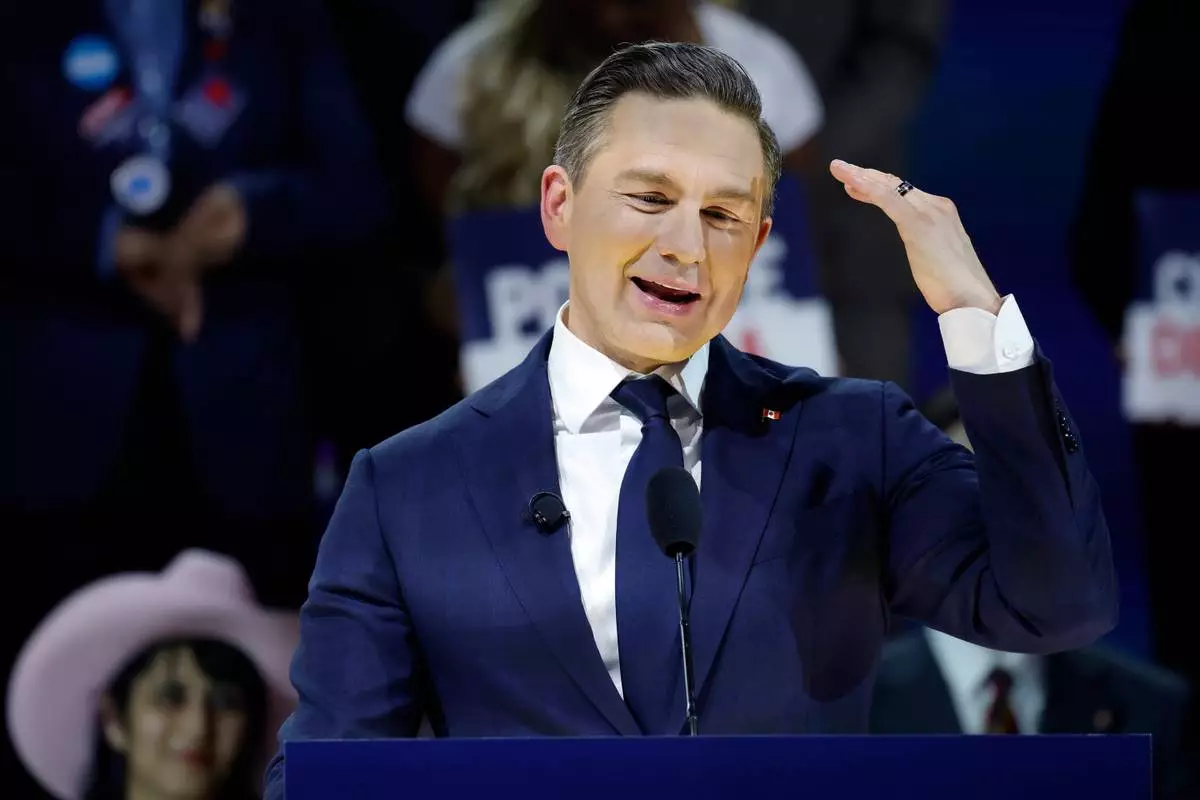
Conservative Party Leader Pierre Poilievre, delivers his keynote address at the party's national convention in Calgary, Friday, Jan. 30, 2026. (Larry MacDougal /The Canadian Press via AP)
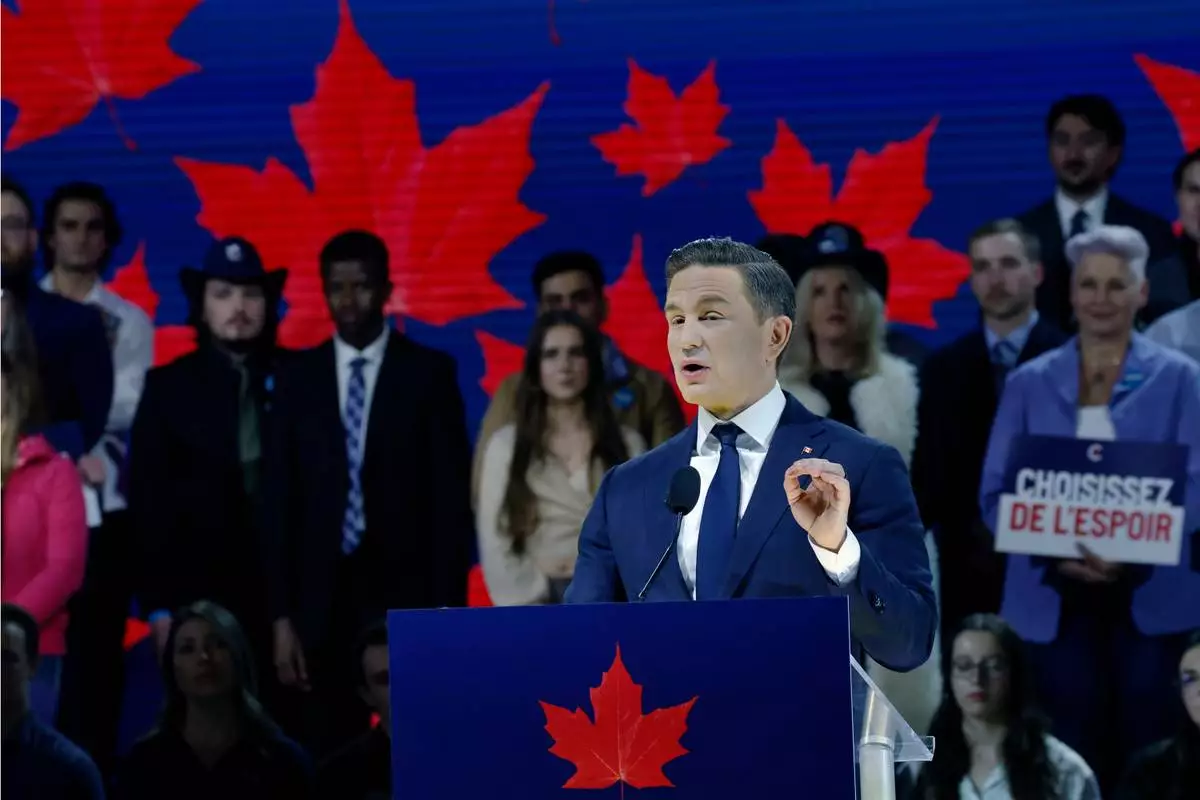
Conservative Party Leader Pierre Poilievre, delivers his keynote address at the party's national convention in Calgary, Friday, Jan. 30, 2026. (Larry MacDougal /The Canadian Press via AP)
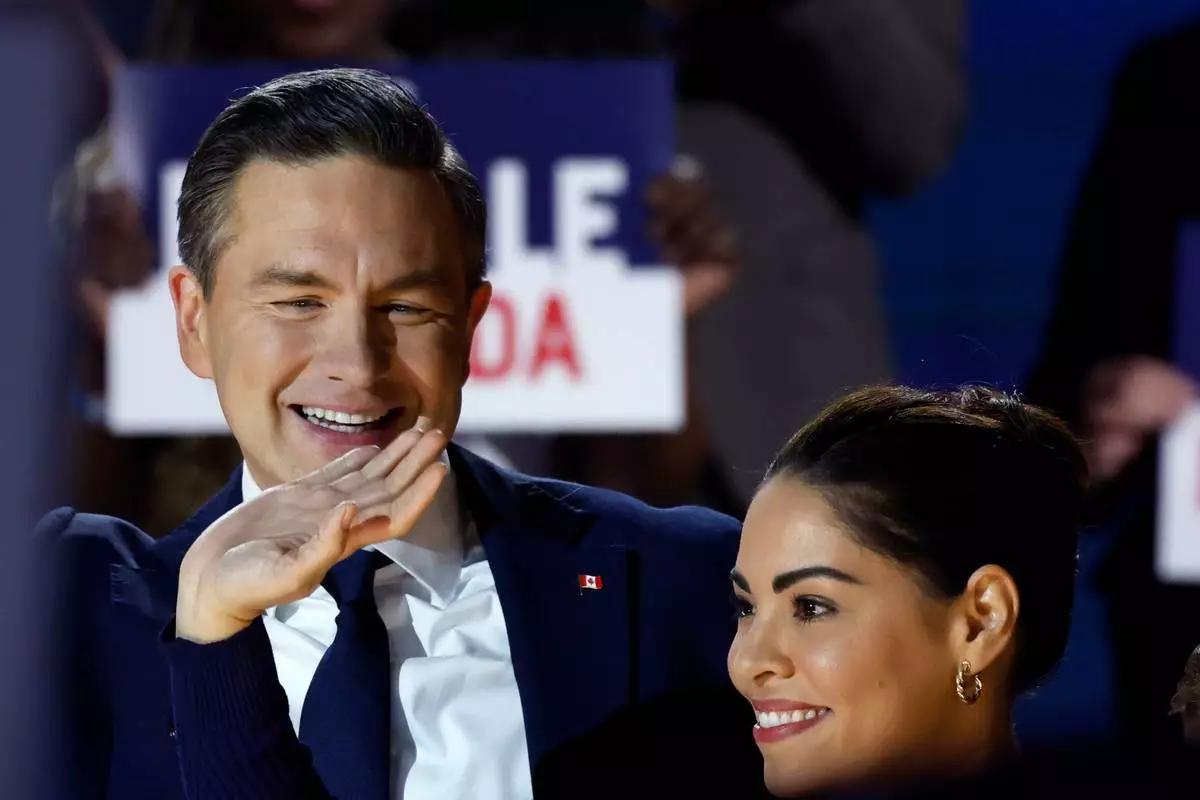
Conservative Party Leader Pierre Poilievre, and wife Anaida arrive at the podium as he prepares to deliver his keynote address at the party's national convention in Calgary, Friday, Jan. 30, 2026. (Larry MacDougal /The Canadian Press via AP)
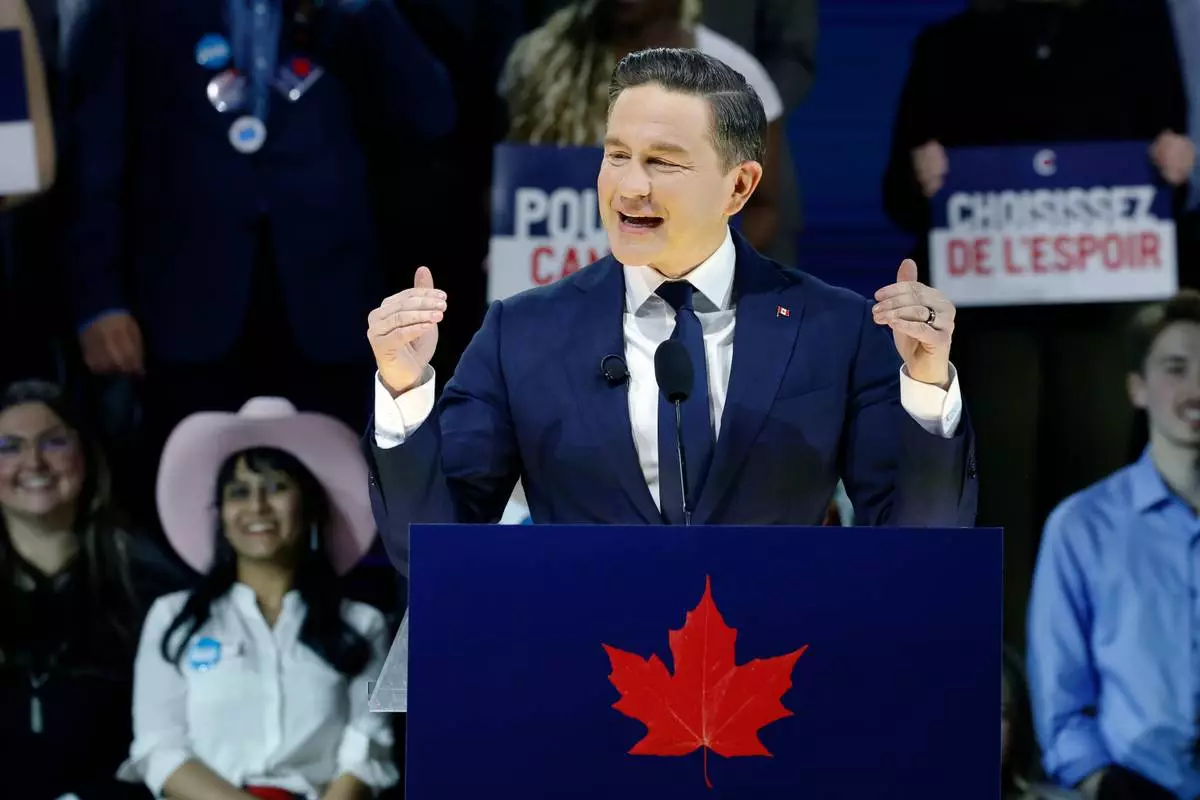
Conservative Party Leader Pierre Poilievre, delivers his keynote address at the party's national convention in Calgary, Friday, Jan. 30, 2026. (Larry MacDougal /The Canadian Press via AP)
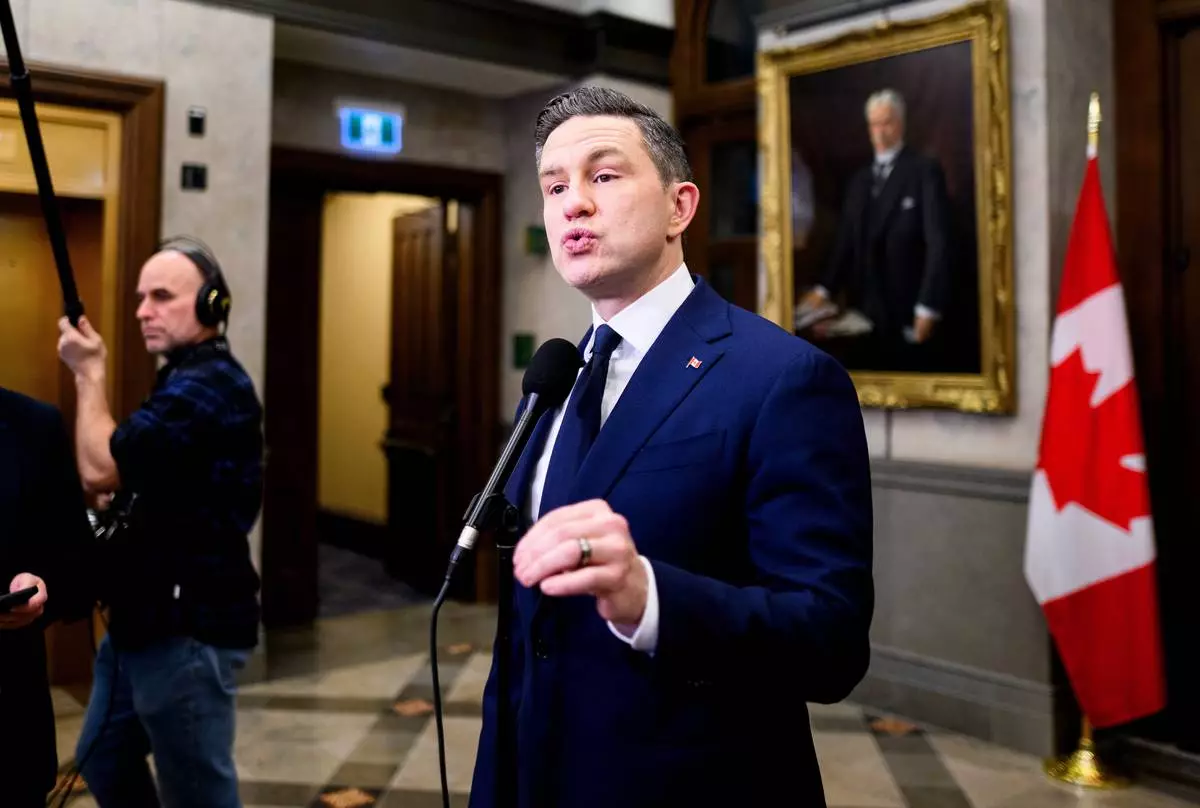
FILE - Conservative Leader Pierre Poilievre speaks in the foyer of the House of Commons on Parliament Hill in Ottawa, Thursday, Dec. 11, 2025. (Spencer Colby/The Canadian Press via AP, File