China Coast Guard (CCG) on Sunday released, for the first time, a video footage of its law enforcement operations near Diaoyu Dao, marking the fifth anniversary of the entry into force of the country's Coast Guard Law.
The footage showed CCG vessels conduct regular patrol operation close to the islands.
Effective as of February 1, 2021, the Coast Guard Law provides a clear legal framework for Coast Guard operations at sea, marking a key milestone in strengthening the country's maritime rule of law.
In an interview with China Central Television, Yang Xiao, deputy director of the Institute of Maritime Strategy Studies at the China Institutes of Contemporary International Relations, said this development shows that CCG patrols around Diaoyu Dao have become routine, reflecting China's determination to safeguard its sovereignty, security and development interests.
"We captured images of Diaoyu Dao at a very close distance, and we can see that the CCG law-enforcement forces are operating at a very short distance from the Diaoyu Dao. It shows that normal patrols and law enforcement operations we have carried out around the Diaoyu Dao over the past decade have now become a new normal. We have shown our patrols and law enforcement activities to the general public and news media, so that the public can see real images of the Diaoyu Dao through the lens. In fact, it is visualization of our governance of the Diaoyu Dao. It also demonstrates our effective exercise of jurisdiction and administration over the islands and our determination to protect our country's sovereignty, security and development interests," he said.
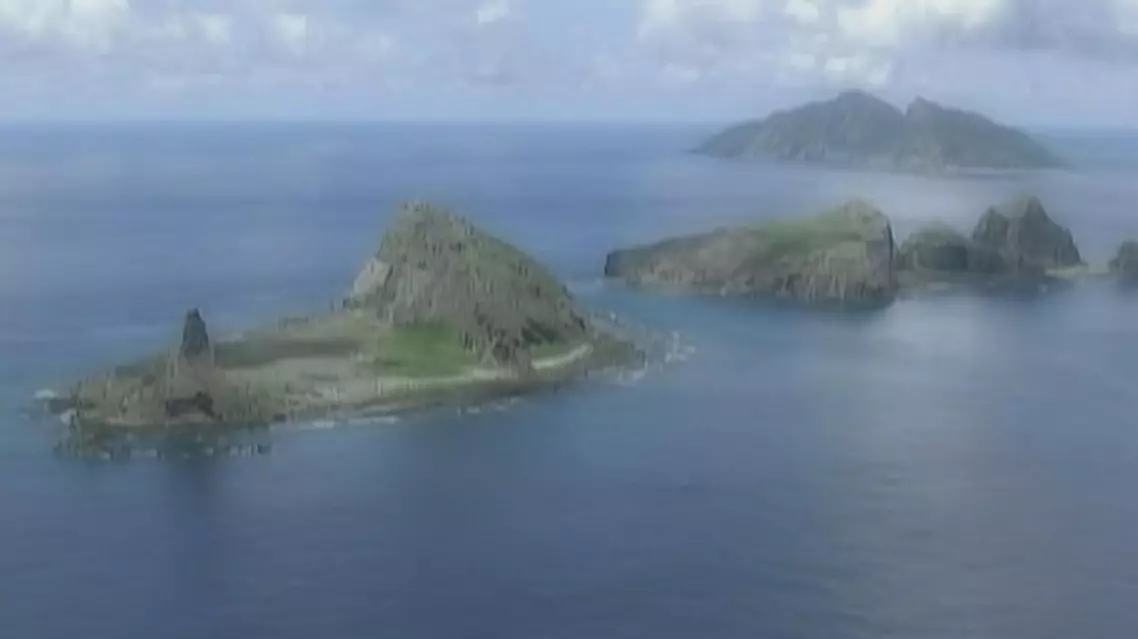
China Coast Guard first releases video footage of law enforcement near Diaoyu Dao
Cities across China are experiencing a significant tourism boom as the three-day Qingming Festival holiday coincides with the first-ever student spring breaks in multiple cities, creating an extended travel period for many families.
Qingming Festival, or Tomb-Sweeping Day, falls on April 5 this year. It is a traditional Chinese festival for honoring the deceased and paying tribute to ancestors. The holiday also provides a short break for Chinese citizens as they engage in outdoor activities and sightseeing. The Qingming Festival holiday will last from April 4 to 6.
In addition, primary and secondary school students in several regions are going to enjoy their first-ever spring break to head beyond the classroom for travel and engaging in a wide range of activities. In some areas, the spring break takes place just before the three-day Qingming Festival in early April, while in others it extends into the five-day May Day holiday, allowing students to combine leave into six- to eight-day mini-breaks.
With spring in full bloom, many families are venturing into nature to enjoy the spring scenery and experience the spring atmosphere in mountains and fields.
At Maoshan Forest World, a scenic spot in Changzhou, east China's Jiangsu, families from surrounding cities such as Nanjing, Nantong, and Zhenjiang are coming in groups. They interacted with adorable animals and experienced digging for bamboo shoots. Under the guidance of the staff, children identified and dug bamboo shoots, experiencing the joyful moments of labor.
"I want my child to get closer to nature, feel the breath of spring, and experience the joy of labor," said Deng Jie, a tourist.
During the holiday, traveling to famous destinations featured in textbooks has become a popular choice for many families.
In east China's Zhejiang Province, several scenic spots have introduced free admission for primary and secondary school students. At the Yanguan Ancient Town in Haining, many students can experience the spectacular sight of magnificent tidal waves of Qiantang River described in textbook.
"We just rode a bamboo raft and are going to watch the Qiantang River tidal bore tomorrow," said Zhao Ziyu, a tourist.
Integrating educational content with holiday vibes, study tours remain popular during the holiday.
At the Wujiangzhai Scenic Spot in Zunyi, southwest China's Guizhou Province, after watching an ethnic performance, many young visitors went to a lantern shop to experience making intangible cultural heritage lanterns. From constructing bamboo frames to pasting paper and coloring, a teacher guided them step by step, and the visitors incorporated the scenic area's landscapes and their own life expectations into their creations.
In Liangdancheng (city of nuclear bombs), the site where China's first atomic and hydrogen bombs were designed, in Zitong County of Mianyang, southwest China's Sichuan Province, a large number of students visited the local aerospace science and technology museum. In the interactive experience area, students operated simulated spaceflight equipment, acting as little astronauts exploring a virtual universe. By wearing Mixed Reality (MR) glasses, they can observe the mysteries of planets up close.
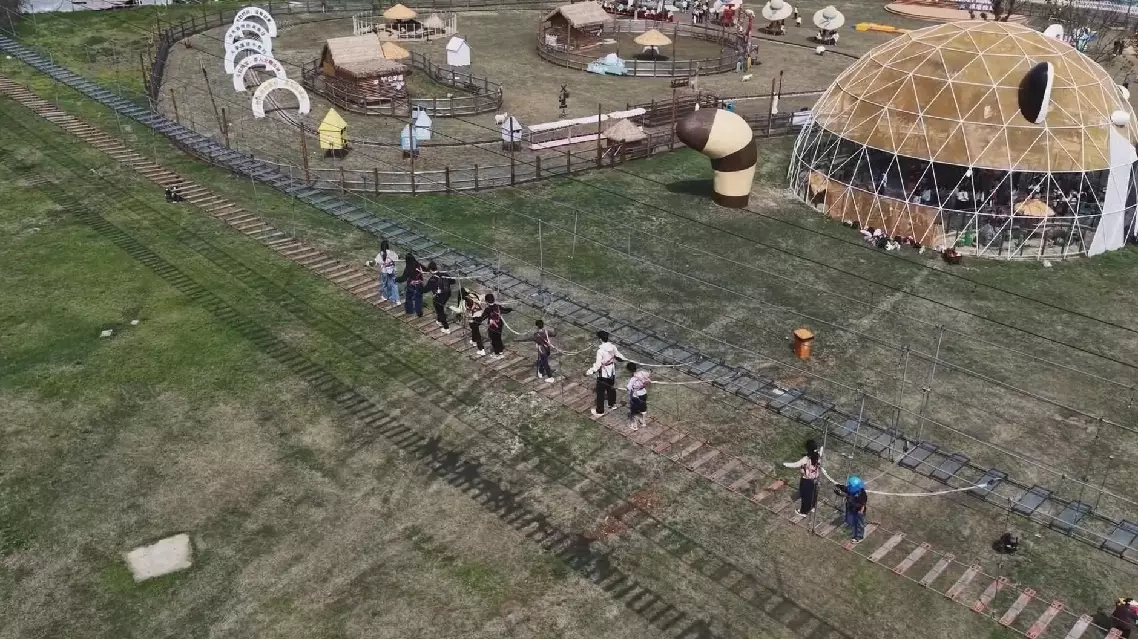
Spring break coincides with Qingming holiday, fueling tourism boom across China