Amid rising tensions between Iran and the United States, Foad Izadi, an associate professor at the University of Tehran's Faculty of World Studies, has emphasized that Iran will not accept demands that limit its missile capabilities or require a detailed disclosure of its nuclear sites in any prospective talks with the U.S.
Tensions escalate dramatically between Tehran and Washington following the latter's military buildup in the Middle East.
U.S. President Donald Trump has said that a "massive armada," led by the aircraft carrier Abraham Lincoln, is heading towards Iran, warning that "time is running out" for Tehran to reach a deal with the United States.
In an interview with China Global Television Network (CGTN) on Sunday, Izadi outlined Iran's non-negotiable red lines, stressing that the country's national defense capabilities should not be undermined.
"When a country is under attack -- in the middle of negotiations, before negotiations, after negotiations -- you need to be able to defend yourself. One of the things that the United States asks Iran is to go under the MTCR (the Missile Technology Control Regime), and if Iran does that, then the range of Iranian missiles cannot go over 300 km. That means if the United States attacks Iran or if Israel attacks Iran again, Iran cannot respond in any way, and this is not acceptable," said the scholar.
The MTCR is an informal, voluntary political understanding established in 1987 by the Group of Seven (G7) industrialized nations to limit the proliferation of missiles and unmanned delivery systems capable of carrying weapons of mass destruction.
Izadi noted that under international law, there are no limitations on ballistic missiles, adding ballistic missiles are not considered weapons of mass destruction, and Iran's ballistic missiles are defensive.
He also cautioned against U.S. demands for detailed information about Iranian nuclear facilities previously targeted in strikes, noting that such intelligence could enable more precise future attacks.
"The other thing they want from Iran is detailed data about what happen to the nuclear sites that they attacked last time illegally. And why do they need that? It seems they are planning on a new attack, and they want to see which places to hit more or hit more accurately. So, what they are saying is that 'tell us where your facilities are exactly, and when we attack you, don't be able to respond to that attack.' So these are the preconditions that the United States has been asking Iran for the last number of months. It is not acceptable to the Iranian side," said the scholar.
Iran's Supreme Leader Ali Khamenei said on Sunday that if the United States starts a war against Iran, it will be regional.
Khamenei said that Iran would not start a war and does not seek to attack any country, "but Iranian people will deliver a hard punch to those seeking to attack and harass them."
"The American should know that if a war is launched, this time, it will be a regional war," he emphasized.
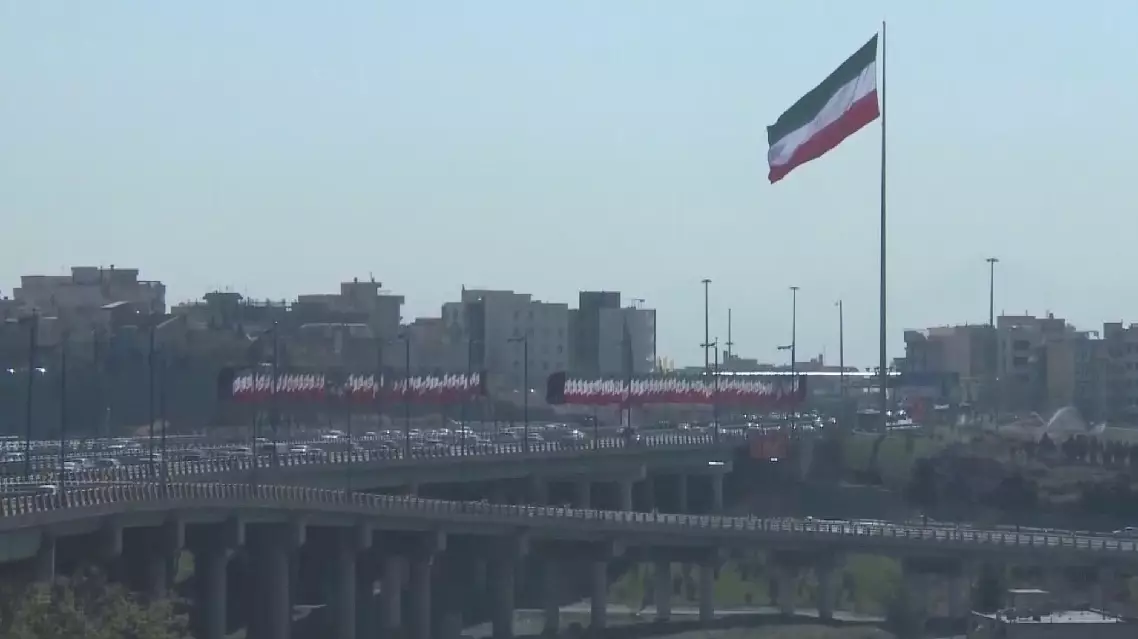
Iran's defense capabilities non-negotiable: scholar