Cubans are navigating lengthening blackouts and longer lines for fueling as the United States moves to cut all oil shipments to the Caribbean country.
On Friday, the U.S. government formally announced its threat to impose tariffs on goods exported to the United States from countries that supply oil to Cuba, a move that marks a further escalation of U.S. economic blockade against the island country.
At a gas station in Havana, the line stretches nearly 700 meters, with drivers saying that they began queuing the night before in hopes of securing some gasoline.
"I've been in line since last night, just to see if I can get any fuel. The line stretches through four or five blocks," said Yadier Lorenzo, a local resident.
Fuel shortage has severely affected electricity supplies nationwide. Power outages have become more frequent, which also disrupt internet access and water services, further straining daily life and economic productivity.
"Sometimes we have fuel but no electricity, or electricity but no internet. It's a complicated situation," said Cristian Caballero, another Havana resident.
"In just the past week, we've had about 26 hours of blackouts," said Fernando Blanco, a resident.
Facing the difficult time, many Cubans said they will not be defeated by the United States.
"The U.S. blockade is hurting ordinary Cubans. We can't use public transport, we generate less electricity, and fuel is vanishing. Everything is reduced. It's simply inhumane," said Mayra, a local resident.
"What the United States is doing to the Cuban people has serious consequences. They want to destroy us, children, the elderly, everyone. But we will find ways to move forward," said Evidio Aliaga, another resident.
While U.S. officials claim to support "freedom for the Cuban people," their actions have only made daily survival increasingly difficult for ordinary Cubans.
To offer relief, Mexico announced on Sunday that it will send humanitarian aid to Cuba, including food and basic supplies.
Mexican President Claudia Sheinbaum said the shipments will be handled by the Mexican navy.
Discussions on whether to include oil in the aid package are underway via diplomatic channels.
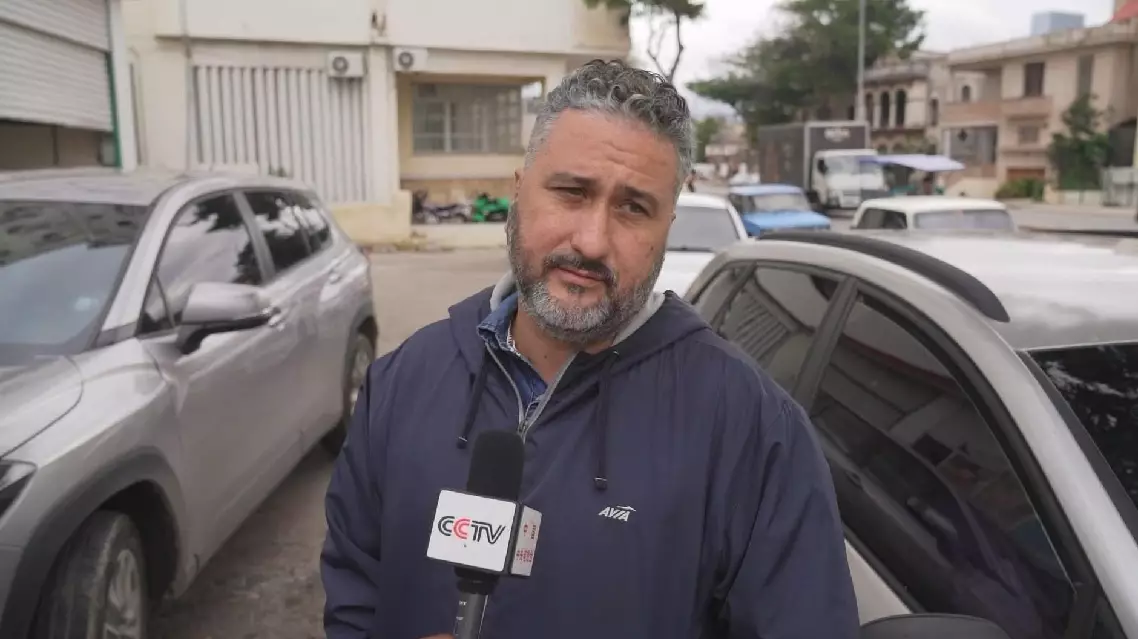
Cubans struggle with blackouts, fuel shortage amid mounting US pressure
Iranian Foreign Minister Seyed Abbas Araghchi said on Sunday that a "just, fair, and equitable" nuclear agreement with the United States remains achievable in the short term, provided Washington abandons its policy of coercion.
In an interview with CNN, Araghchi underscored Iran's desire to avoid war, noting that Iran is engaging with regional partners and utilizing intermediaries to maintain communication with the United States, which has shown some progress.
Although both sides have confirmed they are in contact, neither has taken concrete steps to de-escalate the situation, sending mixed signals -- expressing openness to talks while remaining prepared for conflict.
"Unfortunately, we have lost our trust (in) the United States as a negotiating partner," but the exchange of messages through friendly countries in the region was facilitating "fruitful" talks with the United States, Araghchi said.
He further noted that if the U.S. negotiators act in line with what President Donald Trump has envisioned, an equitable deal on Iran's nuclear program could be possible, potentially within a short timeframe.
Araghchi also reaffirmed Iran's openness to cooperation with American companies and stressed that the primary obstacle lies in U.S. sanctions.
A senior U.S. official said the Trump administration had told Iran through multiple channels that it's open to meeting to negotiate a deal, according to a report on Sunday by Axios, an American news website.
White House officials said Trump had not made a final decision on a strike against Iran and remained open to a diplomatic solution, said the report.
Regional countries such as Turkey, Egypt and Qatar are working to organize a meeting between White House envoy Steve Witkoff and senior Iranian officials in Ankara later this week, two sources told Axios.
The three countries, which worked with the U.S. government on the Gaza ceasefire deal, aim to prevent the escalation of regional conflict by encouraging U.S.-Iran negotiations. Meanwhile, the Islamic Revolutionary Guards Corps (IRGC) Navy Commander Alireza Tangsiri issued a written statement on Sunday, warning Iranians to remain vigilant against "hybrid warfare and toxic propaganda" amid heightened tensions.
The IRGC on Saturday roundly rejected rumors of the assassination of Tangsiri.
In a statement on its official news outlet Sepah News, the IRGC said the rumor was spread by an Israeli social media account, identified as Terror Alarm, describing the account as "the operational arm of (Israel's intelligence agency) Mossad in psychological warfare."
It added that the account has a track record of spreading rumors about security and military areas and had earlier claimed that Commander of the IRGC Quds Force Esmaeil Qaani had been assassinated.
According to Sepah News, the Terror Alarm's rumor-spreading makes more sense, given Trump's psychological operation through sending warship fleets to the West Asia region over the past few days.
"Just, fair, equitable" nuclear deal with US remains achievable: Iranian FM