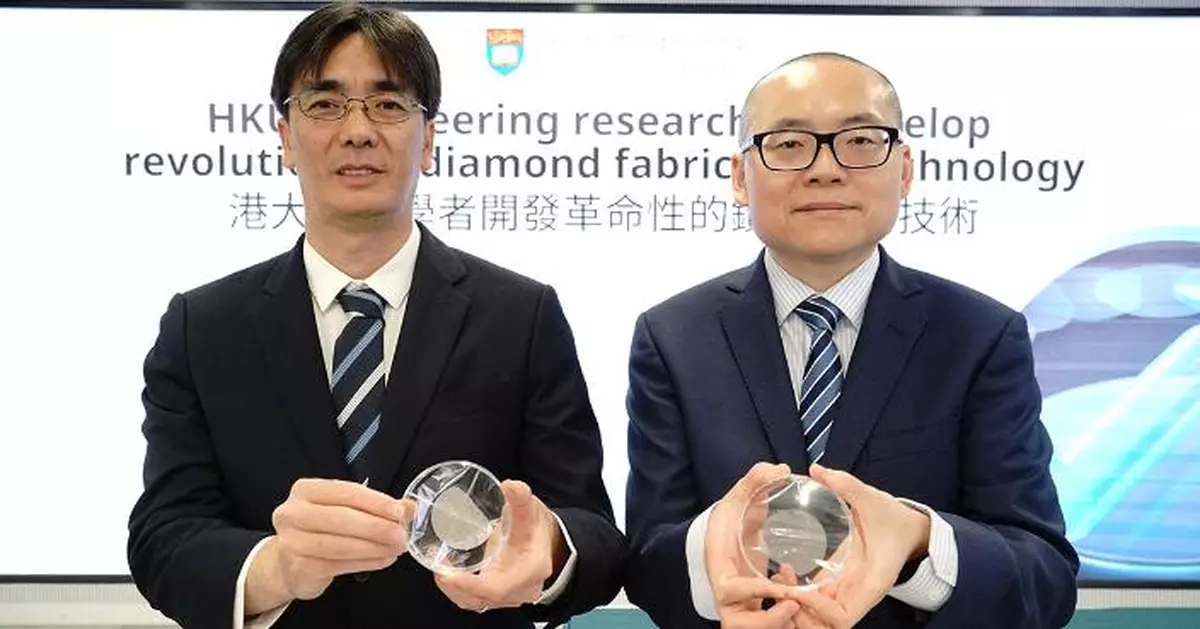
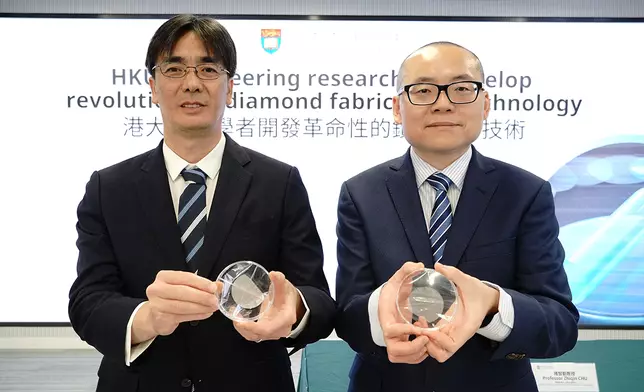
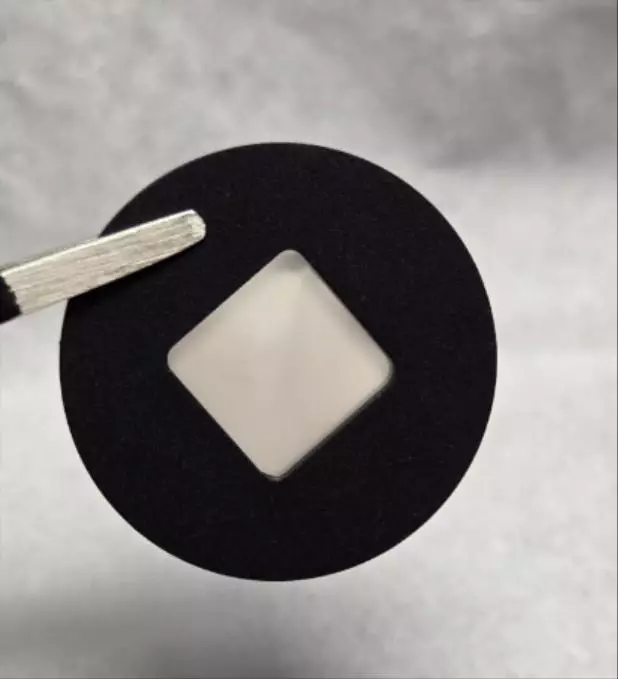
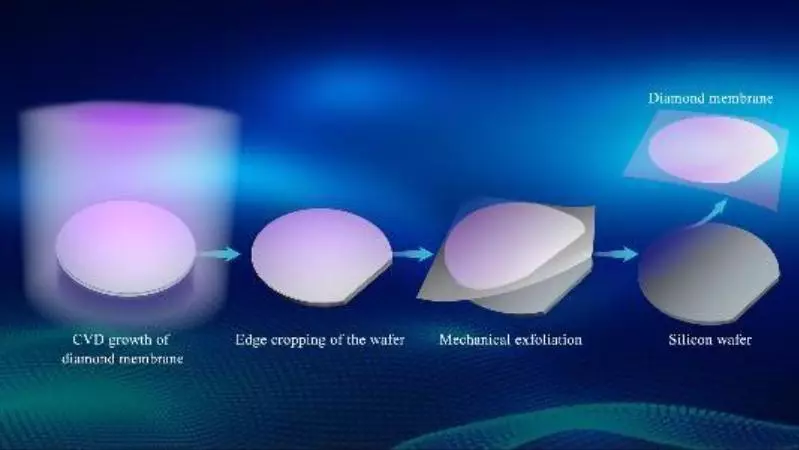
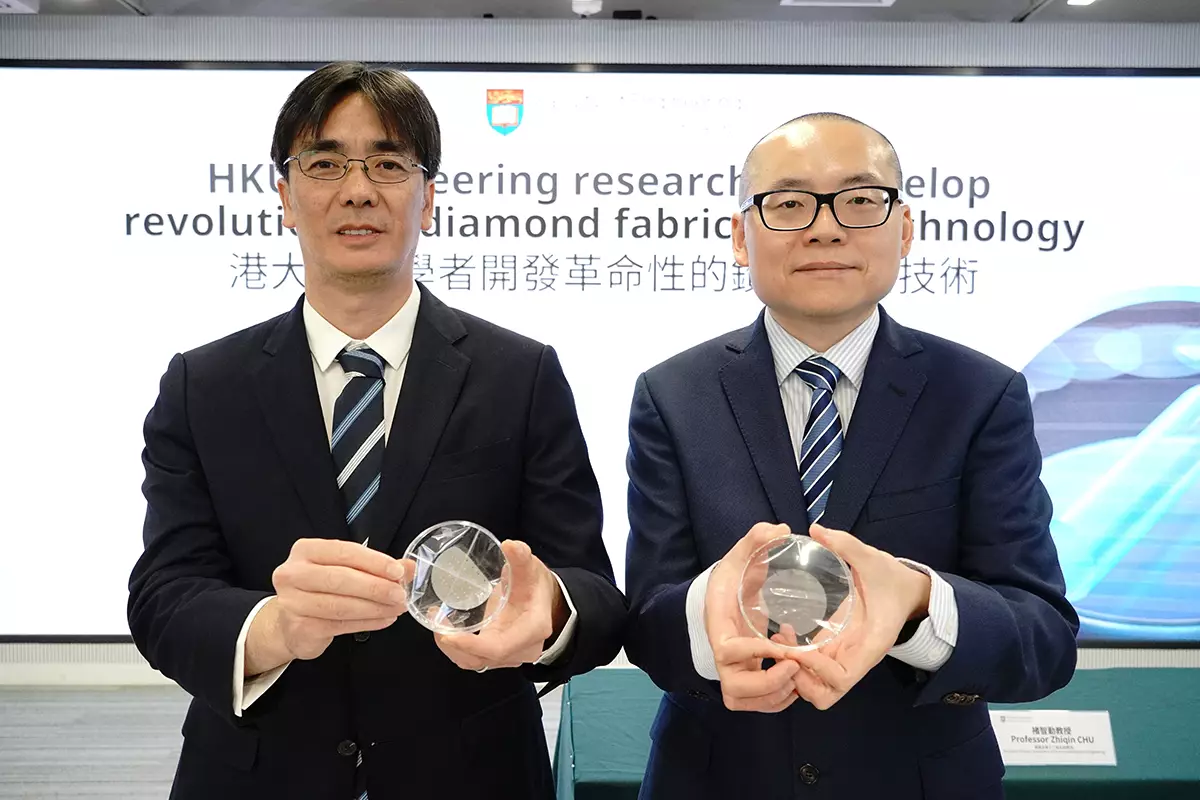
The research team led by Professor Zhiqin Chu, Associate Professor in the Department of Electrical & Electronic Engineering, and Professor Yuan Lin, Professor in the Department of Mechanical Engineering, Faculty of Engineering at the University of Hong Kong (HKU), has developed a novel technique called ‘Edge-Exposed Exfoliation.' This breakthrough shatters decades-old manufacturing bottlenecks in materials science and the semiconductor industry, successfully enabling mass-production of large-area, flexible diamond membranes with ultra-flat surfaces at low-cost and high-efficiency. This research has been published in the prestigious international journal Nature, and has received numerous international honors, including the 'Falling Walls Science Breakthroughs of the Year' from the ‘Falling Walls Foundation 2025' and a 'Gold Medal' at the 'International Exhibition of Inventions of Geneva', marking a significant step in the commercialisation of diamond semiconductor technology.
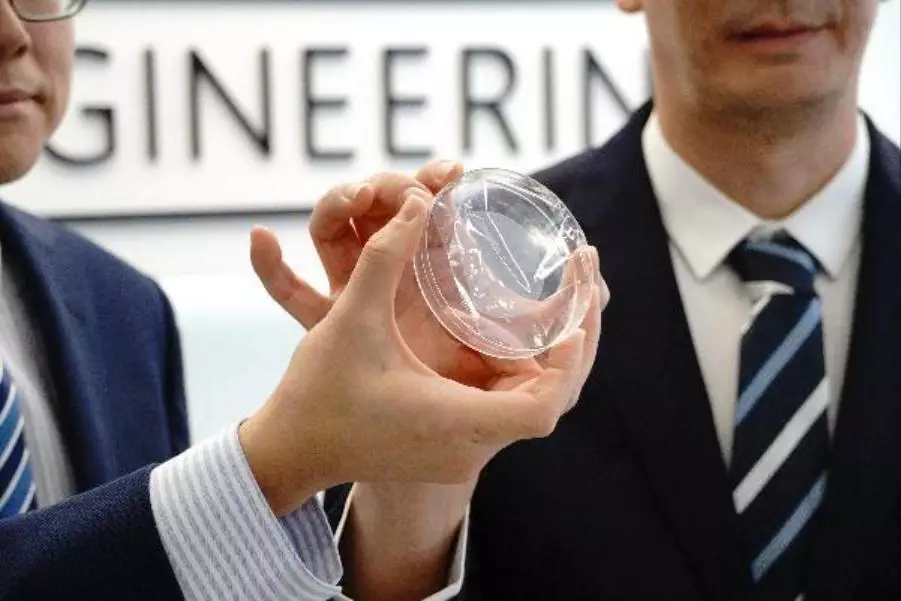
HKU's Revolutionary Diamond Membranes
Addressing Industry Pain Points: Overcoming Cost and Scalability Challenges
Click to Gallery
HKU's Revolutionary Diamond Membranes
Diamond Membrane Technology
Diamond Membrane Technology
Diamond Membrane Technology
Prof. Zhiqin Chu and Prof
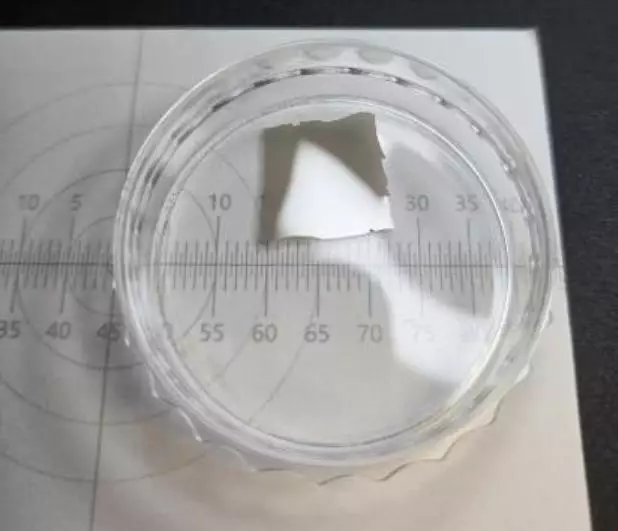
Diamond is not only a precious gemstone but is also regarded as the 'ultimate semiconductor material.' Its exceptional thermal conductivity and extremely high carrier mobility make it an ideal semiconductor. However, traditional methods of synthesising diamond membranes are typically costly, slow, and limited in size, with insufficient surface flatness, severely constraining their commercial applications and industry development. The HKU team has revolutionised the production process of high-quality diamond membranes. This technology can produce 2-inch diamond wafers in just 10 seconds, with production costs at 1/1000th of previous methods.
Compared to previous expensive, time-consuming, and non-scalable processes, this technology is ready for immediate industrial-grade speed and scalability, while ensuring products have atomically flawless surfaces and excellent flexibility. This foundation sets the stage for precision manufacturing at the micro-nano level and applications in flexible electronics, moving diamond from the lab to widespread applications, including in high-power electronics, quantum technologies, advanced RF systems, and optoelectronics.
Diamond Membrane Technology
Diamond Membrane Technology
Three Core Technologies of Diamond Membranes
• Cost-effective – Production costs have reduced to 1/1000th of previous technologies, transforming diamond from an expensive laboratory material into an affordable industrial-grade component.
• High-Speed, Scalable Industrial Process – The process is rapid, stable, and scalable, ready for immediate industrialisation and advancing the technology from the lab to the market.
• Flawless, Flexible, Ultra-Flat Product Characteristics – The resulting diamond membranes are flawless, flexible, featuring extremely flat surfaces, meeting the stringent requirements of high-precision optoelectronic and semiconductor processes.
Diamond Membrane Technology
Prof. Zhiqin Chu and Prof
Professor Chu stated, ‘The company we founded, DiamNEX, is dedicated to promoting the research, production, and commercialisation of diamond membrane materials. Our technology and development prospects have received high recognition in the market. The company successfully completed over 10 million in angel round financing last year and is currently focused on advancing its industrialisation plans. We look forward to collaborating with academic and industry partners to bring this revolutionary product to market and accelerate the arrival of diamond era.'
CHP investigates two confirmed Mpox cases
The Centre for Health Protection (CHP) of the Department of Health (DH) said today (September 2) that it is investigating two confirmed Mpox (also known as Monkeypox) cases, and strongly urged high-risk target groups to receive Mpox vaccinations. Meanwhile, the public is advised to be vigilant and avoid close physical contact with individuals suspected of contracting Mpox.
The first case involves a 38-year-old male. He developed ulcers on his genital area on August 19. As his symptoms persisted, he sought medical treatment at a social hygiene service clinic (SocHS) under the DH on August 31. According to information provided by the patient, he had sexual contact with his male partner in Hong Kong during the incubation period.
The second case involves a 34-year-old male. He developed a fever on August 27 and sore throat on August 29. He sought medical attention at the Accident and Emergency Department of Caritas Medical Centre on the same day and was admitted for treatment. He further developed rashes on various parts of his body, including his face, neck, trunk, limbs, buttock and genital area, on September 1. According to information provided by the patient, he had high-risk exposure with three male strangers in Hong Kong during the incubation period.
Both of their clinical specimens were tested positive for monkeypox virus upon laboratory testing by the CHP's Public Health Laboratory Services Branch. The CHP has arranged them to receive isolation treatment at hospitals. They are currently in stable condition. No epidemiological linkages between these cases or confirmed Mpox cases earlier recorded in Hong Kong have been identified so far. The CHP is continuing an epidemiological investigation of the cases, and will endeavour to contact individuals who had high-risk contact with the patients and report the cases to the World Health Organization.
Since 2022, Hong Kong has recorded a total of 99 Mpox cases (79 local cases and 20 imported cases), including the above-mentioned cases. All patients were males. Epidemiological investigations revealed that most cases had high-risk sexual behaviour, including having sex with strangers or having sex without wearing condoms.
The Mpox vaccine can prevent infection and severe disease. The DH provides Mpox vaccination services for high-risk groups. The following high-risk target groups are eligible for Mpox vaccinations on a voluntary basis:
- individuals with high-risk sexual practices, e.g. having multiple sexual partners, sex workers, or having a history of sexually transmitted infection within the past 12 months;
- healthcare workers responsible for caring for patients with confirmed Mpox;
- laboratory personnel handling zoonotic pox viruses; and
- animal care personnel with high risk of exposure in case of Mpox occurrences in animals in Hong Kong.
High-risk target groups can receive Mpox walk-in vaccinations at any of the DH's SocHS (namely Chai Wan SocHS, Wan Chai Male SocHS, Wan Chai Female SocHS, Yau Ma Tei Male SocHS, Yau Ma Tei Female SocHS, Yung Fung Shee SocHS, Fanling SocHS and Tuen Mun SocHS) and the DH's Yau Ma Tei Integrated Treatment Centre, without prior appointments.
Meanwhile, the DH's Kowloon Bay Integrated Treatment Centre and the Hospital Authority's Special Medical Clinics at Queen Elizabeth Hospital and Princess Margaret Hospital also provide Mpox vaccination services for their clients.
Mpox is not transmitted through respiratory droplets or aerosols in general, and transmission would not occur through social contact. The CHP reminds the public, especially those at higher risks of exposure, to take precautions and avoid close physical contact with persons or animals suspected of being infected. They should seek medical attention as soon as possible if they experience relevant symptoms, including rash, fever, chills, swollen lymph nodes, exhaustion, muscle pain, and severe headaches. They should not engage in activities with others that may involve contact with skin rash or body fluids.
For more details, please visit the CHP's webpages onMpoxandMpox Vaccination Programme.
Source: AI-found images