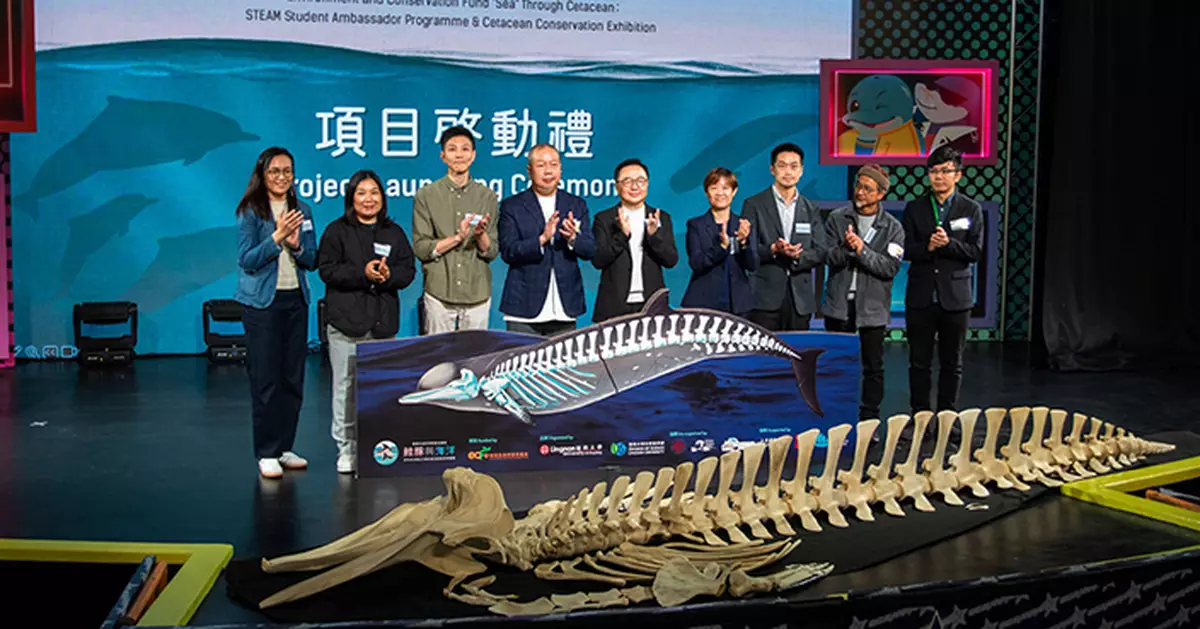
More than 190 students from 13 local secondary schools will take part in a year-long programme to gain hands-on experience in preparing an extremely rare whale specimen for public exhibitions scheduled for 2027. The Environment and Conservation Fund “Sea” Through Cetacean: STEAM Student Ambassador Programme & Cetacean Conservation Exhibition, organised by the Division of Science of Lingnan University in collaboration with The Hong Kong Polytechnic University, Cetacea Research Institute, and Ocean Park Conservation Foundation Hong Kong, was officially launched on 1 February 2026. This initiative builds on the rare stranding of a Longman's beaked whale in Hong Kong in 2024, providing students with a unique opportunity to assist in the preparation of skeletal specimens of one of the world's most mysterious marine mammal species. The project also promotes cetacean conservation and will educate the public in key marine environmental issues, including plastic pollution in the oceans.
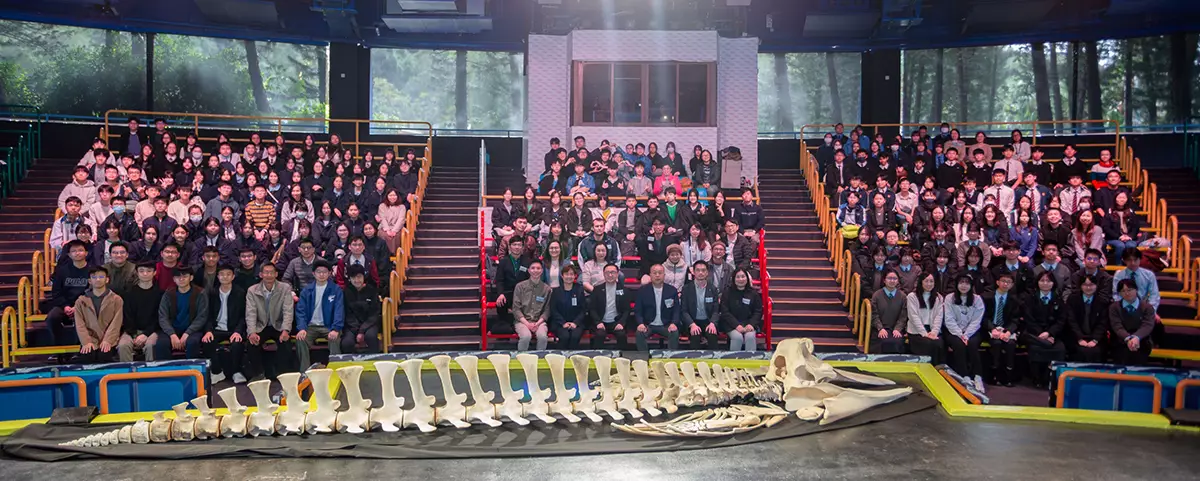
The programme has involved over 190 students from 13 secondary schools across Hong Kong. They will assist in the preparation of a complete skeleton of the rare Longman's beaked whale, with public exhibitions of the specimen scheduled for the second and fourth quarters of 2027.
Dr Eric Cheng Kam-chung, SBS, MH, OStJ, JP Chairman of the Environment and Conservation Fund Committee, delivered a speech at the launch ceremony: “This Environment and Conservation Fund funded project turns a marine ecological conservation event into a highly meaningful educational programme. It is believed that the project will not only raise public awareness of whale and dolphin conservation as well as environmental sustainability but also encourage a deeper reflection on marine ecological conservation."
Click to Gallery
The programme has involved over 190 students from 13 secondary schools across Hong Kong. They will assist in the preparation of a complete skeleton of the rare Longman's beaked whale, with public exhibitions of the specimen scheduled for the second and fourth quarters of 2027.
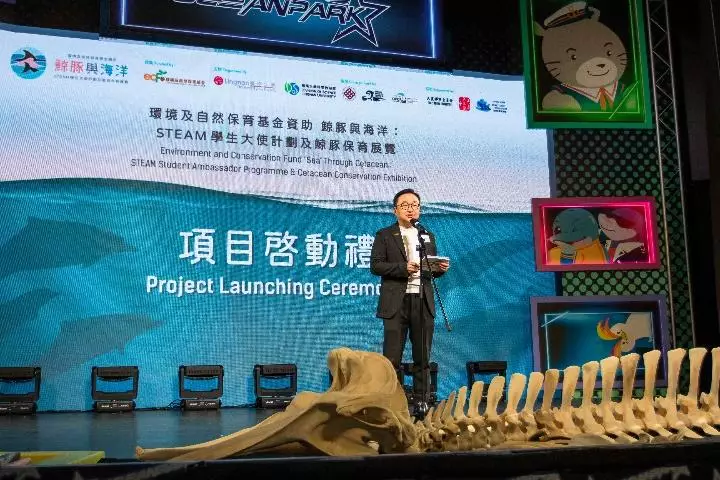
Dr Eric Cheng Kam-chung gives a speech
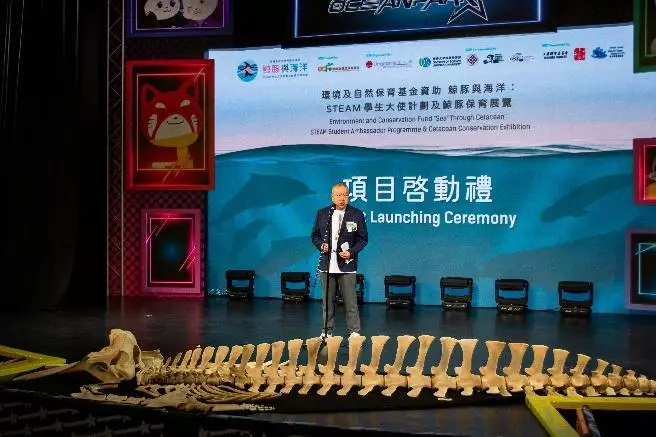
Dr Chu Chun-wa gives a speech
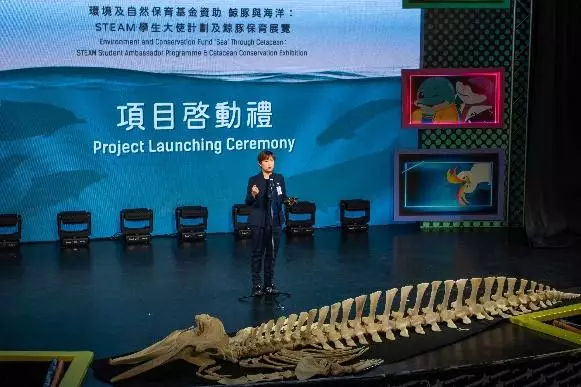
Prof Paulina Wong Pui-yun gives a speech
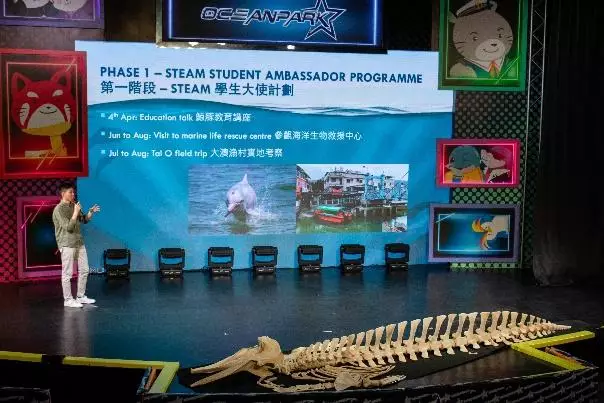
Prof Scott Chui Yik-suen introduces the series of STEAM activities
Dr Eric Cheng Kam-chung gives a speech
Dr Chu Chun-wa, Assistant Director (Fisheries and Marine Conservation) of the Fisheries and Marine Conservation Branch of the Agriculture, Fisheries and Conservation Department (AFCD), said “The AFCD has long been committed to promoting marine conservation. We believe this skeletal preparation programme will cultivate a sense of responsibility among young people towards marine ecology, foster greater interest in fisheries and marine conservation, transform scientific knowledge into action, and facilitate the long-term protection of biodiversity in Hong Kong waters.
Dr Chu Chun-wa gives a speech
Prof Paulina Wong Pui-yun, Head and Associate Professor (Presidential Early Career Scholar) of Division of Science at Lingnan University, agreed “Complete Longman's beaked whale specimens are extremely rare worldwide, and this has presented a precious opportunity to study rare deep-sea cetaceans. Lingnan University is honoured to host this programme, which allows students to study whale specimens through STEAM interdisciplinary experiences. We hope to teach students to understand marine conservation from multiple perspectives — science, technology, engineering, and arts — so they can become a new generation of ambassadors, spreading conservation messages among the public and raising awareness of the importance of protecting marine ecosystems.”
Prof Paulina Wong Pui-yun gives a speech
This two-year project, led by Prof Scott Chui Yik-suen, Research Assistant Professor of the Division of Science at Lingnan University, starts with providing introductory training and guidelines on the preparation of whale skeleton specimens to over 190 students from 13 secondary schools across Hong Kong. Students will assist with an 11-month specimen processing procedure and gain hands-on experience in handling, degreasing, measuring, and documenting the condition of the assigned whale skeletal specimens to preserve them for both scientific study and public exhibition. Throughout the process, they will regularly and systematically monitor and record any changes to the specimens, and will also participate in diverse STEAM-based experiential learning activities, including science and conservation lectures, visits to research facilities and marine animal rescue centres, and field trips to Tai O, as well as creating works of art to exhibit. These multidisciplinary skills will help them become ambassadors advocating for cetacean and marine conservation.
Prof Scott Chui Yik-suen introduces the series of STEAM activities
In the second phase, the project will extend its reach to the public through two Cetacean Conservation Exhibitions scheduled for the second and fourth quarters of 2027. These will showcase the Longman's beaked whale skeleton prepared with the students' assistance in the first phase, together with specimens of two local cetacean species—the Chinese white dolphin and the finless porpoise. The exhibitions will also display the canvas bag found in the whale's stomach to highlight the threats of plastic pollution to marine ecosystems. During the exhibitions, student ambassadors will serve as docents, guiding public tours and describing their own experiences to deliver key messages about cetacean ecology and marine conservation. The digital 3D model and 1:1 3D-printed replica of the Longman's beaked whale skeleton will serve as lasting educational and scientific resources, contributing to 3DTEACH—a newly established educational alliance among universities in Hong Kong. This initiative will create ongoing and lasting value to public education, conservation efforts, and the scientific community.
Prof Chui said “There are typically 20 to 50 cases of dolphin stranding reported in Hong Kong each year, predominantly involving two local cetacean species—Chinese white dolphins and finless porpoises. Strandings of other species are rarer, with only a few reported annually. Cetaceans inhabiting inshore habitats, such as Chinese white dolphins and finless porpoises, are particularly susceptible to threats from human activities, including coastal development, marine traffic, and pollution. Plastic debris and fishing hooks are sometimes found in the stomachs of stranded animals, and entanglement in abandoned fishing nets and gear is not uncommon. One study even found up to 145 microplastic particles in the stomach of a stranded Chinese white dolphin in the Pearl River Estuary, highlighting the critical issue of plastic pollution in the marine ecosystem. We hope to educate the public in environmental issues such as cetacean conservation and marine plastic pollution through this project.”
Participating Secondary Schools (in alphabetical order):
• Diocesan Boys' School
• DMHC Siu Ming Catholic Secondary School
• Elegantia College
• HKCCCU Logos Academy
• Kau Yan College
• La Salle College
• Lingnan Hang Yee Memorial Secondary School
• Po Leung Kuk Laws Foundation College
• St. Catharine's School for Girls
• Sha Tin Methodist College
• Shun Tak Fraternal Association Leung Kau Kui College
• The ELCHK Yuen Long Lutheran Secondary School
• Ying Wa College
About the Longman's beaked whale
The Longman's beaked whales (Indopacetus pacificus), also known as Indo-Pacific beaked whales or tropical bottlenose whales, belong to the beaked whale family (Ziphiidae) within the order Cetacea. They live in the deep, open, tropic waters of the Pacific and Indian Oceans, and are rarely seen near coastal waters. As of 2021, there have only been seven other complete skeleton specimens of Longman's beaked whales reported worldwide, and they are widely regarded as one of the most mysterious and least understood marine mammals.
Asian turtles face a severe conservation crisis caused by illegal poaching and the wildlife trade. Supported by Ocean Park and the Ocean Park Conservation Foundation Hong Kong, Lingnan University is hosting the inaugural International Conference on Integrated Conservation of Asian Turtles (ICAT) from today, 27 March, through 30 March 2026. The conference, attended by 180 leading scholars, scientists, zookeepers, veterinarians, policymakers, educators, and other experts from 19 countries and regions will examine the latest research findings and practical conservation, as well as strategies to combat the illegal poaching of Asian turtles, and enhance protection for endangered species.
The opening ceremony was officiated by Mr Simon Chan Kin-fung, Assistant Director (Conservation) of the Agriculture, Fisheries and Conservation Department; Mr Ivan Wong, Chief Executive of Ocean Park Corporation; Prof S. Joe Qin, President and Wai Kee Kau Chair Professor of Data Science of Lingnan University; Mr Howard Chuk, Executive Director of Zoological Operations and Conservation of Ocean Park Corporation cum Foundation Director of Ocean Park Conservation Foundation, Hong Kong, and Mr Wander Meijer, Executive Director of the Kadoorie Farm and Botanic Garden.
Mr Simon Chan Kin-fung gave a speech at the opening ceremony, saying “We are home to five native freshwater turtle species. Among them are the Big‑headed Turtle, the Golden Coin Turtle, and Beale’s‑eyed Turtle, species of exceptional ecological, scientific, and cultural value. Unfortunately, many now survive only in small, fragmented populations and face persistent threats, particularly from illegal hunting and trapping. To address this, the Agriculture, Fisheries and Conservation Department (AFCD) has adopted a multi‑pronged, integrated approach, combining enforcement, science, and partnerships. This approach has resulted in several suspects being arrested for illegal possession of endangered turtles, and convictions have led to prison sentences of 15 and 20 months, a strong deterrent to poaching. This conference represents an opportunity for turtle conservationists to not only share knowledge but also forge meaningful partnerships, develop innovative strategies, and agree on concrete actions.”
Mr Ivan Wong, Chief Executive of Ocean Park Corporation, said “Ocean Park is honoured to co-host the first International Conference on Integrated Conservation of Asian Turtles. Conservation is at the heart of Ocean Park’s mission, driving our expansion into research, rescue, rehabilitation, and regional partnerships. In light of the conservation crisis facing Asian turtles, this conference serves as a crucial platform for global experts to share knowledge and forge new strategies. We are confident that these collaborations will significantly advance our shared goal to protect these endangered species and ensure a sustainable future for Asian turtles.”
“Leveraging the Park’s professional team and world-class facilities, we are dedicated to fostering conservation through various initiatives. These include establishing the Dive Into Local Diversity exhibit that showcases the rich diversity of Hong Kong's freshwater ecosystems for public education; formulating breeding programme for the Beale's eyed turtle with the goal of wild release to rebuild local populations; providing rehabilitation and care for confiscated freshwater turtles; and driving education through student ambassador programmes and student-led surveys,” Wong added.
Prof S. Joe Qin noted that “Lingnan University has concentrated on turning research outcomes into practical contributions towards many United Nations Sustainable Development Goals. Co-hosting this important international conference with Ocean Park creates a vital platform for over a hundred interdisciplinary experts from around the world to discuss the latest research and strategies on Asian turtle conservation. As an important component in the ecosystem, wild populations of Asian turtles are declining rapidly. We hope that cross-sector collaboration will promote the sustainable development of global ecosystems.”
Over the four days of the conference, about 50 academic presentations and keynote speeches will cover forensic technologies for combating illegal trade, veterinary care, and efforts to boost wild populations of endangered Asian turtles through captive breeding and reintroduction to natural habitats. Officers from the Agriculture, Fisheries and Conservation Department and Hong Kong Customs and Excise Department, who are at the forefront of combating turtle poaching and illegal wildlife trade in Hong Kong, also attended the conference.
Prof Anthony Lau, Assistant Professor of the Division of Science at Lingnan University and the conference’s Secretary, stressed “This conference will act as a catalyst that deepens international collaboration on Asian turtle conservation, such as the exchange of captive-bred animals, and accelerates local, on-the-ground work on native species, such as reintroduction and enhancement of anti-poaching strategies.”
A highlight of the conference will be an in-depth discussion panel chaired by Prof Jonathan Fong, Associate Professor of the Division of Science of Lingnan University, and Prof Sung Yik-hei, Adjunct Assistant Professor of the Division of Science of Lingnan University and Lecturer at the University of Suffolk, on the conservation of turtles in the Hong Kong SAR and Greater Bay Area. They explain that wild populations of native freshwater turtles in Hong Kong SAR have plummeted over recent decades, and that three species inhabiting the wilds of Hong Kong SAR are critically endangered. They also describe Lingnan University's successful cases of captive breeding in recent years, and the University's expertise in providing conservation forensics to courts and investigations into illegal trading.
Internationally recognised expert in freshwater turtle conservation Prof Ricky Spencer, Professor of Ecology at Western Sydney University, will deliver a keynote speech “Fixing the Life Cycle: The Future of Turtle Conservation Is Community-Driven”, reviewing Australia's effective experiences in turtle conservation through community-led monitoring, habitat restoration, and other initiatives.
Other experts include freshwater turtle conservation expert Prof Chen Tien-hsi, who talked about the Taiwan region’s endeavours to reintroduce endangered freshwater turtles and conserve native species. Mr Shahriar Caesar Rahman, Regional Vice Chair – South Asia for the IUCN/SSC Tortoise and Freshwater Turtle Specialist Group and Co-founder and CEO of the Creative Conservation Alliance, Bangladesh, spoke on Bangladesh's pioneering rewilding programme for the critically endangered Asian giant tortoise (Manouria emys), community protection measures, and efforts to dismantle smuggling networks, giving valuable cross-regional conservation insights.
As well as the academic presentations, the conference includes field trips to Ocean Park and the Kadoorie Farm and Botanic Garden to visit and learn from successful captive breeding facilities for endangered native turtles.
Another highlight of ICAT is a showcase of 20 posters designed by local students from 17 schools with their entries to the ICAT Secondary Student Academic Poster Competition. The competition encourages students to participate in conservation through environmental education. Each group of four students conducts a study related to the conservation of Asian turtles, and the finalists are required to present their ideas to the guests attending the first day of ICAT to compete for the awards.
Opening ceremony of the inaugural International Conference on Integrated Conservation of Asian Turtles (ICAT).
The conference brings together more than a hundred experts from around the world.
Mr Simon Chan Kin-fung, Assistant Director (Conservation) of the Conservation Branch of the Agriculture, Fisheries and Conservation Department (AFCD), delivers a speech.
Mr Ivan Wong, Chief Executive of Ocean Park Corporation, delivers a speech.
Prof S. Joe Qin, President and Wai Kee Kau Chair Professor of Data Science of Lingnan University, delivers a speech.
Asian turtles are an important species in the ecosystem, but their wild populations are declining at an alarming rate.
Prof Jonathan Fong, Associate Professor of the Division of Science of Lingnan University and Prof Sung Yik-hei, Adjunct Assistant Professor of the Division of Science of Lingnan University and Lecturer at the University of Suffolk, Co-chairs of the conference; Prof Anthony Lau, Assistant Professor of the Division of Science at Lingnan University and the conference’s Secretary. (From left: Prof Sung Yik-hei, Prof Jonathan Fong and Prof Anthony Lau)