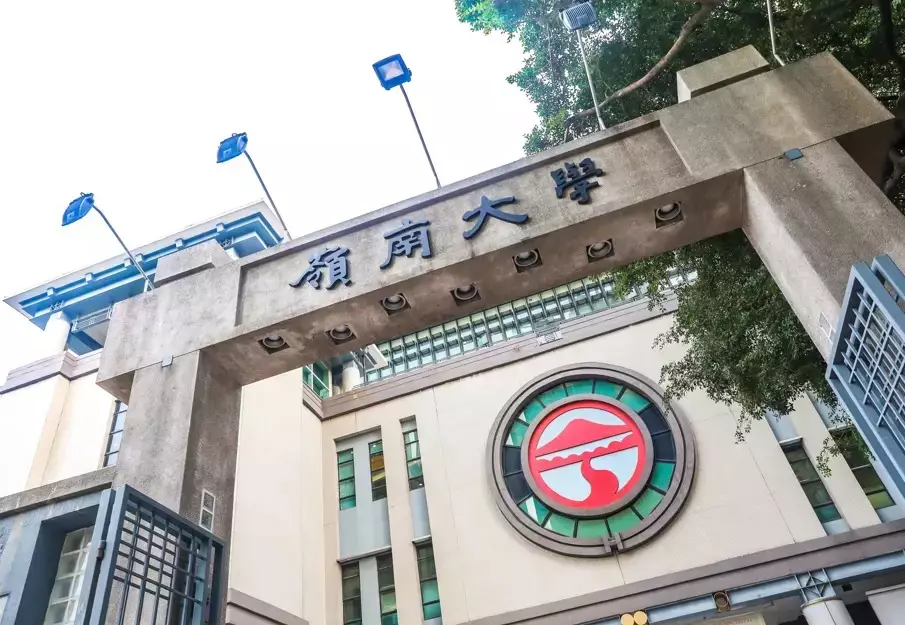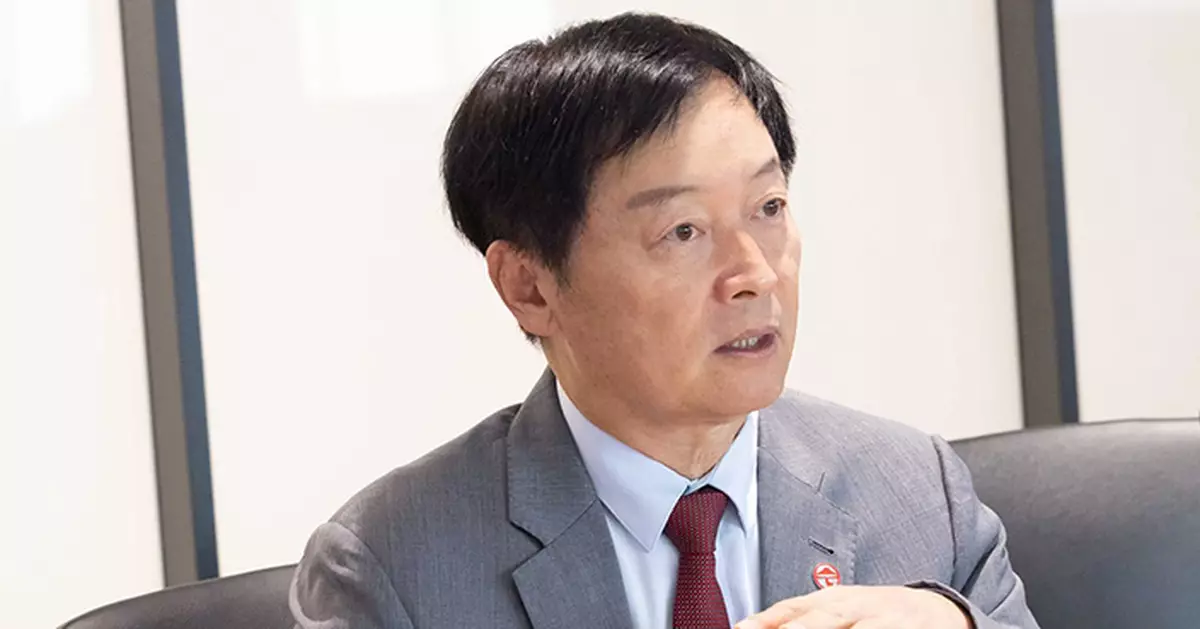
Leading international industrial media outlet Control Global has announced that Prof S. Joe Qin, President and Wai Kee Kau Chair Professor of Data Science of Lingnan University, has been inducted into the 2026 Process Automation Hall of Fame in recognition of his long-term outstanding contributions and far-reaching impact in industrial data analytics, process control and automation, the only scholar from the Hong Kong SAR to receive this distinction. Inductees over the years have been key figures driving industrial technological innovation and theoretical breakthroughs, and the accolade is held in very high esteem by both the international academic and industrial communities.
Control Global commended Prof Qin’s academic career for its distinctive interdisciplinary nature, saying that with training spanning electrical engineering, control theory, and chemical engineering, he has demonstrated remarkable versatility across disciplines, and published extensively in process monitoring, system identification, chemometrics, and machine learning.
Prof Qin responded “Being inducted into the Hall of Fame is not the capstone of my academic journey, but rather a prompt for me to share my experiences more openly, including both the right and wrong paths I have taken, so that younger generations may benefit. This spirit of academic inheritance and selfless contribution is a value I hope to carry forward. My best advice to young engineers is to resist the pull of short-term rewards, recognise the full arc you are capable of, and always keep the bigger picture in sight.”
In a feature titled “Engineering a lifetime of reinvention”, Control Global describes Prof Qin’s interdisciplinary academic journey, noting his unusual background. The professor was born in Rizhao, Shandong province, and grew up during a period when formal schooling was limited, yet by the time he was 11 he had already taught himself to make wooden chairs to earn a living. When the higher education system reopened, Prof Qin seized the opportunity to gain admission to Tsinghua University at the age of 16 with the top scores in his cohort to study automatic control, laying the foundation for his engineering career.
Prof Qin recalls in the interview that while he was at Tsinghua University, he met the renowned scholar Prof Harmon Ray, who was visiting the campus and who advised him to pursue a PhD in chemical engineering at the University of Maryland - “life changing” advice. During his doctoral studies, he embarked on early research into how machines learn, examining neural networks’ strengths and limitations from a statistical perspective. After graduation, he became a principal engineer at Emerson Process Management, where he developed two commercial products successfully before returning to academia to teach and conduct research at The University of Texas at Austin and the University of Southern California.
Looking ahead, Prof Qin predicts that while industry has accumulated vast amounts of data over the past decades, its full value has yet to be realised due to previous limitations in computational power. Now although computing capabilities have advanced significantly in recent years, technologies such as artificial intelligence and machine learning remain underutilised in chemical engineering, and Prof Qin believes that applying advanced analytics to process monitoring, control, and optimisation will represent an unprecedented opportunity. He emphasises that the next generation of process engineers will need to be as fluent in data analytics and machine learning as they are in thermodynamics and fluid mechanics.
Prof S. Joe Qin, President of Lingnan University, has been inducted into the Process Automation Hall of Fame
Prof Qin also expresses concern about developments in engineering education, observing that, compared with 30 years ago, mathematical training in engineering programmes is weaker, and it has become more difficult to offer very rigorous courses. This is partly because most people want a programme where even the average student understands most of the concepts and graduates easily, although in the long run this may undermine the cultivation of advanced mathematical talent. Prof Qin suggests that universities create deliberately designed environments for mathematically gifted students to be challenged at an appropriate level, in order to preserve academic depth and international competitiveness.
Established in 2001, the Process Automation Hall of Fame recognises scholars and industry leaders for their outstanding contributions to process automation and control. The other inductees this year are Prof Manfred Morari of the University of Pennsylvania, an eminent international authority in modern systems engineering, and Prof Peter Morgan, longtime process engineer with Syncrude Canada and now an independent consultant.
For the full feature article, please visit: Engineering a lifetime of reinvention: 2026 Process Automation Hall of Fame's S. Joe Qin | Control Global