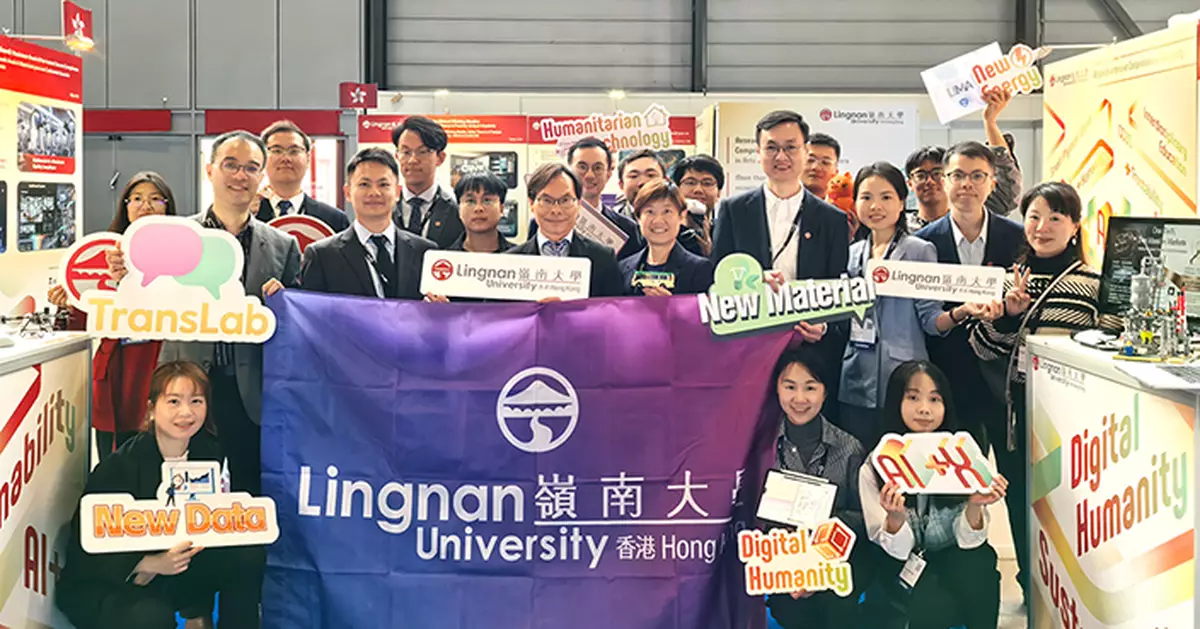
Lingnan University has achieved spectacular results at the 51st International Exhibition of Inventions Geneva with all 13 of the inventions it entered winning awards. This remarkable success includes one Gold Medal with Congratulations of the Jury, five Gold Medals, three Silver Medals and four Bronze Medals. The number of projects entered and awards received have more than doubled since last year, setting a new record for Lingnan, and confirming the University’s excellence in groundbreaking interdisciplinary research.
This year’s award-winning inventions integrate artificial intelligence (AI) with diverse applications (AI+X), notably AI + Creativity, AI + Humanity, AI + Pedagogy, AI + Sustainability, and AI + Trustability. These span professional domains such as data science, advanced materials, sustainable energy, art technology, and transformative education, fully demonstrating Lingnan’s achievements in interdisciplinary collaboration and human-centric innovation, which ultimately drive positive social impact and enhanced community wellbeing.
Click to Gallery
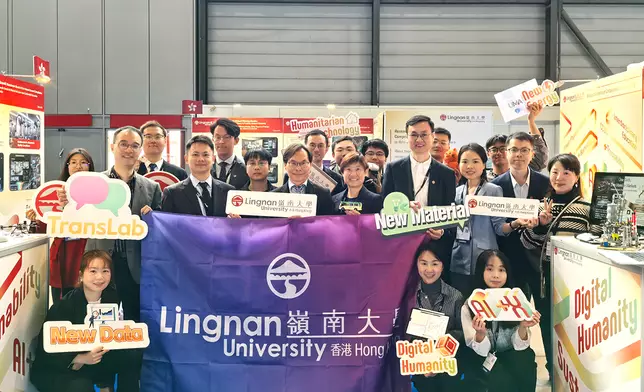
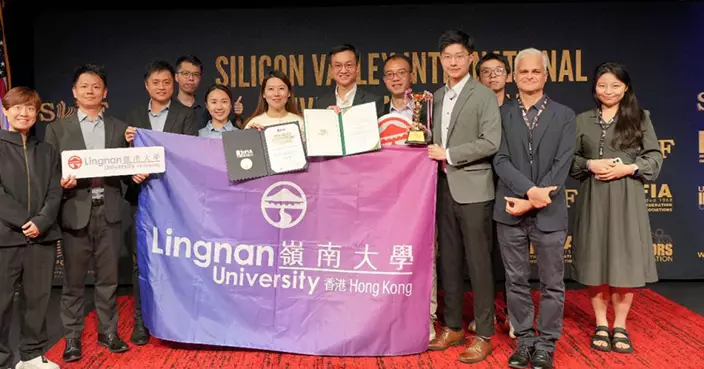
Lingnan University achieves outstanding results at the 51st International Exhibition of Inventions Geneva, winning 13 awards, more than twice as many as last year.
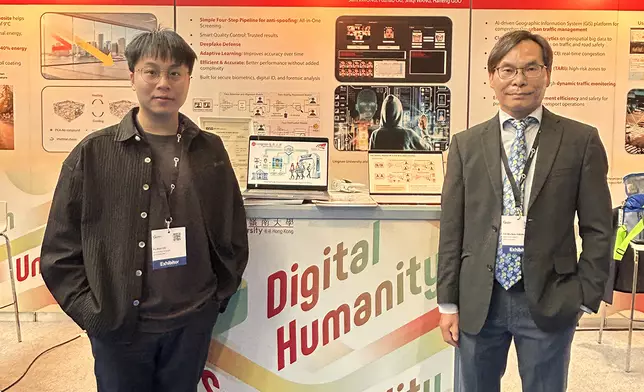
“Face Fortress: Adaptive All-In-One AI for Digital ID Safety”, developed by a team led by Prof Sam Kwong Tak-wu, Associate Vice-President (Strategic Research) (right), wins a Silver Medal.
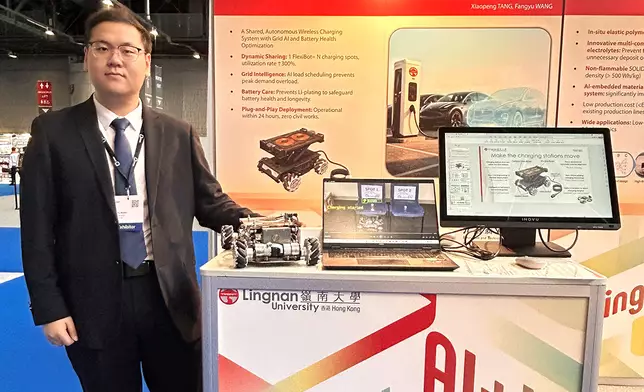
“FlexiBot: Make Every Parking Spot a Charging Spot” wins a Gold Medal with Congratulations of the Jury. The project was developed with the participation of Mr Wang Fangyu, Senior Research Assistant of the Division of Science at Lingnan University.
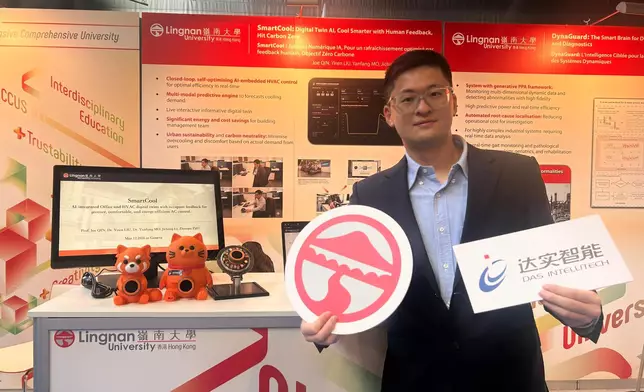
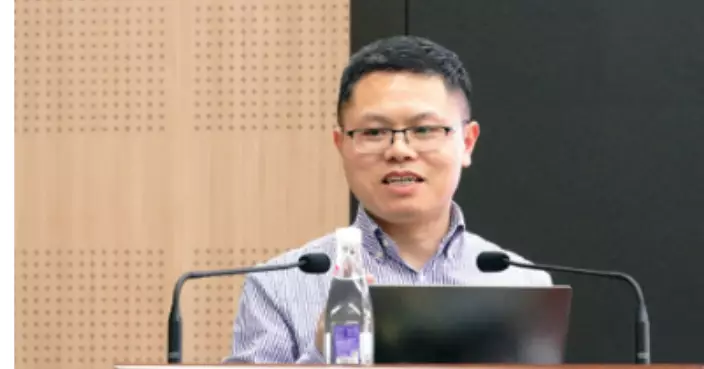
“SmartCool: Digital Twin AI, Cool Smarter with Human Feedback, Hit Carbon Zero” wins a Gold Medal. Shown in the photo is Dr Liu Yiren, Postdoctoral Fellow of the Division of Industrial Data Science at the School of Data Science, who contributed to the project led by President S. Joe Qin.
Prof S. Joe Qin, President and Wai Kee Kau Chair Professor of Data Science at Lingnan University, expressed his delight at the University’s latest important milestone and congratulated all the award-winning teams. He said, “This year, multiple innovative inventions jointly developed by faculty and students’ teams were entered by Lingnan University. By actively breaking traditional disciplinary boundaries under the AI + concept, we have integrated AI into various academic fields, resulting in a series of human-centred research and innovative solutions that respond to societal needs, affirming the University’s mission of ‘Education for Service’. In the face of global technological innovation challenges, Lingnan continues to promote interdisciplinary research, strengthen industry–academia–research collaboration, and transform research into practical applications. At the same time, we seek to equip students with humanistic values to guide technological applications, and make a positive impact on society.”
The research project that received the Gold Medal with Congratulations of the Jury is “FlexiBot: Make Every Parking Spot a Charging Spot”, developed by a team led by Prof Tang Xiaopeng, Assistant Professor (Presidential Early Career Scholar) of the Division of Science. FlexiBot is an intelligent robot designed to provide wireless charging for electric vehicles in any parking space. The robot automatically locates and moves to the nearest charging point. Its wireless charging module and adapter are compatible with all electric vehicles, offering park-and-charge compatible chargers. The system also features smart scheduling for charging, automatically avoiding peak electricity times to reduce grid load and cost.
A total of five projects have won the Gold Medals, including “SmartCool: Digital Twin AI, Cool Smarter with Human Feedback, Hit Carbon Zero”, developed by a team led by President S. Joe Qin; “BuildGuard: Blockchain Oracle AI for Instant Secure Compliance”, developed by Prof Wu Liupengfei, Assistant Professor of the Division of Industrial Data Science at the School of Data Science; “IDShield: AI Behavioural Fingerprinting for Anonymous Dialogue Decode”, developed by a team led by Prof Shen Jiaxing, Assistant Professor of the Division of Artificial Intelligence of the School of Data Science; “Solid-Safe Lithium Battery: Puncture-Proof, 500Wh/kg, Compatible with All Lines”, developed by a team led by Prof Chen Ze, Assistant Professor of the Wu Jieh Yee School of Interdisciplinary Studies; and “StorySketcher: A Multi-Agent AI System for Child-Led Co-Creative Narratives”, a project developed by Prof Xu Xian, Assistant Professor of the Department of Digital Arts and Creative Industries.
Three projects have won Silver Medals, including “Face Fortress: Adaptive All-In-One AI for Digital ID Safety”, developed by a team led by Prof Sam Kwong Tak-wu, Associate Vice-President (Strategic Research); “Hydrogel Smart Window: Cool Without Power”, developed by a team led by Prof Chen Xi, Dean of the Wu Jieh Yee School of Interdisciplinary Studies; and “Smarter Traffic, Safer Roads: AIoT and Real-Time GeoAI Innovations for Urban Transport”, a project developed by Prof Paulina Wong Pui-yun, Head and Associate Professor (Presidential Early Career Scholar) of the Division of Science.
Four projects have won the Bronze Medals, including “DynaGuard: The Smart Brain for Dynamic System Monitoring and Diagnostics”, developed by a team led by President S. Joe Qin; “Generative AI Assessment System (GAAS): A Game-Changer for Timely Student Feedback”, developed by a team led by Prof Frankie Lam King-sun, Director of the Teaching and Learning Centre; “TransLab: AI-powered Translation Learning and Evaluation Suite”, a project developed by Prof George Chan Chi-yu, Assistant Professor of Practice of the Department of Translation; and “CineSim: Interactive Cinematography Lab”, a project developed by Dr Tobby Kan Shiu-tao, Senior Lecturer of the Department of Digital Arts and Creative Industries.
The International Exhibition of Inventions Geneva, held annually since 1973, is the world’s largest exhibition of innovation and invention. This year’s exhibition features over 1000 inventions from approximately 35 countries and regions.
List of winning projects and introduction
Awards Gold Medal with Congratulations of the Jury
Project Title FlexiBot: Make Every Parking Spot a Charging Spot
Winning Lingnan Faculty and Staff • Prof Tang Xiaopeng, Assistant Professor, Division of Science
• Mr Wang Fangyu, Senior Research Assistant, Division of Science
Project description FlexiBot is an intelligent robot designed to provide wireless charging for electric vehicles in any parking space. Key Features include Autonomous Mobile Charging, Excellent Compatibility, and Smart Scheduling.
Awards Gold Medal
Project Title SmartCool: Digital Twin AI, Cool Smarter with Human Feedback, Hit Carbon Zero
Project description An AI-driven air conditioning management system that optimises performance through the integration of predictive algorithms and RL-MPC control technology. It features desk-side smart feedback and load forecasting for energy saving.
Awards Gold Medal
Project Title BuildGuard: Blockchain Oracle AI for Instant Secure Compliance
Project description Acts like a tamper-proof inspector for remote manufacturing using AI and secure blockchain data feeds for real-time compliance audits.
Awards Gold Medal
Project Title IDShield: AI Behavioural Fingerprinting for Anonymous Dialogue Decode
Project description Designed to detect and remove behavioural signals that could lead to re-identification in AI platforms, ensuring privacy compliance.
Awards Gold Medal
Project Title Solid-Safe Lithium Battery: Puncture-Proof, 500Wh/kg, Compatible with All Lines
Project description An innovative all-solid-state lithium battery without flammable electrolytes, offering high energy density and enhanced safety for drones and electric vehicles.
Awards Silver Medal
Project Title Face Fortress: Adaptive All-In-One AI for Digital ID Safety
Project description Integrates deepfake detection and image quality filtering into a single verification pipeline for high-security scenarios.
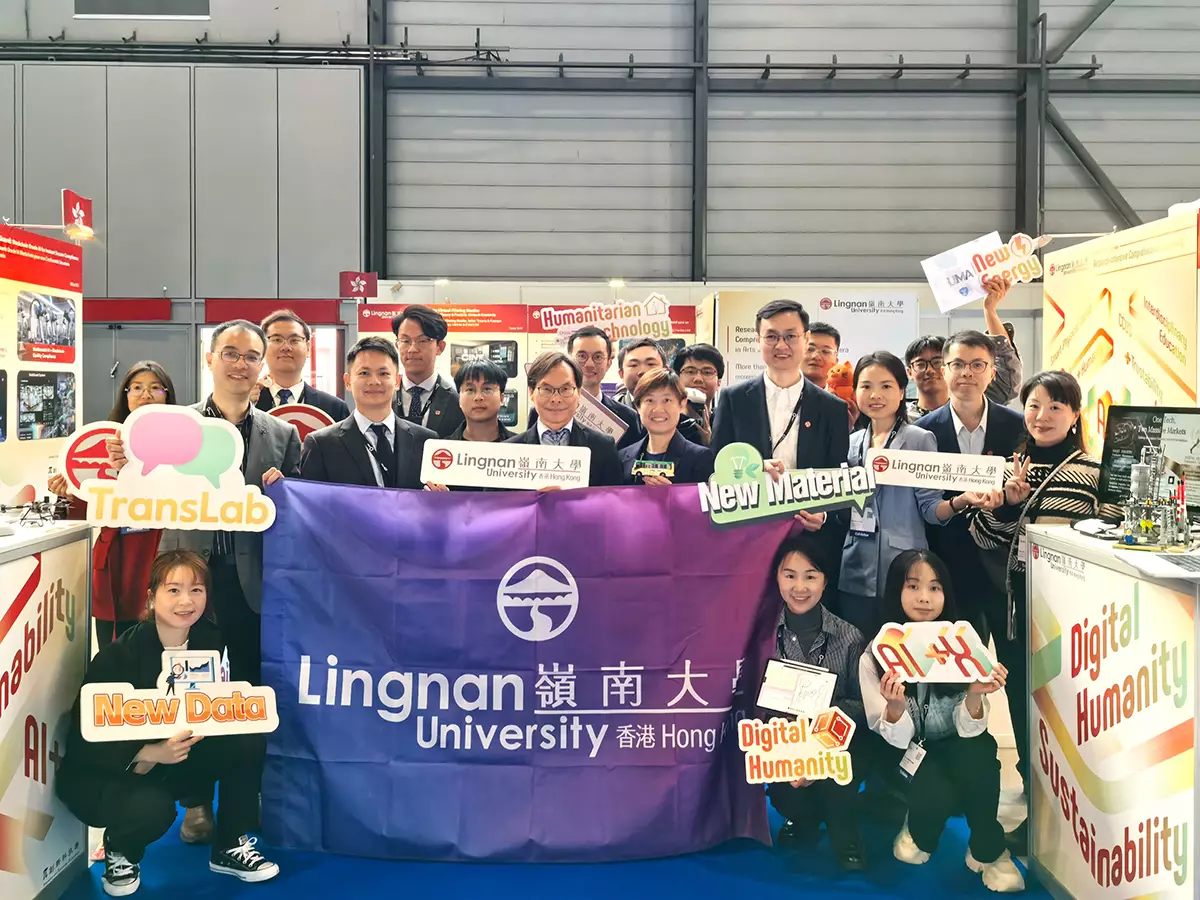
Lingnan University achieves outstanding results at the 51st International Exhibition of Inventions Geneva, winning 13 awards, more than twice as many as last year.
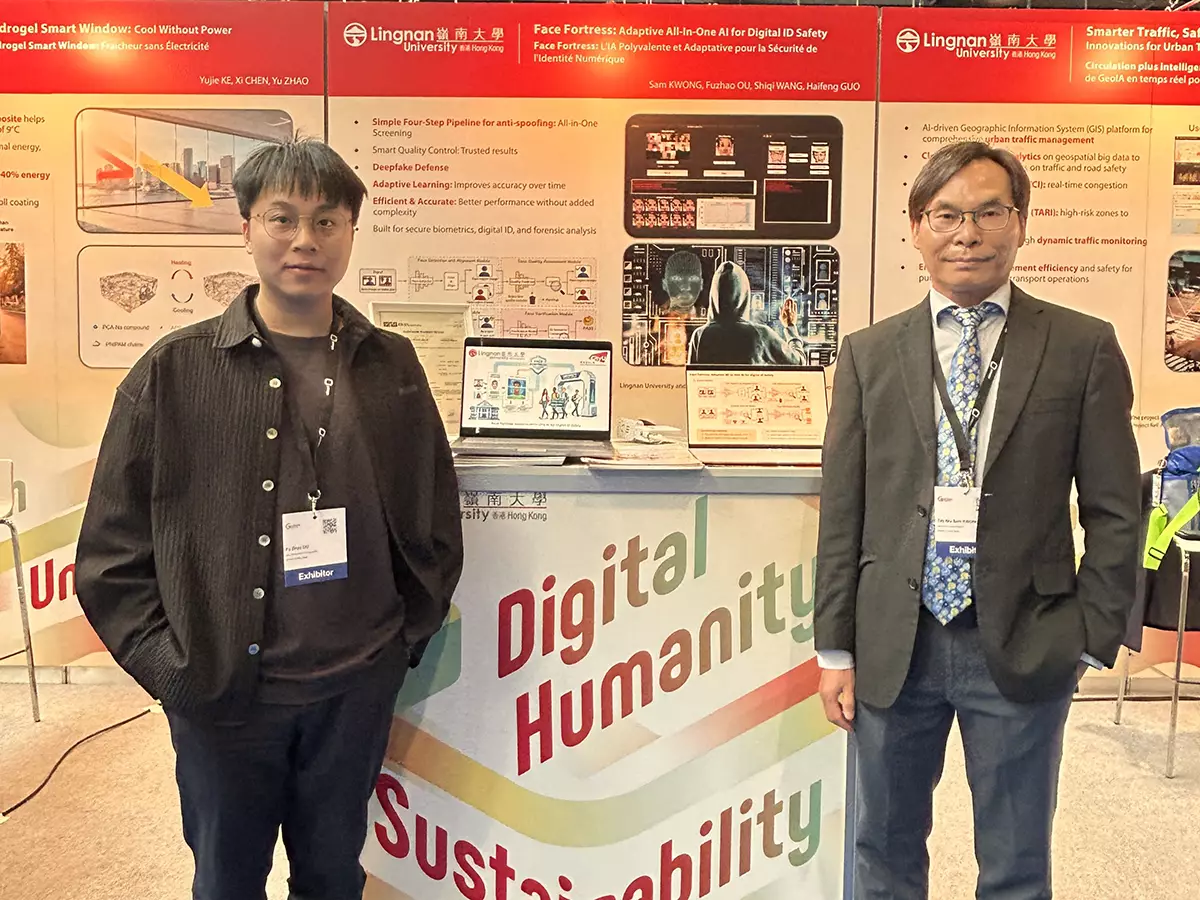
“Face Fortress: Adaptive All-In-One AI for Digital ID Safety”, developed by a team led by Prof Sam Kwong Tak-wu, Associate Vice-President (Strategic Research) (right), wins a Silver Medal.
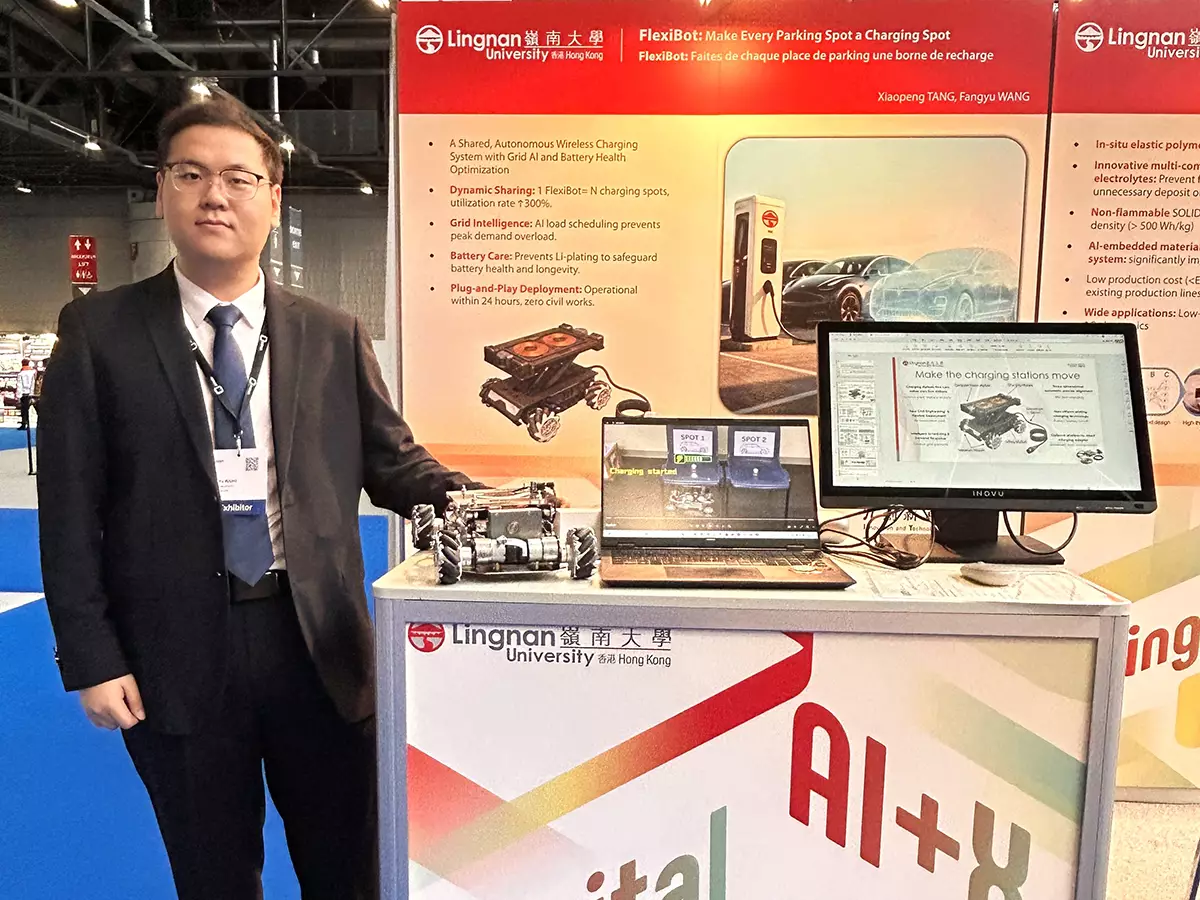
“FlexiBot: Make Every Parking Spot a Charging Spot” wins a Gold Medal with Congratulations of the Jury. The project was developed with the participation of Mr Wang Fangyu, Senior Research Assistant of the Division of Science at Lingnan University.
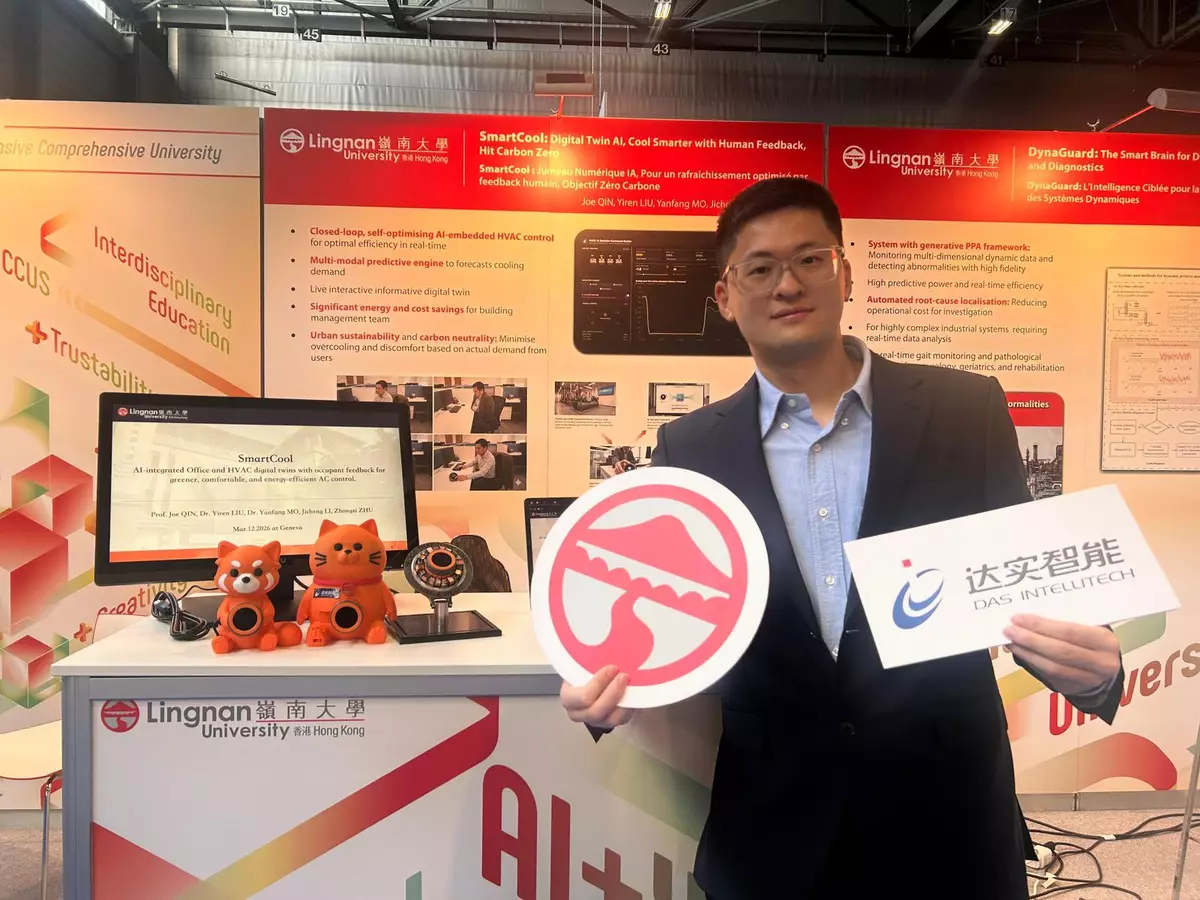
“SmartCool: Digital Twin AI, Cool Smarter with Human Feedback, Hit Carbon Zero” wins a Gold Medal. Shown in the photo is Dr Liu Yiren, Postdoctoral Fellow of the Division of Industrial Data Science at the School of Data Science, who contributed to the project led by President S. Joe Qin.