Skip to Content Facebook Feature Image

Nobel Laureate Inspires Future Scientists at Lingnan

HK

Nobel Laureate Inspires Future Scientists at Lingnan
HK

HK

Nobel Laureate Inspires Future Scientists at Lingnan

2026-04-13 18:42 Last Updated At:18:42

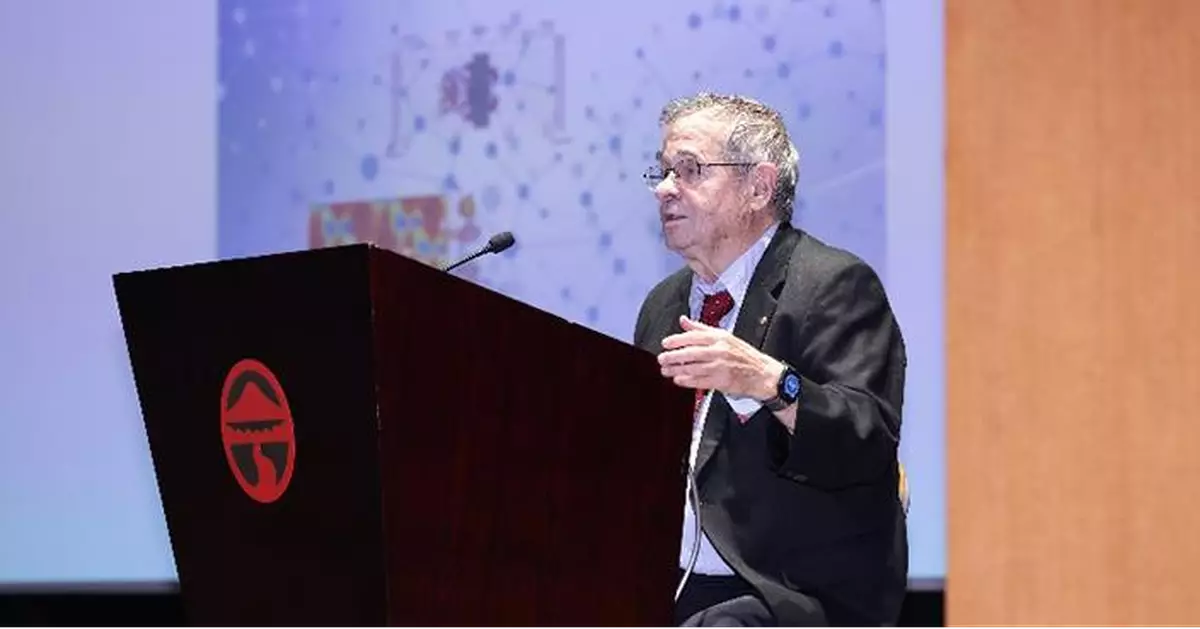
Lingnan University today, 13 April, hosted its University Assembly with guest of honour Prof Arieh Warshel, Nobel Laureate in Chemistry in 2013 and widely recognised as one of the founding figures of computational chemistry. In his lecture Electrostatic Basis of Biological Actions, Prof Warshel shared insights from his decades of research and presented an integrated account of his life’s work, from fundamental physical principles and the laws governing electrons to the construction of the “microscopic world” of biological systems. He further extended this framework to the study and application of biomolecules, and highlighted the role of computational tools and artificial intelligence in advancing medical and pharmaceutical research.

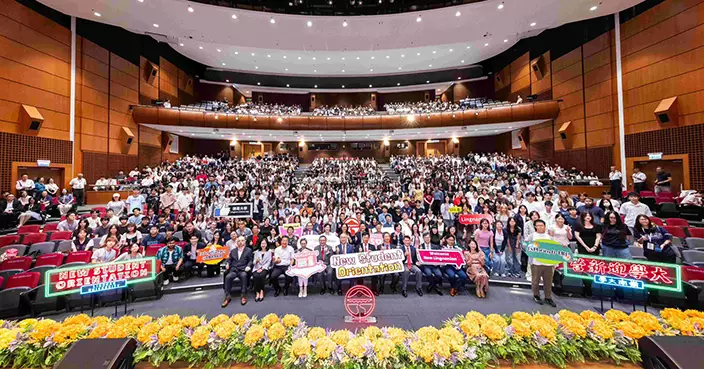
The University Assembly was held in the Chan Tak Tai Auditorium on the Tuen Mun campus. There was an audience of around 600 people, including Lingnan’s senior management, staff, students, and young scholars.

Prof S. Joe Qin, President and Wai Kee Kau Chair Professor of Data Science at Lingnan University, warmly welcomed Nobel Chemistry Laureate Prof Warshel, in honour of his visit to engage with Lingnan students and learn about the University’s latest developments. He said, “Leading scholars are a cornerstone of Lingnan’s competitiveness and help drive the University’s academic development and international exchange. Following Nobel Laureate in Physics Prof Samuel C.C. Ting’s joining Lingnan, we are delighted to host world-class scholar Prof Warshel at one of our signature academic events. This initiative enhances the campus internationalisation, providing faculty and students with invaluable opportunities to interact with outstanding scholars and to advance interdisciplinary inquiry. It not only inspires students to combine frontier research with societal needs, but also facilitates the translation of research outcomes into practical applications that deliver tangible benefits for society and sustainable development.”

In his lecture Electrostatic Basis of Biological Actions, Prof Warshel provided a systematic overview of more than four decades of research on biological reactions. He also shared how his interest in chemistry began. When he first entered university, he was uncertain about his academic direction. Encouraged by a friend who recognised his keen observational ability, he chose to study chemistry, a decision that sparked his lifelong passion for the field.

Prof Warshel is best known for developing multiscale molecular modelling of complex chemical systems, enabling the simulation of biomolecular systems and protein reactions at multiple levels. This work transformed the understanding of biochemical processes and led to his award of the Nobel Prize in Chemistry in 2013.

Prof Warshel guided the audience from fundamental physical principles, tracing the development from classical theories such as Maxwell’s equations and energy models to modern computational approaches. He emphasised that the key to understanding the complexity of biological systems lies in translating microscopic electronic interactions into macroscopic dielectric environments. The electrostatic models he pioneered have enabled scientists to calculate electrostatic free energy within proteins with remarkable precision.

These computational approaches have advanced the understanding of enzyme catalysis and the molecular basis of cancer-related mutations. Enzymes, as highly efficient natural catalysts, accelerate reactions not primarily through mechanical strain, but through electrostatic preorganisation that lowers activation barriers. Using the Ras protein (Rat sarcoma protein) as an example, Prof Warshel explained that mutations can disrupt electrostatic balance in GTP hydrolysis (Guanosine Triphosphate hydrolysis), leading to uncontrolled cell growth and contributing to tumour formation.

The influence of electrostatic interactions extends beyond reaction rates to energy transport and macromolecular dynamics in living systems. Processes such as proton transfer within cells and ion transport across membranes are governed by electrostatics. At the molecular level, systems such as ATP synthase (Adenosine Triphosphate synthase) operate under strict electrostatic constraints. These insights have been applied to the study of complex biological processes, including protein folding and cardiac hypertrophy.

Prof Warshel concluded that the missing link between the structure and function of biological macromolecules lies in electrostatic interactions. This highlights the fundamental role of physical principles in biology and underscores the importance of electrostatics in guiding future developments in precision medicine and bioengineering.

During an in-depth discussion session with students and faculty, Prof Warshel encouraged young people to pursue excellence, and integrate knowledge and translate it into a meaningful contribution to society.
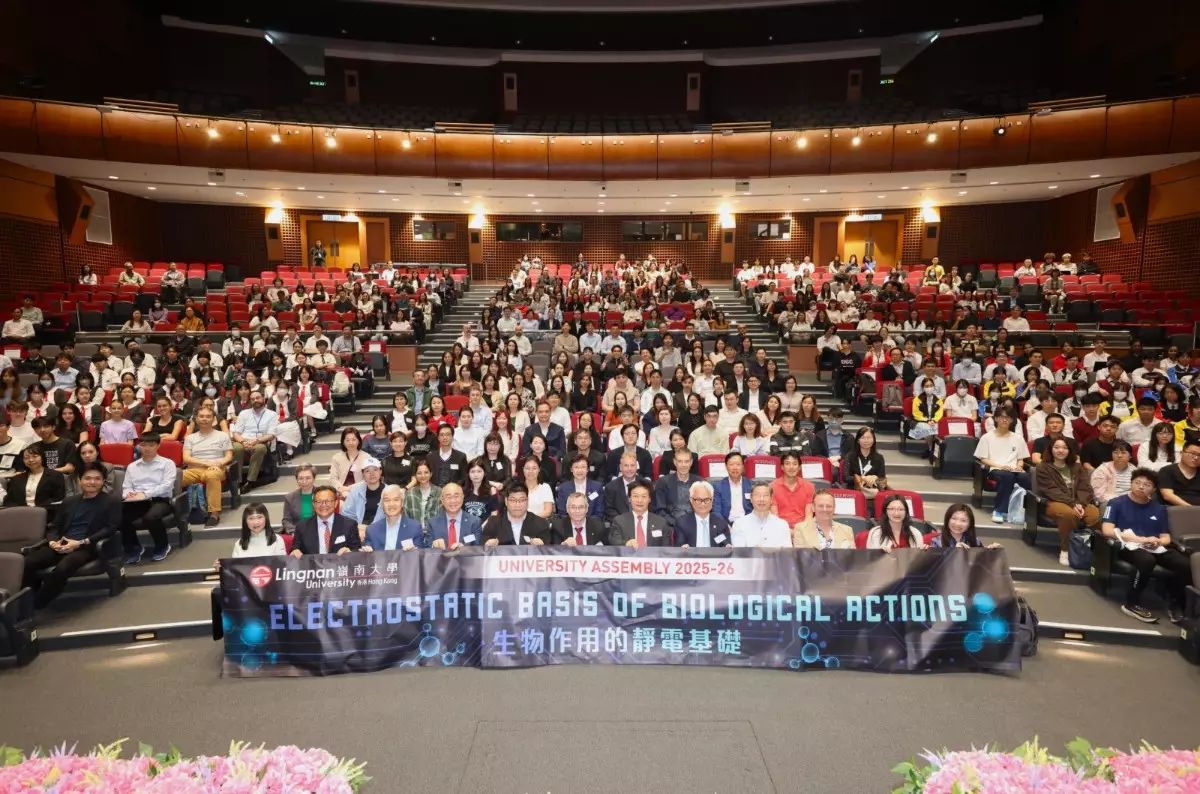
Nobel Laureate in Chemistry Prof Arieh Warshel speaks at the Lingnan University Assembly.
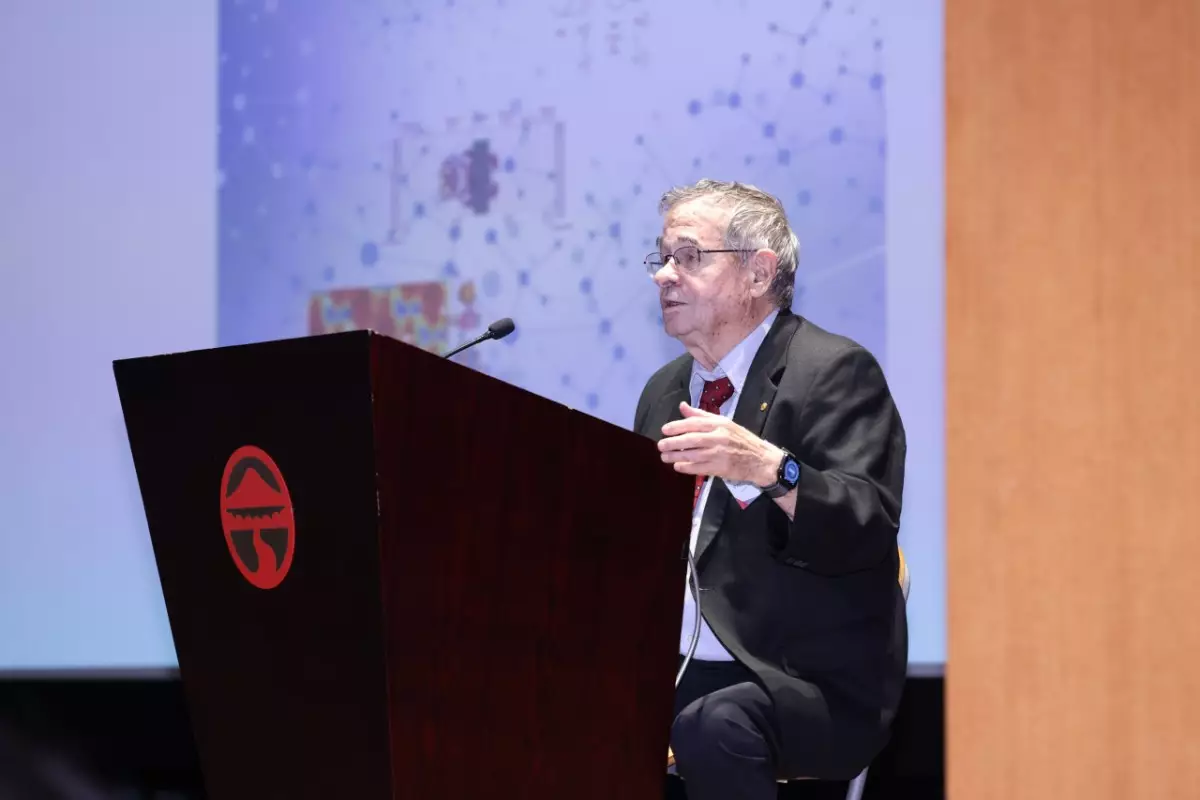
Nobel Laureate in Chemistry Prof Arieh Warshel speaks at the Lingnan University Assembly.

The University Assembly, held in the Chan Tak Tai Auditorium on the Tuen Mun campus, was attended by around 600 members of the University’s senior management, staff, students, and young scholars.
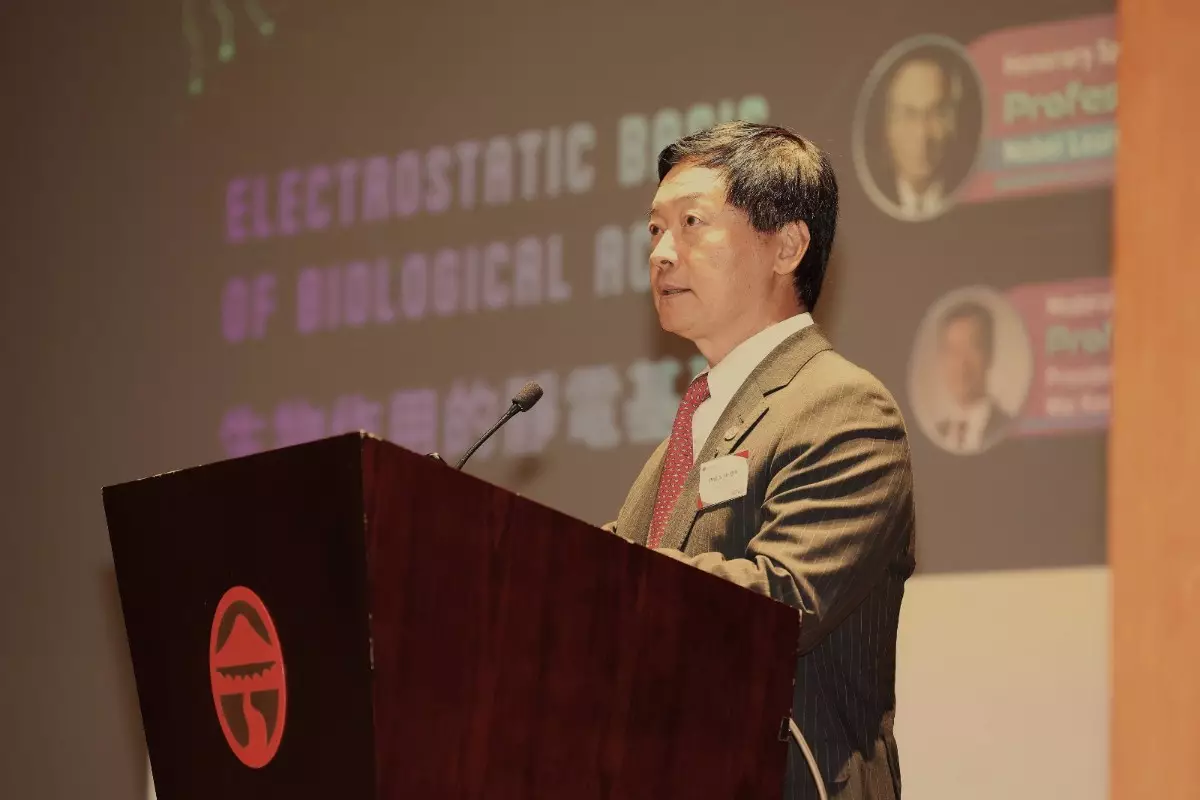
The University Assembly, held in the Chan Tak Tai Auditorium on the Tuen Mun campus, was attended by around 600 members of the University’s senior management, staff, students, and young scholars.

Prof S. Joe Qin, President of Lingnan University and Wai Kee Kau Chair Professor of Data Science, delivers opening remarks welcoming Prof Warshel to the campus.

Prof S. Joe Qin, President of Lingnan University and Wai Kee Kau Chair Professor of Data Science, delivers opening remarks welcoming Prof Warshel to the campus.
The Hong Kong SAR imports over 90 per cent of its food, and it can be very difficult when food safety incidents occur to trace the source across a complex supply chain. Prof Leng Mingming, Dean of the Faculty of Business and Chair Professor of Operations and Risk Management at Lingnan University, has published a new study proposing the introduction of a unified product tracing system across the food supply chain. The study confirms that such a system would improve overall traceability efficiency, and analysis shows that cooperative mechanisms across supply chain tiers help reduce the entry of problematic food into the market, improving both food safety and consumer confidence. The research findings have been published in the internationally respected flagship journal IISE Transactions of the Institute of Industrial and Systems Engineers.

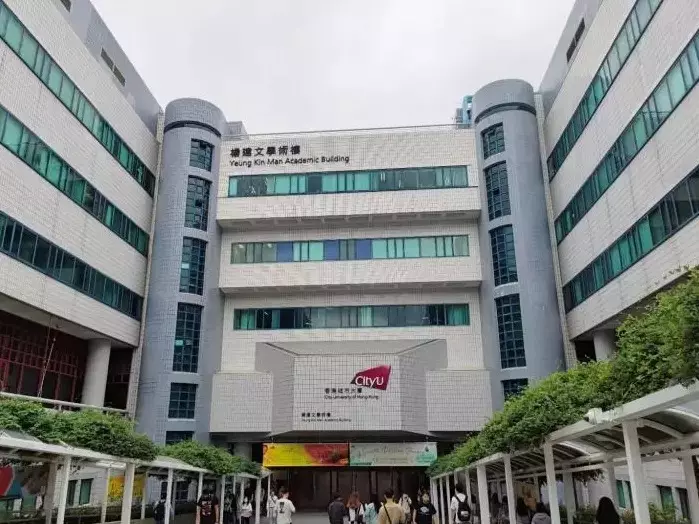
The Faculty of Business at Lingnan University.

The Faculty of Business at Lingnan University.

The international research team, comprising Prof Leng and scholars from Hunan University, the University of Southern California, and McMaster University of Ontario, developed a three-tier food processing system covering upstream producers, midstream manufacturers or wholesalers, and downstream retailers, including supermarkets and catering groups, forming a “cross-tier” network. Using cooperative game theory, the team analysed independent decision-making versus coalition-based cooperation potential profit outcomes for stakeholders. Results show that when supply chain tiers act independently up to 90 per cent of total profits may be lost, but a unified cross-tier cooperative alliance between manufacturers and retailers can reduce losses to approximately 55 per cent.

The study also explains that the fewer “separate coalitions” there are within the supply chain, the more effectively manufacturers and retailers can share traceability responsibilities, leading to higher total profits. Adopting a unified product tracing system reduces fragmented decision-making, improves operational efficiency, lowers unnecessary costs, and promotes more equitable profit allocation. This strengthens incentives for cooperation across supply chain tiers, and helps alleviate concerns among small and medium-sized enterprises (SMEs) over the high costs or limited resources that may discourage participation in a unified tracing system.

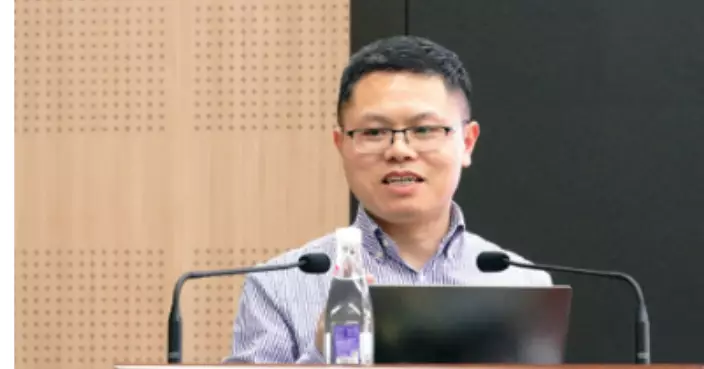
Prof Leng Mingming, Dean of the Faculty of Business and Chair Professor of Operations and Risk Management at Lingnan University, has published a new study proposing a unified product tracing system across the food supply chain. The system would improve traceability efficiency and food safety management, and the findings have been published in the flagship journal IISE Transactions of the Institute of Industrial and Systems Engineers.

Prof Leng Mingming, Dean of the Faculty of Business and Chair Professor of Operations and Risk Management at Lingnan University, has published a new study proposing a unified product tracing system across the food supply chain. The system would improve traceability efficiency and food safety management, and the findings have been published in the flagship journal IISE Transactions of the Institute of Industrial and Systems Engineers.

Prof Leng noted “According to data from the Food Industry Association, about 64 per cent of consumers worldwide prefer brands that provide detailed product information and traceability records. A well-established product tracing system is better able to identify and intercept contaminated food or food that has deteriorated before it reaches retail markets, significantly reducing the risk of economic losses from product recalls.”

He added “Our study shows that cross-tier cooperation between manufacturers and retailers is key to improving overall supply chain efficiency. The Hong Kong SAR’s reliance on imported food underscores the importance of robust food traceability systems that enhance public confidence in food safety and support sustainable economic development. The use of innovative technologies such as blockchain and the artificial intelligence of things (AIoT) for food monitoring has become a global trend among major retailers and food companies. As an international trade hub, the Hong Kong SAR should encourage the adoption of these technologies for supply chain transparency and long-term sustainable development in the industry.”

The study also shows that many upstream farmers and manufacturers are SMEs with limited capital and technical resources, and it is difficult for them to shoulder the costs of implementing a tracing system independently. When penalties for distributing problematic foods are high, downstream retailers and manufacturers have a greater incentive to adopt a unified tracing system to intercept compromised food, thus appropriate regulatory measures can serve as an important lever to drive technology adoption in the industry.

Prof Leng has been named the recipient of the Beta Gamma Sigma (BGS)’s 2026 Dean of the Year Award. He was the sole winner selected from over 640 universities across 39 countries and regions. The award is presented annually to one outstanding dean who has demonstrated exceptional leadership in business education and consistent support for students.

Read the full study here: System-wide incentives to trace food processing: A cooperative-game analysis

Recommended Articles