The evolution of higher education in the digital era has attracted global attention, and Prof S. Joe Qin, President and Wai Kee Kau Chair Professor of Data Science at Lingnan University, recently published a paper titled “AI for education: The digital transformation of a liberal arts institution – implementation at Lingnan University” in a leading international journal Computers and Education: Artificial Intelligence. The paper’s in-depth analysis of the role artificial intelligence (AI) plays in education uses Lingnan as a case study to examine the success of its pilot initiatives.
Prof Qin notes that higher education is undergoing an “AI revolution”, not merely reinforcing teaching with technology, but driving the “digital-intelligent transformation” of both teachers and students. Future curricula will shift from a traditional emphasis on memorisation and content mastery towards the application and navigation of knowledge, and students will be trained in prompt engineering in order to validate outputs generated by generative AI, and understand the ethical implications of such automated systems.
At the pedagogical level, repetitive tasks such as administrative duties, classroom management, and marking assignments will increasingly be handled by AI, allowing educators to focus more on their primary role of instruction and mentorship. This shift enables teachers to expand stronger data analytics and technological integration capabilities, permitting them to make higher-level decisions based on data, and to advise students more effectively.
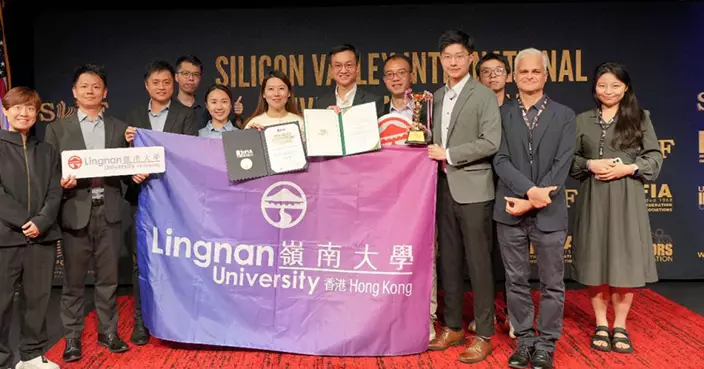
Using Lingnan University as an example, Prof Qin highlights the development and application of a “Generative AI Assessment System (GAAS)”, an AI-driven learning platform capable of examining student performance in real time and making individual recommendations. Final oversight remains with teachers, so that this moves away from a one-size-fits-all model, and lecturers can shape instruction to individual progress and needs. The system was awarded a Bronze Medal at the International Exhibition of Inventions Geneva in March this year.
The pilot study shows that the system reduces the time spent on mechanical marking significantly. Traditionally, students often wait weeks for a response, whereas the new system enables a rapid turnaround, improving student engagement. It also ensures consistent application of marking criteria, and minimises discrepancies caused by human fatigue or bias. By delegating mechanical tasks such as grammar and structural checks to AI, instructors can focus entirely on students’ arguments and intellectual abilities, leading to better guidance.
Prof Qin stresses that educators are not replaceable. “At its core, education is a social and emotional process, and AI is currently unable to perceive student frustration, demonstrate empathy, mediate peer conflicts, or give emotional support. These forms of ‘emotional value guidance’ are inherently human and beyond the capacity of algorithms. Students must shift from being passive consumers of AI-generated content to active editors and critical thinkers. For example, they should debate AI, identify flaws in logic, and generate multiple solutions using AI, and then evaluate and rank them independently. The key lies in asking the right questions and appraising the quality and accuracy of the responses.”
The paper also notes that, given AI’s strength in processing large volumes of information, tasks that require high accuracy and speed but involve limited complex judgement are more susceptible to automation. These include data entry, basic translation, routine programming, software operation, and format-driven content generation, all repetitive and rule-based cognitive tasks. Such changes are more likely to replace specific tasks than entire professions. For instance, legal assistants may spend less time gathering information, and more on strategic legal work.
Prof Qin explains that as anyone can now create grammatically correct text or digital images within seconds, technology itself is no longer in short supply. What becomes truly beneficial is human intent, philosophical thinking, and flair in evoking emotional resonance. In an age saturated with generated content, whole-person education focusing on critical thinking and authentic human expression will become the most important standard and benchmark.
He also points out that the widespread adoption of AI will increase the importance of interdisciplinary learning. “Cognitive flexibility, complex problem-solving skills, and emotional intelligence - all fostered by whole-person education - provide students with a solid foundation so they can remain adaptable in rapidly evolving technological environments. By integrating knowledge across disciplines such as history, philosophy, and science - in essence, learning how to learn - students can continue to grow amid constant change.”
The paper expresses how disciplines such as literature, history, and philosophy offer an “ethical perspective”, and how the study of classical works, particularly those rooted in the Chinese cultural heritage, is essential for independent thinking. By understanding a historical context and moral framework, students can apply AI more judiciously, minimise algorithmic bias, and ultimately take a leading role in shaping technological progress.
Read the full study here: AI for education: The digital transformation of a liberal arts institution – implementation at Lingnan University
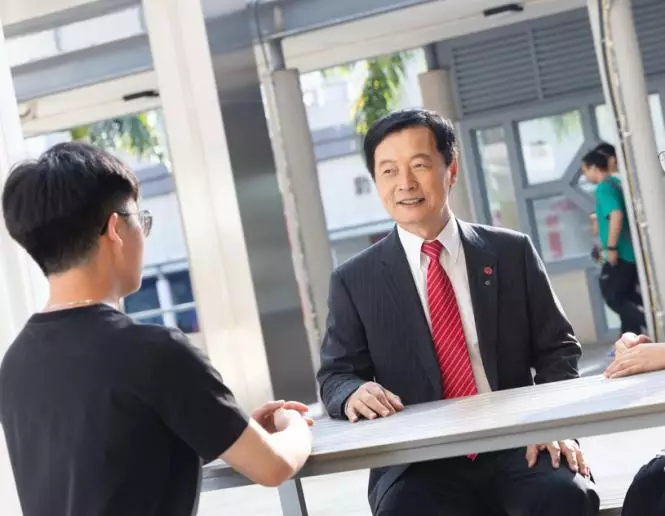
Prof S. Joe Qin, President and Wai Kee Kau Chair Professor of Data Science of Lingnan University, has published a paper titled AI for education in a leading international journal.