MANILA, Philippines--(BUSINESS WIRE)--Feb 2, 2026--
Coins.ph, the Philippines' leading crypto-native financial services platform, has joined Circle Payments Network (CPN) to enable faster, more cost-efficient cross-border payments into the Philippines for institutions, platforms, enterprises and end users.
This press release features multimedia. View the full release here: https://www.businesswire.com/news/home/20260201949832/en/
As a beneficiary financial institution (BFI) on CPN, Coins.ph provides payout capabilities across its local network of over 120 local banks and e-wallets, streamlining settlement into Philippine Pesos (PHP) through compliant, blockchain-powered rails.
Modernizing Cross-Border Value Movement
This integration aims to simplify and modernize global value movement into the Philippines. Financial institutions across CPN can now benefit from near-instant settlement and direct local currency distribution via Coins.ph.
For end users, including Overseas Filipino Workers (OFWs) and their families, as well as enterprises, this infrastructure translates to lower fees, competitive FX rates, and near-instant access to funds. Real-time payment status updates also provide transparency throughout the process.
"Joining Circle Payments Network makes the Philippine Peso a native part of the internet economy," said Wei Zhou, CEO of Coins.ph. “Through this integration, we’re helping to modernize how value moves into the Philippines by reducing the costs and delays often associated with legacy cross-border infrastructure, while improving the speed and predictability of local payouts.”
“Coins.ph’s integration with CPN strengthens local payout capabilities in the Philippines,” said Irfan Ganchi, SVP of Product Management, Payments at Circle. “By enabling PHP payouts through CPN, Coins.ph helps institutions deliver real-time, compliant settlement in one of Southeast Asia’s most dynamic markets, supporting our shared vision for a more inclusive and interoperable financial system.”
AboutCoins.ph
Coins.ph is an all-in-one financial app for millions, seamlessly fusing traditional finance with digital assets. Established in 2014, it stands as the Philippines' premier cryptocurrency exchange. Licensed by the BSP as both a virtual asset marketplace and a mobile wallet, the platform empowers users to trade, execute payments, and utilize crypto remittance for sending and receiving funds quickly and affordably, all in one secure place.
About Circle Payments Network
Circle Technology Services, LLC (CTS) is the operator of Circle Payments Network (CPN) and offers products and services to financial institutions that participate in CPN to facilitate their CPN access and integration. CPN connects participating financial institutions around the world, with CTS serving as the technology service provider to participating financial institutions. While CTS does not hold funds or manage accounts on behalf of customers, we enable the global ecosystem of participating financial institutions to connect directly with each other, communicate securely, and settle directly with each other. CTS is not a party to transactions between participating financial institutions facilitated by CPN who use CPN to execute transactions at their own risk. Use of CPN is subject to the CPN Rules and the CPN Participation Agreement between CTS and a participating financial institution.

Coins.ph joins Circle Payments Network to enable local currency payouts in the Philippines
ISLAMABAD (AP) — Pakistanis faced record fuel price increases Friday, as petrol and diesel prices rose by up to 54% driven by the war in the Middle East that has caused global oil prices to surge.
The increase adds pressure to a cash-strapped nation already grappling with high inflation, as economists warned the hike would push up food prices and living costs.
Pakistan's Petroleum Minister Pervez Malik said late Thursday that the increase was “unavoidable.” He said the government was compelled to raise petrol prices by 137 rupees (49 cents) per liter, following a 20% increase last month.
Diesel prices were increased overnight by 184.49 rupees (67 cents) per liter, a rise of about 54.9%.
Malik said the adjustments were “necessary and unavoidable” in line with global market trends, adding that the government plans to subsidize fuel for motorcyclists, though a mechanism has yet to be finalized. Motorcycles overwhelmingly outnumber cars in Pakistan, accounting for nearly 78% of all vehicles on the road, as they are among the most affordable modes of commuting.
On Friday, Interior Minister Mohsin Naqvi said public transport in Islamabad will be free for 30 days from Saturday on the prime minister’s instructions, and his ministry will cover the fuel costs.
Pakistan in recent weeks has used alternate routes to get oil due to the closure of the Strait of Hormuz.
The unprecedented price increase came after Prime Minister Shehbaz Sharif said regional instability had affected Pakistan’s fragile economy. He said the government was pursuing diplomatic efforts to ease tensions and encourage dialogue between the parties involved.
Pakistan has offered to host peace talks, though no dates have been announced for any such meetings in Islamabad.
However, for many citizens, the impact of the ongoing tensions and recent fuel price increases was immediate, with households and commuters bracing for higher transportation and daily living costs.
“It’s not just gas,” said Mohammad Zain Alvi, a commuter waiting for a bus in Islamabad. “Life was already very difficult for us, and now everything will become more expensive.”
Across major cities Friday, fuel stations were unusually quiet and traffic noticeably lighter as many people stayed home, unable or unwilling to bear the higher costs. At some stations, customers stood in silence after hearing the new rates.
“We have nothing to do with the war,” said Azhar Ali, a junior government employee who uses an old motorcycle to commute from Rawalpindi to Islamabad. “Why are we being made to pay for it? This will affect everything — transport, food, our entire lives.”
In the northwestern city of Peshawar, motorcycle rider Sher Khan said he was uncertain how he would continue working after the spike in fuel prices. He delivers food in the capital of Khyber Pakhtunkhwa province.
“I earn so little for each ride, and now most of it will go into fuel,” he told The Associated Press.
Jabran Sarfraz, a prominent economist in Karachi, said the immediate burden would fall on consumers, warning that higher fuel prices would raise the cost of daily necessities and disproportionately affect lower-income groups. He said the duration of the impact would depend on how quickly global prices ease.
__
Khan reported from Peshawar, Pakistan.
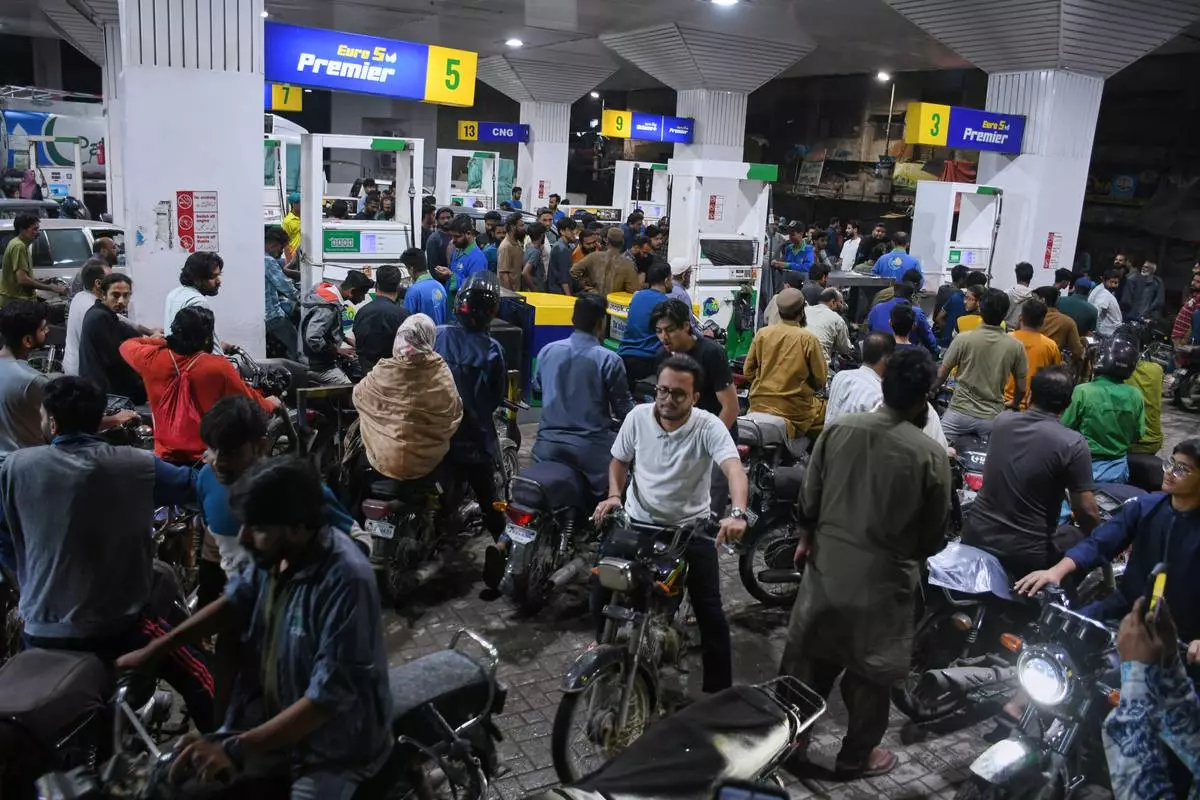
Motorcyclists crowd into a filling station as they wait their turn to buy fuel, in Karachi, Pakistan, Thursday, April 2, 2026. (AP Photo/Ali Raza)
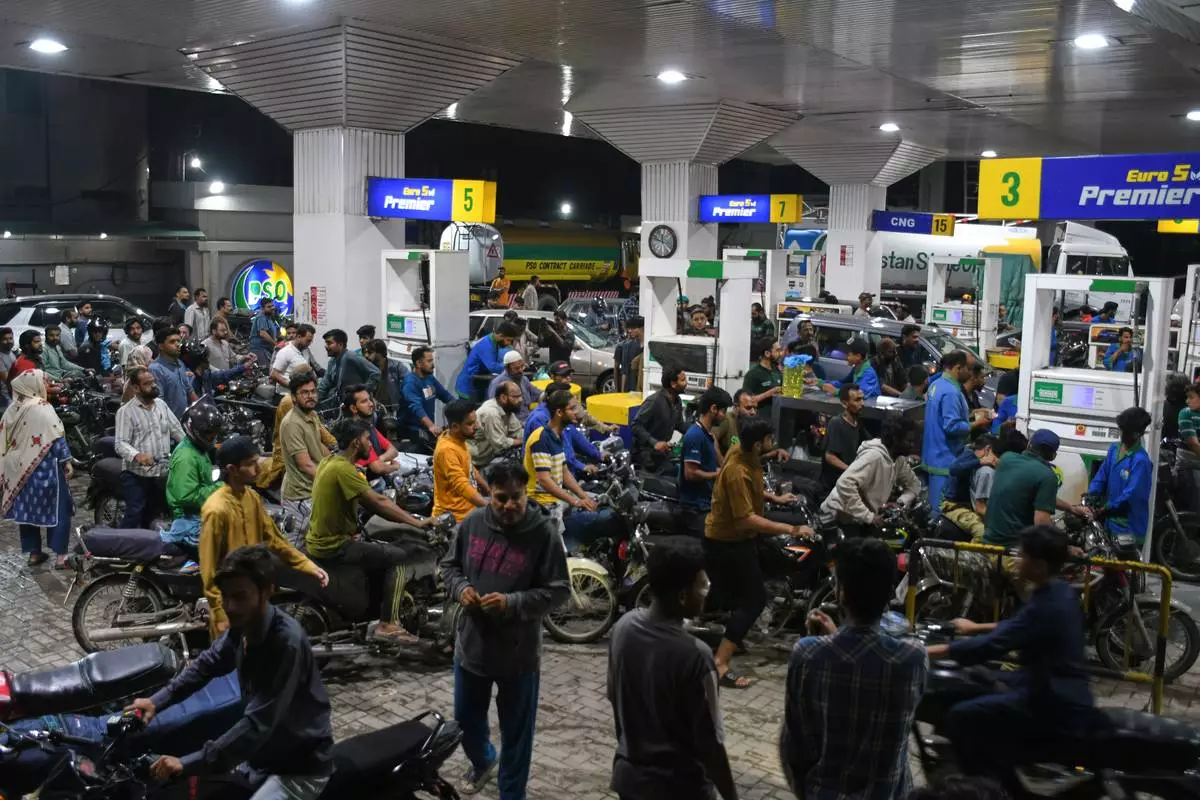
Motorcyclists crowd into a filling station as they wait their turn to buy fuel, in Karachi, Pakistan, Thursday, April 2, 2026. (AP Photo/Ali Raza)
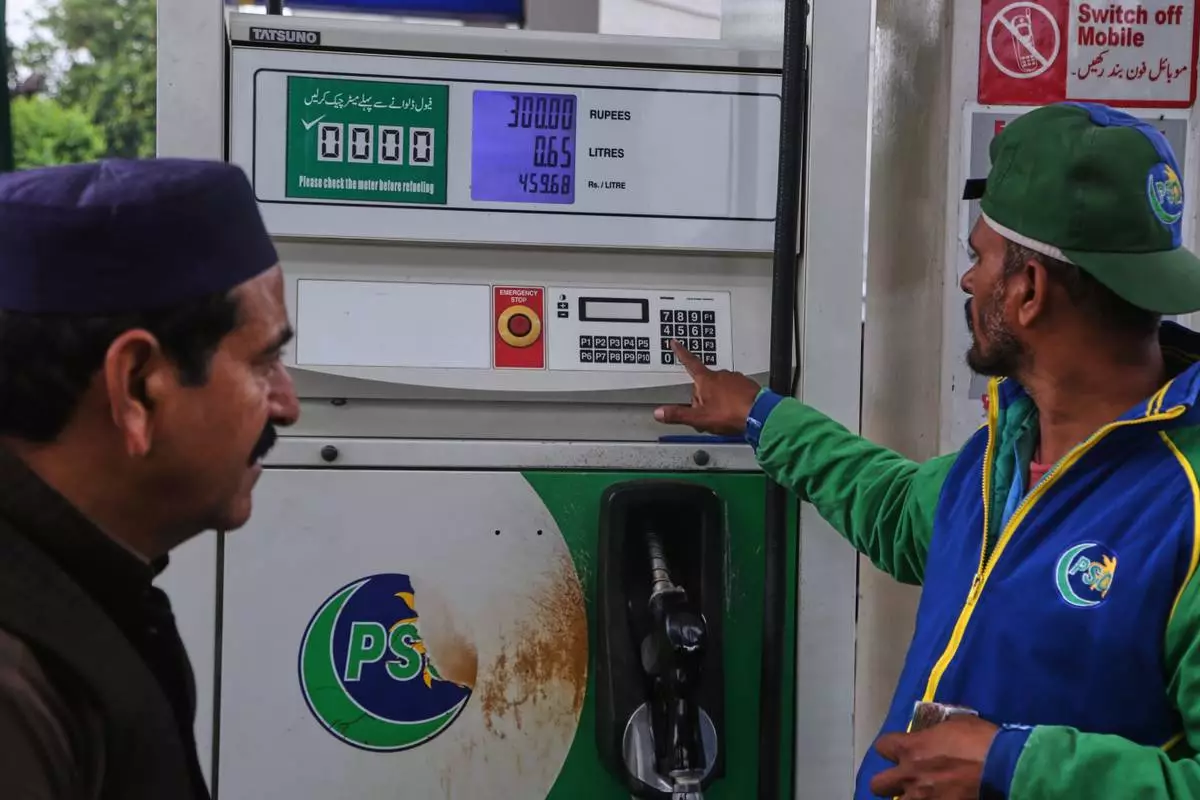
A motorcyclist looks at the display at a fuel station as he buys fuel after the government increased fuel prices amid surging global oil prices due to the Iran war, in Peshawar, Pakistan, Friday, April 3, 2026. (AP Photo/Muhammad Sajjad)
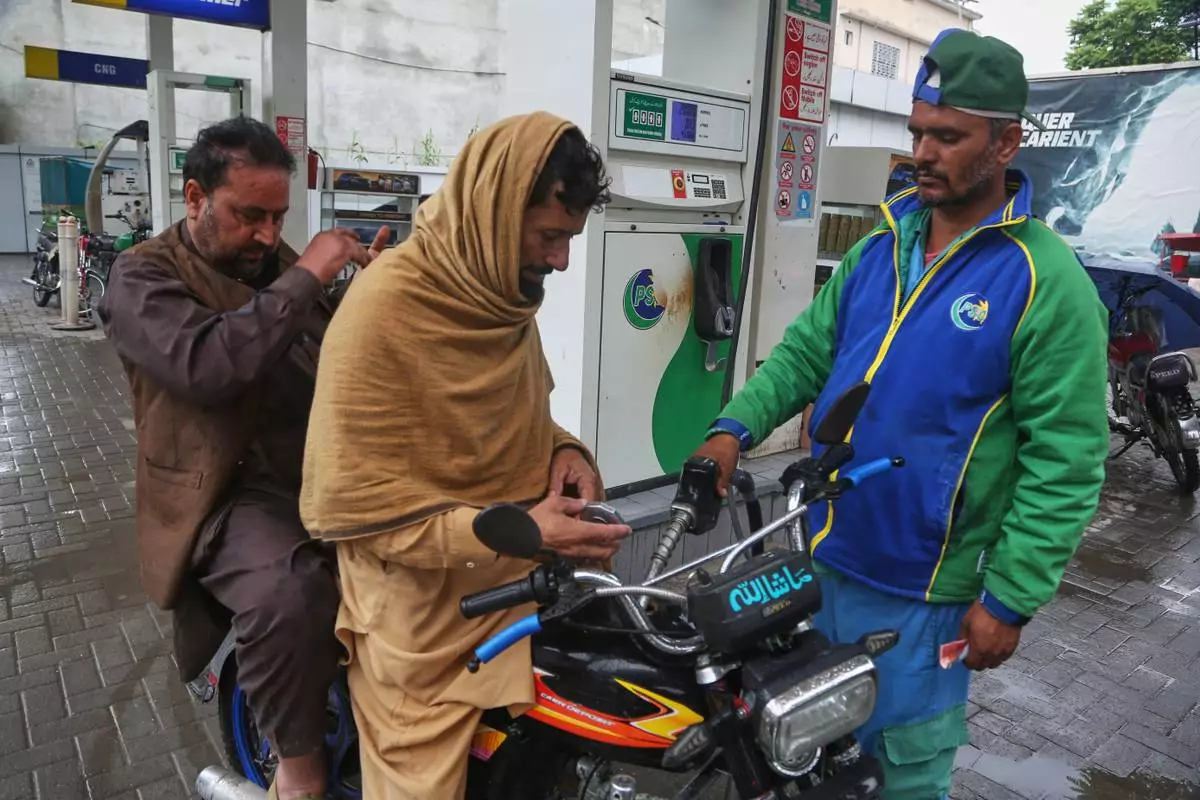
A motorcyclist buys fuel after the government increased fuel prices amid surging global oil prices due to the Iran war, in Peshawar, Pakistan, Friday, April 3, 2026. (AP Photo/Muhammad Sajjad)
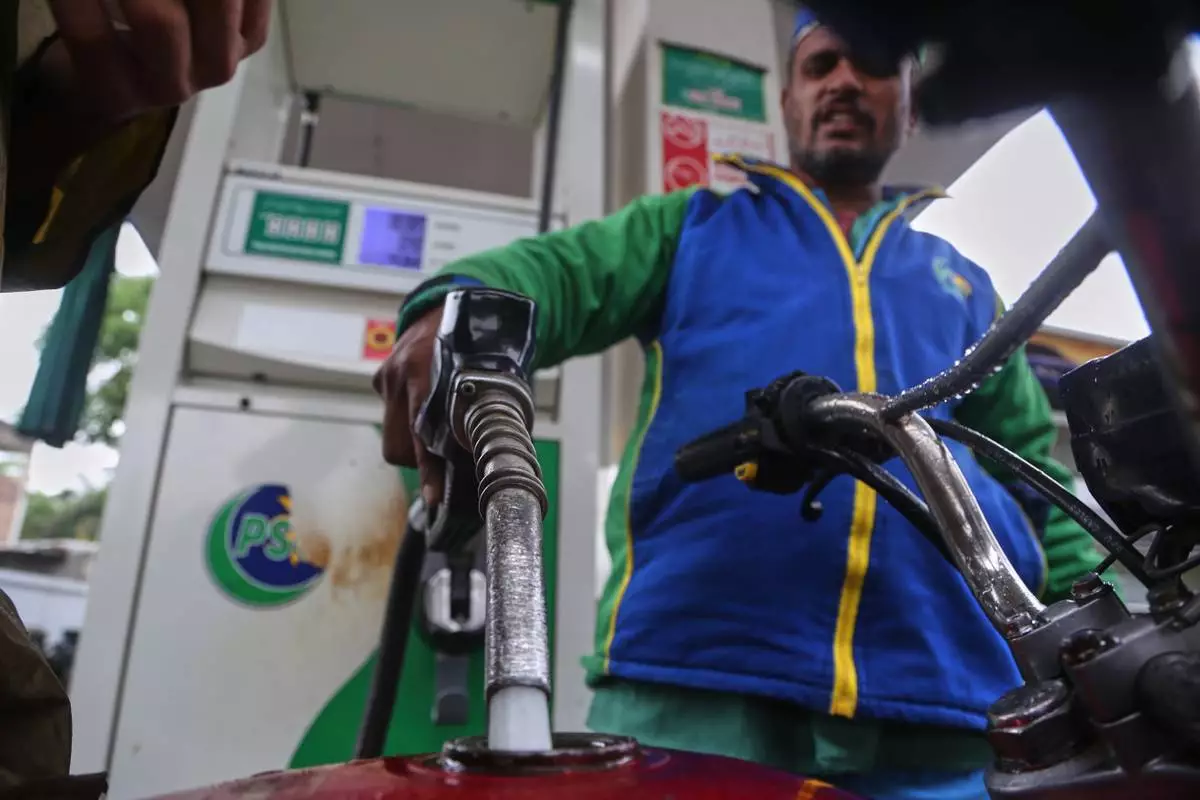
A worker fills fuel into a motorbike after the government increased fuel prices amid surging global oil prices due to the Iran war, in Peshawar, Pakistan, Friday, April 3, 2026. (AP Photo/Muhammad Sajjad)