AL-HASSAKEH, Syria (AP) — A small contingent of security forces with Syria’s interior ministry entered the city of al-Hassakeh on Monday as part of a deal between Damascus and the Kurdish-led Syrian Democratic Forces, or SDF, which control the city.
The SDF announced the new agreement with the central government on Friday, aiming to stabilize a ceasefire in the country that ended weeks of fighting, in which the Kurdish-led force lost most of the territory it previously held in northeastern Syria. It lays out steps toward integrating the force into the army and police forces, and integrating civilian institutions in SDF-controlled areas into the central government.
Click to Gallery
Kurdish-led Syrian Democratic Forces (SDF) combatants look on as a contingent of Syria's Interior Ministry security forces arrive to implement an agreement aimed at stabilizing a ceasefire in al-Hassakeh, eastern Syria, Monday, Feb. 2, 2026. (AP Photo/Baderkhan Ahmad)
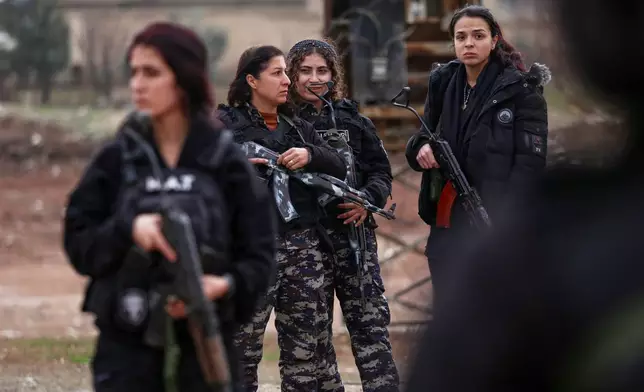
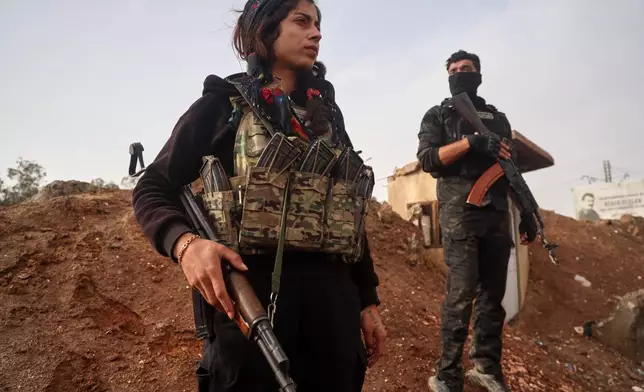
Kurdish-led Syrian Democratic Forces (SDF) female soldiers look on as a contingent of Syria's Interior Ministry security forces arrive to implement an agreement aimed at stabilizing a ceasefire in al-Hassakeh, eastern Syria, Monday, Feb. 2, 2026. (AP Photo/Baderkhan Ahmad)
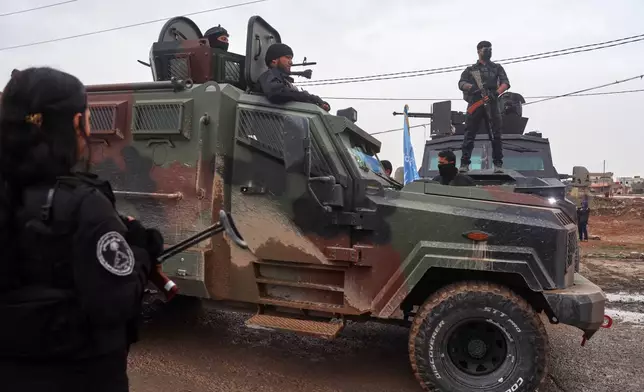
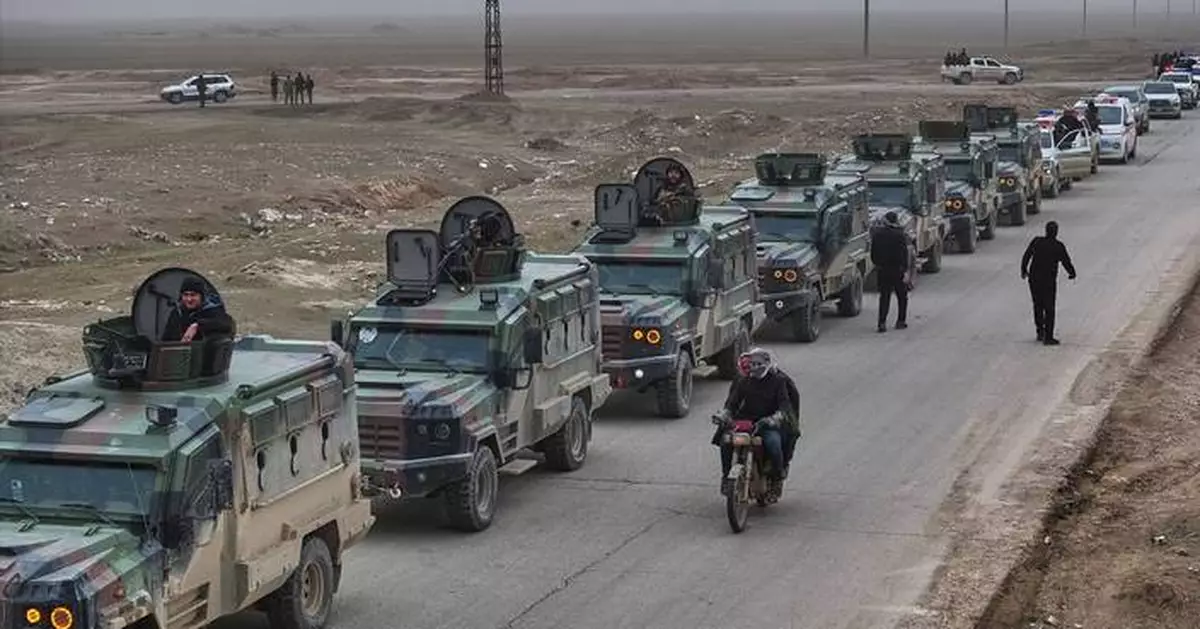
Kurdish-led Syrian Democratic Forces (SDF) soldiers, left and right, stand along the road as vehicles carrying a contingent of Syria's Interior Ministry security forces arrive to implement an agreement with the SDF aimed at stabilizing a ceasefire in al-Hassakeh, eastern Syria, Monday, Feb. 2, 2026. (AP Photo/Baderkhan Ahmad)
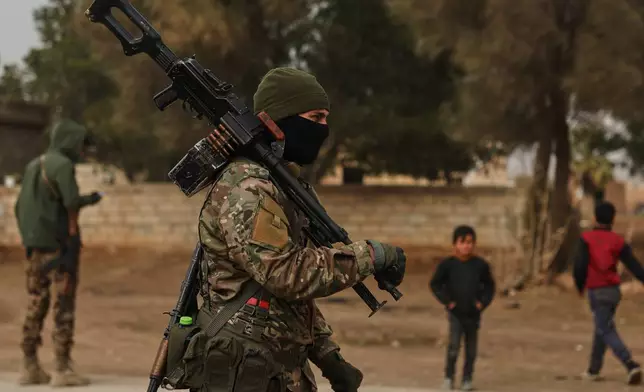
Members of the Syrian army stands at a checkpoint in the town of Sarin, where government forces were already present, as additional units move toward al-Hasakah to implement an agreement with the Kurdish-led Syrian Democratic Forces (SDF) aimed at stabilizing a ceasefire, in al-Hasakah province, eastern Syria, Monday, Feb. 2, 2026. (AP Photo/Ghaith Alsayed)
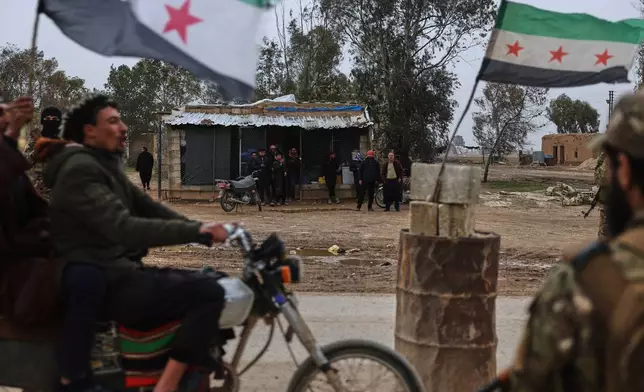
Members of the Syrian army stand at a checkpoint in the town of Sarin, where government forces were already present, as additional units move toward al-Hasakah to implement an agreement with the Kurdish-led Syrian Democratic Forces (SDF) aimed at stabilizing a ceasefire, in al-Hasakah province, eastern Syria, Monday, Feb. 2, 2026. (AP Photo/Ghaith Alsayed)
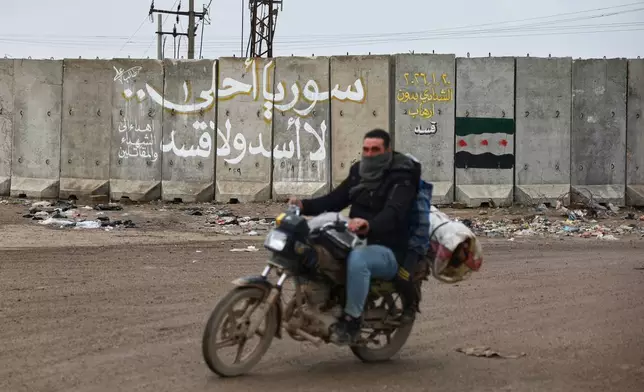
A man rides his motorcycle past the wall of a U.S. military base bearing graffiti in Arabic that reads, "Syria is more beautiful, no Assad, no SDF," and in yellow, "Al-Shaddadi without SDF terrorism," near the village of Al-Shaddadi, al-Hassakeh province, eastern Syria, Monday, Feb. 2, 2026. (AP Photo/Ghaith Alsayed)
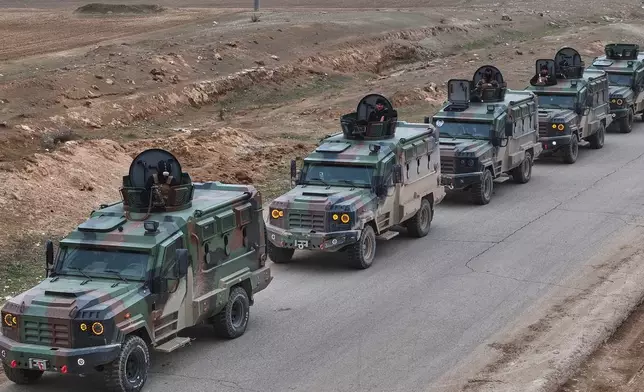
Syrian security forces gather before entering the town of al-Hassakeh to implement an agreement with the Kurdish-led Syrian Democratic Forces (SDF) to stabilize a ceasefire, in Wadi al-Raml, al-Hassakeh province, eastern Syria, Monday, Feb. 2, 2026. (AP Photo/Ghaith Alsayed)
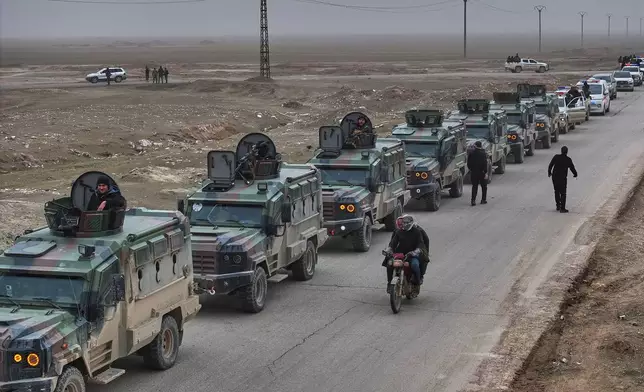
Syrian security forces gather before entering the town of al-Hassakeh to implement an agreement with the Kurdish-led Syrian Democratic Forces (SDF) to stabilize a ceasefire, in Wadi al-Raml, al-Hassakeh province, eastern Syria, Monday, Feb. 2, 2026. (AP Photo/Ghaith Alsayed)
Under the deal, government military forces won't enter Kurdish-majority areas, but small contingents of security forces reporting to the interior ministry will enter the cities of al-Hassakeh and Qamishli to secure state-affiliated institutions such as the civil registry, passport offices and the airport, and to restart work at those institutions.
Local Kurdish police forces will continue to patrol both cities and will eventually be integrated into the interior ministry as well.
The entry of government forces into al-Hassakeh went forward as planned without any outbreaks of violence.
Later Monday, Turkish President Recep Tayyip Erdogan warned the SDF against any attempts to “sabotage” the agreement reached with the Syrian government.
“With the latest agreements, a new page has now been opened before the Syrian people,” Erdogan said in a televised address. “Whoever attempts to sabotage this, I say clearly and openly, will be crushed under it.”
Turkey is a strong ally of the government in Damascus and regards the SDF as an extension of a Kurdish militant group that has led a decades-long insurgency in Turkey.
Also Monday, a court in Iraq announced that it has begun investigative procedures with 1,387 accused members of the Islamic State group who were recently transferred by the U.S. military from prisons in Syria to Iraq.
The First Investigative Court in the Karkh district of Baghdad said in a statement that the investigations are being carried out by specialized judges in counterterrorism under the direct supervision of the president of the Supreme Judicial Council.
Altogether, around 7,000 accused IS militants are set to be transferred from Syria to Iraq for trial. Amid the fighting between the SDF and government forces last month, some suspected IS members escaped from one prison, although the government said most were later captured.
Abdul-Zahra reported from Baghdad. Suzan Fraser contributed to this report from Ankara, Turkey.
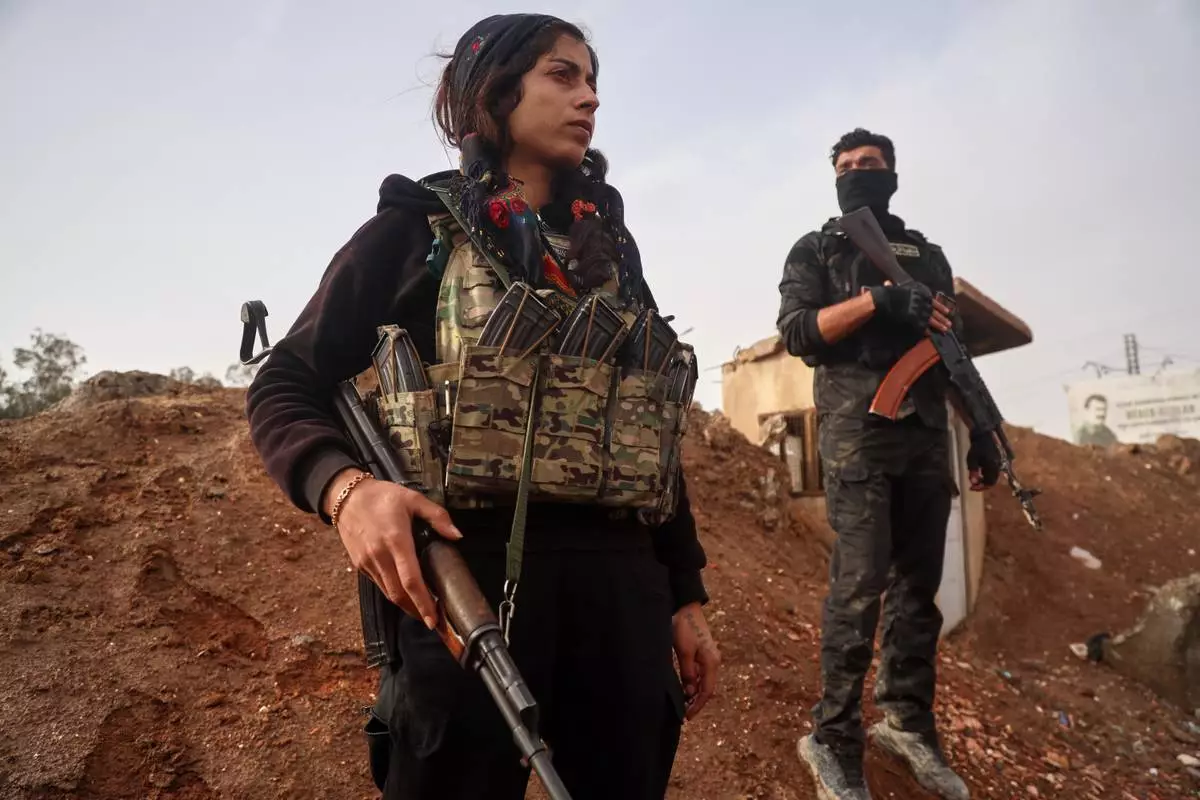
Kurdish-led Syrian Democratic Forces (SDF) combatants look on as a contingent of Syria's Interior Ministry security forces arrive to implement an agreement aimed at stabilizing a ceasefire in al-Hassakeh, eastern Syria, Monday, Feb. 2, 2026. (AP Photo/Baderkhan Ahmad)
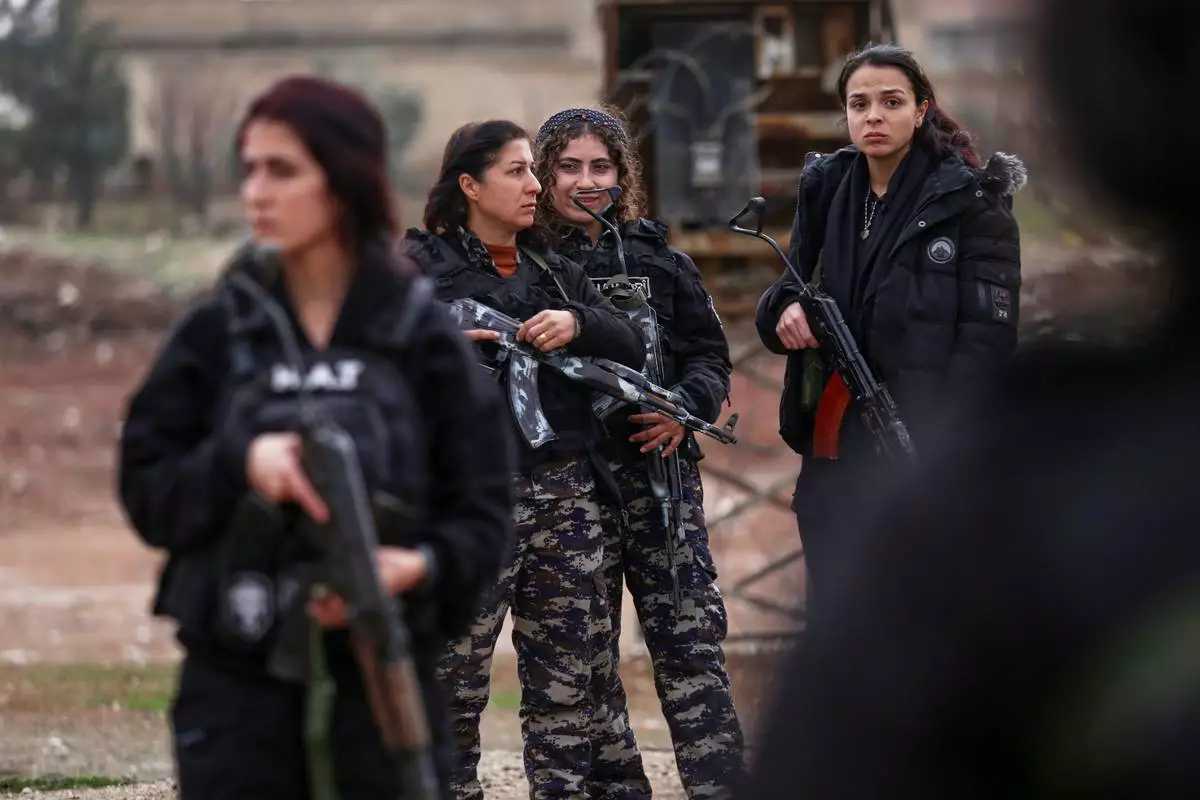
Kurdish-led Syrian Democratic Forces (SDF) female soldiers look on as a contingent of Syria's Interior Ministry security forces arrive to implement an agreement aimed at stabilizing a ceasefire in al-Hassakeh, eastern Syria, Monday, Feb. 2, 2026. (AP Photo/Baderkhan Ahmad)
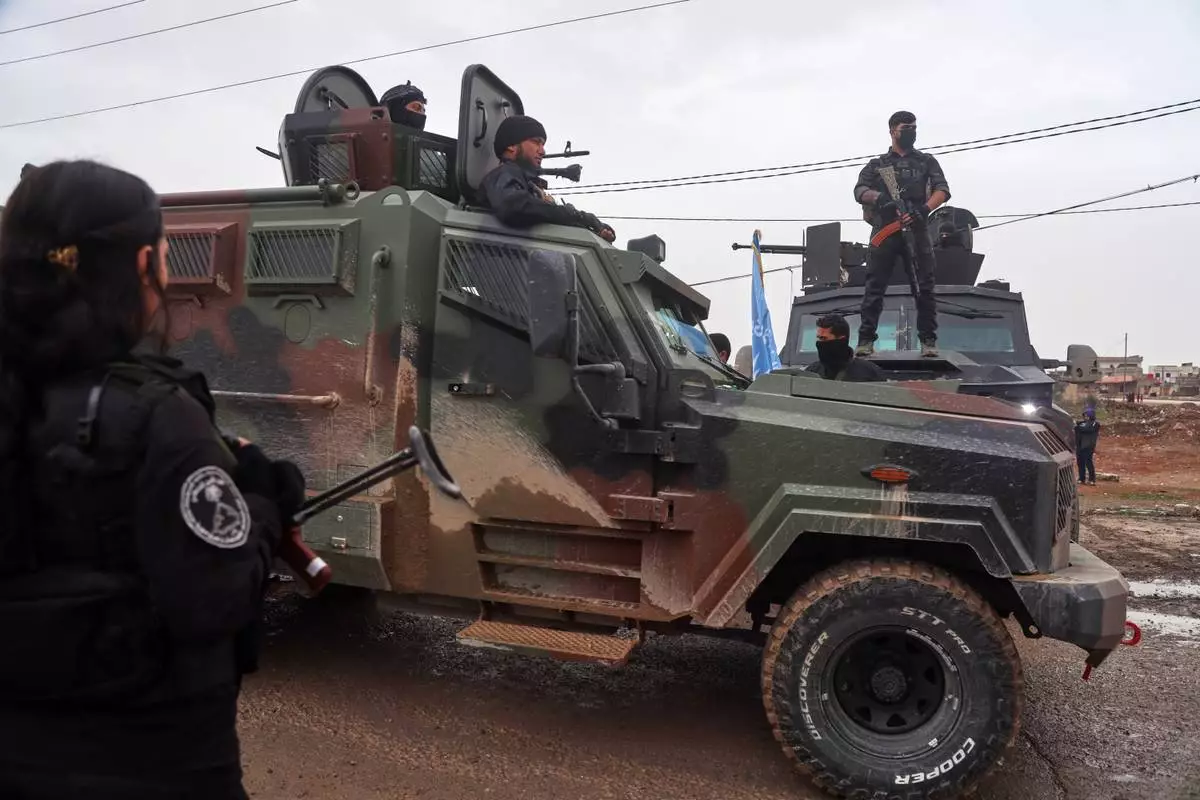
Kurdish-led Syrian Democratic Forces (SDF) soldiers, left and right, stand along the road as vehicles carrying a contingent of Syria's Interior Ministry security forces arrive to implement an agreement with the SDF aimed at stabilizing a ceasefire in al-Hassakeh, eastern Syria, Monday, Feb. 2, 2026. (AP Photo/Baderkhan Ahmad)
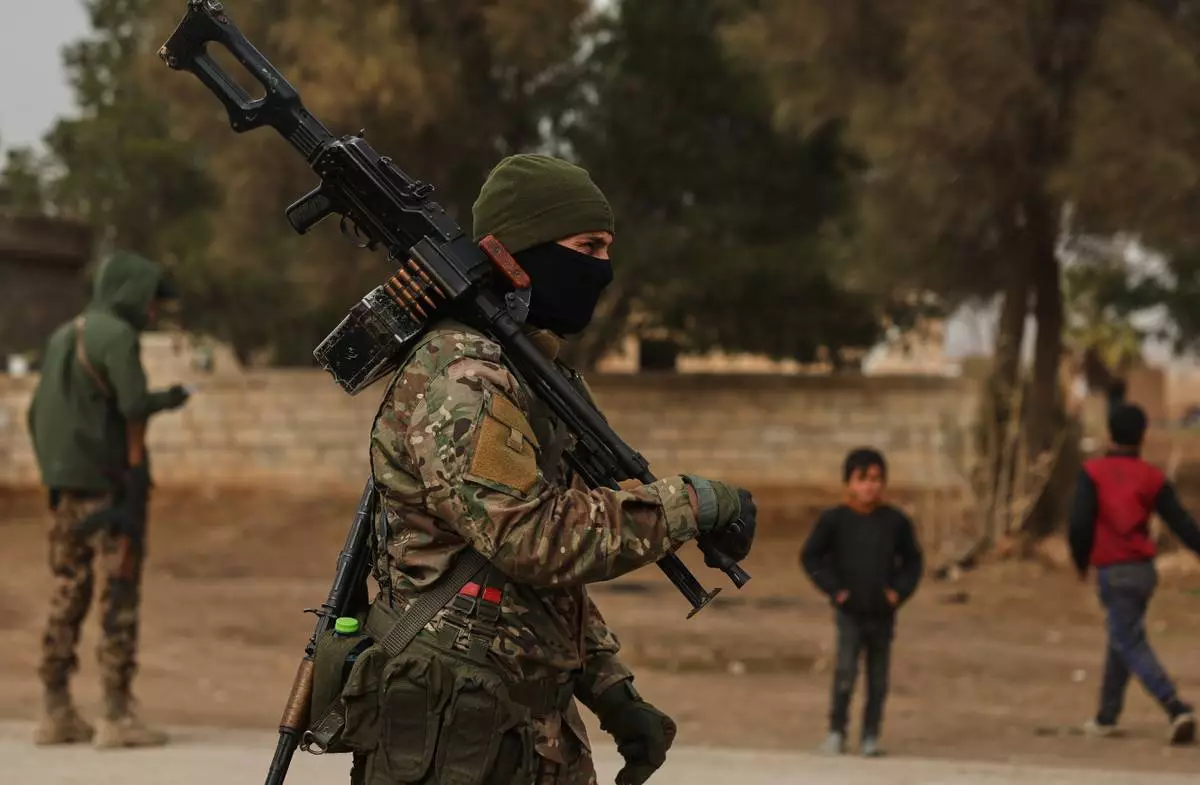
Members of the Syrian army stands at a checkpoint in the town of Sarin, where government forces were already present, as additional units move toward al-Hasakah to implement an agreement with the Kurdish-led Syrian Democratic Forces (SDF) aimed at stabilizing a ceasefire, in al-Hasakah province, eastern Syria, Monday, Feb. 2, 2026. (AP Photo/Ghaith Alsayed)
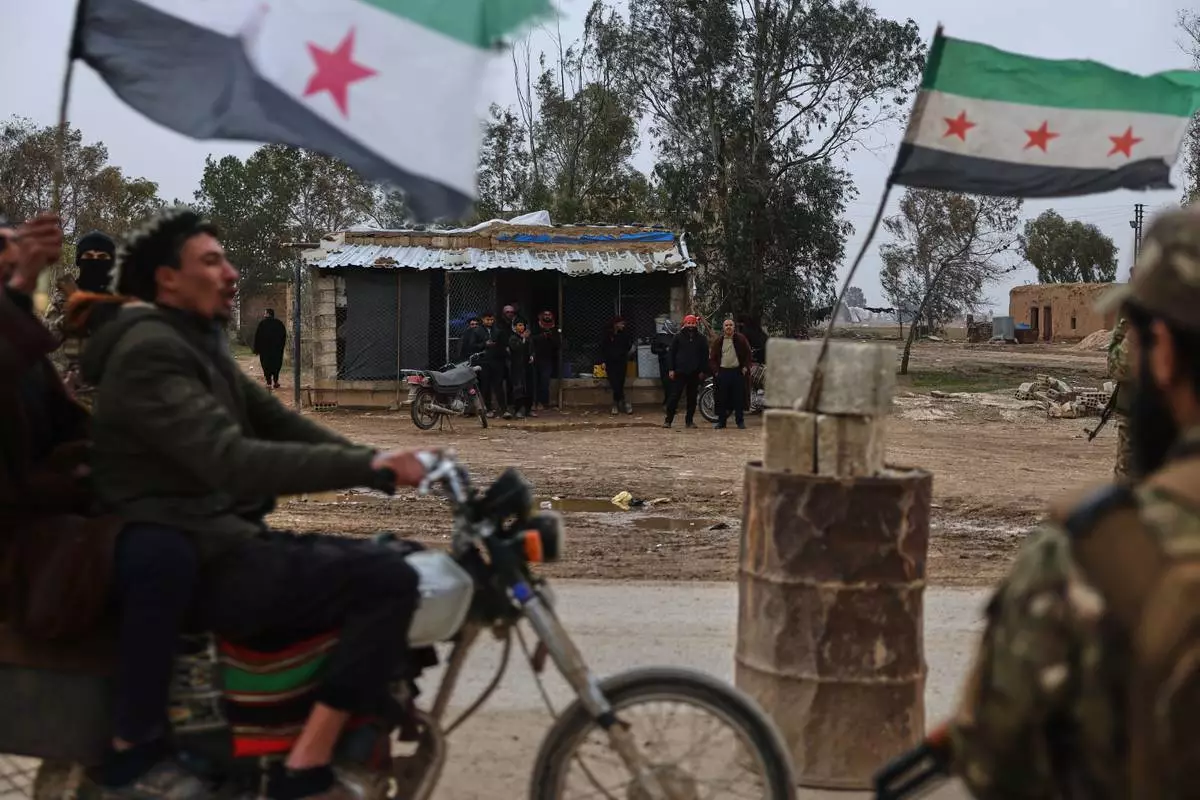
Members of the Syrian army stand at a checkpoint in the town of Sarin, where government forces were already present, as additional units move toward al-Hasakah to implement an agreement with the Kurdish-led Syrian Democratic Forces (SDF) aimed at stabilizing a ceasefire, in al-Hasakah province, eastern Syria, Monday, Feb. 2, 2026. (AP Photo/Ghaith Alsayed)
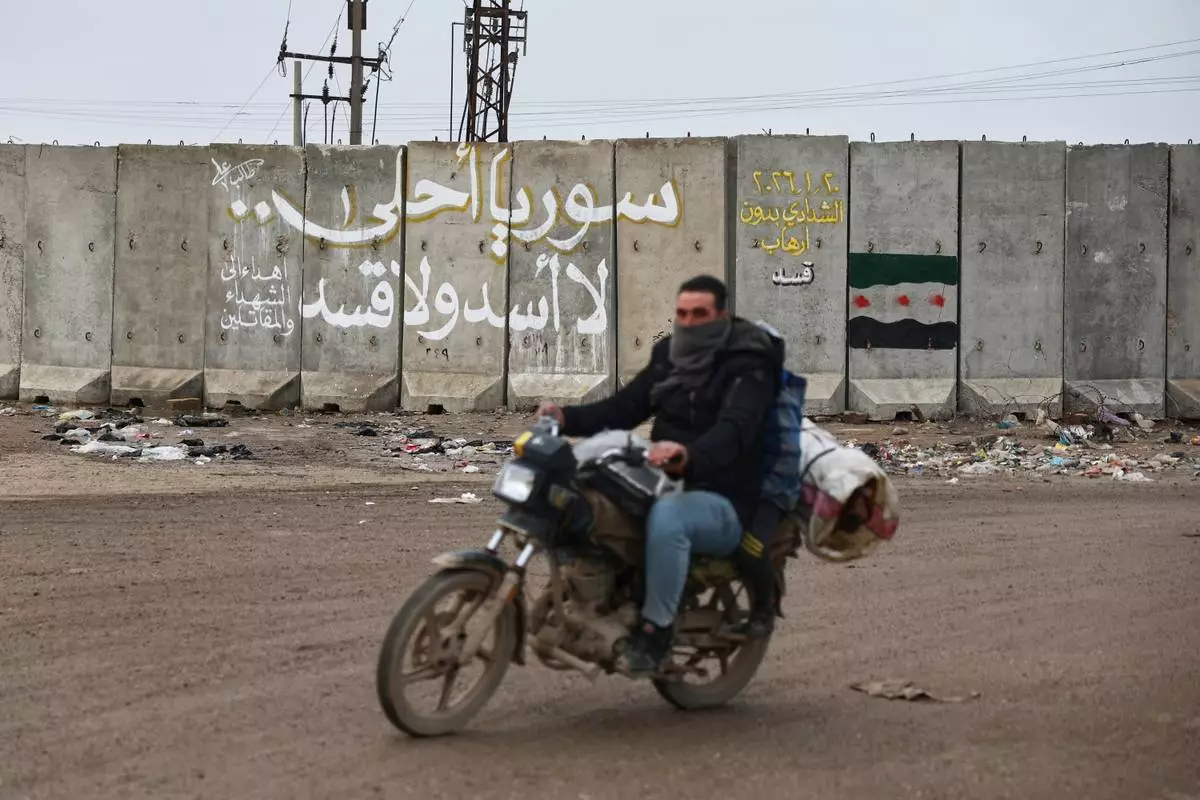
A man rides his motorcycle past the wall of a U.S. military base bearing graffiti in Arabic that reads, "Syria is more beautiful, no Assad, no SDF," and in yellow, "Al-Shaddadi without SDF terrorism," near the village of Al-Shaddadi, al-Hassakeh province, eastern Syria, Monday, Feb. 2, 2026. (AP Photo/Ghaith Alsayed)
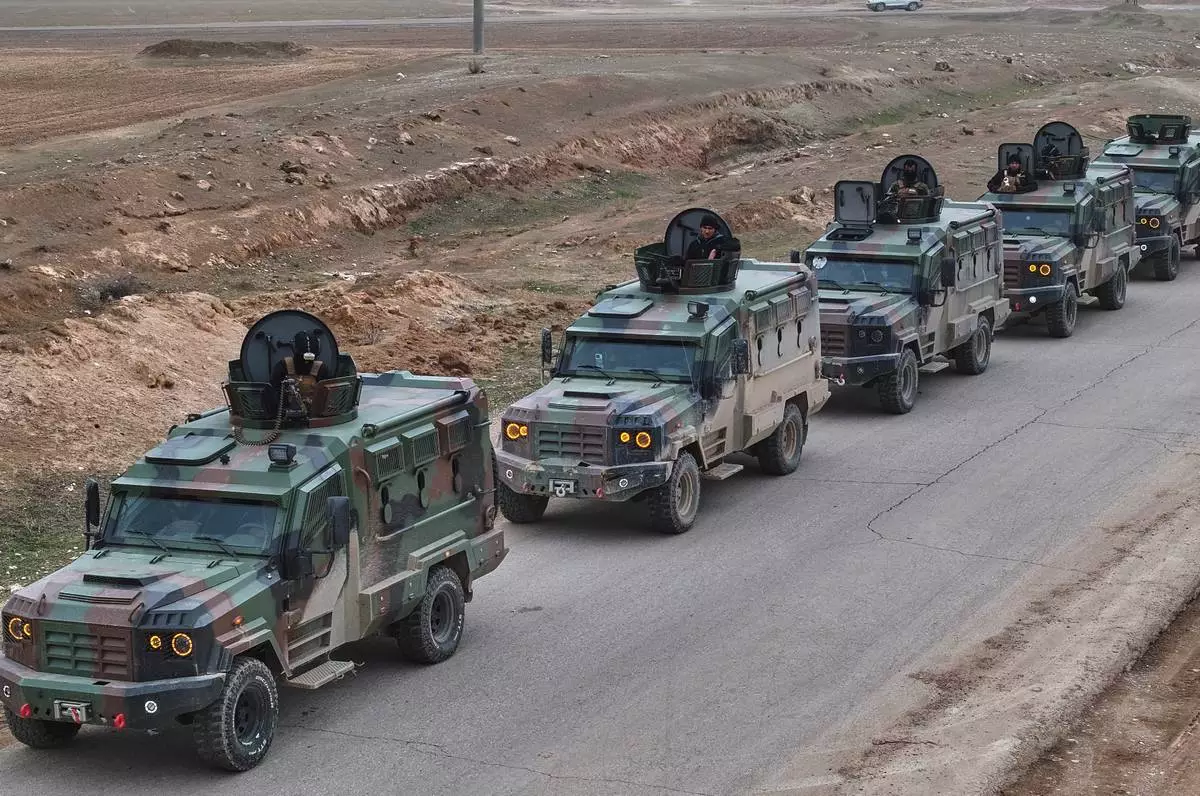
Syrian security forces gather before entering the town of al-Hassakeh to implement an agreement with the Kurdish-led Syrian Democratic Forces (SDF) to stabilize a ceasefire, in Wadi al-Raml, al-Hassakeh province, eastern Syria, Monday, Feb. 2, 2026. (AP Photo/Ghaith Alsayed)
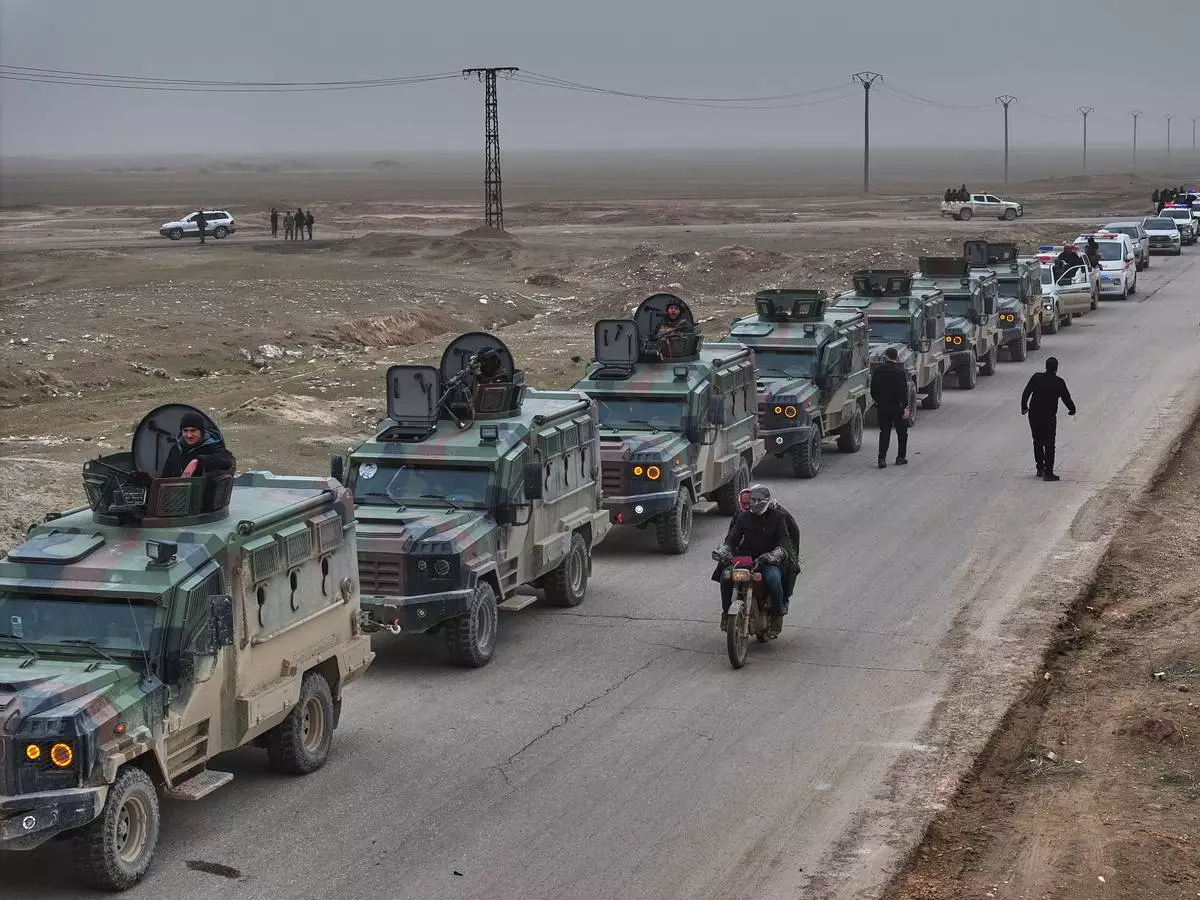
Syrian security forces gather before entering the town of al-Hassakeh to implement an agreement with the Kurdish-led Syrian Democratic Forces (SDF) to stabilize a ceasefire, in Wadi al-Raml, al-Hassakeh province, eastern Syria, Monday, Feb. 2, 2026. (AP Photo/Ghaith Alsayed)