Skip to Content Facebook Feature Image

Argentina fires ravage pristine Patagonia forests, fueling criticism of Milei's austerity

News

Argentina fires ravage pristine Patagonia forests, fueling criticism of Milei's austerity
News

News

Argentina fires ravage pristine Patagonia forests, fueling criticism of Milei's austerity

2026-02-03 22:12 Last Updated At:22:20

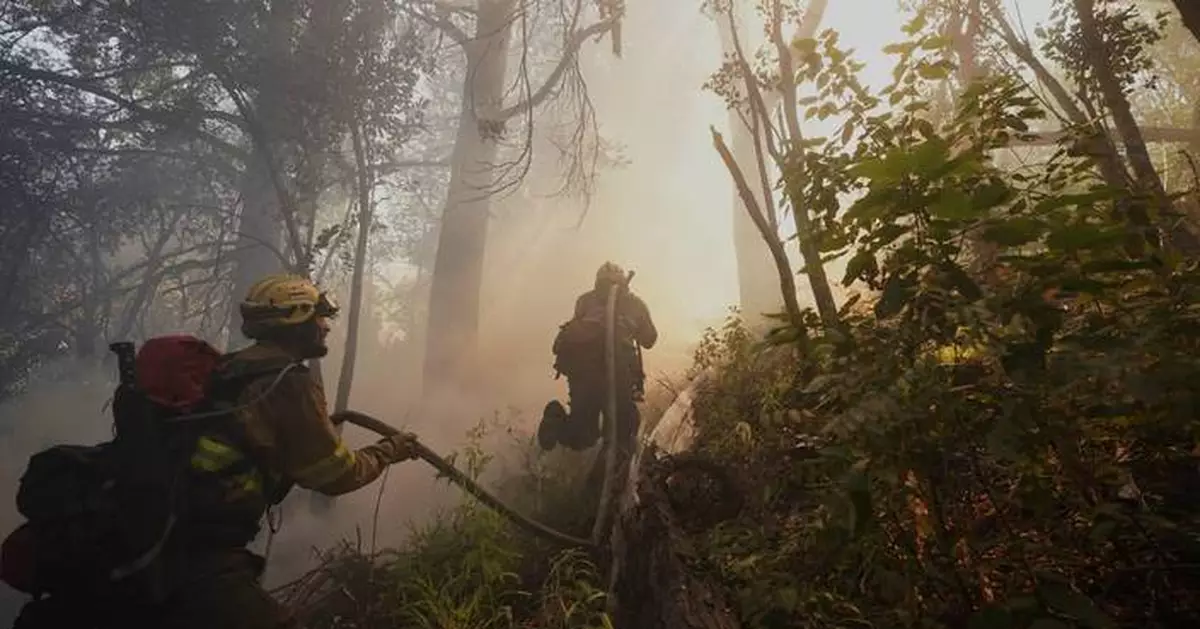
LOS ALERCES NATIONAL PARK, Argentina (AP) — These days, the majestic, forested slopes of Argentina’s Patagonia look like a war zone.

Mushroom clouds of smoke rise as if from missile strikes. Large flames illuminate the night sky, tainting the moon mango-orange and turning the glorious views that generations of writers and adventurers imprinted on the global psyche into something haunted.

More Images
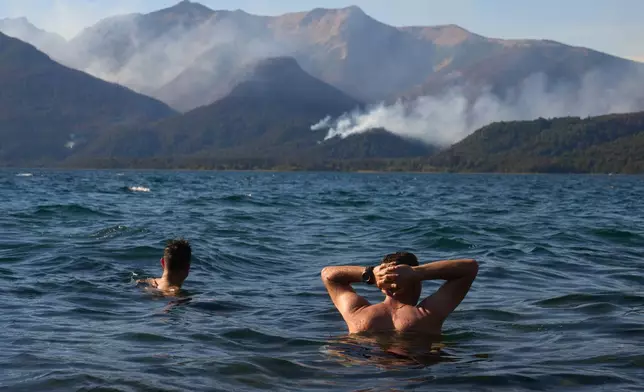
Firefighters relax by Futalaufquen Lake after battling wildfires in Los Alerces National Park, Argentina, Saturday, Jan. 31, 2026. (AP Photo/Victor R. Caivano)
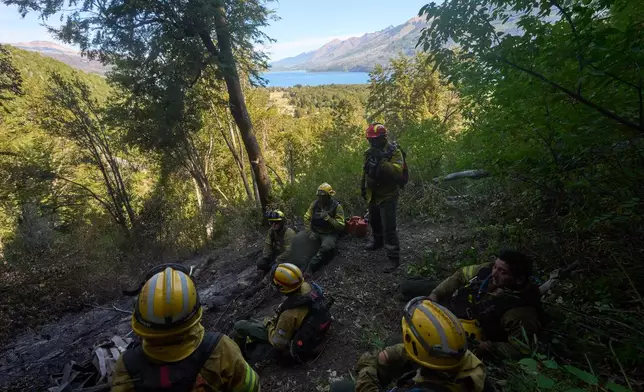
Firefighters relax by Futalaufquen Lake after battling wildfires in Los Alerces National Park, Argentina, Saturday, Jan. 31, 2026. (AP Photo/Victor R. Caivano)
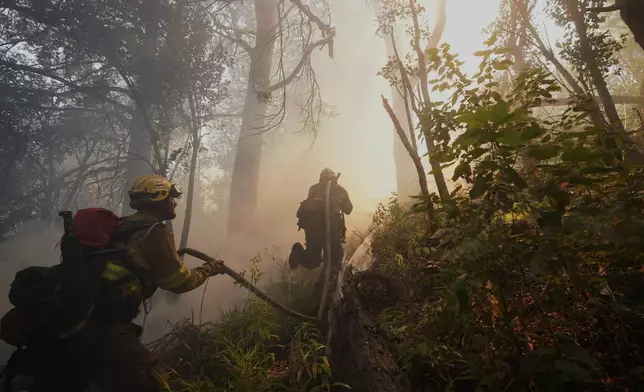
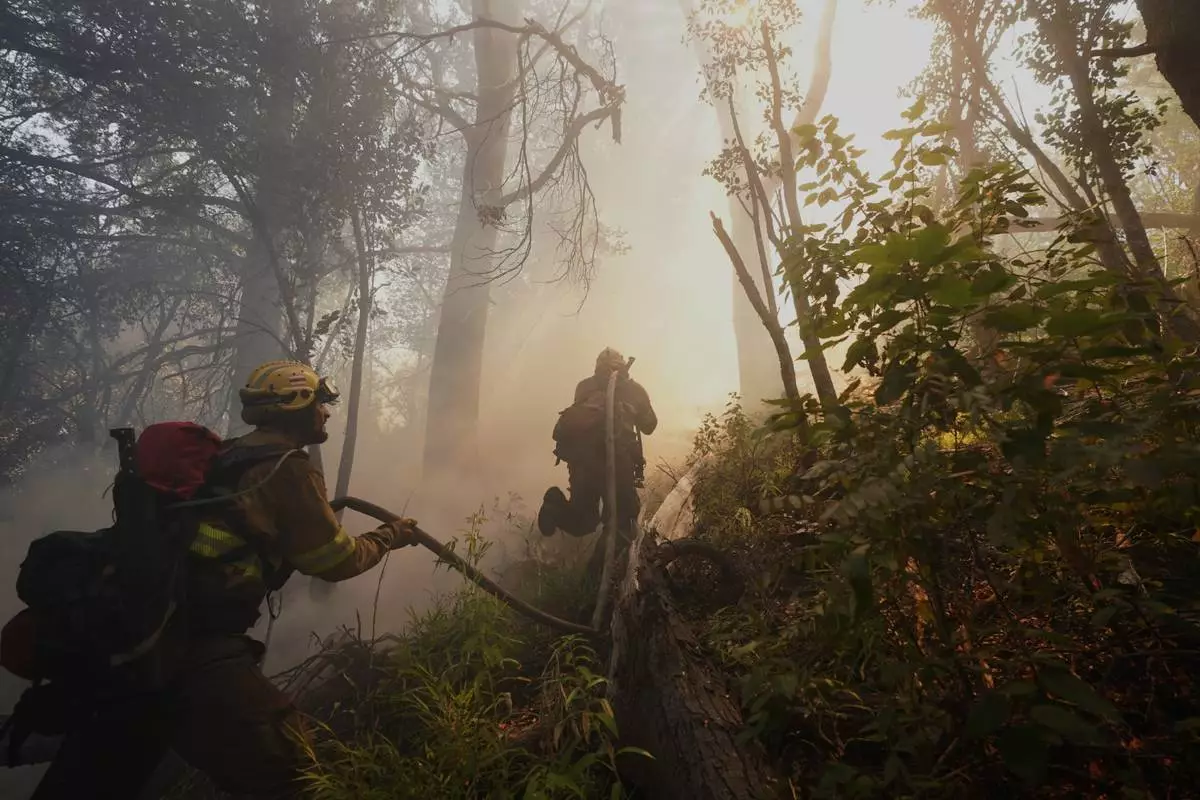
Firefighters battle wildfires in Los Alerces National Park, Argentina, Saturday, Jan. 31, 2026. (AP Photo/Victor R. Caivano)

Firefighters battle wildfires in Los Alerces National Park, Argentina, Saturday, Jan. 31, 2026. (AP Photo/Victor R. Caivano)

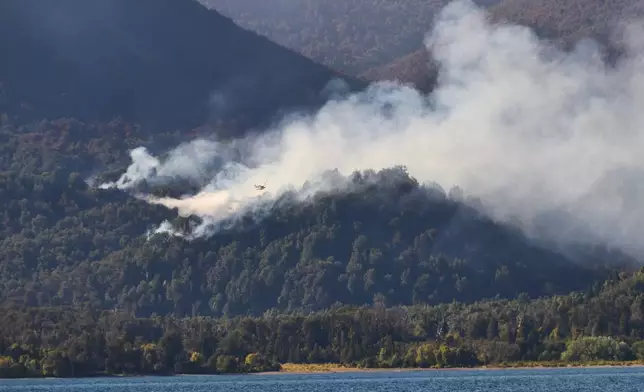
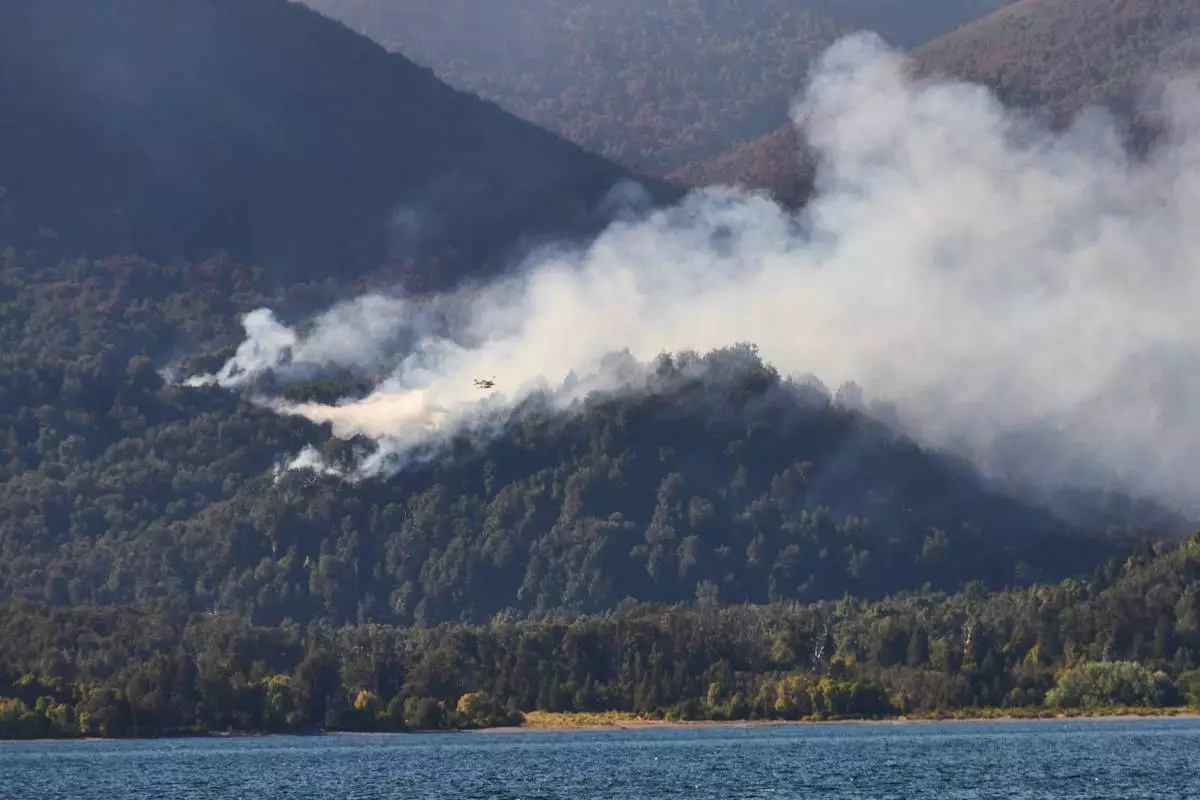
Wildfires burn in Los Alerces National Park in Argentina, Saturday, Jan. 31, 2026. (AP Photo/Victor R. Caivano)
Wildfires burn in Los Alerces National Park in Argentina, Saturday, Jan. 31, 2026. (AP Photo/Victor R. Caivano)

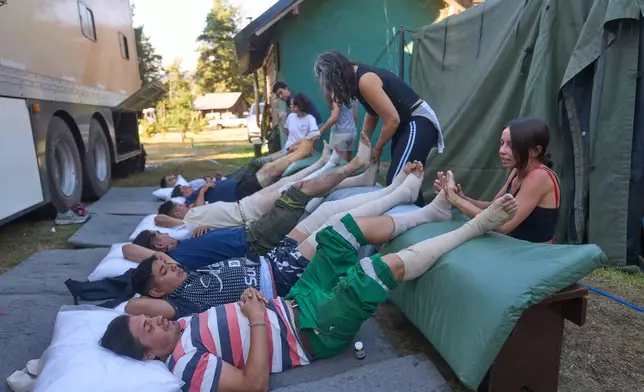
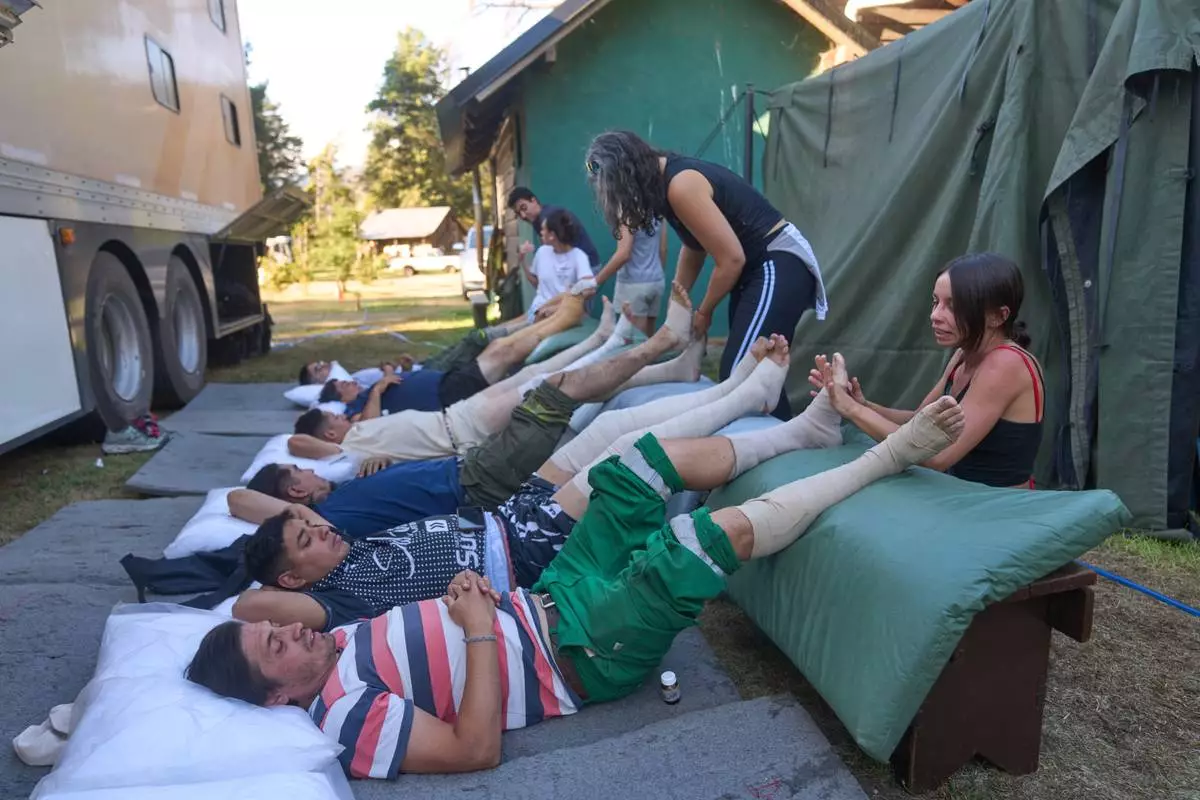
Volunteers massage firefighters resting after battling wildfires in Los Alerces National Park, Argentina, Saturday, Jan. 31, 2026. (AP Photo/Victor R. Caivano)
Volunteers massage firefighters resting after battling wildfires in Los Alerces National Park, Argentina, Saturday, Jan. 31, 2026. (AP Photo/Victor R. Caivano)

Firefighters battle wildfires in Los Alerces National Park, Argentina, Saturday, Jan. 31, 2026. (AP Photo/Victor R. Caivano)

Firefighters battle wildfires in Los Alerces National Park, Argentina, Saturday, Jan. 31, 2026. (AP Photo/Victor R. Caivano)

Vast swaths of the Los Alerces National Park, a UNESCO World Heritage site home to 2,600-year-old trees, are now ablaze.

The wildfires, among the worst to hit the drought-stricken Patagonia region in decades, have devastated more than 45,000 hectares (174 square miles) of Argentina’s forests in the last month and a half, forcing the evacuation of thousands of residents and tourists. As of Monday, the inferno was still spreading.

The crisis, with most of Argentina's fire season still ahead, has reignited anger toward the country’s radical libertarian president, Javier Milei, whose harsh austerity drive in the last two years has slashed spending on programs and agencies that not only work to combat fires but also protect parks and prevent blazes from igniting and spreading in the first place.

“There has been a political decision to dismantle firefighting institutions,” said Luis Schinelli, one of 16 park rangers covering the 259,000 hectares (1,000 square miles) of Los Alerces National Park. “Teams are stretched beyond their limits.”

After coming to office on a campaign to rescue Argentina’s economy from decades of staggering debt, Milei slashed spending on the National Fire Management Service by 80% in 2024 compared to the previous year, gutting the agency responsible for deploying brigades, maintaining air tankers, purchasing extra gear and tracking hazards.

The service faces another 71% reduction in funds this year, according to an analysis of the 2026 budget by the Environment and Natural Resources Foundation, or FARN, an Argentine environmental research and advocacy group.

The retrenchment arrives at a time when climate change is making extreme weather more frequent and severe, increasing the risk of wildfires.

“Climate change is something that's undeniable. This is us living it,” said firefighter Hernán Mondino, his face smeared with sweat and soot after a backbreaking day battling blazes in Los Alerces National Park. “But we see no sign that the government is concerned about our situation.”

The Ministry of Security, which assumed oversight of firefighting efforts after Milei downgraded the Ministry of Environment, did not respond to requests for comment.

Milei’s deep spending cuts have stabilized Argentina's crisis-stricken economy and driven annual inflation down from 117% in 2024 to 31% last year — the lowest rate in eight years.

His battles against government bloat and “woke” culture have helped him cozy up to U.S. President Donald Trump, whose own war on federal bureaucracy has similarly rippled through scientific research and disaster response programs.

After Trump announced last year that the U.S. would leave the Paris climate agreement, Milei threatened to do the same. He boycotted U.N. climate summits and referred to human-caused climate change as a “socialist lie,” infuriating Argentines who understand that record-breaking heat and dryness, symptomatic of a warming planet, are fueling the fires in Patagonia.

“There's a lot of anger building up. People here are very uncomfortable with our country's politics,” said Lucas Panak, 41, who piled into a pickup truck with his friends last Thursday to fight the blazes enveloping the small town of Cholila after municipal firefighters were sent elsewhere.

When lightning started a small fire along a lake in the northern fringes of Los Alerces in early December, firefighters struggled to respond, limited by the remote location and a lack of available aircraft to transport crews and douse the hills.

The initial delay forced the resignation of the park's management and led residents to accuse them of negligence in a criminal complaint when the winds picked up and blasted the blaze through the native forest.

But some experts argue the problem wasn't inaction after the fire erupted, but long before.

“Fires are not something you only fight once they exist. They must be addressed beforehand through planning, infrastructure and forecasting,” said Andrés Nápoli, director of FARN. “All the prevention work that's so important to do year-round has essentially been abandoned.”

On top of cutting the National Fire Management Service budget, Milei's government ripped tens of millions of dollars from the National Park Administration last year, leading to the dismissal or resignation of hundreds of rangers, firefighters and administrative workers.

As more tourists descend each year on Argentina's parks, forest rangers say that cutbacks and deregulation measures make it harder to monitor fire dangers, clear trails and educate visitors on caring for the park. Last March the government scrapped a requirement for tourist activities such as glacier treks and rock climbs to be overseen by licensed guides.

“If you increase the number of visitors while cutting staff, you risk losing control,” said Alejo Fardjoume, a union representative for national park workers. “The consequences of these decisions is not always immediate, they will be noticed cumulatively, progressively.”

A 2023 National Park Administration report recommends a minimum deployment of 700 firefighters to cover the land under its purview. The agency employs 391 now, having lost 10% of staff as a result of layoffs and resignations in the last two years under Milei.

Budget cuts to the National Fire Management Service have scaled back training capacity and reduced available equipment, firefighters say, leaving many to rely on secondhand protective suits and donated gear.

Authorities at Los Alerces said that they’ve always been strapped for funds no matter the government and insisted that there were no shortages of resources to battle the blaze.

“Criticizing is always easy,” said Luciano Machado, head of the fire, communications and emergency division at the National Park Administration. “Sometimes adding aircraft doesn't make things better. And in order to add firefighters, you need more food, shelter and rotation.”

But national park firefighters pushed beyond the brink of exhaustion said their ranks are constantly thinning, if not due to layoffs then to resignations over poverty-level wages that have failed to keep pace with inflation.

The average firefighter in Patagonia's parks earns less than $600 a month. In provinces with cheaper living costs, the monthly wage drops below $450. A growing number of firefighters say they've had to pick up extra work as gardeners and farmhands.

“From the outside it looks like everything still functions, but our bodies bear the cost,” said Mondino. “When someone leaves, the rest of us carry more weight, sleep less and work longer hours.”

For a month as the forests burned, Milei said almost nothing about the fires and carried on as usual. Last week, as provincial governors pleaded with him to declare a state of emergency in order to release federal funds, he danced onstage with his ex-girlfriend to Argentine rock ballads.

The split-screen image supplied his critics with powerful political ammunition. “While Patagonia burns, the president is having fun singing,” said centrist lawmaker Maximiliano Ferraro. Left-leaning opposition parties staged protests across provinces.

On Thursday Milei relented, decreeing a state of emergency that unlocked $70,000 for volunteer firefighters and announcing “a historic fight against fire” on social media.

At a base camp this weekend, volunteer medics scurried around bleary-eyed firefighters, tending to scratchy throats, sore legs and irritated sinuses. Some expressed hope that more relief was on the way. Others dismissed the decree as symbolic. All, looking over the smoldering trees that take human generations to regenerate, couldn’t help but dwell on what had already been lost.

“It hurts because it's not just a beautiful landscape, it's where we live,” said Mariana Rivas, one of the volunteers. “There's anger about what could have been avoided, and anger because every year it gets worse.”

Follow AP’s coverage of Latin America and the Caribbean at https://apnews.com/hub/latin-america
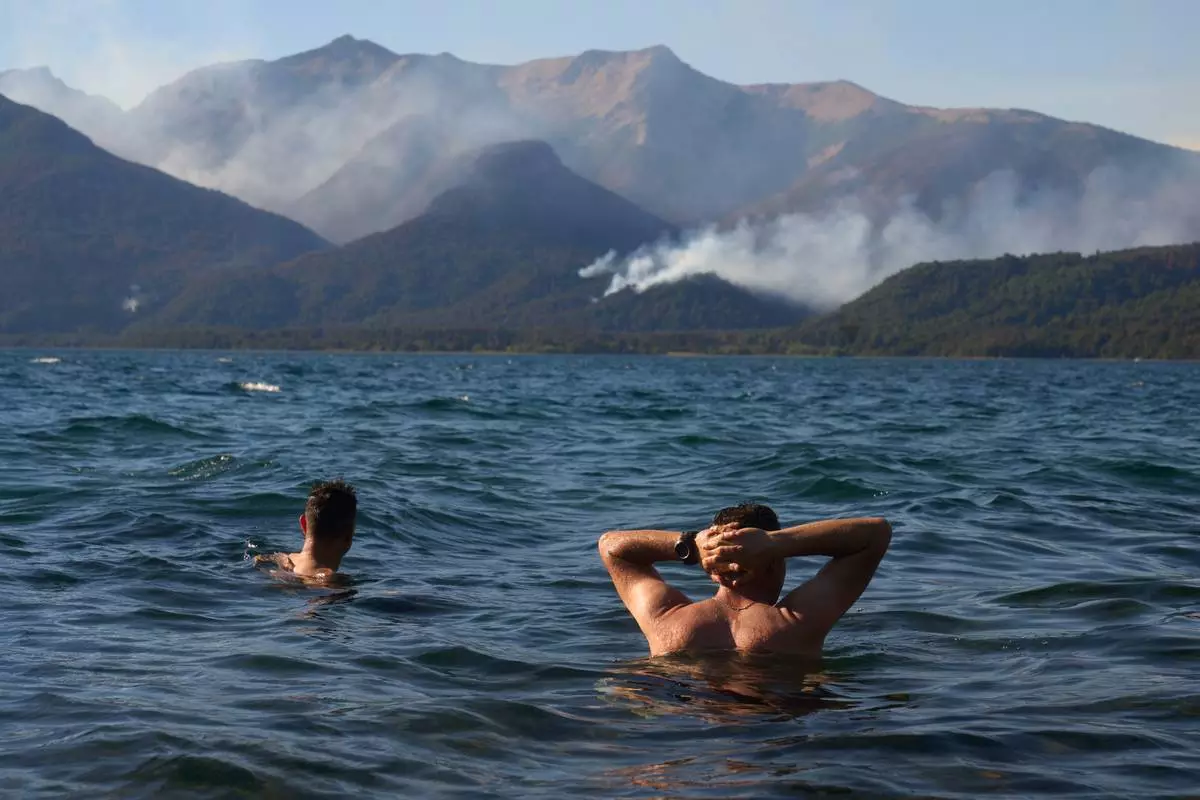
Firefighters relax by Futalaufquen Lake after battling wildfires in Los Alerces National Park, Argentina, Saturday, Jan. 31, 2026. (AP Photo/Victor R. Caivano)
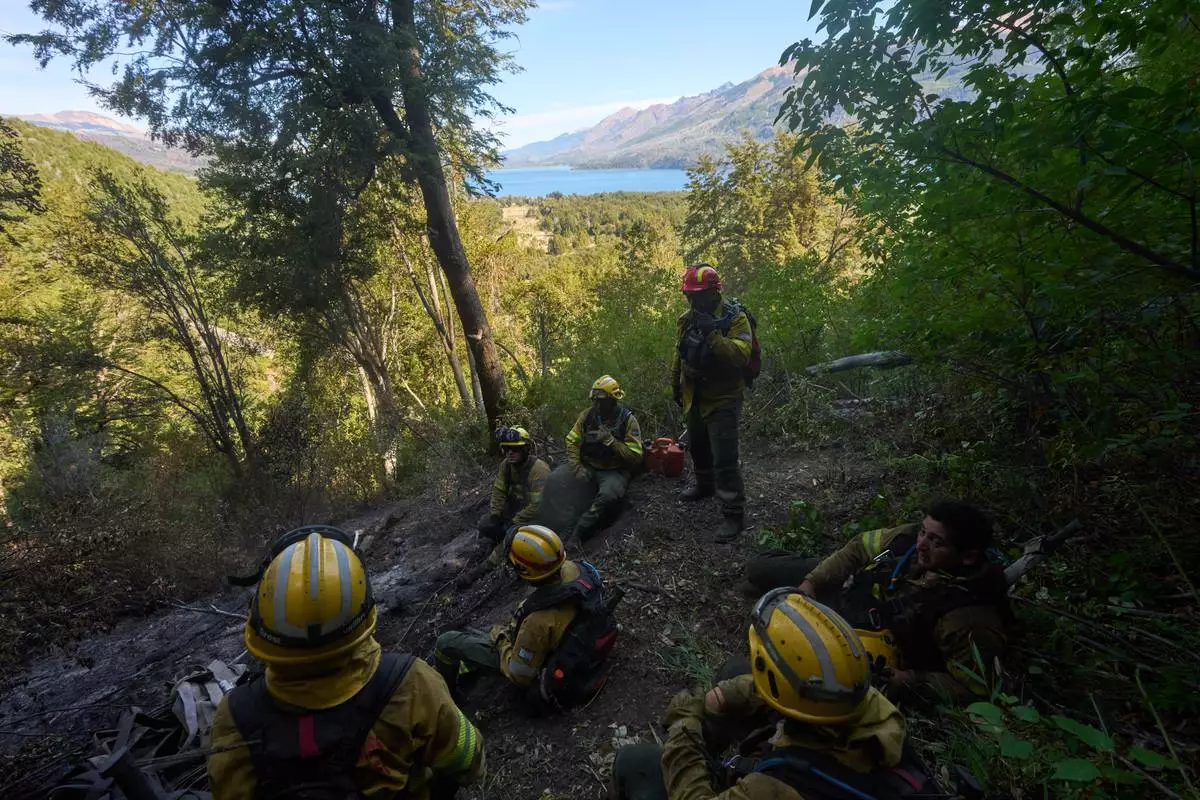
Firefighters relax by Futalaufquen Lake after battling wildfires in Los Alerces National Park, Argentina, Saturday, Jan. 31, 2026. (AP Photo/Victor R. Caivano)
Firefighters battle wildfires in Los Alerces National Park, Argentina, Saturday, Jan. 31, 2026. (AP Photo/Victor R. Caivano)

Firefighters battle wildfires in Los Alerces National Park, Argentina, Saturday, Jan. 31, 2026. (AP Photo/Victor R. Caivano)

Wildfires burn in Los Alerces National Park in Argentina, Saturday, Jan. 31, 2026. (AP Photo/Victor R. Caivano)
Wildfires burn in Los Alerces National Park in Argentina, Saturday, Jan. 31, 2026. (AP Photo/Victor R. Caivano)

Volunteers massage firefighters resting after battling wildfires in Los Alerces National Park, Argentina, Saturday, Jan. 31, 2026. (AP Photo/Victor R. Caivano)
Volunteers massage firefighters resting after battling wildfires in Los Alerces National Park, Argentina, Saturday, Jan. 31, 2026. (AP Photo/Victor R. Caivano)
Firefighters battle wildfires in Los Alerces National Park, Argentina, Saturday, Jan. 31, 2026. (AP Photo/Victor R. Caivano)
Firefighters battle wildfires in Los Alerces National Park, Argentina, Saturday, Jan. 31, 2026. (AP Photo/Victor R. Caivano)
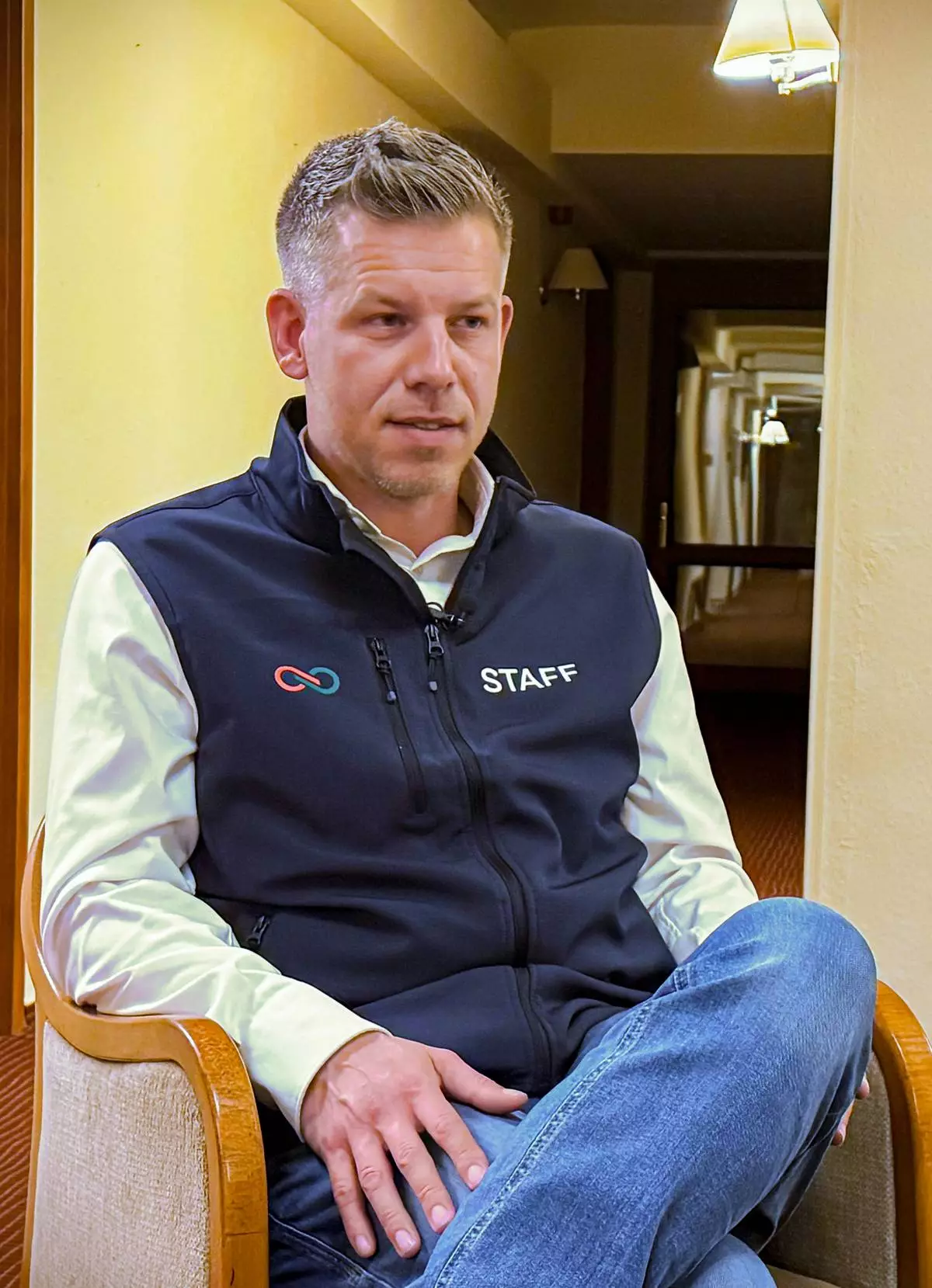
KISKUNHALAS, Hungary (AP) — Hungarian opposition leader Péter Magyar says a crucial election next week where he's facing pro-Russian Prime Minister Viktor Orbán will be a “referendum” on whether Hungary continues on its drift toward Eastern autocracies, or can retake its place among the democratic societies of Europe.

Magyar, once an Orbán ally, poses the most serious threat to the nationalist prime minister's hold on power since he took office in 2010.

In an exclusive interview with The Associated Press, Magyar said the European Union's longest-serving leader has led the country on a “180-degree turn” in recent years, endangering its Western orientation while cozying up to Moscow.

Yet despite that drift, “Hungarians still see that Hungary’s peace and development are guaranteed by membership of the European Union and NATO,” Magyar said. “I think this really will be a referendum on our country's place in the world.”

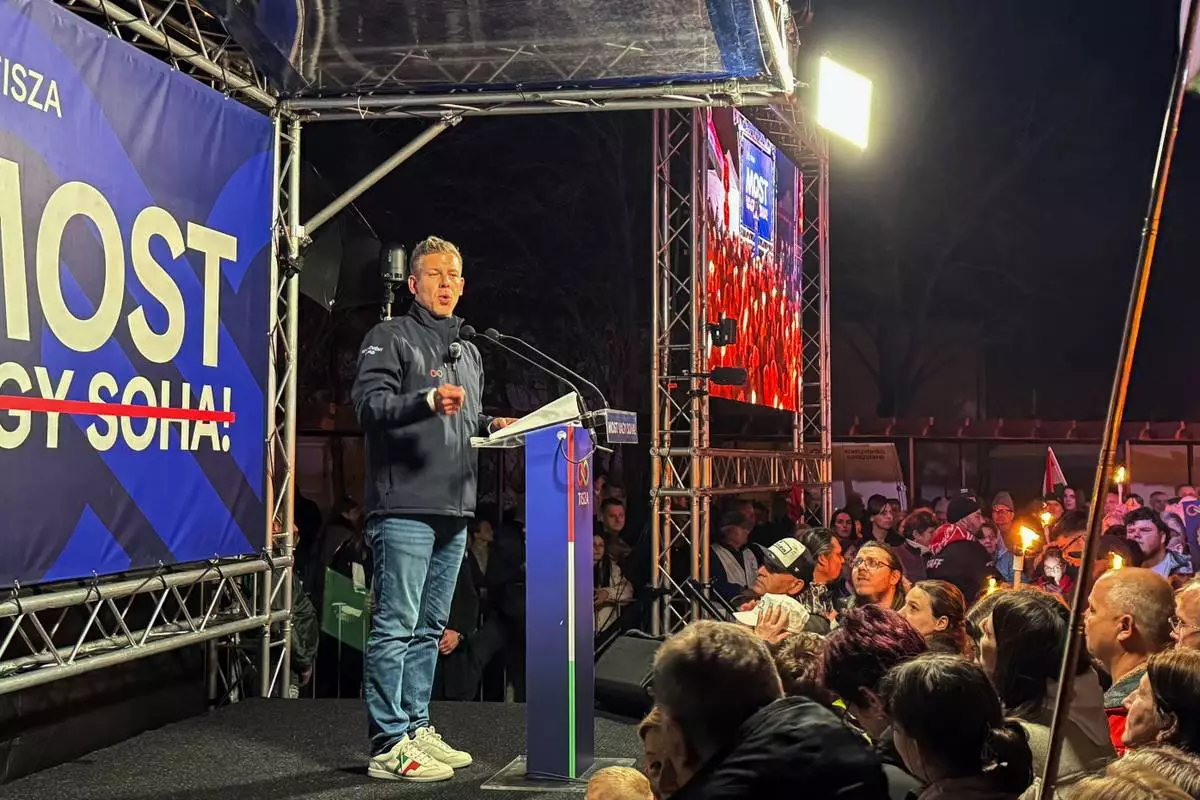
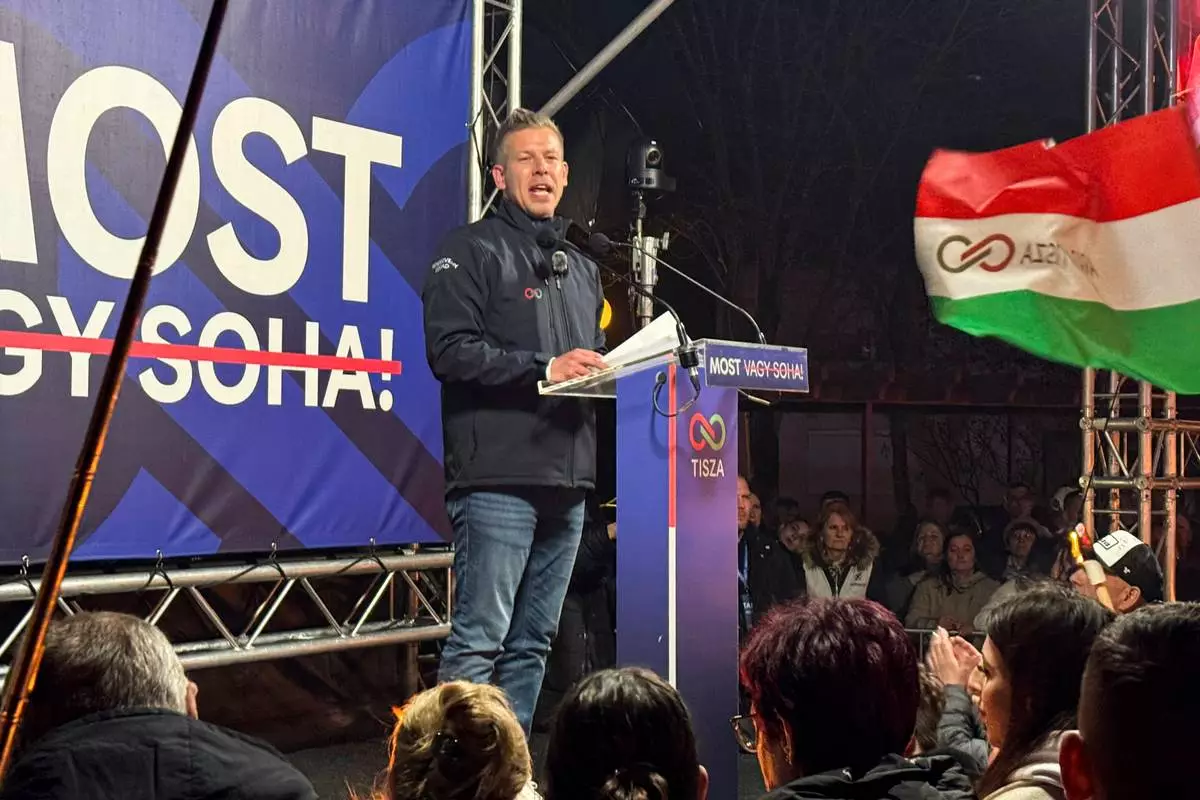
Magyar spoke to the AP on Thursday following an election rally by his center-right Tisza party in Kiskunhalas, a small city of around 25,000 on Hungary's southern great plain. It was one of hundreds of rallies he's held in settlements big and small across the country, a campaign blitz that has him visiting up to six towns a day ahead of the April 12 election.

Orbán has gained a reputation as an inveterate disruptor within the EU for his frequent vetoes of important decisions. He has campaigned by sounding the alarm on a myriad of external dangers he says are threatening Hungarians — the war in Ukraine, a cabal of EU bureaucrats and financial elites aligned against Hungary, and an immigration crisis ever on the horizon.

Magyar, who is leading in most polls, has focused on issues that affect voters' everyday lives, like Hungary’s faltering state health care and public transportation sectors and what he describes as rampant government corruption.

At each of his rallies, he charges Orbán and his nationalist-populist Fidesz party with making Hungary the “poorest and most corrupt” country in the EU — and depicts a “peaceful, humane and functioning” country that is within reach.

Yet alongside that domestic message, Magyar has increasingly portrayed Orbán’s brinksmanship with the EU, and his drift toward Russia, as matters of critical importance for the country’s future.

“I think that Tisza will have an overwhelming electoral victory, because even Fidesz voters do not want our country to be a Russian puppet state, a colony, an assembly plant, instead of belonging to Europe,” he said.

Magyar and his party's meteoric rise caught many Hungarians by surprise. For nearly a decade and a half, a broad slate of fractured opposition parties had tried and failed to mount a serious threat to Orbán's hold on power.

While opposition politicians often slammed Orbán during debates in parliament, they rarely made efforts to win over his base of support in the rural countryside. Frustrated after a string of bitter losses, many opposition voters descended into political apathy.

Magyar, a 45-year-old lawyer and former Fidesz insider, was previously married to an Orbán ally who served as Hungary’s justice minister. After working for several years as a diplomat in Brussels, he returned to Hungary and took positions in state institutions, gaining familiarity with the workings of Orbán's system.

But then, in the wake of a political scandal in 2024 involving a presidential pardon to an accomplice in a child sexual abuse case, Magyar publicly broke with Orbán's party, accusing it of overseeing entrenched corruption and capturing Hungary's institutions.

He quickly founded the center-right Tisza party — named for Hungary's second-largest river — which, only four months after Magyar's break into electoral politics, won 30% of the vote in European Parliament elections.

As Tisza's popularity grew, a chant heard at its rallies became a motto for its rise: “The Tisza is flooding.”

While Magyar has cast his task in the election as dismantling Orbán's autocratic system, he has promised to keep some of the prime minister's policies he views as positive, such as a fence along the southern border to keep out migrants, and a popular utility reduction program.

Still, his party — a member of the European Parliament's largest, center-right group — diverges from the constellation of far-right political movements in Europe and beyond that view Orbán as a shining example of nationalist populism in action.

In a sign of U.S. President Donald Trump and his MAGA movement's admiration for Orbán, Vice President JD Vance is set to visit Budapest on Tuesday in support of his reelection.

Many EU leaders are watching Hungary's election in the hopes that Orbán will be defeated.

His frequent vetoes — which most recently included blocking a major, 90-bill euro ($104-billion) EU loan for Ukraine — have often been to please his euroskeptic base, Magyar said, “vetoing just to veto so he can say at home that he is vetoing.”

The prime minister's conduct has led to renewed calls within the EU to reform the bloc’s foundational treaties by reducing the number of decisions that require unanimity — a way to buttress against the paralysis that can be caused by intransigent member states.

Magyar said that under a Tisza government, European leaders can expect a “constructive position,” but one that is “critical and willing to debate. We want to be there at the table.”

Despite Orbán's exploitation of the EU's unanimity rules, the ability to veto important decisions is a “valid option,” he continued, adding: “I think the European leaders have no problem with this, they have a problem with the unnecessary troublemaker role.”

“The task of a Hungarian prime minister at any given time is to represent Hungarian interests, and if necessary, to represent them forcefully,” he said. “Whatever it costs.”

Orbán has confounded, and even angered, nearly every other EU leader with his conciliatory approach to Russia and closeness to President Vladimir Putin. Some EU officials, and many of his opponents at home, have accused him of forsaking his commitments to the bloc on Moscow’s behalf.

As nearly every EU country cut off supplies of Russian fossil fuels following the full-scale invasion of Ukraine in February 2022, Hungary, along with Slovakia, maintained and even increased supplies — drawing ire from many countries who accused them of helping finance the war.

While Magyar has condemned Hungary's drift toward Moscow, as well as reports that Russian secret services are meddling in the election to tip it in Orbán's favor, he said his future government will pursue a “pragmatic” approach toward Russia.

“Pragmatism means that we have no say in Russia’s internal affairs, and they don’t have any say in our affairs,” he said. “We are both sovereign countries, and we respect each other, but we don’t have to like each other.”

Magyar has criticized Orbán's government for failing to diversify its energy mix, and advocated for reaching new agreements and constructing new infrastructure to bring oil and gas from other sources into landlocked Hungary.

Still, he said, “this does not mean that we must stop using Russian oil tomorrow. It means that the European Union’s resources must be used well.”

Hungarian opposition leader Peter Magyar addresses people during an election rally in Kiskunhalas, Hungary, Thursday, April 2, 2026. (AP Photo/Bela Szandelszky)

Hungarian opposition leader Peter Magyar addresses people during an election rally in Kiskunhalas, Hungary, Thursday, April 2, 2026. (AP Photo/Bela Szandelszky)

Hungarian opposition leader Peter Magyar addresses people during an election rally in Kiskunhalas, Hungary, Thursday, April 2, 2026. (AP Photo/Bela Szandelszky)

Hungarian opposition leader Peter Magyar addresses people during an election rally in Kiskunhalas, Hungary, Thursday, April 2, 2026. (AP Photo/Bela Szandelszky)

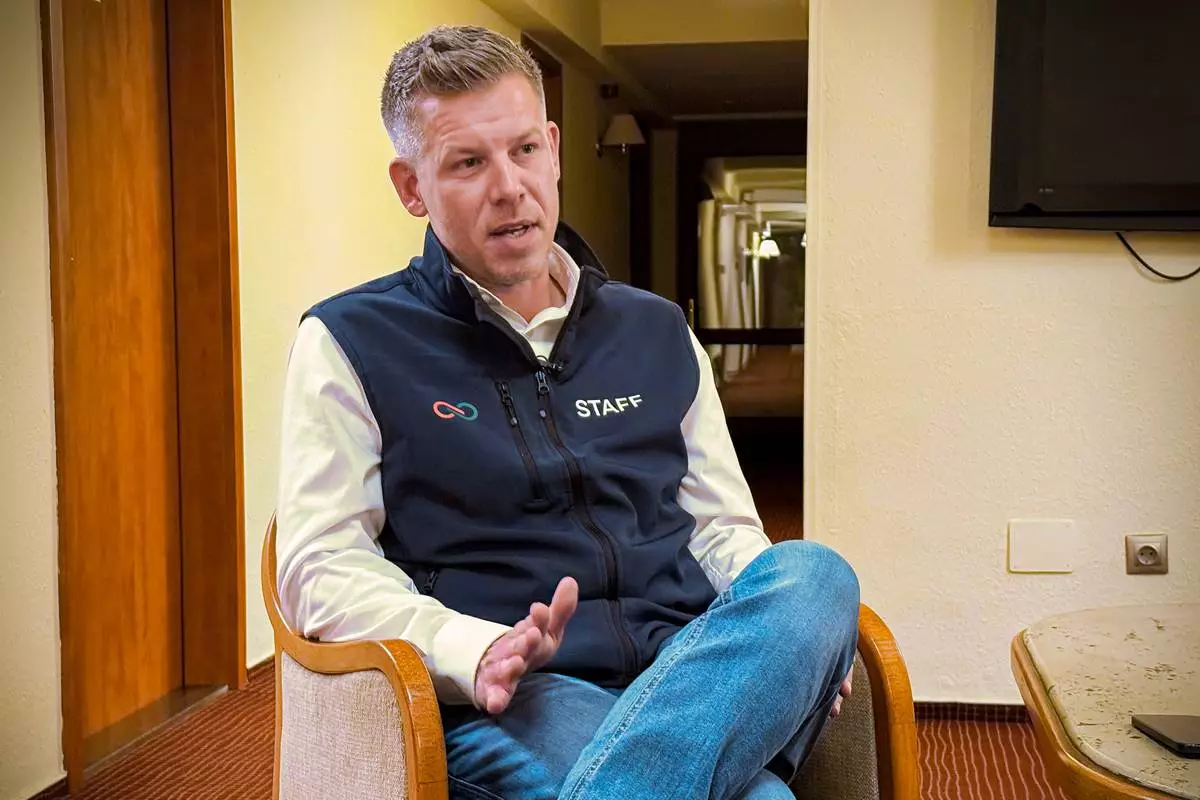
Hungarian opposition leader Peter Magyar speaks during an interview with the Associated Press, Thursday, April 2, 2026, in Kiskunhalas, Hungary. (AP Photo/Bela Szandelszky)

Hungarian opposition leader Peter Magyar speaks during an interview with the Associated Press, Thursday, April 2, 2026, in Kiskunhalas, Hungary. (AP Photo/Bela Szandelszky)

Hungarian opposition leader Peter Magyar speaks during an interview with the Associated Press, Thursday, April 2, 2026, in Kiskunhalas, Hungary. (AP Photo/Bela Szandelszky)

Hungarian opposition leader Peter Magyar speaks during an interview with the Associated Press, Thursday, April 2, 2026, in Kiskunhalas, Hungary. (AP Photo/Bela Szandelszky)

Recommended Articles