WASHINGTON (AP) — President Donald Trump held a nearly two-hour meeting on Tuesday with his Colombian counterpart, Gustavo Petro, that both called friendly — a dramatic about-face from weeks earlier, when Trump accused Petro of pumping cocaine into the U.S. and threatened his country with military action.
Afterward, Trump tried to downplay his past criticisms, saying, “He and I weren’t exactly the best of friends, but I wasn’t insulted because I never met him. I didn’t know him at all.”
“We had a very good meeting,” Trump told reporters in the Oval Office during a subsequent event. “I thought he was terrific.”
Petro held his own post-meeting news conference and said the pair emerged “with a positive and optimistic view.” He said, “What brings us together is freedom. And that’s how the meeting started out.”
Colombia's president said Trump gave him a red “Make America Great Again” cap and Petro said he wanted to put an ‘s’ on it to make it, “Make (the) Americas Great Again,” a reference to North and South America being aligned culturally, economically and historically.
Petro has criticized Trump and the U.S. operation to capture Venezuela’s Nicolás Maduro. But Trump said more recently that Colombia’s leader has become more willing to work with his administration to stem the flow of illegal drugs.
Petro said afterward that he and Trump had “looked at ways in which we can reactivate Venezuela” including through energy projects. Trump said the pair discussed cooperation in counternarcotics operations, which Petro echoed, while also noting that there are parts of his country where drug cultivation can be the only way to make a living.
“If people have no options to eat, and live in the jungle, or places where there is no transportation to produce something legal, what there will be is drug trafficking,” he said.
Petro said he also told Trump, “You need to go after the kingpins,” but that there's a belief in the U.S. and Colombia “that capos are the ones in uniform and (carrying) weapons in Colombia. That's the second line of drug trafficking. The top tier lives in Dubai, Madrid, Miami.” He said he provided the U.S. president with names.
Colombia's president also said he'd invited Trump to visit the Colombian resort city of Cartagena.
“We didn’t talk about personal matters, but I did invite him to Cartagena, which I told him was a cool and beautiful place to live,” Petro said. He also said that he'd sought Trump's help in mediating an escalating trade war between his country and Ecuador.
Trump gave Petro a copy of his book, “The Art of the Deal,” with a signed inscription reading, “You are great.” Petro posed a picture of the book on X and wrote ironically in Spanish, “What did Trump mean to say to me with this dedication? I don't understand English very well.”
Leading up to the meeting, Petro, a leftist politician, had continued to poke at the conservative U.S. president, calling Trump an “accomplice to genocide” in the Gaza Strip while asserting that the capture of Maduro was a kidnapping.
And, ahead of his departure for Washington, Petro called on Colombians to take to the streets of Bogotá during the White House meeting.
Just minutes before his conversation with Trump started, Petro, in a video shared by his office, described himself as a politician who has denounced and prosecuted drug traffickers.
Accompanied by one of his daughters and his granddaughter, he lamented that most of his children live outside Colombia, in exile, due to the fight he's waging against drug trafficking. “We have truly suffered its effects directly,” Petro said.
Historically, Colombia has been a U.S. ally. For the past 30 years, the U.S. has worked closely with Colombia, the world’s largest producer of cocaine, to arrest drug traffickers, fend off rebel groups and boost economic development in rural areas. Colombia is also designated by the U.S. as a major non-NATO ally.
But relations between the leaders have been strained by Trump’s massing of U.S. forces in the region for unprecedented deadly military strikes targeting suspected drug-smuggling boats in the Caribbean Sea and the eastern Pacific. At least 126 people have been killed in 36 known strikes.
In October, Trump's Republican administration announced it was imposing sanctions on Petro, his family and a member of his government over accusations of involvement in the global drug trade.
The Treasury Department leveled the penalties against Petro; his wife, Veronica del Socorro Alcocer Garcia; his son, Nicolas Fernando Petro Burgos; and Colombian Interior Minister Armando Alberto Benedetti.
The sanctions, which had to be waived to allow Petro to travel to Washington this week, came after the U.S. administration in September announced it was adding Colombia to a list of nations failing to cooperate in the drug war for the first time in three decades.
Then came the audacious military operation last month to capture Maduro and his wife to face federal drug conspiracy charges, a move that Petro has forcefully denounced. Following Maduro’s ouster, Trump put Colombia on notice and ominously warned Petro he could be next.
Colombia is “run by a sick man who likes making cocaine and selling it to the United States,” Trump said of Petro last month. “And he’s not gonna be doing it very long, let me tell you.”
But a few days later, tensions eased somewhat after a call between the leaders. Trump said Petro in their hourlong conversation explained “the drug situation and other disagreements.” And Trump extended an invitation to Petro for the White House visit.
In a diplomatic gesture, Colombian officials said Petro came bearing gifts, including a signature Wounaan indigenous basket from Colombia's Chocó region for Trump and a handmade gown crafted by indigenous artisans from Nariño for first lady Melania Trump.
Trump didn't personally greet Petro upon his arrival and pose for a photograph with him in front of the North Portico of the White House before a gathered press — a set piece for most foreign leaders' visits. Instead, Petro arrived at a side entrance of the White House.
Suarez reported from Bogotá, Colombia. Associated Press writers Will Weissert and Moriah Balingit contributed to this report.
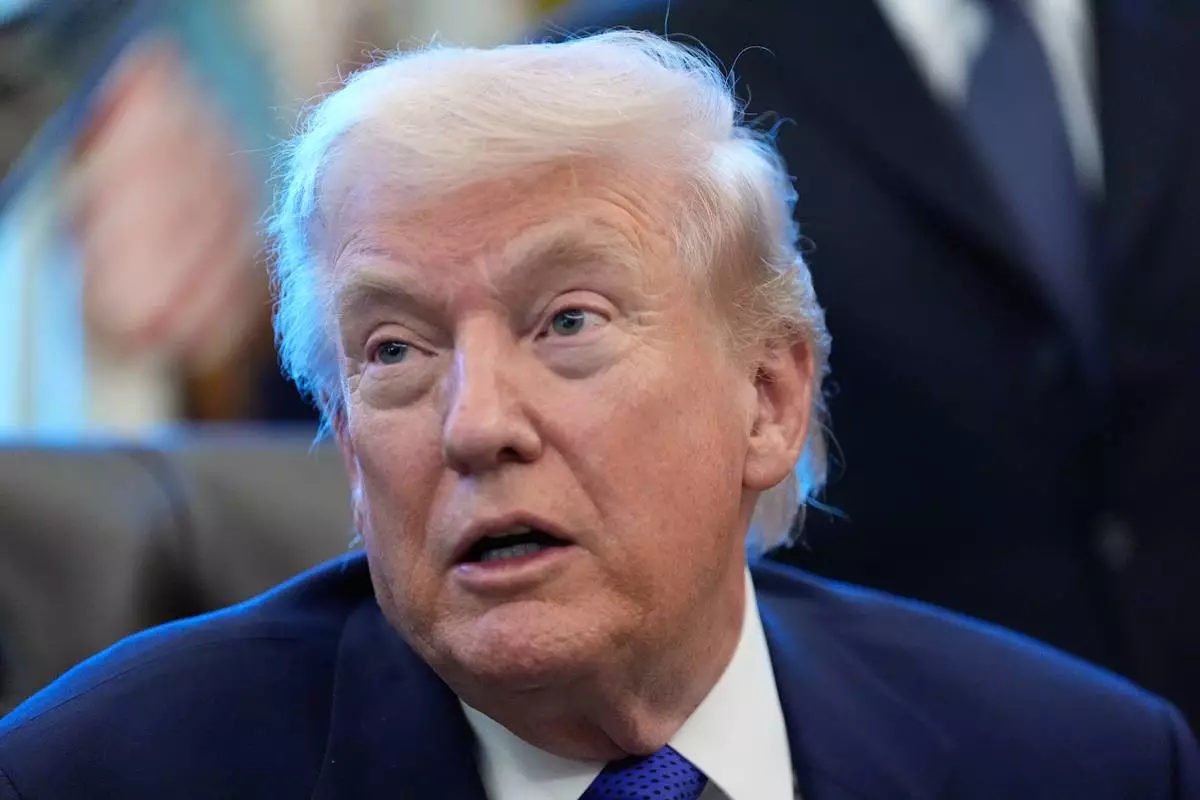
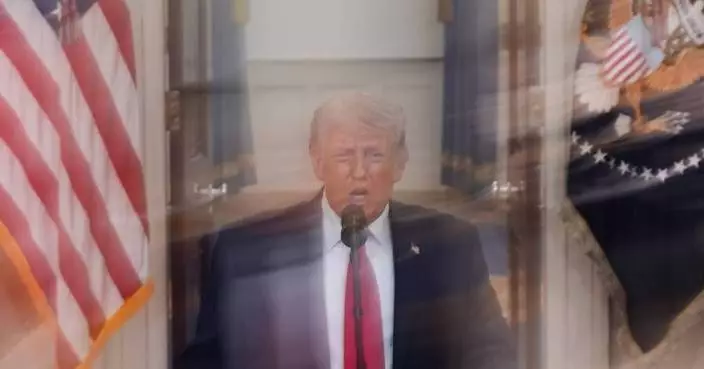
President Donald Trump speaks in the Oval Office of the White House, Monday, Feb. 2, 2026, in Washington. (AP Photo/Alex Brandon)
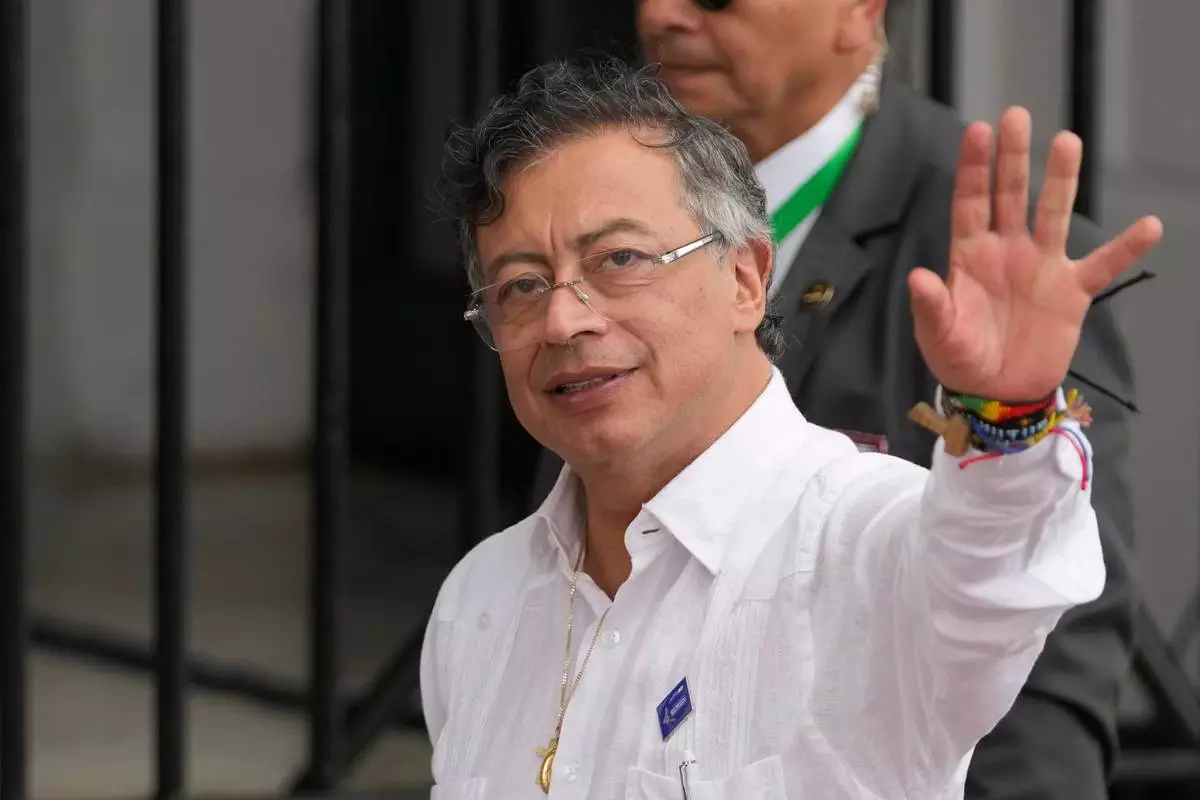
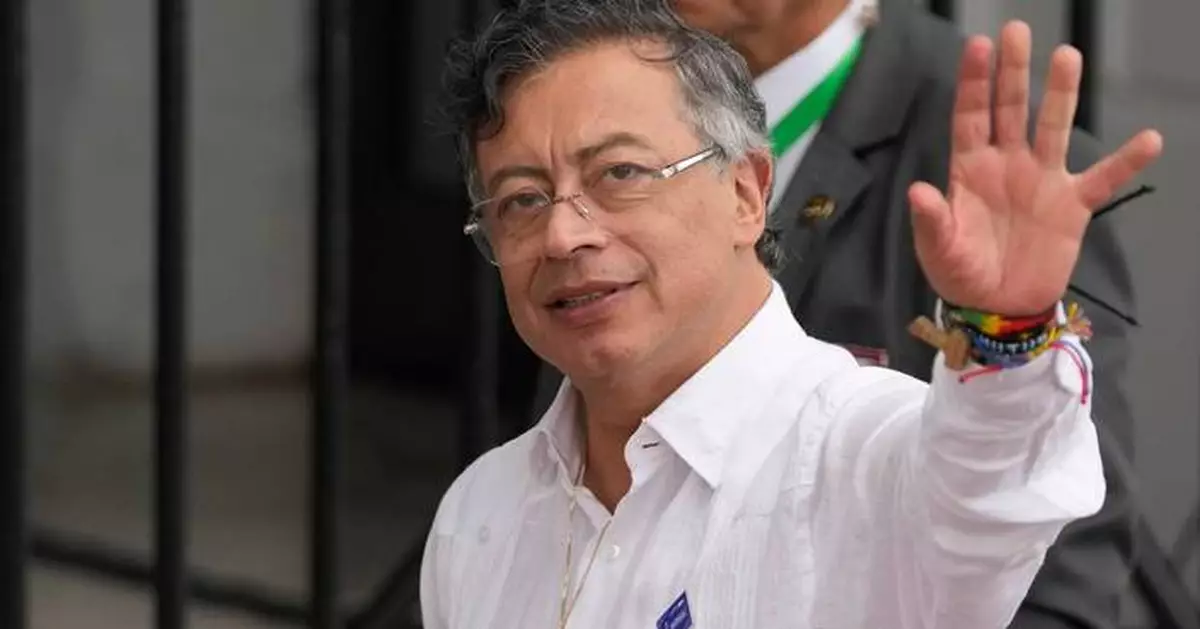
FILE - Colombian President Gustavo Petro arrives at the presidential palace in Panama City, Jan. 28, 2026. (AP Photo/Matias Delacroix, File)
Luka Doncic is almost certainly going to win the NBA scoring title this season. And it's now very possible that he doesn't make the All-NBA team.
That's rare, but it might be this season's reality.
The roster of award-caliber players who won't be winning awards this season continues to grow, with Doncic — the Los Angeles Lakers standout guard and MVP candidate — now out with a left hamstring injury. Minnesota guard Anthony Edwards is certain to miss the league's 65-game award eligibility threshold as well after he was held out Thursday because of illness.
Doncic has played 64 games, so he would fall just short of the mark if his hamstring issue keeps him out for the remainder of the regular season -- which has barely over a week remaining. It's worth noting that BetMGM Sportsbook, among others, took Doncic off the list of MVP betting options following his injury Thursday.
“Health is wealth. ... We'll see what happens,” Lakers star LeBron James said.
Edwards can now only reach a maximum of 64 games as well, so he won’t be on the ballot for most major NBA awards either.
It was collectively bargained — meaning the league and the players association agreed on the terms — and this is the third season of it being part of the NBA rules.
It applies to player eligibility for five awards — MVP, Defensive Player of the Year, Most Improved Player, the All-NBA Team and the All-Defensive Team. Players have to either play in 65 regular-season games (with some minutes-played minimums in there as well), or at least 62 games before suffering a “season-ending injury."
But even if Doncic's hamstring keeps him out for the rest of the regular season, it wouldn't be classified as “season-ending” unless a doctor — jointly selected by the NBA and the National Basketball Players Association — says he wouldn't be able to play again through May 31.
There is a grievance process and even a way to challenge the rule citing extraordinary circumstances, but neither would be easily utilized.
Five of the league's six highest-paid players this season — Golden State's Stephen Curry and Jimmy Butler, Philadelphia's Joel Embiid, Milwaukee's Giannis Antetokounmpo and Boston's Jayson Tatum — aren't eligible for awards. Denver's Nikola Jokic is the exception on the highest-paid list, and he'd likely be ineligible if he misses another game as well.
There were 23 players on the list of those winning MVP, MIP, DPOY, All-NBA and All-Defense last season. Of those, at least 10 are out of the running for honors this season: Antetokounmpo, Curry, Edwards, James, Tatum, Detroit's Cade Cunningham, Indiana teammates Tyrese Haliburton and Ivica Zubac, Utah's Jaren Jackson Jr. and Oklahoma City's Jalen Williams.
Another four award winners from a year ago — Jokic, Oklahoma City's Lu Dort, Golden State's Draymond Green and Cleveland's Evan Mobley — aren't at 65 games yet this season but, for now anyway, seem on pace to get there.
Never say never. The union wants changes to the policy, and it's certain to come up in their conversations with the league office. But many players — and even Andre Iguodala, now the head of the players' association — have said in recent years that the 65-game rule is a good thing.
The league doesn't seem inclined to make a change based solely on what would appear to be an extraordinary number of award candidates not hitting the threshold in one year.
“I think it is working,” NBA Commissioner Adam Silver said last month. “I think if you look at the numbers, the pre-implementation of this rule, numbers were going in the wrong direction. I may have this a little bit off: I think the three years before we adopted this rule, almost a third of the All-NBA players had not played 80% of the games. That was a huge issue for the league.”
As we said, it's rare, but it has happened. Twice, to be exact.
— 1968-69: Elvin Hayes won the scoring title as a rookie, then wasn't even All-NBA — and didn't win Rookie of the Year, either.
— 1975-76: Bob McAdoo won his third consecutive scoring title and was second in the MVP race — but didn't make All-NBA. Players voted for MVP in those days, and McAdoo was an extremely close second behind Kareem Abdul-Jabbar. Dave Cowens was third in the MVP vote but got the second-team All-NBA nod at center, with Abdul-Jabbar the first-team pick.
Doncic could join that list. He was scheduled for an MRI on Friday to determine the extent of his hamstring injury. It's not mathematically certain yet that he wins the scoring title, but it would take something extraordinary for it not to happen.
He's averaging 33.5 points per game, with Gilgeous-Alexander at 31.6 per game. For Gilgeous-Alexander — last season's scoring champion — to overtake Doncic, he would need to go on an unbelievable run. An example: He'd need to score 292 points over the final five games to take over the top spot, and nobody other than Wilt Chamberlain has had a five-game run like that.
Of the previous 79 scoring champions, 64 were first-team All-NBA and 13 were second-team.
Jokic is going to win the league's rebounding and assist titles, while averaging a triple-double yet again. But he's also not assured yet of being on the award ballots.
The thresholds are different.
While the award mandate is 65 games in most cases, players are eligible for most statistical awards if they play in 58 games (or 70% of the season). There are different standards for some stat awards, such as field-goal percentage (minimum 300 made), free-throw percentage (minimum 125 made) and 3-point percentage (minimum 82 made).
A player can win a stat award while appearing in less than 58 games.
For example, last season, San Antonio's Victor Wembanyama played only 46 games but still won the blocked shot title. Even if he played in the minimum 58 games and recorded no blocks in the 12 games needed to reach that number he still would have been ahead of the runner-up, Utah's Walker Kessler.
AP NBA: https://www.apnews.com/hub/NBA
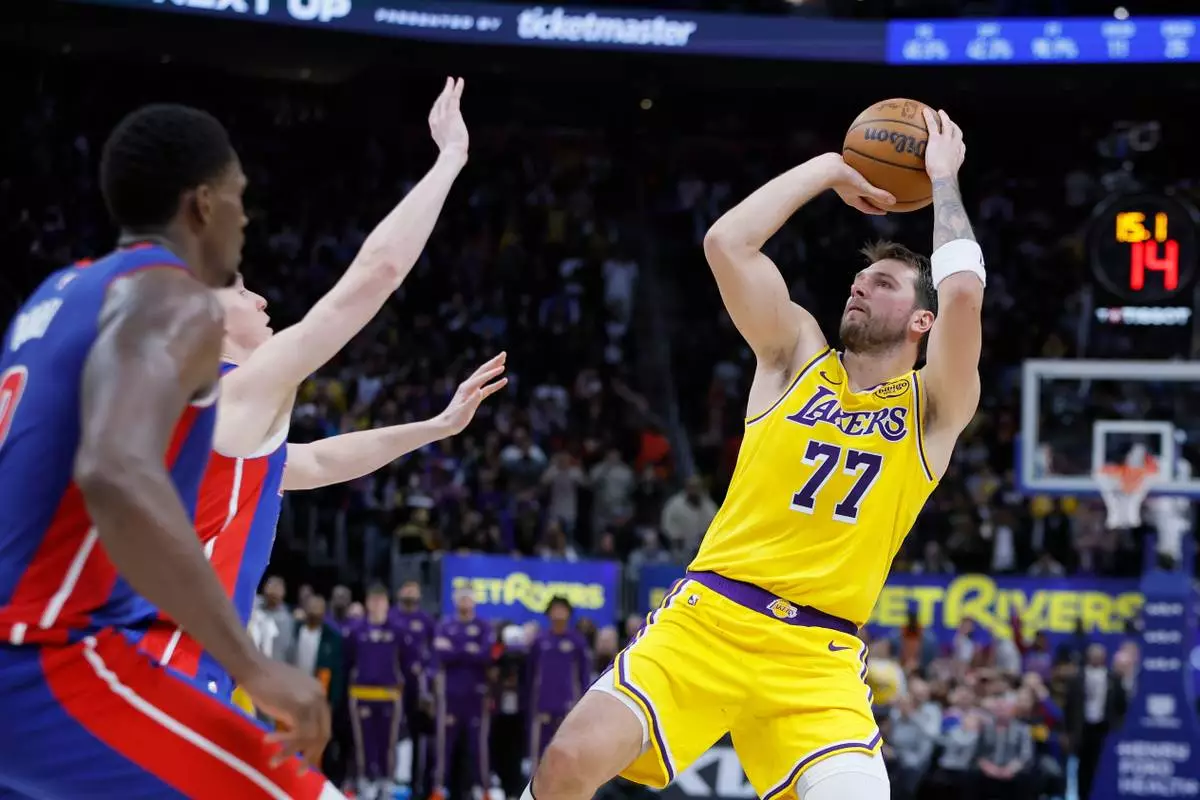
Los Angeles Lakers guard Luka Doncic (77) looks to make a shot-attempt in the fourth quarter of a loss to the Detroit Pistons in an NBA basketball game Monday, March 23, 2026, in Detroit. (AP Photo/Duane Burleson)
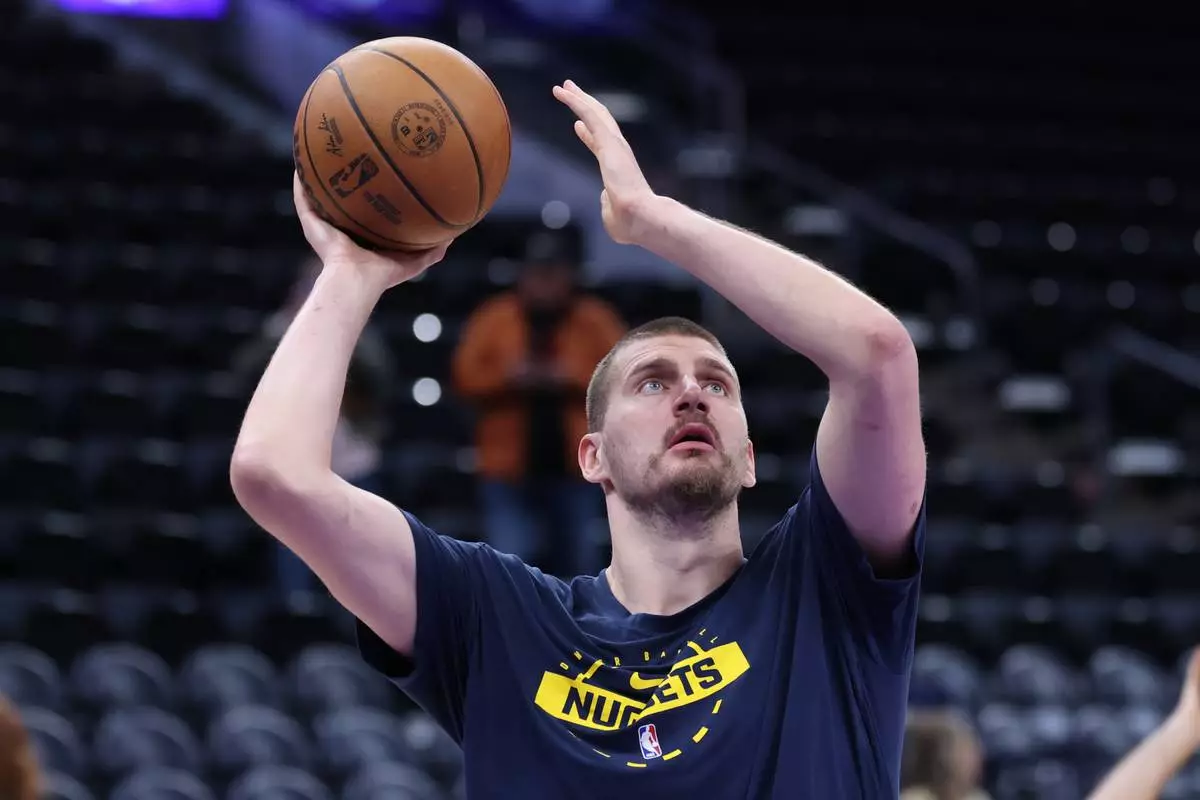
Denver Nuggets center Nikola Jokic warms up before an NBA basketball game against the Utah Jazz, Wednesday, April 1, 2026, in Salt Lake City. (AP Photo/Rob Gray)
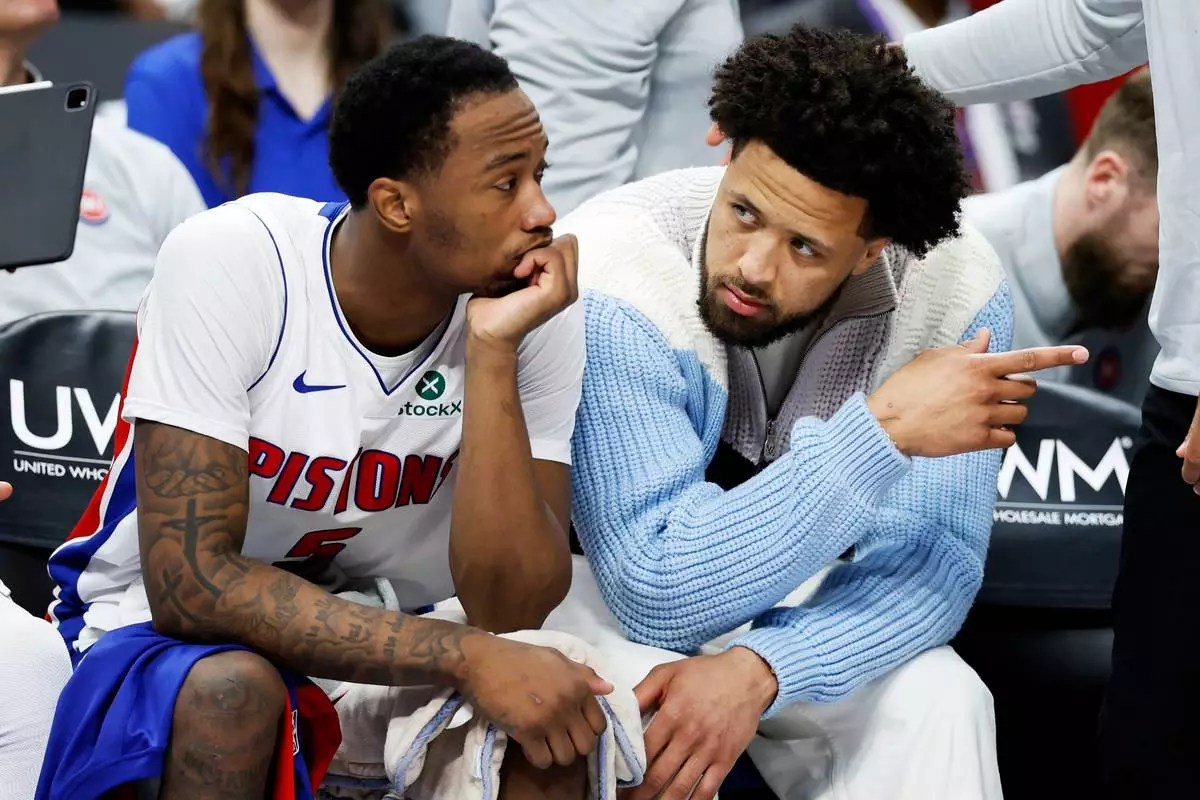
Detroit Pistons forward Ronald Holland II (5) talks with guard Cade Cunningham (2), who did not play due to an injury, during the second half of an NBA basketball game against the Toronto Raptors Tuesday, March 31, 2026, in Detroit. (AP Photo/Duane Burleson)
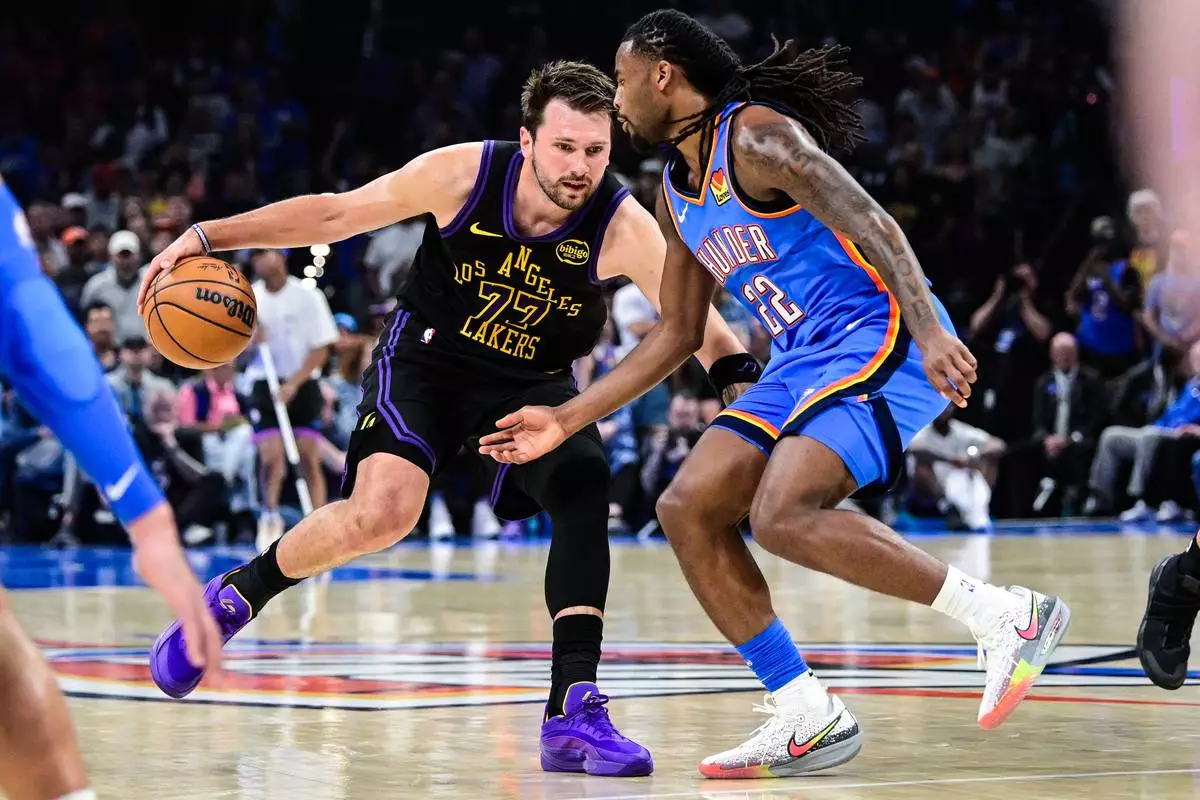
Los Angeles Lakers forward/guard Luka Dončić (77) drives against Oklahoma City Thunder guard Cason Wallace (22) during the first half of an NBA basketball game Thursday, April. 2, 2026, in Oklahoma City. (AP Photo/Gerald Leong)