
WASHINGTON (AP) — On New Year's Eve, Lee Zeldin did something out of character for an Environmental Protection Agency leader who has been hacking away at regulations intended to protect Americans' air and water.
He announced new restrictions on five chemicals commonly used in building materials, plastic products and adhesives, and he cheered it as a “MAHA win.”
It was one of many signs of a fragile collaboration that’s been building between a Republican administration that’s traditionally supported big business and a Make America Healthy Again movement that argues corporate environmental harms are putting people's health in danger.
The unlikely pairing grew out of the coalition's success influencing public health policy with the help of its biggest champion, Robert F. Kennedy Jr. As health secretary, he has pared back vaccine recommendations and shifted the government's position on topics like seed oils, fluoride and Tylenol.
Building on that momentum, the movement now sees a glimmer of hope in the EPA's promise to release a “MAHA agenda" in the coming months.
At stake is the strength of President Donald Trump ’s coalition as November's midterm elections threaten his party’s control of Congress. After a politically diverse group of MAHA devotees came together to help Trump return to the White House a little more than one year ago, disappointing them could mean losing the support of a vocal voting bloc.
Activists like Courtney Swan, who focuses on nutritional issues and has spoken with EPA officials in recent months, are watching closely.
“This is becoming an issue that if the EPA does not start getting their stuff together, then they could lose the midterms over this,” she said.
Christopher Bosso, a professor at Northeastern University who researches environmental policy, said Zeldin didn’t seem to take MAHA seriously at first, “but now he has to, because they’ve been really calling for his scalp.”
Last year, prominent activist Kelly Ryerson was so frustrated with the EPA over its weakening of protections against harmful chemicals that she and other MAHA supporters drew up a petition to get Zeldin fired.
The final straw, Ryerson said, was the EPA’s approval of two new pesticides for use on food. Ryerson, whose social media account “Glyphosate Girl” focuses on nontoxic food systems, said the pesticides contained “forever chemicals,” which resist breakdown, making them hazardous to people. The EPA has disputed that characterization.
But Ryerson’s relationship with the EPA changed at a MAHA Christmas party in Washington in December. She talked to Zeldin there and felt that he listened to her perspective. Then he invited her and a handful of other activists to sit down with him at the EPA headquarters. That meeting lasted an hour, and it led to more conversations with Zeldin’s deputies.
"The level of engagement with people concerned with their health is absolutely revolutionary," Ryerson said in an interview. She said the agency's upcoming plan “will say whether or not they take it seriously,” but she praised MAHA's access as “unprecedented.”
Rashmi Joglekar, associate director of science, policy and engagement at the University of California San Francisco’s Program on Reproductive Health and the Environment, said it’s not typical for an activist group to meet with the EPA administrator. She said MAHA's ability to make inroads so quickly shows how “powerful” the coalition has become.
The movement’s influence is not just at the EPA. MAHA has steered federal and state lawmakers away from enacting liability shields that protect pesticide manufacturers from expensive lawsuits. In Congress, after MAHA activists lobbied against such protections in a funding bill, they were removed. A similar measure stalled in Tennessee’s legislature.
Zeldin joined a call in December with the advocacy group MAHA Action, where he invited activists to participate in developing the EPA’s MAHA agenda. Since then, EPA staffers have regularly appeared on the weekly calls and promoted what they say are open-door policies.
Last month, Ryerson’s petition to get Zeldin fired was updated to note that several signers had met with him and are in a “collaborative effort to advance the MAHA agenda."
Zeldin’s office declined to make him available for an interview on his work with MAHA activists, but EPA Press Secretary Brigit Hirsch said the forthcoming agenda will “directly respond to priorities we’ve heard from MAHA advocates and communities.”
The American Chemistry Council said “smart, pro-growth policies can protect both the environment and human health as well as grow the U.S. economy.”
Despite the ongoing conversations, the Republican emphasis on deregulation still puts MAHA and the EPA on a potential collision course.
Lori Ann Burd, the environmental health program director at The Center for Biological Diversity, said the administration has a particularly strong alliance with industry interests.
As an example, she pointed to the EPA’s proposal to allow the broad use of the weed killer Dicamba on soybeans and cotton. A month before the announcement, the EPA hired a lobbyist for the soybean association, Kyle Kunkler, to serve in a senior position overseeing pesticides.
Hirsch denied that Kunkler had anything to do with the decision and said EPA’s pesticide decisions are “driven by statutory standards and scientific evidence.”
Environmentalists said the hiring of ex-industry leaders is a theme of this administration. Nancy Beck and Lynn Dekleva, for example, are former higher-ups at the American Chemistry Council, an industry association. They now work in leadership in the Office of Chemical Safety and Pollution Prevention, which oversees pesticide and toxic chemical regulation.
Hirsch said the agency consults with ethics officials to prevent conflicts of interest and ensures that appointees are qualified and focused on the science, “unlike previous administrations that too often deferred to activist groups instead of objective evidence."
Alexandra Muñoz, a molecular toxicologist who works with MAHA activists on some issues and was in the hourlong meeting with Zeldin, said she could sense industry's influence in the room.
“They were very polite in the meeting. In terms of the tone, there was a lot of receptivity,” she said. “However, in terms of what was said, it felt like we were interacting with a lot of industry talking points.”
Hirsch said the MAHA agenda will address issues like lead pipes, forever chemicals, plastic pollution, food quality and Superfund cleanups.
Ryerson said she wants to get the chemical atrazine out of drinking water and stop the pre-harvest desiccation of food, in which farmers apply pesticides to crops immediately before they are harvested.
She also wants to see cancer warnings on the ingredient glyphosate, which some studies associate with cancer even as the EPA said it is not likely to be carcinogenic to humans when used as directed.
While she’s optimistic that the political payoffs will be big enough for Zeldin to act, she said some of the moves he’s already promoting as “MAHA wins” are no such thing.
For example, in his New Year's Eve announcement on a group of chemicals called phthalates, he said the agency intends to regulate some of them for environmental and workplace risks, but didn't address the thousands of consumer products that contain the ingredients.
Swan said time will tell if the agency is being performative.
“The EPA is giving very mixed signals right now,” she said.
Govindarao reported from Phoenix.
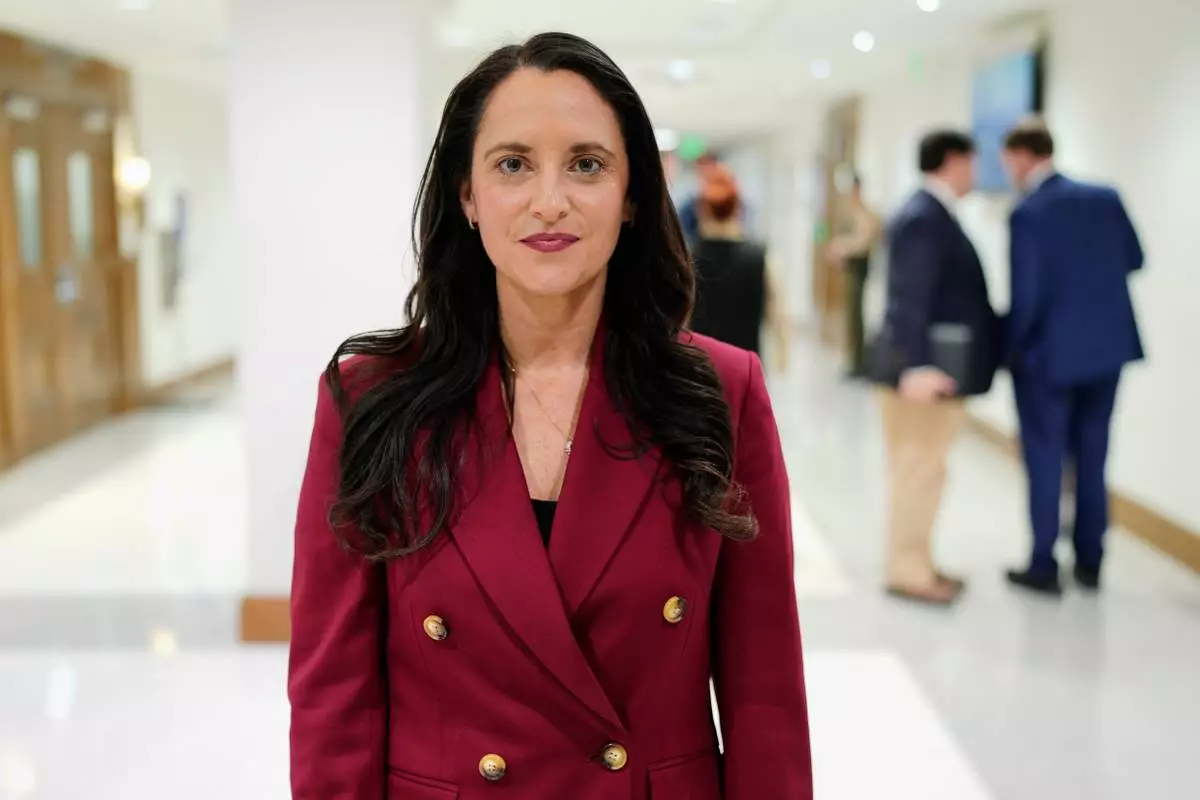
Molecular toxicologist Alexandra Muñoz poses outside a hearing room at the Tennessee State Capitol, Wednesday, Jan. 21, 2026, in Nashville, Tenn. (AP Photo/George Walker IV)

Kelly Ryerson, known by her supporters as "Glyphosate Girl," poses for a portrait, Thursday, Jan. 22, 2026, in Miami. (AP Photo/Marta Lavandier)