WASHINGTON (AP) — A new wave of departures is rippling through the U.S. Attorney's office in Minnesota, where additional federal prosecutors are leaving at a time of mounting frustration with the Trump administration's stepped-up immigration enforcement and the Justice Department's response to fatal shootings of civilians by federal agents, two people familiar with the matter said Tuesday.
The latest departures are on top of a half-dozen attorneys who left the office last month amid disagreements over the Justice Department's response to the shooting of Renee Good by an Immigration and Customs Enforcement officer. At least one supervisory agent in the FBI's Minneapolis office is known to have resigned last month as well.
Click to Gallery
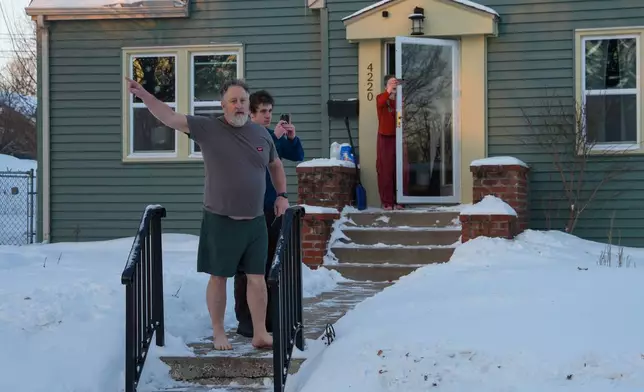
People film and yell at federal agents to leave their neighborhood while agents conduct immigration enforcement operations in a neighborhood on Monday, Feb. 2, 2026, in Minneapolis. (AP Photo/Ryan Murphy)
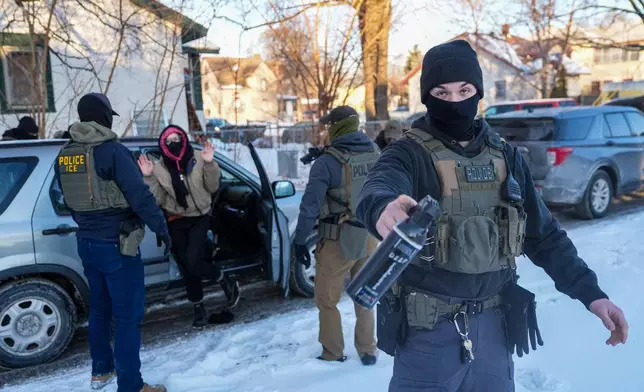
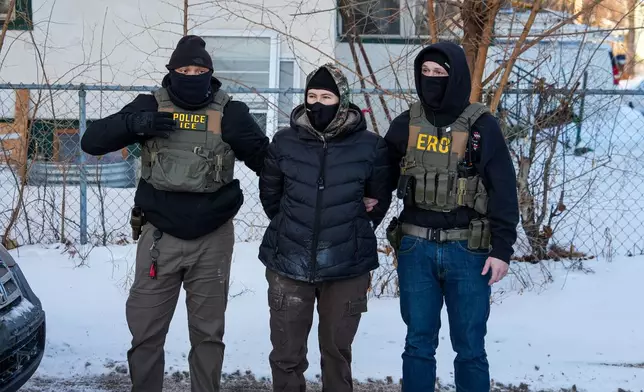
Activists are approached by federal agents for following agent vehicles, on Tuesday, Feb. 3, 2026, in Minneapolis. (AP Photo/Ryan Murphy)
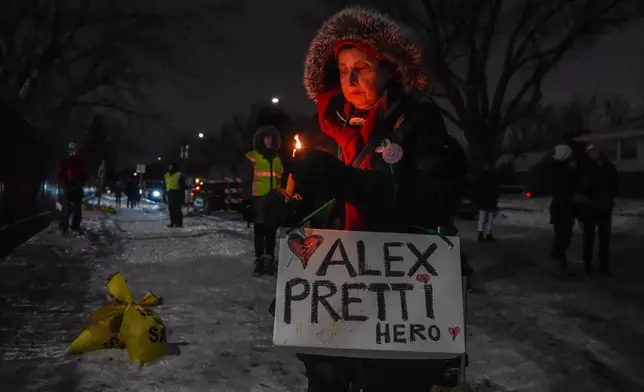
A woman attends a vigil for Alex Pretti who was fatally shot by a federal agent, at the Minneapolis VA Hospital, where Pretti worked, on Sunday, Feb. 1, 2026, in Minneapolis. (AP Photo/Ryan Murphy)
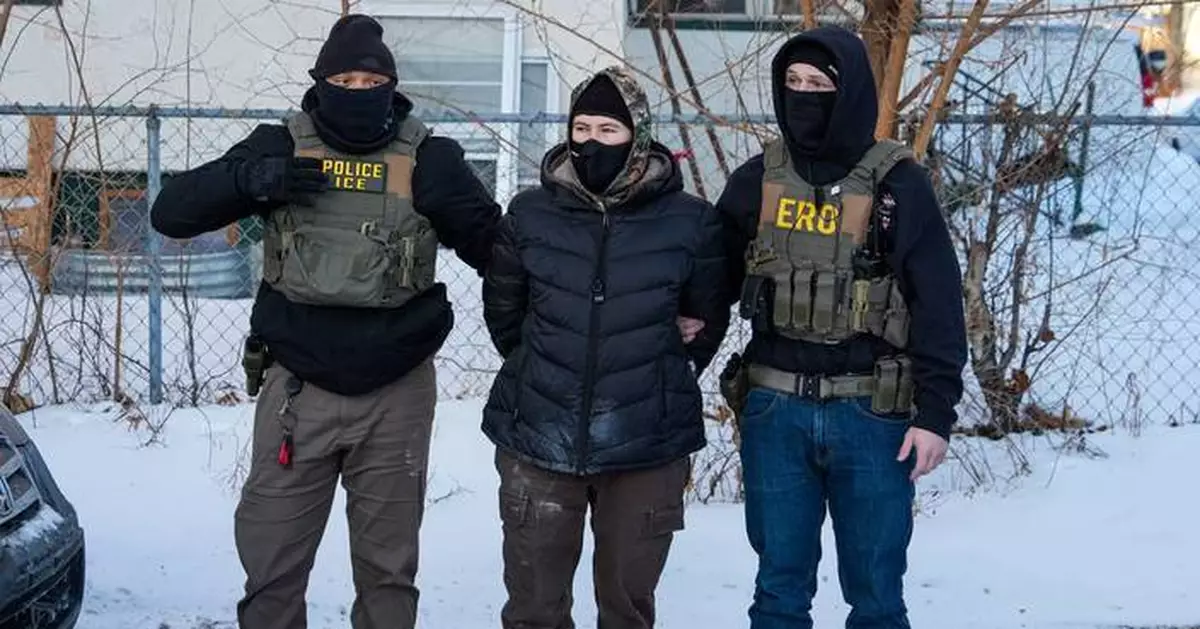
An activist is detained by federal agents on Tuesday, Feb. 3, 2026, in Minneapolis. (AP Photo/Ryan Murphy)
The Minnesota Star Tribune reported Monday evening that eight lawyers have since departed the office or announced plans to do so. A person familiar with the matter, who spoke on condition of anonymity to discuss non-public personnel moves, confirmed that this number was correct and that more departures were likely. Another person also confirmed a new wave of departures in the office.
The office did not immediately respond to a request for comment.
The resignations reflect the turbulence that has roiled the state over the last month or so as law enforcement officials have clashed over how to respond to violent confrontations during the heightened immigration enforcement. Minnesota officials, for instance, raised alarm after federal officials blocked state investigators from accessing evidence in the Good shooting and declared that Minnesota has no jurisdiction to investigate the killing. The Justice Department also declined to open a civil rights investigation into her death.
After Trump administration officials initially said the Department of Homeland Security would lead the investigation into the subsequent killing of Alex Pretti by Border Patrol officers, Deputy Attorney General Todd Blanche last week revealed that the Justice Department was opening a civil rights investigation aimed at determining whether the shooting of the intensive care nurse constituted a crime.
“We’re looking at everything that would shed light on what happened that day and in the days and weeks leading up to what happened,” Blanche said last Friday.
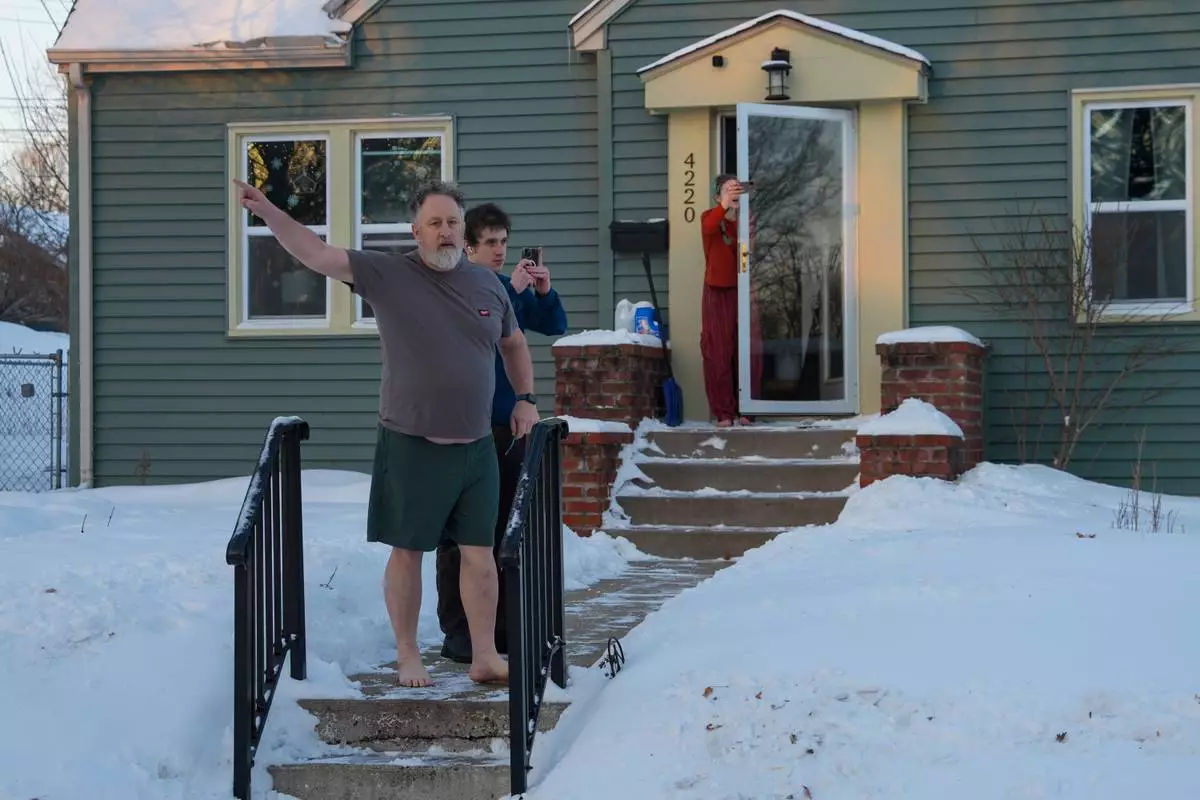
People film and yell at federal agents to leave their neighborhood while agents conduct immigration enforcement operations in a neighborhood on Monday, Feb. 2, 2026, in Minneapolis. (AP Photo/Ryan Murphy)
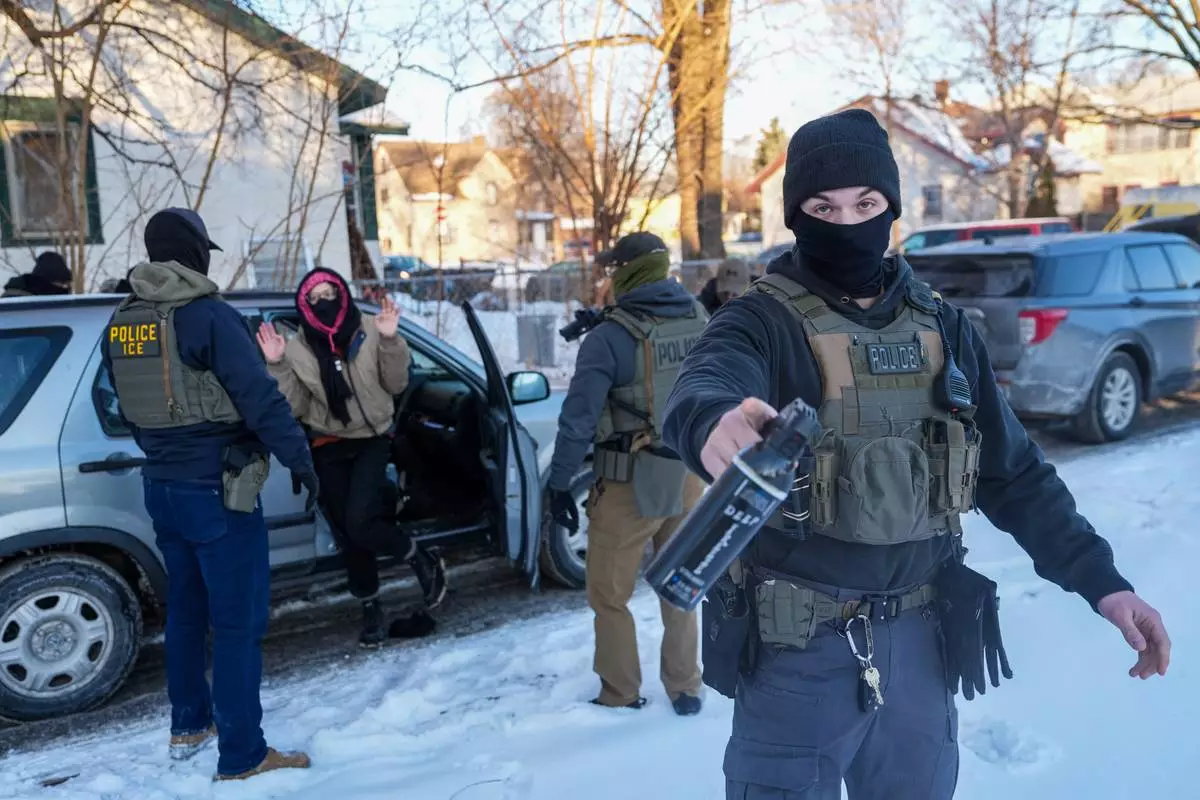
Activists are approached by federal agents for following agent vehicles, on Tuesday, Feb. 3, 2026, in Minneapolis. (AP Photo/Ryan Murphy)
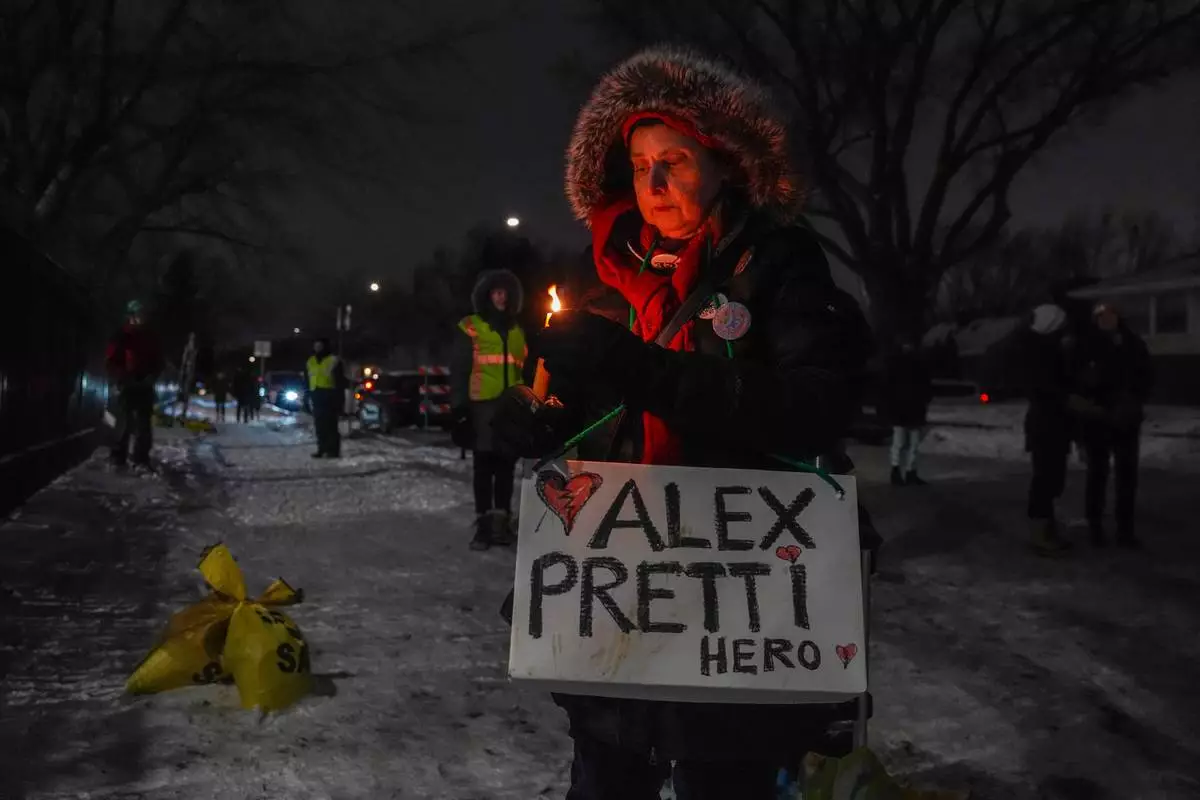
A woman attends a vigil for Alex Pretti who was fatally shot by a federal agent, at the Minneapolis VA Hospital, where Pretti worked, on Sunday, Feb. 1, 2026, in Minneapolis. (AP Photo/Ryan Murphy)
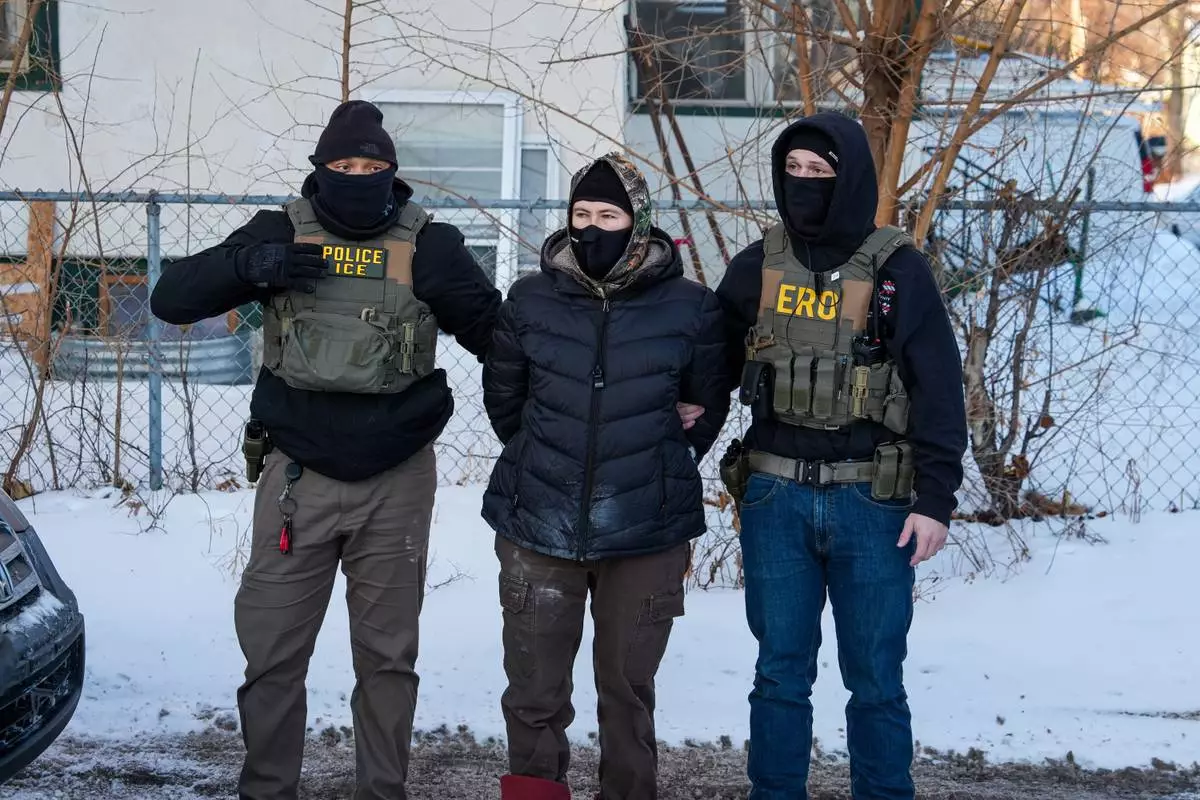
An activist is detained by federal agents on Tuesday, Feb. 3, 2026, in Minneapolis. (AP Photo/Ryan Murphy)
WASHINGTON (AP) — President Donald Trump met for nearly two hours with Colombian President Gustavo Petro at the White House on Tuesday, conducting a friendly face-to-face mere weeks after threatening military action against the South American country and accusing the leader of pumping cocaine into the United States.
Trump said afterward that he and Petro hadn’t been “the best of friends,” suggesting that he’d felt insulted by the president of Colombia because he didn't know him and because the two had never met.
Afterward, he'd changed his mind, saying, “We had a very good meeting. I thought he was terrific.”
Trump said the pair discussed cooperation in counternarcotics operations and a number of other topics.
The meeting followed Trump saying Petro — who has continued to criticize Trump and the U.S. operation to capture Venezuela’s Nicolás Maduro — has become more willing to work with his administration to stem the flow of illegal drugs from Colombia.
The good feelings seemed to be mutual.
Petro posted on X a picture of Trump's book “The Art of the Deal,” with a signed inscription reading, “You are great." Colombia's president wrote, ironically, in Spanish, “What did Trump mean to say to me with this dedication? I don't understand English very well.”
Petro also said in an interview with Colombia's Caracol Radio that he asked Trump to help mediate an escalating trade war between his country and Ecuador.
Still, past bad blood continues to loom. Indeed, in the days prior to Tuesday's meeting, Petro, a leftist politician, continued to poke at the conservative U.S. president, calling Trump an “accomplice to genocide” in the Gaza Strip, while asserting that the capture of Maduro was a kidnapping.
And ahead of his departure for Washington, Petro called on Colombians to take to the streets of Bogotá during the White House meeting. He plans to hold a news conference at the Colombian Embassy in Washington later Tuesday.
Petro brought along Foreign Relations Minister Rosa Yolanda Villavicencio, Defense Minister Pedro Arnulfo Sánchez Suárez and Ambassador Daniel García-Peña, while Trump was joined by Vice President JD Vance, Secretary of State Marco Rubio and Republican Sen. Bernie Moreno, R-Ohio, who was born in Colombia.
Just minutes before the meeting started, Petro, in a video shared by his office, described himself as a politician who has denounced and prosecuted drug traffickers.
Accompanied by one of his daughters and his granddaughter, he lamented that most of his children live outside of Colombia, in exile, due to the fight he's waging against drug trafficking. “We have truly suffered its effects directly,” Petro said.
Historically, Colombia has been a U.S. ally. For the past 30 years, the U.S. has worked closely with Colombia, the world’s largest producer of cocaine, to arrest drug traffickers, fend off rebel groups and boost economic development in rural areas. Colombia is also designated by the U.S. as a major non-NATO ally.
But relations between the leaders have been strained by Trump’s massing U.S. forces in the region for unprecedented deadly military strikes targeting suspected drug-smuggling boats in the Caribbean Sea and the eastern Pacific. At least 126 people have been killed in 36 known strikes.
In October, Trump's Republican administration announced it was imposing sanctions on Petro, his family and a member of his government over accusations of involvement in the global drug trade.
The Treasury Department leveled the penalties against Petro; his wife, Veronica del Socorro Alcocer Garcia; his son, Nicolas Fernando Petro Burgos; and Colombian Interior Minister Armando Alberto Benedetti.
The sanctions, which had to be waived to allow Petro to travel to Washington this week, came after the U.S. administration in September announced it was adding Colombia to a list of nations failing to cooperate in the drug war for the first time in three decades.
Then came the audacious military operation last month to capture Maduro and his wife to face federal drug conspiracy charges, a move that Petro has forcefully denounced. Following Maduro’s ouster, Trump put Colombia on notice and ominously warned Petro he could be next.
Colombia is “run by a sick man who likes making cocaine and selling it to the United States,” Trump said of Petro last month. “And he’s not gonna be doing it very long, let me tell you.”
But a few days later, tensions eased somewhat after a call between the leaders. Trump said Petro in their hourlong conversation explained “the drug situation and other disagreements.” And Trump extended an invitation to Petro for the White House visit.
The Colombian president said he'd planned to use the meeting to detail his country’s counternarcotics initiatives to Trump. And in a diplomatic gesture amid the acrimony, Colombian officials said Petro came bearing gifts, including a signature Wounaan indigenous basket from Colombia's Chocó region for Trump and a handmade gown crafted by indigenous artisans from Nariño for first lady Melania Trump.
Petro's office released a photo of Trump and Petro chatting as they walked the colonnade toward the Oval Office at the start of the visit. García-Peña, Colombia's envoy to Washington, is captured in the frame holding a copy of Trump’s book “The Art of the Deal.”
Trump skipped on greeting Petro upon his arrival and posing for a photograph with him in front of the North Portico of the White House before a gathered press, a set piece for most foreign leaders' visits. Instead, Petro arrived at a side entrance of the White House along West Executive Avenue, minutes before the start of their scheduled meeting.
The two leaders did not deliver joint statements before the press, something Trump typically does at the start or end of most leader visits.
Suarez reported from Bogotá, Colombia. Associated Press writers Will Weissert and Moriah Balingit contributed reporting.
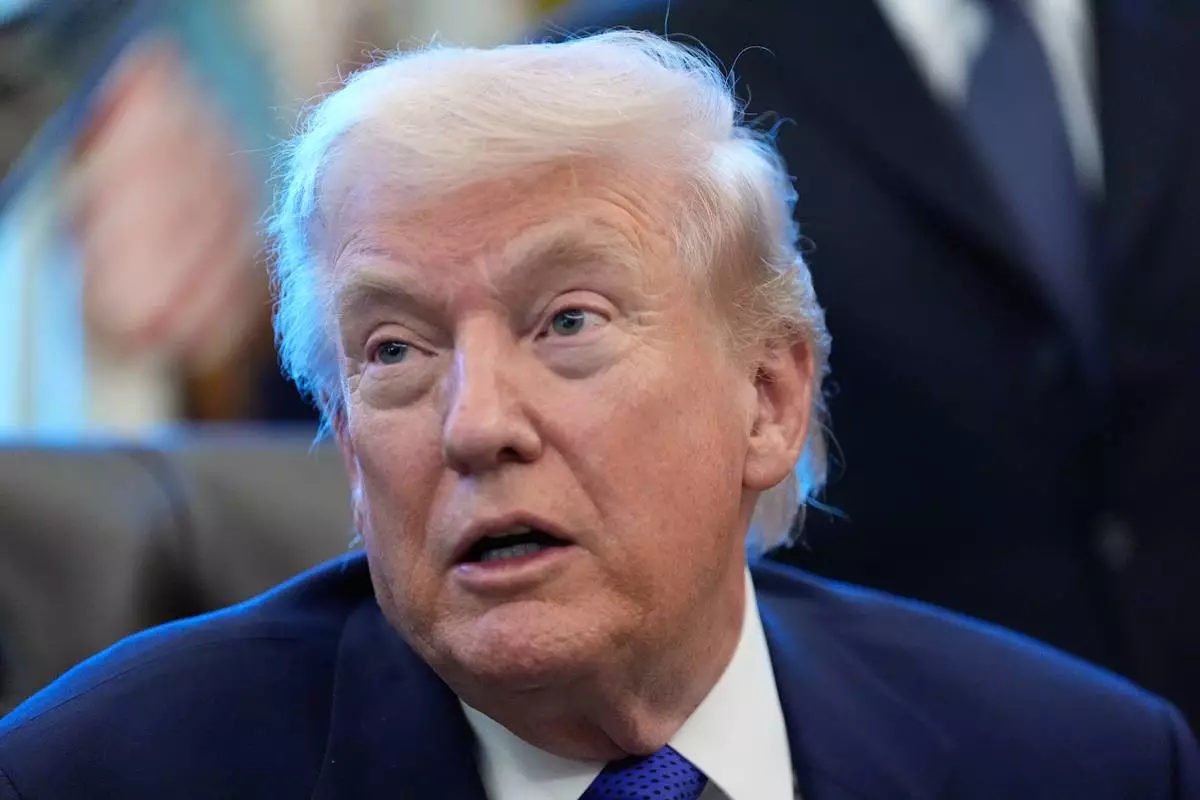
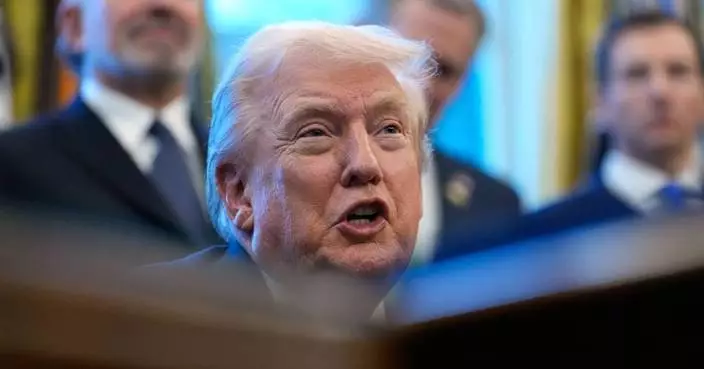
President Donald Trump speaks in the Oval Office of the White House, Monday, Feb. 2, 2026, in Washington. (AP Photo/Alex Brandon)
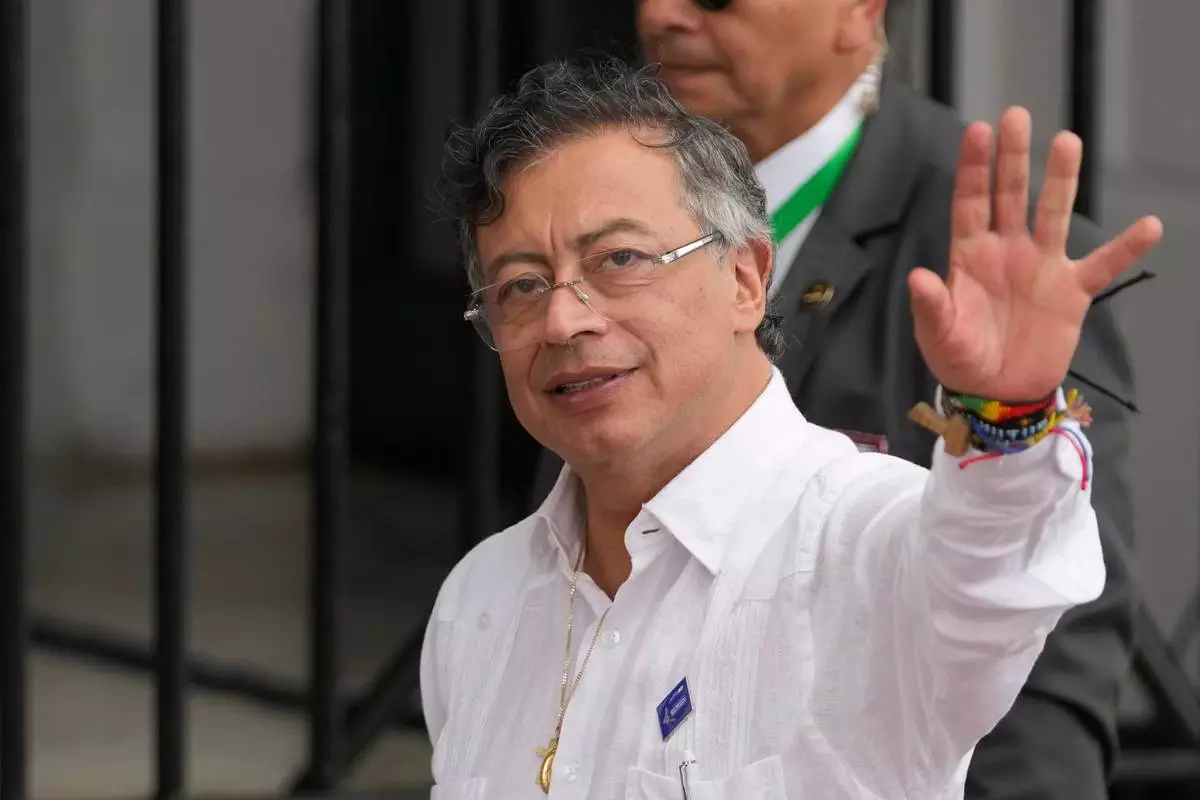
FILE - Colombian President Gustavo Petro arrives at the presidential palace in Panama City, Jan. 28, 2026. (AP Photo/Matias Delacroix, File)