MEXICO CITY (AP) — Historians and observers accused the Trump administration of trying to rewrite American history to justify its own foreign policy decisions toward Latin America by posting a “historically inaccurate” version of the Mexican-American war.
The Monday statement from the White House commemorating the anniversary of the war described the conflict as a “legendary victory that secured the American Southwest, reasserted American sovereignty, and expanded the promise of American independence across our majestic continent.” The statement drew parallels between the period in U.S. history and its own increasingly aggressive policies toward Latin America, which it said would “ensure the Hemisphere remains safe.”
“Guided by our victory on the fields of Mexico 178 years ago, I have spared no effort in defending our southern border against invasion, upholding the rule of law, and protecting our homeland from forces of evil, violence, and destruction,” the statement said, though it was unsigned.
In the post, the White House makes no mention of the key role slavery played in the war and glorifies the wider “Manifest Destiny” period, which resulted in the displacement of hundreds of thousands of Native Americans from their land.
Alexander Aviña, Latin American history professor at Arizona State University, said the White House statement “underplays the massive amounts of violence that it took to expand” the U.S. to the Pacific shore at a time when the Trump administration has stuck its hand in Latin American affairs in a way not seen in decades, deposing Venezuela's president, meddling in elections and threatening military action in Mexico and other countries.
“U.S. political leaders since then have seen this as an ugly aspect of U.S. history, this is a pretty clear instance of U.S. imperialism against its southern neighbor,” Aviña said. “The Trump administration is actually embracing this as a positive in U.S. history and framing it – inaccurately historically – as some sort of defensive measure to prevent the Mexico from invading them.”
On Tuesday, criticisms of the White House statement quickly rippled across social media.
Asked about the statement in her morning news briefing, Mexican President Claudia Sheinbaum guffawed, quipping and noting “we have to defend sovereignty.” Sheinbaum, who has walked a tight rope with the Trump administration, has responded to Trump with a balanced tone and occasionally with sarcasm, like when Trump changed the name of the Gulf of Mexico to the Gulf of America.
The Mexican-American war (1846–1848) was triggered by long-running border disputes between the U.S. and Mexico and the United States' annexation of Texas in 1845. For years leading up to the war, Americans had gradually moved into the then-Mexican territory. Mexico had banned slavery and U.S. abolitionists feared the U.S. land grab was in part an attempt to add slave states.
After fighting broke out and successive U.S. victories, Mexico ceded more than 525,000 square miles of territory — including what now comprises Arizona, California, western Colorado, Nevada, New Mexico, Texas and Utah — to the U.S.
The moment turned Texas into a key chess piece during the U.S. Civil War and led former President Ulysses S. Grant to write later that the conflict with Mexico was “one of the most unjust ever waged by a stronger against a weaker nation."
The Associated Press was formed when five New York City newspapers funded a pony express route through Alabama to bring news of the Mexican War — as it is sometimes known in the U.S. — north faster than the U.S. Post Office could deliver it.
The war continues to be a historical sticking point between the two countries, particularly as Sheinbaum repeatedly reminds Trump that her country is a sovereign nation whenever Trump openly weighs taking military action against Mexican cartels and pressures Mexico to bend to its will.
The White House statement falls in line with wider actions taken by the Trump administration to mold the federal government's language around its own creed, said Albert Camarillo, history professor at Stanford University, who described the statement as a “distorted, ahistorical, imperialist version" of the war.
Aviña said the statement serves "to assert rhetorically that the U.S. is justified in establishing its so-called ‘America First’ policy throughout the Americas,” regardless of the historical accuracy.
The Trump administration has ordered the rewriting of history on display at the Smithsonian Institution, saying it was “restoring truth and sanity to American history.”
The administration has scrubbed government websites of history, legal records and data it finds disagreeable. Trump also ordered the government to remove any signs that “inappropriately disparage Americans past or living," including those making reference to slavery, destruction of Native American cultures and climate change.
“This statement is consistent with so many others that attempt to whitewash and reframe U.S. history and erase generations of historical scholarship,” Camarillo said.
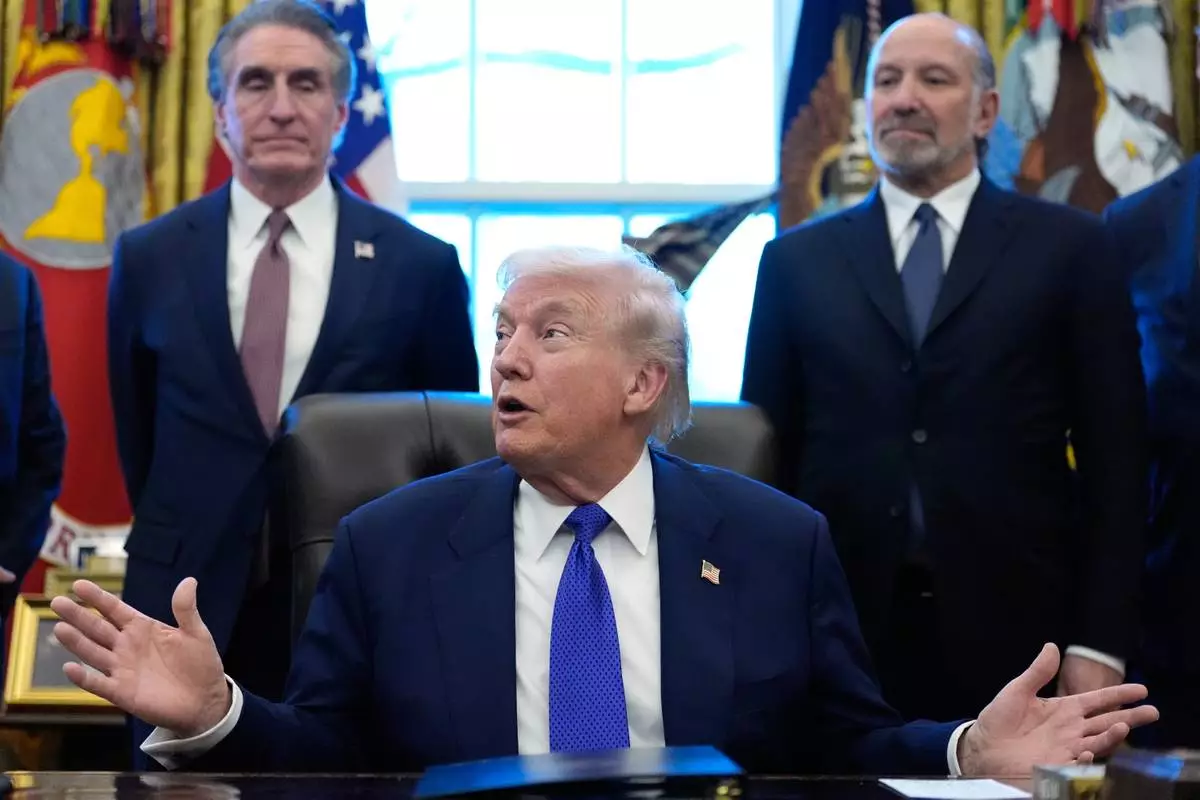
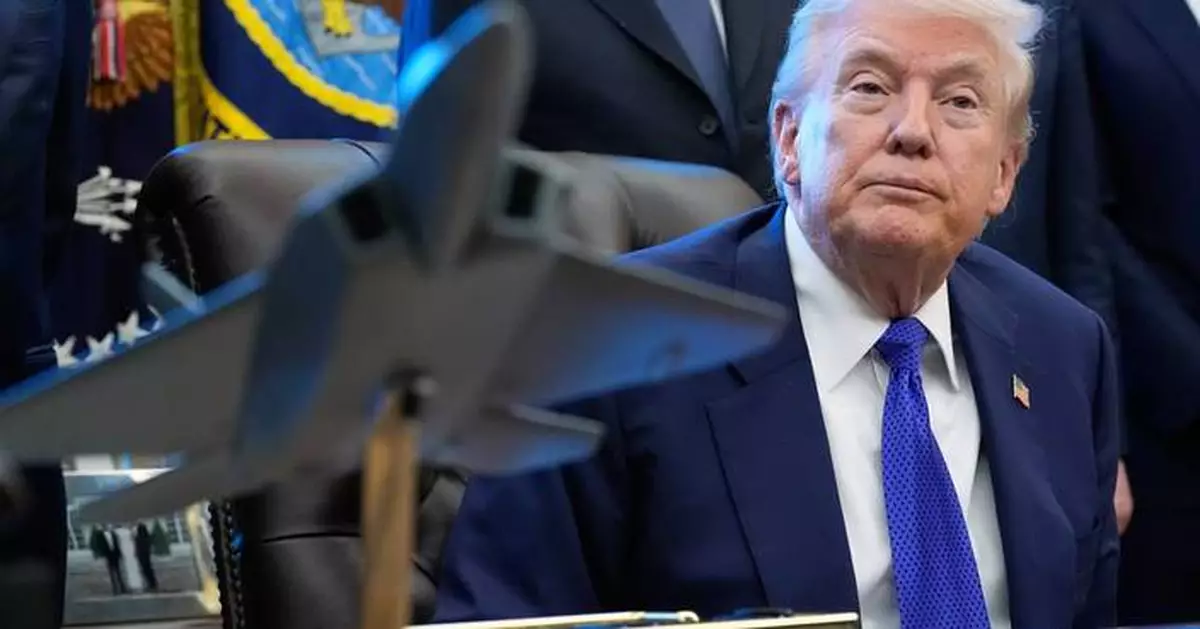
President Donald Trump speaks in the Oval Office of the White House, Monday, Feb. 2, 2026, in Washington, as Interior Secretary Doug Burgum and Commerce Secretary Howard Lutnick, right, listen. (AP Photo/Alex Brandon)
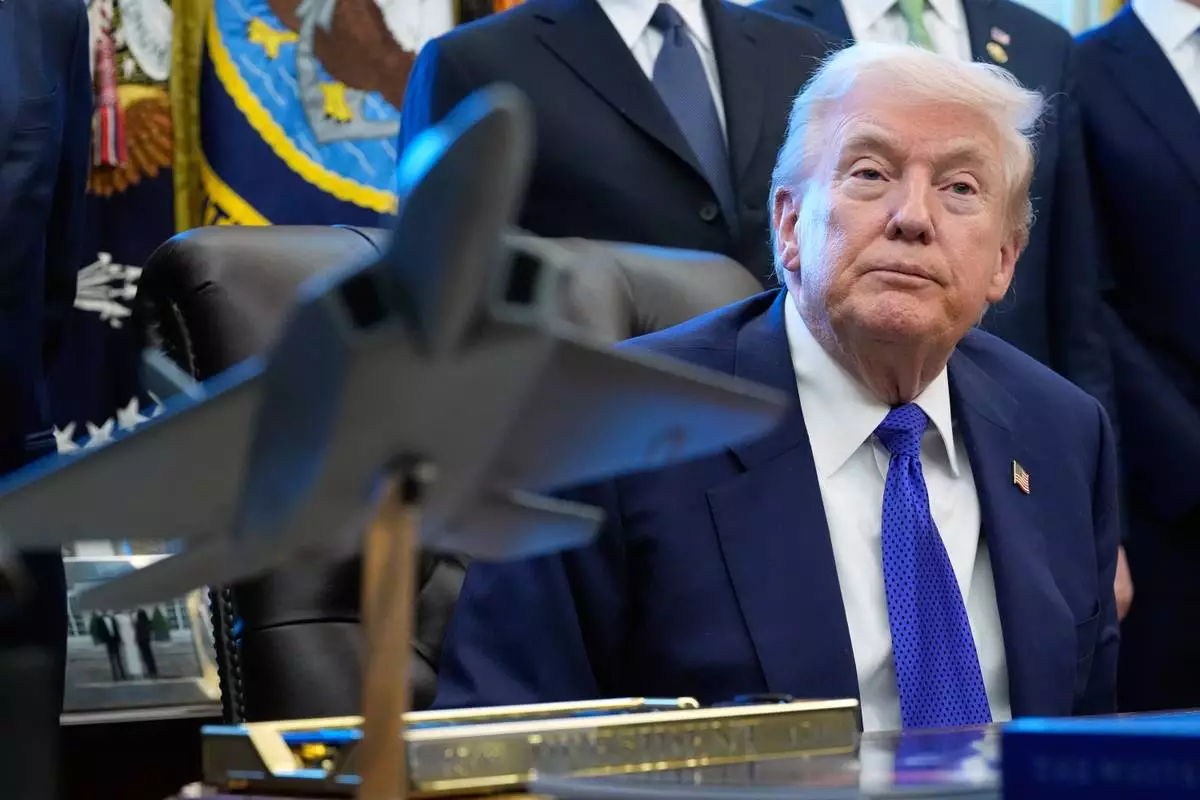
President Donald Trump listens to a question from a reporter as he speaks in the Oval Office of the White House, Monday, Feb. 2, 2026, in Washington. (AP Photo/Alex Brandon)
MINNEAPOLIS (AP) — Immigration officers with guns drawn arrested activists who were trailing their vehicles on Tuesday in Minneapolis, while education leaders described anxiety and fear in Minnesota schools from the ongoing federal sweeps.
Both are signs that tension remains in the Minneapolis area after the departure of high-profile commander Greg Bovino of U.S. Border Patrol and the arrival of Trump administration border czar Tom Homan, which followed the fatal shooting of protester Alex Pretti.
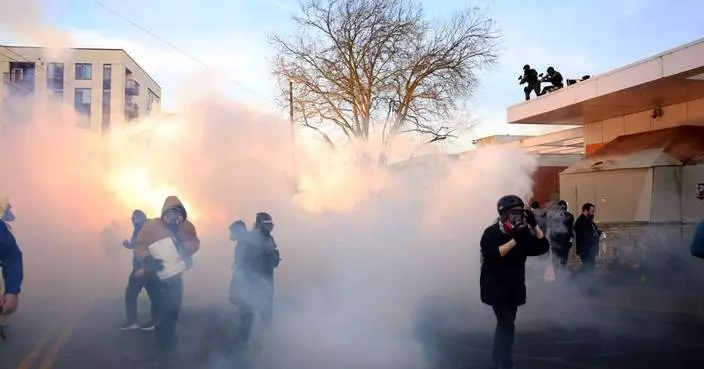
“There’s less smoke on the ground,” Gov. Tim Walz said, referring to tear gas and other irritants used by officers against protesters, “but I think it’s more chilling than it was last week because of the shift to the schools, the shift to the children.”
At least one person who had an anti-ICE message on clothing was handcuffed while face-down on the ground. An Associated Press photographer witnessed the arrests.
Federal agents in the Twin Cities lately have been conducting more targeted immigration arrests at homes and neighborhoods, rather than staging in parking lots. The convoys have been harder to find and less aggressive. Alerts in activist group chats have been more about sightings than immigration-related detainments.
Several cars followed officers through south Minneapolis after there were reports of them knocking at homes. Officers stopped their vehicles and ordered activists to come out of a car at gunpoint. Agents told reporters at the scene to stay back and threatened to use pepper spray.
Homeland Security spokesperson Tricia McLaughlin said agents detained the activists because they hindered efforts to arrest a man who is in the country illegally.
A federal judge last month put limits on how officers treat motorists who are following them but not obstructing their operations. Safely following agents “at an appropriate distance does not, by itself, create reasonable suspicion to justify a vehicle stop,” the judge said. An appeals court, however, set the order aside.
Bovino, who was leading immigration enforcement in Minneapolis and other big U.S. cities, left town last week, shortly after Pretti's death became the second local killing of a U.S. citizen in January.
Homan, who was dispatched to Minnesota to succeed Bovino, has warned that protesters could face consequences if they interfere with officers.
Walz and education leaders held a news conference to say the presence of immigration officers is frightening some school communities. Brenda Lewis, superintendent of Fridley Public Schools in suburban Minneapolis, said she has been followed twice by Immigration and Customs Enforcement agents since speaking publicly on Jan. 27 and that school board members have had ICE vehicles outside their homes.
Lewis, a U.S. citizen, said she has seen SUVs with tinted windows, multiple masked people inside and out-of-state license plates. She goes on neighborhood patrols near schools with a security guard.
“Students are afraid to come to school, parents are afraid to drop them off,” Lewis said. “Staff are coming to work wondering if today will be the day something happens in one of our buildings.”
She said Fridley, which has Somali and Ecuadorian families, has added security, adjusted drop-off procedures and increased mental health support. Tracy Xiong, a social worker in the Columbia Heights district, said she has been coordinating grocery deliveries to school families and finding volunteers to drive children.
There was no immediate response to a request for comment from the Department of Homeland Security and ICE about the concerns of educators.
Meanwhile, Tuesday was the deadline for Minneapolis to produce information for a federal grand jury. It is part of a U.S. Justice Department request for records of any effort to stifle the Trump administration’s immigration crackdown. Officials have denounced it as a bullying tactic.
“We have done nothing wrong and have nothing to hide, but when the federal government weaponizes the criminal justice system against political opponents, it’s important to stand up and fight back,” said Ally Peters, spokesperson for Mayor Jacob Frey, a Democrat.
She said the city was complying, but she didn't elaborate. Other state and local offices run by Democrats were given subpoenas, though it is not known whether they had the same deadline. People familiar with the matter have told the AP that the subpoenas are related to an investigation into whether Minnesota officials obstructed enforcement through public statements.
Elsewhere, a man charged with squirting apple cider vinegar on Democratic U.S. Rep. Ilhan Omar will remain in jail. U.S. Magistrate Judge David Schultz granted a federal prosecutor's request to keep Anthony Kazmierczak in custody.
“We simply cannot have protesters and people — whatever side of the aisle they’re on — running up to representatives who are conducting official business, and holding town halls, and assaulting them," Assistant U.S. Attorney Benjamin Bejar said Tuesday.
Defense attorney John Fossum said the vinegar posed a low risk to Omar. He said Kazmierczak's health problems weren't being properly addressed in jail and that his release would be appropriate.
Raza reported from Sioux Falls, South Dakota. AP reporters Ed White in Detroit and Hannah Fingerhut in Des Moines, Iowa, contributed.
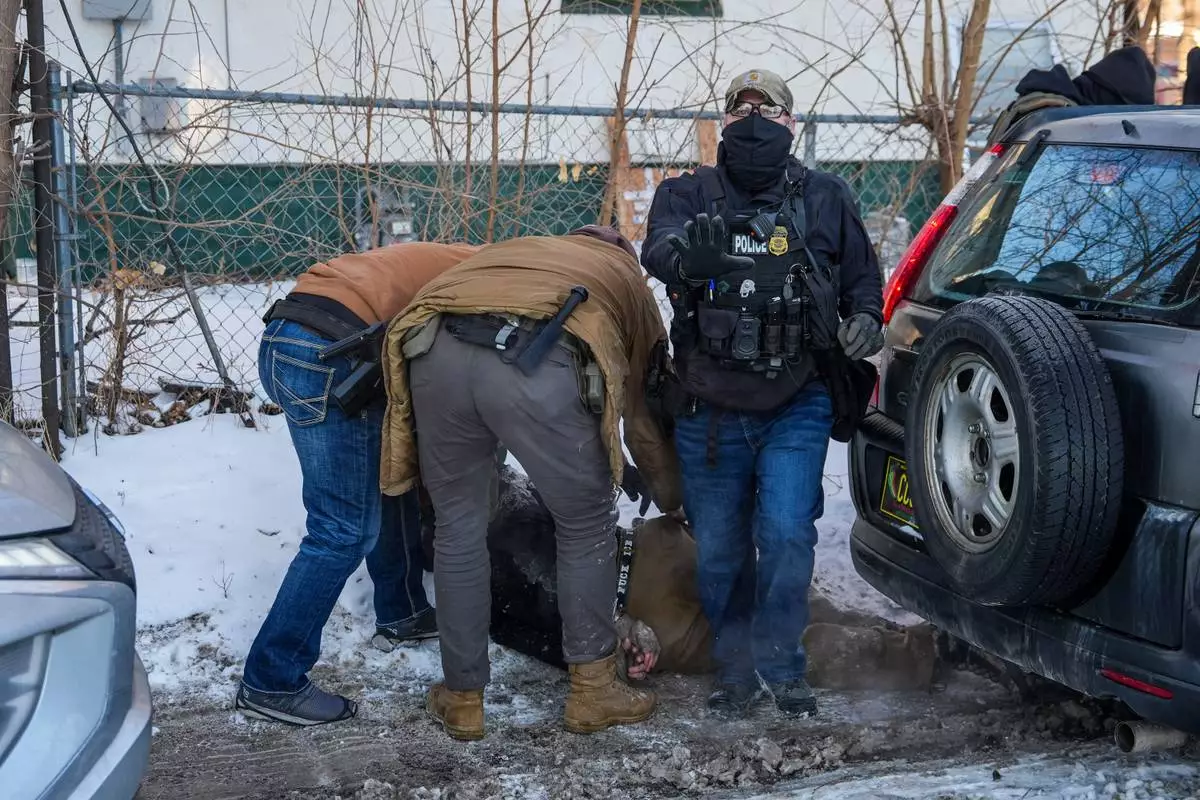
An activist is detained by federal agents on Tuesday, Feb. 3, 2026, in Minneapolis. (AP Photo/Ryan Murphy)
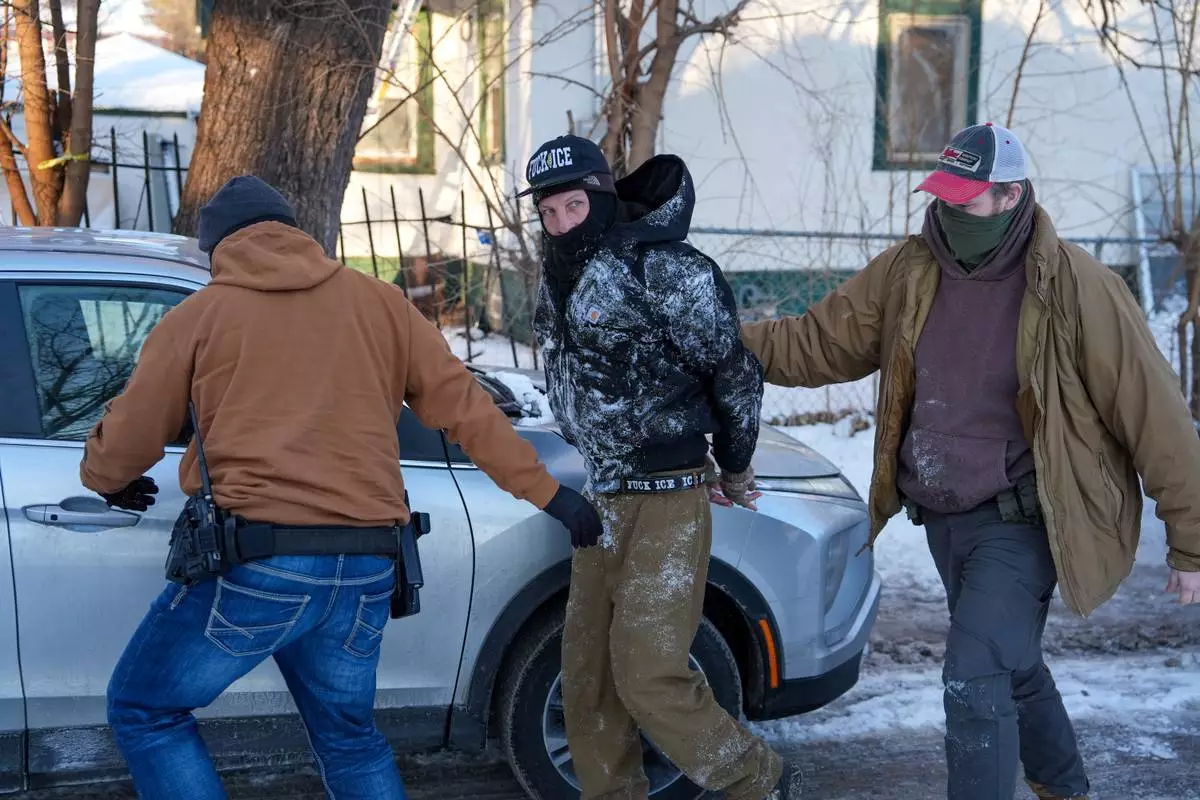
An activist is detained by federal agents on Tuesday, Feb. 3, 2026, in Minneapolis. (AP Photo/Ryan Murphy)
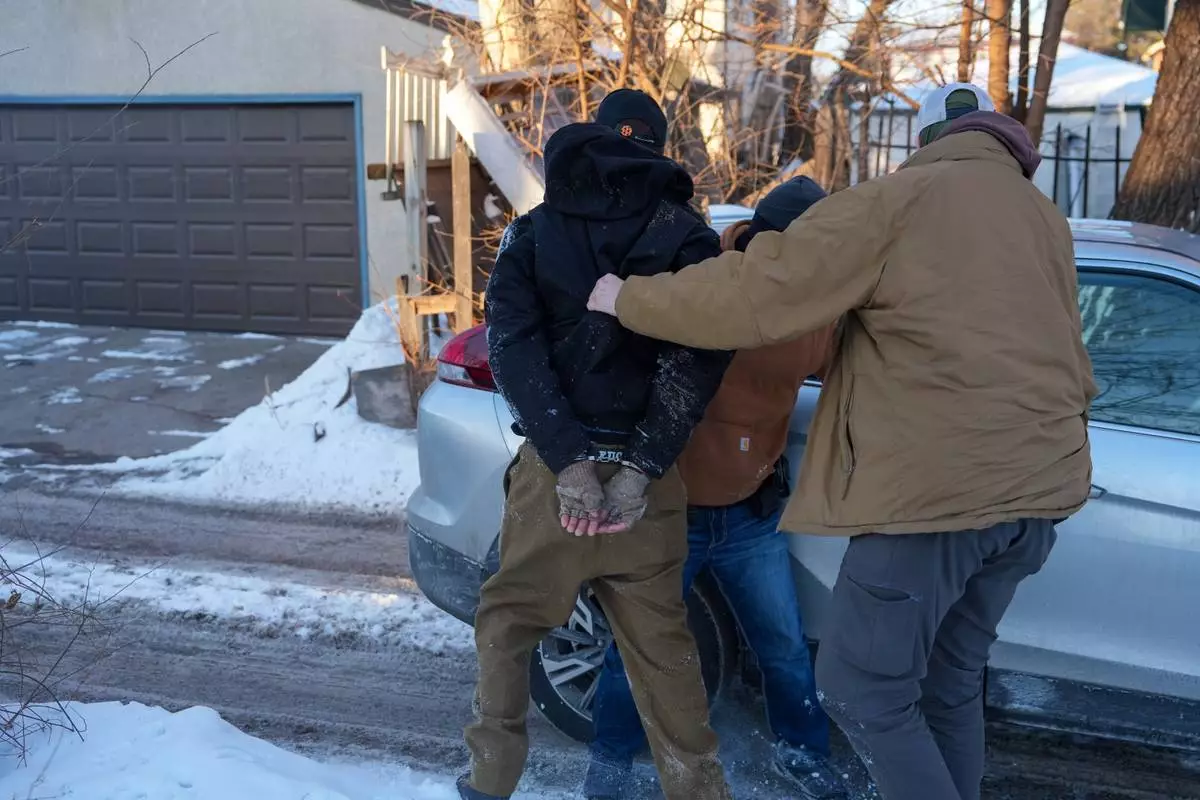
An activist is detained by federal agents on Tuesday, Feb. 3, 2026, in Minneapolis. (AP Photo/Ryan Murphy)
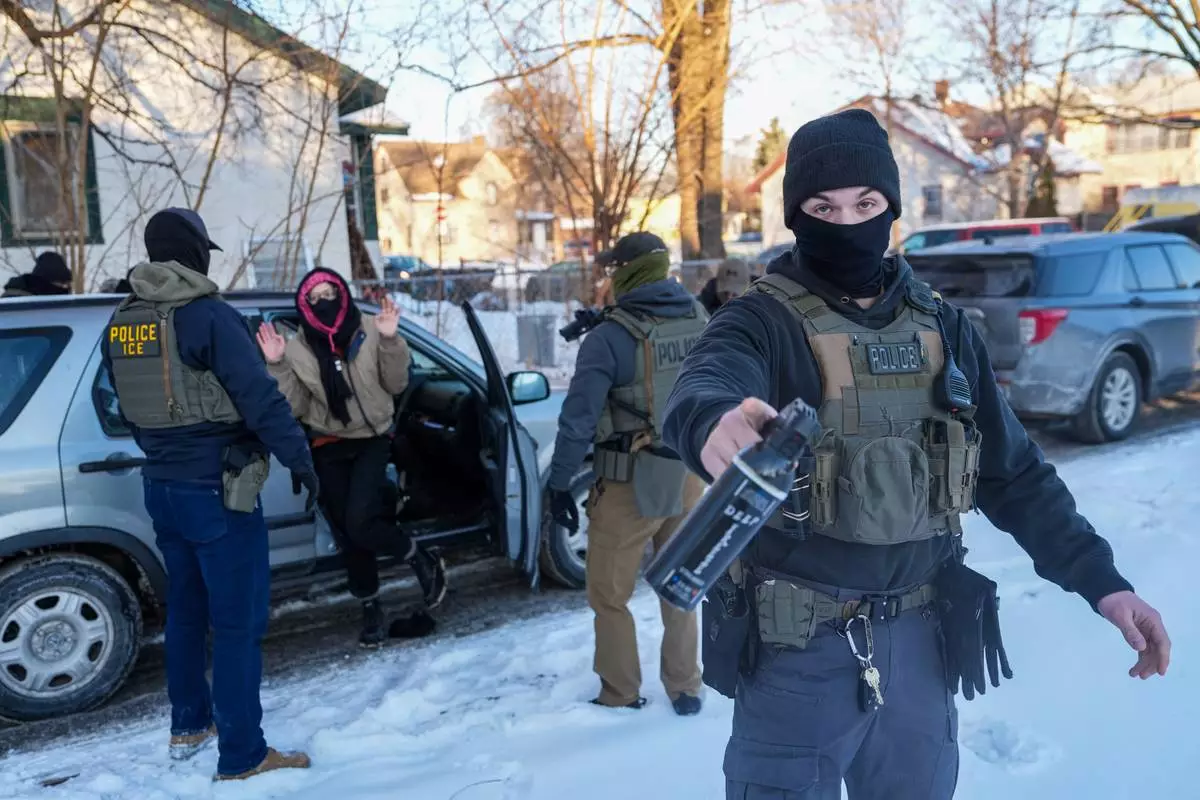
Activists are approached by federal agents for following agent vehicles, on Tuesday, Feb. 3, 2026, in Minneapolis. (AP Photo/Ryan Murphy)
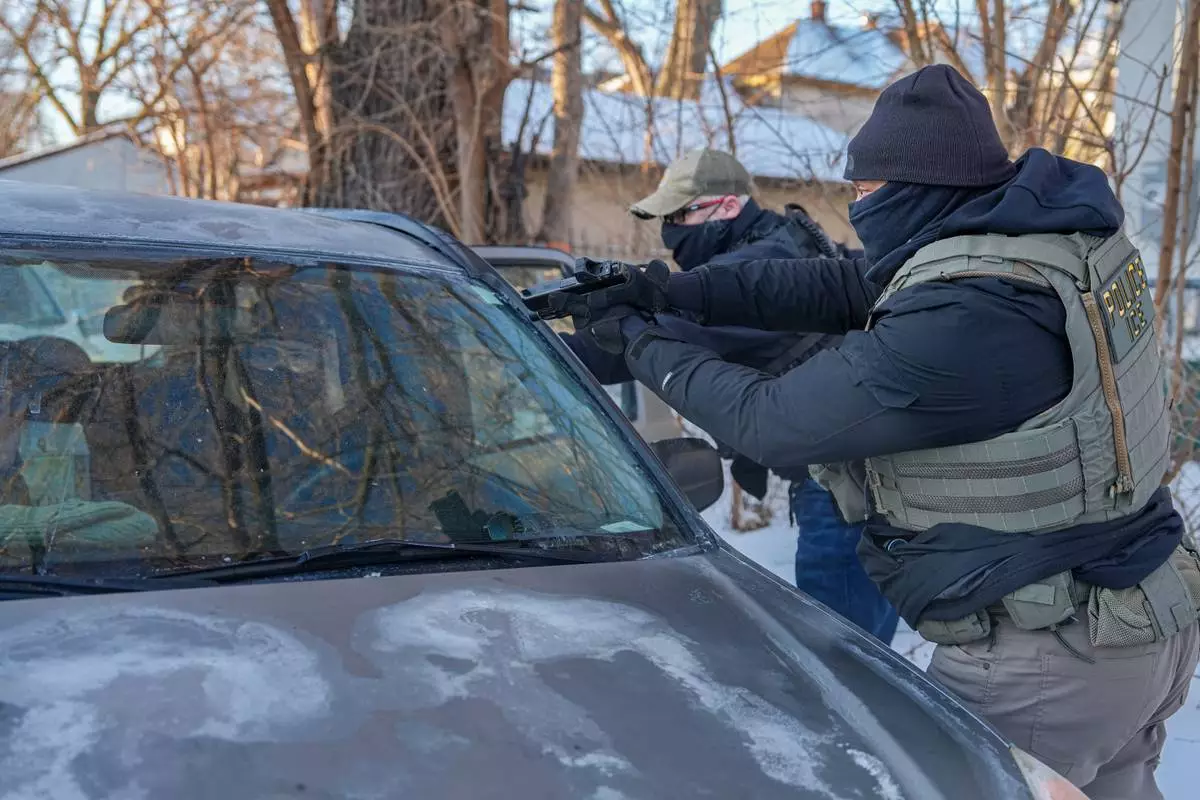
Activists are approached by a federal agent brandishing a firearm, for following agent vehicles, on Tuesday, Feb. 3, 2026, in Minneapolis. (AP Photo/Ryan Murphy)