WASHINGTON (AP) — President Donald Trump says history is on his side.
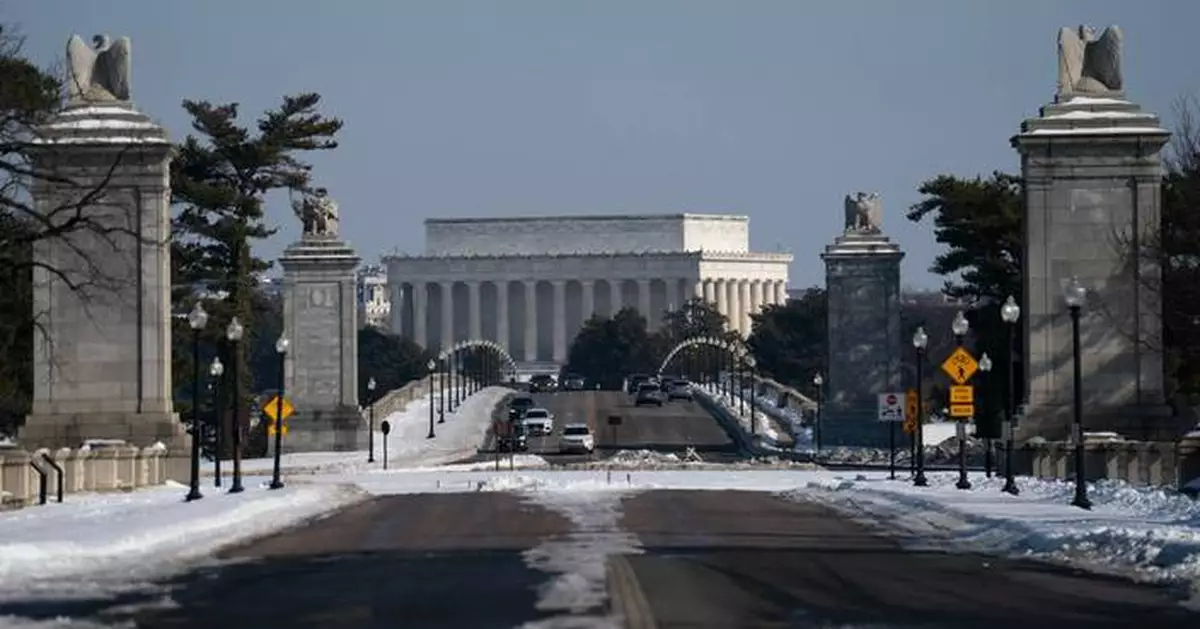
He wants to build a towering arch near the Lincoln Memorial and argues that the nation’s capital first clamored for such a monument two centuries ago — even going so far as to erect four eagle statues as part of the project before being derailed by the attack on Fort Sumter.
“It was interrupted by a thing called the Civil War, and so it never got built,” Trump said aboard Air Force One as he flew to Florida last weekend. “Then, they almost built something in 1902, but it never happened.”
Trump’s history is off — the eagles he references are actually part of a bridge connecting Virginia and Washington that was built decades after the Civil War. The closest Washington came to an arch was a wood and plaster construction built in 1919 to mark the end of World War I — and even that was always meant to be temporary.
“For 200 years they’ve wanted to build an arc,” Trump said, meaning an arch. “They have 57 cities throughout the world that have them. We’re the only major city – Washington, D.C. – that doesn’t.”
Chandra Manning, a history professor at Georgetown University, said Washington was fledgling in the 19th century, dealing with a housing shortage, a lack of boarding houses for visitors, roads that went nowhere and an incomplete U.S. Capitol.
“Washington coming into the Civil War was still this unfinished city,” Manning said. "There’s no push for decorative memorialization in Antebellum Washington because it's still such a place that doesn’t even have all the functional buildings it needs yet.”
Trump has offered a similar historical rationale for the $400 million ballroom he demolished the White House's East Wing to begin building — arguing that officials for 150 years have wanted a large event space.
That claim, too, is dubious. While space at the White House has indeed long been an issue, there's no record of public outcry for a ballroom. Trump nonetheless is employing a similar argument to justify the arch.
“I think it will be the most beautiful in the world,” he said.
The arch would stand near the Arlington Memorial Bridge, which spans the Potomac River.
Trump first unveiled the idea at an October dinner for top donors to his ballroom. Without divulging how much the arch would cost, who would pay for it or whether he'd seek approval from planning officials, the president showed off three different-sized arch models, all featuring a statue of Lady Liberty on top.
The president acknowledged then that the largest one was his favorite, and The Washington Post reported that Trump is mulling building an arch standing 250 feet (76 meters) tall. Asked about that aboard Air Force One, Trump didn't confirm the exact height he desires, but offered: “I’d like it to be the biggest one of all.”
“We’re setting up a committee, and the committee is going to be going over it," Trump said. "It’ll be substantial."
The president says he'd like the new structure to be reminiscent of the Arc de Triomphe, at the end of the Champs-Élysées in Paris, which was built to honor those who fought for France during the French Revolution and Napoleonic wars.
But that monument stands only 50 meters (164 feet) high. A 250-foot Washington arch would dwarf the Lincoln Memorial and White House, and even rival the Capitol, which stands 288 feet (88 meters).
The finished arch would be part of a building boom Trump has personally triggered, anxious to use his background as a onetime New York construction mogul to leave a lasting physical mark on the presidency.
In addition to the ballroom, Trump is closing the Kennedy Center for two years of renovations amid backlash from artists over changes he's made at the nation's premier performing arts venue. He replaced the lawn in the Rose Garden with a patio area reminiscent of his Mar-a-Lago estate in Florida, and redecorated the Lincoln Bathroom and Palm Room in the White House’s interior.
Trump also installed a Walk of Fame featuring portraits of past presidents along the Colonnade, massive flagpoles on the north and south lawns, and golden flourishes, cherubs and other flashy items to the substantially overhauled Oval Office.
The arch would extend the president's influence into Washington, where he has talked of beautifying “tired” grassy areas and broken signage and street medians and also deployed the National Guard to help break up homeless encampments.
Harrison Design, a local firm, is working on the project, though no construction start date has been announced. Trump wants to unveil the new structure as part of celebrations marking America’s 250th birthday.
Pressed on what Trump meant by the four eagles, the White House sent a photo showing eagle sculptures at the four corners of the Arlington Memorial Bridge, but no further details.
“President Trump is right. The American people for nearly 200 years have wanted an Arch in our Nation’s capital to showcase our great history," White House spokesperson Davis Ingle said in a statement. "President Trump’s bold vision will be imprinted upon the fabric of America and be felt by generations to come. His successes will continue to give the greatest Nation on earth — America — the glory it deserves.”
The president's timing is off, though.
The Arlington Memorial Bridge was first proposed in 1886, but it wasn't approved by Congress until 1925. According to the National Park Service, the bridge was conceived after the Civil War and meant to memorialize the symbolic reunification of the North and South.
It was originally built to link the site of the Lincoln Memorial with the home of Confederate Gen. Robert E. Lee — where Arlington National Cemetery now stands. At the time, the direction the eagles would face — right or left, meant to symbolize inward toward the city or outward facing visitors — sparked controversy.
The park service says the bridge was constructed between 1926 and 1931, and an engineer's report lists only slightly different dates — still decades after Trump's timeline.
Washington also once had a Victory Arch built near the White House in 1919, to commemorate the end of World War I. It was wood and plaster, however, and meant to be temporary. That structure was torn down in the summer of 1920.
A 2000 proposal called for a peace arch in Washington, but those plans were abandoned after the Sept. 11 attacks the following year.
Manning, who is also a former National Park Service ranger, said that, Washington aside, “I don't know of a long U.S. tradition of building arches for things."
“That sounds like an import from elsewhere to me,” she said.
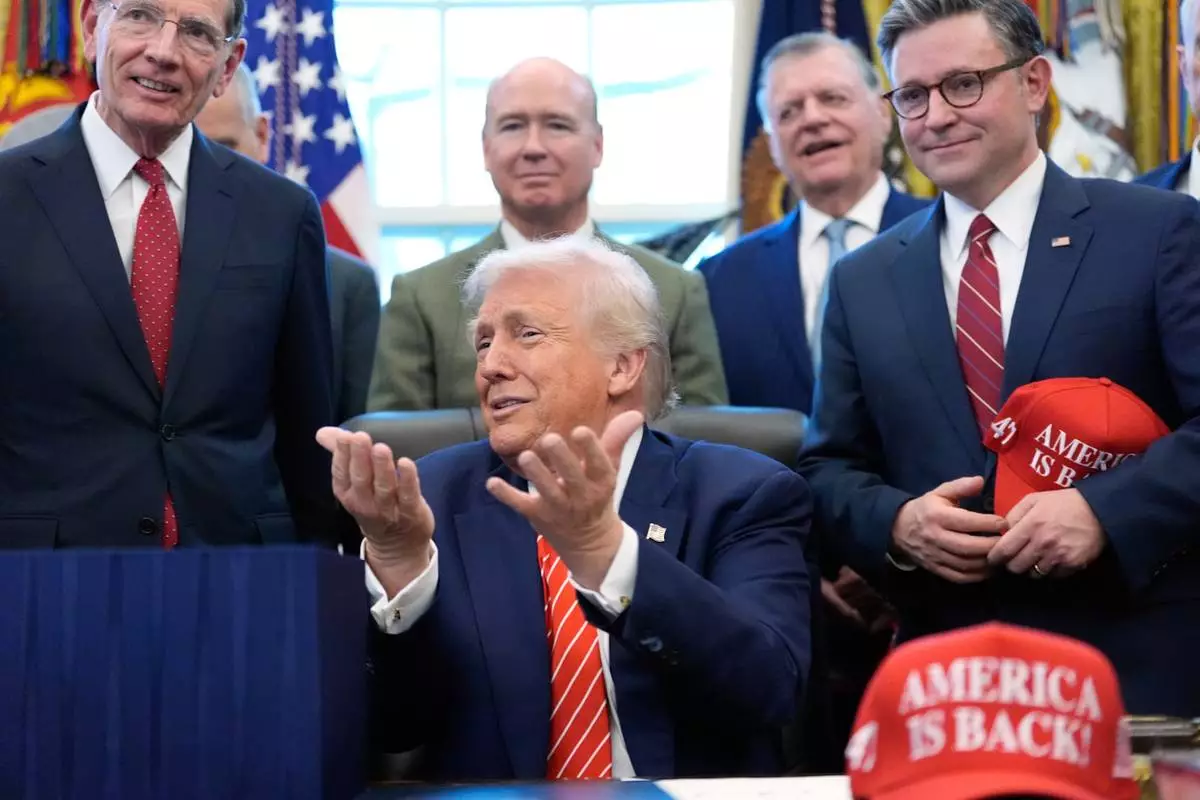
President Donald Trump speaks to reporters after signing a spending bill that ends a partial shutdown of the federal government in the Oval Office of the White House, Tuesday, Feb. 3, 2026, in Washington. (AP Photo/Alex Brandon)
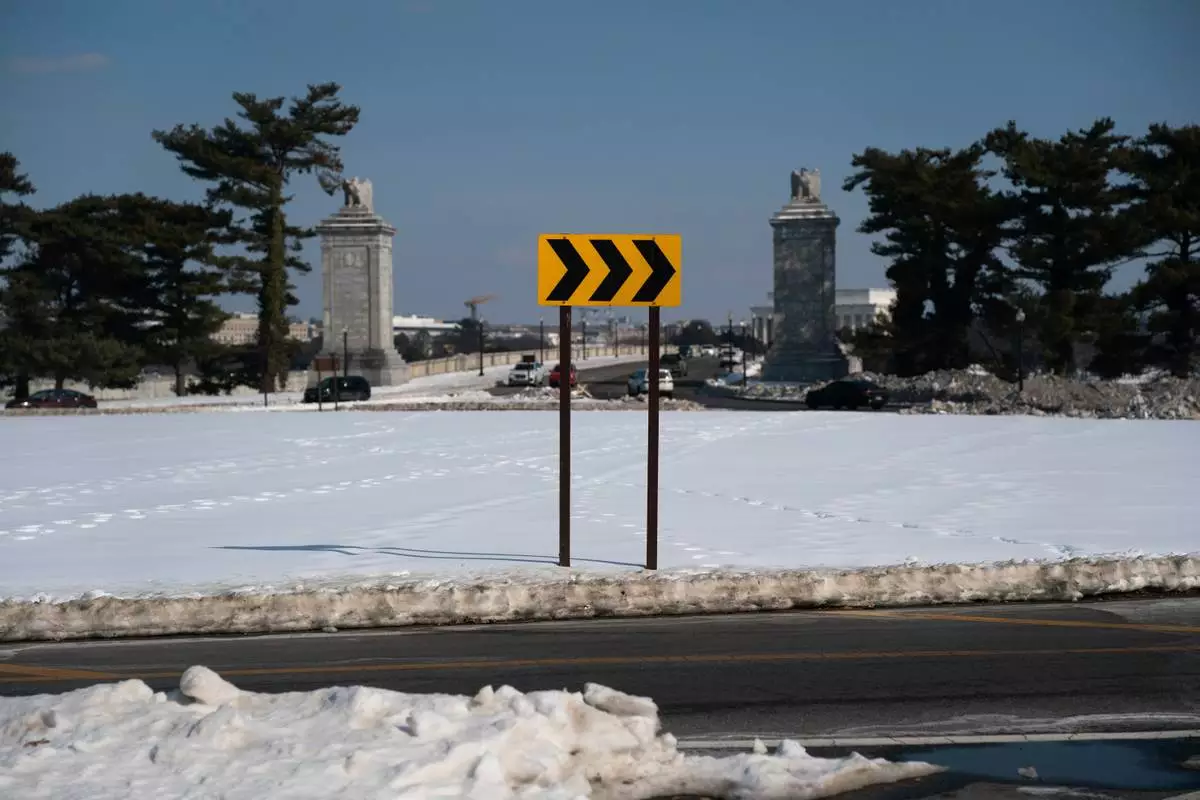
Memorial Circle, the proposed plot of land near Memorial Bridge where the Independence Arch could be built is seen in Washington, Tuesday, Feb. 3, 2026. (AP Photo/Nathan Howard)
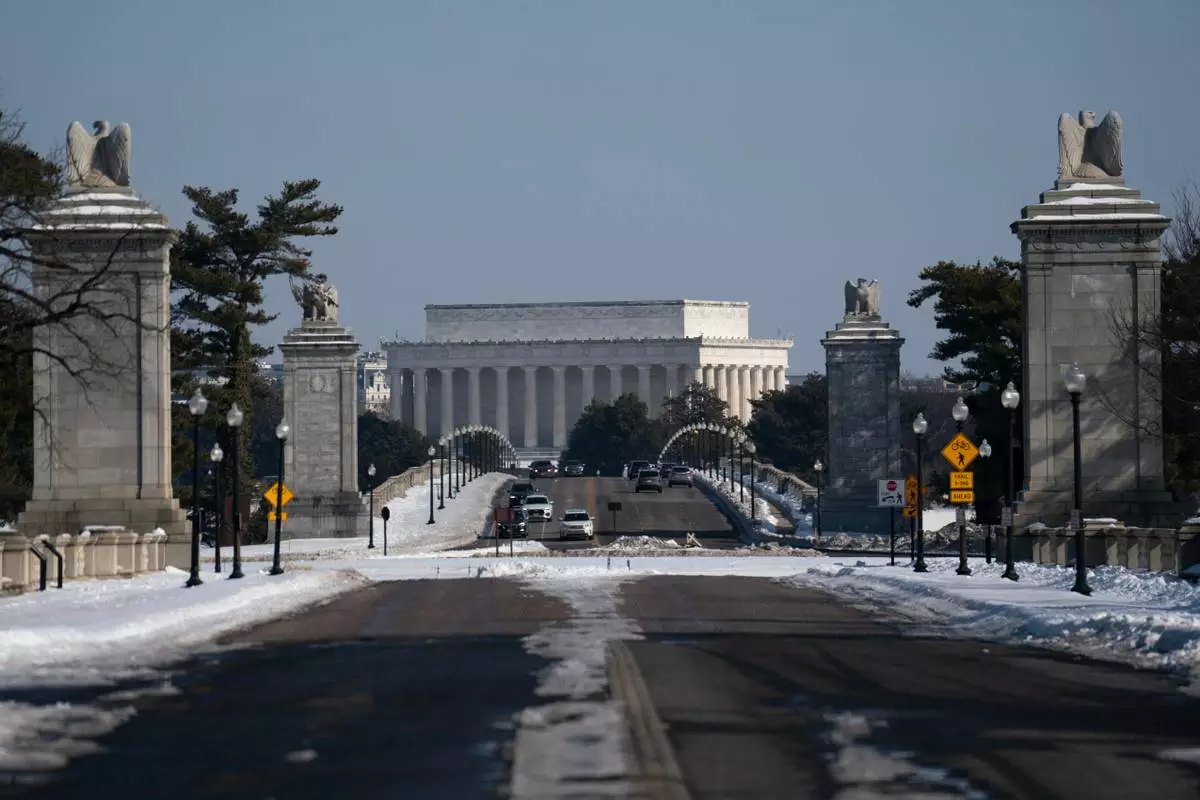
Memorial Circle, the proposed plot of land near Memorial Bridge where the Independence Arch could be built is seen in Washington, Tuesday, Feb. 3, 2026. (AP Photo/Nathan Howard)