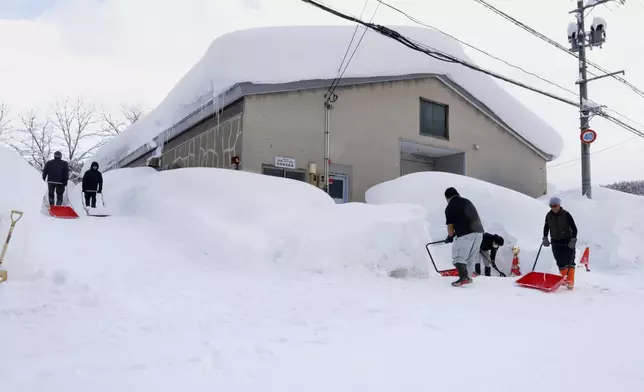
TOKYO (AP) — Heavy snow piling up in northern Japan in the last two weeks has blocked roads and is being blamed for dozens of deaths nationwide.
As of Wednesday, 15 prefectures have been affected, with snow reaching up to 2 meters (6.5 feet) in worst-hit areas. The unusually heavy snowfall is largely due to a cold air mass from the Arctic that has lingered over the Japanese archipelago.
Click to Gallery
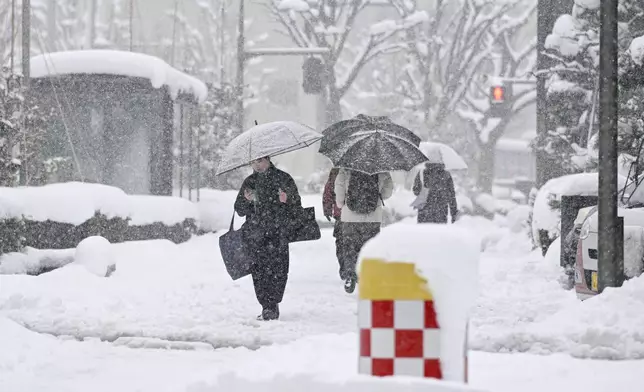
People walk in a snow in Kanazawa, Ishikawa prefecture, Japan, on Jan. 23, 2026. (Kazushi Kurihara/Kyodo News via AP)
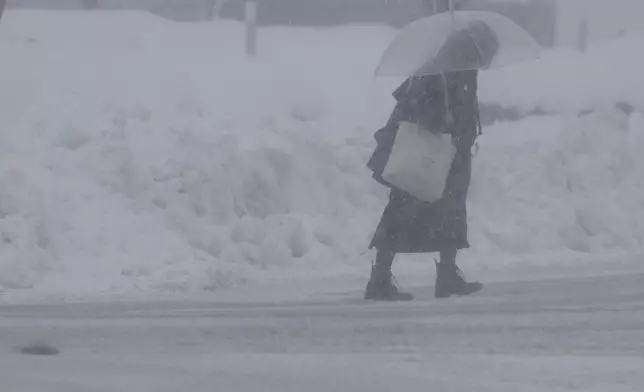
A person walks in a snow in Nagaoka, Niigata prefecture, Japan, on Jan. 22, 2026. (Chiaki Ueda/Kyodo News via AP)
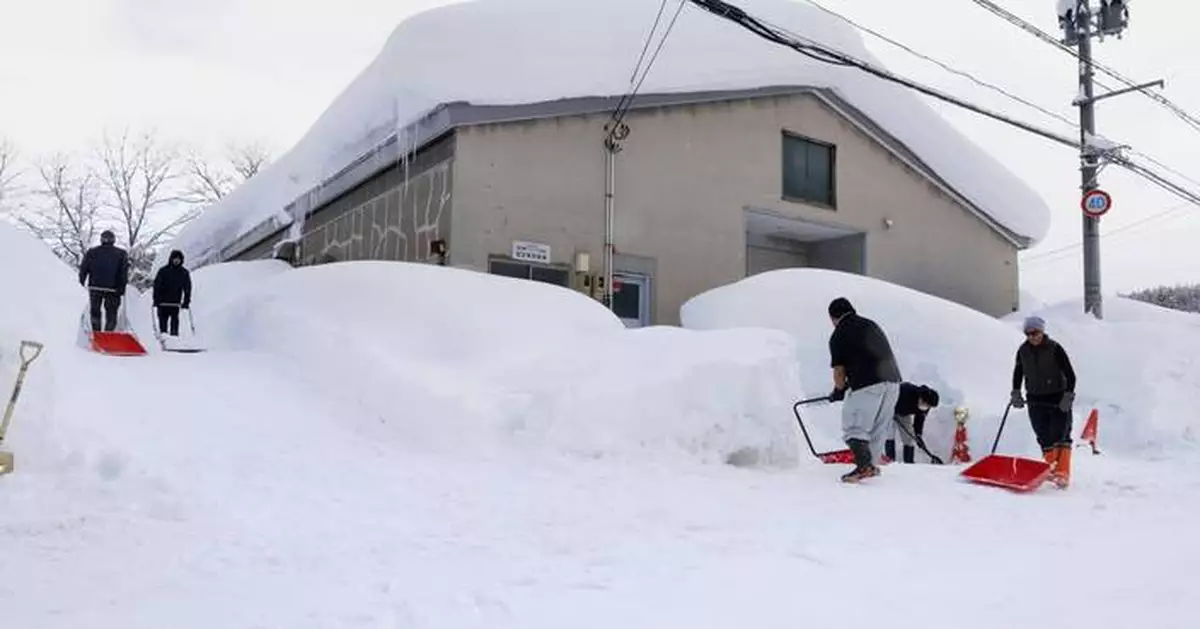
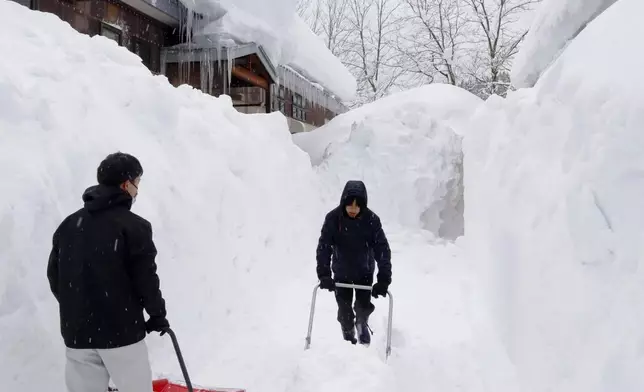
People clear snow near houses in Aomori, northern Japan, Monday, Feb. 2, 2026. (Kyodo News via AP)
People clear snow near a building in Aomori, northern Japan, Monday, Feb. 2, 2026. (Kyodo News via AP)
More than 1,700 homes were without electricity, and most train lines weren’t running, including the bullet trains, according to Aomori prefecture.
“We anticipate some roads might get blocked off, and so we are consulting with services that can help with ambulances and fire trucks to get through to their destinations,” Aomori Gov. Soichiro Miyashita told reporters Wednesday.
Emergency vehicles that weren’t able to get to their destinations had parked nearby, and medical staff gone on foot with stretchers to rescue people in need, he said.
Miyashita said he was asking the city of Aomori to try to clear the main roads of snow, implying that the city is falling behind others. Schools in Aomori were shut, affecting thousands of schoolchildren, he added.
Most of the 35 deaths and hundreds of injuries reported across Japan were caused by falls among people trying to clear their homes of snow.
Twelve of the snow-related fatalities were reported in Niigata prefecture, a rice-growing region in northern Japan, including a man who was found collapsed on the roof of his home in Uonuma city on Jan. 21. In Nagaoka city, a 70-year-old is believed to have died after falling from his roof, according to the Niigata government.
Japan’s chief government spokesperson, Minoru Kihara, warned that although the weather was getting warmer, more danger could lie ahead because snow would start melting, resulting in landslides and slippery surfaces.
Injuries nationwide numbered 393, including 126 serious injuries, 42 of them in Niigata. Fourteen homes were damaged, three in Niigata and eight in Aomori prefecture.
More heavy snow is forecast for the coming weekend in northern Japan.
Yuri Kageyama contributed to this report. She is on Threads: https://www.threads.com/@yurikageyama
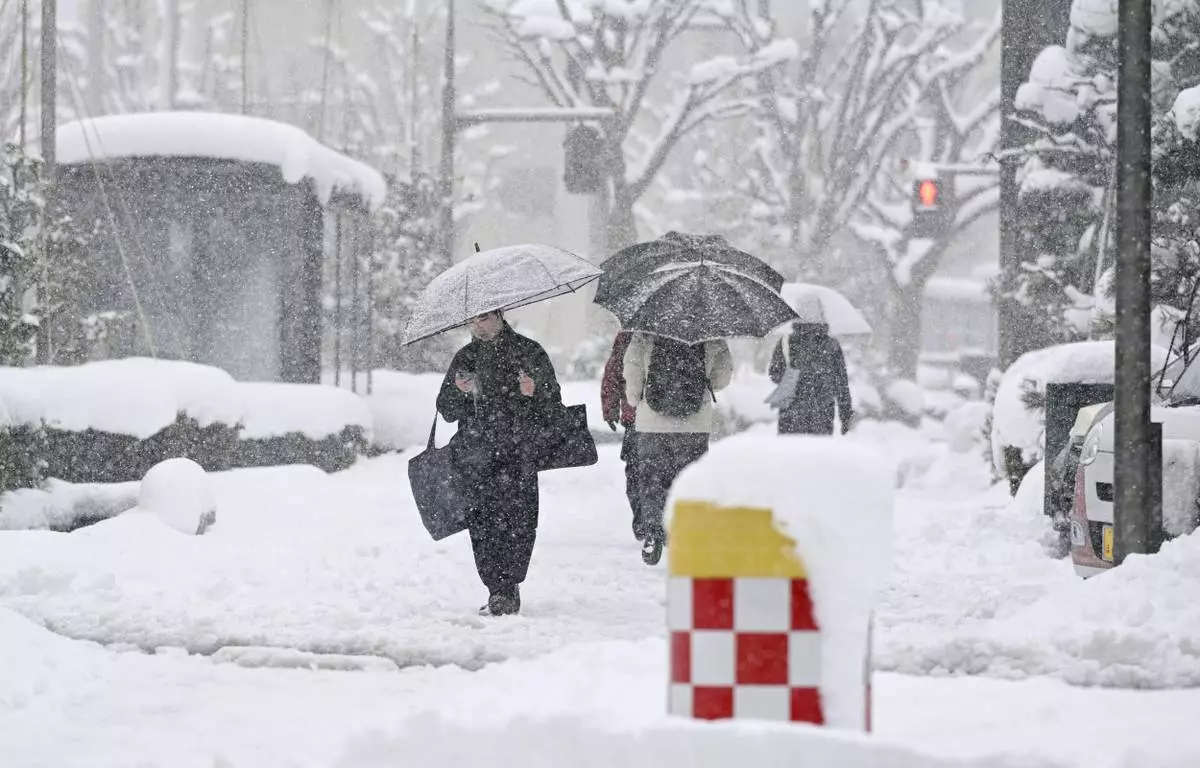
People walk in a snow in Kanazawa, Ishikawa prefecture, Japan, on Jan. 23, 2026. (Kazushi Kurihara/Kyodo News via AP)
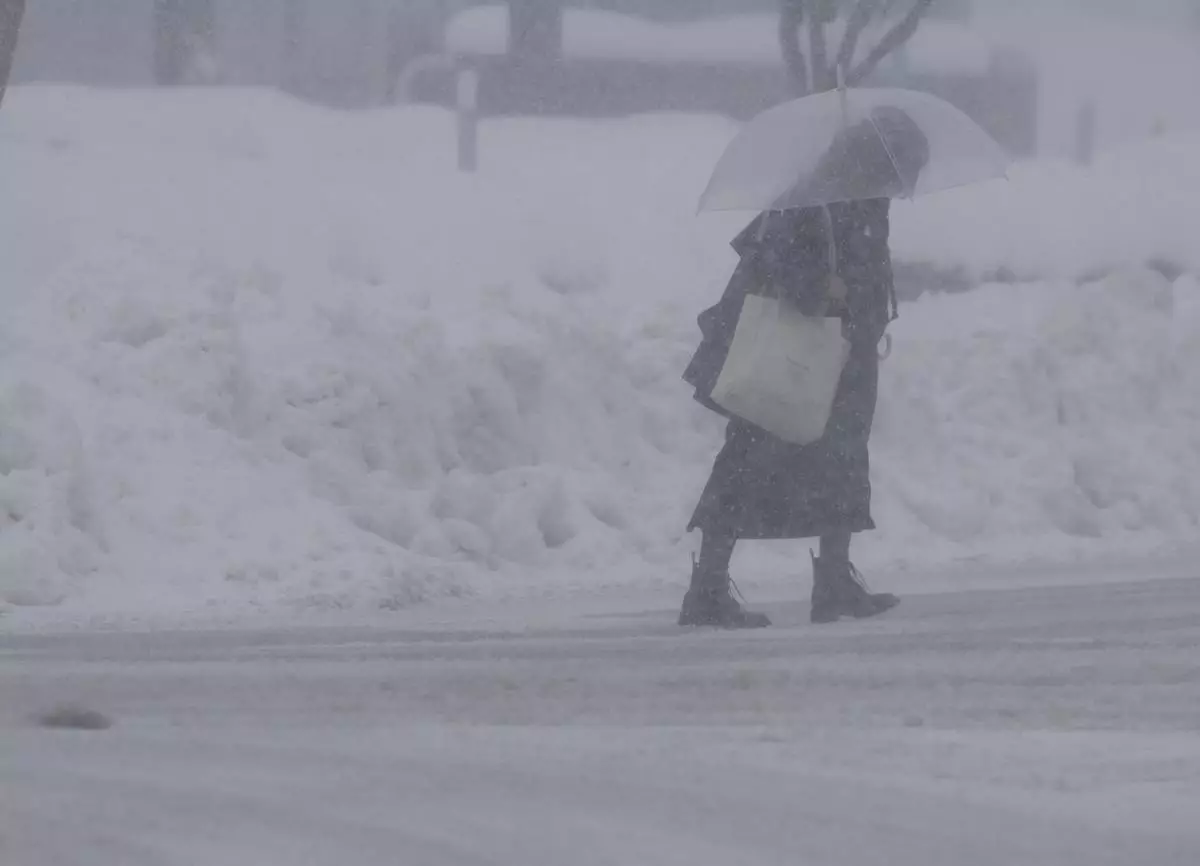
A person walks in a snow in Nagaoka, Niigata prefecture, Japan, on Jan. 22, 2026. (Chiaki Ueda/Kyodo News via AP)
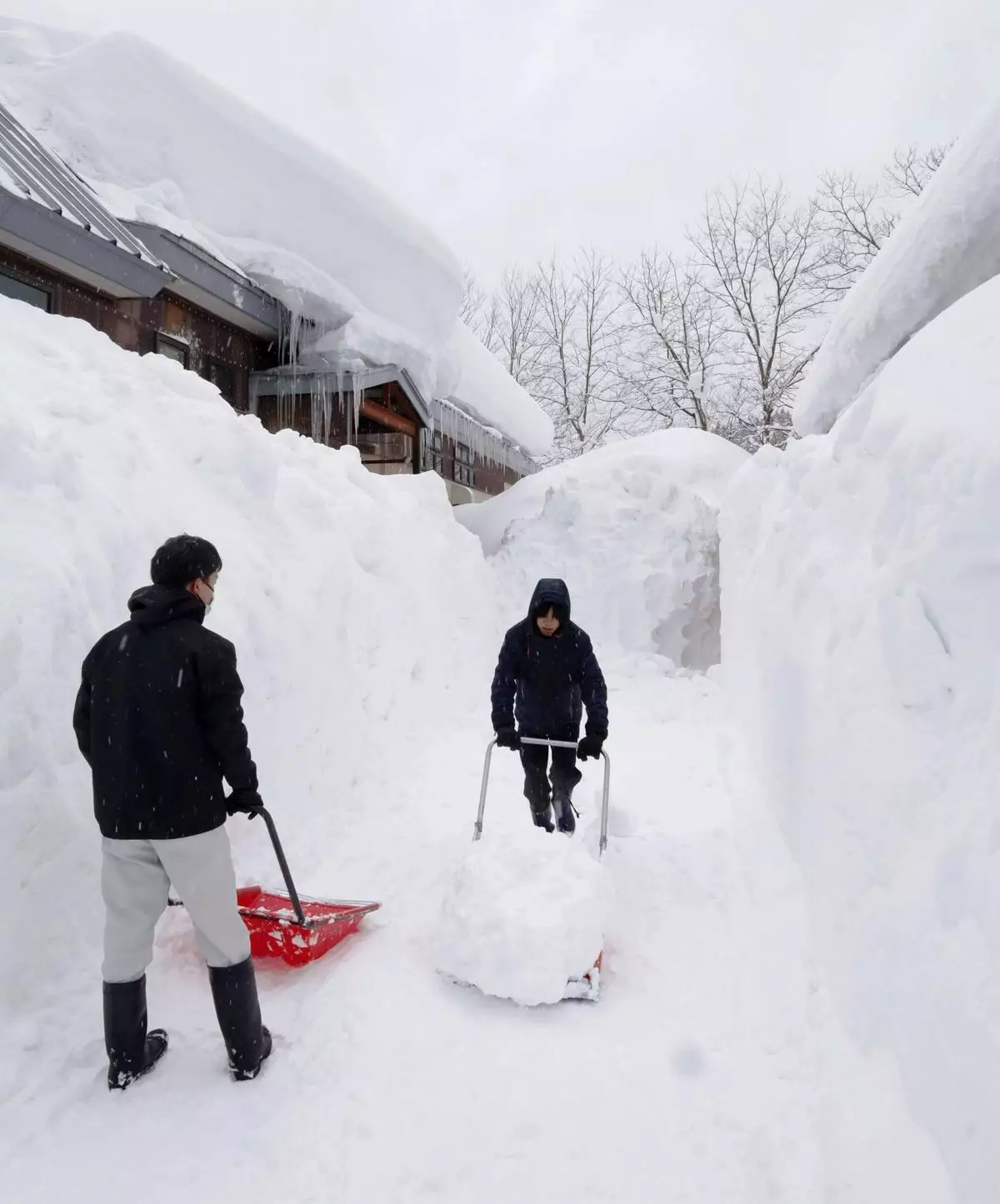
People clear snow near houses in Aomori, northern Japan, Monday, Feb. 2, 2026. (Kyodo News via AP)
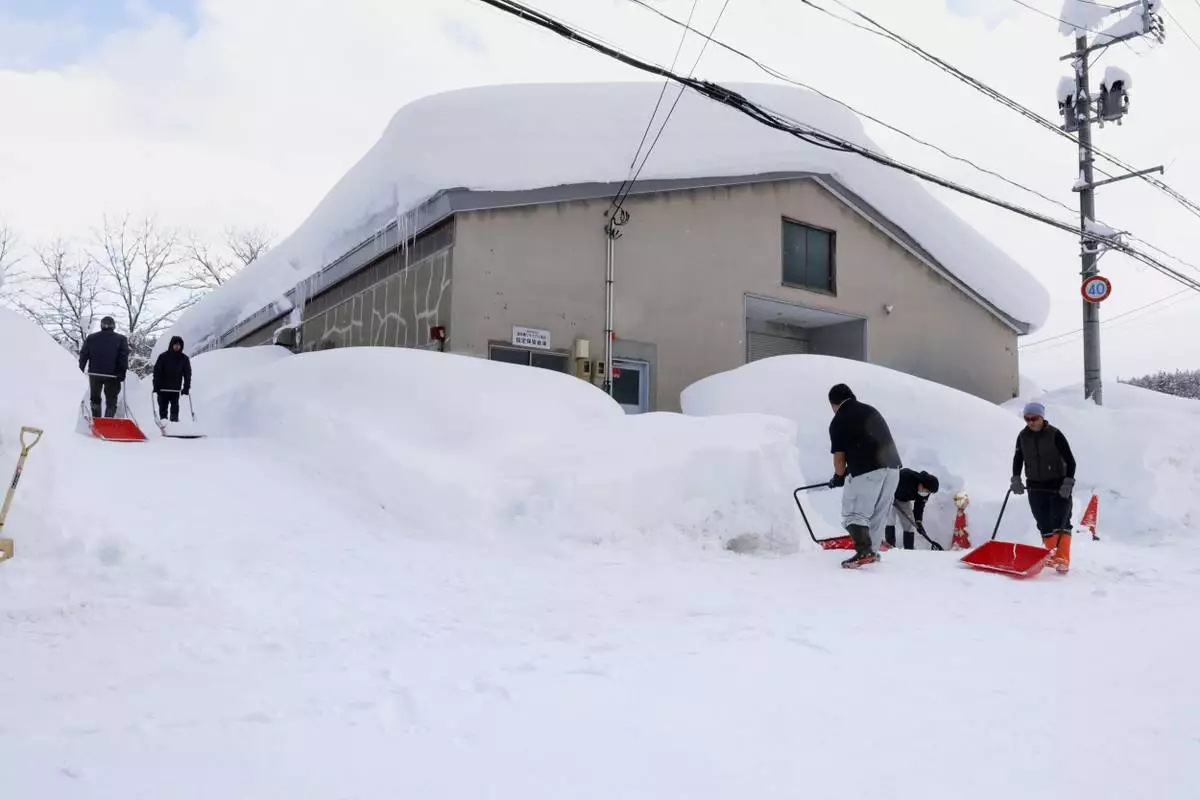
People clear snow near a building in Aomori, northern Japan, Monday, Feb. 2, 2026. (Kyodo News via AP)
MILAN (AP) — Norwegian cyclist Fredrik Dversnes claimed the biggest victory of his career as he won the 15th stage of the Giro d’Italia on Sunday, while Jonas Vingegaard remained in the overall lead heading into the final week.
Dversnes won from a four-man breakaway that escaped early on the flat 157-kilometer (98-mile) route that started in Voghera and ended with four laps of the finishing circuit in Milan.
The Uno-X Mobility rider edged out his fellow escapees by almost a bicycle length, with Mirco Maestri finishing second and Martin Marcellusi third.
It is the first Giro for Dversnes and his team.
“Super good help from the other guys in the breakaway … They were really, really strong today,” Dversnes said. "I knew I had good opportunities because I’m pretty good at going in breakaways, so this was my big shot.
“I’ve been joking this year that I will try to trick the peloton in one of these sprint stages, so I really wanted to do that and prove that, so super glad to make it. It's big. It’s a really big and incredible feeling.”
Vingegaard, who had seized control of the race on Saturday, finished safely in the peloton to maintain his overall advantage of 2:26 over Afonso Eulálio, with Felix Gall 24 seconds further back.
The race jury decided to neutralize Sunday's stage for the last lap after several riders — including Vingegaard — complained about the road surface and the placing of the barriers. The overall times were taken at the last passage under the finish arch, before the start of the last lap.
“Maybe today was not the most safe road, so to speak, but we tried to speak with the organization and they really listened to us,” Vingegaard said. “So I want to thank the organization as well for listening to what we had to say today.”
Monday sees the Giro’s third and final rest day before Tuesday’s brutal 16th stage. The 113-kilometer route from Bellinzona includes five classified climbs, including the top-category slog to the finish in Carì.
The Giro ends on May 31 in Rome.
The women’s Giro from May 30-June 7 will be defended by Italian rider Elisa Longo Borghini.
AP cycling: https://apnews.com/hub/cycling

Denmark's Jonas Vingegaard wears the pink jersey of the race overall leader as he stands on the podium after completing the 15th stage of the Giro d'Italia cycling race, from Voghera to Milan, Italy, Sunday, May 24, 2026. (Massimo Paolone/LaPresse via AP)

Norway's Fredrik Dversnes Lavik, left, celebrates winning the 15th stage of the Giro d'Italia cycling race, from Voghera to Milan, Italy, Sunday, May 24, 2026. (Marco Alpozzi/LaPresse via AP)

Norway's Fredrik Dversnes Lavik celebrates winning the 15th stage of the Giro d'Italia cycling race, from Voghera to Milan, Italy, Sunday, May 24, 2026. (Fabio Ferrari/LaPresse via AP)

Pink jersey Denmark's Jonas Vingegaard, center, pedals during Stage 15 of the Giro d'Italia cycling race, from Voghera to Milan, Italy, Sunday, May 24, 2026. (Fabio Ferrari/LaPresse via AP)

The pack of riders pedals during the 15th stage of the Giro d'Italia cycling race, from Voghera to Milan, Italy, Sunday, May 24, 2026. (Gian Mattia D'Alberto/LaPresse via AP)

Denmark's Jonas Vingegaard wearing the pink jersey of the race overall leader, waves to fans ahead of the 15th stage of the Giro d'Italia cycling race, from Voghera to Milan, Italy, Sunday, May 24, 2026. (Massimo Paolone/LaPresse via AP)