NEW YORK (AP) — Author-vloggers Hank and John Green often end their popular “Crash Course” videos with a donation appeal to keep the YouTube show “free for everyone forever.” The multihyphenate brothers now hope they've figured out a way to do just that — by changing their production studio's tax status.
Their educational media company Complexly, which has garnered billions of views through web series that explain just about every classroom subject from animal biology to Latin American literature, will now operate as a nonprofit.
Click to Gallery
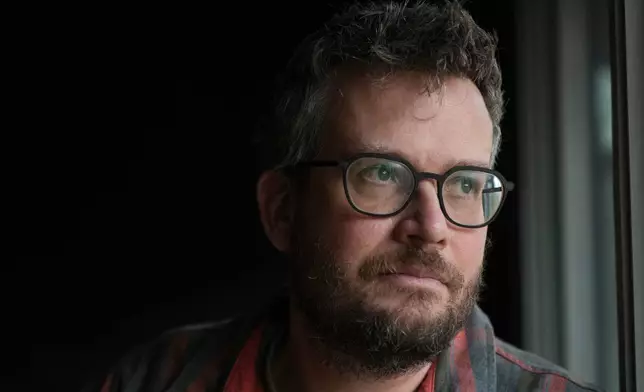
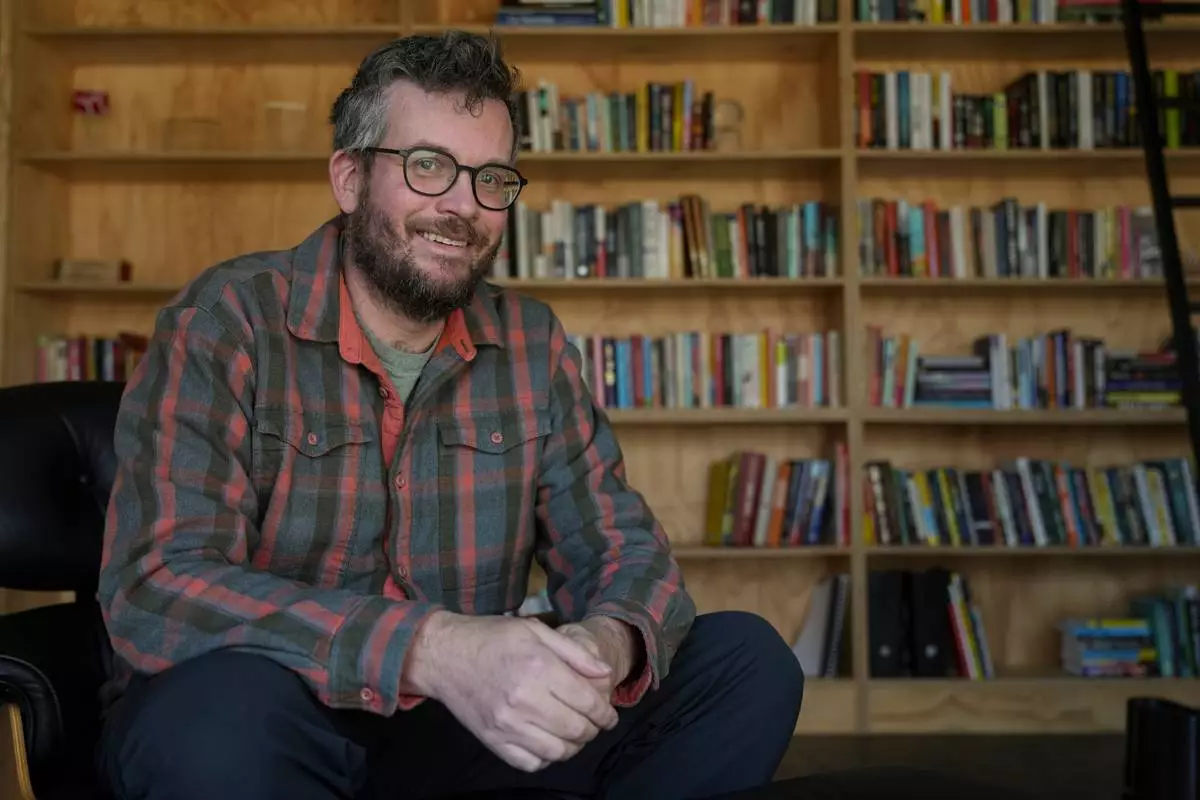
Writer John Green poses in his studio in Indianapolis, Wednesday, Jan. 21, 2026. (AP Photo/Michael Conroy)
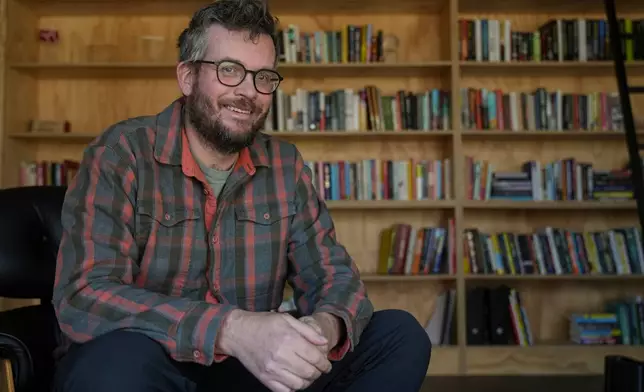

Hank Green sits for a portrait at his studio in Missoula, Mont., on Tuesday, Jan. 27, 2026. (AP Photo/Tommy Martino)


FILE- This combination of photos show brothers John Green, left, and Hank Green. (AP Photo)
The change is intended to ensure viewers have access to engaging, fact-based content that can compete free of advertisers' interests in the attention economy. It comes as artificial intelligence gives rise to absurdist “ brain rot ” and distorted deepfake images while public media struggles to make ends meet amid sudden cuts in federal funding.
“Part of what Complexly’s trying to do is create good information on the internet,” Hank told the Associated Press. “Let’s actually just say that this is our goal. Like, our goal isn’t to build a big company and sell it someday.”
“There’s never been more information and yet there’s never been less information that you feel you can trust," John added. "Our goal at Complexly has always been to make trustworthy content. And making Complexly a public good, for me, is the next step in that process.”
Nonprofit status has been a consideration for several years, according to Complexly CEO Julie Walsh Smith.
The studio already receives sizable philanthropic funding — including $4.8 million last year. The nonprofit's initial supporters are led by existing partners such as YouTube, PBS, and the Alfred P. Sloan Foundation. Other funders such as Arizona State University and the Howard Hughes Medical Institute underwrite a number of “Crash Course” projects.
While about one-tenth of their revenue comes from a YouTube program that gives creators a share of advertising earnings, strong audience support made them confident in their ability to reach individual donors.
Complexly estimates that another tenth of their revenue comes from Patreon, a platform where fans can contribute to their favorite online creators often in exchange for bonus content. Monthly Patreon subscribers tend to give $5 or $10 to help them make shows such as “Crash Course.”
They also sell minted silver “Crash Course” coins every year that can cost thousands of dollars. Hank said they have relationships with the individuals who buy the most expensive versions of the coin — and that most of those high-dollar supporters have said they want to increase their support but maybe “felt a little weird” giving money to a for-profit entity.
The small donors provide general funds that Hank said give them flexibility to “invest in the ideas that we think are most likely to deliver impact through reach.”
It is "hard to do the thing that we have to do where we compete with MrBeast and cat videos and all of the very attention-grabbing dashcam fights that YouTube has to offer," he said. “But we really take that responsibility very seriously. We are not just here to make educational video. We are here to make educational video that people choose to watch. And so that's the fight that we are fighting."
The nonprofit transition requires Hank and John, best known for his young adult novels “The Fault in Our Stars” and “Looking for Alaska,” give up any equity they held in Complexly. While the Montana-headquartered nonprofit expects to maintain its staff of roughly 80 employees, Smith says its growth means they no longer require the founders’ “day-to-day leadership.”
John will move forward as “founder emeritus” — he doesn’t know exactly what that means but says he is “looking forward to finding out” — while Hank will join the nonprofit’s board of directors and continue hosting some shows.
“The way I like to think about it is they’re going from leaders of the organization to cheerleaders,” said Smith.
John promised that the viewing experience won't change much. If anything, he said, there are potential new shows “that have long been great ideas that weren't possible because they didn't make sense from a business perspective."
Complexly is committing $8.5 million to new content that neither its founders nor CEO would discuss yet. But Smith did say they are seeking additional funding for an upcoming series that will go behind the scenes at zoos and museums to spotlight the specimens they don't display.
As far as new mediums such as TikTok go, Smith said they're focused on YouTube while staying committed to being in the spaces “where audiences are spending their time.”
The duo has long tried to crack the economics of the internet.
They founded the crowdfunding platform Subbable in 2013 to help creators raise money for specific projects. There was even a point where Hank tried to form a union for creators, whose livelihoods are subject to the unpredictability of social media platforms' algorithmic priorities and advertising share models.
This shift wasn't motivated by any doubts about their business' health, they insisted, but rather other concerns.
“We've always worried about being overly reliant on advertising,” John said. “I think that an advertising-funded internet is a complicated place to live, as I've observed from the last 25 years of my life.”
By leaning into philanthropic funding, John says the desire is for Complexly to exist “for the good of the people who benefit from it” and not “for anyone else's benefit."
“That’s not the same path a lot of digital media companies take,” Smith said. “Often, they’ll put premium content behind paywalls or behind a subscription service. And we’re just never gonna do that.”
It's hardly their first foray into philanthropy.
The brothers say they have granted more than $17 million to dozens of charities through their Foundation to Decrease World Suck. They fund those donations with the profits from everyday purchases made on the Good Store, their online retailer.
That familiarity has made them aware of the fact that many nonprofits struggle with the nimbleness required of a digital production studio. But they emphasized that there are many ways to run a nonprofit. John noted that Partners in Health — one of the Good Store's charitable partners — track tuberculosis in Lesotho with an app that is “on par with anything being done in the private sector.”
“It's perfectly possible for nonprofits to be innovative and fast movers," John said. "It's just that you need to set that up from the beginning."
“Can we signal to other people that there is no reason why you can't do this and also model, as we go forward, that if that's a choice that other people want to make then there's good ways to do it?" Hank added.
Associated Press coverage of philanthropy and nonprofits receives support through the AP’s collaboration with The Conversation US, with funding from Lilly Endowment Inc. The AP is solely responsible for this content. For all of AP’s philanthropy coverage, visit https://apnews.com/hub/philanthropy.
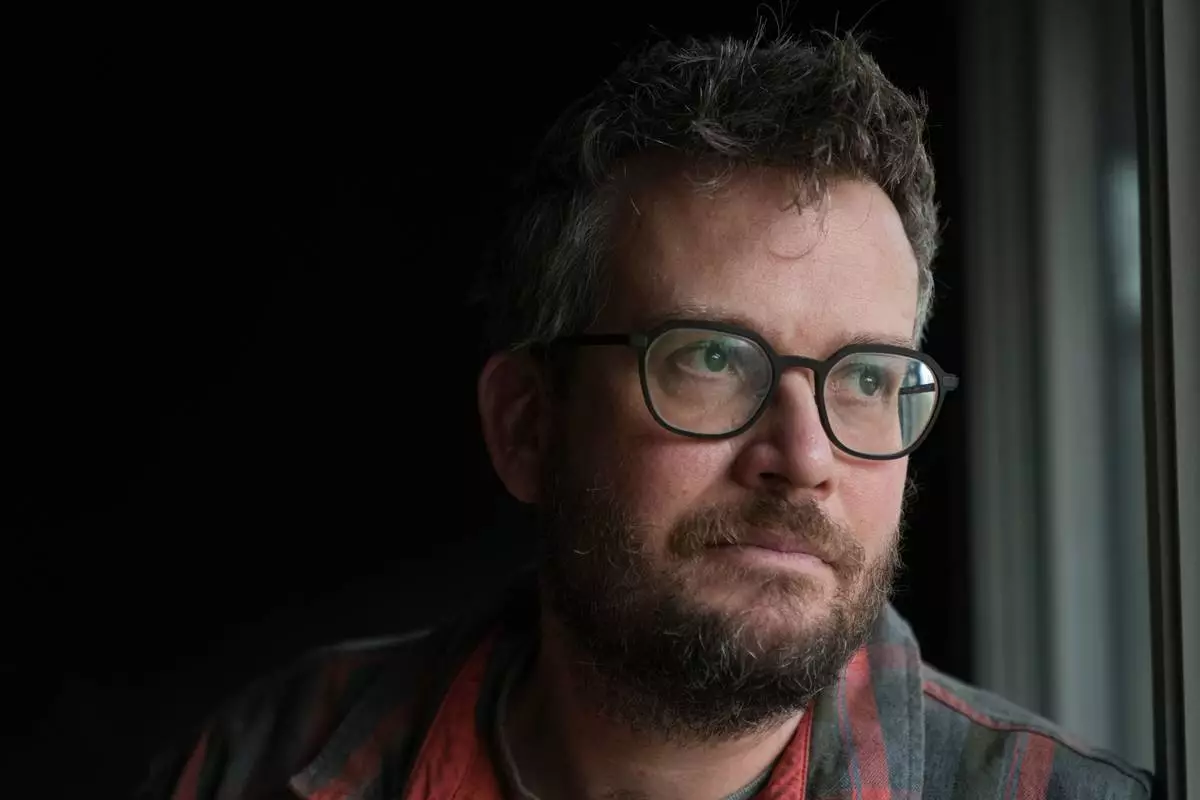
Writer John Green poses in his studio in Indianapolis, Wednesday, Jan. 21, 2026. (AP Photo/Michael Conroy)

Hank Green sits for a portrait at his studio in Missoula, Mont., on Tuesday, Jan. 27, 2026. (AP Photo/Tommy Martino)


FILE- This combination of photos show brothers John Green, left, and Hank Green. (AP Photo)

President Donald Trump’s administration is reducing the number of immigration enforcement officers in Minnesota after state and local officials agreed to cooperate by turning over arrested immigrants, border czar Tom Homan said Wednesday.
About 700 of the roughly 3,000 federal officers deployed around Minnesota will be withdrawn, Homan said. The immigration operations have upended the Twin Cities and escalated protests, especially since the killing of protester Alex Pretti, the second fatal shooting by federal officers in Minneapolis.
Homan pushed for jails to alert ICE to inmates who could be deported, saying transferring such inmates to the agency is safer because it means fewer officers have to be out looking for people in the country illegally.
Here's the latest:
Despite nodding to mistakes in Trump’s immigration crackdown in Minnesota, Homan is still vigorously defending federal officers and pointing fingers at protesters.
“We will hold our officers to the highest standard,” he told reporters before shifting tone.
“Considering the hate, the rhetoric, the attack, I think they performed remarkably, and I’m proud of them,” he said.
Homan urged protesters to back off.
“The message to those folks: ‘What are you doing?’” he said. “You really think you’re going to stop ICE and CBP from doing their job? It’s a joke. The only people you are hurting is your own community. ... Stop. Stop.”
During that critique, Homan did not explicitly acknowledge that ICE and Border Patrols shot and killed two U.S. citizens in January.
Trump’s border czar described improved coordination among federal, state and local law enforcement after he arrived in Minnesota to oversee Trump’s immigration crackdown.
But Homan stopped short Wednesday of criticizing operations before he arrived, despite clashes between federal authorities and Minnesota residents, including ICE and Border Patrol officers killing two U.S. citizens.
The operation under the now-deposed Gregory Bovino was “very effective as far as public safety goes,” Homan said. “Was it a perfect operation? No,” he continued, later adding, “I’m not going to sit here and point the finger at anybody” and say “they failed.”
Homan said he “brought a different set of eyes” to Minnesota at Trump’s request.
“President Trump sent me here to help de-escalate what was going on,” Homan said, without mentioning the killings of Renee Good and Alex Pretti. “We’re not surrendering our mission. … We’re just making this more effective and more smart.”
A prosecutor says the Justice Department is still weighing whether to seek the death penalty against a man charged with shooting two National Guard troops near the White House, killing one of them.
Prosecutors may seek to add charges that would make Rahmanullah Lakanwal eligible for a death sentence if he’s convicted in the Nov. 26 ambush, Assistant U.S. Attorney Christopher Tortorice said Wednesday during the defendant’s court appearance.
“We’re pursuing those options,” Tortorice told U.S. District Judge Amit Mehta. “We’re continuing to look at that.”
Mehta said he wasn’t asking for any “firm commitments” from the government yet.
“I’d rather get to that point sooner rather than later,” the judge said before setting May 6 as Lakanwal’s next court date in Washington.
Lakanwal, an Afghan national, pleaded not guilty to nine counts, including first-degree murder, in the shooting that killed West Virginia National Guard Spc. Sarah Beckstrom and critically wounded Staff. Sgt. Andrew Wolfe.
State and local officials, along with Minnesota officials, have harshly criticized the federal government’s roving patrols in the streets of Minneapolis and the surrounding area.
“When we leave this building, we know who we’re looking for, where we’re most likely to find (them), what their criminal record is,” Homan told reporters Wednesday in Minnesota.
Still, when pressed on whether ICE and CBP officers would stop random requests that people prove their U.S. citizenship or legal immigration status, Homan declined to rule out spontaneous arrests beyond an original “criminal target.”
“We will not turn a blind eye to illegal immigration,” he said.
Homan says its a mix of 700 ICE and Border Patrol agents leaving. The remaining federal footprint will be more than 2,000. Homan says he would like to return to the metro area’s normal federal immigration footprint, which he said was about 150 officers.
Representing the Japanese government, minister of state for foreign affairs Iwao Horii told the meeting that Japan was fully on board with the U.S. initiative and would work with as many countries as possible to ensure it’s a success.
“Japan shares a deep sense of concern and urgency about the risk of disruptions to critical mineral supply chains,” he told a ministerial meeting on critical minerals co-hosted by Vance and Rubio at the State Department.
“Critical minerals and (their) stable supply is indispensable to the sustainable development of the global economy,” he said.
Chinese President Xi Jinping on Wednesday spoke with President Trump, said Liu Pengyu, spokesperson for the Chinese embassy in Washington. He said details weren’t immediately available.
The phone call came just as Secretary of State Marco Rubio convened a ministerial meeting with ministers from several dozens of countries to discuss how to rebuild supply chains of critical minerals to counter China. Vice President JD Vance proposed a trading bloc without China at the meeting, which is being held at the State Department.
Fulton County has filed a motion in federal court seeking the return of all documents from the 2020 election that were seized last week from a warehouse near Atlanta by the FBI, officials in the Georgia county said Wednesday.
The motion also asks for the unsealing of a law enforcement agent’s sworn statement that was presented to the judge who signed off on the search warrant, county spokesperson Jessica Corbitt-Dominguez said. The county isn’t releasing the motion because the case is under seal, she said.
The Jan. 28 search at Fulton County’s main election facility in Union City sought records related to the 2020 election.
▶ Read more
He proposed frameworks that will serve as “platforms for coordinating policies” to ensure countries can have abundant and affordable access to critical minerals.
“So we stand ready and intend to work with each country here today to find a specialized role that you can play,” Rubio said, as he was hosting a ministerial meeting at the State Department with dozens of nations to build a bloc to rebuild global supply chains of the critical minerals without China. “Everyone here has a role to play, and that’s why we’re so grateful for you coming and being a part of this gathering that I hope will lead to not just more gatherings, but action.”
He called for the “trading bloc” among allies and partners to build supply chains of critical minerals to counter China.
“We want members to form a trading bloc among allies and partners, one that guarantees American access to American industrial might while also expanding production across the entire zone,” he said at a ministerial meeting at the State Department on Wednesday. “What is before all of us is an opportunity at self-reliance that we never have to rely on anybody else except for each other, for the critical minerals necessary to sustain our industries and to sustain growth.”
He defended the government’s push to ramp up production of the rare earths metals used in electronics, military hardware, phones and other goods.
Vance said markets have been unable to deliver on key economic priorities at a State Department conference on building out the rare earths supply chain that is now dominated by China.
“But even in some cases, even in the United States, some of these projects are struggling to attract investors,” Vance said. “This is crazy.”
The vice president added: “We in the Trump administration believe it is the business of the government.”
Vance said the U.S. government will create baseline prices for rare earths to ensure that foreign competitors are unable to undercut domestic producers and a trading bloc among the U.S. and its allies.
Vice President JD Vance on Wednesday said prices for critical minerals must be made “more predictable and less erratic” for the U.S. to rebuild its critical minerals industry to counter China in the global market.
Vance is speaking at a ministerial meeting at the State Department where Secretary of State Marco Rubio is convening ministers from several dozens of countries on building supply chains that should be less reliant on China.
“We see telltale signs of a market distorted beyond recognition, one that punishes strategic investment, one that punishes diversification, and one that punishes long term planning.” he said.
The Trump administration is reducing the number of immigration enforcement officers in Minnesota after state and local officials agreed to cooperate by turning over arrested immigrants, border czar Tom Homan said Wednesday.
About 700 federal agents will be withdrawn from the immigration operation around Minnesota, Homan said during a news conference. Roughly 3,000 federal officers are currently deployed in the state.
▶ Read more
Secretary of State Marco Rubio said the issue is a “top priority for the world.”
He introduced Vice President JD Vance, who joked about the many hats Rubio wears in the administration. Vance said that when Rubio invited him to the State Department, he countered that Rubio should come to the White House instead. But then Rubio said he has many jobs and Vance said he’d do Rubio a favor since Vance has just one job.
A few of Rubio’s other responsibilities are national security adviser and acting archivist of the United States.
That, combined with aggressive actions by Russia and China, has wreaked havoc on human rights protections globally, according to the annual report.
”President Donald Trump’s second administration has been marked from the start by blatant disregard for human rights and egregious violations. The U.S took significant steps backward on immigration, health, environment, labor, disability, gender, criminal justice, and freedom of speech rights, among others,” the 536-page report said.
In his message, entitled “Will Human Rights Survive a Trumpian World?” executive director Philippe Bolopian said U.S. actions at home and abroad in the past year may be seen as a tipping point and places them in a class with Russia and China and leaves a vacancy in leadership in pursuit of world human rights.
In an email to The Associated Press, Bolopian said “The deterioration of democracy and human rights in the US. the past year is probably the worst I have seen in my lifetime. I cannot remember a similar assault on domestic checks and balances, coupled with such an open disdain for international human rights norms.”
The White House didn’t immediately respond to requests for comment.
The semiofficial ISNA and Tasnim news agencies, as well as the Student News Network, all reported the talks would take place.
Oman didn’t immediately acknowledge it would host the talks. The sultanate hosted multiple rounds of earlier nuclear talks between Iran and the U.S.
The U.S. hasn’t acknowledge the talks would take place in Oman, though the White House said it anticipated the negotiations would take place even after the U.S. shot down an Iranian drone Tuesday and Iran attempted to stop a U.S.-flagged ship.
▶ Read more
Hamas released Keith Siegel in February 2025 after 15 months in captivity as part of a U.S.-brokered ceasefire with Israel.
Melania Trump had met with Siegel’s wife, Aviva Siegel, in the weeks before Donald Trump opened his second term as president. She was released during a brief ceasefire in November 2023, shortly after the militant group launched a surprise attack in southern Israel on Oct. 7, 2023, that killed about 1,200 people and took 251 others hostage.
The first lady included footage of her meeting with Siegel’s wife in a documentary film that opened in theaters last week.
▶ Read more
Ryan Routh is scheduled to appear Wednesday before U. S. District Judge Aileen Cannon in Fort Pierce. Her courtroom erupted into chaos in September shortly after jurors found Routh guilty on all counts, including attempting to kill a presidential candidate and several firearm-related charges. Routh tried to stab himself in the neck with a pen, and officers quickly dragged him out.
Routh’s sentencing had initially been scheduled for December, but Cannon agreed to move the date back after Routh decided to use an attorney during the sentencing phase instead of representing himself as he did for most of the trial.
Prosecutors said in a sentencing memorandum filed last month that Routh has yet to accept any responsibility for his actions and that he should spend the rest of his life in prison, in accordance with federal sentencing guidelines.
▶ Read more
The 2nd U.S. Circuit Court of Appeals in November ordered U.S. District Judge Alvin K. Hellerstein to reconsider his decision to keep the case in state court instead of moving it to federal court, where President Trump can seek to have it thrown out on presidential immunity grounds.
A three-judge panel ruled Hellerstein erred by failing to consider “important issues relevant” to Trump’s request to move the New York case to federal court. They said they “express no view” on how he should rule.
Trump, a Republican, isn’t expected to attend Wednesday’s arguments in federal court in New York City, which were preceded by lengthy written submissions from Trump’s lawyers and the Manhattan district attorney’s office, which prosecuted the case and wants it to remain in state court.
Trump was convicted in May 2024 of 34 felony counts of falsifying business records to conceal a hush money payment to adult film actor Stormy Daniels, whose allegations of an affair with Trump threatened to upend his 2016 presidential campaign. He was sentenced to an unconditional discharge, leaving his conviction intact but sparing him any punishment.
Trump denies Daniels’ claim and said he did nothing wrong.
Despite rare negotiations between Democrats and President Donald Trump, a bipartisan agreement on new restrictions for federal immigration enforcement in the next two weeks will be exceedingly difficult — or even “an impossibility,” as Republican Senate Majority Leader John Thune said.
Congress is discussing potential new rules for Immigration and Customs Enforcement and U.S. Customs and Border Protection after officers shot and killed two Minneapolis protesters in January. The negotiations come amid some bipartisan sentiment that Congress should step in to de-escalate tensions over the enforcement operations that have rocked Minnesota and other states.
But it’s unclear if the president or enough congressional Republicans will agree to any of the Democrats’ larger demands that the officers unmask and identify themselves, obtain judicial warrants in certain cases and work with local authorities, among other asks. Republicans have already pushed back.
▶ Read more
A complaint made about Director of National Intelligence Tulsi Gabbard months ago relates to an allegation that she withheld access to classified information for political reasons, according to a memo sent to lawmakers by the Inspector General’s Office and obtained by The Associated Press.
That allegation in the complaint filed in May appeared to not be credible, according to the former watchdog for the intelligence community that initially reviewed it. It has become a flashpoint for Gabbard’s critics, who accuse her of withholding information from members of Congress tasked with providing oversight of the intelligence services.
Copies of the top-secret complaint are being hand-delivered this week to the “Gang of Eight” lawmakers — a group comprised of the House and Senate leaders from both parties as well as the top Democrats and Republicans on the House and Senate intelligence committees.
Gabbard’s office has denied the allegations and disputed that it withheld the complaint, saying the delay in getting it to lawmakers was due to an extensive legal review necessitated by the complaint’s many classified details, as well as last year’s government shutdown.
▶ Read more
President Donald Trump’s administration is expected to unveil its grandest plan yet to rebuild supply chains of critical minerals needed for everything from jet engines to smartphones, likely through purchase agreements with partners on top of creating a $12 billion U.S. strategic reserve to help counter China’s dominance.
Vice President JD Vance is set to deliver a keynote address Wednesday at a meeting that Secretary of State Marco Rubio is hosting with officials from several dozen European, Asian and African nations. The U.S. is expected to sign deals on supply chain logistics, though details have not been revealed. Rubio met Tuesday with foreign ministers from South Korea and India to discuss critical minerals mining and processing.
The meeting and expected agreements will come just two days after Trump announced Project Vault, or a stockpile of critical minerals to be funded with a $10 billion loan from the U.S. Export-Import Bank and nearly $1.67 billion in private capital.
▶ Read more
President Donald Trump speaks to reporters after signing a spending bill that ends a partial shutdown of the federal government in the Oval Office of the White House, Tuesday, Feb. 3, 2026, in Washington. (AP Photo/Alex Brandon)