A Chinese team has unveiled a full-size humanoid robot capable of running at 10 meters per second, thus outsprinting most humans.
The robot called "Bolt", named after Jamaican sprint legend Usain Bolt, was developed by the Humanoid Robot Innovation Research Institute at the Zhejiang University's Hangzhou Global Scientific and Technological Innovation Center in east China, in collaboration with Hangzhou-based robotics startups Mirror Me and Kaierda, both also located in Zhejiang.
Standing 175 centimeters tall and weighing 75 kilograms, "Bolt" was designed to mimic human proportions while pushing the physical boundaries of bipedal movement.
This achievement marks a significant breakthrough in robot locomotion control, dynamic balance and high-performance drive systems, according to the developers.
Wang Hongtao, head of the institute and founder of Mirror Me, and the red-painted metallic android competed against each other on treadmills. A released video clip shows that while the robot took shorter strides, it was able to move at a faster cadence than Wang.
Wang noted that the primary goal of the research was not simply to break records but to develop a technological foundation that approaches or exceeds the biological limits of human motion.
The team previously set a speed record for quadruped robots in 2025 with its Black Panther, which reached a speed of more than 10 meters per second.
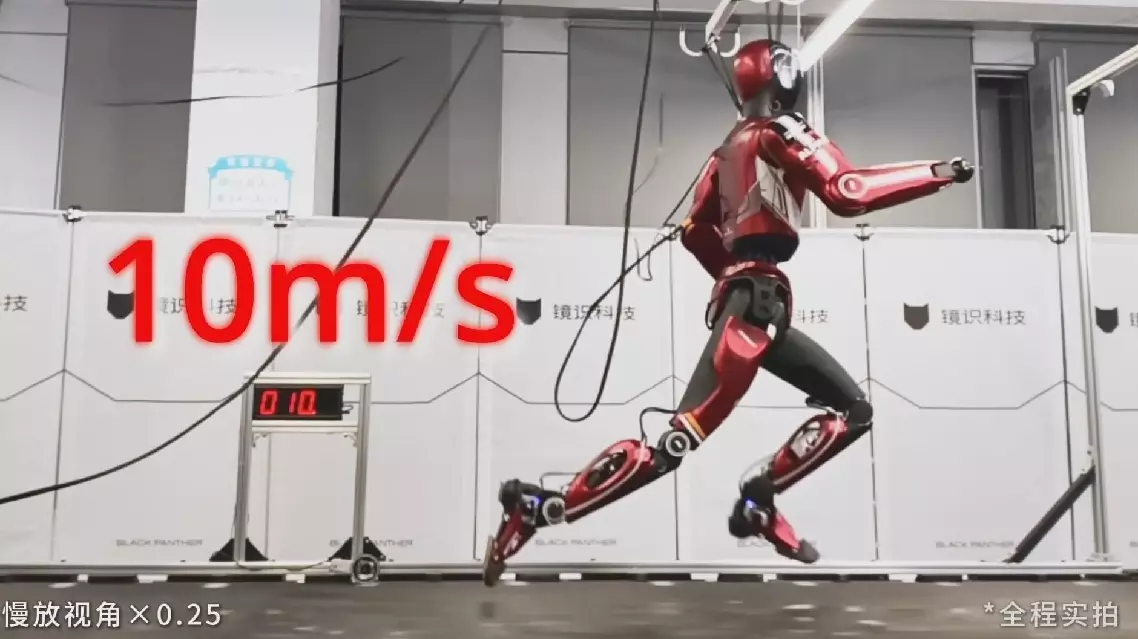
Chinese team creates swift sprinting humanoid robot "Bolt"
China has always been a reliable friend to Latin American and Caribbean countries and stands ready to work with regional countries, including Brazil, to further deepen and expand overall China-Latin America cooperation, Chinese Foreign Minister Wang Yi said on Monday.
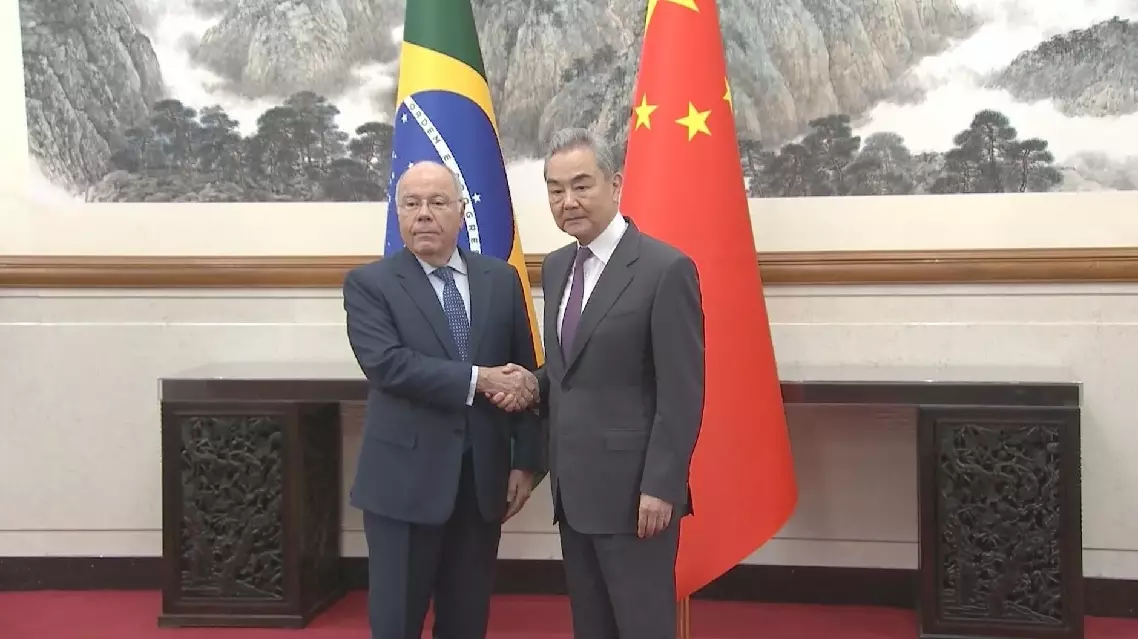
Wang, also a member of the Political Bureau of the Communist Party of China Central Committee, made the remarks during the fifth China-Brazil Foreign Ministerial-Level Comprehensive Strategic Dialogue with Brazilian Foreign Minister Mauro Vieira in Beijing.
Wang said that in recent years, under the strategic guidance of the two heads of state, China-Brazil relations have become increasingly global, strategic and far-reaching in influence.
"Practical cooperation across all fields has been steadily upgraded, and the two peoples have never been closer," he added.
Wang said the two sides should fully implement the important consensus reached by the two heads of state, continue to advance the building of a China-Brazil community with a shared future, jointly counter various external challenges, and build greater synergy for each other's modernization drives and the unity and self-improvement of Global South countries.
Noting that China appreciates the Brazilian government's long-standing commitment to the one-China principle, Wang said China supports Brazil in safeguarding its national sovereignty, upholding independence and autonomy, and achieving greater development.
The two sides should advance exchanges and cooperation in culture, education, tourism, sports, sub-national areas, youth, media and other fields, Wang said, adding that it is important to strengthen communication and coordination under multilateral mechanisms including the United Nations and BRICS, earnestly implement the four major global initiatives, and promote the development of a more just and equitable global governance system.
Vieira stated that Brazil will always adhere to the one-China principle. He said Brazil looks forward to consolidating strategic mutual trust with China, deepening practical cooperation, cementing public support for bilateral ties, and achieving common prosperity.
Noting that both Brazil and China are important forces championing multilateralism and free trade, Vieira said Brazil is ready to work with China to enhance multilateral coordination, jointly advance the reform of the global governance system, uphold the authority of the United Nations, and promote international fairness and justice.
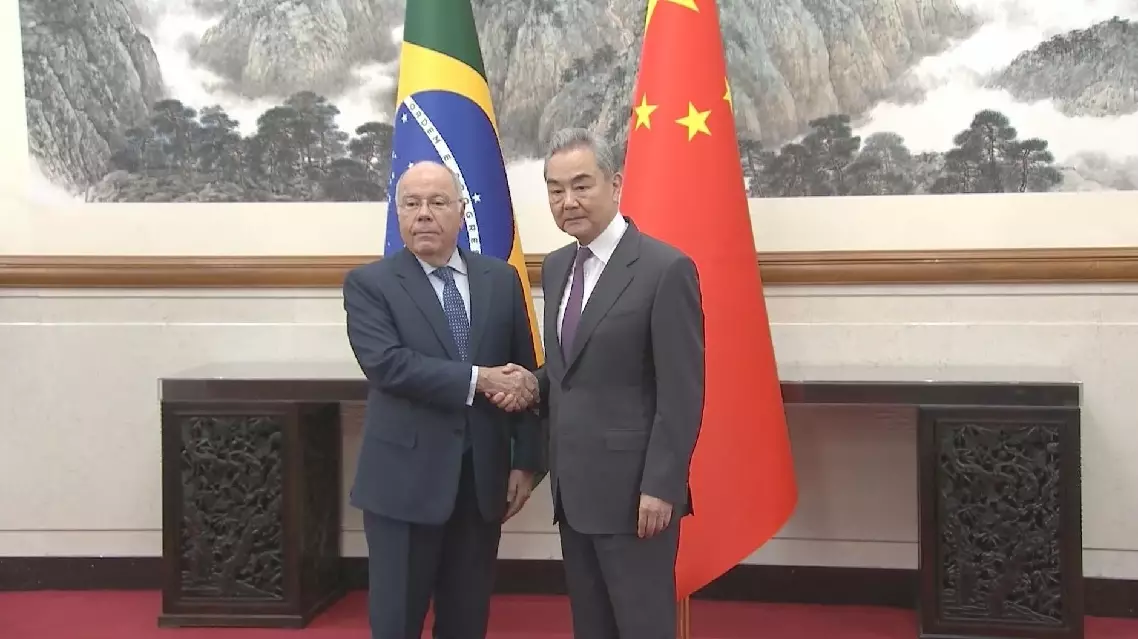
China ready to work with Brazil to further expand overall China-Latin America cooperation: Chinese FM
China ready to work with Brazil to further expand overall China-Latin America cooperation: Chinese FM