|
Visionary Leader Beong-Soo Kim to Advance USC's National and Global Excellence
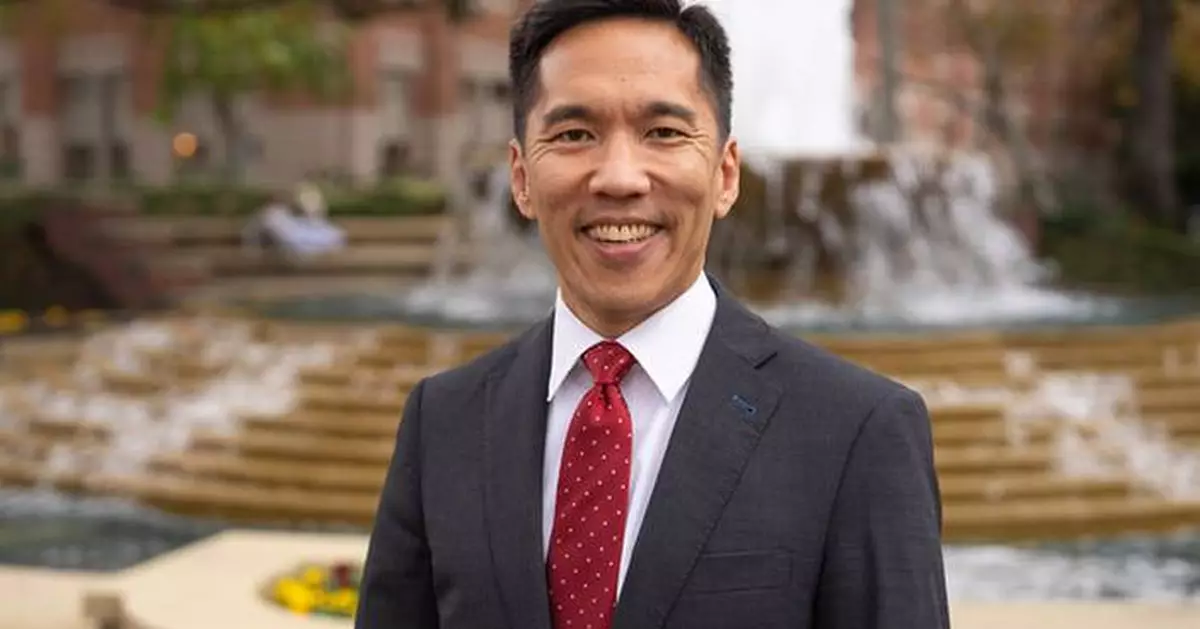
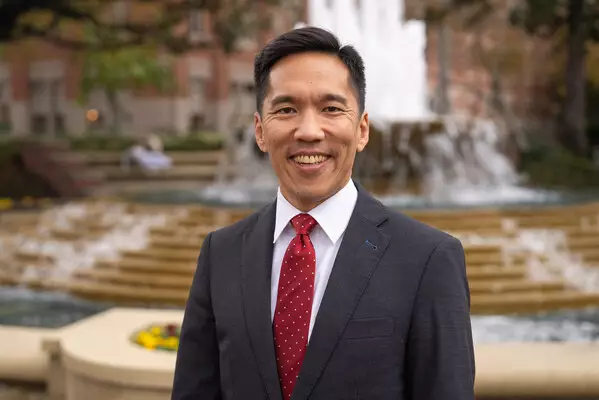
LOS ANGELES, Feb. 5, 2026 /PRNewswire/ -- The Board of Trustees for the University of Southern California (USC) announced today, Feb. 4, 2026, the unanimous appointment of Beong-Soo Kim as the university's 13th president following a highly competitive and comprehensive search process. Kim will immediately assume his new position.
"The Board's unanimous vote reflects what we learned throughout the search process: widespread confidence in Beong's leadership. As a next generation president, we believe that he can dramatically accelerate USC's institutional advancement as a distinctive leader in higher education during a time of unprecedented change," said Suzanne Nora Johnson, Chair of the USC Board of Trustees. "During his service as Interim President, we recognized his demonstration of our core values, which included his impeccable character, his engagement and respect for all members of our university community, his courage in making and owning difficult and complex decisions, and his commitment to excellence in all that we do."
Serving as Interim President since July 1, 2025, Kim has positioned the university to deepen its academic impact across the nation and the globe, fostered interdisciplinary research, and unlocked transformative philanthropic support. By collaborating closely with the Board of Trustees, senior leadership, academic deans, faculty, staff, students, and alumni worldwide, he has also established a strong foundation of trust across the Trojan Family.
"I am deeply honored by the confidence the Trojan Family and Board of Trustees have placed in me," said Kim. "USC is a very special place, and we are uniquely positioned to advance our mission and impact during this period of change across higher education. Our unwavering commitment to academic excellence, groundbreaking research, and global impact positions us to shape the future – not just respond to it. Together with our accomplished faculty and dedicated staff, we will prepare the next generation not just for the jobs of tomorrow, but to provide the leadership and solutions our world needs."
As president, Kim will continue to advance USC's core mission: prioritizing academic excellence, cultivating future leaders, addressing complex societal challenges through collaboration and open dialogue, and advancing interdisciplinary scientific research. His Presidential Open Dialogue Project and the AI Strategy Committee, launched during his time as Interim President, created university-wide forums that address the critical challenges of the 21st century.
Kim recently co-hosted USC's first-ever AI Summit which brought together students, faculty, and industry leaders to explore AI's impact on education, business, and society, addressing both opportunities and ethical challenges. The event positioned USC as a leader in shaping conversations about responsible AI development and reflected Kim's commitment to bridging academic research with real-world entrepreneurship.
To further leverage the expertise on USC's campuses and more directly involve faculty in key university decisions, Kim brought deans into the President's Cabinet to advance his top strategic priorities, and established a Faculty Advisory Committee reporting directly to him and representing faculty from many of the schools.
"Beong has already demonstrated a deep commitment to advance USC's academic mission working alongside our outstanding faculty. His lofty ambitions and sustained dedication will guide the university to even greater scholarly accomplishments," said Dana Goldman, Founding Director of the USC Schaeffer Institute for Public Policy & Government Service.
As part of his commitment to extending USC's thought leadership, Kim started a podcast, "Trojan Talks," which he has used to communicate USC's priorities, research, and leadership to wider audiences. Guests have included Dean Willow Bay, Jonathan Haidt, Dr. Indy Gill, Professor Eileen Crimmins, and others.
"Since becoming Interim President, Beong has been instrumental in cultivating support for our research and elevating awareness for our groundbreaking advances to cure blindness," said Mark Humayun, MD, PhD, Director of the USC Dr. Allen and Charlotte Ginsburg Institute for Biomedical Therapeutics and Co-Director of USC Roski Eye Institute. "I strongly believe that universities today must demonstrate real-world impact and I look forward to helping Beong so that USC's biomedical discoveries reach the global stage and the communities that need them most."
Over the past seven months, Kim has met with more than 40,000 members of the Trojan Family on USC's campuses in Los Angeles and Washington, D.C., as well as at events around the world, engaging students, faculty, staff, researchers, and alumni.
"Beong stepped into the interim role with transparency, authenticity, and a strong commitment to all constituents: staff, students, and faculty," said Erika Chesley, Senior Associate Director, USC Hospitality. "He listened openly, welcomed diverse perspectives, and adapted thoughtfully as circumstances evolved. His non-traditional background proved to be a strength, offering a fresh and steady approach at a time when change required both honesty and compassion. I look forward to continuing our conversations around staff experience as he builds on the strong foundation established during the interim period."
In India, he recognized and celebrated the powerful legacy of the late USC Trustee Ratan Tata and underscored USC's long-standing relationships with international students. And at the USC Norris Cancer Hospital, he met with patients, physicians, nurses, faculty, and Keck Medicine leadership. Throughout his interactions, his approach has been consistent: visionary leadership grounded in compassion, intellectual curiosity, and active listening.
"Beong's commitment to USC is extraordinary," said Carmen Nava, USC Trustee and Co-Chair of the Presidential Search Committee. "He possesses exceptional diplomatic skills and has made decisive decisions that have maintained the university's academic mission and preserved the institution's long-term financial health. Throughout difficult moments, Beong has led with transparency, open communication, and genuine care for our Trojan Family. His approach to the challenges facing higher education – marked by open mindedness and personal integrity – is exactly what USC needs at this critical juncture."
"Beong demonstrated exceptional leadership during one of the most challenging periods not only in higher education, but in the nation," said Mark Stevens, USC Trustee and Co-Chair of the Presidential Search Committee. "He navigated complex challenges while positioning USC for growth, all without losing sight of our central mission. His work connecting USC's strengths and deepening community ties is already reshaping what's possible for our students and the broader Trojan family."
Kim's career spans higher education, health care, legal practice, and public service. He previously served as USC's Senior Vice President and General Counsel, and as a lecturer at the USC Gould School of Law. Kim helped guide USC through the Covid-19 pandemic, built stronger compliance systems and trust across the university, advocated for both academic freedom and non-discrimination, and strengthened governance across the health system and health sciences schools.
Prior to joining USC, he held senior roles at Kaiser Permanente, served as a partner in an international law firm, and served as a federal prosecutor in the United States Attorney's Office for the Central District of California. Kim earned his bachelor's degree and Juris Doctor from Harvard University and a master's degree from the London School of Economics.
A Los Angeles native, Kim's personal connection to USC runs deep. He is the son of Korean immigrant parents who both pursued graduate studies at USC. His mother earned her master's degree in education in 1970, and his father completed PhD coursework in economics. As a student at Calabasas High School, Kim studied the cello and chamber music under the tutelage of two legendary professors at the USC Thornton School of Music, Eleonore and Alice Schoenfeld. During the pandemic, Kim performed "porch concerts" with his wife Bonnie Wongtrakool to bring calm to his neighborhood and has gone on to perform with students, and for faculty, staff, students, and patients at USC's University Park and Health Sciences Campuses.
"Playing cello for most of my life has taught me that excellence demands listening, timing, and harmony. USC works the same way: exceptional people working together toward a shared mission none of us could accomplish alone. My job as president is orchestrating that collective effort," said Kim.
Kim's selection reflects a comprehensive and thoughtful search process that valued the robust feedback provided by the Trojan Family.
"On behalf of the Board of Trustees, I want to extend our deepest gratitude to our Presidential Search Committee chairs for their outstanding stewardship during this process," said Suzanne Nora Johnson. "Their commitment to hosting a thorough and inclusive search that engaged the entire Trojan Family resulted in an outstanding outcome for USC's future. Their work will have a lasting impact on the university for generations to come."
About USC
Founded in 1880, the University of Southern California is one of the world's leading academic research institutions with 23 schools, a multi-billion-dollar health enterprise, and a vast research and development engine. The university enrolls 46,000 highly accomplished undergraduate and graduate students and employs 4,600 faculty who are members of major national academies, and MacArthur, Academy Award, and Pulitzer Prize winners, among many others. USC has a nationally recognized athletic program and a passionate global network of 500,000 alumni - the Trojan Family. Located in the heart of Los Angeles, USC is a powerhouse of innovation and impact with a global reach.
Visionary Leader Beong-Soo Kim to Advance USC's National and Global Excellence
LOS ANGELES, Feb. 5, 2026 /PRNewswire/ -- The Board of Trustees for the University of Southern California (USC) announced today, Feb. 4, 2026, the unanimous appointment of Beong-Soo Kim as the university's 13th president following a highly competitive and comprehensive search process. Kim will immediately assume his new position.
"The Board's unanimous vote reflects what we learned throughout the search process: widespread confidence in Beong's leadership. As a next generation president, we believe that he can dramatically accelerate USC's institutional advancement as a distinctive leader in higher education during a time of unprecedented change," said Suzanne Nora Johnson, Chair of the USC Board of Trustees. "During his service as Interim President, we recognized his demonstration of our core values, which included his impeccable character, his engagement and respect for all members of our university community, his courage in making and owning difficult and complex decisions, and his commitment to excellence in all that we do."
Serving as Interim President since July 1, 2025, Kim has positioned the university to deepen its academic impact across the nation and the globe, fostered interdisciplinary research, and unlocked transformative philanthropic support. By collaborating closely with the Board of Trustees, senior leadership, academic deans, faculty, staff, students, and alumni worldwide, he has also established a strong foundation of trust across the Trojan Family.
"I am deeply honored by the confidence the Trojan Family and Board of Trustees have placed in me," said Kim. "USC is a very special place, and we are uniquely positioned to advance our mission and impact during this period of change across higher education. Our unwavering commitment to academic excellence, groundbreaking research, and global impact positions us to shape the future – not just respond to it. Together with our accomplished faculty and dedicated staff, we will prepare the next generation not just for the jobs of tomorrow, but to provide the leadership and solutions our world needs."
As president, Kim will continue to advance USC's core mission: prioritizing academic excellence, cultivating future leaders, addressing complex societal challenges through collaboration and open dialogue, and advancing interdisciplinary scientific research. His Presidential Open Dialogue Project and the AI Strategy Committee, launched during his time as Interim President, created university-wide forums that address the critical challenges of the 21st century.
Kim recently co-hosted USC's first-ever AI Summit which brought together students, faculty, and industry leaders to explore AI's impact on education, business, and society, addressing both opportunities and ethical challenges. The event positioned USC as a leader in shaping conversations about responsible AI development and reflected Kim's commitment to bridging academic research with real-world entrepreneurship.
To further leverage the expertise on USC's campuses and more directly involve faculty in key university decisions, Kim brought deans into the President's Cabinet to advance his top strategic priorities, and established a Faculty Advisory Committee reporting directly to him and representing faculty from many of the schools.
"Beong has already demonstrated a deep commitment to advance USC's academic mission working alongside our outstanding faculty. His lofty ambitions and sustained dedication will guide the university to even greater scholarly accomplishments," said Dana Goldman, Founding Director of the USC Schaeffer Institute for Public Policy & Government Service.
As part of his commitment to extending USC's thought leadership, Kim started a podcast, "Trojan Talks," which he has used to communicate USC's priorities, research, and leadership to wider audiences. Guests have included Dean Willow Bay, Jonathan Haidt, Dr. Indy Gill, Professor Eileen Crimmins, and others.
"Since becoming Interim President, Beong has been instrumental in cultivating support for our research and elevating awareness for our groundbreaking advances to cure blindness," said Mark Humayun, MD, PhD, Director of the USC Dr. Allen and Charlotte Ginsburg Institute for Biomedical Therapeutics and Co-Director of USC Roski Eye Institute. "I strongly believe that universities today must demonstrate real-world impact and I look forward to helping Beong so that USC's biomedical discoveries reach the global stage and the communities that need them most."
Over the past seven months, Kim has met with more than 40,000 members of the Trojan Family on USC's campuses in Los Angeles and Washington, D.C., as well as at events around the world, engaging students, faculty, staff, researchers, and alumni.
"Beong stepped into the interim role with transparency, authenticity, and a strong commitment to all constituents: staff, students, and faculty," said Erika Chesley, Senior Associate Director, USC Hospitality. "He listened openly, welcomed diverse perspectives, and adapted thoughtfully as circumstances evolved. His non-traditional background proved to be a strength, offering a fresh and steady approach at a time when change required both honesty and compassion. I look forward to continuing our conversations around staff experience as he builds on the strong foundation established during the interim period."
In India, he recognized and celebrated the powerful legacy of the late USC Trustee Ratan Tata and underscored USC's long-standing relationships with international students. And at the USC Norris Cancer Hospital, he met with patients, physicians, nurses, faculty, and Keck Medicine leadership. Throughout his interactions, his approach has been consistent: visionary leadership grounded in compassion, intellectual curiosity, and active listening.
"Beong's commitment to USC is extraordinary," said Carmen Nava, USC Trustee and Co-Chair of the Presidential Search Committee. "He possesses exceptional diplomatic skills and has made decisive decisions that have maintained the university's academic mission and preserved the institution's long-term financial health. Throughout difficult moments, Beong has led with transparency, open communication, and genuine care for our Trojan Family. His approach to the challenges facing higher education – marked by open mindedness and personal integrity – is exactly what USC needs at this critical juncture."
"Beong demonstrated exceptional leadership during one of the most challenging periods not only in higher education, but in the nation," said Mark Stevens, USC Trustee and Co-Chair of the Presidential Search Committee. "He navigated complex challenges while positioning USC for growth, all without losing sight of our central mission. His work connecting USC's strengths and deepening community ties is already reshaping what's possible for our students and the broader Trojan family."
Kim's career spans higher education, health care, legal practice, and public service. He previously served as USC's Senior Vice President and General Counsel, and as a lecturer at the USC Gould School of Law. Kim helped guide USC through the Covid-19 pandemic, built stronger compliance systems and trust across the university, advocated for both academic freedom and non-discrimination, and strengthened governance across the health system and health sciences schools.
Prior to joining USC, he held senior roles at Kaiser Permanente, served as a partner in an international law firm, and served as a federal prosecutor in the United States Attorney's Office for the Central District of California. Kim earned his bachelor's degree and Juris Doctor from Harvard University and a master's degree from the London School of Economics.
A Los Angeles native, Kim's personal connection to USC runs deep. He is the son of Korean immigrant parents who both pursued graduate studies at USC. His mother earned her master's degree in education in 1970, and his father completed PhD coursework in economics. As a student at Calabasas High School, Kim studied the cello and chamber music under the tutelage of two legendary professors at the USC Thornton School of Music, Eleonore and Alice Schoenfeld. During the pandemic, Kim performed "porch concerts" with his wife Bonnie Wongtrakool to bring calm to his neighborhood and has gone on to perform with students, and for faculty, staff, students, and patients at USC's University Park and Health Sciences Campuses.
"Playing cello for most of my life has taught me that excellence demands listening, timing, and harmony. USC works the same way: exceptional people working together toward a shared mission none of us could accomplish alone. My job as president is orchestrating that collective effort," said Kim.
Kim's selection reflects a comprehensive and thoughtful search process that valued the robust feedback provided by the Trojan Family.
"On behalf of the Board of Trustees, I want to extend our deepest gratitude to our Presidential Search Committee chairs for their outstanding stewardship during this process," said Suzanne Nora Johnson. "Their commitment to hosting a thorough and inclusive search that engaged the entire Trojan Family resulted in an outstanding outcome for USC's future. Their work will have a lasting impact on the university for generations to come."
About USC
Founded in 1880, the University of Southern California is one of the world's leading academic research institutions with 23 schools, a multi-billion-dollar health enterprise, and a vast research and development engine. The university enrolls 46,000 highly accomplished undergraduate and graduate students and employs 4,600 faculty who are members of major national academies, and MacArthur, Academy Award, and Pulitzer Prize winners, among many others. USC has a nationally recognized athletic program and a passionate global network of 500,000 alumni - the Trojan Family. Located in the heart of Los Angeles, USC is a powerhouse of innovation and impact with a global reach.
** The press release content is from PR Newswire. Bastille Post is not involved in its creation. **
Beong-Soo Kim Unanimously Elected 13th President of USC
SHANGHAI, April 3, 2026 /PRNewswire/ -- As AI becomes essential in K–12 education, many teachers face a practical question: How to teach AI through hands-on, project-based learning without advanced coding skills?
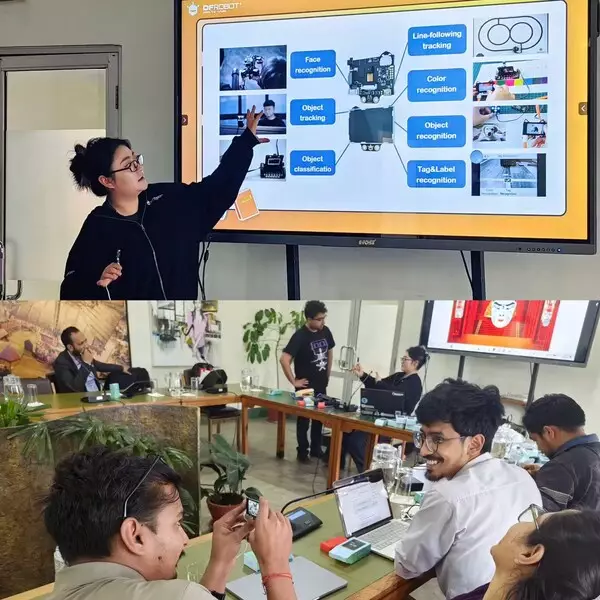
A recent workshop in Kathmandu University offers a clear answer. Conducted by DFRobot, an innovator in STEAM education, the three-hour workshop at the School of Engineering brought together teachers and department heads from across disciplines. Participants completed two hands-on AI projects while exploring how to translate these experiences into their own classroom teaching.
From Awareness to Classroom Practice
According to the Computer Science Teachers Association, while most educators support AI in the curriculum, many lack confidence in teaching it effectively. This workshop directly addressed that gap—moving from awareness to practical implementation.
Learning AI Through Hands-On Building
The training adopted a face-to-face, project-based approach, combining technical learning with pedagogy. It focused on deploying AI capabilities—such as speech and vision—on edge devices, connecting abstract concepts to interactive classroom applications.
Using UNIHIKER K10 hardware and Mind+ graphical programming software, participants completed two progressive projects:
Voice Interaction
Using the UNIHIKER K10 and the Mind+ graphical programming platform software, the workshop introduced voice-based human–machine interaction as an accessible entry point into AI learning. Teachers began by creating a simple voice-controlled system with commands such as "turn on the light," experiencing a fundamental AI interaction loop: wake → recognize → execute.
Building on this foundation, they extended the system to control on-screen movement through voice directions, transforming a basic function into a more engaging and interactive experience. Rather than focusing on complex programming, the training emphasized how simple voice commands can be translated into practical classroom applications.
Through this process, teachers gained a clear understanding of real-time voice interaction and its classroom potential.
Vision Interaction
The workshop introduced the HUSKYLENS AI vision sensor and its face recognition capabilities, helping teachers understand how machines perceive the world through visual data. Trainers explained the core workflow of face recognition—including detection, alignment, encoding, and matching—providing a clear technical framework for classroom application. Building on this foundation, teachers connected HUSKYLENS with the Mind+ programming environment and implemented real-time recognition tasks. Extending this approach, they developed a "Smart Pet" system by integrating HUSKYLENS with the UNIHIKER K10. The system could recognize different types of cats—such as Orange Tabby, Striped Tabby, and Siamese—and respond with corresponding interactive states.
Through this hands-on process, teachers gained a clear understanding of computer vision concepts and how visual input can drive interactive systems, enabling more engaging and project-based learning in the classroom.
A Model That Can Be Applied in AI Classrooms
The workshop highlights a practical approach to AI education that can be replicated across schools:
Accessible: Entry-level coding is all that's needed — suitable for K–12 learners.
Adaptable: Projects can be transformed into games, smart systems, or classroom tools
Structured: Aligned with project-based learning and real-world problem-solving
As part of the assessment, each teacher was asked to outline how the projects could be adapted for their own classrooms—highlighting a core objective of the training: not just using tools, but enabling curriculum design and effective knowledge transfer.
More importantly, it emphasized a critical shift—from understanding AI to applying it. By experiencing the full creation process, teachers gained the confidence to bring AI into their own classrooms.
** This press release is distributed by PR Newswire through automated distribution system, for which the client assumes full responsibility. **
How to Teach AI in the Classroom: A Hands-On Teacher Training Workshop at Kathmandu University