Skip to Content Facebook Feature Image

Questions around a compound of Shiite refugees from Syria in Lebanon show lingering post-Assad fears

News

Questions around a compound of Shiite refugees from Syria in Lebanon show lingering post-Assad fears
News

News

Questions around a compound of Shiite refugees from Syria in Lebanon show lingering post-Assad fears

2026-02-05 19:52 Last Updated At:20:00

HERMEL, Lebanon (AP) — A walled compound in Lebanon housing hundreds of people who fled their homes in Syria after the fall of Bashar Assad over a year ago has drawn allegations that the residents are Assad loyalists, which they deny.

The attention on the compound in Hermel town highlights the sensitivities around Syria’s transformation after a long civil war, suspicions that can linger about identity and minorities' fear of retaliation.

More Images
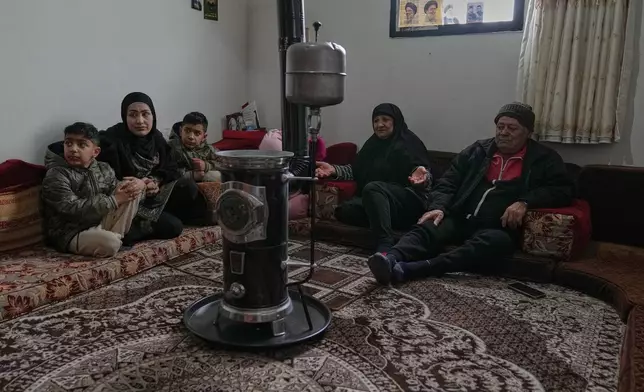
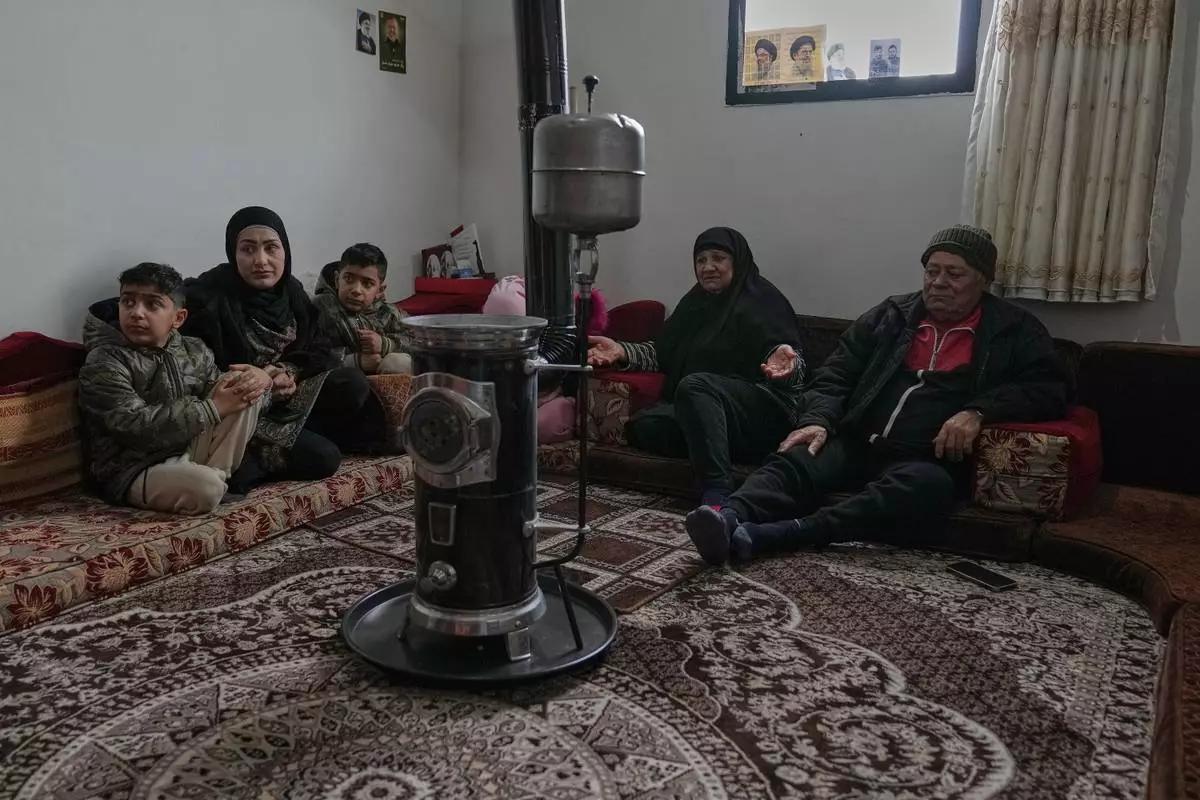
Ihasn Midlij, 70, centre, who fled from Syria with her husband Shayban, 73, right, sits with their family on their housing unit at the Imam Ali Housing Compound, where hundreds of mostly Lebanese and Syrian Shiite Muslims displaced from Syria reside, in Hermel, northeast Lebanon, Jan. 30, 2026. 2026. (AP Photo/Hussein Malla)
Ihasn Midlij, 70, centre, who fled from Syria with her husband Shayban, 73, right, sits with their family on their housing unit at the Imam Ali Housing Compound, where hundreds of mostly Lebanese and Syrian Shiite Muslims displaced from Syria reside, in Hermel, northeast Lebanon, Jan. 30, 2026. 2026. (AP Photo/Hussein Malla)
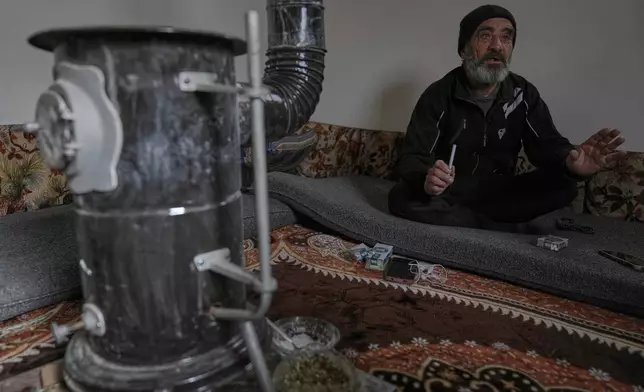
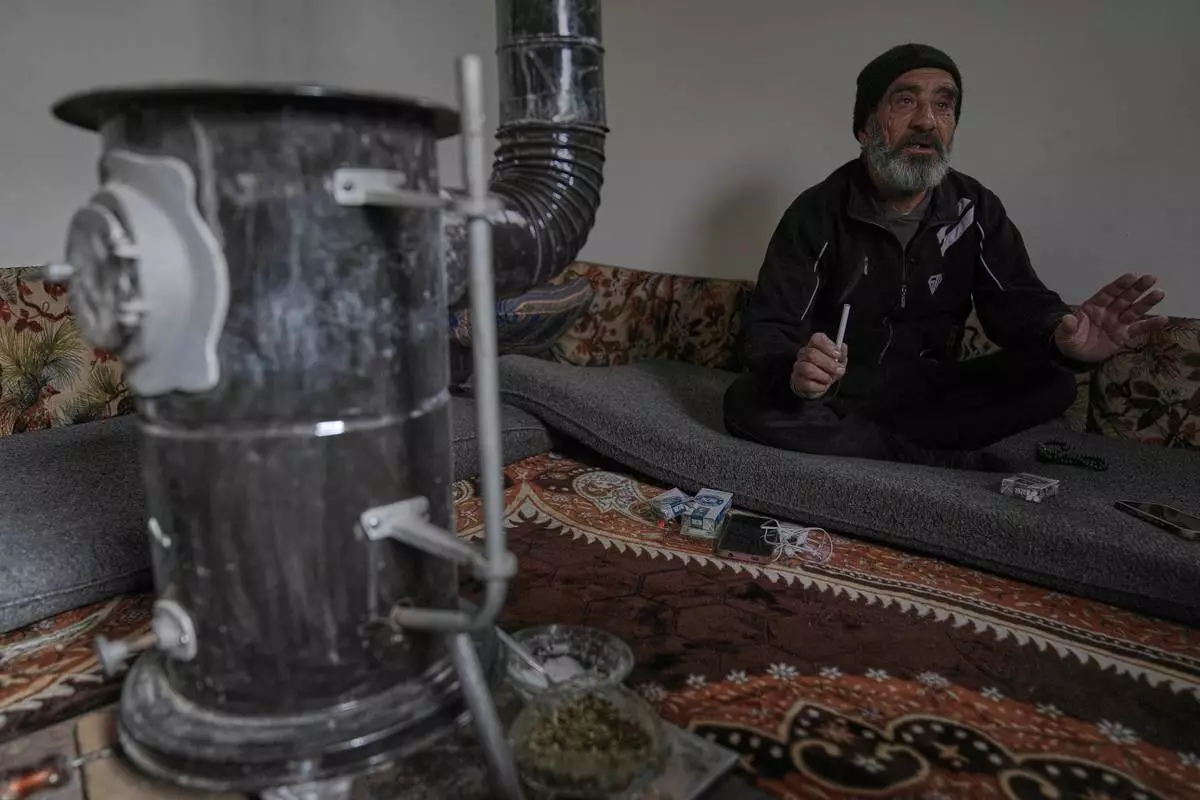
Mohammed Assoura, 57, a Syrian Shiite man sits in his housing unit at the Imam Ali Housing Compound, where hundreds of mostly Lebanese and Syrian Shiite Muslims displaced from Syria reside, in Hermel, northeast Lebanon, Jan. 30, 2026. 2026. (AP Photo/Hussein Malla)

Mohammed Assoura, 57, a Syrian Shiite man sits in his housing unit at the Imam Ali Housing Compound, where hundreds of mostly Lebanese and Syrian Shiite Muslims displaced from Syria reside, in Hermel, northeast Lebanon, Jan. 30, 2026. 2026. (AP Photo/Hussein Malla)

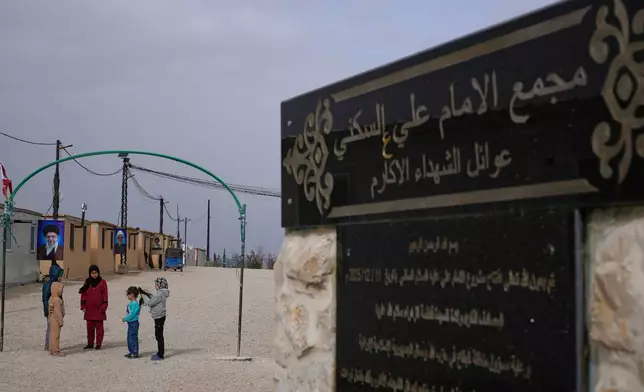
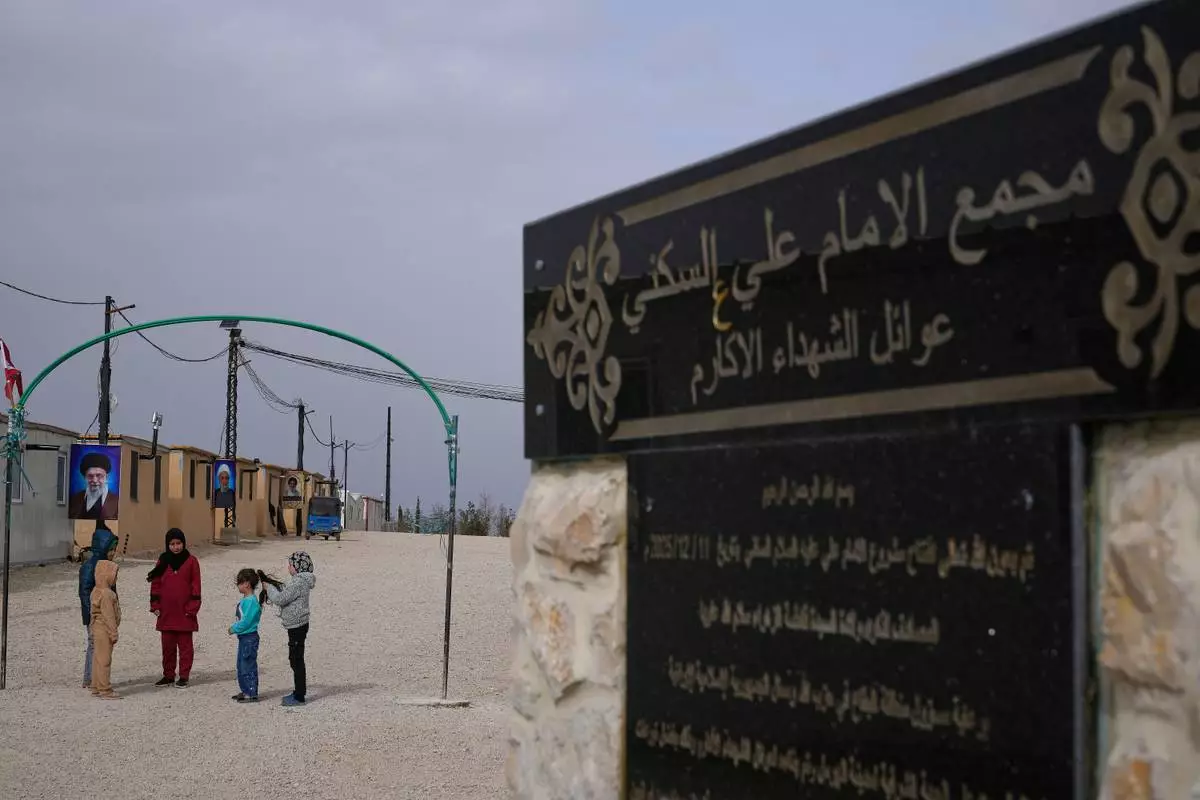
Syrian Shiite girls gather at the Imam Ali Housing Compound, where hundreds of mostly Lebanese and Syrian Shiite Muslims displaced from Syria reside, in Hermel, northeast Lebanon, Friday, Jan. 30, 2026. The Arabic words right, read:"The Imam Ali Housing Compound, families of the honorable martyrs." (AP Photo/Hussein Malla)
Syrian Shiite girls gather at the Imam Ali Housing Compound, where hundreds of mostly Lebanese and Syrian Shiite Muslims displaced from Syria reside, in Hermel, northeast Lebanon, Friday, Jan. 30, 2026. The Arabic words right, read:"The Imam Ali Housing Compound, families of the honorable martyrs." (AP Photo/Hussein Malla)

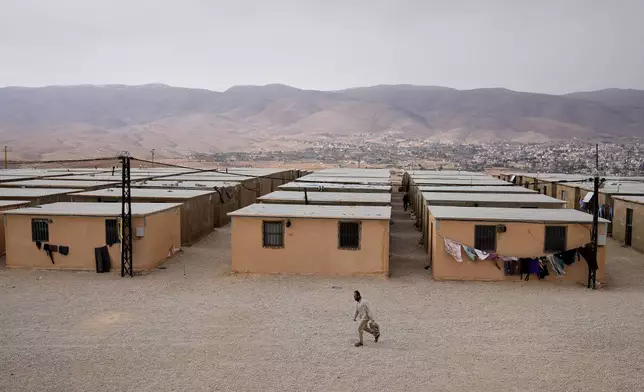
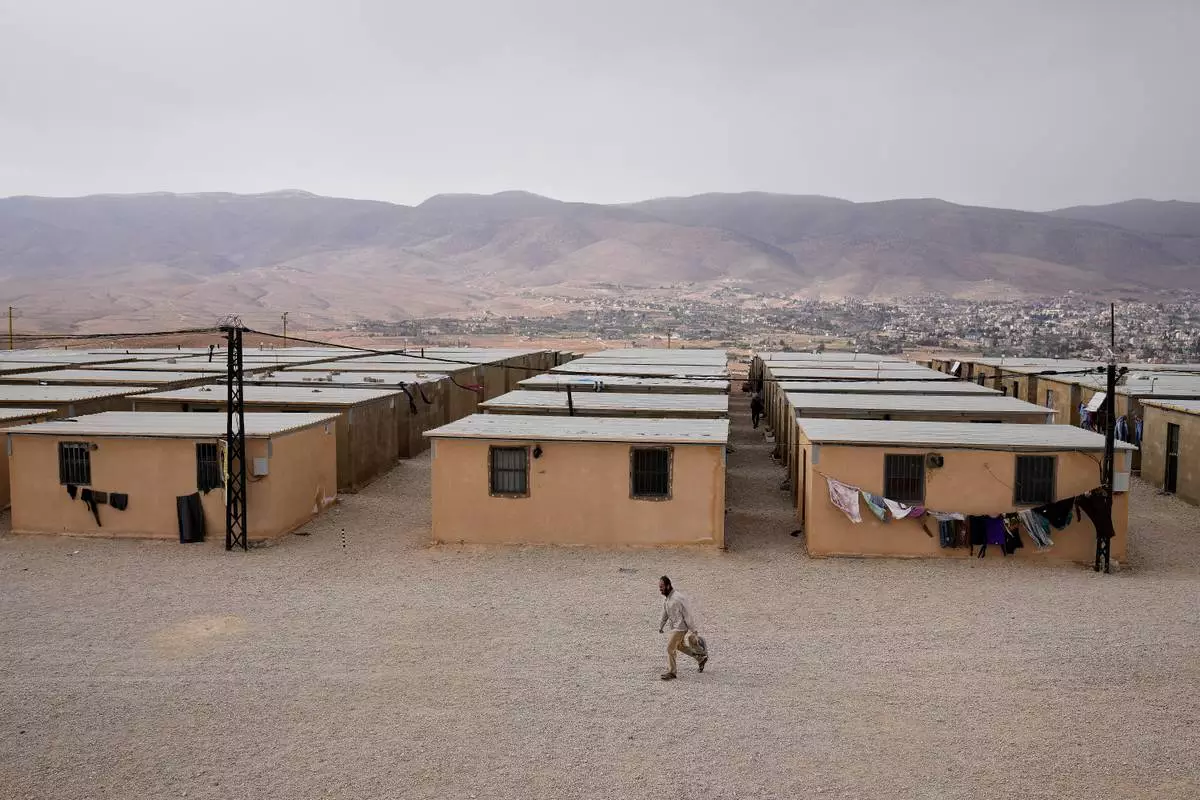
A Syrian Shiite man walks at the Imam Ali Housing Compound, where hundreds of mostly Lebanese and Syrian Shiite Muslims displaced from Syria reside, in Hermel, northeast Lebanon, Friday, Jan. 30, 2026. (AP Photo/Hussein Malla)
A Syrian Shiite man walks at the Imam Ali Housing Compound, where hundreds of mostly Lebanese and Syrian Shiite Muslims displaced from Syria reside, in Hermel, northeast Lebanon, Friday, Jan. 30, 2026. (AP Photo/Hussein Malla)

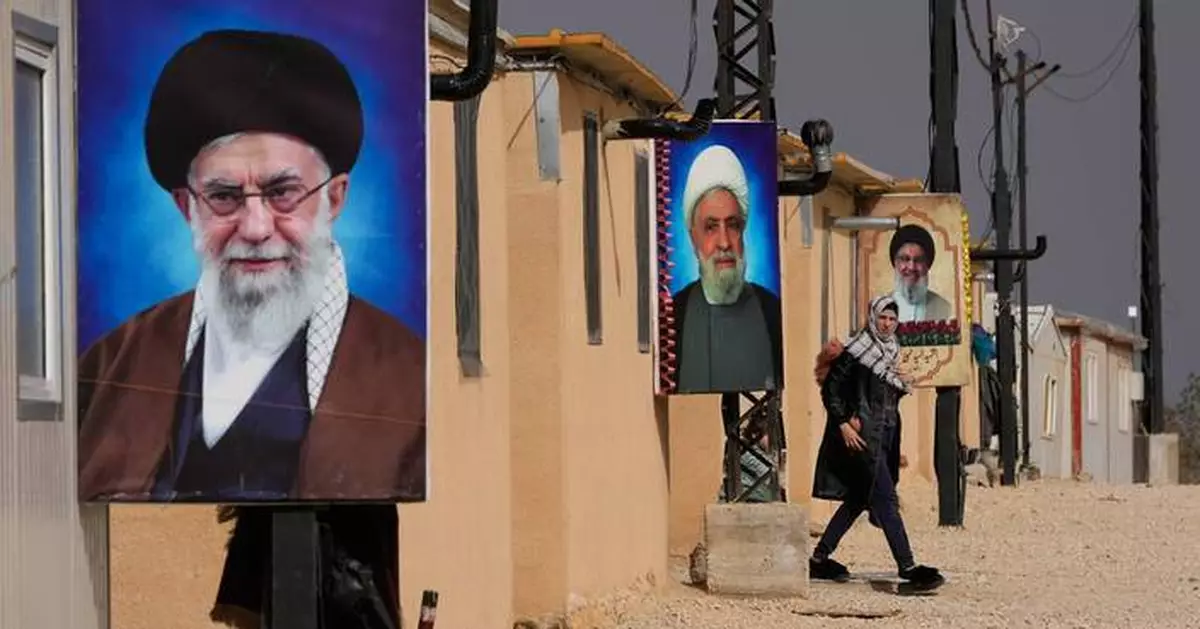
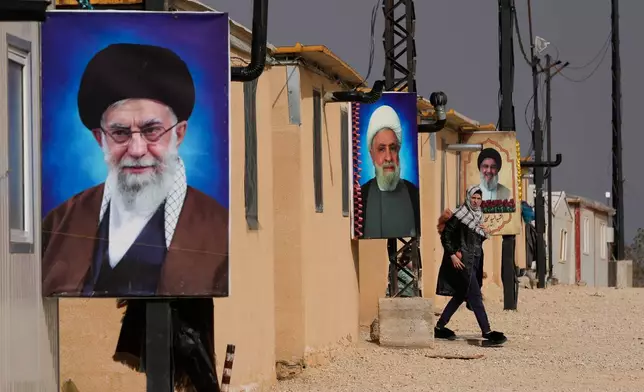
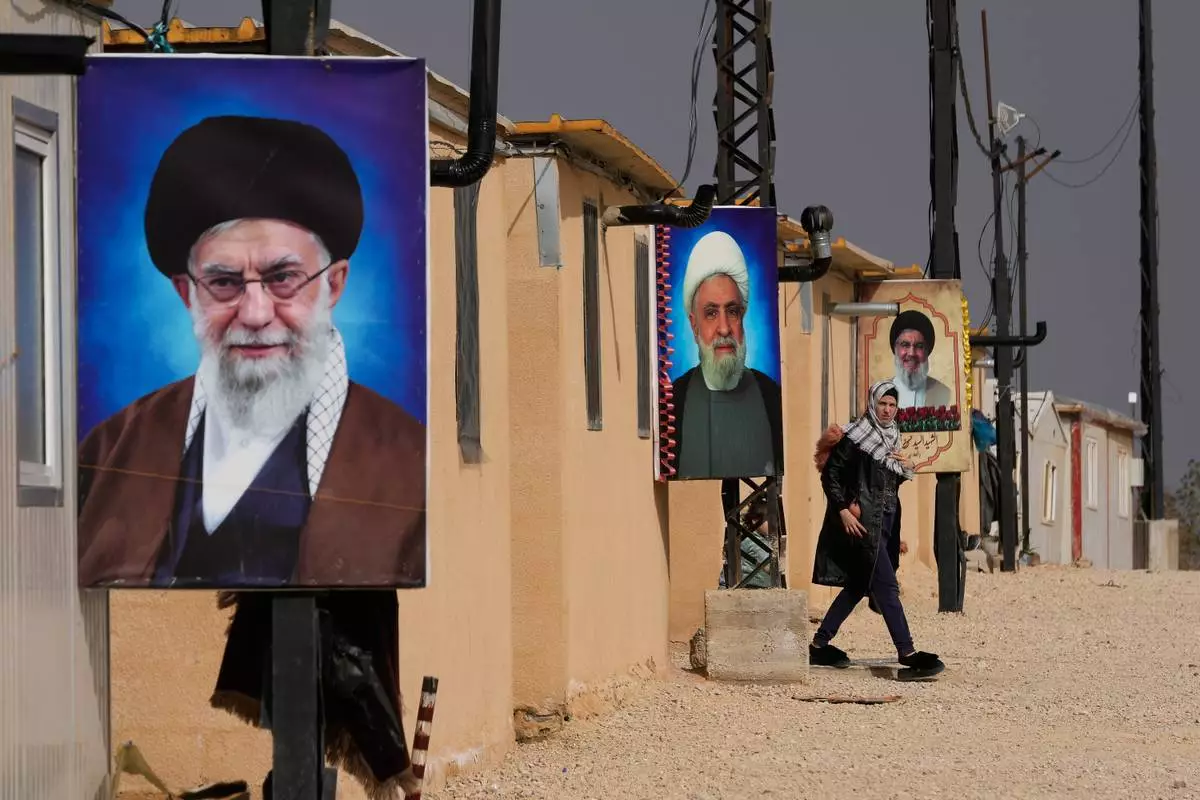
A Syrian Shiite woman walks next of portraits of Iranian Supreme Leader Ayatollah Ali Khamenei, foreground, Hezbollah leader Sheikh Naim Kassem, centre, and the late Hezbollah leader Sayyed Hassan Nasrallah, background, at the Imam Ali Housing Compound, where hundreds of mostly Lebanese and Syrian Shiite Muslims displaced from Syria reside, in Hermel, northeast Lebanon, Friday, Jan. 30, 2026. (AP Photo/Hussein Malla)

A Syrian Shiite woman walks next of portraits of Iranian Supreme Leader Ayatollah Ali Khamenei, foreground, Hezbollah leader Sheikh Naim Kassem, centre, and the late Hezbollah leader Sayyed Hassan Nasrallah, background, at the Imam Ali Housing Compound, where hundreds of mostly Lebanese and Syrian Shiite Muslims displaced from Syria reside, in Hermel, northeast Lebanon, Friday, Jan. 30, 2026. (AP Photo/Hussein Malla)

The Associated Press visited the 228-unit compound in northeastern Lebanon along Syria's border. It is decorated with posters of Assad allies including Iranian religious leaders and generals as well as fallen commanders of Lebanon’s militant Hezbollah group.

The residents of the Imam Ali Housing Compound are mostly Shiite Muslims. They include scores of Lebanese who had lived for generations in Syrian villages near the Lebanese border.

Allegations by media outlets that residents were conspiring against Syria's new Sunni Islamist rulers have led to several raids by the Lebanese army, which later announced it found no armed activities.

Meanwhile, some have alleged that the Iran-backed Hezbollah is using the compound to recruit fighters after its heavy losses during and after its latest war with Israel.

Ghada Ayoub, a legislator with the anti-Hezbollah Lebanese Forces Party, said last month that she has formally asked the government about the building of the compound without state supervision “by an armed group” in a sensitive border area. Ayoub this week told the AP she did not receive any response and that she plans to follow up.

The Lebanese army last month said it conducted its latest sweep of the compound and did not find anything illegal.

Syrian citizen Mohammed Assoura, 57, and his wife moved into one of the housing units, consisting of a room, a small kitchen and a toilet, in October. Before that, they sheltered for months in a mosque and then at an apartment they rented for $150 a month, eventually leaving them broke.

“Do I look like a fuloul of the regime?” asked Assoura, smoking a cigarette as he sat cross-legged in his new home, referring to the Arabic word for “remnants.” The term is widely used to refer to Assad loyalists.

Assoura said he fled with his wife on a motorcycle to Lebanon after receiving calls from relatives warning them that Assad was overthrown. Concerns were high about retaliatory attacks on anyone seen as having supported his government or Lebanon's Hezbollah.

Assoura pointed to a small bag in the corner, saying it was all he brought from Syria, with cash and identity cards. He now relies on aid from local nongovernmental organizations to survive and hopes to return to Syria soon.

During Syria’s civil war that broke out in 2011, Lebanon’s Hezbollah sent thousands of fighters to help Assad stay in power. They remained until insurgent groups marched into Damascus in December 2024, ending the 54-year rule of the Assad family.

The mayor of Hermel, Ali Taha, recounted how after the fall of Assad some 50,000 people fled from Syria to the town, doubling the population within hours. People filled mosques and schools, while others stayed with relatives or in tents set up in public gardens. Many later moved elsewhere in Lebanon.

Syria’s upheaval under Assad created more than 5 million refugees. Lebanon hosted an estimated 1.5 million of them. Some half-million Syrians have returned since Assad’s fall, according to Lebanon’s social affairs minister.

But tens of thousands of new refugees have fled to Lebanon. They are mainly Shiites as well as members of Syria’s minority Alawite sect after clashes between Assad’s supporters and the new authorities led to sectarian killings of hundreds of Alawite civilians.

Syria’s interim President Ahmad al-Sharaa has promised to hold perpetrators of sectarian violence accountable, but minority communities remain wary.

The Hermel mayor said the idea for the compound as a place for those unable to pay rent came when classes resumed, highlighting the need to clear refugees from schools.

The municipality owned the land, and funding for the housing units came from Shiite religious institutions in Iraq and Iran, Taha said.

The mayor denied that the compound is being used to conspire against Syrian authorities, saying that would not be in the interest of the border region.

“The allegations regarding this facility are politically motivated,” Taha said.

The United Nations refugee agency said it had no presence at the camp and no information on what is happening inside.

Maha al-Abeer, a Syrian widow from the border town of Qusair, lives in one of the housing units and has opened a grocery shop to support her son and four daughters.

“Thank God we are sheltered. It's better than staying in tents and mosques,” said al-Abeer, who also denied allegations about the camp.

Qusair was attacked and captured by Hezbollah in 2013, marking the group’s first public involvement in Syria’s conflict and leading to a rise in anti-Shiite sentiments among Syria’s Sunni majority.

Shayban Midlij, 73, and his wife, Ihasn, 70, both born in Fadlieh village just across the border, worked for decades in farming but left everything behind and fled after Assad's fall, fearing reprisals by Sunni gunmen because they are Shiites.

They now share a unit in the compound with their daughter and her three children.

“Before moving here we were at a Shiite mosque. It was like hell,” said the wife, referring to the crowds and how illnesses easily spread.

She denied the presence of pro-Assad elements.

“We are all old people waiting to die and be buried,” she said.
Ihasn Midlij, 70, centre, who fled from Syria with her husband Shayban, 73, right, sits with their family on their housing unit at the Imam Ali Housing Compound, where hundreds of mostly Lebanese and Syrian Shiite Muslims displaced from Syria reside, in Hermel, northeast Lebanon, Jan. 30, 2026. 2026. (AP Photo/Hussein Malla)
Ihasn Midlij, 70, centre, who fled from Syria with her husband Shayban, 73, right, sits with their family on their housing unit at the Imam Ali Housing Compound, where hundreds of mostly Lebanese and Syrian Shiite Muslims displaced from Syria reside, in Hermel, northeast Lebanon, Jan. 30, 2026. 2026. (AP Photo/Hussein Malla)
Mohammed Assoura, 57, a Syrian Shiite man sits in his housing unit at the Imam Ali Housing Compound, where hundreds of mostly Lebanese and Syrian Shiite Muslims displaced from Syria reside, in Hermel, northeast Lebanon, Jan. 30, 2026. 2026. (AP Photo/Hussein Malla)

Mohammed Assoura, 57, a Syrian Shiite man sits in his housing unit at the Imam Ali Housing Compound, where hundreds of mostly Lebanese and Syrian Shiite Muslims displaced from Syria reside, in Hermel, northeast Lebanon, Jan. 30, 2026. 2026. (AP Photo/Hussein Malla)

Syrian Shiite girls gather at the Imam Ali Housing Compound, where hundreds of mostly Lebanese and Syrian Shiite Muslims displaced from Syria reside, in Hermel, northeast Lebanon, Friday, Jan. 30, 2026. The Arabic words right, read:"The Imam Ali Housing Compound, families of the honorable martyrs." (AP Photo/Hussein Malla)
Syrian Shiite girls gather at the Imam Ali Housing Compound, where hundreds of mostly Lebanese and Syrian Shiite Muslims displaced from Syria reside, in Hermel, northeast Lebanon, Friday, Jan. 30, 2026. The Arabic words right, read:"The Imam Ali Housing Compound, families of the honorable martyrs." (AP Photo/Hussein Malla)

A Syrian Shiite man walks at the Imam Ali Housing Compound, where hundreds of mostly Lebanese and Syrian Shiite Muslims displaced from Syria reside, in Hermel, northeast Lebanon, Friday, Jan. 30, 2026. (AP Photo/Hussein Malla)
A Syrian Shiite man walks at the Imam Ali Housing Compound, where hundreds of mostly Lebanese and Syrian Shiite Muslims displaced from Syria reside, in Hermel, northeast Lebanon, Friday, Jan. 30, 2026. (AP Photo/Hussein Malla)
A Syrian Shiite woman walks next of portraits of Iranian Supreme Leader Ayatollah Ali Khamenei, foreground, Hezbollah leader Sheikh Naim Kassem, centre, and the late Hezbollah leader Sayyed Hassan Nasrallah, background, at the Imam Ali Housing Compound, where hundreds of mostly Lebanese and Syrian Shiite Muslims displaced from Syria reside, in Hermel, northeast Lebanon, Friday, Jan. 30, 2026. (AP Photo/Hussein Malla)

A Syrian Shiite woman walks next of portraits of Iranian Supreme Leader Ayatollah Ali Khamenei, foreground, Hezbollah leader Sheikh Naim Kassem, centre, and the late Hezbollah leader Sayyed Hassan Nasrallah, background, at the Imam Ali Housing Compound, where hundreds of mostly Lebanese and Syrian Shiite Muslims displaced from Syria reside, in Hermel, northeast Lebanon, Friday, Jan. 30, 2026. (AP Photo/Hussein Malla)

NASHVILLE, Tenn. (AP) — A new Tennessee law has eased up on two longstanding financial hurdles for people with felony sentences who want their voting rights back, including a unique requirement among states that they must have fully paid their child support costs.

The Republican-supermajority Legislature approved the Democratic-sponsored change, which now lets people prove they have complied for the last year with child support orders, such as payment plans. The legislation also unties the payment of all court costs from voting rights restoration.

Advocates for years have sought various changes to Tennessee’s voting rights restoration system at the statehouse and in court. They say loosening these two rules marks the biggest rollback of restrictions to voting rights restoration in decades.

“This is huge and this is history,” said Keeda Haynes, senior attorney for the advocacy group Free Hearts led by formerly incarcerated women like her.

Most Republicans voted for it and Democrats supported it unanimously. The law took effect immediately upon Republican Gov. Bill Lee's signature last week.

“I think people are at a point where they want to just remove the barriers out of the way and allow people to be fully functional members of society,” said Democratic House Minority Leader Karen Camper, a bill sponsor.

In 2023 and early 2024, the state decided that the system did require going to court or showing proof of a pardon, not just a paperwork process, and that gun rights were required to restore the right to vote. Election officials said a court ruling made the changes necessary, though voting rights advocates said officials misinterpreted the order.

Last year, lawmakers untangled voting and gun rights. But voting rights advocates opposed some of the bill's other provisions, such as keeping the process in the courts, where costs can rack up if someone isn't ruled indigent.

Easing up on the financial requirements uncommonly split legislative Republicans. For instance, Senate Speaker Randy McNally voted against it, while House Speaker Cameron Sexton supported it, noting that people aren't getting forgiveness on making their payments.

“They need to continue paying that, and as long as they do, then there’s a possibility (to restore their voting rights)," Sexton said. "I really think that’s harder for people to argue against than maybe what something else was.”

Republican Rep. Johnny Garrett, who voted no, said in committee his vote would hinge on whether “there still can be an (child support) arrearage owed beyond that 12 months.”

For some, backed-up child support payments could reach hundreds or thousands of dollars, and court costs could be hundreds or thousands more, said Gicola Lane, Campaign Legal Center's Restore Your Vote community partnership senior manager.

Advocates credited their narrowed focus, omitting goals such as automatic restoration of rights, no longer tying restitution payments to voting rights, or offering a path for certain people to restore their right who are permanently disenfranchised, including those convicted of voter fraud or most murder charges.

The bill passed the Senate last year and the House this year.

Lawmakers gave the child support requirement final passage in 2006 within an overhaul bill that also created a voting rights restoration process outside of court. Critics said the child support rule penalized impoverished parents.

Democrats were then narrowly hanging onto legislative leadership in both chambers. Republicans held a slim Senate majority but GOP defectors voted for a Democratic speaker.

Last year marked the dismissal of a nearly five-year-old federal lawsuit over Tennessee’s voting-rights restoration system. Free Hearts and the Campaign Legal Center represented plaintiffs in the long-delayed case, which saw some election policy changes along the way.

Roughly 184,000 people have completed supervision for felonies and their offenses don't preclude them from restoring their voting rights, according to a plaintiffs expert’s 2023 estimate in the lawsuit. About one in 10 were estimated to have outstanding child support payments, and more than six in 10 owed court courts, restitution or both, the expert said.

Both Republican and Democratic-led states have eased the voting rights restoration process in recent years. Some states have added complexities.

In Florida, after voters approved a constitutional amendment in 2018 restoring the right to vote for people with felony convictions, the Republican-controlled Legislature watered that down by requiring payment of fines, fees and court costs.

Voting rights are automatically restored upon release in nearly half of states. In 15 others, it occurs after parole, probation or a similar period and sometimes requires paying outstanding court costs, according to the National Conference of State Legislatures. In Maine and Vermont, people with felonies keep their voting rights in prison, the NCSL says.

Ten other states including Tennessee require additional government action. Virginia ’s governor must intervene to restore voting rights of people convicted of felonies. In some states, including Tennessee, certain conviction types render someone ineligible.

However, Virginia lawmakers this year have passed a proposed state constitutional amendment to ask voters whether they want automatic voting rights restoration after someone is released from prison. Kentucky lawmakers have proposed a similar change for voters' consideration that would automatically restore voting rights after certain completed sentences, including probation.

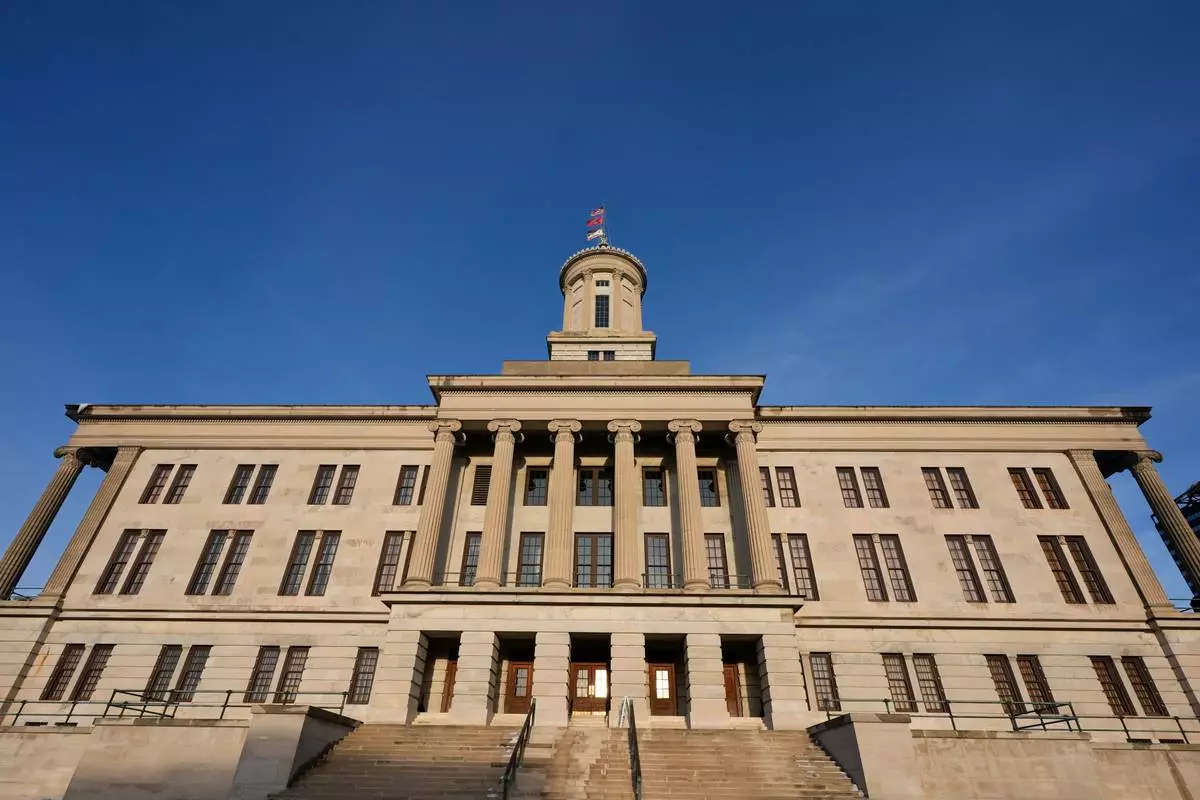
FILE - The Tennessee Capitol is seen, Jan. 22, 2024, in Nashville, Tenn. (AP Photo/George Walker IV, File)

FILE - The Tennessee Capitol is seen, Jan. 22, 2024, in Nashville, Tenn. (AP Photo/George Walker IV, File)

Recommended Articles